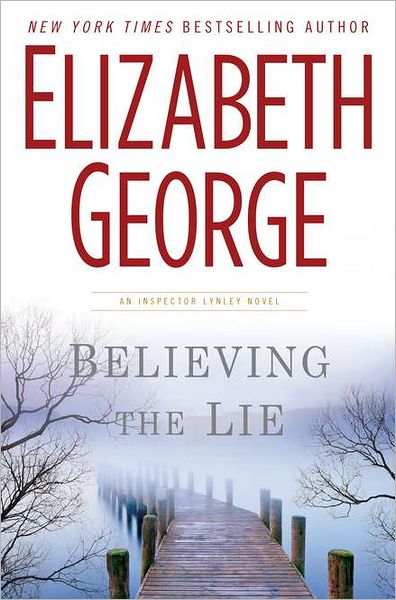
Believing the Lie by Elizabeth George

The latest gruesome, yet touching, mystery starring Inspector Thomas Lynley and his friends.


Elizabeth George’s long-awaited 18th installment in the Inspector Thomas Lynley mystery series sees our Tommy back at New Scotland Yard, having returned from wandering the English countryside mourning his murdered wife. His new illicit relationship with a superior officer is interrupted by a mysterious secret assignment–to look into a drowning that has already been ruled accidental. A powerful patriarch (like Lynley, a peer of the realm) requests further investigation into his own family–most obviously, the recovering drug addict prodigal son. But as Lynley, with the assistance of the reliable Deborah and Simon St. James, delves deeper into this family’s history and entanglements, he uncovers myriad lies, betrayals, deceptive identities and plenty of cause for scandal.

Fans of the series will rejoice in rejoining Lynley, the St. Jameses and Sergeant Barbara Havers, who unwillingly undergoes a makeover in this book. George also delivers the fully wrought, sympathetic, very human minor characters her readers have come to expect. Longtime fans may find Deborah’s increasingly obsessive distress over her failure to conceive beginning to wear thin; the subject becomes a full-fledged plot thread here. But George’s strengths–character development, plot twists and shocking tragedy–continue to shine.

While Believing the Lie can stand alone, series readers will find a deeper appreciation of the complex relationships at play. Look out for a serious cliffhanger at the end, which will leave George’s fans panting for the next Lynley episode.


This review originally ran in the January 13, 2012 issue of Shelf Awareness for Readers. To subscribe, click here, and you’ll receive two issues per week of book reviews and other bookish fun!

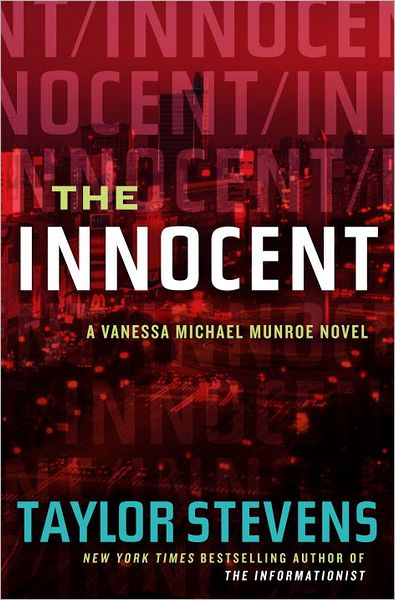
The Innocent by Taylor Stevens

A whirlwind thriller about a seriously ass-kicking female renegade’s battle against a hair-raising cult.


In this sequel to The Informationist, Vanessa Michael Munroe is back. Taylor Stevens‘s heroine has been compared to Jack Reacher, Jason Bourne and Lisbeth Sanders, and evokes each–but also possesses certain qualities all her own.

The traumatized Munroe, facing her horrific past every time she tries to sleep, vacillates between insomnia and drug-induced oblivion. Her private battles are interrupted, though, when her old friend Logan shows up begging for her help. Eight years ago, when she was five, Hannah was kidnapped by members of a religious cult called The Chosen. As a former member, Logan know first-hand how desperate her situation must be–and though his gruesome childhood is not quite like Munroe’s, he has an understanding of her damaged soul. Now, eight years after her capture, Logan finally knows Hannah’s location, and he needs the help of Munroe to free her. But to get Hannah out of The Chosen, Munroe will have to go in.

The Innocent is tight and fast-paced, an adrenaline rush of a novel with vibrant settings ranging from Morocco to Buenos Aires and characters who jump off the page. The descriptions of The Chosen’s abuses of its own members are heartwrenching; Stevens’s own experience in such a world makes this semiautobiographical novel’s emotional impact even stronger. But the story’s greatest strength may be Munroe herself: gender-bending, starkly violent, as lethal with her bare hands as she is with a knife, she steals the reader’s heart, tortured psyche and all.


This review originally ran in the January 10, 2012 issue of Shelf Awareness for Readers. To subscribe, click here, and you’ll receive two issues per week of book reviews and other bookish fun!

Bad Luck and Trouble by Lee Child

I began reading Lee Child in late 2010, with Echo Burning, and loved him. In 2011, I ran through almost the entire Jack Reacher series. I’m glad I saved this one for 2012, because it’s the last one I hadn’t read yet (not the last in the series, you realize, but the last that I got to). It was a treat, and now I’m left waiting for him to write more books. I’m concerned that it may be a little while because maybe he’ll be busy helping make the One Shot movie. I don’t know, are authors involved, or is his work done?

That’s right, they’re making a movie out of One Shot, and so the controversy begins. Like many Reacher fans, I would love to see film versions of the whole series, but: the Hollywood folks have gone in the wrong direction picking a Reacher. For those who don’t know, Reacher is a charismatic, handsome, intelligent, super-strong post-military man, 6’5″ and about 250 pounds, and blonde. And they’ve chosen Tom Cruise to play him. Sigh.

The interwebs are in uproar over this choice; not surprisingly, followers of Reacher don’t feel that the short, skinny-ish, dark-haired Cruise can play Reacher appropriately. Apparently Lee Child has come to terms with this choice, which is something that I, personally, have not come to terms with yet. I will not be able to bring myself to see this movie. I think the movie – and if it goes that far, the film franchise of Reacher movies – will end up having a different fan base than the books. I fear that no one who has come to know and love the written Reacher will be able to love Cruise in that role.

But! Reacher-in-media updates aside, I was writing a book review. Sorry! Back on track.

Bad Luck and Trouble opens with a gruesome death, and then checks in with Reacher. The former military policeman has been roaming the country with a folding toothbrush in his pocket and is not looking for any trouble, but his past catches up with him. Specifically, Frances Neagley (whom we met in Without Fail) makes contact, requesting his help. A member of their one-time elite and closer-than-blood special investigations unit has been thrown out of a helicopter and, as Reacher will repeat, you don’t throw his friends out of helicopters and get away with it. A small group of Reacher-esque badasses thus reunite to avenge their friend’s death and save the world.

This is the 16th Reacher novel I’ve read, and I confess there are a number of predictable elements. For example: Reacher’s side will win. Sorry if this spoils the ending, but he always does. For another, the hot chick will insist on sleeping with him. And finally, he’ll fade out into the sunset rather than settle down at the end, after winning, and sleeping with the hot chick.

But you know what? Predictability in these areas doesn’t lessen my enjoyment. Reacher’s cleverness and the fast-paced action and ass-kicking have never gotten old. And the action itself is not predictable; I was trying right up to the end to figure out whodunit and how we were going to get out of this pickle. Knowing Reacher will get out of the pickle is not the same as knowing how he’ll do it. I continue to eat these books up, and will continue to do so. Child, more please!

Item of interest: Bad Luck and Trouble included a much more math-heavy side of Reacher than I can remember having seen before. We know he’s good with numbers, does complicated arithmetic problems in his head for fun and all that, but this special skill (I believe he calls it a “junior idiot savant” ability) plays a larger role here than usual, which is fun if you’re into that sort of thing.

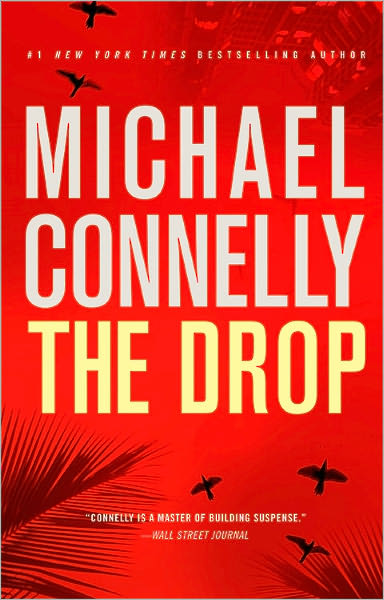
The Drop by Michael Connelly

The latest suspenseful, dark, yet hopeful mystery starring the indomitable Harry Bosch.


In The Drop, Michael Connelly’s long-running protagonist, Det. Harry Bosch, faces end-of-career issues in the Los Angeles police department’s Open/Unsolved Unit. In one day, he gets two hits: a DNA match on a 21-year-old murder-rape case and an unexpected fresh body. The son of Councilman Irvin Irving–Bosch’s nemesis from previous novels in the 17-book series–has jumped or been dropped from his hotel balcony, and Irving inexplicably requests Bosch as investigator. It looks to be a case of “high jingo”–political complications threatening the quest for truth and justice to which Bosch is so committed.

As the Irving case gains momentum, the politics threaten to engulf an old friend and colleague, and Bosch may have no one left that he can trust. Meanwhile, logic contradicts fact as the blood found on the victim of the unsolved murder-rape belongs to a man who was eight years old at the time of the crime. Even Bosch’s new partner seems to be working against him. Worst of all, he begins to doubt his own abilities: is Bosch too old for the job?

Fans of Connelly’s series will exult in another round of Bosch-versus-the-world (and the LAPD); he exhibits all his old charms and skills, as well as tenderness towards his teenage daughter (who develops in her own right as a character). New readers will follow the action perfectly; The Drop can confidently stand alone. The evocation of the Los Angeles setting is lovely as usual, and the action’s crescendo hits all the right notes. Don’t take your eyes off Connelly yet–Bosch is ready to fight another round.


This review originally ran in the December 13, 2011 issue of Shelf Awareness for Readers. To subscribe, click here, and you’ll receive two issues per week of book reviews and other bookish fun!


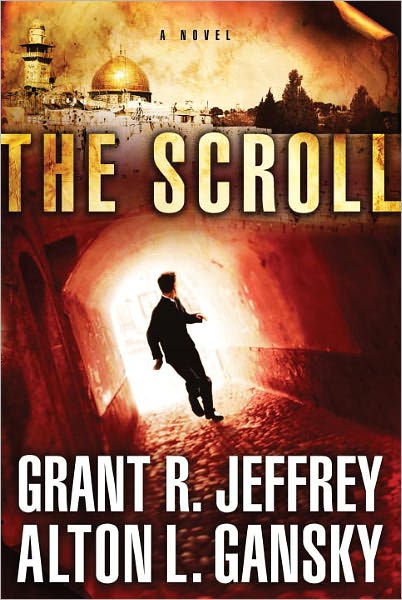
The Scroll by Grant R. Jeffrey

A fast-paced Christian-fiction-thriller involving international intrigue, archeology, and one man’s struggle with his own faith.

Dr. David Chambers is a world-class celebrity archeologist who has always specialized in scientific support for the Bible. But a crisis of faith has left him bitter, split from his former fiancé, Amber, and seeking a new area of study. So when an old friend and mentor requests his help on a new project, he wants to turn away; but a final expedition in biblical archeology is more than he can resist. This new project will make all his past accomplishments pale: there is unimaginable treasure to be found, and even more importantly, temple artifacts thrilling and useful to those who still believe. Surrounded by colleagues, professional rivals, estranged old friends, and Amber herself, David undertakes one final assignment in Jerusalem. The question of the Bible as historical fact is at risk, as are all David’s most valued relationships, including that with his God.

But then unknown forces come into play in a series of violent attacks, and it becomes clear that there is more at stake than David’s personal life and religion. The dig becomes an undertaking of international significance, with the world’s Muslim and Jewish powers struggling for control. Will David find the answers? Regain his faith? Will he survive this mission?

Jeffrey & Gansky have created an engrossing thriller that offers notes of interest in the field of archeology and special focus on love and relationships, and most importantly, relationships with God. If you can overlook that Muslims are generally depicted in a less-than-favorable light, this is a page-turner.


I wrote this review for Shelf Awareness for Readers. To subscribe, click here, and you’ll receive two issues per week of book reviews and other bookish fun!


Further feedback: I am not a fan of Christian fiction, mostly because I’m not a Christian. Most of the genre seems to require that of its readers, for fine writing, perfectly wrought plots, literary triumphs in general are rare; generally what Christian fiction seems to have to offer is a comforting reassurance of faith. The Scroll was somewhat unique in being a page-turning mystery, and I found it more palatable than those saccharine Christian romance novels. But there were still some strains on my credibility and most damning of all (no pun intended) was the unsympathetic treatment of the main Muslim character. That was just too obvious, easy, and stereotyped; no points given.

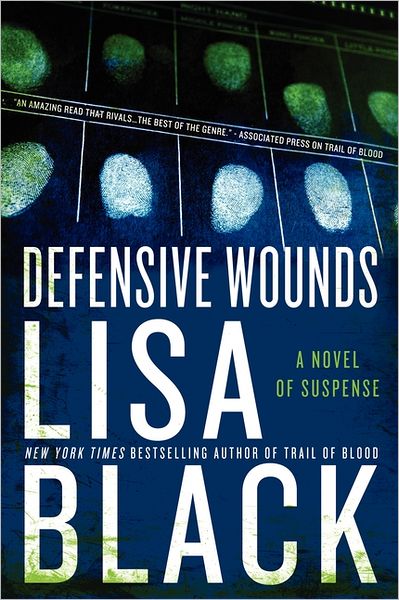
Defensive Wounds by Lisa Black

A forensic scientist with the cases of several murdered defense attorneys to investigate–reluctantly–while keeping her daughter safe on the scene of the crimes.

Defensive Wounds is the fourth in Lisa Black’s series starring Cleveland forensic scientist Theresa MacLean. CSI comes to life when a series of defense attorneys are murdered in spectacular fashion at the Ritz-Carlton during a convention; investigations are complicated by the fact that, as the cops put it, “everyone” hates these victims. For that matter, murder investigation in a hotel–let alone the collection of forensic evidence–is a detective’s nightmare; fibers and bodily fluids abound. Theresa’s involvement is made especially significant by her daughter Rachael’s new job at the hotel. With her cousin Frank one of the investigating detectives, Theresa is perhaps more intimately concerned than she should be–which is how she discovers the seemingly innocent character who may have singled Rachael out.

The tribal mentality of cops versus defense attorneys muddies everyone’s waters, and old crimes and questionably accidental deaths are reexamined. Theresa may have a new romantic interest, even as she tries to thwart Rachael’s budding relationship. Meanwhile, a serial killer runs loose, while Theresa collects loose fibers and cat hairs and struggles to make sense of it all.

An authentic feel to the forensics joins with breathless pacing and an intertwining cast of characters to make for an exciting and unique contribution to the thriller genre. Those new to Black’s series will be right at home with Theresa, a woman who takes her career in science and law enforcement seriously, while simultaneously trying to be a good mother. But we’re really here for the adrenaline rush, and Black delivers.


I wrote this review for Shelf Awareness for Readers. To subscribe, click here, and you’ll receive two issues per week of book reviews and other bookish fun!

Burned by Thomas Enger, trans. by Charlotte Barslund

Henning Juul is an investigative crime reporter in Oslo, just returning to work after a two-year hiatus. He needed that time to recover and mourn after a fire in his flat killed his six-year-old son and badly burned Henning himself. His scars are external as well as internal: Henning is overwhelmed by guilt at having failed to save his son Jonas, and his wife Nora divorced him while he was in the hospital recuperating. With this backdrop, Henning returns to work reluctantly, and is immediately confronted by a horrific crime: a beautiful, talented, popular college student has been half-buried, stoned to death, flogged, and partially dismembered. Yes, you read that right. On the cop shows they call that “overkill.” And finally, Henning is assigned to work this case with his ex-wife’s new boyfriend.

As it turns out, the new boyfriend storyline doesn’t really go anywhere; the plot revolves around Henning’s investigation of the murder case. He does experience some angst over his ex-wife; more so over his son; but primarily we stick to the murder-mystery thread. The case at hand imitates a movie script the dead girl wrote, which is an interesting plot device; there is some question as to whether this is a Muslim honor-killing under somebody’s interpretation of sharia law, or whether the cops’ arrest of the victim’s Muslim boyfriend indicates racism and/or a jumping to too-easy conclusions. As you are beginning to understand, there’s a lot going on here.

That may be one of the downfalls of Burned, though. This plot undertakes many interesting inquiries, and resolves few if any to satisfaction. We get a good picture of Henning’s inner workings, at least; as a series character he shows promise. The tragedy of his own disfigurement, the loss of his son (to death) and his wife (to divorce), and his psychological trauma definitely lend themselves to another book or several. But the many plot threads picked up in this book are mostly put back down again after cursory treatment, which left me feeling a little bit jarred and jumbled. There were several small details that were left unexplained. There were loose ends.

Also the prose was decidedly awkward at times; it’s translated, so I’m assuming this criticism goes to the translator rather than the author. I give you my favorite example, a travesty of pronouns:

Henning sighs. Perhaps it’s right that Jonas is here now, he thinks. My lovely, lovely boy. He remembers the leap through the flames, how he tried to shield his face with his hands and arms, his hair which caught fire, the burning and the stinging, Jonas’s eyes when he saw him, how he helped extinguish the flames, before they got to them.

Really. I tell you. Even if it were the only example – which it wasn’t – a sentence like this will help to ruin a reading experience for me.

It wasn’t all bad, really. Henning is an engaging character and I cared what happened to him. I wanted the solution to the puzzle, which motivated me to keep reading. That solution disappointed me, frankly, but I still care about Henning. The ending clearly leaves the door open for more of him, and I confess I’m tempted. But with this many loose ends, I’m not sure I’ll subject myself to the frustration again (particularly when compounded with such stylistic offenses as the pronoun mess above). Not a complete failure, but far from a raging success, I’m sorry to say.

Many thanks to the publisher for the copy they sent me, all the same!

The Man Who Smiled by Henning Mankell (audio)

My experience with Scandinavian thrillers is very limited, and no, I have not read any Stieg Larsson. Henning Mankell is reputed to be a standard of the genre that Larsson dominates these days. I was curious and hoped to find a new thriller/mystery author so I picked up this audiobook.

Mankell’s serial character, Kurt Wallander, is a detective in the Ystad police force in Sweden. When the book opens, he’s on leave, trying to recover from the experience of having killed a man – justifiably, in self defense, but still. He has just decided to retire permanently when an old friend, Sten Torstensson, appears, begging Wallander to look into his (Sten’s) father’s death. Gustav Torstensson’s death was ruled accidental – a car crash – but Sten believes he was murdered. Wallander refuses to rejoin the police force – until Sten is killed just weeks later. This convinces our detective, and he comes back to work to investigate the two deaths, and the crimes that spiral on from there.

I am not terribly impressed. The case is rather convoluted, but not convincingly so; I am not enraptured by the twisting threads of guilt and intrigue; I am not held on the edge of my seat. The investigation of the crime is drawn out; many pages pass in which relatively little happens. I was impatient at some point to get the thing over with, especially since the reader knows who the bad guy is from the beginning, thus killing the suspense. (Sometimes this is done well, but not here.) Wallander is somewhat developed as a character, but I felt that we were told more than made to feel his trauma, his personal demons, the difficult family relationships he struggles with. (I’m willing to allow that it might help to read the whole series, or to read in order. But then again, I feel that any individual novel should stand alone, too.) There was a certain amount of… well, it sounded like whining to me.

One detail I struggled with: I know that guns are far, far less prevalent in Scandinavia than they are here in my native USA (and my native Texas in particular). But I still have trouble believing that a Swedish police officer, when approached by a man brandishing a pistol – not aimed at him, and with assurances that he means well – would faint. This and other details felt unrealistic to me and took away from my ability to get lost in the story. That, or the Swedish police are wussies?

In one of the final scenes we supposedly learn all the details and backstory and tie up the loose ends, but the explanation of all those loose ends wasn’t convincing to me; it felt unfinished. And forgive me for being jaded – maybe I’ve been exposed to too much hyper-violent stateside crime drama – but Wallander’s deep shock at the depravity of the crimes in this story felt a little bit extreme to me. Again – this is a police officer? Is this really the worst he’s ever seen by an exponential factor?

Sorry for being harsh, Mr. Mankell; I understand you have a devoted following. But either I missed something, or I need to steer clear of Kurt Wallander in future.

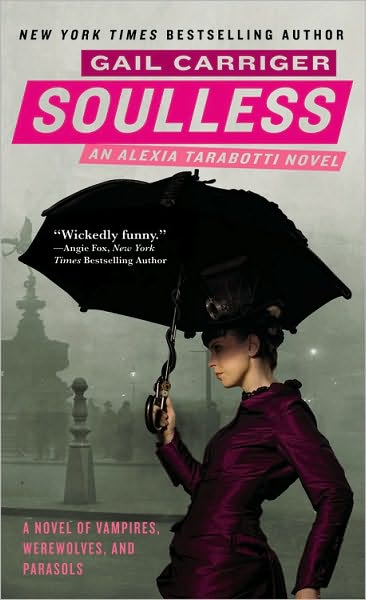
Soulless by Gail Carriger

My friend Amy told me about the Parasol Protectorate series, and I was intrigued. It took me a while to find a copy of this, the first in the series, but it was worth finding!

The cover asserts that this is “a novel of vampires, werewolves and parasols,” and so the uniqueness begins. The series is set in Victorian London, and combines the genres of paranormal romance and steampunk along with, I suppose, alternate history. And there is a mystery as well. Most interesting.

Alexia Tarabotti is a confirmed spinster of the advanced age of twenty-six. There are several setbacks to her marriageability: her father is both dead and (was) Italian; he gave her a swarthy complexion; her nose is rather large; she is tall; and her personality is far too assertive and prickly to make her a decent wife. Furthermore, she is a preternatural – meaning, she has no soul. In Alexia’s society, werewolves and vampires are well-integrated into society (if not entirely accepted in all circles). To become a vampire or a werewolf, one must have an excess of soul; Alexia’s total lack thereof means that she can, with a touch, neutralize supernatural qualities. At the opening of the book, a vampire attacks her and in defending her, she accidentally kills him. The werewolf authority sent to investigate the death is a peer, one Lord Maccon, with whom she has tangled in the past. As new vampires begin appearing where they shouldn’t, and known vampires (and werewolves) fail to appear where they should, Alexia comes under suspicion. The clever and not-to-be-daunted Alexia, with her preternatural abilities to help her along, works on solving the mystery, further motivated on repeated attempts to abduct her. Lord Maccon works on the mystery because it’s his job. The two have some personality clashes but are also drawn to each other (cue the classic romance-novel device).

There is no arguing against the absolute silliness of this book, but it is oh! so much fun! I really enjoyed the romance that develops between Lord Maccon and Alexia. They struggle with understanding one another’s culture in their courtship: his involves pack dynamics that she’s unfamiliar with, and hers involves chaperones and proper proceedings that Alexia herself is not terribly comfortable with, being such a spinster. Carriger writes some very funny scenes; I giggled aloud. The mystery is engaging. The steampunk background was totally new to me and didn’t necessarily add anything to the appeal, other than being a layer of interest, something shiny to look at between steamy scenes.

I am surprised at myself, because I haven’t liked any paranormal romances yet; but despite the vampires (Lord Akeldama is great fun!) and the werewolves (Lord Maccon is really a sexy beast) this was an engaging, entertaining, clever story with a very likeable main character. I think I’ll seek out more of the Parasol Protectorate series! I wonder if we’ll ever learn more about the incident involving the hedgehog?? Thanks Amy for a very strong recommendation!

Definitely Dead by Charlaine Harris (audio)

Definitely Dead is a Sookie Stackhouse book from the Southern Vampire Mystery series. Yes. Southern Vampire Mystery Series. The television series True Blood is based on these books. This is not my standard reading material, but (this is becoming a theme) I picked it to cover Louisiana for the Where Are You Reading? Challenge, on rhapsodyinbooks‘s recommendation. I like James Lee Burke for Louisiana normally, but took this opportunity to expand my knowledge (if not my reading loves) – for professional reasons as a librarian, if for no other reason. One of my first pleasant surprises was the narration; Johanna Parker’s southern accent is fun. (Her Irish accent, for Father Riordan, on the other hand, is a travesty. Luckily we don’t hear too much from him.) The redeeming features didn’t end there; Sookie is a pleasant, likeable enough protagonist. She’s a little bumbling, and she struggles a little bit with her sense of self-worth, but she’s not whiny; she’s just human. Ha – that’s a joke, as her being human makes her fairly unique in Bon Temps, Louisiana, a world full of supernatural beings: were-wolves, were-panthers, were-tigers, vampires, goblins, and sundry shape-shifters.

In this book, Sookie is being attacked by various enemies: one, the family of the Pelt girl that she apparently killed in an earlier book, and two, okay I won’t give it away just yet… The vampire Queen of Louisiana (what a funny phrase, it made me smile every time) marries the King of Arkansas (even funnier!) in a political match, but Sophie’s cousin Hadley is the Queen’s real love. Hadley has just died, and when Sookie goes into New Orleans to clean out her apartment she finds a dead werewolf in the closet – and the intrigue just increases from there. Meanwhile, Sookie begins to date a sexy were-tiger, Quinn; he’s there with her when she’s attacked on several occasions, so they bond while fighting various supernatural beings. There is an unusual sex scene between the two of them that I am still contemplating and finding unlikely, but I’ll let you discover that one on your own.

It’s an odd world that Harris builds here; a number of phrases got me giggling just for their oddity (I wish I’d taken better notes here). It was strange enough to me that the novelty was rather amusing, although I guess regular readers of paranormal whatnot are beyond this. Sookie is relatively charming, and Quinn is an attractive character; I found myself entertained once I got into things. But this book is no literary feat. The dialog can be awkward, and I found enough grammatical errors to be distracting.

In the end, this wasn’t a painfully bad book to listen to. (Well, the cd’s in my audio copy were badly scratched and sometimes that got a little painful, but I don’t hold Harris or Sookie responsible for that.) It had its moments, but it failed to make me care deeply; the world Harris built was more silly than interesting. Unfortunately I don’t care what happens to Sookie next, although I wish her well.