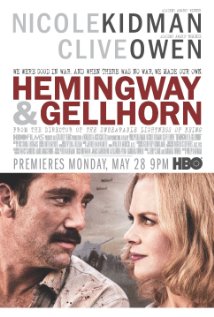
movie: Hemingway and Gellhorn (2012)

Many thanks to my gracious in-laws for DVR-ing this HBO special so that I could watch it later on. You know this was a high priority for me! We had a lovely evening, the four of us, enjoying this newly released film about Hemingway’s time with his third wife (the shortest of his marriages), Martha Gellhorn. Gellhorn met Papa in Key West while he was married to Pauline; their romance developed as they shared a common career as war correspondents. His marriage to Pauline ended just a few weeks before he married Gellhorn. While married to Martha, Hemingway wrote For Whom the Bell Tolls. During their barely four years of marriage, professional rivalry posed one of the couple’s greatest difficulties. Hem was not accustomed to having a woman challenge him in his area of expertise, and he handled it badly. They parted less than amicably, with Gellhorn doing the leaving (an unusual experience for the famous writer).

This film did an admirable job of covering this relationship. With just a few qualifying remarks, I can say I really enjoyed it.

The movie opens with Hem & Martha’s meeting in the famous Key West bar, Sloppy Joe’s. I was concerned, early on, because of the overly dramatic dialogue; Hemingway, I kept thinking, would never write dialogue like this. It was theatrical; every line could have ended a chapter (or served for a movie trailer clip). It was overwrought. But as soon as we met Pauline, I started to feel more at home. Pauline was exactly as I picture her. She played the hypocritical righteousness of the spurned wife perfectly. (Keep in mind, as Pauline demands that Hem be a faithful husband, that she stole him from his first wife, arguably in an even more shameful manner than Martha’s, since Pauline befriended Hadley en route to the husband-thievery.)

And it got better from there. I have to give Nicole Kidman credit: I wasn’t sure I could stomach her, not being a big fan; but she was great. Her acting was good and she communicated the Martha Gellhorn I know from the history books: spunky, competitive, impatient with Papa’s neediness and intolerant of his philandering (yes, there’s some hypocrisy again), an inexperienced journalist early in their relationship but later a real professional, and later still, dismissive of history’s desire to relegate her to (a famous quotation, used in the movie) “a footnote to someone else’s life.” (Hint: Hemingway is “someone else.”)

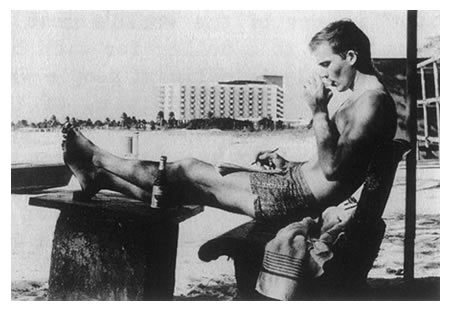
Clive Owen was acceptable as Hemingway, but I couldn’t feel him as Papa. Hey, I’m willing to allow that perhaps my own attachment to the character is strong enough to have created impossibly high standards. (Owens’s acting was perfectly fine, though. My father-in-law commented that Hemingway was a real drunken braggart asshole! To which I say, yes! He was authentically portrayed, as well!) I will say that I think Hemingway himself was handsomer than Owens, where Kidman has the opposite problem: she was, if anything, too beautiful, too glamorous, to be Gellhorn. Gellhorn was a lovely lady, don’t get me wrong, but Kidman is a knockout. See for yourself:
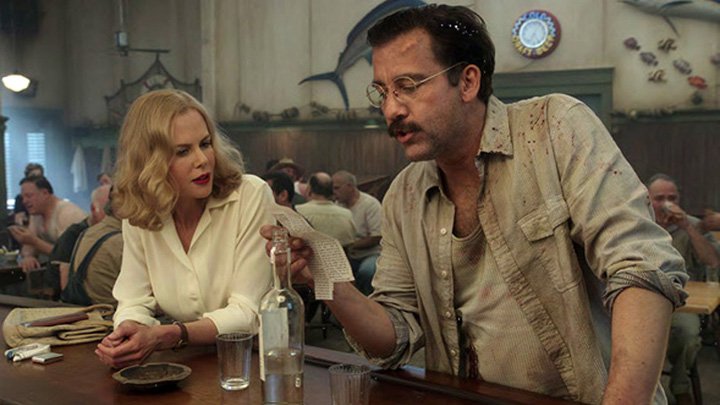
Clive Owen as Ernest Hemingway & Nicole Kidman as Martha Gellhorn
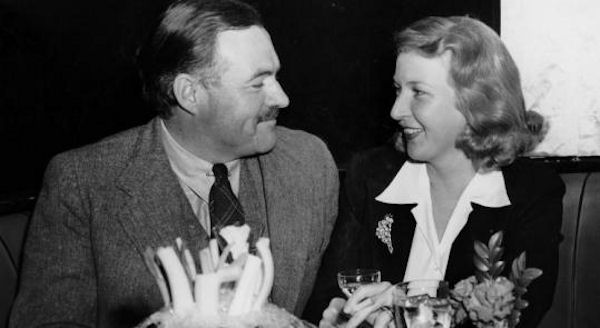
the real Hemingway & Gellhorn


While we’re discussing actors, I thought Parker Posey made a surprisingly perfect Mary Welsh. Who’d have thought? If you had told me who would play her role, I would never have believe she could pull it off – for one thing, look old enough! – but she was actually exactly the right person for that role. Casting director, I apologize for my skepticism.

I think the film’s strongest moments were definitely in Spain. The chronology goes: couple meets in Key West (overwrought dialogue abounds); they travel to Spain (lovely cinematography as well as great acting, great images, and – take note – fairly graphic sex); couple moves to Cuba and purchases the Finca Vigia, relationship starts falling apart; Gellhorn continues to pursue wars around the world, and the film loses just a little bit of its magic. Particularly when she visits Dachau and then Auschwitz and comments on the effect of those horrors on her psyche, I felt that it was handled too cursorily. Perhaps a film should not enter Dachau without investing the time, energy, and emotion that it deserves? That was a strange 30-second sideplot; it felt a little disjointed to me. By all means tell us about Dachau if it belongs in your story; but in that case take a minute to do it right. …This is really just a quibble, though.

Final scenes included Hemingway’s great descent into depression and craziness, and finally, his suicide. I had mixed feelings. If this is the story of Hemingway and Gellhorn, I’m not sure his demise really plays into it. But it was necessary, I suppose, to make sense of Gellhorn’s final remarks about his death 30 years past. Hemingway and Gellhorn’s deteriorating relationship felt accurately portrayed, and I liked the frame of an elder Gellhorn reminiscing the rest of the story for us, then going off back into battle. That part was accurate, too.

I wondered many times whether I was seeing real, authentic, historic footage of various scenes from the various wars depicted. I feel confident that at least *some* were authentic; but I doubt my own ability to draw the line. This is high praise.

I think one of the things it is easy to misunderstand, when watching a movie about Hemingway (this is true of Gellhorn, too), is that his life really was that wild, adventurous, exciting, dangerous, and filled with big names. He really did bully John Dos Passos that unrelentingly, and they really were friends (sort of, in the way men could be friends with Hemingway) through it all. The most outrageous parts of this film were perhaps the truest parts.

Recommended!

movie: To Have and Have Not (1944)

The Howard Hawks movie To Have and Have Not is based loosely on Hemingway’s novel by the same name, which received a lukewarm-at-best reaction from critics. Faulkner was involved in working on the script, making this a pretty literary movie; add to this mix Humphrey Bogart, fresh off the success of Casablanca, and throw in Lauren Bacall’s first movie appearance, and you have a hell of a recipe. Bacall & Bogart met on the set, developing the on-screen chemistry they would be known for, and the off-screen romance that would end Bogart’s marriage to Mayo Methot so that he could marry Bacall.

And Bacall at 19 is a formidable screen presence. It was hard for me to believe her age – although, as Husband pointed out, 19 was a little older then than it is now.

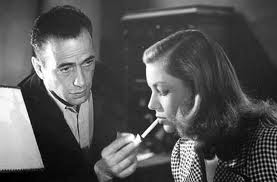
she lights a cigarette for him...

The plot resembles that of the novel, but with a number of changes. The two agree: Harry Morgan (Bogart) is a charter fishing boat captain, accompanied by his drunken mate Eddie. A customer named Johnson has just walked out on his bill after fishing with Harry for several weeks, which financial hardship leads Harry to reluctantly take on the smuggling of illegal passengers onto his island. From here, they differ. The novel’s Cuba becomes the movie’s Martinique, under Vichy rule, just after the fall of France. The Chinese passengers in the novel become a French resistance couple in the movie; and most importantly, Bacall’s character is wholly a creation of the film. Harry’s family life in the book is quite different.

he lights a cigarette for her...

Bacall’s character is Marie but we know her as “Slim” (and she calls Harry “Steve,” for reasons I never grasped). She has shown up in Martinique alone and broke, and immediately she and Harry feel an attraction to one another. She sort of hangs around as Harry’s drama with the French develops. He goes ahead and transports the resistance fighters, out of financial necessity but also out of friendship with hotel owner “Frenchy.” The local Vichy government harasses him for his apparent sympathies. When one of his illicit passengers is shot, he is reluctantly convinced to play doctor, involving him momentarily with the French wife, which makes Slim jealous. Slim briefly takes a gig singing in the hotel lounge, giving us one great scene. Harry has a sweet, not entirely explained loyalty to the drunken Eddie; things wrap up with the three – Harry, Slim and Eddie – about to sail into the sunset together.

Not surprisingly, I was a little disappointed to not find a little more Hemingway in the movie, but that didn’t last long. To Have and Have Not is a snapshot into a moment in film history with iconic stars, smoldering romance, and likeable piano-playing sidekicks. It was very enjoyable.

more movies

We’ve been watching a few more movies; thought I’d share them with you here.

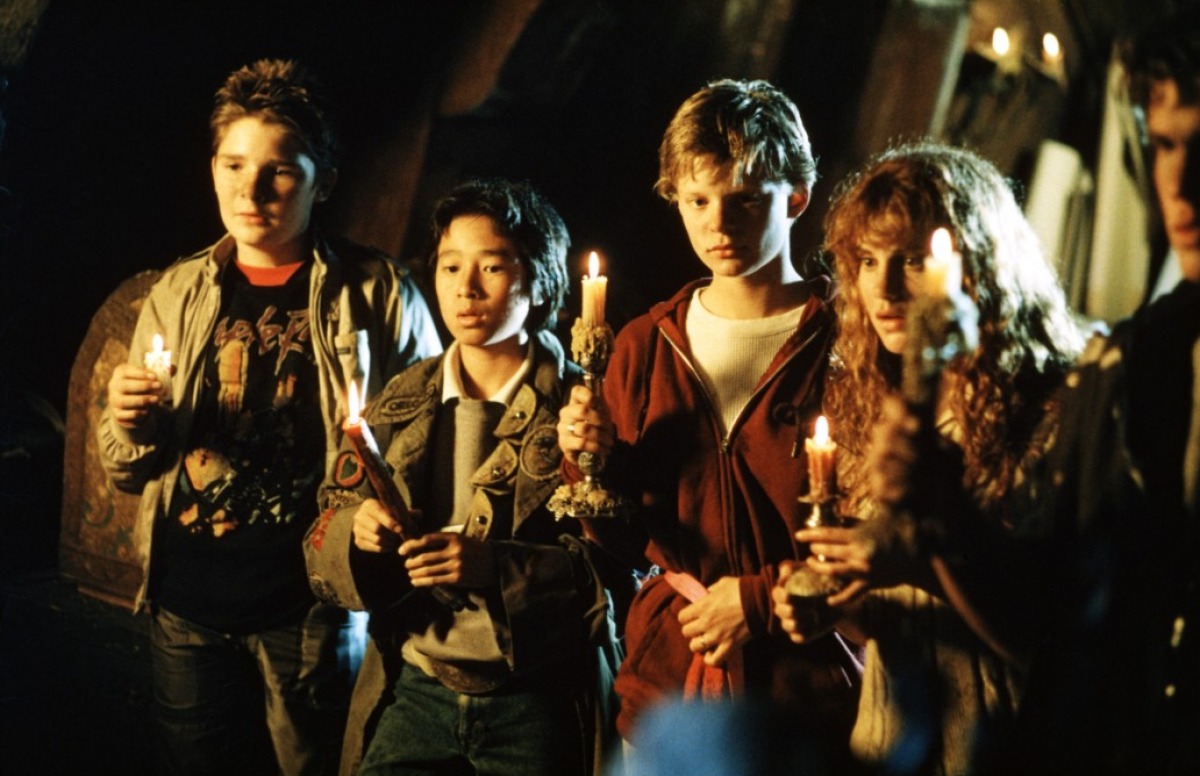
First off, I finally got around to seeing The Goonies (1985), a childhood classic that passed me by. (I may have been a few years too young; also not absolutely in touch with pop culture.) It’s a kids-to-early-teens movie, and when allowances are made for the target audience, it’s really pretty fun. It reminded me of The NeverEnding Story (a childhood favorite of mine), for its imaginary-coming-true element. The premise is that everyone who lives in the “goondocks” are about to have to move; their homes are being bought out from under them (mortgage issues contributing to the problem) to build a golf resort. The kids are naturally bummed; and finding a treasure map in Mikey’s attic offers a natural solution. Mikey and his three buddies, chaperoned by his older brother Brand and eventually joined by two girls Brand’s age (for the romantic element), set out looking for lost treasure. To get there, they’ll have to wrangle with the Fratellis, a slapstick mother-and-two-sons crime team. (There’s a delightfully peverse lesson in family values there I think.) I love that the kids got a chance to save the day! And I love Data. How cute. I like his opening sequence when he enters through the screen door. 🙂 Anybody else remember this one fondly?

Next, Hanna (2011) recommended to me from Jimmy. Hanna is a teenager living in the back of beyond somewhere (did we ever learn where? it’s arctic). She barely remembers her mother, and has been raised by her father without other human contact; he teaches her to fight, to hunt, to survive; everything else she might need to know comes from an ancient encyclopedia. He’s also given her a false identity; she has her home address, school, and the names of her dog and two best friends memorized. Early in the movie they begin considering whether she is “ready”; Dad digs up the black box, they flip the switch, and get ready for all hell to break loose. I won’t tell you any more.

I really enjoyed this movie, but I regretted a few things. For one, I thought the early part of the movie – when it’s just Hanna and her father in the bright white arctic wilderness – was the strongest, and regret that we didn’t spend more time there. And the premises of the world out there that Hanna eventually enters weren’t as fully developed as I’d have liked. If this had been a book and not a movie we might have fleshed out the concepts a little better. Call this a flaw of the format, maybe. At any rate it was definitely worthwhile.

And then one of the westerns loaned me by Catherine & Bill during my post-surgery laid-up time: The Outlaw Josey Wales (1976). I wasn’t sure this would work for me, as westerns seem to be one of the genres that fail to penetrate my thick skull (cf. The Good, The Bad and the Ugly). But with the volume turned way up (Clint Eastwood had marbles in his mouth, no?), Husband helping me keep up, and a few rewinds, I followed this one fine, and found it quite entertaining. Maybe I’ll have to give a few more Eastwood classics a try. With subtitles?

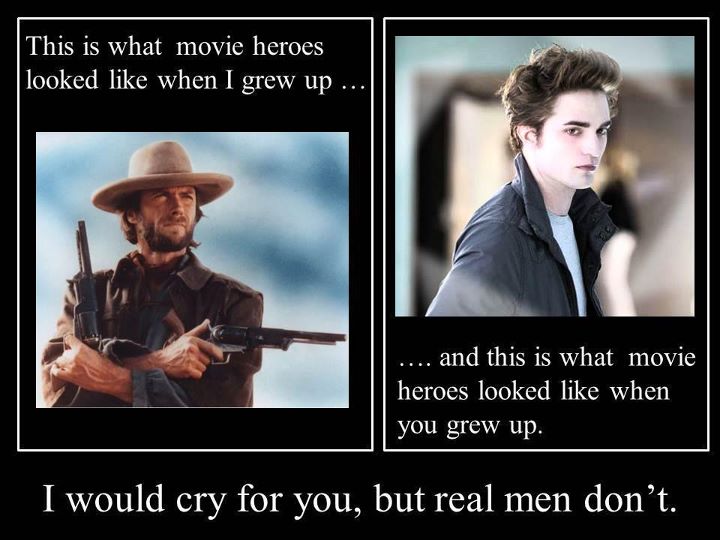
PC it’s not, with the Indians and all, but Clint is a tough guy and I gotta say, I eat that shit up. (Jack Reacher, anyone?)

A friend posted this the other day and I have to say I find it apt and amusing…

(Sorry, Twilight fans. Wait, that’s the guy from Twilight, yes?)

a couple of movies

During my week home from work recovering from knee surgery, I mostly read books, but I also watched more movies than usual. You’ve already most likely seen my Gone With the Wind movie review; here’s a quick run-through of a few more.

Mary and Max (2009): Recommended by my buddy Barrett, this animated movie is about a little Australian girl and an older Jewish New Yorker who become pen pals by chance and possibly save each other’s lives. Sad, yes, but also cute and heartwarming by turns. I really enjoyed the animation; it’s either Claymation or a fine computer-done imitation thereof.


Boogie Nights (1997): Lent to me by Laurissa & Drew, because I ❤ Mark Wahlburg. Wahlburg is a youngster in the 70's when he's spotted by a big-time artsy porn director who helps him make it big (ha) as porn star Dirk Diggler; but the sex-and-drugs lifestyle may prove too much for him to handle… Most of it was great fun and sexy times, but in the (unavoidable) spirit of movies like Blow and Studio 54, everything goes rather to sh*t. I ended up a little bummed out.


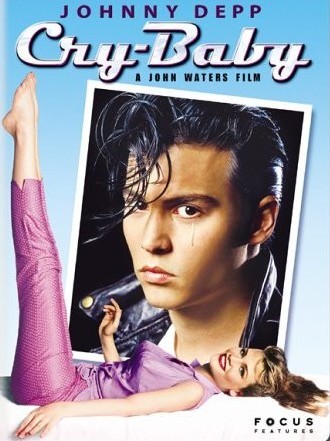
Crybaby (1990): Johnny Depp stars in a John Waters film that borrows a little from Grease and a little from Rebel Without a Cause. Depp is Crybaby, one of the bad boys, but one of the good girls is attracted to him; cue story book, with all the 50’s hair and leather and rockin’ tunes. Good fun, if quite weird.


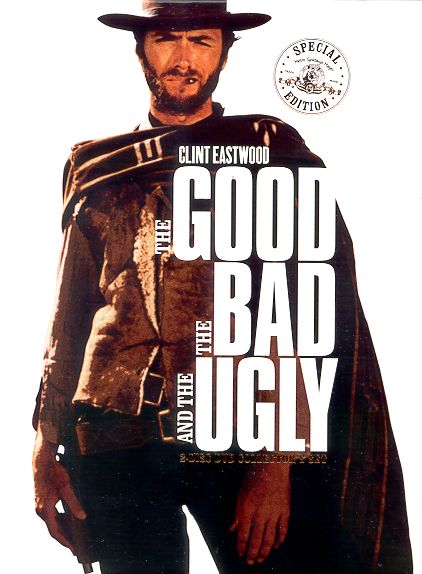
The Good, The Bad, and the Ugly (1966): I confess: I put this on too late at night, while I was on pain pills. So, maybe it was partly me. I know this is a classic. It’s from an age when movies were paced quite differently (read: slooow) and I fell asleep; and even while I was awake I was failing to keep track of who was who. I wasn’t engaged. Further blasphemy: I’ve seen the Star Wars movies repeatedly and still can’t follow them. Similar failure to engage. Sorry. :-/


Funny, I didn’t watch nearly as many movies as I thought I would. I do have a towering stack of loaned DVD’s still sitting at home. We’ll see.

movie: Gone With the Wind (1939)

Well I finally got around to it. I think I was the last person alive who had not seen this movie; and having finally read the book just this year as part of the Great Gone With the Wind Readalong (thanks Erin!), and then being laid-up post-knee-surgery, what better time?

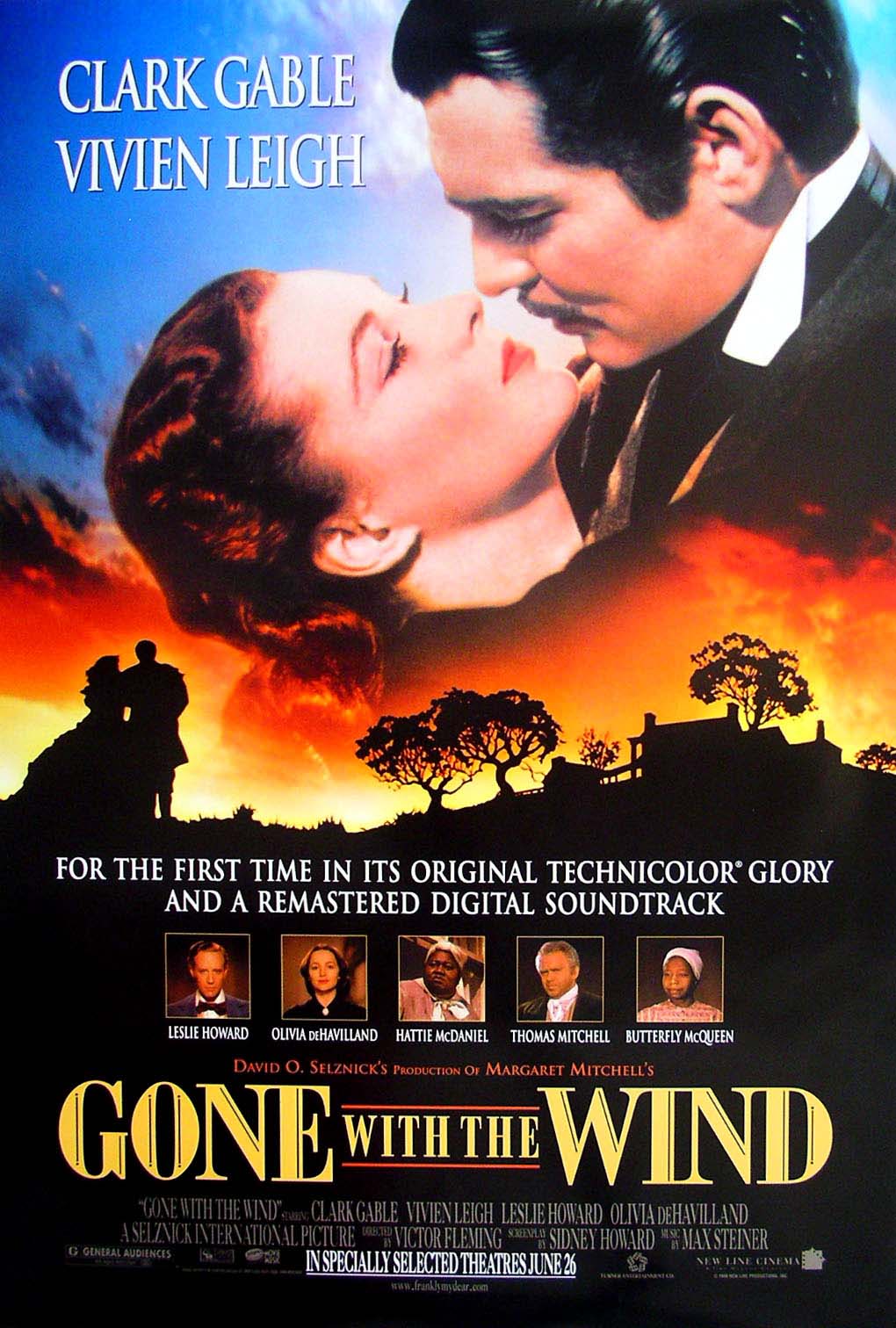
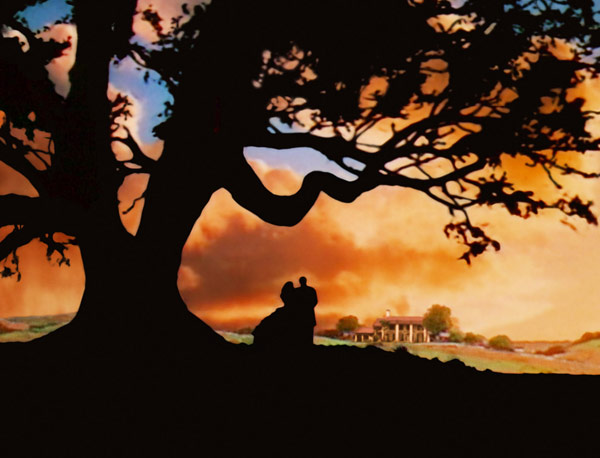
It’s certainly an amazing movie. The score and the cinematography were outstanding; dated, yes, but obviously classic and absolutely admirable even in late 2011. Vivien Leigh made a lovely Scarlett and Clark Gable made a perfect Rhett. If anything, I found Ashley an even more obviously weak man, and Rhett a more obviously handsome and preferable pick, onscreen. I loved the Technicolor! It was beautiful to look at. If I have some criticisms, they are only the obvious and unavoidable ones: even in an almost-four-hour movie, the format clearly doesn’t allow for the inclusion of ALL of Mitchell’s 1000 pages of details. (This is why I always struggle with movies made from books. I am attached to ALL those details.) But to be fair, the movie did a pretty wonderful job of sketching the book in broad strokes; they included just about all the important bits. And if they sometimes felt a bit rushed-together – Scarlett makes her “I’ll never be hungry again” speech immediately upon reaching Tara, giving it less power than it had in the book, after months of suffering there – this method did give the movie the same epic, sweeping, long-time-line feel that the book had. I thought it was awfully well done, considering the obvious limitations of the format. The most blatant exclusion, for me, was Scarlett’s two children from her first two marriages. But maybe this just underlines how important poor little Wade and Ella weren’t to Scarlett in the book!

love the Technicolor!


The greatest divergence from the text, and the only one that really bothered me, was Rhett’s constant declarations of love. The great drama of the book is arguably Rhett and Scarlett’s failure to connect their love for one another in time and space, their passing as two ships in the night, their missing of the opportunity to share their love. Without consulting my text, I’ll venture that Rhett never declared his love, in fact denied it, declared he’d never love Scarlett, until it was too late. This changed things somewhat in the movie and bothered me some. (This is why I mostly avoid movies made from books; they disappoint me.) But you know? It didn’t ruin it for me. This was a beautiful and enjoyable movie.

Poor Melanie’s plainness was emphasized clearly enough; she definitely had some bags under her eyes here and there. The slaves were played as fools in a way that I found faithful to Mitchell’s work, which is also to say kind of cringingly offensive to my eyes today. Rhett was a dish. Ashley was a bore. Melanie was sweet; Scarlett was impressive, powerful, beautiful and conniving; Mammy was a nag, and Ellen was grand. And before I neglect, let me also say, I thought both Tara and Atlanta were very well-done, despite receiving very little attention in the movie compared with the book. We get a few shots of Atlanta as (respectively) booming, powerful, covered in dead and dying troops, crumbling and burning, and being rebuilt, which painted Atlanta-as-character very effectively in very little screen time.

If Gone With the Wind, the book, was a masterpiece – and I say it was – Gone With the Wind, the movie, starring Vivien Leigh and Clark Gable, was every bit a masterpiece in its own right, and surprisingly faithful to the book. I’m impressed. It was a fine way to spend a few hours. If there’s anyone else out there who hasn’t seen it yet, I recommend it.

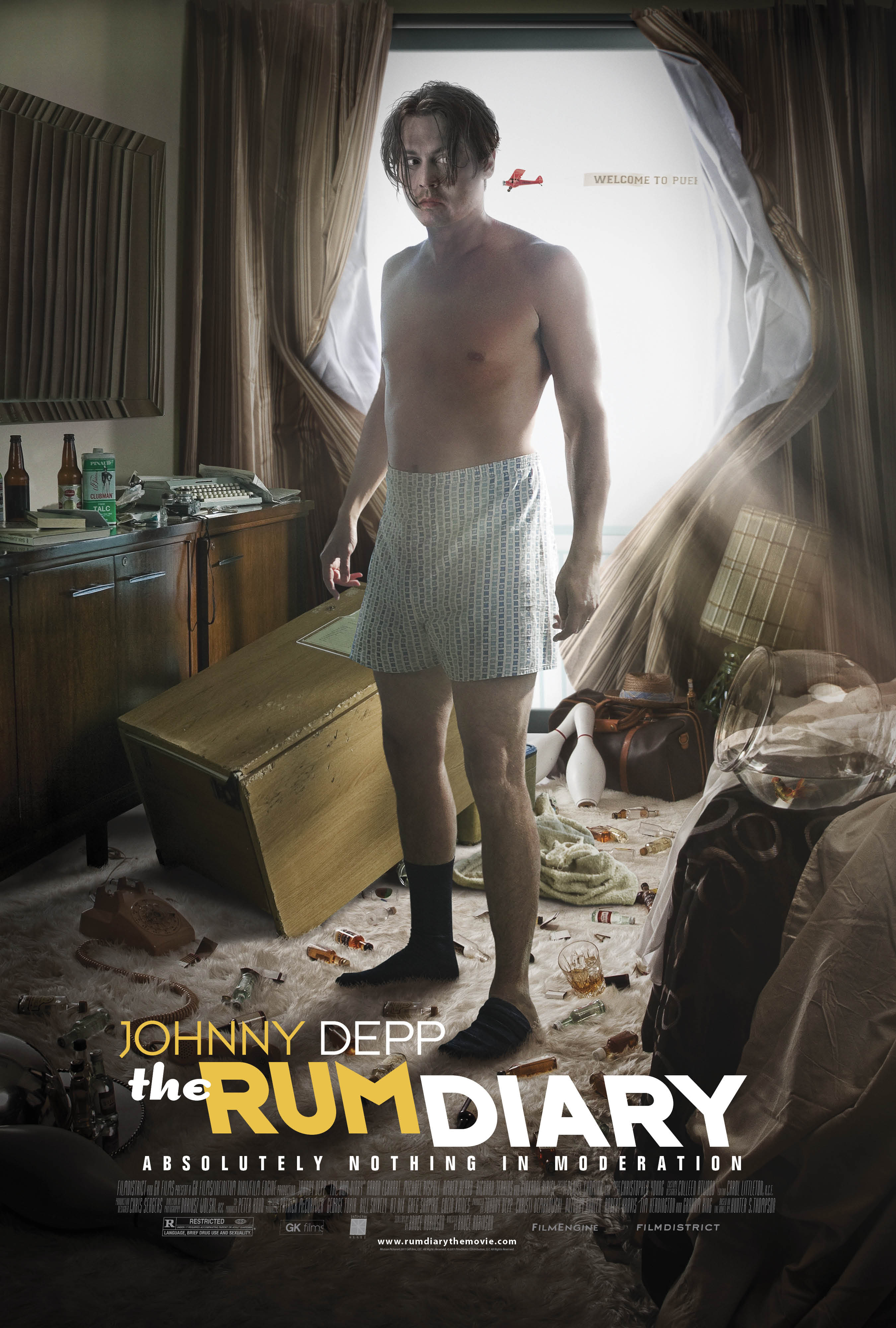
movie: The Rum Diary (2011)

I went with my friend Justin to see The Rum Diary, starring Johnny Depp and based on the novel of the same name by Hunter S. Thompson. My experience with Thompson is woefully limited; I’ve seen Fear and Loathing in Las Vegas, and that’s all. I feel like I should have read him by now, and maybe someday I will.

Based on that one other Thompson experience, I’ll say that the movie was absolutely recognizable as coming from the same mind; the mood is a rambling, drunken, drugged, yet often profound rush through life with relatively little concern for peripheral consequences. Paul Kemp arrives in San Juan, Puerto Rico to start work at a newspaper there. He’s trying to be a novelist but failing so far; he hasn’t found his voice. Kemp finds it easy to drink & drug with his new friends there. His new boss is not interested in the human-interest, social-justice, exposé-style stories he tries to write. And a new acquaintance wants to hire him to write promotional materials for real estates ventures that will result in the defiling of yet another island of virgin Caribbean paradise. Kemp is not interested in this work; but he’s very interested in the man’s girlfriend.

Kemp and friends get themselves into scrapes; they get arrested, party at Carnival (a Caribbean version), battle the establishment. It’s a story of redemption as well as of drug-addled hilarity. This is a very funny movie. (Look out for the scene involving the operation of a car missing its front seat.) It also offers some serious moments, and seriously cynical ones. My movie date Justin knows Thompson much better than I do, and he feels that this autobiographical work of fiction was a sort of mission statement for the writer. Kemp eventually finds his voice, and I think we can probably agree that Thompson did, too. I thought it was a very good movie; very funny and also very serious and thought-provoking and sad. Also, Johnny Depp was absolutely the perfect choice for the role of Paul Kemp. His wildly expressive, comical face was just right for the character and the movie, and all it had to say.

Hunter S. Thompson: this photo is on the cover of the book

different strokes

I’m a big reader. Always have been. I’m pretty sure that our fate as readers – either joyful, voracious readers or reluctant ones – is set firmly in childhood. Those who learn to read hungrily as kids will know how to read hungrily forever – they may get too busy to do it right all their lives, but they can always return to such behavior, and I hope they will. Those who don’t learn to really love reading as children are unlikely to ever learn the same abandon in hours (and hours) of reading later. I’m sure there are exceptions (I certainly hope there are exceptions, to that second part of my theory) but I think this is generally true. I am a reader. Husband is not. He reads magazine articles, sometimes. He has read one book that I know of in our years together. But recently we discovered an ability to share an audiobook on a long drive, and I find this lovely. These days he asks for audiobooks when he’s going to fly somewhere for work. I feel so good about helping him find a way to appreciate books.

So the other night I’m on the couch, as usual, and Husband is on the loveseat, as usual, except NOT as usual, I don’t have a book in my lap to defend me from the television. Rather, I have a laptop and I’m researching a few beers that Husband has expressed an interest in: the black IPA (made by 512 brewing, as it turns out) and what I remembered as the Belgian IPA which turns out to be the BPA – Belgian pale ale – made by Ommegang (as I thought). And I look up and see this crazy whatnot that Husband has on the television and I say, what movie is this? and he says, it’s The Bone Collector. I say gasp! that’s a book! it’s a book by Jeffery Deaver.

This reminds me of that other day when I said gasp! oh boy, the Odyssey on audiobook, how wonderful. He said, Space 2001? I said, Homer!

I’ve never read any Deaver, although I certainly know of him (through the library where I work) as a genre author. I know his serial detective is Lincoln Rhyme. But I didn’t know until I caught this movie that he’s quadriplegic! The movie was quite good – I watched a good chunk of the middle part of it. All-star cast includes Denzel Washington (Rhyme himself), Angelina Jolie (of whom Husband is not a fan), Queen Latifah, and Luiz Guzmán, who I like very much. (I always remember him fondly from Punch-Drunk Love.) I think I might pick up one of Deaver’s books one of these days.

But my real point here is that while Husband and I approach books from very different starting points, we both still see books in our lives. (He’s seen a lot more books in his life since his wife became a librarian.) And I think that’s a beautiful thing. Even if my beer research and his television watching made up our route to books on this particular evening, it’s the destination that’s important.

guest review: movie: Midnight in Paris, from Mom (2011)


A new guest reviewer! I asked my mother to share her thoughts about the movie we saw together, initially thinking she could help me develop my own review; but I think she merits her own post here.

Paris is sweet and softly lit in the late hours of the 1920’s, but the hard truth of the present is clear. The plot of Midnight in Paris concerns a trip to Paris by our hero with his fiancé and her parents – a family of snobby rich American tourists who don’t like Paris most of the time – like when it rains – and focus mostly on shopping. The story has our hack Hollywood writer dreaming of the pure Paris artistic air and following the path of Hemingway or Fitzgerald. He wanders the streets at midnight, and gets in a taxi to the twenties.

Woody Allen’s twenties Paris is a spectacle. It’s a fun romp, and adorable. What fun it must be to put together the words of the great Americans who were there in the bars and Gertrude Stein’s salon. He throws out the lines and the audience laps it up, especially the fun poked at Papa.* We share the lives of these artists who didn’t know where they were going, didn’t know that they lived in the Golden Age, and it’s our lovely secret. It’s also the secret of our hero, who is clearly the alternative Woody Allen. He tries to milk his opportunities, getting advice from Stein, schmoozing with the Fitzgeralds, and romancing Picasso’s girl. He even considers staying, but we’re a bit hopeful that he might grow up.

Salvador Dali is a grand character, super-mustachioed and enigmatic. Hemingway is larger than life – but isn’t that what he really was? Cole Porter appears, and Zelda and Scott Fitzgerald are all that they must have been, gay, charming, and ready to dash off at a whim, probably into the abyss. Luis Buñuel gets a film concept from his own future, through our hero/fan. Gertrude Stein rules her salon and there is no doubt that she’s the regent.

It was never going to work out for the couple, and if this is a spoiler, you’re missing the gorilla in the bedroom. It’s a little silly that this innocent was ever attracted to the scolding fiancé we see. The plot is obvious, but we’re here for the fun. Paris is every artist’s dream and muse; we love those dreamers who sucked up life when it was at its best. There’s a carpe diem moral here, and idealism waiting to be tested. Also just good looking.

*I think this is a poke at me, too. I was eating up Papa’s lines – yes ridiculous, but true to life! I may take him too seriously. 🙂

Thanks Mom, you did it beautifully.

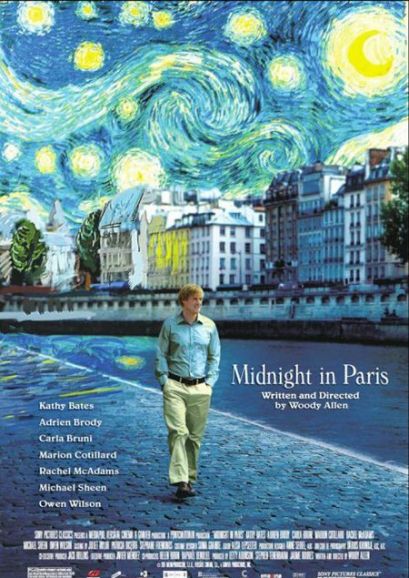
movie: Midnight in Paris (2011)

EDIT: You can check out my mother’s review too here.


I saw this one weeks ago; I don’t know what’s taken me so long. Maybe I was up too far past my bedtime in order to see it, and lost it in my dreams. It was a lovely night out with my mother (while Pops is off traveling the world) and a really delightful movie; we both enjoyed it very much.

You’ve heard of this one. It’s the Woody Allen movie in which Owen Wilson takes on the Woody-role, a young man named Gil, traveling in Paris on business, who wants to sink into 1920’s Paris and finally write his novel. His materialistic and unsympathetic (in both senses) fiancé, Inez, thinks this is ridiculous; she wants him to hurry up and get back to making oodles of money writing the Hollywood scripts that he feels are soul-killing. Amid his dreaming about the perfection of interwar Paris, with its meeting of literary and artistic minds, Gil finds himself actually transported there via vintage Peugeot. He plays and parties with Hemingway and the Fitzgeralds, gets his manuscript reviewed by Gertrude Stein, and takes on Pablo Picasso as a romantic competitor – among a flurry of other storybook meetings.

Corey Stoll as Hemingway

I bet you can guess what got me in the door for this one. That’s right, Hemingway. I’m so easy. 🙂 Really, though, it was a remarkable little journey through time and space. The introductions to various famous artists were thrilling; the romantic mood was dreamy. After putting in our time with the obnoxious fiancé, we get to see Gil find romantic satisfaction in the end – it’s a classic romantic comedy in that sense, but it’s so much more. It’s a poignant statement about nostalgia, with each generation or era longing for another. And it’s a charming jaunt, a who’s who of 1920’s artists. For me, it was something of a wake-up call, too, to the fact that my knowledge of this era is built around my Hemingway obsession: I knew the famous names more or less only as they relate to Papa, sigh. I should be better educated. Oh, and I thought the Fitzgeralds were rendered very truthfully (to the best of my knowledge) and really very charmingly, in their own insane and endearing way.

Overall a dreamy and very pleasant adventure. If more movies made me feel this way, I would go to more movies.

movie: The Lincoln Lawyer (2011)

I didn’t let being sick stop me! I made the Husband take me to a movie Friday night! So I saw the first Michael-Connelly-book-made-into-a-movie on opening night! This is especially momentous because the Husband does not Do Movies. This is the second movie we have seen together in a theatre. (He has a slightly higher tolerance at home on the couch. Like maybe 10 movies, ever.)

It was pretty great! I was excited, because it’s Connelly, and it’s a great story, and I thought McConaughey had some potential as Mickey Haller. (I hadn’t thought of Haller as being quite that pretty, myself, when I read the book, but I was open.) But I was also concerned, just as in reading The Paris Wife (which I loved! did you notice?), because I love Connelly and the movie is never as good as the book, and there was a high risk of disappointment.

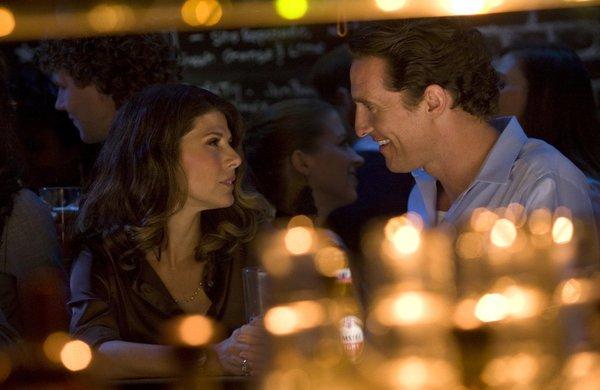
cute Maggie McFierce

But I liked it! Yay! (The Husband did too. Remember he’s a part-time Connelly fan.) Of course, being a two-hour Hollywood movie, it cut significantly from the book. I was tolerant. It stayed with the feel of the plot; Haller was a baller, and his being pretty worked, and I thought Marisa Tomei was the CUTEST Maggie McFierce. It was enjoyable. Was it a Connelly novel? Heck no, but it followed his atmosphere, and I enjoyed it. And then I went to bed.

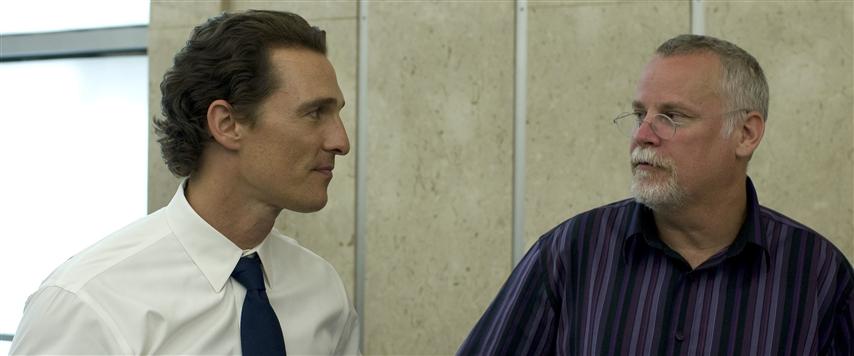
McConaughey with Connelly

I wonder if maybe he sold that book for a movie, first, to see how it would go, rather than any of the Bosch series. I figure once he releases Bosch to the big screen, he will have committed, and will have to let them keeping making Bosch, for better or worse. Which led to a question: who do we like to play Bosch? Anybody? The Husband had an idea, but I didn’t know the actor so it hasn’t stuck in my head. I have no ideas because I’m not very good at Hollywood. :-/ Please share! Who is Bosch? I see him as being stout and muscled, not terribly tall, with dark hair, and weathered by violence and stress, but still a touch ruggedly handsome while NOT being pretty. Who is this?