Teaser Tuesdays: Something Rising (Light and Swift) by Haven Kimmel

Teaser Tuesdays is a weekly bookish meme, hosted by MizB of Should Be Reading. The idea is to open your current read to a random page and share a few sentences. And try not to include spoilers!


somethingrising

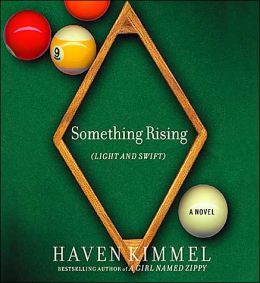
I came across this audiobook as I sometimes do, with audio, entirely by accident. I was not familiar with the name Haven Kimmel. It turns out she’s the author of A Girl Named Zippy – a title that rings a bell but still doesn’t tell me much. So I am very pleasantly surprised to say that I love this book and hang on its every word. For example, a phrase like this:

The sun was a violence against Cassie’s back. Sweat ran toward her eyes.

The sun was a violence. That is attention to word choice, my friends. And the sweat didn’t run into her eyes, but toward them. It implies more motion this way, somehow, the suspense of whether the sweat will actually get into her eyes or if we’ll see some action to interrupt it. It’s attention to detail like this, along with an engaging storyline, that hook me. I hope you’re enjoying your reading this week, too!

Still Alice by Lisa Genova (audio)

stillaliceI have a favorite book of the year so far, you guys. Still Alice is one of the most remarkable books I’ve read in some time. I enjoyed Lisa Genova’s second novel, Left Neglected, very much. (I listened to that one as an audiobook, too.) But Still Alice gripped me from the first lines, and never let me go – I was riveted. Let me tell you more.

The two books have more than a few threads in common. Both feature married women, with three children, in male-dominated fields with all the requisite toughness and work ethic but also with plenty of feminine soft spots, struggling to reconcile the two; both live in Boston. One could easily surmise that these are attributes shared by the author, a Harvard-educated neuroscientist-turned-novelist. Where Sarah of Left Neglected had young children, though, Alice Howland has grown children: one lawyer trying to get pregnant, one doctor just finishing his medical training, and one relatively wayward daughter who has scorned college in favor of acting. Alice is a Harvard professor of psychology, and her husband John is also a Harvard doc, working with human cells & a possible cure for cancer. She is nearing her 50th birthday when the book opens, and shortly after it, she is diagnosed with early-onset Alzheimer’s disease. The story is concerned with the progression of her disease, the changes it wreaks on her life and the lives of her husband and three children, and their struggles (independently and as a family unit) to handle these changes. It is also centrally about Alice herself, as a person, what Alzheimer’s does to her and her reactions & dealings with that disease. Again, the author is a neuroscientist, so while I (thankfully) don’t have any experience with Alzheimer’s disease by which to judge this portrayal, I trust Genova’s ability to tell it truly.

I became deeply engrossed in this story from the very beginning. Although told in the third person, we are very much inside Alice’s head (call it third person limited, for which I like this explanation because of the example chosen!). Alice felt very much like a real, flawed-but-likeable person. I was occasionally exasperated with her choices: to fight with Lydia over her acting career, to fail to appreciate her, and to put off telling her husband about her diagnosis. But I always sympathized, and liked her throughout. I would like to spend a day or a week with this woman. In fact, in telling Husband about this story as I listened to it, I referred to her as my friend. This is not something I normally do with fictional characters.

I was deeply emotionally involved. If I was angry with Alice for not telling John she had Alzheimer’s right away, I was even angrier with John for his reaction, and his repeated failures to be supportive. I wanted to cry when they began considering their future. And I did cry, often, as the disease progressed and Alice’s family was – still flawed and imperfect, but earnest and effortful and loving in their handling of these events. I hope it’s not too much of a spoiler to say that I was charmed by the silver-lining aspect, where Alice’s relationship with Lydia grew stronger in this time of sickness. I pondered whether it was a bit too fictional-happy, to insert such a silver lining, and decided it wasn’t.

This is a sad story, certainly, and I cried more than a few times. (I finished this book in the gym, and it took great effort not to weep on the elliptical machine. What would people have thought?) But there is love, and hope, and strength; Alice keeps a certain dignity that made me love her more as she got sicker. I can see how this would be a painful read for someone whose own life has been affected by Alzheimer’s, but I’m inclined to think it might be worth the pain for the beauty it expresses.

If you’ve read the book or don’t care to, highlight the white text to read my spoiler-y discussion below; but if you intend to read this book, don’t.

I was saddened by Alice’s decision to plan her suicide, but I respected it. When she got so sick that she couldn’t execute her own plans, I found that sadder still. I wondered a little at Genova’s decision to end the story the way she did, with Alice fading into gray; I would have liked to know her final fate, when and how she died, whether John moved her to a place she never wanted to be (a “home,” or New York), but I think this way was for the best. That fade-to-gray is probably most like the end of Alice’s own understanding of things – most like Alzheimer’s disease.

Unlike Left Neglected, this book is read by the author, and when I heard that I was thrilled, because my author-narrated audiobook experiences have so far been 100% wonderful. Still Alice is no exception. Genova’s goodreads page tells us she’s an actress as well as a neuroscientist and novelist, so perhaps it’s no surprise that she delivers her characters feelingly (or that she wrote a lovely, passionate actress character into this book). For the record, I really enjoyed the audio reading of Left Neglected, too, but I would never pass up an author-read version, and highly, highly recommend this audio version of Still Alice.

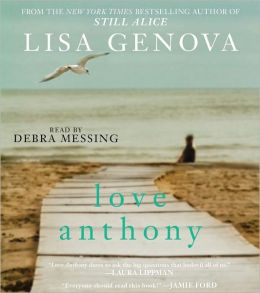
This is without a doubt going to make my list of best books read in 2013. I am so relieved to see that Genova has a third novel out already, Love Anthony, and is working on a fourth – whew! I can’t say enough good things about this book. I love Alice.


Rating: 9 thingies.

movie: Lonely are the Brave (1962)

Here’s another movie I made a point to find after reading the book. Very few of Edward Abbey’s books have made it into film. His most famous novel, The Monkey-Wrench Gang, has been optioned repeatedly but appears doomed to never grace the silver screen, owing (I think rather obviously) to its anti-establishment themes: no Hollywood mogul would involve himself in something so sacrilegious. But The Brave Cowboy was made into a movie starring Kirk Douglas in 1962. Here he is fighting a one-armed man with one arm behind his back in a raunchy saloon:

fighting

The movie is faithful to the book’s plot only in its actions, and not in its motives. The cowboy Jack does ride into town on his horse with the intention of busting his old buddy Paul out of jail; he does kiss Paul’s wife in the process; he does end up in the mountains fighting an archetypal battle against the sheriff and his men, complete with military technologies and sweeping vistas.

vista

It is, in short, a fine Western. What the movie version left out, however, is Jack and Paul’s past together as political protesters. There’s no mention of what Paul’s doing in jail in the first place (dodging the draft, and refusing to take conscientious-objector status), let alone their history in anarchist organizations and their shared hatred of The Man. That would be a little too much even for our Western hero, presumably: better that he be nostalgic about the days of horse and rider herding sheep, and not specifically interested in taking down the federal government. Can’t say I’m surprised. My final gripe would be that the sheriff, Morey, was not cast nearly as fat and bumbling as he reads in the book. At least they left in the taking down of the helicopter; that was fun.

This movie is a simplified and sanitized version of the better book upon which it was based; but that’s what I mostly expect from movies made from books. Some of the dialog seems to have materialized out of thin air, most definitely in the case of Jack’s monologue about being a loner – I suspect Abbey could have rendered such a scene much finer (and funnier) if he’d wanted it in his story in the first place. But it was still a fun romp alongside an Abbey-like hero, just dumbed down. I don’t regret my 90 minutes, but it sure is nice to dream about a proper movie made of The Monkey-Wrench Gang or the like. Sigh. Not a bad film, but not too terribly close to its literary origin.


Rating: 5 stoic grins.

Closing credits: thanks to my neighbor Adrian for helping me find this not-easy-to-find movie. You get a 10-star rating, Adrian!

The Brave Cowboy by Edward Abbey

bravecowboyThe Brave Cowboy was Abbey’s second novel, published in 1956. It introduces Jack Burns, the eponymous cowboy, who will reappear in a number of Abbey’s works of fiction hereafter. We meet Jack as he rides into town (somewhere in New Mexico) on his horse, grumbling in typical Abbey fashion about the military-industrial complex creeping across the desert wilderness he loves. He visits a friend, Jerry, and her son Seth, to ask about her husband Paul, imprisoned in city jail awaiting transfer to a federal facility for a two-year term for draft dodging. Paul and Jack, it turns out, share a past as anarchist opposers of the war in Vietnam. Jack hides two files in his boots and proceeds to get drunk and look at people funny at a bar; this leads, predictably, to his joining Paul at the city jail, where his plan can begin to take action.

Obviously, Jack is there to bust his friend out of jail. But Paul wants to take an ideological stand, points out that he turned himself in and debated the question of his “crime” purposefully, and intends to serve out his term, not least because jailbreaking would lead to a life on the run and negatively effect his family. Jack is disgusted, frustrated, and miserable in jail himself (being something of an archetypal wild creature that cannot be caged) and breaks out the first night, alone.

Local law enforcement follow Jack and his horse into the hills, bound for the wilderness where they will be unable to track him, ultimately (Jack hopes) to Mexico, or who knows where. No spoilers here.

Jack is a symbol. He is everything that is wild and untameable, and counter to the “civilization” (I think of Huck Finn’s “sivilization”) of city & town, military test ranges, factories, and regular baths. He’s rough-n-tough and (I imagine) everything Abbey dreamed of being. He and Jerry, Paul’s wife, share a moment of sexual tension that goes unexplained; I wonder if light is ever shed on this subject in other novels, or if it’s just a gratuitous moment of sexuality – otherwise absent in this book, unusually for Abbey. The manhunt scenes in the desert canyons are excellent, and reminiscent of those in The Monkey Wrench Gang (which Abbey wouldn’t write for another nine years). And the opposing symbol to Jack Burns, the sheriff Morlin Johnson, is an exquisite picture of everything wrong: he picks his nose and scratches his armpits, grumbles at his wife on the phone, is incompetent in every way; and yet, to Abbey’s credit, he retains some humanizing characteristics as well. For example, he struggles to control the enthusiastic manhunters, reminding them that their quarry is not a murderer and should not be shot on sight.

Literary critics, I imagine, could find points to contend over. The good and evil may be a little straightforward; Abbey never bothered with subtlety in his values. The plot is simplistic. But I don’t necessarily find these to be weaknesses. Jack Burns is an archetype, yes, but he’s a strong and entertaining one. I found the ending (still no spoilers!) powerful. Abbey’s highly realistic descriptions of natural scenery, man’s crude habits and strengths and weaknesses, campsite routine, and urban decay are among the best I’ve encountered. Jack’s horse, Whisky, and the relationship they share were a charming addition. While not complicated in form or message, I found The Brave Cowboy to be an excellent read, and a fair representation of Abbey’s work.

Connections…

This book was adapted into a movie called Lonely Are the Brave, starring Kirk Douglas, in 1962, and I will now be seeking that out.

Also, a later Abbey novel called Fire on the Mountain (which I reviewed, and enjoyed) shares an ambiguous connection. The little boy in that book is named Billy, and seems to be the wrong age to grow up to be Jack Burns. But they share the same grandfather, whose ranch meets the same fate in each telling. Abbey wrote Fire later, and I have no explanation for the disjointed connection between the two stories. Are Billy & Jack brothers? Cousins? Mismatched versions of the same man, early & later in life? I am intrigued.

Another great Abbey novel. Luckily, like Hemingway, Abbey is on the one hand dead and no longer writing, but on the other hand, was prolific enough in life to keep me stocked for the time being. Keep ’em coming.


Rating: 7 stoic, unshaven stares into the middle distance.

Teaser Tuesdays: The Brave Cowboy by Edward Abbey

Teaser Tuesdays is a weekly bookish meme, hosted by MizB of Should Be Reading. Anyone can play along! Just open your current read to a random page and share a few sentences. Be careful not to include spoilers!

bravecowboy

I can’t tell you how happy I am to be reimmersed in Edward Abbey. For today’s teaser, I’ve chosen a crudely-stated bit of philosophy that I enjoyed, uttered by an unnamed character in a jailhouse scene:

Serenity is for the gods – not becoming in a mortal. Better to be partisan and passionate on this earth; be plenty objective enough when dead.

Something about this sentiment struck me. I like the idea of being partisan and passionate on this earth. Maybe because I am. 🙂

book beginnings on Friday: Strangers on a Train by Patricia Highsmith

Thanks to Rose City Reader for hosting this meme. To participate, share the first line or two of the book you are currently reading and, if you feel so moved, let us know what your first impressions were based on that first line.

strangers

I’ve been waiting for some time to get around to this one, and I love the mood and foreboding atmosphere established in the opening pages.

The train tore along with an angry, irregular rhythm. It was having to stop at smaller and more frequent stations, where it would wait impatiently for a moment, then attack the prairie again. But progress was imperceptible.

The personification of the train is very effective. Angry, impatient, attacking. Good stuff!

did not finish: Gold by Chris Cleave (audio)

You might recognize Chris Cleave’s name from the significant success of his 2009 bestseller, Little Bee. I did not read that one. But his new book, Gold, appealed to me: for starters and most obviously, it stars two female Olympic track cyclists. This is a rather obscure sport (particularly in the US) that I have competed in. Also it came recommended to me personally. Of course I was going to give it a go.

Hm. I wanted to like this book, for its subject matter if for nothing else. But there are two flaws in that thinking: first, subject matter alone rarely makes for an enjoyable read. Just because a book is about baseball won’t necessarily do it for a baseball player or fan. Secondly, as it turns out, I was too close to this sport. I’m sure Cleave did some research – he had some terms and concepts down, certainly – but he made several errors of inaccuracy that I believe are due to track cycling’s obscurity, and the public’s low awareness. These errors will go unnoticed by a large percentage of the average readership. In this respect I’m far from the ideal reader: I’m so close to the sport that I spot the errors and to me they are egregious. They rankled.

Unfortunately that’s not all that bothered me about this book. I found the characters to be a little one-dimensional (all good, all bad) and unbelievable. Really, the Olympic gold medalist is also model-gorgeous and could make a living posing for photographs?? Come on. (Okay, I guess there’s always Lolo Jones…) And the dialog was stiff, too. Particularly the parent-child dialog: every conversation was a heart-to-heart. I don’t think children really open up and get earnest and profound every time they talk to their parents (at any age). It didn’t feel real, because there were no mundane moments. And here’s the final kicker, fair warning to any who may be sensitive to such things: there is a (fairly central) little girl with cancer. That was a bit much for me personally, considering that I work full-time at a cancer hospital and therefore see enough of this. Just a personal reaction.

I made it a little better than halfway through this book, which sort of surprises me. I was certainly frustrated, annoyed, exasperated with it much earlier than that: in fact, I can pinpoint it for you. I was impatient with the first chapter’s interactions between Zoe and her coach, Tom; but I was really annoyed for the first time on page 11, when Jack relates that Zoe has won her first sprint and he has to get off the phone because her second is starting. The second ride of gold-medal round sprints should follow the first by more than an hour; putting them right back-to-back like that is completely unrealistic and was the first sign that the reality of track cycling would not be taken too seriously in this book.

But I made it past halfway. Why? I’m not sure. I was hoping it would get better? I cared what happened to the characters? But I didn’t, really; I’ve walked away not knowing the outcome of OH so many dramas, and that’s okay. Cleave failed to make me invest in his characters because he failed to make them fully human.

I didn’t read Little Bee; maybe it’s better than this. But Gold didn’t work for me at all.


Minor redemptive points: Emilia Fox’s audio narration was fine. And the only character I liked, related to, felt was human, was the coach. Some of his moments of self-doubt and retrospection felt real. More people like Tom in my fiction, please.

Hayduke Lives! by Edward Abbey

Hayduke Lives! What fun! I have been looking forward to this one – with some trepidation, yes, since lovers of The Monkey Wrench Gang tend to be disappointed; but also with good cheer, because even if it’s not the bible of eco-warriors that the other is, I have faith in Abbey and his sense of humor. And my instincts were more or less correct.

We follow a few different plots in this installment. One: George Washington Hayduke is, yes, alive and well, and trying to reconnect with his fellow monkey-wrenchers Bonnie, Doc, and Seldom Seen. Bonnie and Doc have married and have a second child on the way, and Seldom Seen is trying to (ha) lay low and play family man to all three of his wives; none wants to be pulled back into criminal activity, but each is eventually sympathetic to the cause (naturally). Two: A new, younger generation of eco-activists, including the nascent Earth First!, is organizing (sort of) to stop the latest earth-terrorizing mega machine, in this case the Arizona GEM (Giant Earth Mover). [And this is getting kind of meta, since EF! in real life came about after publication of The Monkey Wrench Gang, inspired by it. Abbey never refers to the first book or his own role, in this second book.] Three: An unnamed government organization is working with local Utahn Mormon yahoo J. Oral Hatch and (from book 1) Bishop Love to try to infiltrate and undermine EF!. Hatch and Love are both total boobs, in their own ways, and provide much of the comic relief of this book.

As in TMWG, Abbey portrays a bumbling but good-hearted, solid, self-deprecating love of Mother Earth, some action, and some laughs. What doesn’t carry over is plot: I could sort of feel that Abbey was riding the popularity of TMWG, playing around with the well-loved characters and theme, without crafting the same total package. The first was not only a good story, with a little more plot to it, but also a remarkable magic chemical confluence of characters; I think part of what we fell in love with was the odd foursome that made up the Gang, and the way they all clicked. Where the first book was already a little silly, farcical, juvenile, and heavy on the penis jokes (and don’t get me wrong, I loved it), this book is practically only those things. Enjoyable? Yes, absolutely. As important as Monkey Wrench? Not by a long shot. But I have no regrets that I (appropriately) spent part of my camping-out-in-New-Mexico vacation time reading this silly romp; it was worth every minute.

And yes, I have already purchased my bumper sticker.


Rating: 6 raucous whoops.

book beginnings on Friday: Hayduke Lives! by Edward Abbey

Thanks to Rose City Reader for hosting this meme. To participate, share the first line or two of the book you are currently reading and, if you feel so moved, let us know what your first impressions were based on that first line.

Hayduke Lives! is more than just a bumper sticker: it’s the sequel to The Monkey Wrench Gang, published at the very end of Abbey’s life. It begins:

Old man turtle ambles along the deerpath, seeking breakfast. A strand of wild ricegrass dangles from his pincer-like beak. His small wise droll redrimmed eyes look from side to side, bright and wary and shrewd. He walks on long leathery legs, fully extended from the walnut-colored hump of shell, the ventral skid-plate clear of the sand. His shell is big as a cowboy’s skillet, a gardener’s spade, a Tommy’s helmet. He is 145 years old – middleaged. He has fathered many children and will beget more. Maybe.

…so we don’t meet Hayduke and the gang immediately. But I love this opening paragraph for its eccentric descriptive style, and clear love of the land, which is what really defines Abbey.

What are you reading this weekend?

Touch by Alexi Zentner (audio)

I didn’t know what this was about when I started it. I know I got this recommendation from somewhere – possibly another book blog – but the source is lost to me now. (Thank you, whoever you are.) So I went in absolutely cold, which is sometimes a really fun way to do things.

It turned out to be a great book, and a great audio version. Our narrator, Stephen, begins the story reminiscing about his childhood in Sawgamet, a fictional British Columbia town, growing up with his mother, father, and sister, and quickly leading into the tragic accident that claims half their family. Then we go back even further, to visit his paternal grandfather, Jeannot, who founded the town. It gradually becomes clear that Stephen has returned to Sawgamet after several decades’ absence, bringing along his own wife and children, to sit at his mother’s deathbed. I’m not sure if we ever learned who his intended audience is in this reminiscence, whether he’s working on a memoir or leaving a story behind for anyone in particular, but he does directly address the reader from time to time. He muses quietly, lovingly, contemplatively, on the experiences of three generations of his family scraping their livings from the bitterly cold winters and dark woods surrounding the town.

Jeannot founded Sawgamet with a gold rush, finding first one and then a second large chunk of gold, with panners and miners following on his heels; but his gold-luck ran out and he quickly turned to logging, which industry outlasted the gold by many years. The young Jeannot takes a wife and their child will become Stephen’s father, Pierre, but Pierre is but a babe when the first tragedies hit their family. No spoilers here, but my, it is a brutal place, where people are sometimes snowbound for months on end, and the woods offer not only gold, and lumber, but also a supernatural element of danger, fear, insecurity. By the time Stephen is born, gold is a distant memory and the town is employed by logging, which has its own obvious expiration date.

The story, switching between the lives of Jeannot, Pierre, and Stephen, is beautifully told, and the narrator of this audiobook, Norman Dietz, performs wonderfully. There is a wondering quality – appropriate, since much is recalled through the eyes of a very young Stephen – that makes the lyrical language feel lovely and dreamlike. The setting was quite exotic and fantastic for me, a Texas native with limited experience with snow; the cold that is described here is literally beyond my imagination. Make no mistake, there are scary, disturbing, dark moments. But there is also love, romantic as well as a loyal familial love. There is death, but also redemption and reunion. I didn’t know what I was getting myself into, but I’m so glad I did. I highly recommend this book. It is evocative, beautiful, loving, quietly disturbing and engrossing; and I recommend this audio version, as well.


Rating: 8 trees felled.