rerun: Martin Marten by Brian Doyle

I read my first Brian Doyle in late 2014 or early 2015. Since then, I’ve taken in nearly everything he’s written. When we lost him in 2017, I felt that as a blow, and I guess I’m taking my time with his last few titles. The audiobook I’m listening to right now reminds me of him (more on that later, obv), and I’m still feeling the loss of this voice. And with all of his work that I’ve loved, Martin Marten still might rank at the very top. Please enjoy my original review below, and if you’re still hungry, check out my audio re-“read” here. May there be more of this sort of thing in the world.

A lyrical ode to all the inhabitants of the world, fun-loving and deathly serious as nature.

marten

Fourteen-year-old Dave is one of the protagonists of Brian Doyle’s Martin Marten. He lives with his delightful, precocious six-year-old sister Maria and his wise, funny parents in a cabin on an Oregon mountain. Dave prefers to call the mountain Wy’east, which is the name given it by the people who lived there for thousands of years, rather than Hood, “which is what some guy from another country called it.”

Also in his adolescence on Wy’east in the same season that Dave enters high school and tries out for the cross-country team is Martin, who likewise is exploring his world, venturing farther from home and contemplating separation from his mother, and who will discover the females of his species around the same time that Dave does. A marten is a small, brownish mustelid with a diverse diet and a large territory, and Martin is as individual an example of his species as Dave is of his.

Doyle (Mink River) follows the coming-of-age of these two young males, and to varying degrees examines the lives and struggles of other inhabitants of Wy’east. These include the woman who runs the general store, Dave’s family and his best friend Moon, a schoolteacher and the dog who adopts him, a massive elk, an elderly bear and a retired horse, and each of their stories is deep and rich with humor and wisdom. The result is a lushly textured, loving, sensitive and whimsical symposium of trees, insects, birds and beasts.


This review originally ran in the April 14, 2015 issue of Shelf Awareness for Readers. To subscribe, click here, and you’ll receive two issues per week of book reviews and other bookish fun!


Rating: 10 tomatoes.

Still.

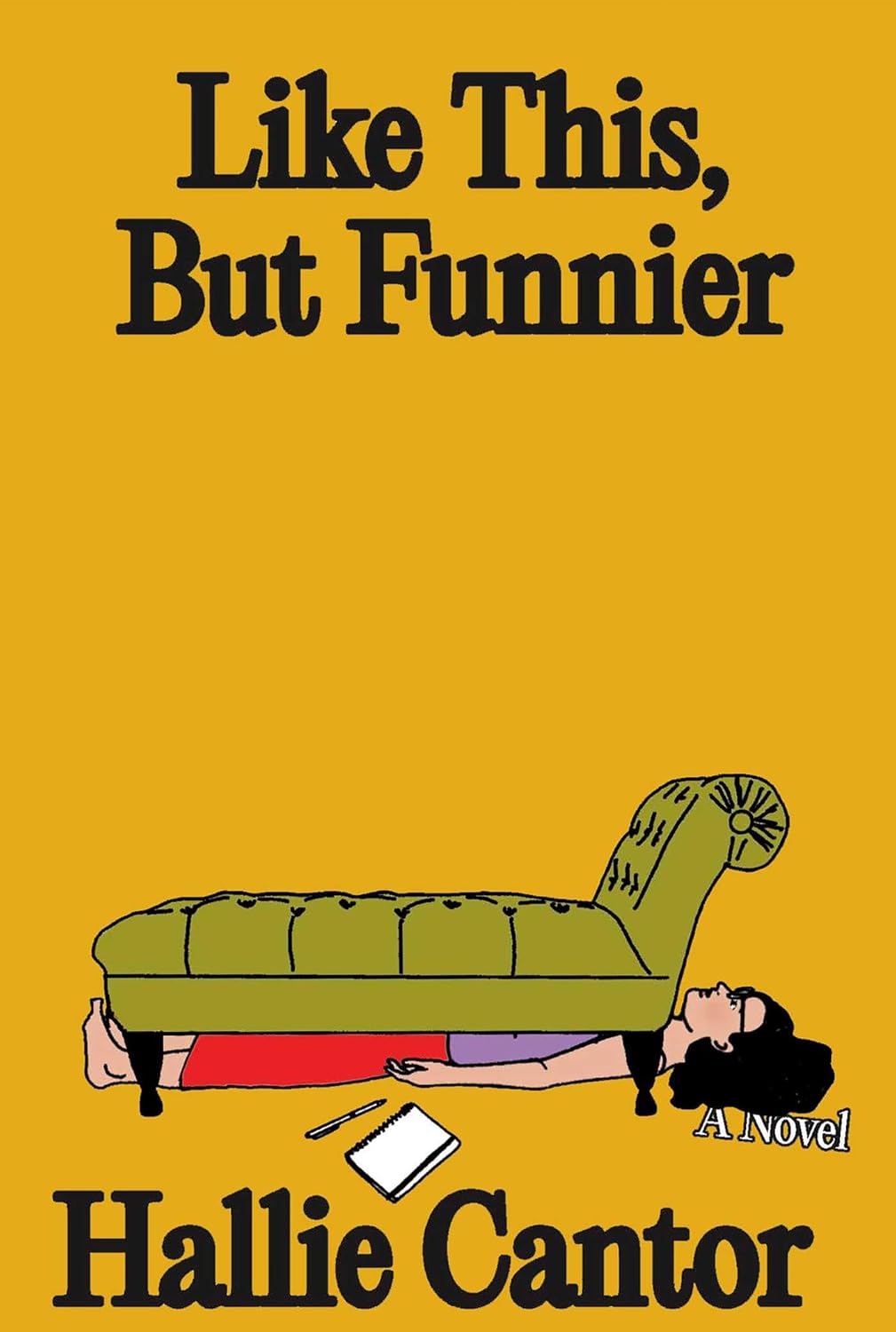
Like This, But Funnier by Hallie Cantor

A 30-something woman writing for television comedy in Los Angeles must wrestle with personal and social as well as professional qualms in this discomfiting and hilarious debut.

Hallie Cantor’s first novel, Like This, But Funnier, is a hilarious and brutally honest send-up of comedy writing for television, a serious consideration of the woes of modern womanhood, and a compassionate telling of one woman’s fumbling journey.

Caroline Neumann is 34 years old. After a relatively successful and socially engaged stint in New York writing for a sketch comedy show, she moved to Los Angeles to write for a sitcom, which was then canceled. She’s been working from home for the past four years–if you can call it “working” when she’s mostly doing unpaid “development.” “In their twenties, she and [husband] Harry had happily not known together” whether they wanted to have kids. But in the interim, he became sure that he did, while Caroline remains doubtful. Harry used to be unhappy at work, too, but now he is a therapist. “They’d made a little home in the despair together. Until he’d abandoned her to go off and get a fulfilling career that he loved. How dare he.” Now, dubiously employed and depressed, Caroline navigates lonely, work-from-home desperation, cataloging all the ways in which she can feel bad (down to the varieties of milk she might put in her coffee: “oat milk: cliché spoiled California millennial princess, very bad”), while Harry nudges her to consider motherhood.

Propelled by work-related frustration and curiosity about Harry’s favorite therapy client, whom she knows only as “the Teacher,” Caroline indulges in a tiny bit of snooping. When she happens to mention a tidbit from the Teacher’s life in a meeting with a producer, however, events snowball beyond Caroline’s control, until she finds herself working on an actual television script featuring the confidential details of a woman’s life that she has no business knowing. Caroline, for whom failure and rejection have come to feel like a professional norm, figures that rather than withdraw from the questionable project, she’ll just tank the pitch meeting: “Why bother quitting when you could fail instead?” And just to keep things complicated, she assents to freeze her eggs for possible future motherhood, as “spiritual atonement for stalking and befriending [her] husband’s favorite therapy patient.” What could go wrong?

Cantor brings her experience writing for Arrested Development, Dollface, and Inside Amy Schumer to Caroline’s often excruciating story: despite the considerable pathos, these conflicts are deeply funny. This protagonist–liable to clog a toilet at the most inopportune moment, frozen by self-loathing, desperate to do the right thing in an industry that’s never heard of it–is, against all odds and her own fears, uncomfortably easy to relate to. Like This, But Funnier is winning, awkward, and unforgettable.


This review originally ran in the January 29, 2026 issue of Shelf Awareness for the Book Trade. To subscribe, click here.


Rating: 7 Zoom calls.

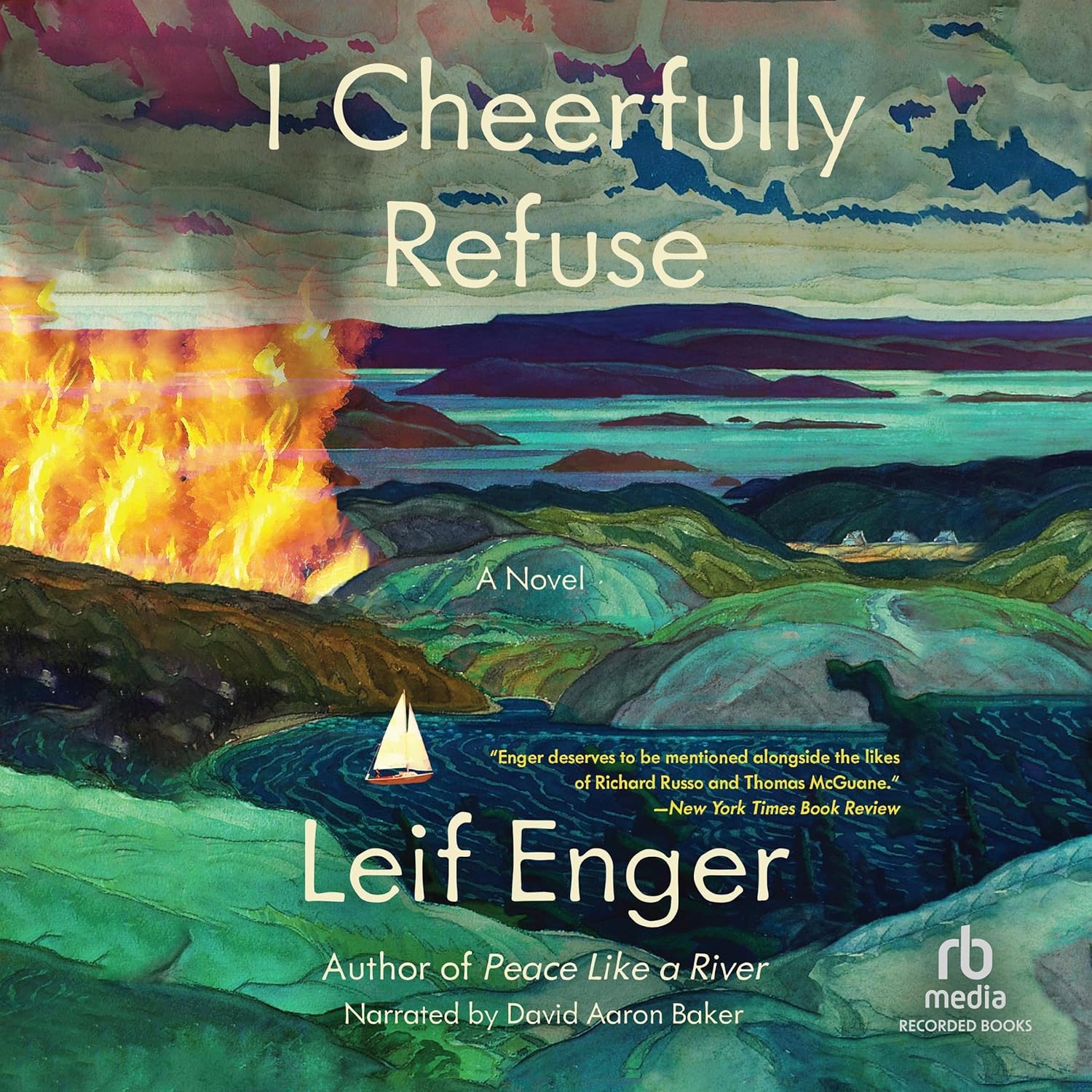
I Cheerfully Refuse by Leif Enger (audio)

Liz was right. This was beautiful and worth it, even though I was a little bit leery of the dystopia. A gorgeous book, and gorgeously read for us by David Aaron Baker. Glorious.

The novel is set in a world very like our own, maybe just a little further down the road to ruin. The narrator, Rainy, lives in town of Icebridge, which I think is on the American side of the border with Canada, on the Great Lakes. Political, economic and environmental collapse have advanced beyond our current situation. Rainy lives in a leaning but charming three-story house with his wife Lark, who is a golden person and one of the town’s most beloved. She runs a bookshop, possesses a great and contagious love of art and literature, and holds wisdom and appealing beliefs. At the story’s beginning, they take in a lodger, Kellan, who eventually admits to being on the run from the ‘astronauts’ he was pledged to as indentured worker. (‘Astronauts’ are not literal, but simply the astronomically privileged and wealthy in an increasingly divided world.) Rainy likes Kellan; but it is true that, as predicted, he brings devastation upon the household. In its wake, Rainy is forced to take to Lake Superior, that great inland ocean, in an ancient sailboat imperfectly restored by hand. He has it in mind that he might find what he is looking for if he can reach the Slate Islands, where he and Lark once sailed, fifteen years ago, on Rainy’s only sailing venture ever until this point. His voyage – really, his quest – will be circuitous, at the mercy of weather patterns and storms, and beset by people who mean him harm. There will also be friendlies along the way. He will pick up a most fascinating passenger, a nine-year-old girl named Sol.

This story is compared to the Orpheus myth, but I don’t see how we can miss Odysseus in it, too, or any quest you choose. It has large, nearly all-encompassing scope, and beautiful ideas about how we make the world around us and what friendship looks like. It considers literature and art and music, and offers hope where it seems unlikely. It is lovely at the sentence level. The lake “was a blackboard to the send of sight, and any story might be written on its surface.” “There’s something in romance if it puts you on a boat with the one you adore in a harbor no storm can penetrate with an affable ghost anchored nearby.” Its events are often horrifying, but I’m left with the weird sense that I’d still be satisfied to follow Rainy anywhere within his world.

This is one of those I’d happily take a high-level lit course in. Solid rec, Liz. Thank you.


Rating: 9 steaming mugs of coffee.

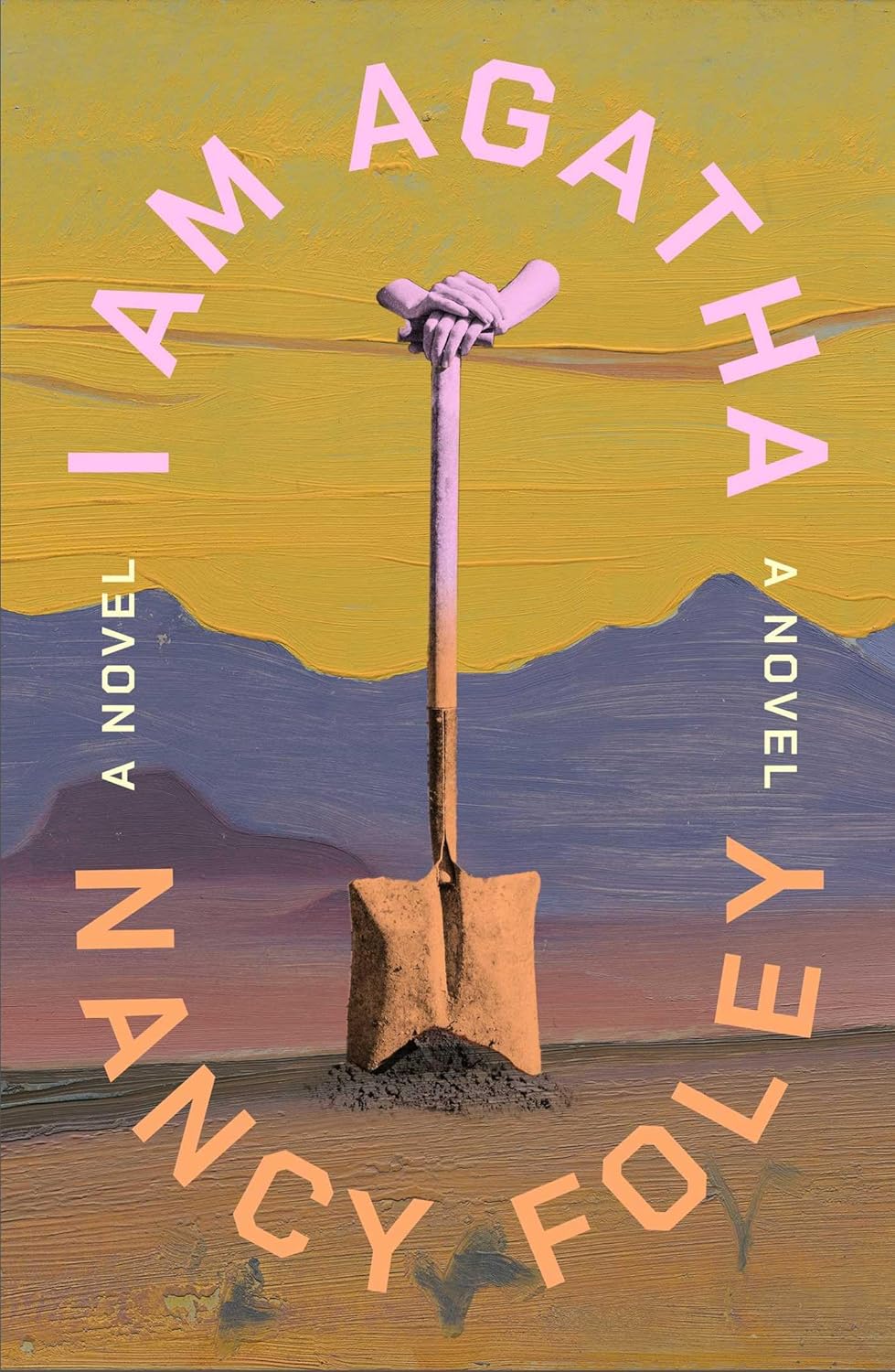
I Am Agatha by Nancy Foley

A solitary aging painter rages against the slow loss of her partner to dementia in this spare, feeling first novel.

Wrestling with grief, love, and creation, a reclusive painter struggles to navigate the decline of her beloved with the help of a loyal 13-year-old neighbor, a trusty pickup truck, and a couple of shovels. Nancy Foley’s I Am Agatha is a striking first novel, jumping off from scant details of the life of a true historical figure to follow the author’s imagination beyond. Like its protagonist, this story is sure-footed and occasionally, markedly vulnerable.

Based upon the painter Agnes Martin, Foley’s Agatha Smithson leaves 1960s New York City to resurface in New Mexico, where she builds an adobe house on a high mesa, lives mostly apart from society, and creates her life’s finest works. She’s passionate about her home and her “ocean canyon”: “It’s ridiculous that anything goes on anywhere other than Mesa Portales, that one can isolate oneself from the world but still it goes about its business.” She is prickly, domineering, capable of grim humor. “You’d sure make my job easier if you could give a straight answer now and then,” comments a local lawyer. “But I guess it’s not in your character.”

Agatha is peremptory, “quick to recognize the correct path forward in all situations.” She is given to strong allegiances but demands great loyalty and holds long grudges; her friends are few and precious. Thirteen-year-old Josey is, like Agatha, obstinate, free-willed, and given to few words. He is her ally, a valued hard worker, and a vital human connection. Agatha has one great love, found later in life: a widow named Alice, who lives alone with a secret buried in her backyard. As Alice’s dementia worsens, Agatha will be late to learn what secrets have been kept from her, too. Fierce and indomitable, Agatha is also overwhelmed by love and grief.

Driven by commitment to her work, which she takes very seriously, Agatha is moved not at all by the opinions of others. But in Alice, she finds something different and shocking. “Work is not the only thing in life,” Agatha says, to a young disciple’s incredulity, but “I surprise myself by feeling it to be true. I would do anything possible, anything at all, to keep Alice with me.” Agatha’s big, brash personality and determination to grow old with Alice is pitted against more staid forces like Alice’s son, who would rather move his mild-mannered mother into assisted living. An accomplished artist and staunch recluse, Agatha does not easily brook resistance, but the end of Alice’s life will be one of her greatest struggles. I Am Agatha is an arresting, darkly funny, and heartrending consideration of life, love, and endings.


This review originally ran in the January 12, 2026 issue of Shelf Awareness for the Book Trade. To subscribe, click here.


Rating: 7 peanut-butter-and-tomato sandwiches.

Haven by Ani Katz

In a masterpiece of tension, set within a lavish island community for the corporate select, a disappeared infant calls into question everything one mother thought she knew.

Ani Katz’s Haven is a chilling story about an apparent utopia that is anything but. As Caroline boards a ferry with husband Adam and infant son Gabriel for an exclusive getaway on a lovely island enclave, she is, first of all, relieved. After a trying period of his unemployment, Adam’s job with corporate giant Corridor gives him the means to join an elite group of friends and coworkers in a spaceship (Caroline’s description) of a house on the outskirts of Haven, a longtime home of the rich.

Caroline has never quite understood what it is that Corridor does–something with “infrastructure”–but she’s grateful that Adam is employed and seemingly less depressed. Now she hopes to relax, get to know Adam’s friends a little better, perhaps strengthen her bond with Gabriel, maybe even get some artistic inspiration back. Ever since becoming a mother, her photography has suffered. She attempted a project about motherhood, but “was getting bored with her baby as a subject.” Even on the island, seeking subjects, she worries: “What if she never made an interesting photograph again?” But in Katz’s tautly plotted psychological thriller, it turns out that photography may be the least of Caroline’s concerns.

Caroline’s roommates for the summer, Adam’s Corridor colleagues, indulge in eating and drinking to excess and unfamiliar, unnamed drugs, but they also coo over Gabriel and give Caroline the occasional break for a proper shower. She is trying to lean into the novel, luxury experience. The island’s wider inhabitants, however, strike her as being just a little off. Tinkly laughter, choreographed dance, and uncanny children degrade into shadowy threats: angry islanders, old rituals and sacrifice, and corporate surveillance. Then comes the nightmarish morning when Caroline wakes up and Gabriel is gone. As she searches for her son and the truth of what happens in Haven, she will come to question even the rules, and the people, she thinks she knows best.

If Haven ever begins to feel like it might trend toward the formulaic, be assured that Katz (A Good Man) is about to twist her tricky narrative again, always catching Caroline, and readers, unawares. This masterpiece of tension turns absolutely terrifying by its finish. Technology, hubris, deception, and mistrust combine in an unsettling corporate dystopia that asks what ends would justify which means. Riveting, thought-provoking, and ever surprising, Haven is not for the easily unnerved.


This review originally ran in the December 23, 2025 issue of Shelf Awareness for the Book Trade. To subscribe, click here.


Rating: 6 hats.

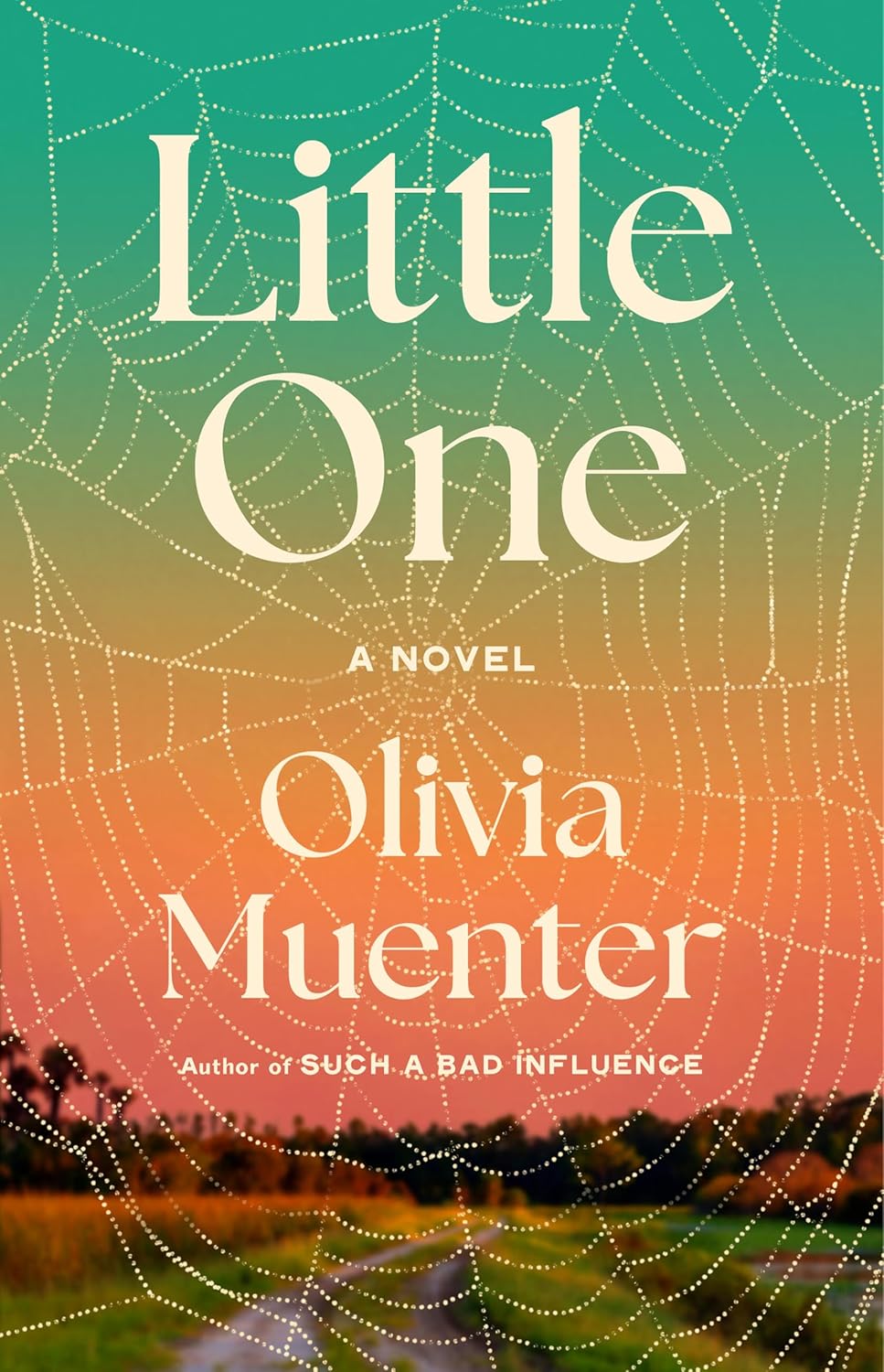
Little One by Olivia Muenter

A young woman’s troubled past resurfaces in this novel of psychological suspense and secrets.

Olivia Muenter’s Little One chills and entertains with the story of a young woman whose fresh start is interrupted.

Since leaving the intentional community run by her father in rural Florida, Catharine West has built herself a life from scratch in New York City. She has a successful copywriting career, visits the public library at least once a week, runs daily, and enjoys a snarky friendship over drinks with the disarming Stella, who says of Catharine’s library habit, “You do realize this isn’t actually a Nora Ephron film.” She doesn’t date much, which Stella attributes to a bad breakup or fear of change. Catharine holds people at arm’s length, privately enforcing upon herself some of the same obsessive standards she learned back at the farm, including extreme fasting and self-deprivation. She has shared her past with no one, which is why it’s so alarming when a journalist e-mails out of the blue with questions about “a little-known, now-defunct cult in central Florida.” Catharine’s carefully crafted, tightly controlled existence is threatened. But in balance with that risk hangs the chance that she might recover the one part of her past that she never meant to lose: her sister.

Little One, Muenter’s second novel (following Such a Bad Influence), follows Catharine in alternating chapters marked “Then” and “Now.” Catharine’s remembered Florida begins as idyllic, sunny, verdant, a childhood spent “chasing the coolest parts of the day, picking tomatoes at dawn, bringing each to my nose and marveling at the smell, all at once familiar and astounding.” But what began as a close-knit community with back-to-the-land ethics gradually became something sinister, sticky, and alligator-ridden in the oppressive heat.

In the present-day timeline, Catharine becomes increasingly involved with the journalist, Reese, whom she finds both attractive and off-putting. As she strings him along, giving him just enough to get back the information she needs from his unnamed source, it may be that she’s met her match. Meanwhile, readers recognize past Catharine (in her father’s steely grip) in the present one (wielding an ironclad control over her own life). Fasting becomes exercise compulsion and an obsession with willpower; the concept of hunger, in its various meanings, is central to the plot. Muenter’s expertly moody, creepy-crawly narrative is precisely paced. Secrets as off-balance as Catharine herself are released at a tantalizing rate that might just keep the reader up all night, as the novel accelerates toward a satisfyingly surprising conclusion.


This review originally ran in the November 21, 2025 issue of Shelf Awareness for the Book Trade. To subscribe, click here.


Rating: 7 car keys.

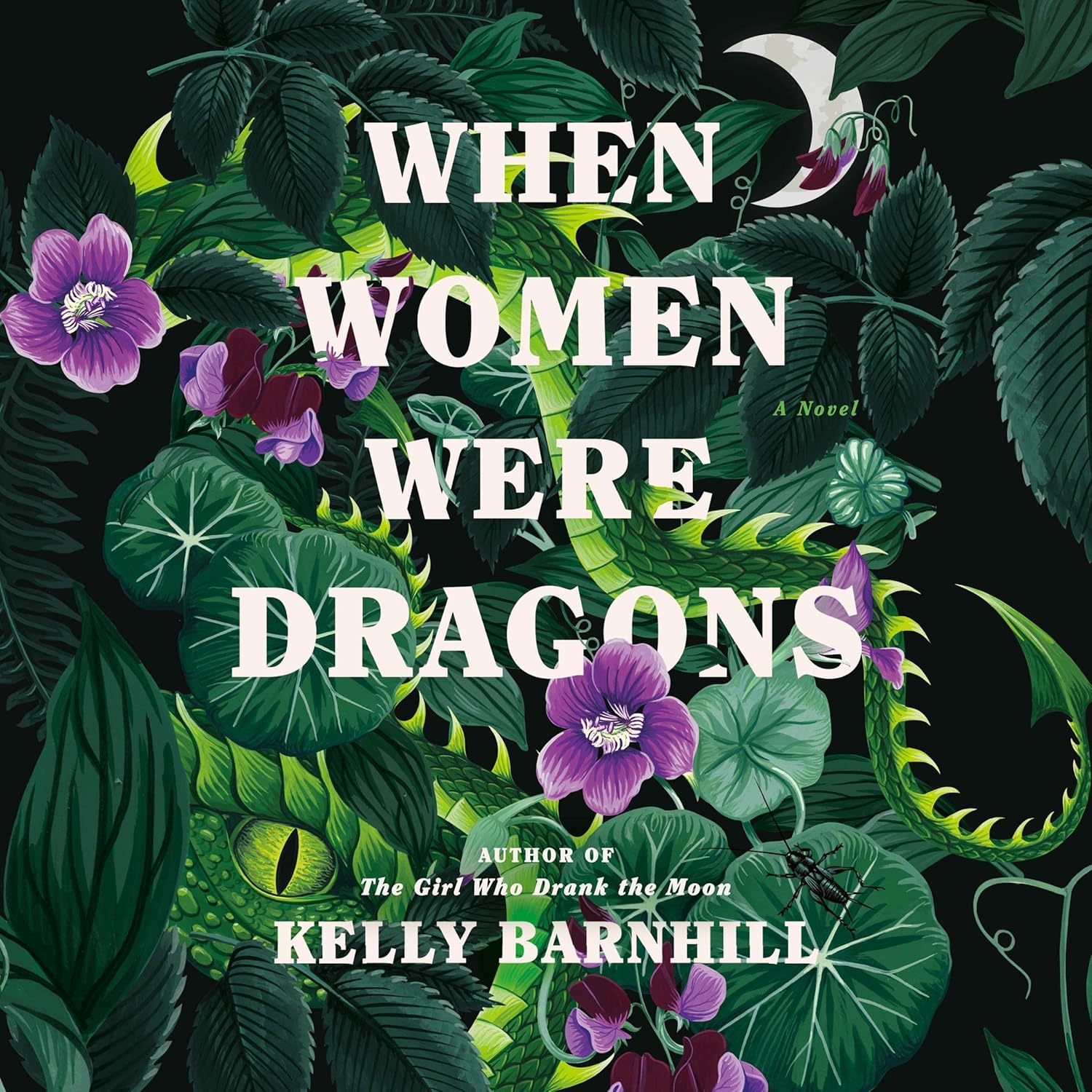
When Women Were Dragons by Kelly Barnhill (audio)

I don’t recall where I got this title from, but I loved this book, and am grateful to whatever review or list sent it my way. Also to my lovely partner who gifted it to me for the long drive from Texas to West Virginia.

When Women Were Dragons: Being the Truthful Accounting of the Life of Alex Green–Physicist, Professor, Activist. Still Human. A memoir, of sorts is a living, breathing tale, ever expanding, filled with metaphor that reshapes itself with the reader’s interpretation. It opens with a strange letter from a Nebraska housewife in 1898 to her mother, shortly before the woman spontaneously dragoned. Next we have an excerpt from the opening statement given by Dr. Henry Gantz to the House Committee on Un-American Activities in 1957. Then we get into the first-person narration of Alex Green, who will tell most of this story, with brief insertions mostly from Dr. Gantz’s work – bit of an epistolary format. (The audiobook is narrated by Kimberly Farr, as Alex Green, and Mark Bramhall, as Dr. Gantz, which I thought was a great choice.) “I was four years old when I first met a dragon. I didn’t tell my mother. I didn’t think she’d understand.”

I think this must be right around 1950. Alex grows up in small-town Wisconsin, in a pretty 1950s world: there are many things we just don’t talk about, including cancer, menstruation and most aspects of girlhood and womanhood, what to expect on one’s wedding night, diversity in sexual orientation and gender expression, our feelings, and dragons. When Alex is a little girl, her mother goes away for some time – months – and no one explains or even acknowledges the change; likewise when her mother returns, gaunt, weak, different (she doesn’t even smell right). The reader understands better than little-girl Alex when her mother’s chest is glimpsed, missing breasts, two scars like smiles. This world is recognizably our own except for the dragons. Women in this world can dragon (that’s a verb), or become dragons, at which point they sometimes eat their husbands (this seems to happen frequently with very unlikeable, not to say abusive, husbands) before flying away. Dragoning is a poorly understood phenomenon because, as with much that is female or feminine, society judges it too shameful to examine, and science mostly averts its gaze. Dr. Gantz is a rare exception: he believes in the scientific mandate to learn, whatever truths are revealed. Biology should never be shameful. His research articles and responses to an oppressive world are useful seasonings to this story, and he is himself a delightful character, alongside the heroic librarian Mrs. Gyzinska.

And oh, Alex’s auntie Marla, a wonderful woman who comes and cares for her while her mother is away in cancer treatment, a big powerful woman who flies airplanes during the war and works as a car mechanic and wears men’s clothes and takes very little shit, and who we lose to the Mass Dragoning of 1955. When Marla dragons, she leaves behind an infant daughter, Alex’s cousin Beatrice, who from here on is raised as Alex’s sister. Such is the gaslighting of Alex’s family and world that she learns to really believe – almost – that she has no aunt, that Beatrice has always been her sister. (Echoes of 1984. We have always been at war with Eastasia.) And boy, the time Alex has raising her younger sister, Beatrice, a delightful dragon of a child if there ever was one.

Despite all I’ve just thrown at you, I’ve barely scraped the surface of this remarkable novel. It contains many stories and many layers, much that is very recognizable from our ‘real’ world, and lots of potential metaphors to ponder. I wondered at different times if dragoning were a metaphor for menstruation; for puberty; for “un-american activities” (certainly, HUAC seems to conflate them); for simply being independent, self-determining, and female (except that those who dragon are overwhelmingly but not universally girls and women). This story tackles the way we handle difference, and especially gender, sexuality, and gender expression. It contains such maddening (if entirely realistic) renderings of sexism that it was sometimes hard to listen to. It contains transcendent moments of personal discovery, joyful academic inquiry, love and coming-of-age, and some lovely iterations of family and built family, which I always appreciate. “Sometimes,” confides Alex at an advanced age, “the expansive nature of family takes my breath away.” There is such good fun; I especially liked the line “If that dragon was hoping for sympathy, she was crying in front of the wrong teenager,” which I got to share with my favorite dragon-loving teenager. It considers the looping of time and relationships. It’s got science and wonder, a bit like A Tale for the Time Being, but I liked this better. I’m a bit over the moon about it, and am giving it a perfect score. Also, I loved the audio format, with the one caveat that I wish I could pull more quotations that I loved.

Do give it a go, and let me know what you think.


Rating: 10 military-issued boots.

Is This a Cry for Help? by Emily Austin

As its protagonist wrestles with grief and challenges to intellectual freedom, this inspiring and very funny story showcases the power of love and libraries.

In the opening scene of Emily Austin’s fourth novel, a librarian named Darcy narrates her response to a patron watching porn in the library (mainly, per policy, to leave him be). From here, Darcy’s story unfolds to grapple with love, grief, mental health, the importance of libraries, and the navigation of personal, professional, and public relationships. Is This a Cry for Help? continues in the vein of Austin’s winsome work (Everyone in This Room Will Someday Be Dead; We Could Be Rats) with a disarmingly candid narrative voice, outrageous humor, and serious thinking on tough topics.

Darcy has a good life. At her public library, she gets to help a messy cross-section of humanity: not only the toddlers, book clubs, and precocious teens she originally imagined, but also people who lack stable housing or who struggle with substance abuse or mental illness, job seekers, immigrants, and people with opinions different from her own. She has a wonderful wife with whom she shares her authentic self, two cats, and a lovely home. But when Darcy learns of the death of her ex-boyfriend Ben, she is thrown off balance. The disruptions to her carefully organized life are often hysterically funny even as they are harrowing and tragic.

Darcy has just returned to work after a two-month leave of absence following a mental breakdown brought on by the news of Ben’s death. “Before this happened, if someone told me they were off work on stress leave, I might have been judgmental too. Now I understand that issues intensify when we smash them down into our boots.” She is not at her strongest for the new challenge of an alt-right self-appointed journalist harassing the library and Darcy for what he deems a series of moral infractions, including the porn-watching patron. Her community holds an array of political views and opinions on topics as personal as Darcy’s identity as a lesbian, and these values will be called into question by an attempted book ban.

Darcy’s first-person narration lets the reader see her puzzle through the motivations of those around her, parsing social cues and questioning her own choices. Since the breakdown, she’s been seeing a therapist (a process she finds “hokey,” but she’s making an honest effort), and she is well served by her earnest analysis of the actions and motivations of herself and everyone around her. “I’m not just thirty-three; I’m twenty-seven. I’m eighteen. I’m nine. I was just born. And I have to carry all of those versions of myself, the feelings they have, and the mistakes they’ve made, everywhere I go.” Thoughtful and self-aware, if often awkward, Darcy strives intentionally to live as best she can. Is This a Cry for Help? portrays a stressful period in her life, but one she ultimately inhabits with wisdom and grace. Hilarious, wrenching, endearingly odd, Darcy’s story is both enlightening and somehow comforting.


This review originally ran in the November 10, 2025 issue of Shelf Awareness for the Book Trade. To subscribe, click here.


Rating: 8 pigeons.

Dandelion is Dead by Rosie Storey

A grieving sister finds that hope, silliness, angst, and even love may be possible amid loss in this astonishing first novel.

Rosie Storey’s debut, Dandelion Is Dead: A Novel About Life, is a glittering riot of grief, laughter, missed connections, absurdities, and the joys and pains of life’s many facets. From one unexpected turn to the next, this story will keep readers emotionally engaged and yearning alongside its protagonist.

Poppy Greene is 37 years old and deep in mourning. It has been 231 days since her older sister, Dandelion, died “and, somehow, it was spring again.” Dandelion had been wild, irrepressible, author of all the sisters’ adventures; without her, Poppy (a professional photographer, ever the observer) is unmoored. Going through her sister’s phone, she clicks on a dating app and, on a whim, answers a message from a year-old match. When Jake asks for a date on Dandelion’s 40th birthday, it feels like fate, or magic, or Dandelion’s mischievous hand from beyond the grave. Poppy does not set out with the purposeful intention of impersonating a dead woman (nor of cheating on her longtime boyfriend, Sam), but she finds Jake incredibly magnetic, and soon begins a romantic relationship in her sister’s name. Dandelion Is Dead alternates between Poppy’s close third-person point of view and Jake’s, revealing his own intense attraction to the woman he knows as Dandelion, and his own past traumas. Poppy and Jake are both awkward, ungraceful, and heartfelt in their romance; both commit dishonesties that threaten everything they value.

The aptly named Storey excels at whimsy, delightful comedy, and pathos. Her plot is composed of debilitating losses, madcap adventures, treacheries, secrets, love, and striving. The profound charm and appeal of Poppy and Jake lie in their contradictions. They suffer terrible losses and make poor choices; they are capable of both sweetness and betrayal. The cast is enriched by Poppy and Dandelion’s lifelong friend Jetta (and her loyal husband); the young son Jake is devoted to, and his masterfully nuanced ex-wife; Poppy’s unsympathetic boyfriend; and of course, the mythic Dandelion herself. While its subtitle feels accurate, this debut is also clearly a novel about grief. Poppy learns that if she is going to find a fulfilling life after losing her sister, she must grapple with her own mistakes and those of her loved ones, even those she’s lost. Dandelion Is Dead is a scintillating achievement in emotional range, humor, and wisdom. Poppy Greene thinks she is the less magnetic sister, but no one who meets her will easily forget her.


This review originally ran in the November 7, 2025 issue of Shelf Awareness for the Book Trade. To subscribe, click here.


Rating: 8 Twisters.

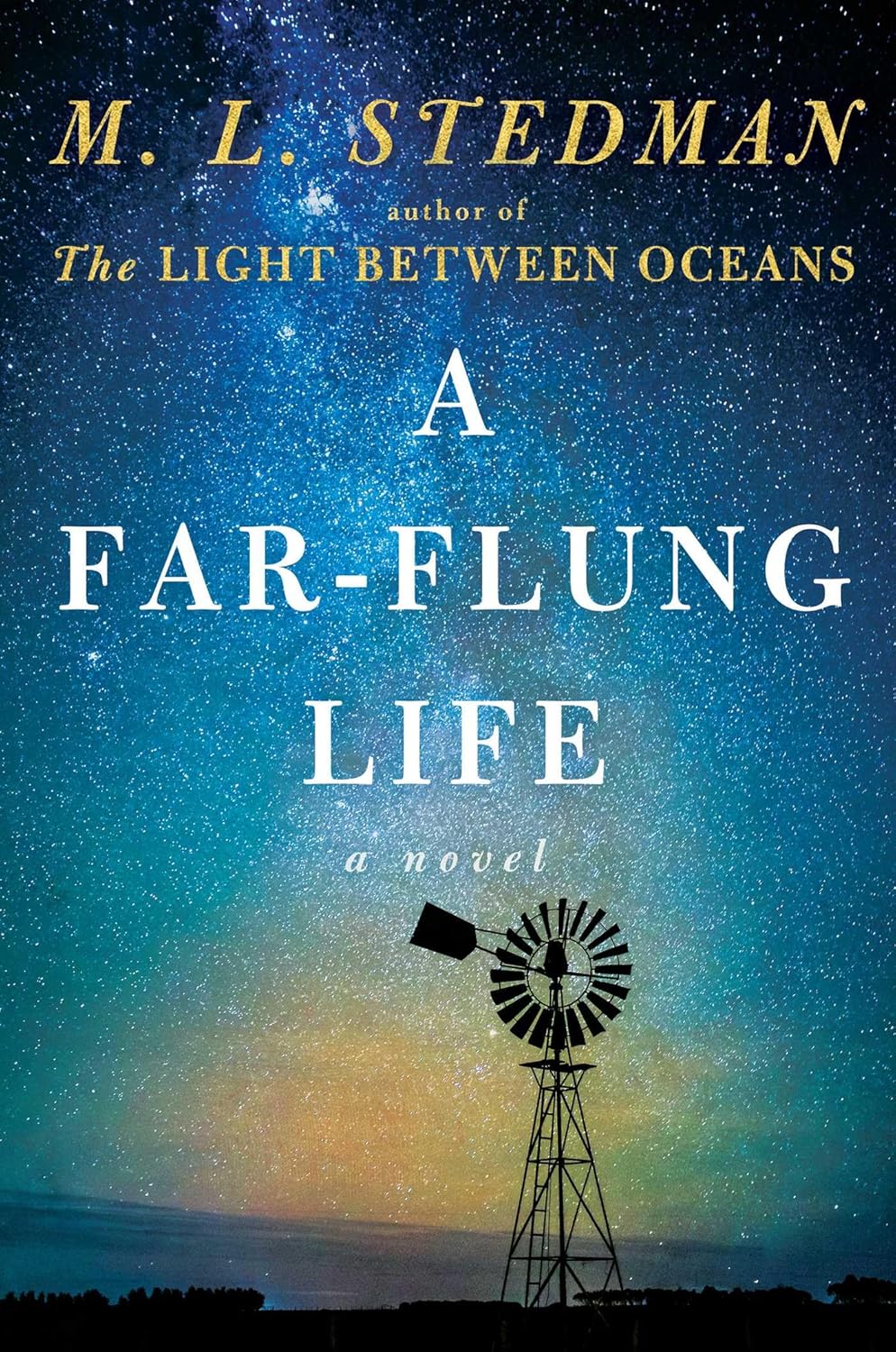
Maximum Shelf: A Far-Flung Life by M.L. Stedman

Maximum Shelf is the weekly Shelf Awareness feature focusing on an upcoming title we love and believe will be a great handselling opportunity for booksellers everywhere. The features are written by our editors and reviewers and the publisher has helped support the issue.

This review was published by Shelf Awareness on October 30, 2025.

M.L. Stedman (The Light Between Oceans) awes and transports readers with the astonishing A Far-flung Life, a sweeping family drama spanning the latter half of the 20th century. Layers of tragedy and compelling, nuanced characters are set against a vast, indifferent landscape in Western Australia.

The MacBride family has run a sizable sheep station for generations, with quiet success, in a dispersed but close-knit community whose respect they have earned. “The MacBrides had the touch, it was said: sensible but shrewd, careful but not mean.” The novel opens with landscape, scenery, and color: red earth, blue sky, dust-green vegetation, the “straight vermilion line” of a road through sparse trees. Against this backdrop, three MacBride men travel “like unpacked Russian dolls” in a Bedford pickup truck across the expanse of their sheep station, “nearly a million arid acres.” Phil drives, accompanied by his sons, Warren and Matt, and a trailer full of sheep. It is fitting that the reader meets this landscape before its human inhabitants; Stedman will consistently reinforce that contrast. It is early 1958, and the date, January 10, will reverberate through the MacBride family history for years to come.

Phil MacBride has known since his feet could reach the pedals not to swerve to avoid a kangaroo. But under the January sun, he makes a fateful error. Back at their homestead, hours later, Phil’s wife, Lorna, and daughter, Rose, open their door to two policemen, from whom they learn of lives both ended and hanging in the balance. The consequences of the crash that opens Stedman’s masterful novel will tumble and tangle MacBride lives for generations. Amid unspeakable tragedy and threads of hope, a note of whimsy cuts through: also introduced in this opening chapter is the outright oddity of a fully rigged pearling lugger. The subject of legend, the boat abides in its own structure, known as “Monty’s shed,” for the late Montgomery MacBride, Phil’s uncle, who won the vessel in a bet but never got to sail it. The MacBrides maintain the tradition of oiling its timbers, keeping spiders and termites at bay, and placing a beer in its bow every year on Monty’s birthday. Matt MacBride–thrown from the truck on that January day–as a younger son, was destined not to inherit the sheep station but to make his own way in a larger world. He had longstanding goals and dreams springing from Monty’s boat. Now everything has changed; but the pearling lugger remains in its shed, storing potential.

A Far-flung Life follows the remaining MacBrides as they continue to scrape life and livelihood out of a hardscrabble home with fragile concepts of morality and honor, and the power of love. They weather births and death, secrets, and scandals both experienced and kept hidden. Throughout every loss and recovery, their fate remains tied up with the land: “Our lives come and go like these gold-rush towns. We arrive, we grow, we thrive, then we’re gone. Then the forgetting happens, and once-solid foundations are barely traces in the earth, from unguessable lives. Whole communities and the ties that bound them are blown away with the dust.” Stedman excels at description of both landscape and the human experience, and alternates applying this close attention to the events in her characters’ lives and to the larger world in which they live. “In the end, we’re all looking for a place to ride out the storm of life. Among all these husks of houses and fossils of trees, we are like hermit crabs, borrowing a shelter for a time, and moving on.”

As the MacBrides carry on after the crash, their lives will continue to call upon big themes, including inexorability and change, innocence, and the handling of painful truths. Stedman generally employs a shifting close third-person perspective, allowing her reader to see through one character’s eyes and then another’s, finding out at different points what they know. This careful reveal not only of events, but of various characters’ knowledge of events, is central to the complexity of the MacBrides’ secrets. Another significant theme is the tension between memory and forgetting. One young character, in asking questions that his elders can’t or won’t answer, coins a term, “forgetment,” for what is forgotten–“the opposite of a memory.” This concept recurs throughout a plot that revolves around what its protagonists can’t remember and what they wish they didn’t.

Like the heartrending The Light Between Oceans, the MacBrides’ story interrogates ideas of right and wrong in specific and complicated cases, and the experience of humans writ small against a vast landscape. “This land has seen improbable things: the evolution of marsupials and monotremes; of flightless birds and animals that fly. It’s seen continents split and islands arise. It’s seen oceans turn to desert and desert turn to glaciers. And it’s watched people drag their little lives across its surface, flat and unforgiving.” By the end of this epic and wrenching family saga, readers will care deeply about lives that are “destined to join the vast ocean of human forgetments.” Heartbreaking and painfully beautiful, A Far-flung Life will haunt and comfort long past its final page.


Rating: 8 goannas.

Come back Monday for my interview with Stedman.