Everything I Found on the Beach by Cynan Jones

A profound story in simple packaging tells of three men longing to catch a break, against a desolate backdrop.

everything I found

Cynan Jones’s (The Dig) Everything I Found on the Beach is a remarkable novel, quiet but powerful. Three unacquainted men on the west coast of Wales aspire to better their respective circumstances, and to that end make a series of decisions that have dire consequences. It is a story filled with tension, desperation and stoicism. Patient pacing nonetheless accompanies a relentless momentum, moving toward an ending that inspires dread.

Hold is a Welsh fisherman, consumed by his sense of responsibility. He is dedicated to the natural world and his place in it, carefully balanced and respectful in the hunting and fishing he does for a living. He is devoted to the wife and son of his recently deceased best friend; Hold made a promise to this friend that worries him constantly. His sense of duty begins as rational and admirable, but may end by overwhelming him. Grzegorz is a Polish immigrant who brought his family to Wales for a better life but found disappointment. He works shifts at a slaughterhouse whose practices offend him, and sees little hope of escaping the indignities of shared migrant workers’ housing. If only he could get a little ahead, he thinks, this might have been worth it. Finally there is Stringer, Irish and a middleman in a criminal hierarchy that he feels has taken advantage of him for too long. These men find potential solutions to their problems in a scene on the beach: a boat, a dead man and a package. Hold’s livelihood offers the metaphor of the net: “Once they choose a course, if the net is there, they hit it.”

Jones’s writing is deceptively simple, often employing short, declarative sentences that belie his poetic mastery of language. His words have a marching rhythm to them that recalls Hemingway: “The first time he ever shot rabbits he was alone and it was with a shotgun and he had been looking for a long time….” His tone is deliberate, resolutely unexcitable despite the extraordinarily high stakes of his story, peopled almost entirely by the three men, whose interior monologues do much of the work to characterize them.

Such a bleak story and austere style may sound gloomy, and it is true that this is a serious book that rewards careful reading. But Everything I Found on the Beach is also thought-provoking and somehow uplifting, in its beautiful, artistic consideration of life itself.


This review originally ran in the March 11, 2016 issue of Shelf Awareness for the Book Trade. To subscribe, click here.


Rating: 8 rabbits.

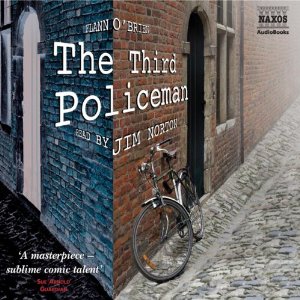
The Third Policeman by Flann O’Brien (audio)

third policemanThis will win the Pagesofjulia Perplexing and Peculiar Award of 2016, which I have just invented.

Flann O’Brien is one of the pen names of Brian O’Nolan (he also wrote under the name Myles na gCopaleen, or Myles na Gopaleen; Brother Barnabas; etc.). This novel came to me first from this list by the Guardian, and then from my friend Barrett, who bought me O’Brien’s At Swim-Two-Birds when we were traveling in Ireland together several years ago. (I still have not read that one.)

The Third Policeman is not so strictly about bicycles or cycling as the Guardian list had led me to believe; I was quite confused for the first, oh, third or so of the book. Our unnamed narrator is an odd one. He was orphaned, lost a leg, and then returned home from college to find his parents’ pub managed by a man named Divney, who is clearly embezzling from the business. Narrator is quite obsessed with a (fictional) scientist-philosopher named de Selby, about whom he writes a definitive work that he cannot afford to have published. This financial need is set up as his motivation to join in a plot with Divney to rob and murder a neighbor, the wealthy Mathers. After the murder, Divney hides the money, inspiring Narrator to follow him around closely, finally sleeping in the same bed to prevent Divney’s sneaking off to recover the funds alone. Very strange, right? It gets stranger. Narrator meets a figure who is, apparently, the ghost of Mathers; Narrator’s soul speaks up quite suddenly, is named Joe, and becomes an occasional participant in dialog; Narrator hikes off to find a certain police station where he wants to report the theft of a nonexistent watch, thereby seeking clues as to Mathers’s missing money; etc. When we meet the policemen (only two of them, the titular third being absent), we get into the bicycle-related part of the book, but nothing makes any more sense than before. Remember de Selby, Narrator’s obsession? Footnotes throughout discuss his life and work (gradually revealing that he was perhaps less the genius than Narrator would have us think), and, digressively, the lives and petty conflicts of de Selby’s other biographers. WHEW.

The policemen, in turn, are obsessed with bicycles. (Recall this teaser.) Apparently in their world, those who spend too much time on their bicycles become bicycles. You know I loved this part.

This plot, if I may call it that, is every bit as twisted and weird and disconnected as it sounds. Despite all that, it is entertaining, stylish in its own way, and yes, smart. Narrator has a strong voice and personality, strange though he be. The policemen have interesting theories and skills, metaphysical and philosophic. And I have by no means hinted at the central questions of the book yet; there is a final big reveal that makes you think. No spoilers here! and you should avoid them elsewhere to keep The Third Policeman‘s full effect intact.

As far as I can tell, O’Brien gets credit with coining a usage of the word ‘pancake’ for ‘puzzle.’ His policemen use it repeatedly:

It is one of the most compressed and intricate pancakes that I have ever known.

…nearly an insoluble pancake…

A very unnatural pancake. A contrary pancake surely…

And thus my rating: this book is a contrary pancake surely.

The real live narrator, who reads this audiobook for us, is Jim Norton, and he does a splendid job. I felt pulled into a surreal world that I enjoyed and giggled at and was occasionally disturbed by. I’m sure I missed two-thirds at least of the opportunities to interpret this work as a piece of philosophy, itself, but I was utterly entertained. The audio format worked well for letting the zaniness just wash over me. It would not be ideal for close reading, of course – never is – but I really appreciated the experience of this audio introduction to Flann O’Brien, or whatever he calls himself, and I will read more. Don’t be too intimidated – just, don’t expect to understand everything you hear. I’m sure O’Brien has been the subject of a few dissertations, and is probably ripe for another, if you’re feeling ambitious.


Rating: 7 pancakes.

Teaser Tuesdays: The Third Policeman by Flann O’Brien

Teaser Tuesdays is a weekly bookish meme, hosted by MizB of Should Be Reading.

This is an exceptionally strange one, friends. I got a little confused. This was recommended as one of The Ten Best Books About Cycling. But early pages (hours) were devoted to an odd friendship, an odder murder and reanimation, and the main character’s obsessive devotion to and criticism of a fictional philosopher.

third policeman The plot remains weird, which I have come to accept is partly the point; and now we have got around to bicycles.

“I do not want to be insidious,” he said, “but would you inform me about your arrival in the parish? Surely you had a three-speed gear for the hills?”

“I had no three-speed gear,” I responded rather sharply, “and no two-speed gear and it is also true that I had no bicycle and little or no pump and if I had a lamp itself it would not be necessary if I had no bicycle and there would be no bracket to hang it on.”

“That may be,” said MacCruiskeen, “but likely you were laughed at on the tricycle?”

“I had neither bicycle nor tricycle and I am not a dentist,” I said with severe categorical thoroughness, “and I do not believe in the penny-farthing or the scooter, the velocipede or the tandem-tourer.”

MacCruiskeen got white and shaky and gripped my arm and looked at me intensely.

“In my natural puff,” he said at last, in a strained voice, “I have never encountered a more fantastic epilogue or a queerer story. Surely you are a far-fetched man. To my dying night I will not forget this today morning.”

I am totally tickled, naturally. Stick around, and I will try to illuminate the weirdness for you in my final review. For now: worthwhile.

Mink River by Brian Doyle (audio)

mink riverMy second Brian Doyle novel (following Martin Marten, which was one of the best I read in 2015) was also outstanding. Mink River shares much of the subject matter and setting: it takes place in a rather larger small town on the Oregon coast, with a cast of delightful people and animals, all of whom make up a web and community of life and values in which human and nonhuman creatures carry equal weight. It covers an enormous swath of life experiences, truly profound in that sense, but also humble in its small physical scale: a few families and friends form the core of this novel, which is both quaint and all-encompassing.

Centrally, Worried Man and Cedar are the two members of the Department of Public Works in the fictional town of Neawanaka. Worried Man has a wife, Maplehead; a daughter, No Horses; an son-in-law, Owen; and a grandson, Daniel, whose hair forms three braids, of red and black and brown. Cedar does not know his personal history. He remembers nothing before the day Worried Man and Maplehead pulled him out of the river where he was drowning. They make a motley family circle, of which Cedar and Owen are as much a part as the other, blood relations. There is also a mean old man who beats his children, now just the younger two boys, as the elder boy and girl are adults who fish for a living. A young couple learning about each other. An upstanding policeman and his wife, who struggle to express their feelings for one another. The doctor; the old nun; and of course Moses, the crow, whom the nun taught to speak and who is capable of carrying on quite complex philosophical discussions with his human friends. (Crows are very smart, you know.)

The family at the center provides a lovely blend of cultures – the indigenous Salish people represented by Worried Man and Maplehead, and the Irish, by Owen. Worried Man and his son-in-law each speak some of their people’s respective dying tongues, and both pay homage to what that represents; both make efforts to pass their knowledge along. Both cultures also offer a legacy of love of stories, which Daniel inherits. As Owen relates, while telling of his grandfather who survived the Hunger in Ireland:

You can eat stories if you have to. A good story is a very good thing to eat. If you have a true story and some good water, you’ll be all right, he would say…

Sometimes, he would tell stories about stories. The stories of children are green, he would say, and the stories of women are blue, and the stories of men are red…

You can eat an infinite number of stories. No one can ever eat too many stories.

A lovely quotation, and of course fitting for a novel about everything in life.

As well as these human cultures, like Martin Marten, this story addresses the bond between human and nonhuman cultures, as best embodied by Moses the philosopher-crow. Bears and birds and the river itself are given voices and agency, although not strictly personified: the bear is not a person at all, but a bear.

Doyle continues to exhibit spellbinding, lyrical language, and his sentences can flow and flow and flow on, as if they will eventually reach the sea. This book was very enjoyable to listen to, read by narrator David Drummond. It was a trade-off: probably I missed some nuance and detail in favor of that lovely sound. But I felt this was a worthwhile trade-off. Sound is one of Doyle’s great strengths – but so is story. He has it all. Loveable, complex, diverse characters, realistic setting, sweeping large plot, philosophy, and poetry, all in one. Absolutely recommended as ever.


Rating: 8 shared bottles of beer.

The Heart by Maylis de Kerangal, trans. by Sam Taylor

The story of a heart transplant, from life to death to final outcome, is viewed through the varied perspectives of some of the people involved.

heart

Maylis de Kerangal’s The Heart, translated from the French by Sam Taylor, spans just 24 hours but covers some of the most profound material imaginable. Simon and his two friends leave the beach after a pre-dawn surfing session and crash off the road. In the hours that follow, Simon’s parents are asked to make decisions about the removal of his organs. A woman with three sons waits for the heart transplant that will, hopefully, prolong her life. De Kerangal follows these and other players–doctors, nurses, family and friends–as the drama unfolds: of Simon’s heart, life and death and definitions, the meaning of generosity and what we love.

The Heart delves deeply into its subjects: the transplant operations are described in precise detail. The anguish of parents losing a child is explored at some length in its various incarnations–aggression, confusion–and compared to that of shipwreck survivors, or of a man who has just been in a fight with “some guy who was asking for it.” Characters are complex–the nurse who met with a lover last night, “sober and ravishing”; the soccer-obsessed surgeon with the violent girlfriend; the man from the Coordinating Committee for Organ and Tissue Removal, whose job it is to convince the parents to approve the transplant and who is passionate about music and his Algerian goldfinch. Through these and other points of view, an extraordinary and shocking story is revealed. Taylor’s expressive translation renders a sensitive, stark and entirely engrossing novel.


This review originally ran in the January 19, 2016 issue of Shelf Awareness for Readers. To subscribe, click here, and you’ll receive two issues per week of book reviews and other bookish news.


Rating: 7 minutes.

The Vegetarian by Han Kang, trans. by Deborah Smith

A South Korean woman’s decision to become a vegetarian has surprising and memorable consequences.

vegetarian

Yeong-hye was an ordinary woman–a trait her husband appreciated–until she made the shocking decision to become a vegetarian. In South Korea, this is unusual and socially scandalous; her family reacts by railing and trying to force her to eat meat. “I had a dream,” is all she says in explanation. Han Kang’s novel The Vegetarian recounts Yeong-hye’s choice and its consequences.

Three sections tell the story from different perspectives: Yeong-hye’s disgusted and frustrated husband; her brother-in-law, a video artist whose work and every thought become fixated on Yeong-hye and her “vegetal” nature; and finally, her older sister, in the late stages of the extreme situation brought about by a seemingly simple decision. Their different relationships to the protagonist reveal more of her personality, but they cannot understand her. Vegetarianism is only one stage in Yeong-hye’s extreme plan for metamorphosis, as it turns out. As her story unfolds, this single decision brings increasing disgrace, violence and subversion, and her limited control over her own life diminishes.

This is a dreamy story with depth and mystery, translated from the Korean by Deborah Smith with nuance and a tone of growing wonderment. Yeong-hye is a confounding and almost mystical character, never seen through her own point of view. In the end, The Vegetarian asks questions about mental illness and the significance of personal choice. Yeong-hye’s story is disquieting, thought-provoking and precisely formed.


This review originally ran in the February 12, 2016 issue of Shelf Awareness for Readers. To subscribe, click here, and you’ll receive two issues per week of book reviews and other bookish news.


Rating: 7 trees.

Maximum Shelf: Tuesday Nights in 1980 by Molly Prentiss

Maximum Shelf is the weekly Shelf Awareness feature focusing on an upcoming title we love and believe will be a great handselling opportunity for booksellers everywhere. The features are written by our editors and reviewers and the publisher has helped support the issue.

This review was published by Shelf Awareness on February 10, 2016.


tuesday nights
It is New Year’s Eve, 1979. In Buenos Aires, a woman named Franca is raising her son alone. The country is in the midst of the turmoil called the Dirty War; kidnappings are on the rise, and Franca is frightened: she has been baking cakes for an underground group that records the names of the “disappeared.” In New York, a man named James Bennett has had a harder time than most finding his way in life: his synesthesia always made him exceptionally strange, as he refers to colors, sounds and smells no one else sensed. But he’s finally made it, as an art critic for the New York Times. Also in the city, Raul Engales works night and day at his art, painting in poached studio space at New York University, a school he does not attend. He knows his work is better than any of what’s being sold in the big galleries. If he could only get someone important to look at it.

Molly Prentiss’s striking first novel, Tuesday Nights in 1980, covers one year, from December 31, 1979, through the final days of 1980. Says an art dealer with more influence than she perhaps deserves: “I’ve always found Tuesdays so charming, haven’t you? I do everything on Tuesdays.” The action tends to take place on Tuesdays, which sounds like a cumbersome and effortful device, but in fact flows smoothly and almost invisibly, following the lives of a few individuals in a city and an art scene big enough to swallow them. Tuesday Nights in 1980 is a sweepingly large and profound story about art, love and actualization, cleanly and beautifully composed.

The lives of Engales and James form the two main threads of story, with their fortunes rising and falling as precipitously as anything in 1980s’ New York. James’s success is born of the impressions other people’s work makes on him: de Goya and Picasso’s blue period both sound a bold, steady drumbeat; Bill Rice gives him a “nocturnal mood” and a headache; the paintings of Louise Fishman smell strongly of shampoo. “He felt gushes of wind and crawling ants, tasted burnt sugar and gazed at skies’ worth of stars.” Marc Chagall’s work gives him a hard-on. Writing these impressions for a public audience gives him immense satisfaction and a little money, and helps him to accumulate a legendary and sought-after collection of “the pieces that made him hear beautiful music.” Meanwhile, Engales sees the glimmering beginnings of the attention his work deserves. He finds a community: the grouchy woman at his art studio, the fellow creatives at “the squat” where he spends his free time and finally, crucially, a muse. Lucy is an innocent from Idaho who believes in omens, who steps out of a taxicab into a world of promise and finds what she thinks she is looking for in the artist. Then James and Engales each suffer a drastic, shattering loss that changes their respective abilities to create. And a small boy from Argentina appears in their lives, offering new varieties of pain, love and responsibility.

Tuesday Nights in 1980 portrays the arts scene as inspired and genius, and fraught with tension between creativity and the question of “selling out.” James’s weird and enchanting perceptions allow Prentiss to paint the visual arts colorfully, as well as fragrantly, noisily, brilliantly, tenderly and roughly. A central theme is the beauty of damage. “Wounds and deformities and cracks and boils and stomachs: this was the stuff that moved Engales… He could hear his father saying: The scratches are what makes a life.” This is not a concept invented by Prentiss, but her characters struggle with and embody it in moving, new ways.

While always told from a third-person perspective, the focus changes from chapter to chapter among Prentiss’s diverse cast: primarily James, Engales and Lucy, but supported by a number of equally fascinating and colorful associates. James’s wife, Marge, is a woman who presents to him as a deep and glorious red, whose own creative career has been sacrificed to enable his. Arlene is a curmudgeonly painter friend to Engales, given to unconventional sartorial choices: a “long fish skirt and a coat that was somehow both puffy and flowy” or “a flowy dress with an outrageous pattern on it… eccentric cowboy boots and a trench coat of sorts, with many, many pockets.” Prentiss’s talent for characterization is prodigious, and matched by her delightful turns of phrase. The art collector who loves Tuesdays has “the kind of hair that was popular that year, a curtain revealing only the first act of her face: a queenly nose, confusingly colored eyes (were they violet?), cheekbones for days” and “a voice as simultaneously regal and flighty as her hair.” She laughs “like a pretty horse.”

A plot with multiple storylines involving so many characters is easily followed, because the people and events who form them are so memorable–but not to the point of caricature. No, James Bennett and Raul Engales and the rest are only as bizarre as their time and place, which Prentiss evokes perfectly: SoHo on the brink of devastating gentrification; artistic genius on the brink of commercialization or self-destruction, or both; and the insane, everyday choices made by regular people seeking love, identity and community but fearing to make the wrong move. Tuesday Nights in 1980 is a beautiful, poetic novel of ambitiously profound considerations, a large-scale drama in a series of small, perfectly rendered moments.


Rating: 8 shades of astonished gray.

Come back tomorrow for my interview with Prentiss.

Teaser Tuesdays: Mink River by Brian Doyle

Teaser Tuesdays is a weekly bookish meme, hosted by MizB of Should Be Reading.

mink river

Totally unsurprisingly, I am thrilled to be back with Brian Doyle, this time in audio format. Mink River is like Martin Marten in that it examines a small town on the northern Pacific coast, and all its inhabitants, human and otherwise. Whimsical is a good word for Doyle, I think. I’m only a short way in but these lines struck me:

Of course, there are many other people in Neawanaka, so very many. Old and young and tall and short and hale and broken and weary and exuberant. So very many it would take a million years to tell a millionth of their lives, and we don’t have the time, worse luck, for their stories are riveting and glorious and searing. But ah, let us choose two…

I am convinced of this concept, that all creatures’ stories are worth telling, if only we could get to them, which we can’t, not all of them. And isn’t the idea well expressed here? Doyle still recommended.

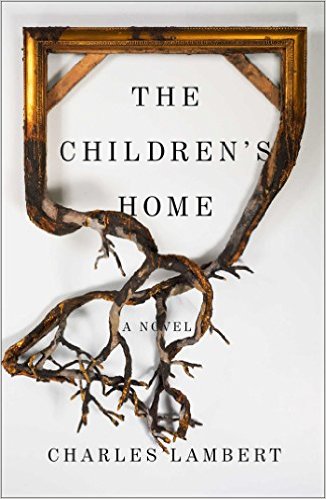
The Children’s Home by Charles Lambert

Wonderful, eccentric stray children fill a decaying country estate in this strikingly dark fairy tale.

children's home

Charles Lambert (With a Zero at Its Heart) offers a startling and adept blend of realism and frightening fantasy in The Children’s Home.

Morgan Fletcher lives alone, served by a housekeeper and a skeleton staff he purposefully never sees, on a sizable estate of fading opulence. He has been disfigured by a mysterious accident; his inherited fortune has equally enigmatic origins. His family history is only hinted at, but apparently contains ugly secrets. His housekeeper, Engel, seems comfortably wise to these difficulties, and when the country doctor, a “sunlike man,” befriends Morgan, he feels a little like himself again. The real difference, however, is the children, who show up one by one as if out of the air, some of them mere babies on the stoop. Morgan is wonderingly delighted to find himself surrounded by youngsters, whose playful noises echo often through the house, but who are strangely silent when he wishes for silence. These are not ordinary children, but Morgan has had no contact with the wider world for many years and is slow to question their behavior. They seem to seek something within his house and simultaneously seem to know his past already.

Lambert opens with plausibly lifelike scenarios and proceeds with careful pacing through the Fletcher family story. The line between reality and illusion is as imperceptible to the reader as it is to Morgan, until the final, otherworldly action accelerates with glittering vividness both lovely and grotesque. The Children’s Home is unforgettable: fanciful, chilling and poignant.


This review originally ran in the January 15, 2016 issue of Shelf Awareness for Readers. To subscribe, click here, and you’ll receive two issues per week of book reviews and other bookish fun!


Rating: 7 questions.

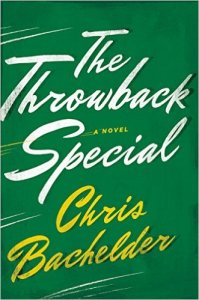
Teaser Tuesdays: The Throwback Special by Chris Bachelder

Teaser Tuesdays is a weekly bookish meme, hosted by MizB of Should Be Reading.

I have a fun one for you today.

throwback special

Chris Bachelder’s novel The Throwback Special had me laughing out loud in the strangest of places. What a gift! Also, this novel is about football – the American kind – a sport and pastime I have no knowledge of or enthusiasm for; and I still loved it. I guess that’s because even more than it’s about football, it’s about people: specifically a group of not-entirely-happy middle-aged men. They interact in some funny ways. I loved this line:

Charles, who counseled adolescent girls with eating disorders, wanted to tell Robert to put that thought in his worry box.

Keep your eyes open…

This quotation comes from an uncorrected advance proof and is subject to change.