Teaser Tuesdays: Turkish Delight by Jan Wolkers, trans. by Sam Garrett

Teaser Tuesdays is a weekly bookish meme, hosted by MizB of Books and a Beat.

Teaser

Dutch author Jan Wolkers is considered one of his country’s greats, and his fifth novel Turks Fruit (in Dutch) was among his splashiest. Sam Garrett’s is the newest, but not the first, English translation.

Check out all that text on the cover: this is indeed a feisty and erotic novel. (I love that they’re advertising Kirkus’s not-so-complimentary words.)

turkish delight

That’s why I felt this teaser was so perfect.

It was because of the ominous thunderstorm and the way the lightning kept illuminating the garden with bright flashes that, for a fraction of a second, showed you every detail of all those separate trees you’d never noticed before. As though the director was pulling out all the stops in some melodramatic B-movie.

Similarly, Wolkers could be said to pull out all the stops, and engage in melodrama; but once you’ve accepted that that’s the style of this work, I think there is much to be said for its artistic merits, and you can’t argue with its passion. Just… not for the squeamish.

This quotation comes from an uncorrected advance proof and is subject to change.

Maximum Shelf: The Wangs vs. the World by Jade Chang

Maximum Shelf is the weekly Shelf Awareness feature focusing on an upcoming title we love and believe will be a great handselling opportunity for booksellers everywhere. The features are written by our editors and reviewers and the publisher has helped support the issue.

This review was published by Shelf Awareness on September 7, 2016.


wangs vs the world

Jade Chang’s first novel, The Wangs vs. the World, is an accomplishment: sparkling characters, family dynamics, humor and despair set against global historic and economic forces, rendering the title entirely apt.

Charles Wang is a proud patriarch. He has three beautiful, talented children (though his son hasn’t slept with quite so many women yet as he should have, and his older daughter lives too far away), and has built a major financial empire in makeup manufacturing. He has the house in Bel-Air, the factories, the cars; his second wife has all the designer clothing, jewelry and handbags she ever wanted. He has a “sexy little cigarette speedboat painted with twenty-seven gallons of Suicide Blonde, his best-selling nail polish color–a perfect blue-toned red that set off the mahogany trim and bright white leather seats.”

Until he doesn’t.

In 2008, the Wang fortune evaporates, like so many others, due nearly as much to Charles’s hubris as to the economic climate of the time. In the face of this calamity (frequently referred to in his inner monologue as “the Failure”), Charles turns to an old legend: his family’s land in China, stolen by the Communists. This fable of luxury and excess was his birthright, and with the U.S.-based version collapsed, he determines to take his family back to the old country and reclaim what is rightfully theirs. And so a road trip ensues, with the patched-together family forming and reforming in various configurations cross-country.

Charles and his second wife, Barbra, depart the California home they no longer own in a powder-blue Mercedes station wagon nearly 30 years old, which luckily had been transferred into the nanny’s name, so it wasn’t repossessed with the other cars. They pick up stunned younger daughter Grace from her boarding school in Santa Barbara, then son Andrew from Phoenix, Ariz., where he’d been enrolled in college (working harder on his stand-up comedy routine than on his studies). The Wangs aim for the home of elder daughter Saina in the Catskills, where she struggles to regroup from her own personal trauma–and from there, for China. But on a southern detour, Andrew leaves the group for an older woman he meets at a New Orleans wedding.

The hilarity of filial antics on this road trip, “a troupe of Chinese Okies fleeing a New Age Dust Bowl,” forms a central part of this story. But the larger narrative involves Charles’s perception of the injustices done to the Wangs by history: Japan’s invasion of China, immigration through Taiwan, investment patterns in the U.S. The next generation of Wangs has taken an artistic turn: Saina is a fallen darling of the New York art world; Andrew aspires to be a comic, but relies perhaps too heavily on Asian jokes; and Grace surprises her elders with her fashion sense (and a promising blog on the topic). The Wangs vs. the World is about generational and cultural challenges, and not just that of the Chinese immigrant to the United States. It is more about family than money.

This is a stylish novel, fun to read. The Wangs sometime speak in a mashup of English and Chinese that Chang leaves untranslated, though adequately understandable in context. Charles has his own prejudices, including a bias against “the tropical joke of Taiwan” and “the poor, illiterate, ball-scratching half men from Canton and Fujian.” Each chapter shifts perspective, beginning with Charles the patriarch and cycling through outsider stepmother Barbra (whose further crime is to be not even Chinese, but Taiwanese), the three privileged but loving children, even the 1980 Mercedes.

Chang crafts her characters expertly, with nuance and precise details. In Charles’s mind, makeup “was artifice, and it was honesty. It was science and it was psychology and it was fashion; but more than that, it was about feeling wealthy. Not money–wealth. The brilliant Aegean blues and slick wet reds and luscious blacks, the weighty packaging, with its satisfying smooth hinges and sound closures.” In packing to leave his dorm, Andrew prioritizes “his top five pairs of sneakers–original issue Infrared Air Max 90s, Maison Martin Margiela Replica 22s, Common Projects Achilles Mid, beat-up checkboard Vans, and a pair of never worn Air Jordan 4 Undefeateds.” Saina’s social life in the Catskills is populated by few but absorbing characters–including an old artist boyfriend and a new one who’s a farmer–who are among Chang’s finest sketches. Andrew’s economics professor offers an impassioned in-class explanation for the crash: “Every one of you ought to be furious because you are the unfortunate generation who will be graduating and trying to obtain jobs in a busted economy that we might well pack up and sell to the Chinese.” These details, and perfectly formed dialogue, make an already engrossing story positively glitter.

As a novel with momentum and magnetism, reaching across generations from China and Taiwan to high-society California and New York to New Orleans and the Catskills, with stops along the way, The Wangs vs. the World undertakes an ambitious range of material. Chang manages both this sweeping plot and backdrop, as well as the finer points of characterization and relationships, with ease. The result is hilarious and heartfelt, witty and wise, and a prodigious achievement for a first-time novelist.


Rating: 8 of dad’s old paisley Hermès bow ties from the eighties.

Come back tomorrow for my interview with Chang.

book beginnings on Friday: Memoirs of a Polar Bear by Yoko Tawada, trans. by Susan Bernofsky

Thanks to Rose City Reader for hosting this meme. To participate, share the first line or two of the book you are currently reading and, if you feel so moved, let us know what your first impressions were based on that first line.

memoirs of a polar bear

I have a strange and interesting one to start off this weekend. The back of the book quotes the New Yorker on “Yoko Tawada’s magnificent strangeness.” I’m looking forward to it.

We begin:

Someone tickled me behind my ears, under my arms. I curled up, becoming a full moon, and rolled on the floor. I may also have emitted a few hoarse shrieks. Then I lifted my rump to the sky and slid my head below my belly. Now I was a sickle moon, still too young to imagine any danger.

Sweet, and strange. I’m game.

This quotation comes from an uncorrected advance proof and is subject to change.

selections from Cascadia: The Life and Breath of the World ed. by Frank Stewart & Trevor Carolan

cascadiaI just read a few pieces from this collection, so I won’t finish with a final rating, but I think it’s recommendable overall for readers interested in a sense of place in this place in particular; nature & ecology; First Nations peoples; or Emily Carr.

The table of contents is organized by category: essays, oratory, poetry, memoir. Unusually, the order of the table of contents is not the same as the order in the book itself. I picked out a few things I wanted to read: essays “In the Shadow of Red Cedar” by Wade Davis, “Reinhabitation” by Gary Snyder, and “Nature’s Apprentice” by Rex Weyler; Barry Lopez’s fiction “In the Great Bend of the Souris River”; and all three pieces of memoir, “The Laughing One: Word Sketches from Klee Wyck” by Emily Carr, “The Sasquatch at Home” by Eden Robinson, and “Lew Welch: An Appreciation” by Maxine Hong Kingston. Emily Carr’s sketches appear throughout, illustrating not only her own writing but all of Cascadia.

The work of Barry Lopez and Maxine Hong Kingston were among my favorites; Eden Robinson’s story about her mother and Elvis was curious and enjoyable. But by far the standout for me was Emily Carr, a woman I know best from a work of fiction: Susan Vreeland’s The Forest Lover. I marveled here at her skill with words as well as pencil and paintbrush. She recounts experiences as a teen visiting a mission school and other native communities, and the wisdom and humor as well as observations she expresses are impressive. I marked several startling phrases.

The house was of wood, unpainted. There were no blinds or curtains. It looked, as we paddled up to it, as it if were stuffed with black.

It must have hurt the Indians dreadfully to have the things they had always believed trampled on and torn from their hugging. Down deep we all hug something. The great forest hugs its silence. The sea and the air hug the spilled cries of sea-birds. The forest hugs only silence; its birds and even its beasts are mute.

The old man sawed as if aeons of time were before him, and as if all the years behind him had been leisurely and all the years in front of him would be equally so. There was strength still in his back and limbs but his teeth were all worn to the gums. The shock of hair that fell to his shoulders was grizzled. Life had sweetened the old man. He was luscious with time like the end berries of the strawberry season.

Luscious with time like a strawberry. I tell you. And this woman is famous for her paintings! (Etc.)

From Barry Lopez’s story, in which the narrator pours his passion into working with wood, reading wood, and using that work to read his world, comes a metaphor:

Nothing solid, I learned, can ever be built without shims.

I’ve just taken a quick overview of what this book has to offer; but I can see that it addresses the politics, history, cultures and ecology of the region of Cascadia (“a great arc from Southeast Alaska to Cape Mendocino, California”) through a variety of lenses and voices. And with some lovely words in between.

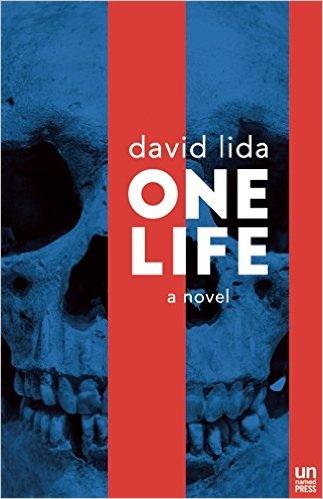
Teaser Tuesdays: One Life by David Lida

Teaser Tuesdays is a weekly bookish meme, hosted by MizB of Books and a Beat.

Teaser

I’ve been enjoying this novel, which is dark but sort of darkly whimsical, thoughtful, shocking, and heavily flavored by Mexico.

one life
Here’s your teaser from One Life:

Seated in a tiny booth, a smudged window separates Esperanza from her lawyer. She looks at Catherine’s straight brown bangs, her watery blue eyes, her bee-stung lips. Squeezed into her side of the booth, Catherine has brought a man with her; Esperanza imagines he is some other licenciado. Lawyers, cops, detectives, interpreters, investigators, detectives, consular officials and their respective assistants have all come to visit Esperanza in the months since her arrest. The meetings are brief and intense and then they disappear. She has seen few of them more than once.

This story is told in shifting perspectives, here Esperanza’s in the present, although hers visits the past quite a bit as well. The other major player is the strange man brought along on this visit. Stick around for the review: I recommend this one.

This quotation comes from an uncorrected advance proof and is subject to change.

Another Brooklyn by Jacqueline Woodson

A vibrant, emotive coming-of-age novel explores friendship and its pitfalls in a changing world.

another brooklyn

Another Brooklyn is Jacqueline Woodson’s (Brown Girl Dreaming) first adult novel in 20 years. Powerfully moving and lyrical, it demonstrates her expertise beyond the children’s and young adult literature for which she is known.

“For a long time, my mother wasn’t dead yet.” This first line presents the powerful narrative voice of August, an adult reminiscing about her Brooklyn upbringing. Chapter 2 flashes back to the summer of 1973, when she was eight years old, and the novel follows chronologically from there. August and her little brother, recently relocated from Tennessee following a murky family tragedy, adjust slowly to city life. August watches a group of three girlfriends from her painted-shut, third-floor apartment window; she longs to be with them and eventually integrates herself, building an intensely close foursome. The girls share the mysteries, miseries and conquests of puberty–though their fate is hinted at by the opening chapter.

Another Brooklyn visits iconic moments in culture and history: damaged Vietnam veterans, white residents fleeing Brooklyn, the influence of the Nation of Islam in the neighborhood and in August’s single-parent household, the city-wide blackout of 1977. The city offers hope to four beautiful, talented, intelligent girls, and threatens them with men in dark alleys and the limiting judgments of others. Afros, cornrows and hijabs mark fashions in time. But despite these vibrant, evocative framing elements, this is essentially a coming-of-age story in which a child comes to face the hard edges of reality, both particular and universal. Woodson’s eye for detail and ear for poetry result in a novel both brief and profound.


This review originally ran in the August 12, 2016 issue of Shelf Awareness for Readers. To subscribe, click here, and you’ll receive two issues per week of book reviews and other bookish news.


Rating: 7 pickled pig’s feet.

A Wife of Noble Character by Yvonne Georgina Puig

Set in contemporary Houston, Tex., this fresh riff on The House of Mirth addresses the same questions of class and feminism, although in its own way.

wife of noble character

In Yvonne Georgina Puig’s A Wife of Noble Character, Vivienne Cally comes from Houston, Tex., high society, but her value is fading: 30 years old, unmarried and living with a coldly distant aunt, she possesses no wealth to speak of. Preston Duffin is an architecture graduate student from a different but adjacent class of people; the two have known each other all their lives. Despite her traditional upbringing, Vivienne is refreshingly spirited and skeptical, and Preston’s challenges to the life she knows intrigue her. He is attracted in turn not only to her beauty, but also to her similarly questioning attitude. Because the novel’s perspective shifts between the two, readers know what neither Vivienne nor Preston does as they are mutually drawn together, mystified and intimidated.

Plot progression would be accelerated if the characters would only talk to one another, but neither of them have the ability to speak honestly. Meanwhile, Vivienne’s society affairs–bridal and baby showers, lunches, mani-pedis–and her increasing struggle to maintain the façade of effortless wealth provide both heartrending pathos and entertainment, as the scene shifts from Houston to Paris, where Vivienne attempts a professional career as an art consultant, and back. Lavish details evoke the fashion and humidity of an expertly rendered setting, and Puig’s characters can be both silly and profoundly recognizable. With allusions to Edith Wharton’s The House of Mirth, and sensitive criticisms and clever details, A Wife of Noble Character is both fun and intelligent, much like its heroine.


This review originally ran in the August 9, 2016 issue of Shelf Awareness for Readers. To subscribe, click here, and you’ll receive two issues per week of book reviews and other bookish news.


Rating: 8 pedicures.

Women Lovers, or The Third Woman by Natalie Clifford Barney, ed. and trans. by Chelsea Ray

A sprightly, autobiographical 1926 novel of a Belle Époque lesbian love triangle, written in French by an American and appearing in English for the first time.

woman lovers

The works of Natalie Clifford Barney, an American who lived in Paris and wrote in French, are little known, and her 1926 autobiographical novel Amants féminins was published for the first time only in 2013. Woman Lovers, or The Third Woman is the first English translation.

A scholarly introduction by Melanie C. Hawthorne and a translator’s essay by Chelsea Ray place this work in the context of modernism and evolving gender definitions while detailing Barney’s biography. These introductory materials are revealing and absorbing in their own right, if a little dry in their academic tone. The novel, however, leaps energetically to life.

Barney’s protagonist N., who stands in for the author, believes in love among women as an ideal of pleasure and friendship. “Friendship is simply love without pleasure!” she declares. “Love is heavy for two to carry, and happiness is monotonous.” With a new lover, M., she establishes an “association” by which the two women will comfort those in romantic distress by sharing their affections. When she brings such a woman into her relationship with M., however, N. is unexpectedly left out, jealous and hurt.

Barney is perhaps best known for her aphorisms, and she uses such pithy fragments as well as screenplay-style dialogue, mock journal entries, a combination of first- and third-person perspectives and even drawings to tell her story. Woman Lovers, while brief, is thus a noteworthy and historically significant piece of experimental literature, queer theory and a captivating roman à clef all at once.


This review originally ran in the July 29, 2016 issue of Shelf Awareness for Readers. To subscribe, click here, and you’ll receive two issues per week of book reviews and other bookish news.


Rating: 7 chestnuts.

Teaser Tuesdays: The Mighty Currawongs and other stories by Brian Doyle

Teaser Tuesdays is a weekly bookish meme, hosted by MizB of Books and a Beat.

Teaser

Brian Doyle on books! Obviously you need this in your Tuesday.

mighty currawongs
From the story called “Elson Habib, Playing Black, Ponders the End Game”:

…one only needs a hundred books, my boy; the trick is to choose carefully which books are your companions; many people simply accumulate books and do not read them, whereas a discriminating soul has fewer books in toto but swims in them regularly; and the best books bear rereading, for somehow they always contain surprises and lessons you did not notice in previous readings. It is possible that some very good books continue to write themselves after they are published, perhaps working with their companions on the shelf, which is why I rearrange them twice a year, so as to provide them with new stimuli. Who is to say that they do not communicate among themselves, in ways only they know?

There is a whole blog post hidden in here about book ownership: how many, how stored, how arranged, how loved, how many read vs. unread. Incidentally, I am preparing for another cross-country move, so packing & choosing books again. Today, I don’t want to muck up Doyle’s lovely words. That blog post will come (and you will be asked about your own habits!).

But for today, go back and reread those lines, above. Happy reading.


This quotation comes from an uncorrected advance proof and is subject to change.

book beginnings on Friday: A Wife of Noble Character by Yvonne Georgina Puig

book beginnings

Thanks to Rose City Reader for hosting this meme. To participate, share the first line or two of the book you are currently reading and, if you feel so moved, let us know what your first impressions were based on that first line.

I am having a blast with this novel set in modern-day Houston’s high society, loosely based on Edith Wharton’s The House of Mirth.

wife of noble character

I will share with you the first lines of the book, as well. But for starters, I couldn’t resist quoting here, because just look at the opening epigraph and its original author, you guys:

I learned two things growing up in Texas.

1: God loves you, and you’re going to burn in hell forever.

2: Sex is the dirtiest and most dangerous thing you can possibly do, so save it for someone you love.

–Molly Ivins

My mother loves Molly Ivins. I was glad to see her here.

The opening lines of the novel itself are a little calmer:

Preston noticed her immediately. He always did.

But never fear. This is a book that will keep you turning the pages.

Stick around.

This quotation comes from an uncorrected advance proof and is subject to change.