The Barefoot Woman by Scholastique Mukasonga, trans. by Jordan Stump

A shadow of tragedy hangs over this lovely, lyric memoir of Tutsi childhood in Rwanda, but the author’s love for her strong mother remains central.
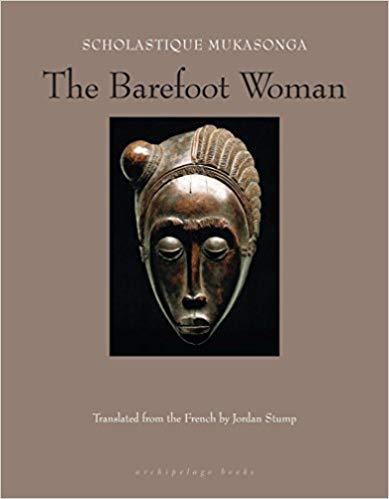
The Barefoot Woman by Scholastique Mukasonga (Our Lady of the Nile; Cockroaches) is a loving tribute to a strong mother and a striking work of memoir.

Mukasonga and her family lived as exiles in Rwanda in the years leading up to the genocide of the Tutsi. This time in her life, when they were all together and alive, was short, but Mukasonga has vivid memories, especially of her mother, Stefania, a leader in the makeshift village where they were regularly terrorized by Hutu soldiers. In an earlier memoir, Cockroaches, Mukasonga depicted the horrific end of her family. Here, she focuses on her mother: Stefania is a hard worker, always with her hoe in hand; a healer with a medicinal garden of grasses, tubers, roots and tree leaves; a “highly respected matchmaker”; and a dedicated, ever-vigilant protector of her children. Saving them was her “one single project day in and day out, one sole reason to go on surviving.” She is not a hero with a single dimension, though. In Mukasonga’s warm telling, Stefania has personality, a sense of humor and a deep love for her family.

The book opens and closes with dreamlike sequences. At the beginning, in the narrator’s memory, Stefania reminds her children of their duty to their mother upon her death. At the end, Mukasonga describes a dream about her mother’s uncared-for dead body and those of so many Tutsi. This sets the tone for the rest of the memoir, which often feels dreamy as it turns to childhood memories. Extraordinarily, this story is at times horrifying in its content and at other times playful; lyric in its style and tender in its handling of the central character. While the reader’s knowledge of the genocide to come hangs over the narrative, the everyday events often retain a quotidian feeling; Stefania and her neighbors worry over their children but also laugh and celebrate and arrange marriages. As a literary work, this establishes a rare balance. Jordan Stump’s translation from the French beautifully conveys this sense of both tragedy and day-to-day joy.

The Barefoot Woman is also an essential record of traditions and a way of life that are in danger of disappearing. It describes the inzu Stefania builds, with great effort, in exile: a traditional straw-dome house “that was as vital to her as water to a fish.” The importance of keeping a fire going, and why a mother would borrow fire from a neighbor rather than use a match. The significance of sorghum, “a true Rwandan” crop, and why Stefania insisted on a cow, the traditional gift for her son’s marriage pact, even in the inhospitable new place where cows were no longer a part of their everyday lives.

This is an adoring, gorgeously rendered memorial to a mother and testimony to a people.


This review originally ran in the November 19, 2018 issue of Shelf Awareness for the Book Trade. To subscribe, click here.


Rating: 8 little loaves of bread.

Truth Serum by Bernard Cooper

Among the central concerns of Truth Serum lie questions of truth and memory. This is a memoir-in-essays of Cooper’s coming-of-age in Hollywood from the 1950s onward, including his identity as a gay man in the early days of the AIDS virus. I found several elements I appreciated from Maps to Anywhere: lyric language and a profound attention paid to the world. I was reminded of Mark Doty in the moments that Cooper leans in, seeming to slow down time, to examine what’s around him, that the rest of us might have called the everyday. Maps to Anywhere, as I remember it*, had some longer essays but more short ones, several of which qualified as prose poems; by comparison, the essays in this collection are on balance longer, and while the language is undeniably lovely, few of these shapeshift toward poetic form. These essays more frequently offer clear narrative structure.

One shorter one I’d seen before was “The Fine Art of Sighing,” about the sighs of three family members. I’m pretty sure* this one reappears in Short Takes (ed. Judith Kitchen), and/or I’ve read it for class. I also really appreciated the opening piece, “Where to Begin,” which is very much about that problem of creating art: that the biggest question is not what to put in, but what to leave out. Else we’ll end up trying to paint, or write, the whole world, and be defeated before we begin. I loved “Burl’s” for its epiphany of gender fluidity. “Against Gravity,” about weightlifters and men and mortality, was a lovely longer meditation… I really enjoyed how it ranged and returned. “If and When” is a beautiful, tearing-open essay about discovering the narrator’s HIV status, and his partner’s. (I am reminded of an essay Cooper contributed to… some essay collection, about handling the public’s response to his revealing private information, this information in particular.) It’s a simply gorgeous and wrenching portrayal, and I think it’s a generosity. “Tone Poem” answers my statement above, about there being less poetry in this collection than in Maps. It’s not so much a poem itself, though, I argue, as it is about poetry, about finding something beautiful in the mundane. “Train of Thought” was the essay I thought might be a poem: it explores the etymology of that phrase, ‘train of thought,’ and the music and language of trains.

In one seminal dream from my childhood I was on a train with a woman who was dressed in an enormous satin skirt. I was sitting on her lap and we ladled cupfuls of cool water into each other’s mouths. Her petticoats crackled whenever I lifted the cup to her lips. “Where are we going?” I asked her. “To the city,” she said, “where the rustling of a woman’s skirt sounds the same as the rain.”

Which I misread, initially, as ‘the same as a train.’ This attention to language and sound, and a final memory about a boy who memorizes numbers, made me feel a little floated above the world. Lovely.

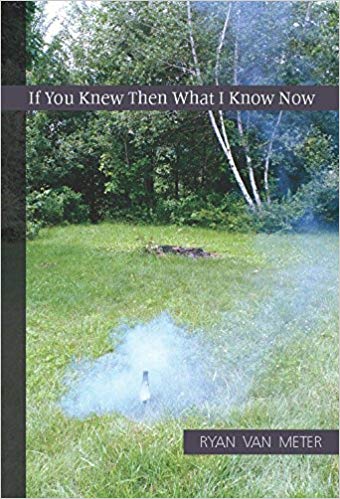
Finally, I was reminded of Ryan Van Meter’s If You Knew Then What I Know Now. Most obviously, both essay collections handle the narrators’ coming-of-age and coming to terms with being gay men. But that’s not all, and I hope I’m not guilty of that kind of simplification. I’m thinking more about the ordering of essays in both collections, where they proceed more or less chronologically, and with an overarching opening up from the immediately personal (and confusion about the subject at hand) to the outward-facing, the public issues involved with being a gay man (for example) in the 1980s as an unknown virus blooms.

Another lovely one from Cooper, although I missed the poetry in Maps and hope to get back into that book one day, too.


Rating: 8 plums.

*I owe y’all an update on this at some future date, but I’m about to be undertaking some travel and have been packing all my books to go into storage… so the other books I’ve mentioned here are not at hand as they’d usually be. I already miss my library!

If You Knew Then What I Know Now by Ryan Van Meter

Another beautiful recommendation by Jeremy Jones. Thank you, Jeremy. And thank you Jessie for cuing me to watch this one for its organization. Jessie has not read the book, but she knew that organization of an essay collection is what I need right now and she somehow knew this was the right fit. (Trust in Jeremy, perhaps? What a fascinating, beautiful world.)

This is an essay collection about the narrator’s finding out that he is gay and eventually living as a gay man. These linked essays appear in almost perfectly chronological order, and the bulk of them take place in childhood or young adulthood (while he’s still living at home). The discovery and coming-out processes took time for this individual, and those twenty-three years (I think) therefore take up most of the book. A few essays cover his adult life after coming out; one essay (although a long one) covers an eight-year relationship, which is his first, and this is one of my favorite essays.

These pieces are nicely linked and ordered, with sensible transitions and little repeated information. Each essay within itself tends to feature repeated images or symbolism that work well to make a point, to come to a conclusion–if anything, perhaps a hair more neatly than I’d prefer, but these points are always clear, and maybe that’s the side to err on. As a collection, it’s a beautiful profile of the narrator and a life, tender and thoughtful, and admirably fair to the flawed but loved parents.

I had a few favorites, of course. The opening piece, “First,” is lovely, and I remember it – I assume Jeremy sent it to me during our semester of working together, because I don’t know where else it would have come from. It’s a quick scene, riding in the car as a small boy, and an early (anti-gay) lesson given by his mother. This is a perfect capsule: scene, scrap of dialog, reflection, and back out again. The final line of the essay reads, “We all just sit and wait and watch our own views of the road–the parents see what is ahead of us while the only thing I can look at is what we have just left behind.” Van Meter is really good at final lines. This is one that I’d say approaches the too-neat conclusion, but doesn’t quite go there. Instead, it’s a perfect summing up and cue to the reader of the meaning of this painful scene we’ve just witnessed. It inspires a sigh, a murmur of recognition.

While most essays feature narrative storytelling, with their points subtly made in the narrator’s reflection, one essay was different. “To Bear, To Carry: Notes on ‘Faggot'” is much more an assaying essay, with the narrator musing on a particular nasty word, its etymology and uses and effects in history and in his own life. There are anecdotes, but the essay concentrates on a concept and not a story. While I loved the storytelling style throughout, I thought this essay was both well-written and well-executed, and well placed in the collection. It is the one, I think, that comes out of chronological order–but that’s appropriate because it’s not nearly so rooted in the chronology of the writer’s life. It showcases a different kind of writing skill, and zooms out to give the reader a different perspective on his life. It cues us to a more zoomed-out view of that life, too: from here on the essays will cover much more time compressed in each one. Childhood has ended and adulthood has fully begun. From here, the narrator is no longer struggling to know that he is gay and come out, and begin his life; now he is living.

I think my clear-favorite essay is the one that follows. “The Goldfish History” is one of the longest in the collection, and it’s the one that compresses that eight-year relationship, using as vehicle a pet goldfish. We learn about the narrator’s best friend and that relationship, which has its troubles over the years in question. We meet the first real boyfriend and follow their romance and break-up. Through it all it is the goldfish that holds the threads together and in some very real ways, the people as well. While every essay in this collection has something to teach and much to admire, this is the one I most climbed inside of and loved.

Very readable (in one sitting, in fact, and what a relief following Goldbarth) and highly recommended, for its individual essays and for its organization overall. A tender, heartfelt, generous, brave portrayal of finding one’s way. As sometimes happens when we read personal essays, I feel like I want to be friends with the man who wrote these words.


Rating: 7 stilt-walkers.

follow-up to The Twenty-Seventh Letter of the Alphabet by Kim Adrian

This Wednesday I posted my review of Kim Adrian’s new memoir; but I have more to say.

The Twenty-Seventh Letter of the Alphabet came to me as one of a series of happy accidents, or coincidences – or synchronicity. At this point, I’m not sure I can call it coincidence; this is more like the result of a cultivated reading life, for which I’m grateful. Recall how I loved and raved about Adrian’s Sock. That review posted just as I headed off to residency, and I heard almost immediately from her publicist, offering me this memoir for review. Well, I say no to these offers 99% of the time, plus I was at residency (spread extra thin), and entering thesis semester. But I was intrigued. I looked up the book. I knew I liked the author; it was the right length. I pitched the review to Shelf Awareness, who accepted, making it worth my time in that (monetary) sense. So I said yes, send me that book.

And it was not only a wonderful book, as I’ve written, but turned out to be uncannily well-suited to my studies this semester – in other words, it serves all these functions for me: a review for the blog (as requested by a pleasant, not pushy, publicist), a review for the Shelf, and a nice tie into my schoolwork.

Adrian’s memoir features photographs – described, not included – which is also something I’m doing in my thesis. (My dear friend Delaney used photographs in her thesis last semester – included them, as in Dorothy Allison’s Two or Three Things I Know For Sure – and taught on “art and artifacts” for her graduate seminar.) She studies a difficult-to-pin-down mother figure, which was the original plan for my thesis – I’ve given up on that for now, but it’s still in the back of my head. Finally and best of all, she uses that strange but quite successful structure, the glossary, an alphabetically organized series of fragments. These entries rarely strike me as “narrative” on their own, but they definitely combine to tell the story, and in chronological order. My lightbulb realization, which seems so obvious in hindsight: these entries were not titled and then sorted; they were titled for their place, to serve the alphabetical structure.

I found this fruitful reading in several senses – and not least, it was gripping. I stayed up until 1am to finish it, which is something I’ve not done, I think, in several years. So it merited this second post and my firm endorsement.

Thank you, Kim Adrian, and thanks to her fine publicist, Carrie Adams, for doing the work of connecting the right reader with the right book.

The Twenty-Seventh Letter of the Alphabet by Kim Adrian

A remarkable memoir, organized as a glossary of terms, that is part detective story, investigating a mother’s mental illness.


The Twenty-Seventh Letter of the Alphabet is a memoir with an unusual structure to match its ever-shifting reality. “I’ve wanted to tell this story for as long as I can remember wanting anything at all,” writes Kim Adrian (Sock): the story of her mentally ill mother, how she got this way and what Adrian can or should do about it.

Linda, Adrian’s mother, has been diagnosed with a long list of ailments: borderline and narcissistic personality disorders, bipolar, psychosis, paranoia and more. Adrian’s father is an alcoholic; his memories, his assertions that Linda wasn’t always this crazy, “not like she is now,” can’t be trusted, because “he’d been drunk the whole time.” Adrian’s sister has few memories from their childhood. In constructing this narrative, then, she relies entirely on her own memory. But the trouble with remembering the truth of what happened is that Linda’s lies, manipulations and her own troubles with reality created a wildly shifting experience for her oldest daughter. If Linda retold a story, the very truth of it changed for Adrian. Reconstructing the past now is therefore a fraught undertaking.

This troubled and troubling attempt to reorganize a life is organized alphabetically, beginning with an anecdote titled “Abecedarian” about an unexplained event in grade school, and ending not with “Zigzag” (Linda weaving down a city sidewalk), but with the entries under “&.” “Until the mid-nineteenth century, the ampersand was considered the twenty-seventh letter of the alphabet,” and for Adrian it offers inclusivity, “a verbal umbrella” under which she is both mother and daughter, both happy and sad.

This structure, the glossary, would feel contrived or awkward in less capable hands. The narrative of Adrian’s childhood through her own motherhood and healthy, loving family life is told more-or-less chronologically, but in fragments, whose alphabetized titles emphasize the narrator’s reliance on words, on the power of storytelling to restructure her experiences, perhaps to fix something. The glossary’s entries are anecdotes, descriptions of family photographs or simple definitions. “Domesticity: A kind of faith, in my experience.” Deceptively simple fragments add up to more than the sum of their parts.

Adrian’s story is often horrifying. Both of her parents were violent; her mother’s emotional and verbal abuse is ongoing and perhaps more shocking still. The older woman’s circumstances, bouts of homelessness and hospitalization, and the younger woman’s inability to extricate herself from the cycle of abuse, can be difficult to read. But, see “Hope: The ‘only way of knowing a person,’ said Walter Benjamin, is to love them without it.”

The Twenty-Seventh Letter of the Alphabet is a feat on many levels. Adrian tells a harrowing story, surprisingly redeemed by her own sweet family, but in many ways also continuing. She gives it meaning without having answers to all the questions she still asks herself. Her work as glossator is astonishing and inventive. Her glossary is strangely gripping, with a momentum pulling the reader in and through. The result is whimsical, even darkly funny at times, brimming with compassion, terribly sad and deeply loving. Memoir readers should not miss this singular offering.


This review originally ran in the September 7, 2018 issue of Shelf Awareness for the Book Trade. To subscribe, click here.


Rating: 8 nutcrackers.

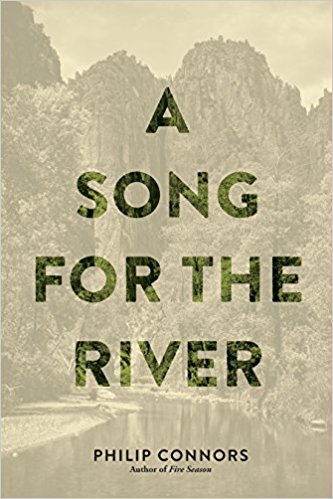
A Song for the River by Philip Connors

Today a simple repost of my review from back in June. Philip Connors’s A Song for the River was released yesterday, and you should get yourself a copy.

Connors writes,

On one quiet stretch of water I looked up at the tiered mesas above us and felt it might be true that my life was both a fire and a river, depending on the moment and the vantage from which it was viewed–and never more like a river than in moments like this.

My review, again, is here. Thank you.

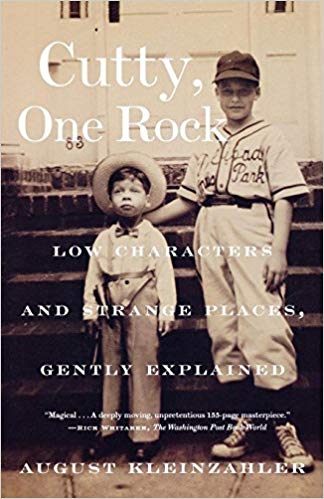
Cutty, One Rock: Low Characters and Strange Places, Gently Explained by August Kleinzahler

I bought this book nearly two years ago, on the recommendation of my friend Doug.

Cutty, One Rock has four parts in this edition (three in the original). Generally, the book deals with Kleinzahler’s background–family, hometown and neighborhood–in a Mob-rough New Jersey; it deals with place, relationships with people, and eventually with art. His parents live a middle-to-upper-middle class life, concerned somewhat with appearances; his mother is devoted to Shakespeare. The back of the book calls them “both cultivated and deranged,” which I think is apt. Early in the book, these parents figure as central influences, central characters in the child’s upbringing, but stay tuned for another important family member to come later in the book.

The adult Kleinzahler is an expatriate Jerseyite living in California’s Bay Area, and the differences between these two places, the baggage he carries between them, is another central feature. Here he is describing the “swagger, a bluff air of menace that many of the males wear”:

Once, after leaving a restaurant in North Beach, here in San Francisco, I gave a panhandler a dollar, a middle-aged black guy with some amusing riff or other.

“Thanks, Jersey,” he said, to the great amusement of my companions.

“How did you know I was from Jersey?” I asked.

“Are you kidding?” he said.

The narrator does substantial traveling beyond these two points, east and west, and these other locations and the nature of travel itself offer another recurring thread. The essay “East/West Variations” opens:

There’s a window, thirty-six hours or so, not even, when traveling by air between places, places where you’ve lived for a long time. After you’ve landed and into the next day, perhaps the evening–then you begin to lose it. It goes very quickly, decaying like a tone in the air. But for a while, inside that window, you’re hyperawake.

He goes on to describe this “window,” which I couldn’t help but conflate with the window you look out of when traveling by air–which I was doing, as it happens, while reading this book. He concludes on the next page that “places are conditions of mind.” By the end of this wide-ranging essay (which catalogs several romantic interests and his hard-nosed mother’s reactions to these women), we deal directly with a parent’s mortality. It’s a hell of an undertaking, and I’m not sure I followed him everywhere he tried to take me, but I appreciate the ambitious handling of place and people, and their intersection.

Part three tackles the subject of poetry, and poets. Kleinzahler is a poet; but he’s a rough-and-tumble Jersey poet, with no patience for poetry readings or academia. He writes a particularly scathing send-up of Garrison Keillor’s Good Poems; a profile of Allen Ginsberg (reminding me, not for the first time, of Joseph Mitchell); and a lovely elegy of Thom Gunn. The Keillor criticism, “No Antonin Artaud with the Flapjacks, Please,” is clever, and the Ginsberg profile is incisive; but I love Kleinzahler’s voice best when he writes with love, as he does of Gunn.

Kleinzahler is derisive toward intellectuals,

particularly university intellectuals, [who] indulge in pissing contests over how much they’ve read, quoting at length by heart and so on. No wonder they have no friend off-campus. Thom could more than hold his own if sucked into one or another of these contests, but it wasn’t his sport.

And it’s not Kleinzahler’s sport, either, but I do want to point out that he had me noting (and in some cases looking up) terms like diabase, tibouchina, carillon, cloaca, tatterdemalion (great fun, that one), superannuated, and–very happily–sprezzatura, which I remember from John McPhee’s Draft No. 4, in which McPhee expresses a sense of total consternation at this untranslatable and mysterious term. So there, Kleinzahler.

While there are many fine essays here–like “The Bus,” about public transportation, class in cities, and the invisible weirdness of strip centers–this book held two exceptional highlights for me. One was the essay, in part two, “The Zam Zam Room.” It offers a profile of a bar, a dark and smoky bar with a characterful bartender/owner who professionally throws people out.

When David Letterman came to town to do a week of shows, his advance people phoned Bruno to see if he would throw Letterman out of the bar on the show. “No, I’m sorry, thank you,” Bruno said over the phone. “Who’s David Letterman?” he asked us. “I don’t know this person. Why do these people bother me? He must be some New York person.”

Perfect descriptions of place, local culture, and especially a singular personality, make for an essay I love–but if it’s also set in a bar, I’m really sold.

The finest thing in these pages, though, is part four. Where the first three parts contain three to four essays apiece, this is a single essay, which shares the book’s title, “Cutty, One Rock.” That’s what Kleinzahler’s older brother always ordered when he went out, which he did, just about all night and every night until he died young and tragic. I heard echoes and rhymes of Norman Maclean’s “A River Runs Through It” loud and clear throughout. This deeply loving study of a loved brother, its close attention and reluctant acknowledgement of flaws, its worship–because the narrator was the much younger brother, always looking up–is so good it hurts. That’s them on the front cover.

This book is worth reading from cover to cover, but that final section really blew me apart. Booze; sense of place; difficult families and unbeautiful homes. Also, memoirs by poets. Good stuff. Thanks, Doug.


Rating: 8 dry martinis.

A Song for the River by Philip Connors

Philip Connors’s first book, Fire Season, changed my life and the way I thought a book could work. I’m still reeling. I need to find time to reread it someday.

His second, All the Wrong Places, worked on me differently but still impressed.

Along the way I got to meet the author and consider him a friend, although not one I’ve kept in touch with closely in the last few years. His new publisher’s email about a third book actually caught me by surprise–very, very happy surprise. I was of course thrilled to get an advanced reader’s copy, in exchange for my honest review (although I can’t at this point claim I’m unbiased about Phil’s work).

A Song for the River is a sort of sequel to Fire Season. In one sense, it’s a third memoir, and therefore refers to the events of the first two books, because all three track the life of an individual. But they do more work than that, too.

Fire Season was about the narrator’s work as a fire lookout in the Gila National Forest. It’s a personal story, a memoir, yes; but it’s also about the history of fire management in the United States, the flora and fauna of one mountain in one forest, about solitude and philosophy and the ways we deal with grief, and so much more. It’s nature writing, political writing, personal writing. All the Wrong Places concentrates more, on a particular loss: a brother’s suicide, and the narrator’s search for answers, and his self-destructive behaviors along the way. A Song for the River returns to Connors’s mountain and forest, and to some of the larger themes and breadth of Fire Season.

Since the timeline of that first book, the narrator has been through a divorce; suffered severe medical issues; lost several people he loved deeply; and seen epic wildfires tear through the wilderness he’s come to feel a part of. Amid loss and pain, he writes, “I found I wanted nothing so much as to be near moving water.” In ways that feel familiar to fans of Fire Season, Connors tracks a number of themes and challenges–pain, grief, personal inquiries–through the physical space of the Gila, with detailed attention to its trees, mosses, grasses, flowers, insects, birds, fish, and mammals. Where in his first book he devoted space to fire management policies and their effect on the natural world, here he adds a new concern: attempts to dam the Gila River, the last wild river in New Mexico and one of a small and shrinking number nationally. Among the people he mourns in this book are a dear friend and fellow fire lookout, “a forest guardian while he lived,” and a young woman he calls an inspiration, “a river guardian while she lived.” He undertakes to help protect the wild river in their honor, and to be closer to them, “gone before me in ash down the river.”

As he visits and revisits a river and travels through this wide range of topics, Connors profiles a number of people: the two in particular that he mourns, as well as other fire lookouts and sundry characters. He studies griefs, and physical pains and ailments, and questions what does and does not belong in nature writing (not, he feels sure, a discussion of his prostate troubles, and yet here they are). He explores themes of empathy and humility, ponders Catholicism, and investigates the nature of friendship and the unavoidable blank and blurred spaces in any attempt to write about a life.

There are refrains.

I reviewed my life and it was also a river, Herman Hesse wrote, in the voice of Siddhartha, a line that stayed with me through the years. Whenever I recalled it, I felt an impulse to revise it for my own purposes and replace the word river with the word fire: I reviewed my life and it was also a fire.

More than a hundred pages later,

On one quiet stretch of water I looked up at the tiered mesas above us and felt it might be true that my life was both a fire and a river, depending on the moment and the vantage from which it was viewed–and never more like a river than in moments like this.

To me, this pair of lines brings together so much of all three of Connors’s books: fire, river, duality and commonality, the connectedness of all things, human and nonhuman, from the obvious and literal fire in book one to river in book three and through the figurative fires of book two, ending in a synthesis: fire and river being one in the way that watershed and ash are part of a unified cycle. Late in the book, Connors references Puebloan beliefs: water moving from sky to earth to soil to plant to animal to death to sky again as a cycle. “The ebb and flow of drought and flood are like the pulse in a human body,” water as blood and nutrients moving through arterial systems in body and on earth. As a writer and a student of writing, the way this book closes these circles is deeply admirable to me. This kind of work can be done too neatly, but Phil allows the world to stay complicated.

I remember feeling this way when I tried to review Fire Season: I am not up to this task, putting into words why these words are so powerful. A Song for the River is deeply sad but deeply beautiful, full of love and truth. I expect it’s something like what Phil felt, trying to properly eulogize, honor, and remember his friends, and feeling less than able to do the job they deserved. This book is essential. I hope you love it, too.


Rating: 10 firm and well-placed fingers.

guest review: The Solace of Open Spaces by Gretel Ehrlich, from Pops

Pops has been making his way through my backlist. See, while we’re at it, his comments on Dream Team. Here, he’s sent a full discussion of The Solace of Open Spaces, which I reviewed here (see his comments there, too). Thanks as always for weighing in, Pops!

Thanks for yet another good recommendation, although belatedly honored.

Ehrlich’s work is as special as you describe, although you commended it with one more cowboy than I might have, likely accounted for by personal taste and happenstance, that nebulous coincidence of reading the right book at the right time (or not).

Two other, little things I noticed. One is her occasional unabashed use of urban references in metaphors or similes describing wild and natural (albeit inhabited) places. This is not so typical in literary works about the wild, but it works well here supporting her personal story as a ‘straddler,’ as she once refers to herself, shifting between places.

The other is a brief mention in her chapter “To Live in Two Worlds,” a title with meaning for her book’s personal backstory, but also for the chapter’s subject describing the parallel Wyoming culture of native Indian tribes. She attends two tribal events; one is the annual Crow Fair, where an Indian friend remarks on tribal mythology about a ‘berdache’ (p.123), a French word which she parenthetically defines as transvestite.

I have read that the American Indian or First Nation usage of a French word derives from French voyageurs, the French trappers in early North American history who were the first European contacts with many native tribes, who then adopted many French terms in their learning of English. The voyageurs encountered the cultural fact of native gender ambiguity, and recognizing a common social reference, contributed their word to an emerging hybrid language of native, English and French words.

From multiple references I have read, Wiktionary seems to get it right: berdache is “a person who identifies with any of a variety of gender identities which are not exclusively those of their biological sex.” An added comment there goes beyond what I have seen elsewhere: “Considered offensive by many Native American communities because of its pejorative and non-American etymology, berdache began to fall out of use in the 1990s; two-spirit and various tribe-specific terms are now used instead.” The latter is wonderfully explicated here by a gay blogger in Montana.

Nevertheless, I find the history fascinating, including that last reference with very helpful context: the contemporaneous accounts, from both Indians and early explorers, suggest both surprising awareness and a more tolerant acceptance of a cultural and social issue that US culture still wrestles with today.

In reading northwest history I have seen berdache, as a word and cultural phenomenon, repeated in things I’ve read lately. Notable are two excellent works of creative non-fiction history, Jack Nisbet’s Sources of the River and Peter Stark’s Astoria. The narrative lines of the two books briefly but importantly overlap, and a berdache is, remarkably, at the center of that historical confluence.

Nisbet’s work references contemporaneous journals of Scot-Canadian David Thompson, who led (and amazingly, accurately mapped) the first European expedition from Columbia River headwaters in Canada to its mouth near Portland, Oregon, in 1811 immediately after Lewis & Clark journeyed overland to the mouth. In his journeys through true wilderness, meeting some tribal parties who have never seen a white person, Thomson first hears tales of a berdache, then meets the person named Qánqon – twice! First is early in the trip, near the headwaters; second is later, at the mouth.

Astoria describes a complicated American expedition of the same period (they and Thompson were vaguely mutually aware), which involved two groups, overland and by sea, converging on the mouth of the river. All three parties converge in the summer of 1811 at the Astorian camp near present-day Portland – and, defying odds, the mysterious Qánqon also arrives, with a companion, to make it four. This motley combination clashes to provide a bit of historical human drama and political intrigue. And it all makes for wonderful reading.

So that’s what I know about berdache. And thanks to Ehrlich for providing yet another reference to an interesting historical thread.

What a turn this review took! I did not remember the term berdache at all, so there you have it. (Also, that was five years and how many hundreds of books ago? Probably nearing a thousand?) Also, although we all know I do not have time for more titles added to my list, I love a review that comes with additional reading recommendations. Thanks as always for weighing in, Pops!

Handling the Truth: On the Writing of Memoir by Beth Kephart

This craft book has things in common with both Family Trouble and Fearless Confessions. Like the former, it addresses in part the difficulties in writing about real people, especially those we love. Like the latter, it takes a certain rah-rah tone, encouraging aspiring writers to go for it, you can do it, and don’t be bothered by all those nasty critics disparaging the genre that is memoir. I don’t mean to condescend, and I appreciate the support that Silverman and Kephart offer. It is a tiny bit peppier in tone than my personal preference would call for. But it’s valid support that I need and appreciate, and it’s backed up by both writing chops (publications) and a secure knowledge of craft.

So this is not a *perfect* book, for me, but a very good one. I really enjoyed Kephart’s boiling-over enthusiasm for the genre, and I’m inspired by her apparently wild success as (in her own words) an “entirely unschooled” writer. I love her annotated appendix of memoirs to read, categorized by subject (grief, childhood, “unwell,” “mothers, fathers, children,” and more): there are so many such lists out there, but I eat them up every time, looking out for the title that I’ve never encountered before (and there were several here!), for the different perspective. Kephart does a good job, introducing this appendix, of pointing out the subjectivity of such lists, the value a book may hold for one reader/writer and not for another, and the value in a book a reader doesn’t love.* Then she goes ahead and lists–with some discussion/description, which is great. Here, the title I picked up on was Nothing to Declare: Memoirs of a Woman Traveling Alone by Mary Morris. I went ahead and ordered myself a copy on Biblio.

In the body of the book, Kephart offers discussions of what memoir is and what it is not (not revenge, not tone-deaf, not therapy, but rather making the “me” work for “us,” making one’s story universal). A number of short chapters offer prompts, or reminders to include weather, place, food, and sensory detail. Final thoughts on how to turn scraps of writing into a book; and exhortations to always work from and toward empathy, to not make stuff up. I appreciate that one of the central pillars of memoir writing, for Kephart, is the idea of making a story speak to the human condition. That my story is not interesting because of its particular, but becomes interesting when I make the unique universal, make the personal stand in for shared experience, draw conclusions, find meaning. (See Gornick’s The Situation and the Story–though it’s not my favorite articulation of this idea, Kephart appreciates it.)

There is much to love here, especially for hesitant writers new to memoir, or those without the benefit of an MFA program–though I am in a program I love and still found lots to appreciate!


Rating: 7 porcelain dogs.

*I am totally tickled when she writes, “You will blog about my inevitable injustice,” when I the reader find my favorite memoir left off her list. Here I am, blogging! But she listed several I love, by Kimmel, Bechdel, and Bragg; Dillard, Williams, Offutt; titles I haven’t read but have faith in by Sanders and Thomas; craft books by Klaus, King, Lamott; and Doty’s Heaven’s Coast, which I am anxious to get to. Sometimes she chose my second-favorite title by a given author. But I am certainly not here to blog about any injustices, no.