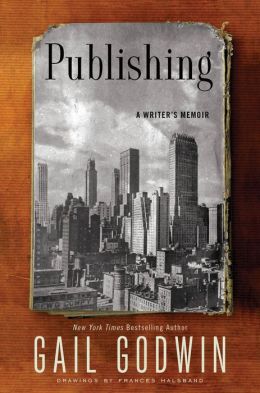
Teaser Tuesdays: Publishing by Gail Godwin

Teaser Tuesdays is a weekly bookish meme, hosted by MizB of Should Be Reading.

publishing

The plentifully published Gail Godwin looks back on her career in Publishing. She is charming and humorous as well as moving; and I think these lines begin to express that.

“What kind of editor would you like to work with?” was Robert Gottlieb’s first question to me in his office, and I replied rather pompously, “Well, it will have to be someone who appreciates great literature,” then burst into sobs.

and several paragraphs later,

…on that late 1970 December day, he waited out my sobs and then said kindly, in response to my Great Literature stipulation, “Well, Gail, I’m afraid that’s going to be me.”

Lest you think her, well, obnoxiously pompous, I assure you she had reasons to be crying that day. And this description of these events is, I think, sweetly funny. I do recommend her.

This quotation comes from an uncorrected advance proof and is subject to change.

The Story of My Heart by Richard Jefferies, as rediscovered by Brooke Williams and Terry Tempest Williams

An exceptional meditation on nature and “soul-life,” republished after many years out of print and contextualized for modern minds.

story

In a dusty Maine bookstore, writer Terry Tempest Williams (When Women Were Birds) and her husband, Brooke Williams, picked up an unfamiliar book that they quickly came to love: The Story of My Heart by English naturalist Richard Jefferies, originally published in 1883. As Brooke writes, “classic works of literature need to be rediscovered and reinterpreted every age for their clues to contemporary issues.” This new edition of Jefferies’s autobiography includes an introduction by Terry and Brooke’s commentary following each chapter.

Don’t be fooled by its small size. This is a book to be taken slowly and savored, because all three of its wise and pensive authors demand and deserve careful consideration. Here is Walden, but more mystical, and with no room to criticize the author for returning to wealthy drawing rooms between his stays in the woods. Jefferies has been characterized as a nature writer and a mystic; in Brooke’s words, “Jefferies writes less specifically about the natural world surrounding him, but in great detail the path his mind takes through that original world.” The Story of My Heart is a philosophical, wondering and wandering, musing, personal ode to the natural world and human potential. The Williamses make his contemplations relevant by analysis–for example, applying the context of climate change–but also explore a more intimate connection, as Brooke ponders the nature of his obsession with this book.

Both literal and spiritually minded readers can appreciate this remarkable collaboration through the counterpoint of Brooke’s responses to each chapter and the timeless thoughts in the original work.


This review originally ran in the November 18, 2014 issue of Shelf Awareness for Readers. To subscribe, click here, and you’ll receive two issues per week of book reviews and other bookish fun!


Rating: 9 leaves of thyme.

Teaser Tuesdays: You’re Not Lost If You Can Still See the Truck by Bill Heavey

Teaser Tuesdays is a weekly bookish meme, hosted by MizB of Should Be Reading.

not lost

Bill Heavey has written for Field & Stream for a number of years; this is the third collection of his work (from F&S and elsewhere). He is a funny man. Hunting and fishing are not hobbies of mine, but this does not disqualify me from enjoying his work.

Every year, in celebration of the return of spring and fishing, I try to have at least one colossally stupid experience involving a canoe. Some people might call it a jinx, but I prefer to think of it as an involuntary tradition. All it takes to have a near-death experience in a small boat is to put aside common sense for a few moments. After that, everything takes care of itself.

Maybe I’m just a sucker for self-deprecation – and all the better in such a macho setting as this. Good stuff.

This quotation comes from an uncorrected advance proof and is subject to change.

vocabulary lessons: Grizzly Years by Doug Peacock

If you’re interested: see other vocabulary lessons as well.


grizzlyUnsurprisingly, Peacock taught me a number of new words in this book, generally of the technical & outdoors variety.

“…grizzlies can walk lightly over a thin crust, distributing their weight evenly on their plantigrade feet…” plantigrade: “walking on the sole with the heel touching the ground.” Which makes sense, as Peacock later writes: “I squatted and traced the outline of the grizzly’s rear foot in the crusted mud. How humanlike it was.”

“Not a single tree decorated the lacustrine benches.” lacustrine: “of, relating to, formed in, living in, or growing in lakes.” A parallel to ‘riparian’, then?

“I dropped down to explore the little mountain, half evenly timbered, half steaming rhyolite and broken andesite.” rhyolite: “a very acid volcanic rock that is the lava form of granite”; and andesite: “an extrusive usually dark grayish rock consisting essentially of oligoclase or feldspar.”

“We passed two tiny azure tarns beginning to melt in the weak spring sunlight…” or “I wondered if anyone had ever visited those four lonely tarns.” tarn: “a small steep-banked mountain lake or pool.”

“High above, I saw the broad wings that had startled the bovid…” bovid: ” any of a family (Bovidae) of ruminants that have hollow unbranched permanently attached horns present in usually both sexes and that include antelopes, oxen, sheep, and goats.” I knew ‘bovine’, of course, but was thrown to see ‘bovid’ (here, referring to a mountain goat); I thought bovine meant cows, specifically. I guess this word is a little more inclusive.

“A spine of dolomite ran off the range of peaks and continued down the mountain as a bedrock ridge.” dolomite: “a mineral CaMg(CO3)2 consisting of a calcium magnesium carbonate found in crystals and in extensive beds as a compact limestone.”

“We set up our tent, locating it out of the wind on the carpet of Carex.” Carex: “a vast genus of almost 2,000 species[2] of grassy plants in the family Cyperaceae, commonly known as sedges.”

“On an island to the south, melanism has prevailed in a species of jackrabbit living among gray andesites and scabrous vegetation.” melanism: “an increased amount of black or nearly black pigmentation (as of skin, feathers, or hair) of an individual or kind of organism.”

“Grunion appear on the beaches of the northern Gulf from February to April after the big tides of the full moon.” grunion: “a silverside (Leuresthes tenuis) of the California coast notable for the regularity with which it comes inshore to spawn at nearly full moon.” Okay, but what is a silverside?? The “Concise Encyclopedia” entry, a little further down the same page, is more helpful: “Edible Pacific fish (Leuresthes tenuis) found along the western coast of the U.S. In the warm months, it lays its eggs in beach sand during a full or new moon when the tide cycle is at its peak. The young hatch and enter the ocean on the next spring tide, two weeks later. Grunion reach a length of about 8 in. (20 cm).”


What have you learned in your reading recently?

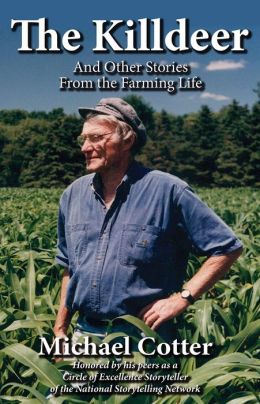
book beginnings on Friday: The Killdeer and Other Stories From the Farming Life by Michael Cotter

Thanks to Rose City Reader for hosting this meme. To participate, share the first line or two of the book you are currently reading and, if you feel so moved, let us know what your first impressions were based on that first line.

killdeer

Michael Cotter was always a storyteller; but he didn’t get to grow fully into that role from the beginning.

“Cut out those damn stories and get some work done around here!” That was my most dreaded message from my dad. Our farm was a livestock farm and it was pretty labor intensive in the early years.

Happily for his readers, he did get around to it, however. I’m really enjoying this collection. The title story “The Killdeer” comes especially recommended.

This quotation comes from an uncorrected advance proof and is subject to change.

Grizzly Years: In Search of the American Wilderness by Doug Peacock

I have a confession to make: I have been reading quickly lately. I’m busy – buying one house and selling another, getting rid of most of our furniture and one car, arranging to ship the other, planning a cross-country move and a goodbye party, and honoring social commitments with lots of friends because I don’t want to miss a chance. I’ve quit my full-time job, and now my employment consists of writing book reviews (and any additional editing work I can get). I’m reading with the finish line in mind: finish this book, write it up, start the next. One a day, ideally; and often it is that quick. I’m not unhappy with my output, and I love to read books and learn new things, and the more the better. But at some point I can’t take it all in…

And then there’s that one book that just forces me to slow down. This week, it was Doug Peacock’s searing, precise, deeply felt writing in Grizzly Years.
grizzly

After Vietnam, I caught myself saluting birds and tipping my watch cap to sunsets. I talked a lot when no one was around, especially to bears.

You recall that I was impressed by Peacock’s Walking It Off. And I recently enjoyed Great Bear Wild; which pushed me to finally pick up Grizzly Years, which has been waiting patiently on my shelf ever since Walking It Off more than two years ago now. As I neared the end of this outstanding read, a beautiful short chapter about the Sea of Cortés makes me want to move straight on to Sea of Cortez: A Leisurely Journal of Travel and Research by Steinbeck and Edward F. Ricketts, which I have owned for a year or more but sits unread. (Actually, it’s packed now, so it will wait.) And that’s how my reading path develops, sometimes.

But what about the book itself? It has many things in common with Walking It Off, which was written and published later but actually feels like a fine book to read in preparation for Grizzly Years. Like that later book, this one studies the interplay between war and wilderness, and I was again struck by what I would have thought would be the unlikely duality there; I guess I thought war was inimical to nature, through it’s destructive power; but Peacock repeatedly and convincingly likens his combat experience to his behaviors in grizzly habitat.

After Vietnam, he was too upset by the “real world” or what he calls (with perhaps a nod to Huck Finn) Syphilization. As Peacock says best himself:

Vietnam gave us a useful pessimism, a pragmatic irreverence I can wear comfortably down any bear trail. No one can ever show me a photo of a mutilated body or dead child again and tell me it is the way of the world. I can’t live in that world, but I do want to live. If this is a wound, it doesn’t want mending.

I was surprised to learn that his local “rough” bar on the edge of the wilderness is mostly populated by Vietnam vets.

They were friends, naturally, as this particular drinking establishment was largely avoided by company loggers, grizzly bear poachers, and higher ranking officials of the Department of Interior.

He tells us that those vets naturally moved toward the edges of Syphilization, the wildest country they could find. In this chapter, Peacock approaches Abbey’s tone of humor, but then gets serious again quickly. He’s a serious guy.

I’m afraid I am implying that the book is largely about war and its personal aftermath, though, which is incorrect. As its title indicates, it’s really about grizzly bears. Peacock spent a few decades traveling seasonally to visit with the same bears year after year, observing where they bed down and den and eat and mate, learning their habits and finding in respect for their wildness some peace for himself. These are not tame bears, and he doesn’t live peacefully side by side them – he has to be careful, because these are true, wild grizzlies. But he knows well enough how to do that, how to live nearby for days or weeks without dying (although he comes close a few times).

Much of the book is grizzly sighting after grizzly sighting; but it doesn’t get old. Every time it’s exciting and beautiful and tinged with danger (which contributes that humility he needs), and the scenery varies, as Peacock travels from his fire lookout in the Montana high country, to what he calls the Grizzly Hilton (also Montana, a pocket of habitat where he consistently sees the best bears), to Yellowstone, the Madison River to fly fish, the Sonoran desert, then to seek out the last Mexican grizzly in the Sierra Madre. (Maybe next year he’ll try the north country again, Yukon or Alaska.) He subsidizes his sparse lifestyle with a little money earned for photographs and film of grizzlies, a commercialism he is ambivalent about. When traveling in the backcountry, he lives off granola, protein powder and (like the bears) huckleberries; but in his lookout cabin, he cooks chanterelle mushroom bisque and cracks open fine Bordeaux wines. Peacock is well named: he is a colorful character, but has none of the strutting associated with the peacock. Abbey is less present here than in Walking It Off, which is fine because Peacock doesn’t need him. I may have gotten here by way of Abbey, but Peacock is a very, very fine writer without help of his friend’s celebrity. In the same style that I appreciated in Fire Season, Peacock intersperses his personal narratives of grizzlies and war with explorations of the history of grizzlies, their place in native cultures, and Syphilization’s damage upon them. He exhorts us gently and briefly in support of preserving a little habitat to let these creatures live. But mostly it’s just simple, beautiful description of his grizzly years.

Beautiful writing, thought-provoking and poignant and important, a fine work of natural observation and consideration of people and grizzlies, war and wilderness: Grizzly Years is one of the best books I’ve read this year and one of the most important I could recommend to you.


Rating: 10 yearlings.

All the Wrong Places by Philip Connors

Two disclosures on this one: I read an advanced reader’s copy; and I consider the author a friend.


wrong placesFrom the author of Fire Season which I loved so much (first-ever 10 out of 10 here at pagesofjulia) comes a newer and even more personal story. Connors’s first book was about life as a fire lookout in the Gila Wilderness; we learned a great deal about the author himself, including some of the demons he’s fought in his life; but we also learned a lot about federal fire management (historical and present), the flora, fauna and atmosphere of the Gila, and what it’s like to balance the isolation involved in a profession I’d never heard of before, a profession “in its twilight.” It was both a deeply personal book, and a book about the world.

By contrast, All the Wrong Places is a singularly personal story. As briefly mentioned in Fire Season, Connors had a younger brother named Dan, who killed himself when they were both in their early twenties. Connors has written about this event and its aftermath in a few articles since; and now, in book-length form. I can only imagine it was difficult, writing a book about long-term pain.

This story follows Connors from the University of Montana, where he was enrolled at the time of the suicide, through his years working in New York for the Wall Street Journal (which considering his politics is a serious conflict in itself); his experience there during the events of September 11; and his path to becoming a fire lookout. The essence of the book, the questions it asks and tries to answer, are why? and how do I deal with this; who am I to become in this aftermath? He tries to investigate his brother’s death, his decision and final moments; but more than that question, All the Wrong Places considers what Connors will be in his own life, how this effects him, how to deal & recover. It would be too pat for Connors to put a full stop to that questioning, but he does come to some place of …if not conclusion, maybe a degree of acceptance. If not redemption, peace.

Connors’s writing has many strengths, but in this case, the greatest may be his ability to be sometimes, astonishingly, funny even while handling this shocking pain and terrible tragedy. He remains lyrical in the oddest, or most difficult, circumstances. In studying the collected notes of a man obsessed with McDonald’s, who’d visited over 1,000 of them and scrupulously recorded their nuances:

Their banal repetition had a strange poetry to it, a kind of Whitmanesque list-making for the end of the millennium; in almost every instance he’d noted what he’d eaten, and the thought of all those empty calories, millions and millions of them, staggered me.

This poetic description of the absurd and vaguely ghastly, in itself, is oddly satisfying. There’s something intriguing going on there.

In other words, his writing is as fine as ever, humorous and thoughtful and touching, and I hadn’t realized how much I’d missed his voice, which is thoroughly recognizable and comforting.

But less comforting, again, is the subject matter at hand, so painful, and so personal. It’s astounding to think about baring oneself to this extent to anyone willing to buy a book at a bookstore. I consider Phil Connors a friend: after I loved his first book he wrote to me, we corresponded a bit, and then Husband and I got to meet him in person too. I thought I knew him moderately well, but learned so much more in this book. I wonder how that colors my reaction; it’s closer to home this way. The pain of others can be paralyzing; and frankly it’s easier with a degree of remove, as in my former job at a cancer hospital, where my library patrons were held at a professional distance (even though we talked about some pretty personal stuff). I want to compliment Connors’s “bravery” in telling this story, but that feels too simplistic (and I bet he’d brush off the compliment). I’m getting less eloquent here, I know. Thank you, Phil, for sharing your story. I found it riveting, I’m so glad you’re okay, and even though this may not have been your goal, I think it might help some other people.


Rating: 9 faxes.

I read an advanced reader’s copy of this book, which is subject to changes before publication. All the Wrong Places will be published in February 2015.

Off Course: Inside the Mad, Muddy World of Obstacle Course Racing by Erin Beresini

One woman’s exhilarating experience in a strange extreme sport.

off course

Erin Beresini was a committed Ironman triathlete and endurance athlete facing overtraining injuries and burnout when she first heard about obstacle course racing (OCR). How silly, she thinks, and how divergent from her past efforts–perhaps just the thing to make new friends, find new motivation and relieve her overstressed muscles by working new ones. From her first mud run she is hooked, and gratifyingly exhausted. She jumps feet first into this bizarre new scene, undertaking a journey that culminates in racing the OCR world’s first marathon-length event, the Spartan Ultra Beast. In Off Course, she documents her labors.

Throughout Beresini’s often-funny personal story, she interjects details of the history and quirks of this recent trend in amateur athleticism. Characterized by mud, fire, ice and blood–and often involving broken bones, electric shocks, sadistic beatings and barbed wire–OCR strikes many as an insane way to chase fun and fitness. As it happens, millions have signed up for these events in recent years, in the United States and around the world. The sport draws “regimented military types and anti-organized sports rebels,” and shares a fan base with CrossFit and endurance athletics. Beresini also scrutinizes the compelling personalities (and controversies) behind the sport’s two main powerhouses, Spartan Race and Tough Mudder, as well as a handful of their participants. As weird as this tale is, it will appeal to both fans of sports narratives and readers who appreciate offbeat obsessions.


This review originally ran in the October 24, 2014 issue of Shelf Awareness for Readers. To subscribe, click here, and you’ll receive two issues per week of book reviews and other bookish fun!


Rating: 7 burpees.

Older, Faster, Stronger: What Women Runners Can Teach Us All About Living Younger, Longer by Margaret Webb

An amiable and instructive memoir about achieving and maintaining competitive fitness at any age.

older

Margaret Webb (Apples to Oysters) was a successful young athlete and an active adult, but never suspected she might be a marathoner. Staring down her 50th birthday, she became curious about what she could accomplish. She knew there were competitive women runners several decades her senior; could she join their ranks? Older, Faster, Stronger covers what Webb calls her “super-fit year.” And as her subtitle states, the lessons she shares are valuable for men and women of all ages, in any sport.

With the luxury of being able to devote her time and energy primarily to training, Webb engages expert nutritionists, personal trainers, coaches, sports psychologists, aging specialists, physiologists and laboratory researchers. She has her maximal oxygen consumption tested (twice); adds cross-training, gym time and track workouts to her running schedule; travels; and brunches with world champion septua-, octo- and nonagenarian women. She sets goals: to qualify for the Boston Marathon under the fastest women’s standard (the qualifying time for 18-to-34-year-old women) and to be competitive in the half-marathon at the World Masters Games.

Webb is meticulous in applying her results stringently to her own life and documenting them for her readers. Her research appears thorough, although the more fastidious reader may be frustrated by the absence of citations. Older, Faster, Stronger is packed with statistics and studies, but is well explained, so the reader will find the science easily digestible. Athletes of any sex, age and discipline can benefit from–and be entertained by–Webb’s approachable investigation of becoming faster and stronger into advance age.


This review originally ran in the October 10, 2014 issue of Shelf Awareness for Readers. To subscribe, click here, and you’ll receive two issues per week of book reviews and other bookish fun!


Rating: 8 minutes.

Teaser Tuesdays: The World of Raymond Chandler: In His Own Words, edited by Barry Day

Teaser Tuesdays is a weekly bookish meme, hosted by MizB of Should Be Reading.

chandler

Yes, it’s true, I just recently did a book beginning; but Chandler is just so quotable (thus this whole book, of course). I couldn’t let this one pass us by.

I write when I can and I don’t write when I can’t, always in the morning or the early part of the day. You get very gaudy ideas at night but they don’t stand up.

That first sentence is unclear: which condition happens always in the morning or the early part of the day? the can, or the can’t? I choose to believe that it is the can; many respected writers (ahem Hemingway) do or did their best work in the mornings. I am certainly a morning person myself. And I like this idea that our nighttime ideas are “gaudy”; I think that’s perfect. I get ideas at night, but they never stand up to sunlit scrutiny. What about you?

This quotation comes from an uncorrected advance proof and is subject to change.