Maximum Shelf author interview: Yael van der Wouden

Following Monday’s review of The Safekeep, here’s Yael van der Wouden: ‘All That’s Left of Them.’


Yael van der Wouden was born in Tel Aviv and currently lectures in creative writing and comparative literature in the Netherlands. Her debut novel, The Safekeep, a quiet consideration of the aftermath of World War II in the Dutch countryside, will be published by Avid Reader Press in May 2024.

What about this story needed telling?

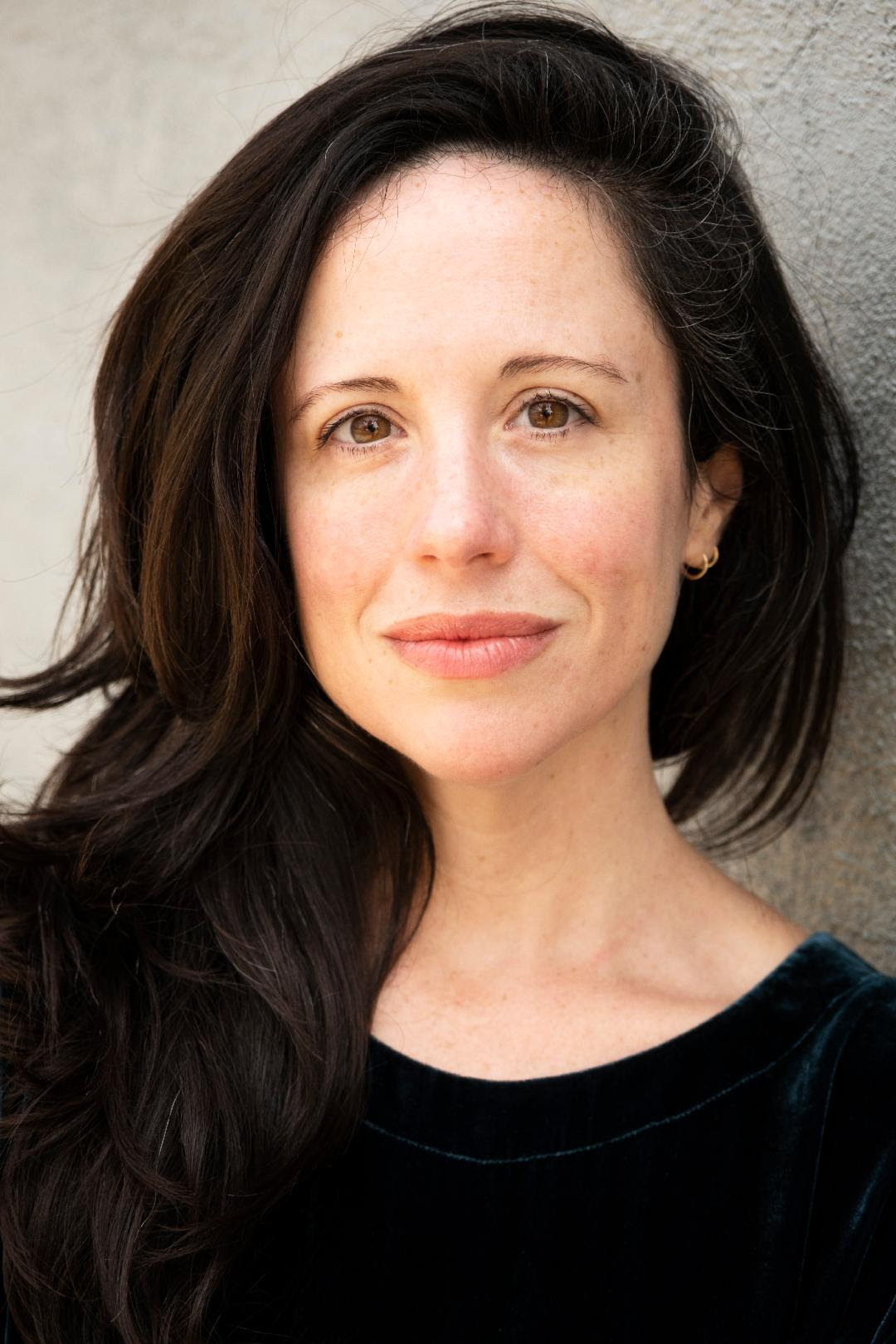
Yael van der Wouden (photo: Roosmarijn Broersen)

The most common story you hear from Dutch Jewish people of my generation is they grew up not knowing they were Jewish. Around age 20, 25, when their grandparents got older, the story came out: they were Jewish and either had to hide during the war or decide to convert entirely. They were so traumatized by being recognized as Jewish that they just wiped it clean. I have a lot of friends around me who around that age started digging into that history. I think I leaned heavily into that.

My mother is Israeli but her heritage is Bulgarian and Romanian, and my dad is not Jewish. He’s Dutch. My Jewishness is not related to my Dutchness. I grew up within Jewish culture, so a lot of those friends came to me. I was always embarrassed to tell them I can give you the songs, the rituals, but the real, true, in-depth knowledge, I do not have. But I guess when you have nothing, then anything resembling a cultural narrative is a lot.

I spent a lot of my 20s in a turmoil of frustration and anger around how nonexistent Jewish heritage is in the Netherlands. It’s been cannibalized: taken apart and consumed by mainstream Dutch culture. There’s a lot of Yiddish in Dutch, which is very confusing when no one is Jewish but everyone says words you understand. How did this word get here? Mazzel, or punim which means face, or lef which means bravery, heart. There were traces. Empty synagogues, houses with David stars on them but no one lives there anymore… it’s as if–no, it is that an entire community of people has just disappeared overnight. And no one ever asked where they went.

All that’s left of them is the traces of language, and locale. The places where they lived. When I started to notice what was around me and what was not present, I (in very 20s fashion) became very frustrated and angry. It’s a conversation that I’ve been having with myself and with people around me ever since. What needs to happen with that history? What does an apology mean? Who is the apology for? Is it for the person who apologizes, or is it for the person on the other end, who receives it? I don’t want an apology. What kind of acknowledgement do I want? That’s the question that’s been on my mind for a long time.

What’s changed in the Netherlands?

If one person is born into responsibility, and the other person is born into misery, how do you marry the two? In that conversation I was having with myself, it’s more than acknowledgment. “Yes, this happened. Yes, I’m sorry.” What I wanted for these characters is for them to find the next step, which I believe is desire. Desire to have the other person around. Desire to have the other person stay. The other side of the coin.

The Netherlands had one of the highest percentages of deported people during World War II. The narrative is that the Dutch had a great resistance, they helped people hide, but actually a lot of people asked for money to hide people. Only people who had wealth could hide. The Dutch are very big on bureaucracy. So when the German officers and officials asked, where are the Jews and where do they live, the Dutch just said, here they are. That’s why it happened so quickly, across the board. They were very efficient. For me the flip side of not caring that someone is going to be taken away is desiring the person to come back, desiring them to stay. How do we take ignorance and prejudice and flip it into desire? I don’t think that tolerance and acceptance is the solution. I think desire is the solution. I wanted to take Isabel and crack her open and see what would happen if that small life, that small way of thinking, were filled up with desire.

The conversation about Jewish life in the modern-day Netherlands is either about the war, or Israel and Palestine. When the Dutch talk about Jews they talk about those who have died or those who are not there. It’s never about the present, the people who live here and how we are a part of society. It feels invisible–and at the same time, I don’t want my visibility to be connected to death. I want it to be about Passover or Rosh Hashanah, or anything else. When you talk about somebody only in the context of them not being there, you’re emphasizing that they don’t belong in your midst. And that goes back to the idea of desire. Maybe it’s a childish thing. I just want to be desired.

Your book includes some lovely erotic writing.

For me, erotica is about the knife’s edge of voyeurism and participation. As a reader, you want to feel like you are present, but if you are too present then I think the text tries to envelope you, tries to comfort, and I think good erotic writing makes you a little uncomfortable.

Zoom in, zoom out. Zoom in on a body part–ideally you don’t zoom in on a body part that is sexual. An elbow, the tip of the nose. Something unexpected. Then you contrast that with something that is very sexual or very obvious. I think that’s how you create that erotic tension.

People sometimes enter into it with their own discomfort, and rather than treat it earnestly, they make it either as weird as possible or as disgusting as possible. Every body part, all the filthy juices. They will not create something attractive, but lean into an element of disgust. I think you need a little bit of disgust, but it should be a palette. It needs to be a good goulash: the sour, the sweet, the savory. You have to be completely earnest about it or it will not work. You need to fully mean to write something personal and intimate.

What do you feel makes a fascinating protagonist?

Everybody will have a different answer. For me the answer is quite similar to the question of what makes good erotica. I think the answer is contrast. Conflict. My favorite line about protagonists is from E.M. Forster. When he talks about Maurice, he says he wanted to write the most normal, run-of-the-mill guy, and then give him something that upends his worldview. For Maurice, it is that he falls in love with a man. The entire mechanism of him has to change in order to accommodate this thing within him that doesn’t fit within the norm. I think that’s the most fascinating character. Somebody who has their idea of who they are, and then you throw something in the middle that topples that Jenga tower. Those are the most interesting moments in our lives, when you have this idea of who you are and something or somebody comes along and you realize, oh, no–I had no idea who I was.


This interview originally ran on January 17, 2024 as a Shelf Awareness special issue. To subscribe, click here, and you’ll receive two issues per week of book reviews and other bookish fun.

Maximum Shelf: The Safekeep by Yael van der Wouden

Maximum Shelf is the weekly Shelf Awareness feature focusing on an upcoming title we love and believe will be a great handselling opportunity for booksellers everywhere. The features are written by our editors and reviewers and the publisher has helped support the issue.

This review was published by Shelf Awareness on January 17, 2024.


Yael van der Wouden’s first novel, The Safekeep, explores the rural Dutch landscape in the years following World War II through the life of a lonely, sheltered woman reluctantly forging new bonds. In what is largely a closed-in, personal story with a solitary protagonist, van der Wouden also examines larger issues in the social context of Dutch postwar society.

The story is set in 1961, in a rural Dutch province that has largely recovered from war, on its surface. Isabel has spent her life tucked away in the house where her family relocated from Amsterdam during the war. An uncle found the place for them, and 11-year-old Isabel took up residence with her mother, younger brother Hendrik and elder brother Louis. Eventually, their mother died and the brothers moved away, but Isabel stayed, believing there was nowhere else for her. She keeps the house meticulously, polishing dishes and micromanaging a series of beleaguered maids. “She belonged to the house in the sense that she had nothing else, no other life than the house, but the house, by itself, did not belong to her.” She lunches occasionally with Hendrik, less often with Louis. In her lonely, strictly regimented life, the house is Isabel’s constant, the thing she can control, her greatest comfort.

The Safekeep opens in her garden. While digging out late-season vegetables, Isabel finds a shard of broken ceramic, “Blue flowers along the inch of a rim, the suggestion of a hare’s leg where the crockery had broken. It had once been a plate, which was part of a set–her mother’s favourite…. There was no explanation for the broken piece, for where it had come from and why it had been buried. None of Mother’s plates had ever gone missing.” This beginning offers an early clue that Isabel’s understanding of the house and its contents, of her own personal history, may be flawed.

Further disruptions follow. Hendrik, a steadfast supporter of his solitary sister, nevertheless lives a life she hasn’t come to terms with. He lives with a man; this makes Isabel uncomfortable. Worse, Louis brings yet another young woman, Eva, to a dinner with his siblings. Eva sets Isabel on edge for reasons Isabel does not understand. Additionally, any serious liaison for Louis implies a threat to Isabel, who is permitted to stay in the house only until Louis (its intended inheritor) settles down to start a family. Worse yet, at Louis’s insistence, Eva comes to stay at the house with Isabel while he is on a trip: Isabel is horrified to be made to share her space with a woman she despises.

The tension in the house rises to a nearly unbearable pitch. Isabel habitually suspects her maids of stealing, and now suspects Eva, whose own history is murky, as well. Isabel obsessively inventories china dishes, silverware, and items of décor, counting spoons and watching Eva’s every move. She cleans and displays and relocates the mysterious shard of plate from the garden, imbuing this small object with outsized power. Eva’s presence continues to feel inexplicable. Louis’s return from abroad, to collect Isabel’s unwanted houseguest, is delayed. Tensions continue to build.

Van der Wouden excels in surprises, including changes in tone. The Safekeep remains, almost in its entirety, nearly claustrophobic in its focus on Isabel’s commitment to her family home. “Bound to the house, [Hendrik] said. As if it was a tether and not a shelter. And not her own love, too.” But this tightly bound, insular story of one woman’s struggle finally zooms out, with near dizzying quickness, to engage with larger questions. An old friend of Isabel’s mother is preoccupied with a dish that was given to her “to keep” before the war, by a neighbor who now wants it back. This friend believes it is hers now; the neighbor disagrees. “What does it matter, gifting, keeping? She gave it to me. It was a terrible time. She was gone for years.” As its title hints, van der Wouden’s novel will puzzle over various meanings of safekeeping. Likewise, the sparsely populated story is punctuated by passages of erotic writing that surprise as much by their loveliness as by their departure from the book’s otherwise lonely atmosphere. Not only the story of one family’s struggle or Isabel’s quiet pain, The Safekeep addresses themes of yearning, possession, the difficulties of Dutch recovery from World War II and of same-sex couples’ experiences in a society still regaining its feet.

In the end, like a country recovering from a trauma, Isabel must step outside her space of comfort and familiarity in order to learn and grow. “Isabel tested one [of the frozen canals] with her foot, and found it solid, and then stood on it in wonder: a miracle, she thought, to stand so solidly on what could also engulf you.” Van der Wouden communicates and implies much with a minimalist style that is often quietly, shockingly, beautiful. “The shadows lifted as though they’d only been glimpsed under the hem of a skirt–the lift on an arm, secrets of the body that only unfolded for the night.” The Safekeep is a slow-burning, deceptively austere novel, whose subtle, crafty questions and lovely, lyric style will follow the reader long after its conclusion.


Rating: 8 pears.

Come back Friday for my interview with van der Wouden.

Maximum Shelf author interview: Rachel Lyon

Following Friday’s review of Fruit of the Dead, here’s Rachel Lyon: This Is an Ancient Story.


Rachel Lyon’s debut novel, Self-Portrait with Boy, was a finalist for the Center for Fiction’s First Novel Prize. An editor emerita for Epiphany, Lyon has taught creative writing at the Sackett Street Writers Workshop, Bennington College, and other institutions. A native of Brooklyn, N.Y., she lives in western Massachusetts with her husband and two young children. Her second novel, Fruit of the Dead (Scribner, March 5, 2024), is a smart, chilling, richly detailed retelling of the Demeter-Persephone myth in modern times.

Was it the Demeter and Persephone myth that struck you? Or was there a different impetus?

Rachel Lyon
(photo: Pieter M. van Hattem)

The myth actually came in midway through the writing process. I was working on a book about a young woman who becomes entangled with a middle-aged man and all the power dynamics of that. I started thinking about precedents of this story, and landed on the Persephone myth. There were many structural similarities to the book already, so I worked on a pretty massive rewrite with Persephone as a model. There was a version of the book that involved Zeus and other mythological characters, but I ended up sticking pretty close to my original characters, just infusing the myth into the book that I had.

It was the beginning of the #metoo movement, and I was frustrated by a lot of men’s reactions. A lot of “gee, how is this suddenly happening now?” And I was like, it’s not sudden! This is an ancient story. So that’s what I hope people get from the mythological element here, the idea of how ancient this story is.

Why did your story need Spenser and Fern?

I don’t know if I knew that Cory was going to be a caretaker, but babysitting is just one of those jobs that so many young women have. Caretaking became a really central theme as I began to include her mother’s voice. I myself was in the process of starting a family as I was working on the book, so it was inescapable for me on a personal level, writing about caretaking and young children.

I love writing children. I taught elementary school for a couple of years before grad school, and I did a bunch of babysitting myself before I had kids, and I just think kids are so funny. I don’t think they’re always given enough dignity or personality on the page. So I was really interested in taking a stab at that.

And Cory couldn’t really go work for Rolo without any experience. So on a plot level, it had to be something easy that she was going to go do. Rolo uses them as signals: “I’m a dad. I’m a friendly character.”

Did you always know the story would be told in alternating points of view?

No. When I was beginning to incorporate the mythology, I started looking specifically for texts told in Persephone’s perspective, and I couldn’t find any. So my first project was to write a story for her, from her point of view, and to give her some agency. Because honestly, in so many versions, she’s abducted, she’s raped, she’s negotiated over, and she’s saved. She has no agency at all. In a contemporary novel we want our characters to have some agency. I wanted to do that for her, for this conceptual Persephone. But as I continued working on it and I became a parent myself, I felt more and more like I needed to include Demeter’s voice. And it was particularly useful because I was writing this teenaged character who’s not well equipped to make intelligent thoughtful decisions for herself. Without an extra pair of eyes or an extra voice that could look at her from the outside and communicate her to the reader, I felt like it was possible that the reader would not be able to see her from the outside. I needed this character to be a loving, worried, invested, exterior voice.

Tell us more about your research.

I read several versions. I kept coming back to the Homeric hymn to Demeter. It felt manageable–it’s only a few pages long–and it’s very strange. There’s this weird tangent in the middle of Demeter’s hunt where she loses hope, and becomes involved as a caretaker in a family. She’s a wet nurse for this baby. She’s in drag as an old woman, and she ends up dipping this child, anointing him in flames, and his mother rushes in and freaks out at her, and Demeter flies into a rage and reveals herself. She says, “How dare you question me? I’m a goddess!” and the woman of course is like, “Oh god no” and they build a temple to Demeter there… the child ends up half immortal or something. And then Demeter goes on with her hunt. It’s a really weird moment in this retelling, because it has nothing to do with the main plot. I struggled for a while: Do I just elide that moment? Or is it even possible to make the novel work with that bizarre tangent? I was talking to another writer about it and she was like, you gotta try. So I tried. Emer loses it and she becomes involved with another family for a moment before resuming her hunt.

How different was this one from your first novel?

Very different. Everyone says when you write your first novel, you have to teach yourself how to write a novel. I think that’s true. It was true in my experience. I relied pretty heavily on suspense. That book is a will she/won’t she book. Its main thrust comes from the reader wondering if she’ll ever tell this secret. And that’s what keeps you turning the pages. With this one I didn’t really have that. You’re not waiting for something to be revealed, although you are waiting for the other shoe to drop. So I maybe taught myself how to do that with Self-Portrait with Boy, but, no, it’s a totally different book.

Self-Portrait with Boy is based on an incident that occurred in the building that I grew up in when I was a kid. A boy fell off the roof. It was a very sad thing that happened in that community. The book is totally fictional, but I drew on that one event, and then the pastiche, that world that I had grown up in for the book. On that level it’s vaguely autobiographical, aesthetically. This book is not aesthetically autobiographical, but it’s much more personal. I think I got annoyed writing a character who was different from me on so many levels. It wasn’t as interesting to me in the end. You work on a book for so long, and if you can’t get something out of it, I feel like it dies on the page. It felt important for me with my second book to write something I was really struggling with. At the time I started working on this book, that [struggle] was mistakes I made in my youth and substance issues and all this kind of naughty, feminine stuff. I’m hoping that the more I work on these long projects the more personal I can get, because it felt really good to get to work hard with that material and I’d like to continue down that road.


This interview originally ran on November 28, 2023 as a Shelf Awareness special issue. To subscribe, click here, and you’ll receive two issues per week of book reviews and other bookish fun.

Maximum Shelf: Fruit of the Dead by Rachel Lyon

Maximum Shelf is the weekly Shelf Awareness feature focusing on an upcoming title we love and believe will be a great handselling opportunity for booksellers everywhere. The features are written by our editors and reviewers and the publisher has helped support the issue.

This review was published by Shelf Awareness on November 28, 2023.


Rachel Lyon’s second novel, Fruit of the Dead, is a lushly detailed, mesmerizing retelling of the ancient Greek myth of Demeter and Persephone, set in modern times. This version retains original themes and subject matter, including power struggles, sexual assault, and cycles of growth and decay, while adding fresh commentary on addiction, class dynamics, and late-stage capitalism. Readers absolutely do not need familiarity with the myth to enjoy the novel, but such familiarity will be amply rewarded by Lyon’s subtle, clever references. The result is smart, disturbing, rich with opulent detail, and harrowing (there are several scenes of sexual assault).

The figure of Demeter, goddess of the harvest, appears as Emer Ansel, who runs an agricultural NGO. “We design, provide the seeds, outsource growth to farmers, and export to the hungry in Yemen, Syria, South Sudan, etcetera.” She is a woman of lofty principles but has sunk perhaps too comfortably into her professional role; a colleague accuses her of wearing “white savior drag.” Demeter had a beautiful daughter named Persephone, fathered by Zeus (god of the sky, king of the gods); Emer is single mother to Cory, who’s just turned 18, a wayward teen who has been accepted to zero colleges. Mother and daughter are at serious odds.

To escape the Manhattan apartment they share and forestall an uncertain future, Cory takes a job at her long-beloved summer camp, River Rocks. At a vulnerable moment (among other things, she is high), while caring for Spenser Picazo, a sensitive boy she’s befriended who’s also the summer’s youngest camper, she first encounters Spenser’s father. Rolo Picazo–the reimagined character of Hades, god of the underworld–is a self-made, superstar executive of a Fortune 500 pharmaceutical company. He has made his significant fortune on painkillers and now faces congressional hearings for his role in a pattern of destructive addictions.

Cory finds Rolo compelling, intimidating, by turns magnetic and repulsive. He is a massive man with a forceful personality. “His gaze is hard and hungry. It could consume her, she thinks, if she let it.” She finds herself spirited away in “a licorice melt of a Cabriolet,” accompanied by seven-year-old Spenser and his younger sister, Fern, figuring, “what killer would bring his kids along for the ride?” Rolo has her sign an NDA and transports her to a private island with no cell or wifi service, to serve as new nanny to his two young children. Cory is isolated, insecure. Rolo offers a lavish, seductive lifestyle, and literal intoxication. Emer descends into a wild panic over the disappearance of her barely-of-legal-age daughter, as Cory descends into the pleasurable fuzz of the ruby-colored pills Rolo provides.

Among Fruit of the Dead‘s themes is the specter of hazards faced by women and girls. Banishing frightening thoughts, Cory reminds herself dismissively, “occasional visits by violence are part of the cost of growing up female.” Rolo acts as if anything he desires is his for the taking: by charisma, by money, by force. His threat is looming and omnipresent, beyond its embodiment in one character. While these power struggles are central, Lyon excels at creating complex characters: Spenser and Fern are especially charming, well-rounded children.

In one of Lyon’s inspired storytelling choices, chapters alternate between the perspectives of Cory (in close third person) and Emer (first person), so that readers see Cory receive a text from her mother that she interprets as malicious, and later watch Emer send it with hopes of loving inspiration. These quietly tragic misunderstandings abound. Cory has moments of clarity, with misgivings about her disappearance into Rolo’s empire of painkillers and dissipation, but she loves her young charges. She mostly thinks her mom is a jerk, and what did Cory have going on, anyway? Emer quickly spirals, beset by calamities at work even as she searches for Cory. “How long have I spent hunting her down, daughter of evasion, daughter of evaporation, daughter of god help me.” The “daughter of” refrains lend this retelling an appropriately mythic tone. “Daughter of goofing, daughter of grief,…” “daughter of splendor, daughter of heartbreak, daughter of elusion,…” “daughter of warmth, daughter of sweetness, daughter of mine.” And “daughter of unwelcome surprises.”

Lyon (Self-Portrait with Boy) expertly leads readers to sympathize with both mother and daughter, even as their perspectives differ. This push/pull echoes the Greek myth’s focus on seasonal cycles: Persephone’s return to Demeter heralds springtime, her inevitable return to the underworld forcing growth to start over again. The best efforts of the protective mother can only delay the child’s foray into danger; every reawakening continues the struggle. Fruit of the Dead offers hope, but always with a seed of foreboding.

This compulsively enthralling novel recasts an ancient myth in familiar times to great effect. Disquieting, propulsive, wise, and frightening, Lyon’s imaginative second novel is hard to put down and harder to forget.


Rating: 8 succulents.

Come back Monday for my interview with Lyon.

Maximum Shelf author interview: Douglas Westerbeke

Following Friday’s review of A Short Walk Through a Wide World, here’s Douglas Westerbeke: “It Might as Well Be Infinite.”


Douglas Westerbeke is a librarian in Ohio, at one of the largest libraries in the United States. He began writing with screenplays, and has served for the last decade on the local panel of the International Dublin Literary Award. His first novel, A Short Walk Through a Wide World, coming from Avid Reader Press on April 9, 2024, is the dazzling story of a woman who must keep moving to outrun a mysterious curse, and a library that seems tailored perfectly to her.

Did reading for the Dublin Literary Award help you write this novel?

Douglas Westerbeke (photo: Roan Westerbeke)

I was reading 50 to 100 novels a year, and some I loved and found really inspiring, and some of them were awful. I thought: I can do better than that. The more you read, the more story ideas you keep having; it snowballs, I guess. I used to write short stories when I was a little kid. My mom always told me, you should write a novel. I said no, I can’t be a novelist, those are real writers! I can’t be like them. The Dublin Literary Committee opened my eyes. It’s achievable. You could be like one of these guys–mostly gals, actually. That’s what inspired me. I thought, I’ll give it a try. It’s hard. I’m not used to working on prose that hard, at a sentence level. That’s where all the work really is, for me anyway. And structure. This one is particularly hard for structure.

What impact did your screenwriting background have on the novel?

I lived in Los Angeles for a while, writing screenplays and sending them out. I did pretty well–four of them got optioned, but they never got produced. I gave up. Well, I shouldn’t say that, because I kept writing. In fact, the day I was going to give up, I had another story idea, about a guy who tries to give up his life as a musical composer.

I had kids, and that slowed things down, and I had cancer, and that really slowed things down. And then the Dublin Literary put me on a different path. Forget that, I’ll try this. My odds were better. Back there it was like a million to one, and this is like 100,000 to one. I thought, those are pretty good odds!

Where did the idea of Aubry’s illness come from?

This all began as a short story idea. It was kind of a comedy. It was an old lady in the same time period–if you put it in the modern day, everybody would just be hanging out in airports, right? Older days, you get to ride trains and ships. Old lady goes to her doctor and says, I’m feeling arthritic, something small like that, and the doctor says, maybe try traveling. Go somewhere warm and dry. And all she hears is “travel.” She just takes off, and she’s so scared of her ailment, she ends up in these dangerous situations traveling around the world. She’s this doddering old fearful lady–the joke is, the cure is worse than the ailment. But then I kept thinking, how am I going to end it? She’ll be on a cruise ship, and it’ll break down in the ocean, they have to anchor, and in the middle of the night she passes away. She was so concerned that what the doctor said was true that she just passes away. And then all of a sudden I was like, this isn’t a comedy anymore!

I thought, maybe she should uncover some great mystery of the world before she goes. She ended up being a nine-year-old girl instead, because now I have so many ideas, I’m not going to get it all with just this little old lady. It’s got to be a whole lifetime.

You are a librarian whose novel, naturally, involves a very special library.

It’s the best place ever to work. I love working there. And working there, you’re doing your stuff, you’re processing the new books, you’re answering questions, you’re doing research, and all the while some book will be sitting on the corner of the desk, and you’re just looking at it the whole day, and it looks really interesting, but you have so much work to do. That’s the life. But then maybe at the end of the day you’ll have some time to yourself, and you’ll open it up. It’s like a treasure trove. Random stuff. I’ve studied an analysis of Shakespeare, I’ve learned how to invest in the stock market, I’ve compiled hundreds of recipes to cook, all because random books kept coming across my desk. And then you start to realize, I’m not reading even the tiniest fraction of the books in this collection. I will never live long enough to read them all. It might as well be infinite.

I was always struck by the impossibility of all this knowledge no one person could ever get. And we have these libraries all over. I mean, I’m in a pretty big library, but even in a small branch I wouldn’t be able to read it all. The idea of the infinite library, I guess, comes from that. But I’m not the first guy. Borges does this all the time. It’s also a riff on him, I suppose.

You are yourself well-traveled. What kind of research was necessary?

I’ve traveled a bit, but almost nothing in this book happens in places I’ve been. I’ve been close to Thailand, or Siam–I was in Malaysia. Doesn’t count! And I certainly wasn’t there in 1900. The whole world is different now, so you really have to research it in the library anyway.

I read all up on the gold rush, and how all these women got rich up there, and I read all about North Africa and people’s experiences, Westerners who got shipwrecked and tried to make their way across the Sahara… the best book I got, I found up in the storage in our library. It was all about the Indian royalty during colonial Britain, and it had all these photographs.

You have the story first. The research is really useful–it helps add color, detail. If you’re way off on an aspect of the story you can correct it. But for the most part, the story I had when I started was the story I ended up with. You want to be sure you’re not doing any blatant anachronisms or anything. I love Braveheart but there’s no historical accuracy whatsoever. But this novel takes place in a lot of obscure little corners of the world, a century ago. All these places no longer exist. And it’s a fantastical story as well, which gives you a lot of wiggle room. You don’t necessarily have to be a nitpicker when it comes to the research, but it does help you to not mess something totally up. You can describe the Arab woman with the copper coins.

What’s next?

I’m working on another with similar themes to this. It’s tricky because it’s modern-day and the characters are two little kids, and I’m trying to write it in their voice. I’m reading a lot of Emma Donoghue.


This interview originally ran on October 12, 2023 as a Shelf Awareness special issue. To subscribe, click here, and you’ll receive two issues per week of book reviews and other bookish fun.

Maximum Shelf: A Short Walk Through a Wide World by Douglas Westerbeke

Maximum Shelf is the weekly Shelf Awareness feature focusing on an upcoming title we love and believe will be a great handselling opportunity for booksellers everywhere. The features are written by our editors and reviewers and the publisher has helped support the issue.

This review was published by Shelf Awareness on October 12, 2023.


Douglas Westerbeke’s debut novel, A Short Walk Through a Wide World, is a wild romping adventure, a poignant tale of relationships and interconnectedness, and a compelling journey of self-discovery. The worldwide (and possibly beyond) travels of Aubry Tourvel have something for every reader, with a momentum that’s impossible to turn away from.

“The paper is clean and white–she hasn’t drawn her first line–so when the drop of blood falls and makes its little red mark on the page, she freezes. Her pencil hovers in her hand. Her heart, like it always does, gives her chest an extra kick.” With these opening lines, readers meet Aubry mid-scene, in a marketplace in Siam. Her illness has returned. First the blood, “And then the pain strikes–a terrible, venomous pain–a weeping pain, like a nail through a rotten tooth.” The first pages are adrenaline-fueled, as Aubry runs for her life.

Aubry recounts her past in fragments to people she meets along the way. In early chapters, she narrates the beginning of this singular illness, this mysterious curse that appeared when she was nine years old in 1885, where her family lived in Belle Époque Paris. She ran, and “Every step made her breath flow easier, made the pain slip a little farther away. She knew this would be her strategy from now on. She would outrun it.” Precocious Aubry quickly intuits the inexplicable rules of her condition: she can never revisit the same place twice, can never retrace her steps, can stay in one place only two to three days, four at the most, before she must move on. And so begins a life of constant travel. From a privileged, spoiled childhood, Aubry becomes resourceful, wary, self-sufficient, standoffish, and eventually a kind–but always watchful–wanderer.

Aubry fashions a spear and becomes adept with it. She travels mainly on foot and by boat, doing odd jobs, fishing and hunting. Her relationships, while often meaningful, last only days. One of her most significant love affairs lasts a whole week, aboard a moving train, until the train breaks down and she must leave her lover behind. A few acquaintances try to travel with Aubry, but it becomes increasingly clear that she is special, able to withstand more than the average human. On foot, she crosses the Himalayas, and the Calanshio Sand Sea in the Libyan desert. She finds libraries filled with wordless books containing only pictorial storytelling–to overcome language barriers–and discovers that these libraries, perhaps a little magic, are for her alone.

The workings of Aubry’s unique, global-scale library are never clear, even to her. There, she finds everything she needs: sustenance, warmth, information. “It comforts her that for every path she’s taken during her many revolutions around the world–for every individual footstep, it seems–there’s a story. Something once happened, a past that is not hers.” This is what library-lovers everywhere have long known, but it is also a device that allows for one of the more magical elements of Aubry’s strange travels. “‘It seems,’ said [one brief acquaintance], ‘that the world you travel through is not the same world we travel through.’ My God, thinks Aubry. My God.”

It is a lonely life. People she meets tend to “romanticize her illness. They imagine an eternal holiday, which is ludicrous, of course. Does anyone really want an eternal holiday? A holiday is a temporary break from the routine, a chance to shake off the dust of habit, to experiment with new foods and customs, but then to return, perhaps borrowing from the outside, perhaps rejecting it–but either way, a return.”

Westerbeke’s imagination is prodigious, and the details with which he fleshes out this absorbing tale are equally abundant. A Short Walk Through a Wide World abounds in the tastes, smells, textures, and sensations of a woman who lives almost from moment to moment. Her haphazard travels, rarely planned, are always in response to a sharp pain or a nosebleed, or worse. She stays just a half-step ahead of the illness which she’s come to personify. “It clung to her back, fingers and toes screwed into her bones, gasping and grinning at all the places she went, a happy demon mounted forever on her shoulders.” She speaks to it, and it responds.

Aubry’s travels arrange themselves into a moving story, often sad, but also filled with joy and fun. Aubry has a special weakness for children, and delights in engaging with them wherever she goes, from a ferry in Siam to a tribe in the Congo. This expansive tale offers new ways of looking at the world–wise, questioning, as rich in emotional depth as it is in detail. The characters she meets are numerous and diverse: New Zealanders rescue her in Siam; an Ottoman fisherman encourages her to gain a meaningful skill; an Indian prince befriends her; a Tibetan nomad invites her to hunt a mysterious beast; a Mexican journalist tracks her down in Alaska. A Short Walk Through a Wide World is utterly engrossing, a world–worlds–to get lost in. In these riveting, swashbuckling adventures, tender meditations on relationships, and philosophical musings about travel and home, every reader will find something to love.


Rating: 9 horned cucumbers.

Come back Monday for my interview with Westerbeke.

Maximum Shelf author interview: Tim O’Brien

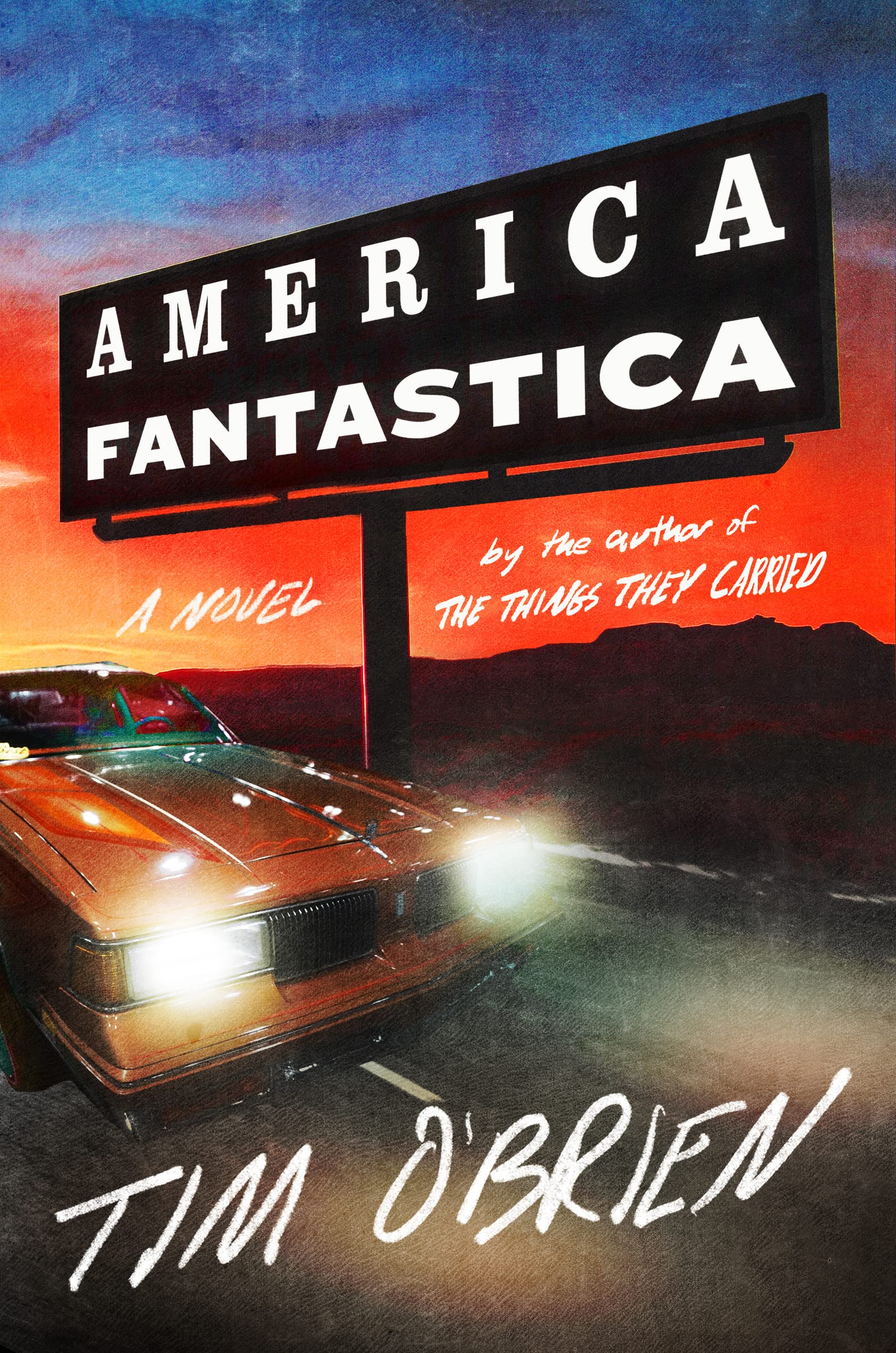
Following Friday’s review of America Fantastica, here’s Tim O’Brien: Route 66 Meets MAGA America.


Tim O’Brien is the author of the novels Going After Cacciato; The Things They Carried; In the Lake of the Woods; and others, as well as memoirs including If I Die in a Combat Zone, Box Me Up and Ship Me Home. He has won the National Book Award for Fiction, the James Fenimore Cooper Prize, and the Katherine Anne Porter Award, and was a finalist for the Pulitzer Prize and the National Book Critics Circle Award. O’Brien has been elected to the American Academy of Arts and Letters and the American Academy of Arts and Sciences. His eighth novel, America Fantastica, a wild ride through a paranoid nation, will be published by Mariner Books on October 24, 2023.

What brought you back to writing a novel after more than 20 years?

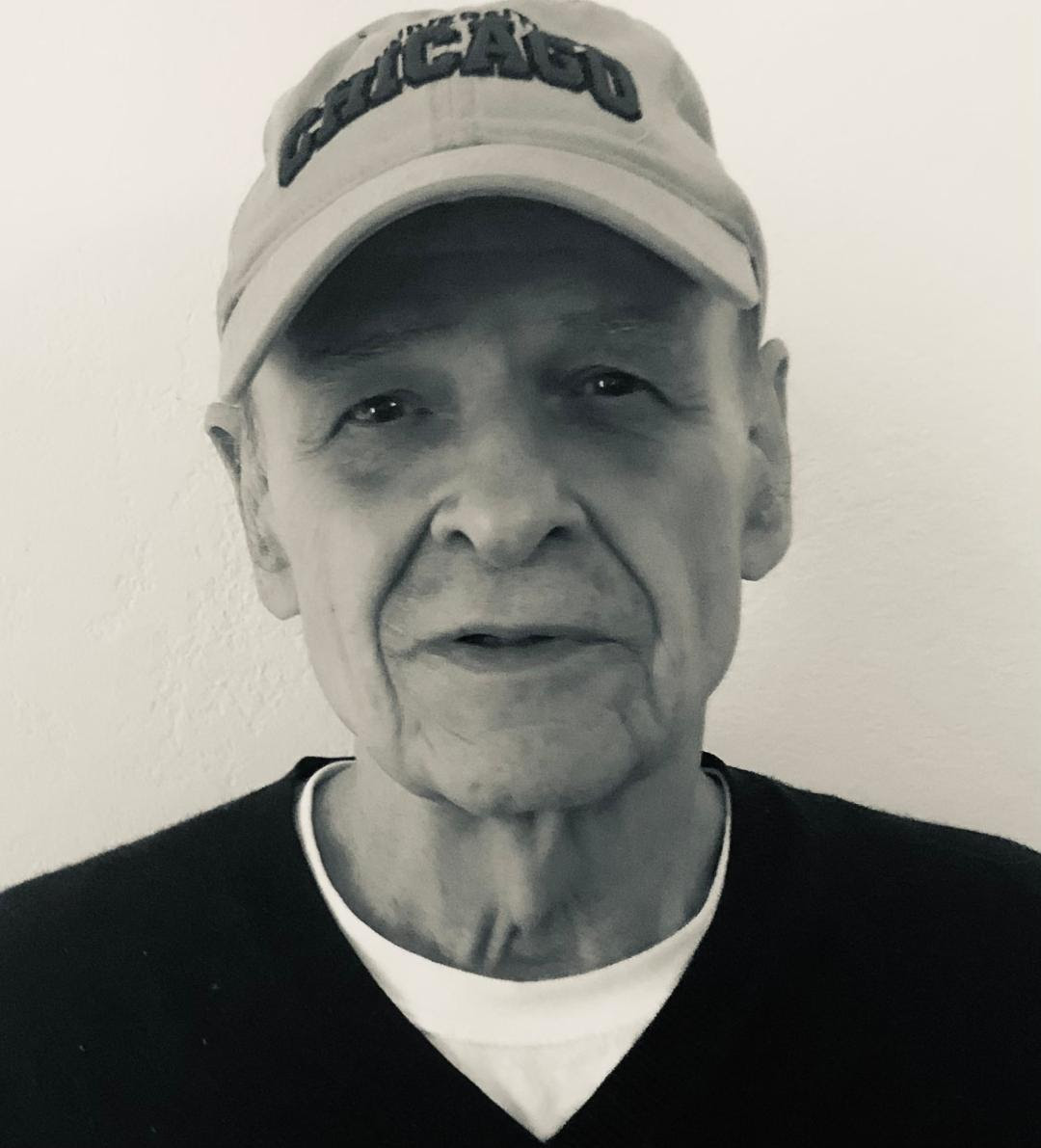
Tim O’Brien
(photo: Tad O’Brien)

The character of Angie Bing. She came into my head, I don’t know, 20 years ago, as did the antihero, Boyd. I tried to push them away for a long time. They just kept yapping at me. Put me in a book! Especially Angie. It was that voice inside my head for all those years that convinced me to at least try. And it was fun. I enjoyed her.

I was pretty determined not to ever write another novel. It’s hard work and often frustrating, all the things that go with a 400-something page book. Five years of my life. I was a little reluctant to do it, but once I started, I got a kind of perverse pleasure out of it.

America Fantastica contains so many characters, events, places. How do you stay organized?

The organizational tool is my head. It’s nothing much beyond that. Occasionally I would lose chronology, but then I simply go back and reread and rediscover.

The novel switches voices among many of those characters. How fun or difficult is that?

It was a great pleasure, going from voice to voice. There are some pretty nasty people in the book–most of them, in fact–and it was fun being nasty. I see it around me so much. It was a sort of Jonathan Swift/Mark Twain fun, curmudgeonly. You call a bank or an airline and they’ll have that message on: “Our phone lines are unusually busy; please hold.” They’re not unusually busy. They’re usually busy. In fact, they’re always busy. Things like that were fun to strike back at.

Do you have a favorite character?

No. Characters, probably for all writers, are like your own children. You don’t pick them. They’re very different. I don’t approve of most of the characters in this book, but I don’t approve of most of the people I see on CNN and Fox, either.

This work of fiction is centered on the lying or fictionalizing of its characters.

It’s been a theme that’s gone through my entire work and probably my entire life, going way back even to my childhood. I grew up in a small town and spent a lot of my time in my own head, imagining I was not in this godawful place. That followed me to Vietnam and has followed me through adulthood. It’s astonishing the things that we witness that seem almost impossible, incredible, especially during the Trump years. How can this be happening in a country I really had loved as a kid? It seemed as if I were living in a fairy tale that couldn’t be true, and yet seemed true. And so all of my work has to do with this blend of our imaginations and the realities we see around us. This book probably is the most blunt about it. Boyd seemed to represent for me what I’m witnessing socially, culturally, and politically in this country, a kind of shameless lying or deceit. I wanted to have as a foil someone who was pretty certain about the world–Angie has a kind of religious certainty about the world. The tug of war between them was fascinating.

Angie came first?

They came together. I imagined her originally as a bank teller, and then almost instantly I imagined Boyd as a small-town entrepreneur (later a JCPenney manager), and within 20 minutes or so I had him robbing that bank as the novel begins. Robbing it essentially for entertainment, as a way of making himself move out of his lethargy and do something in the world. When he invited her along, or made her come along, a kind of Route 66 theme dominated, and it stayed throughout the entire book. It’s sort of a Route 66 meets MAGA America kind of book.

I knew it would be set during those years. They were the years that I was living through, with my mouth agape as I watched the television set. It seemed appropriate to have a character who was a shameless liar and had been his entire life, and to find out why. Why do people do this sort of thing? There’s a quote at the beginning of the book by Yeats: “We had fed the heart on fantasies, / The heart’s grown brutal from the fare.” That’s what I saw happening around me, that sort of fantasy: of a lost election being a winning election, for example. I wanted a hero who was part of the conspiracy world, coming up with these bizarre fantasies about the world and apparently believing in them, repeating them enough to believe in them.

By having such a human being as one of the two main characters in the book I felt I was trying to get into what made people do these sorts of things. For my hero, Boyd, it goes back to his childhood, as we learn late in the book. He began, even as a kid, living in a fantasy world as a way of escaping the world he was in. It can have terrible consequences, and did for him: a broken marriage, a lost career. But on the other hand, fantasy keeps us going. The fantasy that tomorrow will be better than today. Maybe fantasy isn’t the word, but the hope or the dream that things will improve for all of us. I’ll win the lottery, I’ll have a great time in Yellowstone, I’ll meet the girl of my dreams or the boy of my dreams. I think we need fantasy. So there’s that tug of war, when what we need can have terrible consequences. That will always fascinate me, and has since I was a kid.

What are you working on next?

I’m working on my golf game.

Nothing. I’d been working on this book all the way through page proofs and so on; it still feels like in my head I’m working on it.

Are you one of those writers who’s never done, even when it’s printed and published?

I am. I’ve made changes in The Things They Carried; In the Lake of the Woods; [Going After] Cacciato. I slip them in when they print a paperback edition. Most of them minor and none of them noticed, except by scholars. I did have a letter from a high school English teacher once who disputed my changes.


This interview originally ran on July 27, 2023 as a Shelf Awareness special issue. To subscribe, click here, and you’ll receive two issues per week of book reviews and other bookish fun.

Maximum Shelf: America Fantastica by Tim O’Brien

Maximum Shelf is the weekly Shelf Awareness feature focusing on an upcoming title we love and believe will be a great handselling opportunity for booksellers everywhere. The features are written by our editors and reviewers and the publisher has helped support the issue.

This review was published by Shelf Awareness on July 27, 2023.


Set against the backdrop of an unnamed but recognizable American presidency, Tim O’Brien’s black comedy, America Fantastica, takes both the dark and the comic to epic proportions with simultaneous absurdism and poignancy. O’Brien (The Things They Carried; If I Die in a Combat Zone, Box Me Up and Ship Me Home) here offers his first novel in more than 20 years–a sprawling, madcap tale of road trips, crimes large and small, love, loss, and, most of all, lying. Like The Things They Carried, America Fantastica revels in detail and highly specific lists, so that the world it portrays feels robust and brimming.

Its opening lines set the tone, far-reaching and grandiose: “The contagion was as old as Africa, older than Babylon, wafting from century to century upon sunlight and moonbeams and the vibrations of wagging tongues. During the second decade of the twenty-first century, the contagion alighted in Fulda, California, riding aboard the bytes of a MacBook Air…. Reinvigorated by repeated utterance, fertilized by outrage, mythomania claimed its earliest victims among chat room patrons–the disappointed, the defeated, the disrespected, and the genetically suspicious…. The disease spread northward into Oregon, eastward into Idaho, arriving on Pennsylvania Avenue in January of 2017.”

Readers first meet O’Brien’s antihero in action. “On an afternoon in late August of the year 2019, after locking up the JCPenney store on South Spruce Street, Boyd Halverson strode out to his car, started the engine, sat without moving for several minutes, then blinked and wiped his eyes and resolved to make changes in his life. He had grown sick and tired of synthetics, rayon in particular.” He departs his Kiwanis brunch early to head to the bank, where he presents a gun and leaves with just under $81,000 and the teller, “a diminutive redhead named Angie Bing.” She is technically kidnapped, but Boyd will repeatedly try and fail to ditch her over the coming months. His name is not really Boyd Halverson and his entire résumé is a fiction. He had in fact been married, had a child, had an impressive career as a foreign correspondent and nearly won a Pulitzer Prize. But that life was built on lies, culminating when “at last he collided with the sudden, brutal, and well-earned catastrophe he’d been patiently anticipating for decades.”

Boyd and Angie hit the road, seeking first Boyd’s ex-wife, Evelyn, and then her father, Dooney, against whom Boyd holds a significant grudge. Their travels prompt movements by an increasingly colorful cast of bizarre characters. Dooney and his partner Calvin flee the possibly murderous Boyd from Port Aransas, Tex., to Bemidji, Minn., and onward. Randy, Angie’s boyfriend, an almost-laughably amoral electrician/rodeo cowboy/burglar, tracks Angie from Santa Rosalía, Mexico, to Santa Monica, Calif., and beyond. Along the way, he meets two ex-cons at a diner in Los Angeles who latch onto his interest in an unreported bank robbery. These characters set the tone of a novel dealing equally in ludicrous comedy, political commentary, and pathos. They will be joined in O’Brien’s imaginative, wide-ranging tale by a violent, egomaniacal CFO; a bank president and his wife, both with a gift and passion for fraud; a racist cop; an Amazonian CrossFit gym owner and amateur detective; a small-town sex worker with either an excellent act or multiple personalities. Events range from disturbing to ridiculous, often simultaneously, as when Boyd gets his toes broken with a monkey wrench by an unlikely pair of sidekicks. These characters and events, in a series of deftly drawn American locales, form a fantasmagoria, a version of reality that both bizarrely exaggerates and digs directly into the emotional truth of the real world.

O’Brien opens with a Yeats epigraph: “We had fed the heart on fantasies,/ The heart’s grown brutal from the fare.” His novel speaks of a nation that craves delusion and deception; O’Brien’s profile of the 2019 United States is savage, blending satire and realism. “Off with their heads! Climatologists? Chemists? Off with their tongues! Who needs reality when you have Venom? Who needs history when you can manufacture your own?” Is it plausible that Boyd, an esteemed investigative journalist, exposed as a liar, might in turn expose larger wrongs than his own?

America Fantastica showcases a broad emotional range, as Boyd Halverson (aka Otis Birdsong, aka Junior, et al.) turns out to harbor some very real trauma amid a fabricated personal history, and at least one complex personal relationship. It is a story chock-full of lies or fictions, a theme O’Brien has explored in earlier works as well. “[Boyd] had fervently believed every word, every unearned moment of an unlived life. Yes, he was a Princeton graduate. Yes, he had distinguished himself in the Hindu Kush, scaled Mount McKinley, survived brain cancer, scored near-perfect on his SATs. But so what? Why risk failure when a fib was always conveniently at hand?” By the novel’s end, readers will have learned–more or less, as far as we can tell–the “real” truth. This feels in some respects like a hopeful conclusion. But the truth itself is more grim than hopeful, which is perhaps the most realistic–truthful–possibility.

As in the earlier works for which he has long been recognized, O’Brien here demonstrates an electric combination of deadpan humor, vicious wit, and a masterful eye for detail in capturing a peculiarly American form of torment.


Rating: 7 wiggles.

Come back Monday for my interview with O’Brien.

Maximum Shelf author interview: Jesmyn Ward

Following Monday’s review of Let Us Descend, here’s Jesmyn Ward: Finding Those Erased by History.


Jesmyn Ward received her MFA from the University of Michigan and has received a MacArthur Genius Grant and a Stegner Fellowship. She has won two National Book Awards, in 2017 for Sing, Unburied, Sing; and in 2011 for Salvage the Bones. She is professor of creative writing at Tulane University and lives in Mississippi. Her fourth novel, Let Us Descend, begins on a rice plantation in the Carolinas, and is narrated by an inspiring enslaved young woman in transcendent prose.

What freedoms and challenges do the historical setting present?

Jesmyn Ward (photo: Beowulf Sheehan)

It offered me a freedom to write from a time and place where I was less constrained by the present moment. That is, I didn’t feel pressured to write about current politics or manners or modes of behavior or even geography, as the world of the novel had its own.

It was beyond difficult to write about a person who has little to no physical agency for much of the novel. That reality is so far removed from my own that it was nearly impossible for me to draft a beginning. I wrote that beginning over and over for years because I could not figure out how to inhabit Annis; I was flailing because I couldn’t understand where the narrative was supposed to go. It took me a long time to figure out that Annis would have other kinds of agency–emotional, imaginative, and spiritual–and that these would carry her through the story. Once I began putting words on the page, living with Annis’s voice, she led me.

Where did this novel begin?

I heard an episode of WWOZ’s Tripod called “Sighting the Sites of the New Orleans Slave Trade.” In it, historian Erin Greenwald tells journalist Laine Kaplan-Levinson that there were only two plaques in New Orleans that accounted for the slave trade, and one of them was in the wrong location.

I felt a hot blush in my chest and had to fight back tears when I heard this. It was devastating to know that so many enslaved people had been sent for sale to the lower south, had endured barbaric conditions and treatment, and then had their experiences erased. It was painful to know that I moved through this landscape, a landscape that had soaked up their sorrow and pain like a sponge, and I was blind to it. It seemed immensely unjust. I immediately asked myself: What if I write about it? What will happen if I bring it to life through a character, a woman? This is how I first began to get glimpses of Annis.

How much research was required?

I knew next to nothing about the domestic slave trade. It was embarrassing to realize that my high school and college education had failed me so miserably in that aspect. It made me wonder about active erasure, about how the active suppression of knowledge can make it possible for a well-known rapper to say slavery was a choice, 150 years later. For folks on Black Twitter to talk about slavery and say: I am not my ancestor–couldn’t be me. We have these ill-informed reactions to American slavery because we don’t know anything about it beyond what we see in pop culture. We are not educated about it.

I read general books about American slavery: The Half Has Never Been Told, They Were Her Property and The Great Stain. I read books about Louisiana: The Sugar Masters, Slavery’s Metropolis and The Free People of Color of New Orleans. I read about slave pens in Soul by Soul. I read about maroons in Slavery’s Exiles, and I read slave narratives, too, the most helpful one being Six Women’s Slave Narratives. This is not an exhaustive list, but these are some of the books that were most helpful to me.

As I wrote I discovered there was still more research I needed to do. I read about African-American slave medicine, the amazons of Dahomey, flora and fauna of the southeast United States, and more, driven by panic and anxiety. The last thing I wanted was to kick an academic out of the story when I got some fact or bit of ephemera wrong.

I’m sure I made mistakes, but I tried really hard not to. I hope I read enough to render the world real and present for the reader, to crowd them into Annis’s reality, to make it impossible for them to look away.

Does this offer an allegory for present times?

I think at its heart that this novel is about someone struggling with grief. I can strip away all the material circumstances of Annis’s enslavement, and underneath the brutality and cruelty of the forced work and punishment and dehumanization, I see a person who is swimming through grief. She has lost so many loved ones, so she is navigating mourning and the strange reality of the slave markets and the lower south at the same time. She is all longing and bewilderment and grit. I think many of us can identify with those emotions, especially post-2020, as we maneuver our way through this new reality, so many of us saddled with loss.

Annis enters adulthood because she has fought to survive a very American crucible. I believe that in a way, Annis saves herself in telling stories, in remembering, in creating community and relationship with those she meets on her way, in empathizing, in living. I like to think that she gives us a blueprint for how to survive and thrive in the present moment.

Is this a triumphant story?

I believe it is a triumphant story for Annis, for the character, but I also think it is a triumphant story for all the enslaved and maroons in the world of the story. In allowing the reader to inhabit this world, we empathize with them, we feel with them as they live and love and resist and persist. I hope this novel contributes to the conversation that writers of African descent have been having in books like The Water Dancer or The Underground Railroad, and that it does its part to enable readers to witness and to understand enslaved people anew.

How has novel-writing changed for you?

I find my motivation for writing novels changing. In the beginning, I wanted to write about people who could be part of my community or family because I wanted to make us visible. I wanted readers to love us and bleed with us and cry and laugh with us. I still want all that, but in the last two novels, I’ve discovered that it is also important to me to find those erased by history and to write them into the present, into common knowledge. I want readers to know about kids like Richie, sent to Parchman Prison at 12 and 13. I want readers to know that teens like Annis existed: that she and others like her walked from the upper south to the lower south, that they encountered demeaning horror after demeaning horror, and yet they persisted. They lived in spite of all that was done to them.

I intend to write a YA/middle grade book next, and my next few novel ideas revolve around characters who live through moments of upheaval, when the world is turned on its head and the logic of everyday life does not apply. I’m really interested in how people cope in those moments, in how they hold onto themselves in those moments, in how they navigate realities that defy their expectations and their experiences.

I believe Let Us Descend could count as the first flower of that motivation as well.


This interview originally ran on May 17, 2023 as a Shelf Awareness special issue. To subscribe, click here, and you’ll receive two issues per week of book reviews and other bookish fun.

Maximum Shelf: Let Us Descend by Jesmyn Ward

Maximum Shelf is the weekly Shelf Awareness feature focusing on an upcoming title we love and believe will be a great handselling opportunity for booksellers everywhere. The features are written by our editors and reviewers and the publisher has helped support the issue.

This review was published by Shelf Awareness on May 17, 2023.


Two-time National Book Award-winner for Fiction Jesmyn Ward (Men We Reaped; Navigate Your Stars; The Fire This Time; Sing, Unburied, Sing; Salvage the Bones) takes a different direction with her fourth novel, Let Us Descend: it’s her first historical narrative. Beautifully written and heartrending, Ward’s story sensitively handles grief, love, and recovery. On a rice plantation in the Carolinas, an enslaved teenager named Annis narrates as she works alongside her beloved mother. Mama is a source of comfort and strength even as her finger bones are “blades in sheaths.” Annis says, “The first weapon I ever held was my mother’s hand.” This steely woman teaches Annis lessons of combat learned from her own mother, one of thousands of warrior wives to an African king, tasked with both protection and elephant hunting. “In this world, you your own weapon,” she tells her daughter, and Annis will need to be.

Annis’s father is the plantation owner who owns her and her mother. Annis has half-sisters in the big house. “My sire’s house hulks; its insides pinned by creaks,” and her “sallow sisters” have a tutor to read to them, to teach them the texts of ancient Greece, about bees and wasps and Dante’s Inferno: “The tutor is telling a story of a man, an ancient Italian, who is walking down into hell. The hell he travels has levels like my father’s house.” Let Us Descend‘s title is a nod to Dante, and a cue to the reader to notice hells, descents, and journeys south. Annis listens and learns. Through her natural gifts, her own interest, and with her mother’s help, she becomes skilled in foraging: herbs, mushrooms, medicinal plants, and simple foods. She learns to befriend the bees she hears her sisters’ tutor speak of.

Then Annis’s father chooses to sell her mother south. The “Georgia Man” takes her away in a line of stolen people for the long walk to market. Annis falls into a near-fatal grief at being left without the most important person in her life, until a kind friend pulls her back to the surface. But soon, Annis and Safi, her friend-turned-lover, are sent on the same walk with the Georgia Man. From the plantation where she was born, Annis makes a death march to a New Orleans slave market and is sold to a cruel lady whose Louisiana sugar plantation marks a further descent, into a new level of hell. Others will uplift her along the way, but she never shakes the excruciating grief for her mother.

Along the way she gains and loses friends, and meets a spirit: Aza controls the storms and winds, and has stolen the name of Annis’s maternal grandmother, the warrior Mama Aza. “Aza’s hair a living thing: scudded clouds, the setting sun lighting them on fire. She leans forward and a breeze blows from her. Feels like the slap of a freshly washed linen on my face, snapping in a cool wind.” The spirit seeks her own identity and self-importance in relation to others, and has locked onto Annis’s maternal line as a way to achieve this: she models herself after the grandmother Annis never knew, and her use of the name Aza represents both connection and theft. That Annis refers to enslaved people like herself as “stolen” adds a layer to Aza’s use of the name.

Less centered around plot and character than Ward’s previous novels, Annis’s story is more elemental and thematic, dealing primarily with grief, forces of nature and human evil, villains and allies. The spirits she meets–chiefly Aza, but others as well–are closely associated with natural forces. “Another spirit, white and cold as snow, walks the edge of the river; it hungers for warmth, for breath, for blood, for fear, and it, too, glances against the enslaved stolen and feeds. Another spirit slithers from rooftop to rooftop before twining about wrought iron balconies outside plaçage women’s bedrooms, where it hums, telling the bound women to portion out poison in pinches over the years, to revolt, revolt, revolt.” These spirits can help but also harm, offer but also take away; they may represent another form of attempted ownership, as Aza has taken Mama Aza’s name. In a magical-realism twist, Annis finds these spirits widen her world beyond her immediate suffering to other timelines and possibilities.

Just as Ward’s title refers to Dante’s story of a descent into ever-deeper levels of hell, her hero makes a parallel, nonconsensual descent into the deeper South, into pain and suffering and sorrow, and into the worsening and worst of humanity. The novel moves with Annis from the Carolinas to Louisiana, and in story, back to Africa, where Mama Aza established the fighting spirit she would pass on.

Ward gives Annis’s voice a raw strength and musicality. After she is imprisoned in an underground cell by a particularly sadistic plantation owner, Aza tells her, “When you were up north, your sorrow choked your song. Swallowed it down. Even so, it hummed. But the walk changed it. The further you went, the more it rose until the woman put you down in the earth. Then it shrieked.” Attention to descriptive detail emphasizes Annis’s close relationship to place, and the importance of the land itself (not least in supplementing the enslaved people’s painfully meager allotted diet). “The water reaches in every direction, duckweed bright and green, floating on the murky wet. Cypress, fresh with rain, shimmers.”

As much pain, struggle, torture as there is in these pages, there are also various forms of love, and great strength, power, and personal reclamation. Let Us Descend ends with surprising hope. “How the whitewash of starlight would buoy them along. How they dance with the rocking deck. How them sing.” With this novel, Ward’s talent continues to deepen and glow.


Rating: 6 broad, glossy leaves.

Come back Friday for my interview with Ward.