Maximum Shelf: Spinster: Making a Life of One’s Own by Kate Bolick

Maximum Shelf is the weekly Shelf Awareness feature focusing on an upcoming title we love and believe will be a great handselling opportunity for booksellers everywhere. The features are written by our editors and reviewers and the publisher has helped support the issue.

This review was published by Shelf Awareness on March 4, 2015.


spinster

“Whom to marry, and when will it happen–these two questions define every woman’s existence, regardless of where she was raised or what religion she does or doesn’t practice… even if the answers are nobody and never.” Kate Bolick explores her own answer to the classic questions, arduously and over the years of her own life; she examines their place in society, and the way other women she admires have answered them, mining the lives of female writers who have affected her. The resulting book, Spinster: Making a Life of One’s Own, is less a polemic than one might expect, and more a thoughtful, generous consideration of our world, and a woman’s best options to honor herself.

Bolick begins with her family background, her loving parents and brother, and her home in Newburyport, Mass. In a personal and family tradition of talking, reading, discussing and writing, Bolick naturally gravitates toward literary models for the life she hopes to build. After her mother’s death, she seeks to re-create the conversations they used to share, “not with other, real, live women… but real, dead women, whom I could sidle up to shyly and get to know slowly, through the works they left behind and those written about them.” In the opening pages, she introduces her five “awakeners,” women of the written word who have offered her lessons about how to live as a woman, married or not. These awakeners are an essayist, a columnist, a poet, a novelist and a social visionary (although each, of course, crosses over and between those categories).

Maeve Brennan (1917-1993), essayist at the New Yorker, offers a loving picture of single city life and an admirable sense of style. She will also come to provide a frightening negative version of the stereotypical single woman’s final days. Neith Boyce (1872-1951), columnist at Vogue and representative of the Bachelor Girl, supplies a glimpse into the life of working women, a novel possibility in her time; although as Bolick points out, the chance of sex or sexiness in the workplace presents a “negotiation [that] continues today.” Edna St. Vincent Millay (1892-1950), poet and legendary lover, brings revelations. “Her legacy wasn’t recklessness, but a fierce individualism that even now evades our grasp.”

Edith Wharton (1862-1937), novelist and grand dame (“society’s favorite version of the single woman”), built herself a house, the Mount, with two rooms of her own, a public “boudoir” for entertaining and a spare bedroom in which to do her writing. She represents a model for the prioritization of one’s work, and also for the work Bolick reluctantly takes on in editing a luxury decorating magazine: rather than mere frivolity, this focus offers another opportunity to get to know herself. Charlotte Perkins Gilman (1860-1935), social visionary and prolific writer (of The Yellow Wallpaper, for example), inspires self-improvement and a different way to go about making a home.

Bolick tells her own story chronologically. As she discovers each of her five awakeners (a term borrowed from Wharton) and the lessons she finds with them, she changes jobs, moves from Newburyport to Boston to New York City, and dates and cohabitates with different men (referred to only by the first letter of their first names). She started using the word “spinster” in her journals in her early 20s, and always considered it a positive appellation, one posing possibility. Her evolving interest in spinsterhood is tracked by all of these layered journeys, the lives and writings of the awakeners interspersed with her own. Along the way, she also makes brief calls on Virginia Woolf, Mary McCarthy, Anne Sexton, Annie Dillard and others. Bolick acknowledges that the subjects of her investigations are all like her: straight white women of New England; diversity is not her focus.

Spinster‘s tone is charming, by turns confessional, collegial and academic. Bolick’s erudition is leavened by a playful, casual tone, even as she references Shakespeare and the Lernaean hydra in a single page. Not only a memoir, Spinster employs research into the lives of the five profiled writers, as well as into history and sexual politics. As the narrator of this voyage, Bolick is amiable, credible and fun to know.

Interestingly, all five of the awakeners eventually married, in some cases more than once. While it thoughtfully contemplates the possibilities for and arguments in favor of women remaining unmarried, Spinster is not a mandate. Bolick does not insist upon spinsterhood for her readers. Rather, she offers assistance in “holding on to that in you which is independent and self-sufficient,” whether single, happily or unhappily coupled. The word “spinster,” and all it entails–and Bolick makes great strides toward the proud and pleased application of this embattled historical term–is thus a tool for our individual contentedness.

Entertaining, wise and compassionate, Spinster is the result of Bolick’s lifetime of meditations, ruminations, angst and joy; of research, reading and appreciation of five intriguing lives; of dating, moving in with someone and time spent alone. While allowing that the coupled lifestyle is fine for some, Bolick’s message for readers is a celebration of the delights, challenges, and opportunities of remaining single.


Rating: 8 women.

Come back tomorrow for my interview with Bolick.

Maximum Shelf author interview: Erik Larson

Following yesterday’s review of Dead Wake, here’s Erik Larson: Ideas and Process.


Erik Larson is the author of four national bestsellers: In the Garden of Beasts, Thunderstruck, The Devil in the White City and Isaac’s Storm, which have collectively sold more than 5.5 million copies. His books have been published in 17 countries. Larson began his writing career as a journalist, and now gets to travel the world researching his works of nonfiction. [You can read a longer and surprisingly hilarious bio written by the man himself here.]

larsonTo begin, my mother made me promise I’d ask: how do you choose the diverse subjects of your books? What makes for a compelling story that you feel driven to tell? Why the Lusitania?

Well, you tell your mother it’s none of her business. Actually, no, please tell her that, really, I have no idea. There’s more truth to that than I care to admit. The hunt for each book idea is a hard one for me, and typically takes about a year. To write the kind of history I write, I need to find real-life events that lend themselves to being told as stories–true stories–with beginnings, middles and ends. There has to be a clear, ascending narrative arc, and there has to be a rich enough trove of archival materials to make the story and characters come alive without massaging the facts. And, it has to be something I want to spend the next few years working on. I often think finding that next idea is like finding a spouse–you have to kiss a lot of frogs before you find one that kisses back.

What drove me to write about the Lusitania was the potential it offered for nonfiction story-telling–for crafting a narrative full of real-life suspense. A nonfiction maritime thriller. The archival base was extraordinarily rich, full of elements that I felt no one else had adequately mined–all the things I love to work with: telegrams, diaries, love letters, secret documents, even the German submarine commander’s hour-by-hour war log. It doesn’t get any better than that. Whether I succeeded, of course, is for readers to decide.

Aside from the obvious choices to concentrate on Captain Turner and Kapitänleutnant Schwieger, how did you choose the individual stories to follow? Were they (Charles Lauriat, Dwight Harris, Theodate Pope, etc.) simply the ones who left behind the most documentation?

Exactly! The three you cite all left vivid, detailed accounts, especially Lauriat, who wrote a book on the subject, and in addition left a broad and deep documentary trail. I also liked the fact that Lauriat was a famous bookseller. How nice that a time once existed when a bookseller could become famous and travel in first class on Cunard ships and be recognized on sight. As for Pope, I found her backstory particularly compelling: her depression, her interest in the supernatural, the fact she was a pioneering female architect and pal of Henry James and that she was in that cadre of American women who were first to embrace their identity as feminists, back when the term itself was brand new.

You state in your “Note to Readers” that you are very careful to stick to the facts, with no embellishment. And yet your narrative is incredibly lively. Please explain the importance of that rule for you–the integrity of pure fact–and how you make the bare truth so gripping.

They key lies in detail. There are no shortcuts–you have to do the necessary digging to find the bits and pieces that will ignite the reader’s imagination. It’s the reader, I’m convinced, who does the animating of my narratives. I just present the details necessary to allow that to happen. For example, I often have people tell me that I must have made some things up, because I have actual dialogue in my books. But in fact, if there is dialogue, it’s pulled directly from some actual historical document, like a letter, or memoir, or newspaper interview. More often than not, however, what they point to isn’t even dialogue–it just seems to be dialogue, and reads that way in their imagination. Which is wonderful. The human mind loves to connect dots and finish sentences and make disparate bits of information seem like a coherent whole.

lusitaniaWhat do your processes of research and writing look like, and are they in fact two separate processes? What’s the most enjoyable part for you?

They are two separate processes that merge in the middle. Ideally I’d like to have all my research done before I start to write, but that never happens. Invariably I reach a point where the book just has to come out. It’s like how my wife describes pregnancy: get this baby out of my body, NOW. Passages come to mind, and I start writing. At first I’ll just write them in my journal–I keep a journal for each book–then I’ll start writing things in a computer file called “Passages.” Then I enter my page-a-day mode, where I get up early, and write a single page before breakfast, and then return to my research for the rest of the day. Pretty soon the writing supplants the research almost entirely–although the research really never ends, because you always end up having to check things. What did early NYC street lamps look like? What was the weather like on a particular day? What were people reading in the newspapers in New York on the day the Lusitania departed? That kind of thing.

How do you keep so many characters and events in such a complex world history straight?

The most powerful tool is chronology. Before I start to write, I build a chronology that contains every worthwhile fact that I’ve mined from archives, books and whatever, with each item coded in such a way that I can readily find the source document in my files. This chronology becomes a de facto outline, with various events clumping at various points, and with each character’s role clearly defined. Using this as a spine, I craft the first draft. Then, I lay the whole thing out on the floor of our bedroom and, using a scissors and tape, I literally cut everything up and move it around, hunting for the most natural structure, while hoping that no one will open a window at the wrong moment. Once my dear departed dog, Molly, walked across the manuscript for Thunderstruck. Luckily only one small passage was displaced–it wound up on the balcony outside my bedroom.

What are you or will you be working on next?

I’m exploring a possible idea. This is early for me, so, being a pessimist, I’m pretty sure the idea won’t pan out. But I’m writing a test proposal. I won’t say what the subject is, because I never talk about works in progress until they’re done. It’s very annoying for my friends and family, though my wife and daughters all know early on. The proposal is a draft of what I would eventually send my agent, and which he in turn would send to my publisher, and which ideally my publisher would love so much that she would spend gobs of money to acquire it. Doing a proposal is a good test of an idea’s strength. If you get through the process–writing an opening chapter, an overall description and a chapter outline, maybe 80 to 100 pages in all–you have a pretty good sense that it’s a viable idea and that halfway through you won’t hang yourself from boredom.


This interview originally ran on February 9, 2015 as a Shelf Awareness special issue. To subscribe, click here, and you’ll receive two issues per week of book reviews and other bookish fun!

Maximum Shelf: Dead Wake: The Last Crossing of the Lusitania by Erik Larson

Maximum Shelf is the weekly Shelf Awareness feature focusing on an upcoming title we love and believe will be a great handselling opportunity for booksellers everywhere. The features are written by our editors and reviewers and the publisher has helped support the issue.

This review was published by Shelf Awareness on February 9, 2015.


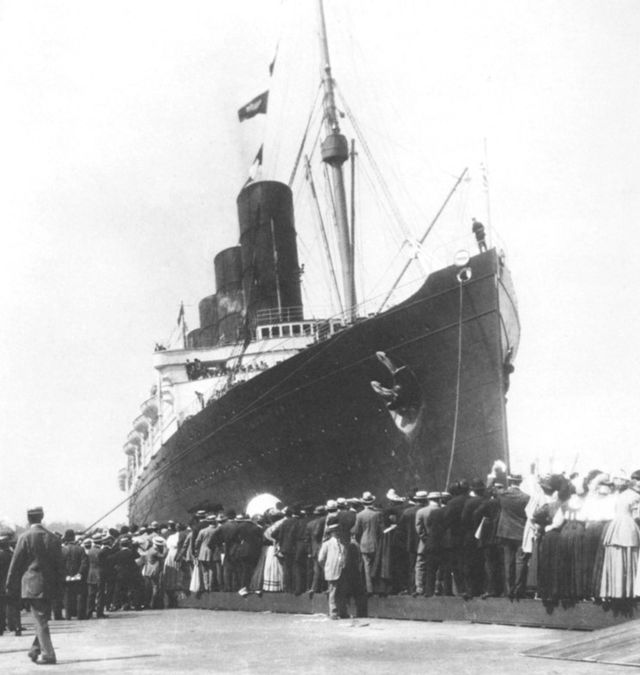
dead wakeIn May of 1915, a torpedo fired from a German submarine struck the RMS Lusitania, a British passenger ship with nearly 200 Americans aboard. She sunk off the coast of Ireland in less than 20 minutes (due to a sequence of events unforeseen even by its attacker), killing 1,200 passengers and crew, fully half of whose remains were never recovered. Common knowledge has it that this event drove the United States to enter a European war that would become World War I, but, in fact, while the Lusitania‘s fate played some role in that decision, it took two full years and the secret German Zimmerman telegram for the U.S. to enter the war in 1917.

Erik Larson examines this extended U.S. isolationism, the final days aboard the Lusitania, and related events and characters in Dead Wake: The Last Crossing of the Lusitania. As in his earlier books (Isaac’s Storm; In the Garden of Beasts), Larson presents exhaustive research with precision and accuracy, in extraordinarily compelling prose. Dead Wake is a masterpiece of gripping narrative nonfiction, arguably the most riveting of Larson’s works.

Nearly 2,000 people boarded the Lusitania in New York City, bound for Liverpool, including 1,300 passengers, of whom 189 were Americans. An unusually large proportion were children and babies. The Lusitania was the biggest and fastest civilian ship on the seas in that 10th month of European war. These superlatives–plus the reassurances of the captain, William Thomas Turner, and the Liverpool-based Cunard Line–allowed the ship to confidently set sail despite a German warning published in all the New York papers on the morning of the Lusitania‘s departure, that “vessels flying the flag of Great Britain, or of any of her allies, are liable to destruction.” Larson provides detail and humanity by profiling several passengers and crew members, including a Vanderbilt heir; a psychic; and a Boston bookseller who boarded with a small but invaluable collection of William Makepeace Thackeray’s original illustrations and Charles Dickens’s own copy of A Christmas Carol, complete with the author’s marginalia.

Just weeks earlier, another vessel had departed from the other side of the Atlantic Ocean. German Unterseeboot-20 was captained by Walther Schwieger, a well-regarded young Kapitänleutnant known for his aggressive and innovative tactics. Because submarines lost radio contact with their bases almost immediately upon departure and remained out of contact for much of their cruise, Schwieger was in full charge of his boat, empowered to cruise, dive and attack on his own, with the full support of his government. In following Schwieger’s submarine in the weeks leading up to the climax, Larson gives the story dimension; far from presenting the German captain as a monster, he is humanized, for example, by the devotion of the men who worked under him, and the presence on board of a litter of puppies rescued, interestingly, from another ship sunk by torpedo.

As he builds toward the inevitable intersection of U-20 with the Lusitania, Larson introduces more characters. Captain Turner of the Cunard Line had decades of experience at sea, and had just testified in a civil case against the owners of the Titanic on behalf of the families of deceased passengers. He was known to his men as a brave and capable but old-fashioned captain, with “one foot on the deck of a sailing ship.” U.S. President Woodrow Wilson had had a rough year, even without the European conflict: having lost his wife Ellen in late 1914, his mourning left him unmoored and struggling to concentrate, until he met widow Edith Bolling Galt. His love for her would prove overwhelming, and their courtship strained–she rejected his first marriage proposal. This love story is affecting, and if it serves as a distraction from the sinking ship at the center of this book, that is a fine style choice by Larson: it was a distraction for Wilson, too.

Meanwhile, a secret section of the British Admiralty was tasked with intercepting and decoding German wireless messages, a purpose known to only nine senior officials, who were hampered in using any information gained for fear of having its cryptanalysis ability revealed. They would therefore fail to warn Turner of U-20’s preying presence in the waters he sailed. Such parallel plots and individual profiles add color and depth to Larson’s account, as when the chief of British naval intelligence is described as “part Machiavelli, part schoolboy.”

The Lusitania‘s story is in itself moving, and carries great historical significance, but these events positively glitter with life in Larson’s engaging, quick-paced and captivating prose. Though it incorporates well-documented history, Dead Wake still contains elements of suspense for all but the most expert readers; as Larson acknowledges, he had his own misconceptions coming into this project, and learned surprising facts in his research, as readers surely will. The pages fly by as such details are revealed and the action ratchets up toward a climactic event that we all see coming, but that still makes us catch our breath. In spellbinding, immediate language, Larson contrasts the “books, and cigars, and fine foods, afternoon tea, and the easy cadence of shipboard life” on the Lusitania with the “U-boat sweat,” foul odors and close air aboard U-20. His enthralling description of passengers joking about submarines and torpedoes, in the very moments before the torpedo strike, and “making polite apologies” just after, in the scramble for life jackets, keep the reader fully engaged. Appealingly, in his “Note to Readers” and “Sources and Acknowledgments,” Larson writes in a more personal voice about the joy of the research process, and about his frank difficulty in understanding the passengers who boarded the Lusitania in the face of warnings from Germany about travel in a war zone.

Dead Wake is both a thoroughly satisfying read, and an unparalleled adventure into world history. Larson’s fans will rejoice, and grow in number.


Rating: 8 life jackets.

How lucky am I to get to interview Erik Larson?? Come back tomorrow to read the result.

Maximum Shelf author interview: Cecilia Ekbäck

Following Monday’s review of Wolf Winter, here’s Cecilia Ekbäck: The Impact of Place.


Cecilia Ekbäck was born in Sweden, in a small northern town. Her parents come from Lapland. Ekbäck now lives in Calgary with her husband and twin daughters, “returning home” to the landscape and the characters of her childhood in her writing. Wolf Winter is her first novel.

ekbackWhat background–literary or personal–led you to this subject matter?

A wolf winter is a very cold, very bitter winter. But in Sweden, it is also the period in life when you’re faced with your mortality, when you realize that you’re alone–an illness, or the loss of a loved one or something like that, when you come face to face with death, and feel very lonely. Where you have to face sides of yourself that you didn’t know that you had, that you like less, or things that you haven’t dealt with. I wrote this book after my own wolf winter, which was when my dad passed, from cancer. He was my best friend. That was the time when I had to do a lot of soul-searching, when I had to do a lot of thinking through what I wanted to do with the rest of my life and what I was going to do with the enormous space that he left after himself. The book sort of came out of that. I wanted to take a number of characters and have them walk through their wolf winter, if you like, both literally, with the cold and the winter and the snow and the hunger and so on, but also emotionally.

The book switches perspectives slightly between several characters. What led you to that strategy?

Society in those days was very compartmentalized, so I knew that I wanted the main character to be a woman. When we read history, there’s so little about women. I wanted to write women back into that period. And I felt you had to have a few different views to get access, for example, to the church. Maija was always there; and then I felt that her character did not let her easily get involved in the more emotional or spiritual side of Blackåsen, so I let her daughter do that. And then I felt that we needed the priest to get access to the church and to the crown.

Was there a character you felt closest to?

Well… I like them all. But I like Maija and the priest very, very much. Frederika felt… a little bit close to home. I grew up in a very religious environment, and I just felt she came a little bit close to home, so I liked her less! But I was very, very fond of the priest and of Maija.

Are there heroes and villains in this story?

I think there are more strengths and weaknesses. You could say that there are certainly villains. But I guess what I wanted them to be was thoroughly human. So nobody, I don’t think, is straight out one way or straight out another. I wanted to work more with strengths and weaknesses of each character.

What kind of research did you do to evoke 1700s’ Sweden?

I read lots. I’m not a historian, and I get uncomfortable when people say this is a historical novel, because I know that I don’t have my education in that field–I have a terrible memory, and very poor attention to detail. It’s a story set in the past, is how I think about it.

I read everything I could find. In northern Sweden, very often when a town celebrates 200 years or 300 years, they publish a book. Those books are only locally published, and they give the history of the place and lots of anecdotes and so on. I worked a lot with books like that. Then, one of the most important things I did was interviews with my grandmother, her sister and their friends. Even though the story happened way earlier, Lapland didn’t actually change that much until after the Second World War. My grandmother used to say they lived like people had lived in all times. And then, one day to another, they went from shoes that they had made themselves to buying high-heeled shoes in the shop. It was a shock to everyone. It was like when falls a meter of snow and you wake up and you go out and you think, this is not my world! I recognize certain things, but not many others…. So, I spoke a lot to them about the practical details, how they cooked, how they shepherded goats, how the cold was, how the houses were, and I imagined that a lot of it wouldn’t have been that different. Because a lot of this sort of knowledge was passed down through generations–the way you did laundry, the way you worked with nature and so on. So that was really, really important for the practical life of the settlers. And I spoke to a lot of priests, but that was more to understand the faith of the state church as was in that time.

I wrote this story four times. The first time it was set in 1985, and it was really much more of a family saga. I was writing it to try and understand where we came from and why we were a certain way and why we were religious, why we didn’t speak of certain things, why we were frightened of certain things, and so on. And the second time it was set in, if I remember correctly, 1865. And then I wrote it set in the early 1800s, and then, finally, in 1717. And every time I wrote it I thought yes, but this is not where it starts, this is not the beginning. And the further I went back, the more I felt that 1717 was a great year, because the early 1700s was when the settlers began to arrive to Lapland, for various reasons. That particular year was a year when Sweden was at its peak. Sweden was a great power, but it was crumbling. The king had warred abroad for his whole life, and he had just returned to Sweden, and we were warring on several fronts and there was no more money and so many people had died in the years of war…. I thought that added something, that crumbling sense, where things change for the characters regardless of which social class they belonged to. I thought that was a good setting for them and for this story. It’s where the story felt comfortable. We’re so influenced by place, in the largest sense of the word; not just nature and climate, but political history and socially what’s going on and so on. I wanted a place that would have an impact on them, whether they were close to it or further away.

What did you feel upon completing your first novel for publication? What are you working on next?

It’s a bizarre thing, publishing your book. You’ve lived with it for so long and it’s so close to you. The delight is that others read it and talk about it, and they’ve seen things in it or found things in it that they feel are valuable, and then I feel elated. But the publication of it actually frightened me more than it made me happy. When I found out that I had actually sold the book, I went to my best friend and I cried. I said, I don’t want to be published! And he said, you’re insane. But that’s what I did. And then I called my husband and said I thought I had a brain tumor. Those are the two things I did.

Now I’m working on the second book, which is a very, very loose sequel. It’s set 130 years later, at Blackåsen, and so the mountain is the same and the supposed curse is the same, but the characters and the dilemma they face are completely different. I have found it easier in a way and harder in others, to write the second one. Easier in that I have more of a writing process. And also easier because I wrote it in so many different centuries that a lot of the research I’d already done. But harder in the sense that it’s much more real: it’s actually going to be a book! It’s not just a story for me any longer. And I find that makes it harder.


This interview originally ran on November 25, 2014 as a Shelf Awareness special issue. To subscribe, click here, and you’ll receive two issues per week of book reviews and other bookish fun!

Maximum Shelf: Wolf Winter by Cecilia Ekbäck

Maximum Shelf is the weekly Shelf Awareness feature focusing on an upcoming title we love and believe will be a great handselling opportunity for booksellers everywhere. The features are written by our editors and reviewers and the publisher has helped support the issue.

This review was published by Shelf Awareness on November 25, 2014.


wolf winter
“It’s the kind of winter that will remind us we are mortal. Mortal and alone.”

In 1717, the Swedish Laplands are home to indigenous nomadic Laplanders and a mere sprinkling of Christian settlers. A new family has just arrived, fleeing an enigmatic unpleasantness in their native Finland, to take over a vacant homestead on the shoulder of beautiful but harsh Blackåsen Mountain. Frederika is 14, Dorotea six; their mother, Maija, is strong and resourceful, while their father, Paavo, is so crippled by vaguely defined fears that he seems to disappear even in the ever-present light of summer. In the opening pages of Cecilia Ekbäck’s debut novel, Wolf Winter, the girls discover a dead body on the mountain: a man, with his torso torn open. Maija rushes to the scene and is told by other settlers he was killed by wolves, or a bear. But the cut is long and clean, nothing has fed upon the corpse, and she wonders. She picks up a small item off the ground nearby.

The settlers do not live close to one another; it requires a purposeful hike to visit with a neighbor. Nonetheless, there is a priest in the village–a place generally vacant, where the settlers gather for Christmas and several weeks after, as required by the King–under whose purview a murder might fall. Just as Maija feels compelled to investigate the death of a man she never knew, the priest has his own orders, and his own secrets as well.

In the autumn, as the days in this far northern land shorten, Paavo leaves to find work far away. Maija capably runs her remaining household, and frustrates her neighbors, who feel that a woman should not speak at meetings. Frederika is haunted by the dead man she and her sister found. She begins to discover certain strengths, or powers, taught by her great-grandmother. Is she being haunted, or is she calling the dead? Frederika seeks guidance from the Laplanders, who used to commune with the spirits, but they have been (nominally) converted to Christianity by the Swedish king. And the priest remains a figure of mystery: Why investigate the death on Blackåsen Mountain? What is he hiding? While always told in third person, the perspective shifts subtly, between that of Maija, Frederika and the priest.

As winter falls, there is a palpable feeling of danger on the mountain and in the scattered, tenuous community. Paavo does not write home, the cold intensifies, food is scarce. Maija feels a continuing urge to solve the mystery of the murdered man on Blackåsen, which makes her no friends, and the priest clearly has motives of his own. War looms in the background, frostbite in the foreground. Maija cannot be sure which of the Swedish settlers she might be able to trust; each time she turns to a new acquaintance, she receives a cold shoulder or an alarming intuition. Even her daughter Frederika feels unreachably distant in their tiny, draughty house. Both Frederika and Maija attempt alliances with the nomadic Laplanders who move through their lives, but each gets less than she’d hoped. And Dorotea, seemingly too small to engage in adult machinations, is in danger from the obvious as well as the most surprising and sinister of threats.

Wolf Winter‘s scope is enormous. Maija struggles to keep her family afloat; struggles for autonomy and reason in a community ruled by secrets, fear and corruption; and seeks a voice as a woman in her own fate. Several levels of organization push and pull against one another: the household, the loose network of homesteads, the village which is only inhabited in darkest winter, the church and state, the King’s decrees and the wars he engages in–all will eventually supply tension in a story set on a sparsely populated and apparently cursed mountain.

Ekbäck imbues her tale with a sense of foreboding from the very start, and her austere writing matches the landscape: occasionally colorful but often in muted shades of gray, stark, cold and unforgiving. The range of topics touched upon–women’s place in society, isolation and community, political corruption, family, the power of superstition and fear–is daunting, but Ekbäck never attempts too much. Instead, the questions her characters ask themselves do the work of the novel’s examinations. Frederika struggles with her ability to see things that others do not; Maija resists such a possibility, to keep a grip on her family’s survival; and the priest strains to maintain the appearance of well-being.

The strengths of Wolf Winter clearly begin in its atmosphere, masterfully chilling with its literal weather–particularly a deadly snowstorm–as well as the isolation and withdrawal practiced by almost every character. Ekbäck’s pacing is expert as well, tension building as the snow rises and the settlers gather together. The characters’ secrets are many, and are revealed slowly throughout, up to the final pages. Even the characters more sparingly described are engaging; the central characters are deeply, thoroughly captivating. In the end, multiple faceted mysteries add to the allure of a debut novel that is both frigidly unnerving and wise, and ultimately satisfying in its resolution.


Rating: 7 toes.

Come back Wednesday for my interview with Ekbäck.

Maximum Shelf author interview: Jonas Karlsson

Following yesterday’s review of The Room, here’s Jonas Karlsson: On Acting in Writing.


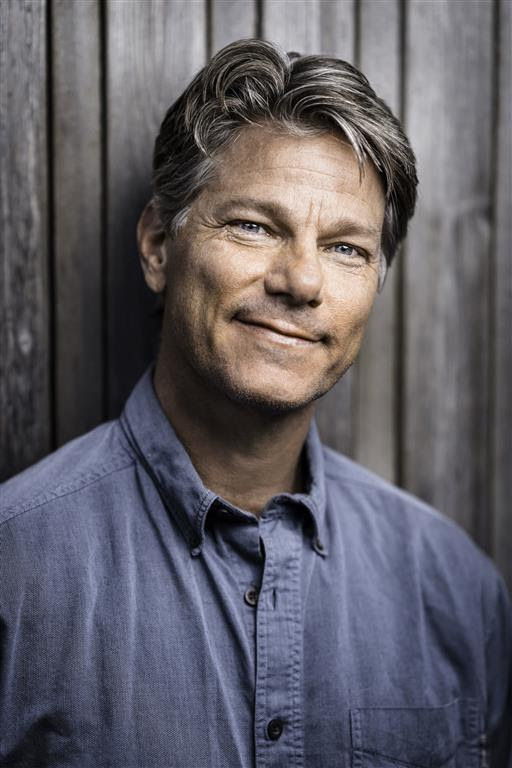
Jonas Karlsson writes plays and short fiction. One of Sweden’s most prominent actors, Karlsson has performed on Sweden’s premier stage and in several acclaimed feature films and television series. In 2005, he made his debut as a playwright, earning rave reviews from audience and critics alike. Spurred by the joy of writing for the stage, Karlsson began writing fiction. He has published several short story collections; The Room is his first novel.

jonasThe Room is a short and apparently straightforward work, but takes us deeply inside the head of Björn, which is a strange place. How difficult is it to present such seeming simplicity?

Thank you! I’m glad to hear that. As an author, I believe it’s all about trying to get inside your main character’s head. If you’re close enough to the story, you’ll get an instinct for what is important and what isn’t. If I choose to describe the right details, it will give the reader a clear image–probably not exactly the same as mine, but one shaped by the reader’s own experiences.

Your background as an actor would imply that you haven’t spent a great deal of time in office settings, but this isn’t the first work of fiction you’ve set there. What experience are you drawing on?

That is correct–I’ve never worked in an office. But I’ve visited many offices and maybe I nurture a secret dream about working in a real open office landscape. I can tell you that the environment in the theater and movie business is more similar to offices than you could imagine. There are a lot of meetings, deals, hierarchies, informal decision paths, intrigues, jealousy–not to mention weirdos–there as well.

Did you intend this as another short story that got away from you, or did you set out to write a novel?

I actually never know how lengthy a story will be when I start writing. Most often I start with a situation or some dialogue that I think seems intriguing. Then I write on and see what happens. Sometimes it turns into nothing, other times it becomes a short story, and sometimes–pretty rarely–it turns into something as lengthy as this. It all depends on what I find along the way, and if I find it exciting to keep going. (I love this feeling of freedom in the writing process. It is like being a jazz musician and starting on a piece of music, and not knowing what will happen–all you can do is hang on.) The story about Björn was hard to let go.

Your decision to write in Björn’s own perspective or voice is a large part of what makes his story so creepy. How did you make that choice?

In the beginning, I only had the part where Björn finds a room. I put myself in his shoes and, as the character took shape, he became very special. When I had the whole story set in my mind, I actually tried to change it to third person because it was so hard to describe how the people around Björn reacted to him. But this proved not to be so easily done. I felt it was like exposing him: “Look here, what a crazy guy, and look at the weird stuff he does….” It became obvious that the story had to be experienced through Björn for it to work.

Besides, I think it’s very intriguing to gradually, over time, discover your narrator isn’t to be trusted.

What do you think makes Björn such a compelling protagonist?

I hope that I’ve given him depth, despite the many comic situations he finds himself in. I always try to imagine that I’m my main character–I have to think: Okay, if I was Björn, what have I done? Kind of like I do as an actor when I play a part.

How hard, or troubling, is it to write from inside a space of darkness or even mental illness?

Above all, it is very exciting. But I did have periods when I thought it was difficult and wondered if I was going to go mad, or if my readers would think that I had become weird and had all of those crazy ideas. At the same time, it is a wonderfully mind-blowing feeling to create and enter into the mind of such a special character. Again, it is similar to acting in that way.

Did you have any role in the translation of this novel by Neil Smith into English? What does the process look like? Is there any sort of back-and-forth?

Neil is such a good translator, and I trust in his judgment 100%. We really just talked about the end, which is altered a bit from the original text. Otherwise I let him do his work, which he does so well.


This interview originally ran on November 10, 2014 as a Shelf Awareness special issue. To subscribe, click here, and you’ll receive two issues per week of book reviews and other bookish fun!

Maximum Shelf: The Room by Jonas Karlsson, trans. by Neil Smith

Maximum Shelf is the weekly Shelf Awareness feature focusing on an upcoming title we love and believe will be a great handselling opportunity for booksellers everywhere. The features are written by our editors and reviewers and the publisher has helped support the issue.

This review was published by Shelf Awareness on November 10, 2014.


room
“The first time I walked into the room I turned back almost at once.”

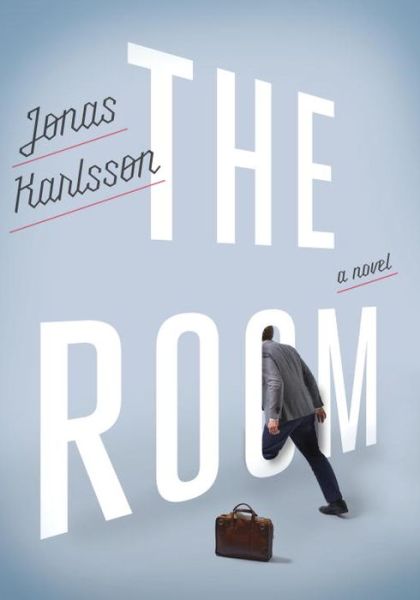
From this skillfully subtle opening line, the titular room is spotlighted as the crux of a strange and surreal tale. The first-person narrator of Jonas Karlsson’s The Room remains nameless for much of his story. He assures the reader that he has been given his new position working for the Authority because of the outstanding work done at his last post–as implied by his boss, “gesturing upwards with his hand to indicate my career trajectory.” This narrator, eventually identified as Björn, is a consummate bureaucrat and couldn’t be prouder of his efficiency. He sets himself a strict schedule: 55 minutes of work followed by five minutes of break time for coffee, toilet and sundry; if he needs the toilet sooner, he practices restraint.

Björn is odd from the first, but we take him at his word: he is good at his job, perhaps not well-liked by his fellows, but effective and ambitious. In this new post, he is determined to work his way to the top, and secretly exults in a future in which his boss Karl will acknowledge Björn’s prowess and grovel for his approval. Social awkwardness is his greatest challenge. His attempts to infiltrate the politics and society of his new office environment are clumsy; nonetheless, he endures the Christmas party. He’s unhappily positioned at the very center of the open-plan office space, with a boorish deskmate whose piles of paper threaten to encroach upon Björn’s territory.

On the other hand, there is the room. Björn discovers it by accident while looking for the toilet. It is a lovely space, a perfectly appointed, perfectly proportioned, old-fashioned, classy office. In his eyes, “The whole room breathed tradition…. Is this what monks feel like as they walk the corridors of their monasteries?” He catches sight of himself in the mirror, and is struck by how good he looks, despite not usually feeling that he is attractive, or even worrying about such things. His suit even fits better when he is in the room.

Björn begins visiting the room regularly, and a problem arises. His coworkers see him standing in a particular spot, along the hallway on the way to the toilets. He just stands there, entirely still and dead to the world, looking contented. This is unnerving. They don’t see the room; the room doesn’t exist on architectural plans or for anyone else; Björn concedes that, when he paces it off, no room should fit in that precise space. The other fourth-floor employees of the Authority gang up on him, enlisting the boss’s power against him, and he is instructed to never enter “the room” again, under any circumstances. But Björn knows that he is a worthy opponent for these small-brained incompetents. He takes on a protracted confrontation in which these conflicts only deepen.

Björn is an exemplary unreliable narrator. As in the best instances, the reader is left to put together fractured pieces of information shared along the way, and struggle to devise the truth of the room and Björn’s sanity. It’s tempting to flip back to earlier scenes and reconsider. Who is crazy here, Björn or his colleagues? Is he the last breath of reason in an insane world, or vice versa? Are we observing the workings of magic, fantasy, conspiracy or madness? Is this really modern Stockholm, or an Orwellian nightmare? The parallel realities experienced by Björn and his colleagues, and the high-strung nature of his interior drama, are sketched with exquisite subtlety in deceptively simple language, and Neil Smith’s translation from the Swedish is pitch perfect. The Room simultaneously approaches claustrophobia in its physical scope and achieves boundless significance.

There are several levels to the uncomfortable probing Karlsson undertakes throughout Björn’s odd tale. Clearly this is in part a critique of bureaucracy and office politics (is it really ideal to dispose of your problem employee by putting him to work restocking printer paper?), but Karlsson also sketches larger doubts about the subjectivity of reality, social graces and the importance of control over the different aspects of our lives.

Karlsson’s prose and the inventiveness of Björn’s surreal mental workings are often funny; indeed, the humor comes in moments of breathless surprise that amplify its effect. This story will, of course, strike comic chords with the cube-dwelling set. But the overall impact is also deeply thought-provoking and profoundly disquieting, and the combination of the banal and the absurd results in a striking and singular read.

The Room is a very slim book with a very large footprint, recalling Kafka and Beckett, and posing questions about the nature of truth as well as the value of defining one’s own work and life. As the reader interprets Björn’s world and social cues, doubts are cast on his belief in his own superiority. But the drama persists until the final, bizarre conclusion.


Rating: 8 fairy-lights.

Come back tomorrow for my interview with Karlsson.

Maximum Shelf author interview: John Vaillant

Following yesterday’s review of The Jaguar’s Children, here’s John Viallant: Looking at the World Differently.


John Vaillant’s work has appeared in the New Yorker, the Atlantic, National Geographic and Outside, among other magazines. His two previous nonfiction books, The Tiger and The Golden Spruce, were award-winners and international bestsellers. Vaillant was born in Massachusetts and lives in Vancouver, B.C. The Jaguar’s Children is his first novel.

vaillantIs Hector’s story based on a specific true account? Where did you get the idea?

The idea came from a conglomeration of different border-crossing incidents. There was one particularly awful case in which a boxcar load of immigrants attached to a train was taken across the border and never opened. It wasn’t found for weeks, until it got to Iowa. Just a hideous, nightmarish situation. I started wondering, what happens in there? What would you go through? And then my family and I lived in Oaxaca for a year, 2009-2010. In Oaxaca, water trucks are a common sight. On one side, they read, “Agua por Uso Humano,” “water for human use,” and I kept thinking about that, and I kept thinking about thirst, and the anagram of agua and jaguar. It just fell into place. All these disconnected observations and ideas gradually coalesced. There was a moment when this fellow, the narrator, just announced himself to me, in January 2010.

This is your first published fiction. What led you here from your past work in nonfiction?

Trying to find a container that was suitable for the story I wanted to tell. Needless to say, Oaxaca is a really interesting place–Mexico is full of stories. There was a nonfiction story that was jaguar-related, that I was pursuing and actively researching down there, and for a couple of reasons it didn’t fully coalesce. A lot of what I was experiencing were more like travel anecdotes, but I didn’t want to write a travel book. It felt too trivial. So then I asked, how do I take all of these things I’m seeing and hearing and feeling, and put them all together in a place where they will make sense and hang together, and create a synergetic narrative and a picture of what is going on down there right now? And the novel was the right form.

This is also somewhat a departure from writing you’ve done about the relationship between people and the natural environment.

I’m really interested in hearing voices that I, or we, don’t usually get to hear, so that’s in a sense what the books are about: creating a platform for these people or beings who are generally invisible, to get some air time. You know, it’s not a selfless, altruistic mission on my part–I’m really curious and I want to see what that world is like, I want to understand it better and re-create it in a way that feels authentic. Ideally people who live that life, whether they’re tigers or conservationists, or biologists or foresters or Mexicans in Oaxaca, will feel that their realities were accurately reflected. So the whole natural world connection is almost incidental, honestly. For me, those margins where human beings and the natural world collide, that’s where the most dynamic tension is. It’s a kind of a front line, and also a fault line. Whether it’s human beings and corn, or human beings and thirst, or human beings and tigers, or the forest, there is a common thread. But it’s certainly not intentional; it’s just where my natural interest seems to go.

Did you go to Oaxaca with any work in mind, a book or a story?

I was deep in The Tiger then. I was in the middle of edits and to be perfectly honest, all I wanted to do was finish that book, lie in a hammock and read books that didn’t have tigers in them. Or any other big cats. That really was the plan.

And here we are.

Here we are. That’s the beauty of the muse, really. All the books I’ve done have really come unannounced. It wasn’t a premeditated objective to write any of those stories, they’ve all come to me and I see them as gifts of sorts. Really time-consuming ones. This again came right when I was just about wrapping up The Tiger and ready to read Under the Volcano or some other books about Mexico. And instead, Hector showed up.

Hector’s perspective is of a Mexican indio from Oaxaca, and his voice is convincing.

I do have a strange, kind of inside track to Mexico. For three generations my father’s family lived there, and I grew up steeped in Mexican lore as it was refracted through their experience. My grandfather was a well-known archaeologist who wrote the first comprehensive history of the Aztec nation, a book called Aztecs of Mexico. My grandmother told us many stories about him. Her house, all her kids’ houses, including my father’s, were filled with things from Mexico, some of them very very old, none of them more modern than 1930 because that’s when they came back. So Mexican art and artifacts were featured in my upbringing, as were stories of my grandfather.

In what ways was your year in Oaxaca helpful?

My wife is a potter and an anthropologist, and she wanted to spend time with traditional Mexican potters. I would follow her around in her trips to these villages, quite remote and very very traditional, so we’d meet people who didn’t speak any Spanish at all. People who have never really succumbed to the dominant culture. They were nominally Christian, but observing and worshiping traditional deities and certainly pursuing traditional practices, whether it was ceramics or agriculture. So it was really like going into another world. I had a notebook and a camera and my innate curiosity. The fact that I had a deep Mexican connection in the family gave me more of a motive to try to understand it. What was it that kept three generations of my family down there when they were all Americans? And perfectly well-connected Americans; they could have had fine lives up here, but for some reason Mexico was the place that offered them something different, something more.

But ultimately this is a story about a Zapotec guy from southern Mexico. Think about the U.S./Mexican border: it’s the most active border on the planet, the site of the largest human migration on earth, and Oaxaqueños play a huge role in that. One in three people from that state go to the States at some point to work, most of them illegally. And all kinds of things happen to them. As I came to understand that, it just started to feel more and more important.

And there was another inspiration. Just as I vowed not to read any more books about tigers, my father-in-law gave me The White Tiger by Aravind Adiga, which won the Booker Prize in 2008. It’s a wonderful novel about a low-caste, indigenous guy from northern India, who notices that there’s something big going on in Bangalore and Delhi. Big money is being made. He’s very smart, but he just doesn’t understand the system well enough to know even how the money’s being made. And that’s how a lot of indigenous Oaxaqueños approach the U.S.–they may have family up there, they may not, but they do not understand the culture terribly well–or often the hazards of the journey, which are many, and can be absolutely lethal. So you have these people who are capable in their sphere but naïve about the wider world, making the journey north, and a lot of them come to grief on the border.

Was this book as difficult or traumatic to write as it may be to read?

I wondered a lot about why I would want to return to this place over and over again, and go back into that truck. It’s a hideous, deadly place. But I thought, nobody else is probably going to do this. And this is something that happens to people, that shouldn’t be happening. And Hector was a very compelling person. But as far as difficulty goes–it was extremely difficult. The novel is a different animal, so to speak, than nonfiction, and certain narrative tools do translate, but being in that voice and pacing it and dealing with the other voices… really was new to me. You’re not really the same after doing something like that. I look at the world differently and feel it differently as a result of spending so much time there.

So the challenge of immersing yourself in the painful subject matter was ultimately rewarding, which I think is the case for readers as well. This is about more than just a nightmarish border-crossing incident.

So much of the book isn’t about that. It’s really about being a young person in a very troubled–some could argue broken–society and first trying to find his place in it, and then ultimately having circumstances align in such a way that he has to leave. The time you spend in the truck is desperate and terrible, but also you get to see how strong Hector is, and what he’s made of. He’s extraordinary in some ways, but he’s not superhuman. It’s amazing what people survive. It’s amazing the kind of clarity and wisdom those kinds of stressors can evoke and inspire. I think it’s a crucible for him, and for his character. I think all of us undergo tests, some of them truly terrible–it’s part of the human experience. Hector is a guy trying to figure it out. Trying to survive at the immediate level, but also at the cultural and occupational levels. The world is changing really fast around us. There are pressures being brought to bear that I have no control over, so what do I have control over? How should I respond to the people around me, to those who are trying to help me and those who are trying to impede me or hurt me? In that sense it feels like a kind of fundamental story.


This interview originally ran on November 5, 2014 as a Shelf Awareness special issue. To subscribe, click here, and you’ll receive two issues per week of book reviews and other bookish fun!

Maximum Shelf: The Jaguar’s Children by John Vaillant

Maximum Shelf is the weekly Shelf Awareness feature focusing on an upcoming title we love and believe will be a great handselling opportunity for booksellers everywhere. The features are written by our editors and reviewers and the publisher has helped support the issue.

This review was published by Shelf Awareness on November 5, 2014.


jaguar
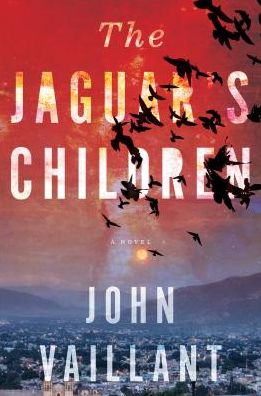
The Jaguar’s Children is a striking and heartrending first novel by John Vaillant (The Tiger; The Golden Spruce). It opens with a text message.

Thu Apr 5 – 08:31 [text]
Hello I’m sorry to bother you but I need your assistance–I am Hector –Cesar’s friend–It’s an emergency now for Cesar–Are you in el norte? I think we are also–Arizona near Nogales or Sonoita–Since yesterday we are in this truck with no one coming–We need water and a doctor–And a torch for cutting metal

The sender is Hector María de la Soledad Lázaro Gonzalez, a young man from a small pueblo in the Mexican state of Oaxaca. He has paid 30,000 pesos to a band of coyotes to be transported across the Mexican border, from Altar in Sonora into Arizona. Along with his companion Cesar and 13 others, Hector has been sealed inside a water tank for this illegal journey, and the truck has broken down and the passengers–now prisoners–have been abandoned.

With Cesar injured, Hector becomes responsible for his friend as well as for himself. The plight of the 15 people trapped in the truck is the central struggle of the book, which spans only a few days in real time, from Hector’s discovery of Cesar’s hidden cell phone (containing only one U.S. phone number, for a person Hector doesn’t know) to their eventual fate. During these days, as food supplies and water dwindle and the immigrants bicker and weaken, Hector uses the phone to compose text messages and record lengthy sound files in which he tells his story, and Cesar’s. The Jaguar’s Children is the transcript of these messages.

Hector initially identifies himself as Cesar’s friend, but as his chronicle unfolds, it becomes clear that their connection is more tenuous. Originally schoolmates, Cesar is older, more successful and popular, and Hector is rather a hanger-on; in the hours before their departure from the border town of Altar, however, Cesar began to unburden himself to the younger man. Hector is at first hopeful that his unknown contact in the United States will save the truckload of thirsty immigrants, but as conditions worsen and he gets no response, he feels an increasing urgency to record the story of both lives. His narrative thus progressively deepens, and gains increasing gravity.

Unquestionably, the immigrants’ suffering is a large part of the novel’s significant and essential emotional impact: these people are treated as worse than beasts by the coyotes who leave them in such straits, and their torments are both unimaginable and graphically described. This agony is leavened somewhat by the interspersed history of Hector’s life in Oaxaca, but even those tales are disturbing, as they examine the injustices and poverty that drive Hector and Cesar to undertake such a dangerous flight in the first place. Principally, however, Vaillant’s masterful debut novel is deeply compelling, realistic and heartfelt, and brings to light important considerations about the way we treat one another.

Vaillant’s writing is extremely well crafted, precise and poetic, not only painfully affecting but carefully structured. He uses Spanish-language word order and sentence structure, so that Hector’s voice speaks aloud from the page. This sense of realism is outstanding, and while it is part of what makes this book distressing, it is also a fine achievement. Indeed, the reader must beware the fine line between fact and fiction, as Hector’s is represented as a true story to the less discerning members of the audience. That this story could happen–does happen–is part of its import.

The Jaguar’s Children is at once a work of intense suspense, as we worry over the question of Hector and Cesar’s survival, a larger story of conflict between two nations, and the indigenous cultures in a parallel struggle for survival. Lyrically composed, tragic and disturbing, Hector’s account will certainly be one of the most memorable books of the year. This heartbreaking novel is worth the pain, for the wisdom it has to share and the respects it can help us all to pay.


Rating: 9 capfuls.

Come back tomorrow for my interview with Vaillant.

Maximum Shelf author interview: Yannick Grannec

Following yesterday’s review of The Goddess of Small Victories, here’s Yannick Grannec: On Mathematics and Metaphor.


Yannick Grannec is a graphic designer, freelance art director, professor of fine arts and enthusiast of mathematics. The Goddess of Small Victories is her first novel. She lives in Saint-Paul de Vence, in France.

(Interview translation courtesy of Other Press.).

yannickWhy Kurt Gödel? Why did you feel the need to tell his story, or more accurately, Adele’s?

When I was 18, I read Gödel, Escher, Bach and became fascinated by the work of Kurt Gödel. Twenty years later, I read, by chance, an essay about the friendship between Gödel and Einstein and, as the subject interested me, read other essays. In one of them, I came across a few lines about Adele that struck me as condescending. This question was implied: How could such a genius marry such a common woman?

Knowing Gödel’s life–the man was paranoid, anorexic, depressed–I wondered: How could a woman love such a difficult man for 50 years? There was nothing scientific about it, but that seemed to me to be the real mystery.

I had the intuition of a human story that needed telling, one that came with an opportunity to share what has always fascinated me, the history of science, as part of the fabric. To tell it in the voice of Adele seemed to me completely natural: she was the Candide, which allowed me to transmit complicated ideas with simple words. I felt an immediate empathy for her, as though I’d always known her: she spoke to me of all these destinies of women, of these lives sacrificed for love or out of social obligation. She spoke to me of my mother, my grandmothers, and all those other women howling through my DNA.

What kind of research did you do to prepare for this writing?

Even before beginning to write, I read a great number of documents over the course of at least a year. Of course, I had begun with everything that was within my intellectual reach that had to do with Kurt Gödel, then Einstein, then the biographies of those scientists who shared their destiny. But as soon as I pulled on one thread, an infinite tapestry appeared: I had to stick my nose into epistemology, into history in general, into philosophy, etc. I admit to having had a few periods of discouragement. In particular about Husserl, on whose subject, clearly, I stumbled. Like Adele, I didn’t have the keys. I assembled a wide-ranging collection of photographs to nurture my imagination (the people, the period clothing, the places, etc.) and then I went on reconnaissance to Vienna and to Princeton, to soak up those places. In certain neighborhoods, those two cities seem to be stopped in time. It is very easy to imagine the era before the war in Vienna and the 1950s in Princeton. I had come up with a route, from house to café, from university to sanatorium, to follow in Gödel’s footsteps. I understood why, for example, they lived in the suburb of Grinzing: the 38 tram was direct from the mathematics university. Kurt didn’t like complications in his daily life. Each new discovery stirred up big emotions: seeking Kurt and Adele on the street where they lived, I found an old photography studio at the address that had belonged to Adele’s father. I’ve returned there since, only to discover it has been replaced by a snack bar. Destiny, in this case, gave me this gift. Three years later, I would have missed it. At Princeton, I timed the route Gödel walked with Einstein, to determine the length of their conversations. At the Gödels’ tomb, in Princeton, I cried. I’ve lived with them; they’re my family.

As for having the nerve to make Einstein, Gödel or Oppenheimer speak, I owe it to a kind of wild foolishness, the one that urges you to jump from a diving board into cold water. In retrospect, I shiver at the thought.

How did you come to the decision to switch back and forth between the latter-day view of Anna’s life, and Adele’s life history as it happened?

Anna was born in hindsight. I needed a character who would listen to Adele. And I felt a need to interrogate the Gödels about their lack of reaction to the rise of the Nazis. I needed to explore this gray area. I’m going to say something very pretentious, but the novel’s construction is meant to be a metaphor for the incompleteness theorem. The system observed here is not a mathematical system, but that of Adele and Kurt’s relationship. Extrapolating from the incompleteness theorem–Gödel forgive me!–we can say: one has to be outside of the system to understand the system. So I opted for a double construction: a subjective perspective, from the inside of the system where Adele recounts her story and her feelings in the first person, and a more objective perspective, in the third person, where the narrator observes Adele and the way she tells her story, completed by the letters of the Gödels’ nurse, Elizabeth Glinka.

Anna was therefore supposed to be an objective observer, but the more I wrote, the more her character developed. The relationship with the old woman became a creative re-creation, allowing me to work without documentation, following my intuition. Her destiny became a mirror of Adele’s with, obviously, different paradigms of social origins and historical circumstances. In the end, Anna is, for me, a very positive character: she gives Adele her affection and the possibility to pass on the vital force that defines her. So the novel doesn’t conclude with a disappearance, but with all the possibilities of a life being constructed.

Toward the end of the book, it felt like we got a more intimate look inside Adele’s head. Was this intentional?

The first part of the book takes place during the time of the events that tormented her: life in Vienna during the heady days, the rise of Nazism, the flight across the Pacific, the move to the United States, McCarthyism. At the end of the novel, we accompany the couple through their aging, in a life that’s more and more reclusive. We must understand Adele’s solitude, her boredom. I felt strangely compelled to make the reader feel Mrs. Gödel’s inner battles: her anger, her discouragement followed by a sort of abandon, the acceptance of her own weakness and inevitable decline.

Did you have any role in the translation of this novel by Willard Wood into English? What does the process look like?

My English is really not good enough to judge the translation. I have complete confidence in Judith Gurewich, my American publisher, and Stephen Carrière, my French publisher, both of whom are completely bilingual. I know it’s a very good translation. I loved working with the translator, Willard Wood: we exchanged numerous e-mails. Willard has a sensitivity, an attention to detail that moved me, and a deadpan sense of humor that I greatly appreciated. For other translations, I had to sometimes explain, literally, the idiom or the double senses, which can be very exhausting. That wasn’t the case with Willard, who has a perfect mastery of the second degree in both languages. It was very important to me to keep the humor of the original French, if I can allow myself to describe it that way!

How important is historical accuracy in fiction, and how faithfully does this novel stick to the historical record?

To slip into Gödel’s life demanded a great deal of exactitude. When you use someone’s life, respect is an imperative at every moment. For Kurt, it wasn’t difficult; his life had already been explored and dissected by different biographers, like the “bible” by John Dawson, Logical Dilemmas. For Adele, I had so little information. I had to make myself empathetic, attempt to guess her feelings, her emotions, through the few anecdotes I was able to gather: the aggression of the Nazis on the steps of the university, the naturalization scene in Oskar Morgenstern’s memoirs, Dorothy Morgenstern’s saying that she was very intelligent and funny. I constructed three chronologies: an historic and scientific frieze; a timeline of Kurt Gödel’s life (his trips, moves, work, depressions and health problems); and underlining it, one of Adele’s life as well. She was the unknown in the equation determined by history and the history of her husband. I tried to guess at and date her moods, her joys and, at times, her despair.

The main difficulty lay less in historical exactitude than in approaching scientific exactitude. First of all, it was necessary to attempt to understand. I could talk about this famous incompleteness theorem in a general way, but not in any detail; I’m not a mathematician, and I’m not at all conversant in the language of logic in which it’s expressed. Then, I had to betray. Because the language of mathematics is, by its very definition, objective–but to integrate it into fiction, and to share it, I could only use written language, a subjective tool. To go from sign to metaphor is a betrayal. So I needed to accept, and have others accept, an inevitable inexactitude.

For the part on the continuum hypothesis, I took a course taught by a mathematician friend. This part is more developed, because I thought I understood it better, and my intention was to use only what I thought I understood, because it was important to me to be intellectually honest. Of course, often, we think we understand, but it’s only the surface of things.


This interview originally ran on August 6, 2014 as a Shelf Awareness special issue. To subscribe, click here, and you’ll receive two issues per week of book reviews and other bookish fun!