Maximum Shelf: The Gap of Time by Jeanette Winterson

Maximum Shelf is the weekly Shelf Awareness feature focusing on an upcoming title we love and believe will be a great handselling opportunity for booksellers everywhere. The features are written by our editors and reviewers and the publisher has helped support the issue.

This review was published by Shelf Awareness on July 22, 2015.
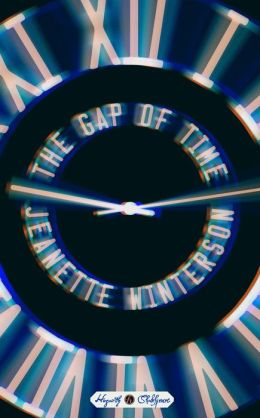

gap of timeThe Hogarth Shakespeare project undertakes to reinvent the Bard’s classic works in novel form; the first installment is The Gap of Time by Jeanette Winterson (Oranges Are Not the Only Fruit; Why Be Happy When You Could Be Normal?), a “cover version” of The Winter’s Tale. In Shakespeare’s original, the kings of Sicilia and Bohemia are great friends until one accuses the other of sleeping with his wife. The jealous Leontes plots to murder his friend Polixenes, but misses his chance and instead takes out his rage on his pregnant wife, the queen Hermione. By the time his suspicions are proved false, he has lost both his son and his wife, and the baby girl Hermione gives birth to has disappeared. Leontes ordered the baby taken into the wilderness and abandoned, but the man he assigned this task died in the process, so the baby’s fate is unknown. Sixteen years later, a romance between Polixenes’s son and a beautiful, mysterious shepherd’s daughter may offer redemption and even a second chance.

The Gap of Time is set dually in modern London, just following the 2008 economic crisis, and the fictional American city of New Bohemia. Londoners Leo and Xeno were childhood friends and, for a time, lovers; as adults, despite very different values, the bohemian Xeno and the materialistic Leo have become business partners in Sicilia, a high-tech gaming company. Leo’s wife, MiMi, son, Milo, and his uber-capable assistant, Pauline, round out a highly functional, loving family of sorts, until Leo becomes obsessed with the idea that MiMi and Xeno are sleeping together. Leo reacts violently, and loses his son and wife. When he tries to ship MiMi’s baby daughter overseas to Xeno, whom he wrongly believes to be her father, the little girl goes missing.

In New Bohemia, Shep and his son, Clo, who run a piano bar, come across a carjacking too late to save its victim, after which Shep is able to pull a baby out of the nearby hospital’s BabyHatch, a high-tech receptacle for abandoned infants. He is convinced this child is a gift meant for him, to help him heal after his wife’s death, and raises the girl as his own. Her name, according to papers found with her, is Perdita. He could never conceal from her that she is adopted: Perdita is white, while Shep and Clo are black; but she grows up in a home filled with love and music, never doubting that she is wanted. As in the original, 16 years will pass before Perdita encounters a romantic interest who, though equally ignorant of their connected past, will lead to her learning about her origins.

A very brief recap of The Winter’s Tale at the beginning of the book informs the reader, so that no knowledge of the original is necessary to follow or enjoy this retelling. Indeed, The Gap of Time will please readers who have never given Shakespeare a second glance, as well as his committed fans. Winterson has fashioned the ideal remake: paying respect to the original and faithfully following many plot points, as well as the general spirit, she simultaneously builds upon it, not only making Shakespeare’s work accessible to modern minds but providing a freshly felt and relevant emotional experience.

Shakespeare’s sympathetic and intriguing plot involving several twists and changes of heart plays well with Winterson’s nuanced tone, while her characters are more multi-faceted than the originals. Leo is a deeply flawed man who nonetheless attracts the reader; Xeno is magnetic, beautiful and sensual; and MiMi is a woman of more complex feelings than the dignity Shakespeare gives Hermione. The next generation, Perdita and Zel, Xeno’s son, are appealing, with passions and interests of their own. It is Shep and Clo, though, Shakespeare’s nameless Shepherd and Clown, who get the most reworking, and to great advantage.

Most of The Gap of Time takes place in London and New Bohemia, but also visits Paris, the Seine and, of course, the bookshop Shakespeare and Company. As realistic as these settings are, it is the gaming world invented by Leo and Xeno that is most imaginative and vibrant. Leo is obsessed with the scene in Superman: The Movie where Superman zips round the world and turns back time to save Lois Lane. Their game is creative, vividly rendered and evocative of Xeno’s disappointment in what his life has become, as well as Leo’s preoccupation with the idea of time’s malleability. It is a game filled with angels of death, and it is called The Gap of Time.

As the title indicates, Winterson’s version of The Winter’s Tale plays with the concept of time even more than the original did, asking questions about what is changeable about our pasts and our futures. Leo wishes he could take back his madness and its consequences; Xeno wishes he’d handled it differently. This is a stirring tale filled with waste, simple mistakes and regrets. But as in the original, it also offers hope, young love and the possibility of new beginnings. In an unusual twist, Winterson herself steps forward in the final pages to speak in the first person about what she hopes for from this story–and then she steps back to allow her characters to finish it.


Rating: 7 feathers.

Maximum Shelf author interview: Bill Clegg

Following yesterday’s review of Did You Ever Have a Family, here’s Bill Clegg: Characters with Secrets.


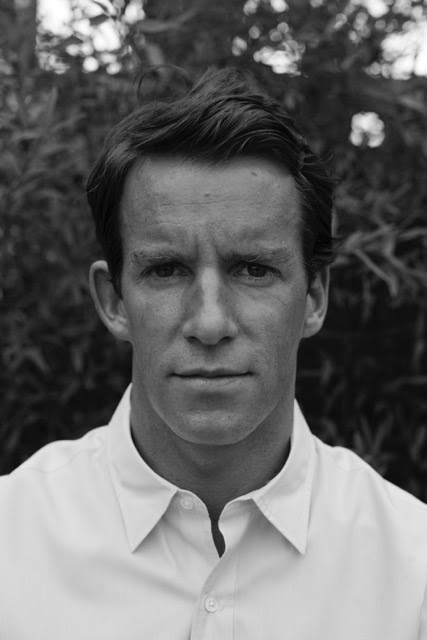
Bill Clegg is a literary agent in New York, and the author of the bestselling memoirs Portrait of an Addict as a Young Man and Ninety Days. He has written for the New York Times, Lapham’s Quarterly, New York magazine, the Guardian and Harper’s Bazaar. Did You Ever Have a Family (Scout Press) is his first novel.

CleggWhat motivated your transition from memoir into fiction, and how did it go?

I became interested in stories where people with good intentions inadvertently make the wrong choice and instigate calamitous consequences.

On top of that: How do the people in their lives forgive them, how do they forgive themselves? Also the possibility of years of struggle that arrive at peace, finally, but not for long. For instance, stories of people who find love after years of its absence, only to face its sudden loss. I found that fiction was the place to begin to find answers to those questions, and soon the world of the novel came into being.

Did your insight as a literary agent make writing and selling a novel easier or harder?

Probably both. I advise my writers to write for themselves first and try and satisfy the terms of the work as they’ve laid it out, and then open their ears to their fellow writers and me, and then editors. Hold on to it as long possible, take it as far as you can before sharing. If publishers don’t want it right away, it is likely not the end of the story, it’s just that it’s not always easy. So knowing that there are no sure outcomes when you submit fiction to publishers was useful because I could, over the years that I worked on the novel, just try and answer the questions I was asking and also stumble onto new ones. For a long time, whether it would be published or not was, happily, not involved in its making. So that part was helpful. Of course, when my agent Jennifer Rudolph Walsh sold it, there was a lot that didn’t need to be translated for me as we progressed toward closing a deal.

I love that so many different characters get a voice in this book. Did you have a favorite to write?

At various times I was drawn to some more than others. Cissy, who works at the seaside motel, held my attention for a long time. She still does.

Cissy is indeed a great enigma. Does this mean that you’ll be writing more about her? Is there room for a sequel here, or will you be able to let her go?

I don’t think Cissy would figure into any next book I might write, but you never know. And I don’t see a sequel in the cards. Anything else that might happen to the characters in Did You Ever Have A Family I leave to the imagination of readers. I have, though, been writing in and around a group of characters in Wells, the town in the novel. It is a place I expect I’ll return to at least one more time.

What makes for a compelling protagonist?

Oh, gosh–many things and likely different for every reader. I tend to be drawn to characters who have something to learn through the course of the story being told. Also people with secrets. I had a lot for a long time and it’s a lonely existence that I am sympathetic to.

This novel starts out as the story of one family’s tragedy, but it expands into something larger. Is this the book you set out to write, or did it grow as you worked?

It opened up in the writing. And far beyond what ended up in the book. I had to write beyond and outside the thing to figure out some of the characters and ideas and voices. Issues of class and people’s relationship to the places they come from became more important and more interesting to me as I wrote.

How tantalizing! What happens with that material? Has it run its useful course?

Not as tantalizing as you might think! All that material is for the forensic computer experts to someday find in my computer but it will never see the light of day.

Do you feel that there is a moral to this novel, a message you needed to share?

When it feels like the end it often is not. And also: despite everything we think we know–about class, about human nature, about psychology–we really know nothing of anyone else’s life, cannot ever presume to understand another’s particular existence. Judgement is often no more than a confession of ignorance.


This interview originally ran on June 10, 2015 as a Shelf Awareness special issue. To subscribe, click here, and you’ll receive two issues per week of book reviews and other bookish fun!

Maximum Shelf: Did You Ever Have A Family by Bill Clegg

Maximum Shelf is the weekly Shelf Awareness feature focusing on an upcoming title we love and believe will be a great handselling opportunity for booksellers everywhere. The features are written by our editors and reviewers and the publisher has helped support the issue.

This review was published by Shelf Awareness on June 10, 2015.


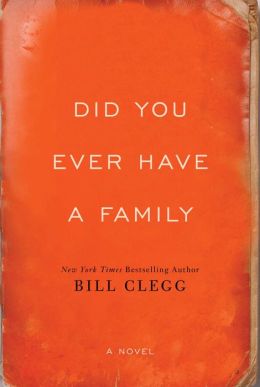
did you everAcclaimed memoirist Bill Clegg (Portrait of an Addict as a Young Man; Ninety Days) offers a profound jolt with his first novel, Did You Ever Have a Family, the impetus for the creation of Gallery Books’ new literary imprint, Scout Press.

June Reid’s world is splintered and lost in an instant. In the early morning of her daughter’s wedding day, her farmhouse explodes and burns, killing June’s ex-husband; her current boyfriend, Luke; her daughter, Lolly; and Lolly’s fiancé, Will. Did You Ever Have a Family maps the circumstances of the blaze and follows the aftermath of this tragedy as it affects June and other members of the families and communities of the victims.

In Clegg’s unusual composition, each chapter belongs to a different person, with the reader left to configure their connections. Some of their stories are told in first person, some in third, and almost all in flashbacks. This ever-shifting perspective highlights mistakes and misunderstandings, including June’s; other characters provide small revelations, thereby contributing to larger questions. The relatives and acquaintances of the deceased are joined by others with less clear ties, who appear to the reader in ever-widening concentric circles. Thus Clegg slowly and skillfully reveals the night of the fire and the nuances of the surrounding community in deft disclosures, through different points of view and with deep feelings.

June’s farmhouse is located in the small Connecticut town of Wells, where the locals are employed, somewhat resentfully, in serving weekend people from New York City. June had first been a weekender, and later moved in full-time. She ruffled some feathers when she began dating Luke, a handsome young man some 20 years her junior with a complicated history, about whom everyone in town had an opinion. June’s own family is not uncomplicated: following her divorce, she struggled to get along with her daughter, Lolly, a dreamy girl who apparently blamed her mother for the fracturing of the household. But June had worked to get to know Lolly’s fiancé, Will. She was counting on a future. In a moment of unguarded exasperation, she rhetorically asked Will’s sister: “Did you ever have a family?” After losing hers in such a spectacular, gruesome fashion, June eventually departs Wells carrying no identification, with only her car keys and a bank card left in the jacket she was wearing when she ran out of her house.

Early chapters focus on native Wells residents: friends, neighbors, the florist contracted for the wedding, the caterer who never got paid. But as characters gradually expand and diversify, the geography of Did You Ever Have a Family also spreads as the narrative unfolds, until its focus ranges from the east to the west coast of the United States. The lives of many are altered by the loss of June’s family; their simply expressed, easily understood emotions belie the gut-wrenchingly awful stories they tell. And each is ultimately working to build or define family, with varying degrees of success.

Lydia is Wells’s town outcast, busty and socially awkward, who gave birth years ago to a baby whose father had to have been African-American, although Lydia’s husband was red-haired and pale. That baby would grow up to be an intelligent, athletic, convicted felon–June’s boyfriend, Luke. When readers meet her, Lydia is chafing under the opinions of small, mean minds and loud voices. Town gossip holds Luke responsible for the tragedy, and thereby confirms Lydia’s low social status. Following an estrangement of several years between mother and son, June had orchestrated a tentative reconciliation. But when June leaves town following the funerals of everyone she loved, Lydia loses not only her son but her only friend. After June deserts Wells, gossip gains strength, and may yet destroy what the fire didn’t.

Supporting characters include a teenage neighbor who helped fix up the yard for the wedding and who carries his bong with him everywhere, and the family of June’s never-to-be son-in-law, Will, who return home to Washington State to mourn him. At a small seaside motel on the West Coast, a couple who have fled their own tragedy in Seattle worry over their new guest, a ghostlike woman who rents by the month and never leaves her room. And with yet another perspective, the reader learns the identity of Luke’s father, although Luke himself never did. These characters and vignettes are not disconnected, although their relationships become clear only over the course of Clegg’s masterfully woven story.

June and Lydia inhabit the center of this wondrous, grave and glorious story, but each voice that speaks up in Did You Ever Have a Family is gripping and invokes the reader’s sympathies. Every character and every small tragedy is a sensitively portrayed, complex, and compelling study on its own. What first appears to be a tale of grief in the face of unspeakable loss grows with its own momentum, until finally its scope is much wider than initially suspected. The expansive and surprising result eventually portrays the building of community and the possibility of recovery, even forgiveness. Did You Ever Have a Family is an elegant first novel, carefully composed and beautifully, hauntingly written.


Rating: 8 daisies.

Come back tomorrow for my interview with Clegg.

Maximum Shelf author interview: Erika Swyler

Following Monday’s review of The Book of Speculation, here’s Erika Swyler: Writing, Binding and the Bath.


Erika Swyler is a graduate of New York University. Her short fiction has appeared in WomenArts Quarterly Journal, Litro, Anderbo.com and elsewhere. Her writing is featured in the anthology Colonial Comics, and her work as a playwright has received note from the Jane Chambers Award. Born and raised on Long Island’s North Shore, Swyler learned to swim before she could walk, and happily spent all her money at traveling carnivals. She blogs and has a baking Tumblr, ieatbutter, with a following of 60,000. Swyler recently moved from Brooklyn back to her hometown, which inspired the setting of The Book of Speculation, her debut novel.
swylerYou presented your manuscript in a highly unusual way. How did that work, and what possessed you?

The plot hinges on the idea that a particular old book is such a fascinating object that it could consume someone’s life. It felt very important to create that experience for a person reading my manuscript. It was a simple thought: if they connected with the manuscript as an object, it would pave the way for connecting with the story. I had next to zero experience in bookmaking when I decided to bind and age the manuscripts. I might have balked if I’d known from the start how much of my life the project would devour.

Possessed is the right word. While revising, I spent months experimenting, testing stains and hunting down the right material for the cover. I tried other binding methods, but they were either too time intensive, or spectacular failures. Japanese stab stitching was fast, and a great way to make a binding stand out. Production took about a month and a half, with binding being the fastest part. Aging books takes time–drying time. It took two days for a book to cure after being rasped and stained, and another day for gilding. For the better part of a summer my dining room was a mess of drying paper, dust from abused tarot cards, rasps and gold ink. My friends thought I’d lost my mind. I probably had, to a degree, but I’d already sunk a good part of my life into writing the book and I felt it deserved every possible advantage I could give it. If nothing else came of it, I’d at least have an art object. I made 16 manuscripts in all. I held on to two copies.

What were the most and least fun parts of writing this book, or bookmaking?

The worst bookmaking moment was when my favorite drill bit snapped and took a piece of my thumb with it. That was an angry day in the dining room bookbindery. The most fun part? I got to make books! Waxing linen thread is really satisfying. It smells delicious and there’s a meditative quality to it. I also got to learn a new skill. I’m happiest when I’m learning.

Trying to evenly balance a dual narrative was the hardest part of writing. The easiest thing a reader can say about a dual narrative is that they prefer one part over the other. It was my mission to make sure that both narratives were treated equally. The whole story had to have a chance. I’d read the narratives together, then separately, then together, and then pull them apart once more. For every one read of a draft a writer might typically do, I’d read anywhere from two to four. The most fun part of writing it? Any scene involving terrible weather. There’s some truly awful weather in this book and it was always a joy to write. Bad weather allows you room for scenery chewing.

How much of this story is rooted in history?

I did a good amount of research, particularly for the 1790s portion. I really wanted to know how circus came to America, and what it looked like before P.T. Barnum cast his shadow. I found this little window of time shortly after the Revolutionary War where circus was just beginning to pop up. It was the perfect space to let Peabody and his menagerie breathe. I also think when you’re playing with the fantastic, it’s helpful to have grounding elements. The Wallendas, Philip Astley, the Joneses, John Bill Ricketts and Mr. Spinacuta are actual figures in circus history. That said, Peabody and his menagerie are entirely imaginary.

Librarians are awesome, aren’t they?

Yes! Librarians are flat-out wonderful. Nothing’s better than a person who doesn’t bat an eye when peppered with questions about curse tablets, circus accidents, tide tables, and if there’s any way around a paywall on an article. I may have done that to several librarians. Yes, I know, search engines. Search engines are like opening a fire hydrant. Librarians are far better at helping you find what you’re after, even when you don’t quite know what that is.

You’re from Long Island. What of your childhood is in Simon’s?

Napawset is a shameless amalgam of small towns where grew up. It’s an interesting place that makes you desperate to leave it, while simultaneously wondering why anyone would ever want to go. As for Simon’s childhood, I spent a good deal of mine on the beach with my sister. Thankfully, our relationship is better than Simon and Enola’s. We played on the rocks, cooked out on the beach and made ourselves nuisances to the adults around us–like kids. Also, when you grow up on a shore, there’s always this odd need to check on the water, to see what it’s up to. I think my gift to Simon was that the water was always up to something.

Where does an idea like this come from? Was it born to you whole, or were you working to flesh it out all the way through?

The idea is rooted in that moment we’ve all had when we stare at our families and think, “Where did you people come from?” That’s Simon’s narrative, this very practical question. His story also came from wondering about the houses that actually are sliding into the Long Island Sound, who lives in them, and how they got to that point. It was something I had to work out because it began with questions more than characters. The 1790s portion came to me almost fully formed, in about thirty seconds, while taking a bath. I saw Peabody, Amos, Evangeline, the entire menagerie, and how it connected to Simon all at once. It was a seriously great bath.


This interview originally ran on April 15, 2015 as a Shelf Awareness special issue. To subscribe, click here, and you’ll receive two issues per week of book reviews and other bookish fun!

Maximum Shelf: The Book of Speculation by Erika Swyler

Maximum Shelf is the weekly Shelf Awareness feature focusing on an upcoming title we love and believe will be a great handselling opportunity for booksellers everywhere. The features are written by our editors and reviewers and the publisher has helped support the issue.

This review was published by Shelf Awareness on April 15, 2015.


book of speculation

Erika Swyler’s debut novel, The Book of Speculation, opens on a precipice: Simon Watson’s house teeters, ready to tumble into the sea. “The Long Island Sound is peppered with the remains of homes and lifetimes, all ground to sand in its greedy maw. It is a hunger.”

Simon is precariously employed as a librarian, and thus lacks the funds to shore up his family home, from which his family is gone: his mother drowned, his father dead from grief, and his sister, Enola, departed, making her life with a traveling carnival. These days, Simon’s community is composed largely of the next-door neighbor, Frank, a longtime friend of Simon’s parents; and Frank’s daughter, Alice, a library colleague and a reliable constant in Simon’s life.

Enola rarely visits, but happens to be on her way home just when Simon receives a strangely apt package in the mail: an antiquarian book dealer, a stranger, has sent him a very old book which he believes has ties to Simon’s family history. The bookseller, Martin Churchwarry, bought it as part of a lot at auction, purely on speculation. It is the log book of Peabody’s Portable Magic and Miracles, a traveling circus in the 1790s, and contains the name of Simon’s grandmother. A librarian with archival experience, Simon is ready to treasure this unexpected gift on several levels, but puzzled by the family connection. Still, it draws him in, and by the time Enola arrives, he is thoroughly absorbed. She is unimpressed with his studies, while her obsession with her own tarot cards seems to be growing.

Simon reads and researches the names he encounters in Peabody’s book, calling into service his librarian friends and Martin Churchwarry himself, with whom a strangely easy friendship is established. These efforts yield a disturbing pattern. Simon already knew his mother was a “mermaid”: she could hold her breath for many minutes at a time, a trick she taught to her children. This skill notwithstanding, she drowned herself on a 24th of July. Simon did not know, however, that she came from a line of circus-performing mermaids, all drawn to the water, and that they all died by drowning on the 24th of July. In mid-July, as Enola, acting strangely, returns to their home by the sea, Simon fears that time is running out if he hopes to solve this puzzle and save his sister.

Meanwhile, the events of the past simultaneously engage the reader, as chapters alternate between Simon’s time and that of Peabody’s menagerie. A mystical Russian tarot card reader, an avuncular business-minded circus boss and other colorful characters populate the parallel thread of The Book of Speculation. But in Peabody’s world, it is Amos, a mute bastard who plays the “Wild Boy,” who will most capture the reader’s imagination and compassion.

The strengths of Swyler’s novel are many. The atmosphere of storm-tossed Long Island, with a house that threatens to dive into the sea, is at once fully, realistically wrought and fanciful: Is there a curse? Simon pursues the secrets of his family as his life literally falls apart around him, floor, ceiling, foundation and memories crumbling. Likewise, Peabody’s peripatetic enterprise evokes the promised “magic and miracles,” as well as more prosaic hazards. Each chapter is in itself a small departure into a fantastic, engrossing world. Imagery of woods and animals, small towns and family dynamics are finely drawn; everywhere is the water that frames both stories, from the Long Island Sound that menaces Simon’s home and those he loves to the rivers and streams alongside which Peabody travels. Indeed, if this story has a soundtrack, it is the gurgling waters that promise both succor and ruin to the mermaids’ line.

The Book of Speculation is driven both by character and by plot, as the reader aches for the vulnerable Wild Boy in Peabody’s circus and roots for the crooked romances of Simon’s time, and wonders, as the story develops, whom to trust. To round out an eccentric cast, Enola brings home a boyfriend from the circus who is covered in tattoos and possesses an electrifying special talent, and Simon explores new ground with Alice, the girl next door. Each of the men and women from both timelines proves multi-faceted and compelling. The overall effect is captivating, as Swyler’s delightful, mesmerizing prose keeps the story tripping playfully along through both light and dark moments. As Simon pursues the loose ends and they tie oddly together, Swyler keeps the pressure and the pacing on, as her characters struggle to make connections.

The meandering plot offers many charms: likable, quirky librarians; circus menageries and freak shows; love stories; tarot cards and trickery; mysticism; family secrets; and prickly sibling love–all accompanied by the author’s illustrations. [Swyler also painstakingly hand-bound, gilded and aged her manuscript submissions, in imitation of the old book in her story.] In short, The Book of Speculation, like the book at its center, promises to grasp the reader with a supernatural force and not let go.


Rating: 8 horseshoe crabs.

Come back Wednesday for my interview with Swyler.

Maximum Shelf author interview: Leslie Parry

Following Monday’s review of Church of Marvels, here’s Leslie Parry: Trusting the Characters.


Leslie Parry is a graduate of the Iowa Writers’ Workshop. Her stories have appeared in the Virginia Quarterly Review, Missouri Review, Cincinnati Review, and the PEN/O. Henry Prize Stories, among other publications. She was recently a resident at Yaddo and the Kerouac House. Her writing has also received a National Magazine Award nomination and an honorable mention in The Best American Short Stories. She lives in Chicago.

photo: Adam Farabee

photo: Adam Farabee


Church of Marvels inhabits a very compelling and specific setting that combines fantasy and history. How did you choose this time and place?

I didn’t consciously set out to write a book about New York, but the sensory experience of living there (the space, the light, the sounds and smells) remains very vivid in my mind, years after I moved away. Like many Americans, the city was a portal for my family. My great-grandfather, who was born in 1888, grew up in an immigrant family in Greenwich Village. His own father was a dreamy, dissolute, would-be poet who operated an elevator; his mother and sister worked as dressmakers. He fell in love with my great-grandmother, an actress, when he saw her on the stage. It’s a story that’s always fascinated me, but because he died so young, it’s all that I really know of him. So at the root of this book, perhaps, is the desire to re-create the world that he lived in, to imagine a history of the Parrys in America. But the story, of course, became something else entirely. And once I started following these specific characters through the streets of Manhattan, the book took on a life of its own.

How much research did you have to do into this historical setting, and what did that process look like?

Before I even knew this was going to be a novel, I was reading certain books just out of curiosity–New York history, medical history, labor history; various histories of vaudeville, dime museums, prizefighting, theater. I even read a book on the history of garbage. So I’m sure all of those various threads were humming along in my mind, crossing and sparking, when I sat down to write. Then, when I was deep into the drafting process, I went back and did some more focused reading: on hair weaving, river transportation, the opium trade, etc. I loved doing research: it answered questions I didn’t even know I had, and helped me understand the hurdles these characters would have been up against. But at the same time–since this is a work of fiction–I didn’t feel beholden to a strict factual representation. I let the research inform the story, but not determine it.

You tell a number of different stories that eventually converge into one. Was it hard to keep track?

Yes! And more so at first, when the story was still taking shape. I knew the direction I was traveling–I knew, in a loose way, how I wanted the plot to evolve–but I didn’t always have a clear path. I took a lot of wrong turns and hit a few dead ends. But I was guided by the overall sensibility of the story; I had to trust the characters. And I was fortunate enough to have a terrific editor help me across the finish line.

Did you always intend to write them as distinct stories?

Yes. In fact, the very first pages of this novel were not novelistic at all. I began writing vignettes about people who populated different areas of the city–just character sketches, really. It was almost like an actorly exercise, trying to situate myself in another body, in another world. This came about after spending some time in New York, where a few chance encounters happened to dovetail serendipitously. I caught a sideshow act at Coney Island; I read Nellie Bly’s Ten Days in a Mad-House; I spent days traversing downtown Manhattan with my sister (usually on the hunt for gelato, mussels, pickles, dumplings). I stumbled across the word night-soiler, I think during a visit to the Tenement Museum. But I got frustrated with these vignettes after a while, unsure where they were headed. I put the pages away for a few years, but I kept thinking back on them. One day I read everything through again and saw the whole project differently–it was a novel, and soon the threads began to braid together.

What do you think makes for good or memorable characters?

That’s a good question. I’m drawn to characters who make mistakes. (This is different from having an endearing flaw–being beautiful but clumsy, say, or handsome but moody.) Mistakes–whether they’re decisions made impulsively, or are calculated; whether they happen in spite of a character’s better judgment, or begin as acts of good faith, naiveté–they reveal some of the most complicated aspects of human behavior. Confusion and doubt, shame or regret, thwarted desire, yearning, fury, vulnerability, perhaps a barbed pathway to amends–it’s a universal experience, and yet has infinite variations.

Do you have a favorite character?

Whichever character I was writing about at the moment became my favorite (even when they tried me and exasperated me!). But there is a special place in my heart for Alphie.


This interview originally ran on April 2, 2015 as a Shelf Awareness special issue. To subscribe, click here, and you’ll receive two issues per week of book reviews and other bookish fun!

Maximum Shelf: Church of Marvels by Leslie Parry

Maximum Shelf is the weekly Shelf Awareness feature focusing on an upcoming title we love and believe will be a great handselling opportunity for booksellers everywhere. The features are written by our editors and reviewers and the publisher has helped support the issue.

This review was published by Shelf Awareness on April 2, 2015.


church

Leslie Parry’s debut novel, Church of Marvels, is set in 1895, in phantasmagorical New York City, and stars a weird, lovable cast. Four protagonists share the spotlight in alternating chapters: recently estranged twin sisters Belle and Odile, orphaned loner Sylvan Threadgill, and the mysterious Alphie.

Belle and Odile’s mother was the indomitable and fabled Friendship Willingbird Church, a runaway who at age 14 dressed as a boy to fight for the Union army, and later established her own circus theater on Coney Island, called the Church of Marvels. After the Church caught fire and Friendship died in its embers, Belle (ever the adventurer) left for the city with a secret that readers must wait for and wonder about. Odile stayed behind, wondering herself at her sister’s abandonment. Belle writes home: “You, dear sister, have always been the brave one, the good one, the strongest of all.” But Odile is not the brave one, and her sister’s letter illuminates nothing about Belle’s new life.

Sylvan Threadgill earns his wages as a night-soiler, cleaning out tenement privies on the Lower East Side. He moonlights by competing in fights that take place and are bet upon in back rooms and on the docks. In the novel’s opening pages, Sylvan, at work one night, finds an unusual treasure in the filth: a baby girl, pale and green-eyed, “with a small nose and a dimpled chin like a pat of butter someone had stuck their thumb in.”

Alphie is an undertaker’s wife with a scandalous past who awakes one morning, disoriented, to find herself imprisoned in the asylum on Blackwell’s Island. She is desperate for rescue, sure that her husband will come, sure that her plight is another evil trick of her mother-in-law’s.

These four characters occupy separate stories for much of the book, and are joined by a colorful supporting cast. There are actors from the sideshow: a boy who is half girl, a girl with four legs, the man who throws knives at Odile as she rotates slowly on a wheel. There is the woman Sylvan turns to for help with the baby, and the very different woman Belle turns to for a very different sort of help. A strange parade of children who dwell underground put on a show for Odile when she reaches Manhattan, with implications she takes personally; Alphie’s fellows, from her past life, shed a harsh light. This array is completed by the baby Sylvan liberates. An orphan himself, he is unable to turn away from her stark need. But a part-time pugilist who was never parented himself makes an inapt caretaker for a newborn.

However fantastical they may be, these eccentrics do not populate a fantasy, but a realistic, heartbreaking and sympathetic story of resilience and connections lost and found. Appropriately, the action of the novel begins with Odile’s breaking character. She had found familiar if uncomfortable circus work with another theater company following her mother’s death, but now leaves to pursue Belle, a journey that leads her into underground opium dens, a hothouse flower nursery curated by an enigmatic woman, and the back alleys of the tenement district. She finds an unlikely ally in her hunt for her sister, just as Belle finds her own, “in this city [where] the lights burn ever brighter, but they cast the darkest shadows.” In chapters alternating among third-person perspectives, we track the movements of the four protagonists as they close in, geographically and philosophically, on the end of their individual and shared stories.

Parry’s central players are each mysterious and multi-layered, and readers will receive shocking new intelligence in the final pages of this masterful novel. In gradually, teasingly unveiling myriad deceptions, Parry shows perhaps her greatest strength.

The atmosphere she evokes is both whimsical and grotesque. The gruesome, appalling asylum, roiling with violence and refuse, and the babies abandoned in privies paint a brutally harsh picture. But the free-wheeling circus performers and the Church family history contribute a note of fancy. Alphie’s life story in particular provides a showcase for this dualism, where horror meets magic–she once worked on the street as a “penny Rembrandt,” painting men’s faces with great skill to cover up the bruises and sallowness of their dissipated nights, so that they could go home to their respectable lives. Church of Marvels demonstrates fascinating characterization and atmosphere as well as a riveting plot.

The bizarre and fanciful world contained in New York City at the turn of the last century is a playground for Parry’s magnificent, alluring prose. These enchantments make Church of Marvels memorable. But it is the compelling characters, both larger-than-life and poignantly real, that exhibit beauty, wonder and distress, and will most beguile readers in the end.


Rating: 7 swords swallowed.

Come back Wednesday to read my interview with Leslie Parry.

Maximum Shelf author interview: Kate Bolick

Following yesterday’s review of Spinster, here’s Kate Bolick: The Single Woman as a Cultural Archetype.


Kate Bolick is a contributing editor to the Atlantic, and a freelance writer for Elle, the New York Times and the Wall Street Journal, among other publications. She’s also host of “Touchstones at The Mount,” an annual literary interview series at Edith Wharton’s country estate in Lenox, Mass. Previously, she was executive editor of Domino, and a columnist for the Boston Globe Ideas section. She lives in Brooklyn, N.Y. Her memoir is Spinster: Making a Life of One’s Own.

photo credit: Willy Somma

photo credit: Willy Somma

Clearly this book was a lifetime in the making. But how long did you purposefully work on it? Did the idea of it change during that time?

Spinster began as a bolt of excitement in 2000, when I first came across 19th-century journalist and novelist Neith Boyce’s 1898 Vogue column, “The Bachelor Girl,” about her decision to never marry. Until then, I was completely unaware that the public conversation around singledom had such a long history, and after that I couldn’t stop thinking about the single woman as a cultural archetype, and collecting examples.

After a few years, I sat down and tried to write a book about how Neith and two of her more-or-less contemporaries had influenced my thinking about marriage vs. not-marriage. It was a total and complete failure. I had no idea how to turn my fascination with their unconventional lives into a compelling narrative, and I was too young to have any insight into or personal perspective on the topic, or even know how to ask the right questions. I put the project aside, but never stopped thinking about it.

Then, in 2011, the Atlantic asked me to write a cover story about the changing face of contemporary marriage, and as I did my reporting and research I could almost physically feel the ghosts of those women from the past perched on my shoulder, taking in everything I learned. After the article came out, I thought maybe I was old enough now to give that failed book another go. In early 2012 I signed a deal with Crown.

From the start, I knew that I’d use my own coming-of-age as an adult as the narrative arc, and feature the lives of my “awakeners” as “love stories”–women I’d found, fallen for, then moved on from. In this way I’d be able to lead the reader through a series of historical and intellectual ideas that might feel dry on their own. Actually plotting that out, though, was maddeningly difficult, and more than a few times I thought I had to abandon that approach and try another.

What started as a fascination with certain lives deepened with research into a more comprehensive understanding of the single woman’s place in the social order, and how it’s changed across time. The specific economic, political and cultural conditions of each era determine who the single woman can be, and how she’ll be perceived.

How was this writing process different from the different kinds of writing you’d done before?

The process of writing this book was so different from anything I’ve ever done that for months and months I was near-paralyzed with doubt about whether I could do it. Length alone was a challenge–I had to unlearn journalistic tics like concision and speed, and give myself over to the space a book calls for and demands. The primary challenge was learning how to create a narrative; what compels a reader to keep wanting to turn the page? Weaving my own story in with the lives of others in a way that didn’t feel thunderingly obvious and clunky was likewise vexing. I also struggled with tone. I’ve written plenty of literary criticism, personal essays, interviews and biographical articles–how could I find a voice that would be capacious enough to let all these disparate forms coexist under the same roof?

What do you most want people to know about you that’s not in Spinster?

The book is officially a memoir, but I had to leave out acres of thoughts and experiences in order to keep the emphasis on what matters: the lives of the women I write about; the history of single women in general. Which is to say, the book is only one slice of me. Dear reader, I contain multitudes!

Could there be a sixth awakener for you, who you just haven’t found yet?

Absolutely. In fact, by the time I started writing the book I’d accumulated quite a few awakeners, which I decided to cut down to a more manageable six–the ones who’d influenced me most directly. After I finished the first draft, I realized six was one too many, and cut another. I expect that for the rest of my life I’ll keep finding new awakeners. At least, I hope I do.

Are you prepared to be an awakener yourself?

Hah! Well, given that finding an awakener is such a private, intimate process, and one that the awakener her/himself has no idea is taking place, I suppose I could handle it. In this way, I’m much better suited to being an awakener than to being a heroine, who needs to be dashing and daring. I’m not very dashing or daring.

What are you working on next?

Wait, you mean there’s life beyond Spinster?! Heh. I love the material too much to even want to think about anything else just yet. After two years holed away writing, I’m excited to finally be back in the world, talking about what I learned.


This interview originally ran on March 4, 2015 as a Shelf Awareness special issue. To subscribe, click here, and you’ll receive two issues per week of book reviews and other bookish fun!

Maximum Shelf: Spinster: Making a Life of One’s Own by Kate Bolick

Maximum Shelf is the weekly Shelf Awareness feature focusing on an upcoming title we love and believe will be a great handselling opportunity for booksellers everywhere. The features are written by our editors and reviewers and the publisher has helped support the issue.

This review was published by Shelf Awareness on March 4, 2015.


spinster

“Whom to marry, and when will it happen–these two questions define every woman’s existence, regardless of where she was raised or what religion she does or doesn’t practice… even if the answers are nobody and never.” Kate Bolick explores her own answer to the classic questions, arduously and over the years of her own life; she examines their place in society, and the way other women she admires have answered them, mining the lives of female writers who have affected her. The resulting book, Spinster: Making a Life of One’s Own, is less a polemic than one might expect, and more a thoughtful, generous consideration of our world, and a woman’s best options to honor herself.

Bolick begins with her family background, her loving parents and brother, and her home in Newburyport, Mass. In a personal and family tradition of talking, reading, discussing and writing, Bolick naturally gravitates toward literary models for the life she hopes to build. After her mother’s death, she seeks to re-create the conversations they used to share, “not with other, real, live women… but real, dead women, whom I could sidle up to shyly and get to know slowly, through the works they left behind and those written about them.” In the opening pages, she introduces her five “awakeners,” women of the written word who have offered her lessons about how to live as a woman, married or not. These awakeners are an essayist, a columnist, a poet, a novelist and a social visionary (although each, of course, crosses over and between those categories).

Maeve Brennan (1917-1993), essayist at the New Yorker, offers a loving picture of single city life and an admirable sense of style. She will also come to provide a frightening negative version of the stereotypical single woman’s final days. Neith Boyce (1872-1951), columnist at Vogue and representative of the Bachelor Girl, supplies a glimpse into the life of working women, a novel possibility in her time; although as Bolick points out, the chance of sex or sexiness in the workplace presents a “negotiation [that] continues today.” Edna St. Vincent Millay (1892-1950), poet and legendary lover, brings revelations. “Her legacy wasn’t recklessness, but a fierce individualism that even now evades our grasp.”

Edith Wharton (1862-1937), novelist and grand dame (“society’s favorite version of the single woman”), built herself a house, the Mount, with two rooms of her own, a public “boudoir” for entertaining and a spare bedroom in which to do her writing. She represents a model for the prioritization of one’s work, and also for the work Bolick reluctantly takes on in editing a luxury decorating magazine: rather than mere frivolity, this focus offers another opportunity to get to know herself. Charlotte Perkins Gilman (1860-1935), social visionary and prolific writer (of The Yellow Wallpaper, for example), inspires self-improvement and a different way to go about making a home.

Bolick tells her own story chronologically. As she discovers each of her five awakeners (a term borrowed from Wharton) and the lessons she finds with them, she changes jobs, moves from Newburyport to Boston to New York City, and dates and cohabitates with different men (referred to only by the first letter of their first names). She started using the word “spinster” in her journals in her early 20s, and always considered it a positive appellation, one posing possibility. Her evolving interest in spinsterhood is tracked by all of these layered journeys, the lives and writings of the awakeners interspersed with her own. Along the way, she also makes brief calls on Virginia Woolf, Mary McCarthy, Anne Sexton, Annie Dillard and others. Bolick acknowledges that the subjects of her investigations are all like her: straight white women of New England; diversity is not her focus.

Spinster‘s tone is charming, by turns confessional, collegial and academic. Bolick’s erudition is leavened by a playful, casual tone, even as she references Shakespeare and the Lernaean hydra in a single page. Not only a memoir, Spinster employs research into the lives of the five profiled writers, as well as into history and sexual politics. As the narrator of this voyage, Bolick is amiable, credible and fun to know.

Interestingly, all five of the awakeners eventually married, in some cases more than once. While it thoughtfully contemplates the possibilities for and arguments in favor of women remaining unmarried, Spinster is not a mandate. Bolick does not insist upon spinsterhood for her readers. Rather, she offers assistance in “holding on to that in you which is independent and self-sufficient,” whether single, happily or unhappily coupled. The word “spinster,” and all it entails–and Bolick makes great strides toward the proud and pleased application of this embattled historical term–is thus a tool for our individual contentedness.

Entertaining, wise and compassionate, Spinster is the result of Bolick’s lifetime of meditations, ruminations, angst and joy; of research, reading and appreciation of five intriguing lives; of dating, moving in with someone and time spent alone. While allowing that the coupled lifestyle is fine for some, Bolick’s message for readers is a celebration of the delights, challenges, and opportunities of remaining single.


Rating: 8 women.

Come back tomorrow for my interview with Bolick.

Maximum Shelf author interview: Erik Larson

Following yesterday’s review of Dead Wake, here’s Erik Larson: Ideas and Process.


Erik Larson is the author of four national bestsellers: In the Garden of Beasts, Thunderstruck, The Devil in the White City and Isaac’s Storm, which have collectively sold more than 5.5 million copies. His books have been published in 17 countries. Larson began his writing career as a journalist, and now gets to travel the world researching his works of nonfiction. [You can read a longer and surprisingly hilarious bio written by the man himself here.]

larsonTo begin, my mother made me promise I’d ask: how do you choose the diverse subjects of your books? What makes for a compelling story that you feel driven to tell? Why the Lusitania?

Well, you tell your mother it’s none of her business. Actually, no, please tell her that, really, I have no idea. There’s more truth to that than I care to admit. The hunt for each book idea is a hard one for me, and typically takes about a year. To write the kind of history I write, I need to find real-life events that lend themselves to being told as stories–true stories–with beginnings, middles and ends. There has to be a clear, ascending narrative arc, and there has to be a rich enough trove of archival materials to make the story and characters come alive without massaging the facts. And, it has to be something I want to spend the next few years working on. I often think finding that next idea is like finding a spouse–you have to kiss a lot of frogs before you find one that kisses back.

What drove me to write about the Lusitania was the potential it offered for nonfiction story-telling–for crafting a narrative full of real-life suspense. A nonfiction maritime thriller. The archival base was extraordinarily rich, full of elements that I felt no one else had adequately mined–all the things I love to work with: telegrams, diaries, love letters, secret documents, even the German submarine commander’s hour-by-hour war log. It doesn’t get any better than that. Whether I succeeded, of course, is for readers to decide.

Aside from the obvious choices to concentrate on Captain Turner and Kapitänleutnant Schwieger, how did you choose the individual stories to follow? Were they (Charles Lauriat, Dwight Harris, Theodate Pope, etc.) simply the ones who left behind the most documentation?

Exactly! The three you cite all left vivid, detailed accounts, especially Lauriat, who wrote a book on the subject, and in addition left a broad and deep documentary trail. I also liked the fact that Lauriat was a famous bookseller. How nice that a time once existed when a bookseller could become famous and travel in first class on Cunard ships and be recognized on sight. As for Pope, I found her backstory particularly compelling: her depression, her interest in the supernatural, the fact she was a pioneering female architect and pal of Henry James and that she was in that cadre of American women who were first to embrace their identity as feminists, back when the term itself was brand new.

You state in your “Note to Readers” that you are very careful to stick to the facts, with no embellishment. And yet your narrative is incredibly lively. Please explain the importance of that rule for you–the integrity of pure fact–and how you make the bare truth so gripping.

They key lies in detail. There are no shortcuts–you have to do the necessary digging to find the bits and pieces that will ignite the reader’s imagination. It’s the reader, I’m convinced, who does the animating of my narratives. I just present the details necessary to allow that to happen. For example, I often have people tell me that I must have made some things up, because I have actual dialogue in my books. But in fact, if there is dialogue, it’s pulled directly from some actual historical document, like a letter, or memoir, or newspaper interview. More often than not, however, what they point to isn’t even dialogue–it just seems to be dialogue, and reads that way in their imagination. Which is wonderful. The human mind loves to connect dots and finish sentences and make disparate bits of information seem like a coherent whole.

lusitaniaWhat do your processes of research and writing look like, and are they in fact two separate processes? What’s the most enjoyable part for you?

They are two separate processes that merge in the middle. Ideally I’d like to have all my research done before I start to write, but that never happens. Invariably I reach a point where the book just has to come out. It’s like how my wife describes pregnancy: get this baby out of my body, NOW. Passages come to mind, and I start writing. At first I’ll just write them in my journal–I keep a journal for each book–then I’ll start writing things in a computer file called “Passages.” Then I enter my page-a-day mode, where I get up early, and write a single page before breakfast, and then return to my research for the rest of the day. Pretty soon the writing supplants the research almost entirely–although the research really never ends, because you always end up having to check things. What did early NYC street lamps look like? What was the weather like on a particular day? What were people reading in the newspapers in New York on the day the Lusitania departed? That kind of thing.

How do you keep so many characters and events in such a complex world history straight?

The most powerful tool is chronology. Before I start to write, I build a chronology that contains every worthwhile fact that I’ve mined from archives, books and whatever, with each item coded in such a way that I can readily find the source document in my files. This chronology becomes a de facto outline, with various events clumping at various points, and with each character’s role clearly defined. Using this as a spine, I craft the first draft. Then, I lay the whole thing out on the floor of our bedroom and, using a scissors and tape, I literally cut everything up and move it around, hunting for the most natural structure, while hoping that no one will open a window at the wrong moment. Once my dear departed dog, Molly, walked across the manuscript for Thunderstruck. Luckily only one small passage was displaced–it wound up on the balcony outside my bedroom.

What are you or will you be working on next?

I’m exploring a possible idea. This is early for me, so, being a pessimist, I’m pretty sure the idea won’t pan out. But I’m writing a test proposal. I won’t say what the subject is, because I never talk about works in progress until they’re done. It’s very annoying for my friends and family, though my wife and daughters all know early on. The proposal is a draft of what I would eventually send my agent, and which he in turn would send to my publisher, and which ideally my publisher would love so much that she would spend gobs of money to acquire it. Doing a proposal is a good test of an idea’s strength. If you get through the process–writing an opening chapter, an overall description and a chapter outline, maybe 80 to 100 pages in all–you have a pretty good sense that it’s a viable idea and that halfway through you won’t hang yourself from boredom.


This interview originally ran on February 9, 2015 as a Shelf Awareness special issue. To subscribe, click here, and you’ll receive two issues per week of book reviews and other bookish fun!