Maximum Shelf author interview: M.L. Stedman

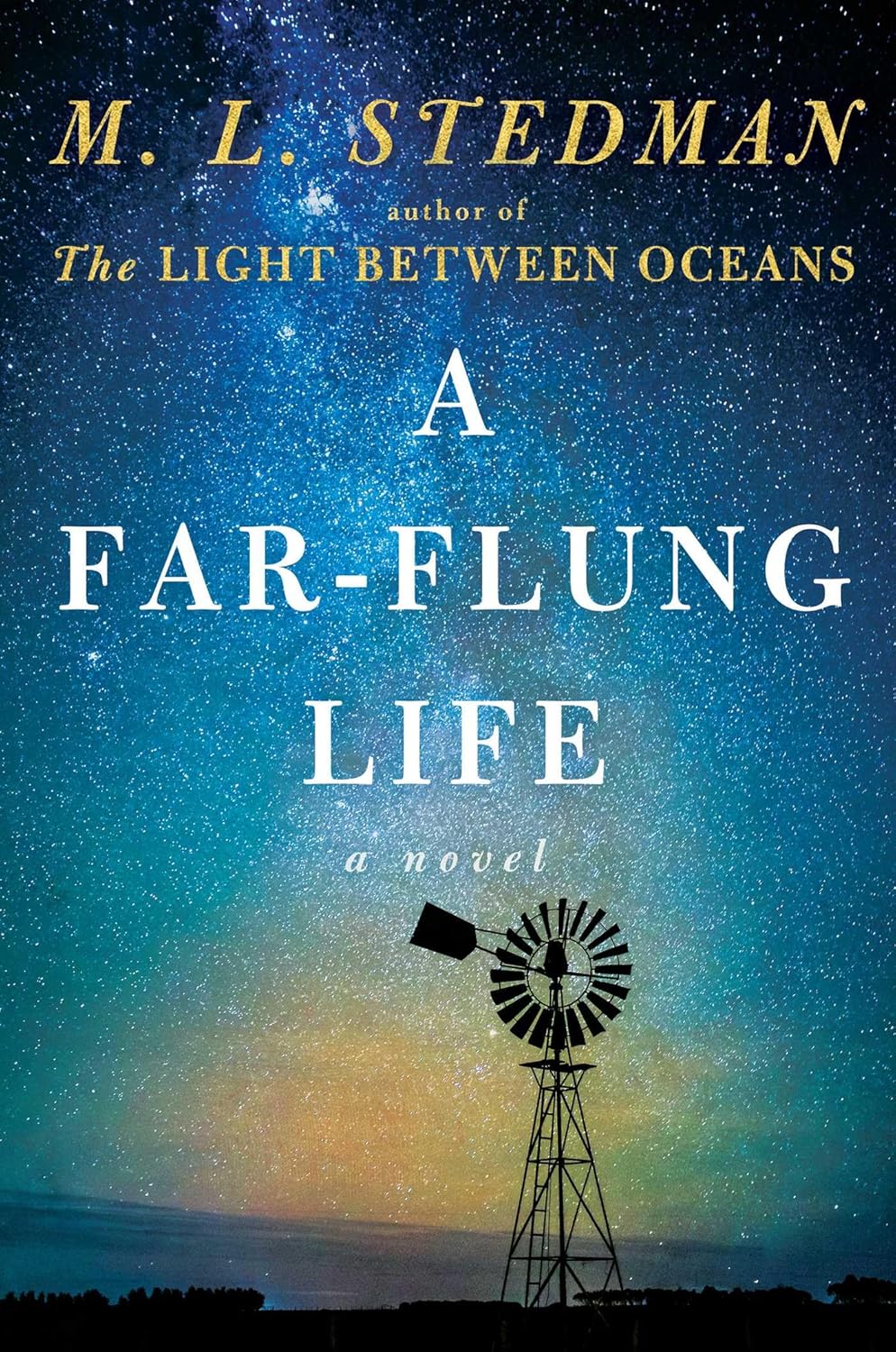
Following Friday’s review of A Far-Flung Life, here’s M.L. Stedman: Capturing the Vast Sweep of Events.


M.L. Stedman was born and raised in Western Australia and now lives in London. The Light Between Oceans was her first novel. Her second, A Far-Flung Life (Scribner, March 3, 2026), examines tragedy, memory, loss, secrets, and the power of love in a family saga set against the vast, stark landscape of a Western Australia sheep station.

Where does the germ of such an expansive plot begin?

M.L. Stedman
(photo: Johnnie Pakington)

It’s different for everyone. I don’t plan what I write–it just sort of turns up, from an image in my mind’s eye, or a random thought. Setting is always crucial for me, too, and Western Australia is a natural place for my stories to arise. I’m drawn to intractable problems, which, because they have no “right” answer, force us to examine our underlying values: as with The Light Between Oceans, there are knotty ones at the centre of this book.

I wrote the story over a very, very long time, and it just sort of grew and took shape organically over years. Characters turned up bit by bit, out of nowhere: they might be prompted by seeing a face, or hearing a phrase, or sometimes, they just materialised when I started to imagine a scene. The process is quite mysterious to me.

How was the process or experience of this novel different for you from your first?

The biggest difference was the time it took–I wrote my first book in about three years or so. It was harder to find uninterrupted space to write once The Light Between Oceans was published. As to what’s changed–I’d say the whole world. From that point of view, it was a great luxury to spend so much time in the remote imaginary setting I’d created, where e-mails and smartphones didn’t exist, “far from the madding crowd.”

Do you have any organizational tricks, for plot or timeline, for example?

When it comes to writing, I’m both organised, and not organised. I’m organised in that I set aside time for it–being at your desk increases the chances of actually writing something. I’m not one of those writers (whom I envy), who can say “I’ve got a spare hour between festival events, so I’ll write a few pages of my novel.” I need long, uninterrupted stretches.

I think it’s important to find out how you write best, and do that: if you’re a planner, plan. If (like me) you’re not, and story turns up as your fingers hit the keyboard, don’t fret about the lack of a plan. I don’t write in chronological order. Often, scenes aren’t remotely linked, and then, with time, like mushrooms underground, little connections form by themselves and suddenly things fit together. It’s risky, of course–you have to be prepared to discard strands that turn out to be dead ends. But in discarding, and discovering what the story is not, you narrow down what the story is. For me, the trick is to stay, to wait, and to trust.

Is “forgetment,” for “the opposite of a memory,” your own coinage?

The concept of “forgetment” is foundational to the book. Anyone who spends a long time thinking and writing about memory will probably eventually notice that there’s a word for things we remember (“memory”), but not one for things we forget. I came up with the word “forgetment,” but didn’t investigate beyond its absence in the Oxford dictionary. When I finally did Google it years later, it turned out–not surprisingly–that other people had thought of that word too.

I’m fascinated by how the “known now” becomes the “lost past.” In the book, there’s a reference to Sleeping Beauty, in which a whole castle disappears from memory. The fact that we accept that story so readily bespeaks how familiar we are with the process of “un-knowing.”

I’m also interested in the role of forgetting in forgiving (there’s a reason we say “forgive and forget”). Humans have been outsourcing memory since they first drew on cave walls. Writing supercharged this, and lately, technology has increased it exponentially, so that the most trivial things are now indelibly recorded and subject to instant recall, without context. Does this mean as a society we’re losing the ability to forget, or at least, as individuals, to choose what is remembered about our lives? If every fault or grudge or transgression remains fresh in our minds, does it diminish our ability to forgive?

Was the close third-person perspective, shifting between characters, always the plan, or did you play with a few points of view?

Writing in the third person comes most naturally to me. That said, I also think about the characters in the first person, seeing the world through their eyes. I’m very conscious of how characters see themselves and each other, and, in A Far-flung Life, how the omniscient narrator sees them all. We switch between the characters living their lives minute to minute, struggling through peril to an unknown future, and the omniscient narrator, who reminds us of the vast sweep of events in that timeless, imperturbable landscape. I find that “eternal” perspective reassuring, comforting.

What was the role of research in this novel?

Research is one of my favourite aspects of writing. For this book, I travelled a lot within Western Australia, read a lot, listened a lot: to people; to the sound of the wind in the trees and the night creatures of the Australian bush; above all, to the deep silence that envelopes the far-flung places I describe. I spent a long time in archives, exploring records that left my fingers covered in the red dust that filled the pages. I was incredibly fortunate to speak to pastoralists (like “ranchers” in the U.S.) and geologists and other people of the generation in which Australia “rode on the sheep’s back,” who recounted their stories and guided my research. I studied rocks and sheep (I even had a brief taste of shearing a wether, under very close supervision!). I visited various stations, sometimes hitching a ride on small aircraft visiting remote places, or delivering supplies to a station cut off by floods.

I must pay tribute to librarians and archivists, the unsung heroes keeping “forgetment” at bay. In this era of austerity and automation, I fear these quiet champions of knowledge are an endangered species. But computers could never replace their wisdom and enthusiasm.

What might you work on next?

Ha! If I knew, I might even tell you. But the ink is barely dry on this book. Once it makes its way out into the world, I’ll look forward to retreating to my imagination again, following up a few little threads of ideas, to see what they want to grow into.


This interview originally ran on October 30, 2025 as a Shelf Awareness special issue. To subscribe, click here, and you’ll receive two issues per week of book reviews and other bookish fun.

Maximum Shelf: A Far-Flung Life by M.L. Stedman

Maximum Shelf is the weekly Shelf Awareness feature focusing on an upcoming title we love and believe will be a great handselling opportunity for booksellers everywhere. The features are written by our editors and reviewers and the publisher has helped support the issue.

This review was published by Shelf Awareness on October 30, 2025.


M.L. Stedman (The Light Between Oceans) awes and transports readers with the astonishing A Far-flung Life, a sweeping family drama spanning the latter half of the 20th century. Layers of tragedy and compelling, nuanced characters are set against a vast, indifferent landscape in Western Australia.

The MacBride family has run a sizable sheep station for generations, with quiet success, in a dispersed but close-knit community whose respect they have earned. “The MacBrides had the touch, it was said: sensible but shrewd, careful but not mean.” The novel opens with landscape, scenery, and color: red earth, blue sky, dust-green vegetation, the “straight vermilion line” of a road through sparse trees. Against this backdrop, three MacBride men travel “like unpacked Russian dolls” in a Bedford pickup truck across the expanse of their sheep station, “nearly a million arid acres.” Phil drives, accompanied by his sons, Warren and Matt, and a trailer full of sheep. It is fitting that the reader meets this landscape before its human inhabitants; Stedman will consistently reinforce that contrast. It is early 1958, and the date, January 10, will reverberate through the MacBride family history for years to come.

Phil MacBride has known since his feet could reach the pedals not to swerve to avoid a kangaroo. But under the January sun, he makes a fateful error. Back at their homestead, hours later, Phil’s wife, Lorna, and daughter, Rose, open their door to two policemen, from whom they learn of lives both ended and hanging in the balance. The consequences of the crash that opens Stedman’s masterful novel will tumble and tangle MacBride lives for generations. Amid unspeakable tragedy and threads of hope, a note of whimsy cuts through: also introduced in this opening chapter is the outright oddity of a fully rigged pearling lugger. The subject of legend, the boat abides in its own structure, known as “Monty’s shed,” for the late Montgomery MacBride, Phil’s uncle, who won the vessel in a bet but never got to sail it. The MacBrides maintain the tradition of oiling its timbers, keeping spiders and termites at bay, and placing a beer in its bow every year on Monty’s birthday. Matt MacBride–thrown from the truck on that January day–as a younger son, was destined not to inherit the sheep station but to make his own way in a larger world. He had longstanding goals and dreams springing from Monty’s boat. Now everything has changed; but the pearling lugger remains in its shed, storing potential.

A Far-flung Life follows the remaining MacBrides as they continue to scrape life and livelihood out of a hardscrabble home with fragile concepts of morality and honor, and the power of love. They weather births and death, secrets, and scandals both experienced and kept hidden. Throughout every loss and recovery, their fate remains tied up with the land: “Our lives come and go like these gold-rush towns. We arrive, we grow, we thrive, then we’re gone. Then the forgetting happens, and once-solid foundations are barely traces in the earth, from unguessable lives. Whole communities and the ties that bound them are blown away with the dust.” Stedman excels at description of both landscape and the human experience, and alternates applying this close attention to the events in her characters’ lives and to the larger world in which they live. “In the end, we’re all looking for a place to ride out the storm of life. Among all these husks of houses and fossils of trees, we are like hermit crabs, borrowing a shelter for a time, and moving on.”

As the MacBrides carry on after the crash, their lives will continue to call upon big themes, including inexorability and change, innocence, and the handling of painful truths. Stedman generally employs a shifting close third-person perspective, allowing her reader to see through one character’s eyes and then another’s, finding out at different points what they know. This careful reveal not only of events, but of various characters’ knowledge of events, is central to the complexity of the MacBrides’ secrets. Another significant theme is the tension between memory and forgetting. One young character, in asking questions that his elders can’t or won’t answer, coins a term, “forgetment,” for what is forgotten–“the opposite of a memory.” This concept recurs throughout a plot that revolves around what its protagonists can’t remember and what they wish they didn’t.

Like the heartrending The Light Between Oceans, the MacBrides’ story interrogates ideas of right and wrong in specific and complicated cases, and the experience of humans writ small against a vast landscape. “This land has seen improbable things: the evolution of marsupials and monotremes; of flightless birds and animals that fly. It’s seen continents split and islands arise. It’s seen oceans turn to desert and desert turn to glaciers. And it’s watched people drag their little lives across its surface, flat and unforgiving.” By the end of this epic and wrenching family saga, readers will care deeply about lives that are “destined to join the vast ocean of human forgetments.” Heartbreaking and painfully beautiful, A Far-flung Life will haunt and comfort long past its final page.


Rating: 8 goannas.

Come back Monday for my interview with Stedman.

Maximum Shelf author interview: James Workman and Amanda Leland

Following Friday’s review of Sea Change, here’s James Workman and Amanda Leland: Messy, Immersive, and a Little Salty.


James Workman and Amanda Leland are the authors of Sea Change: Unlikely Allies and a Success Story of Oceanic Proportions (Torrey House Press, September 30, 2025), the compelling story of hard-driving fishermen and determined conservationists working together to turn the tide on overfishing. In this vivid, accessible book, they argue for a system that could serve as a blueprint for solving other environmental crises.

James Workman

James Workman is a storyteller, entrepreneur, and author of resilience strategies, including the award-winning book
Heart of Dryness. He founded AquaShares, a firm pioneering water credit trading, and has been published in the New York Times, the Los Angeles Times, the New Republic, Orion, Trout, and Washington Monthly. Workman studied at Yale, Oxford, and Stanford, and taught at Wesleyan and Whitman. But his real education came from wildfire recovery, reintroducing wolves, blowing up dams, smuggling to dissidents, getting married, and raising two daughters.

Amanda Leland
(photo: Ben Tiu)

Amanda Leland fell in love with the sea at five years old, when her grandfather taught her to fish. She is executive director of Environmental Defense Fund and previously led EDF’s Oceans program, a global team focused on reversing overfishing while supporting those whose livelihoods rely on fish. An avid kayaker and scuba diver, Leland holds a master’s degree in marine biology and lives with her family in Washington, D.C.

What was the origin of this book?

It’s the classic, counterintuitive “man bites dog” story, right? Against the ubiquitous headlines warning our oceans were running out of fish and “deadliest catch,” we knew there was a counter-narrative of quiet recovery, innovation, and collaboration. Fishing was growing safer, more ecologically resilient, and more prosperous, yet almost no one knew it. That silence was our opportunity: to share this well-kept secret of offshore transformation with fellow landlubbers.

The scale and complexity of this story ruled out a blog series or even a long magazine feature. Moreover, it cried out for a deeply human protagonist, someone who faced storms, institutional obstacles and his own doubts. That search led us to Buddy Guindon, a Galveston captain whose life traced the arc of modern fishing: from unregulated abundance to dangerous depletion, from the most dangerous profession to calm seas, from fierce resistance to steady reform. Through Buddy’s eyes we could share how a remarkable inner shift, combined with real agency, altered the fate of a fishery and sent ripples outward to the region, the nation, and the world.

How did the two of you come to this project?

For two decades, on opposite coasts, we had been watching this story take shape and sensed it needed to be told in full. On the Atlantic, Amanda, a trained marine biologist turned environmental advocate, was building coalitions, educating policymakers, and supporting new solutions. On the Pacific, Jamie, fascinated with hunter-gatherer societies, was interviewing fishermen from Mozambique, India and Belize to Lake Michigan, the Gulf, and his native California coast.

Both of us kept hearing the same universal, fatalistic trap: “If I don’t catch the last fish, someone else will.” We realized our distinct but converging perspectives could make the book richer and more compelling: Amanda could open insights into ocean ecology and the political tensions behind reform; Jamie could personalize the stakes for readers with a firsthand view of life and death on the docks, bars and decks offshore.

What are your roles as coauthors?

It’s an iterative process of talking, writing, rewriting… then rewriting again. Amanda brought science knowledge, policy experience, and relationships with key players like Buddy. Jamie had flexibility to explore narrative structure, conduct dockside or barstool interviews, research scientific documents, and distill complex systems into human stories that would resonate beyond the waterfront.

Drafts got passed back and forth until even red ink Track Changes could no longer tell who had revised what. When we disagreed, our exchanges mirrored the trust-building central to the book, the delicate negotiations between conservationists and fishermen, scientists and policymakers, who must work past suspicion to get results.

What does the research process look like for a project of this scope?

Messy, immersive, and a little salty. We logged hundreds of hours in interviews listening to fishermen, scientists, seafood dealers, policymakers, and critics. We tracked EDF’s decades-long efforts to advance sustainable fisheries. We sifted through historical archives, economic data, and stock assessments, where otherwise dry material might yield some fresh angles or surprising discoveries. For example, among our title’s “unlikely allies,” Thomas Jefferson and Alexander Hamilton set aside a lifetime of political rivalry to unite, perhaps for the only time, behind an economic vision for America’s fisheries based on “sharesmen.”

The work took us from early-morning commercial harvests to fluorescent-lit stakeholder workshops, from policy conferences in Washington to cutting bait on a skiff in southern Belize. We found patterns: secure rights, clear rules, and shared stewardship could take root in wildly different contexts, from tropics to arctic, and we tried to bring those contrasts to life on the page.

The structure you use, a journey from personal to global, feels very natural. How did you come to it?

It grew organically, with form following function. Other approaches–framed on a single species, gear innovation, era, or location–lacked the human flow and rising stakes we wanted. By chance, the formal evolution of catch shares paralleled Buddy’s personal journey from alienation to reconciliation, from antagonism to collaboration, from fighting the old system to advocating for the new.

His growing concern radiated outward: from family, Galveston bar and first boat, to the local wharf, fish house, and rival yacht club, then to his coastline, country, Gulf Stream, and fishing communities worldwide. That expansion mirrored the spread of an unlikely idea that began with skepticism yet matured into stewardship. Helping readers identify with Buddy made the story tensions real; scaling up made the stakes consequential.

That arc also let us show a universal truth: fishery management is really people management. And since few of us (not just Buddy) like to be managed by distant strangers, the challenge is to overcome the legacy of distrust and rediscover how to manage from within the community, because the people closest to the problem are often also closest to the solution.

What do you hope results from this book’s publication?

There is an undeniable despair and cynicism about how, or if, we can sustain a healthy, clean, life-giving planet for all of us. It’s too easy, especially while shopping in well stocked supermarkets, to point fingers at “commerce” or “industry” and blame remote “others” for ecological decline, or to cut off access to resources so essential to the health, nutrition, and security of billions.

Sea Change wants to replace simplistic blame and fatalistic shrugs with a proven, science-based case for practical hope. We want readers to see that “wicked problems” aren’t always intractable, that solutions can emerge from unexpected alliances, and that those most directly tied to the fate of a resource can become its fiercest protectors when given the right incentives.

We also hope the book sparks a wide conversation about how the same principles that saved fisheries could help us restore mature forests, groundwater, soil fertility, and even slow climate change. If a Gulf Coast “pirate” can transform into a guardian of the sea, imagine what the rest of us can do?


This interview originally ran on September 11, 2025 as a Shelf Awareness special issue. To subscribe, click here, and you’ll receive two issues per week of book reviews and other bookish fun.

Maximum Shelf: Sea Change: Unlikely Allies and a Success Story of Oceanic Proportions by James Workman and Amanda Leland

Maximum Shelf is the weekly Shelf Awareness feature focusing on an upcoming title we love and believe will be a great handselling opportunity for booksellers everywhere. The features are written by our editors and reviewers and the publisher has helped support the issue.

This review was published by Shelf Awareness on September 11, 2025.


Journalist and entrepreneur James Workman and Amanda Leland, executive director of Environmental Defense Fund, present a rare story of ecological recovery with Sea Change: Unlikely Allies and a Success Story of Oceanic Proportions. In the concept known as “catch shares,” fishers are allotted proportional shares of a limited quantity of fish to be harvested; the demonstrated outcome improves the health of fisheries as well as the lives and livelihoods of commercial fisherfolk. Through the lens of engaging characters and locally based stories, Workman and Leland suggest this strategy may be applicable to other challenges around the world: “This revolutionary social contract with the sea has not only slowed, stopped, and in some cases reversed the devastating effects of overfishing along our coasts, but the centrality of pragmatism and collaboration could help solve some of the thorniest and most urgent natural resource challenges we confront worldwide–including the climate crisis.”

In an easy-to-read, storytelling style, Workman and Leland describe how catch shares have been proposed and enacted, often amid great conflict. The authors also detail how this strategy has led to safer and more profitable fishing while helping recover fish populations. Even former opponents have become involved in supporting and expanding such programs. Sea Change wisely focuses on delightful, colorful characters, opening with Keith “Buddy” Guindon, who grew up fishing the Great Lakes and then made a career in Galveston, Tex. Big, brash, a self-described pirate with a “reputation as a grim reaper of the aquatic world,” he’s an ideal protagonist. “A barrel of a man with amused eyes, a gruff voice and a Santa Claus beard, Buddy is a Galveston legend.” Since arriving there in the late 1970s, “he has consistently outmuscled and outfoxed every other fisherman in the western Gulf.” An early, outspoken detractor of catch shares, Buddy rapidly morphed into one of its champions, proselytizing across the United States and the world.

Fisheries in the United States and around the world have been, in recent years, suffering various stages of overuse. As the problem grows exponentially–fewer fish, longer hours, greater rush in more unsafe conditions, lower prices–so does the solution. When fishermen are assured of their fair share of the total catch, they can be more methodical, efficient, and selective about their work. They can avoid dangerous weather conditions, work shorter shifts with less rush, save on fuel, reduce bycatch and waste, bring in higher-quality product and command higher prices, even tailor their harvest to market. In Alaska’s pollock fishery, for example, “Each shareholder could set a unique and more unhurried pace to catch his quota. Vessels dropped trawl nets into the sea less often and more selectively, with fewer ‘tows’ per day. Waste from having to throw back both regulatory discards (fish that are marketable but illegal to keep) and accidental bycatch (species with no market value) plummeted. Fishermen began to insist on and provide credible data, sharing information on how much they caught where and at what time just as soon as it was available.”

Moreover, as the fish population, health, and habitat recover, fishers and communities become safer and more secure. Fishermen like Buddy, generally fiercely independent individualists, learn to work together not only in allocating shares but in enforcing rules and developing technologies to assist in transparency and improved fishing practices. Fishers learn to work with scientists and environmentalists–not traditional partners–and everyone with a stake in the fishery’s health learns to play a more responsible role.

Often following Buddy’s own journey, Sea Change is structured as a movement from the microcosm to the macro, in sections titled “Personal,” “Local,” “Regional,” “National,” and finally “Global,” where readers see Buddy travel to Tokyo’s Tsukiji fish market, and share his support for catch shares with Japan’s commercial harvesters. The narrative progresses from highly specific successes to globally applicable potentials. Coercive, top-down policies set by government or environmental agencies had long rankled the likes of Buddy, who reflexively pushed back; but catch shares depend on cooperative buy-in from the fishers themselves and incentivize them to protect overfished populations of their own volition.

Catch shares is in some ways an innovation, but also based on traditional relationships across many small coastal societies throughout history: the concept that everyone takes a share according to ability and need, and that everyone contributes to responsible stewardship. It is a version of the concept of the commons, in which a public resource is both used and maintained by the public. The “tragedy of the commons,” in turn, is the fear that if one party does not use up their share–or more than their share–another will. This mindset encourages irresponsible use: if someone else is going to overharvest, it might as well be me, some might think. But with appropriate monitoring–another piece of the system whose development wound up actively involving fishermen–Buddy and the others were able to relax, build trust, and fish smarter.

From local fisheries to global trends, Sea Change samples best and worst practices to highlight the great promise of catch shares to help both fish populations and the people who rely upon them for livelihoods and nutrition. This accessible study emphasizes galvanizing opportunities to make positive change in myriad other areas of policy and sorely needed optimism in the world of environmental thinking and planning.


Rating: 6 hooks.

Come back Monday for my interview with Workman & Leland.

Maximum Shelf author interview: Pat Harris

Following Friday’s review of A Season on the Drink, here’s Pat Harris: People Matter.


Pat Harris is a lifelong Saint Paulite and passionate community champion. His commitment to public service began in 1989 as a VISTA volunteer at Catholic Charities, where he first learned about the Saint Anthony Residence and heard tales of a softball team that won it all. The experience sparked a lifetime of civic engagement and advocacy. Harris’s debut novel, A Season on the Drink (Adventure Publications, September 9, 2025), chronicles the story of Marty Peterson and the Saint Anthony Residence fast-pitch softball team their single, undefeated season, and the flash of inspiration it provided. Harris and his partner, Laura, have four dynamic children, and one enthusiastic canine companion named Ranger.

Tell me about the line between verifiable fact and fiction in this novel based on true history.

Pat Harris
(photo: Michael Murrary)

It’s nearly all true, although obviously you have to bring in some license in order to really show the story. When I was a VISTA volunteer, I spent time at the Saint Anthony Residence and learned some of the struggles that people were going through, but also the hope that existed in that building. It’s kind of the end of the road if you’re a person in the deep levels of alcoholism; that’s where you can go to sort of live out life and continue to be an alcoholic. I spent a lot of time there learning about people, and I heard this story, of this one year where they started playing pickup softball games at this park near the building, and they were kinda good! In the middle of some very intense poverty and alcoholism, they were good softball players. It was anchored by a guy I eventually worked with, Marty Peterson, who played baseball at the University of Minnesota. He was a standout baseball player, but alcoholism turned the tide of his life. As soon as I heard it, I was like, someone’s gotta tell this story. A lot of stars aligned to really change some people’s lives. The Saint Anthony is a very intense place that a lot of people are unaware of, but this one year, something really cool happened.

I spent the better part of many years interviewing people and learning what happened. I compiled all the information, but I wasn’t at the games, so I had to reconstruct them based on interviews and stories. All the members of the team, as far as we can tell, have passed. The staff people have passed. Some of the people in the book are still around.

When Marty got sober and got out of the Saint Anthony Residence, that’s when I met him. I discovered this extraordinary person with a trove of original poetry, who saved a child from a burning building (which is in the book)–an absolutely 100% true story that was on the front page of the St. Paul Pioneer Press. My main character, who was a chronic alcoholic and played on this softball team, saved a child from a burning building! You can’t make that up. It had to have been true; I could never have thought of it.

What research did you do?

A lot of it was that I was there. Not for the games–that season happened before I arrived–but the stories were told with great pride. I just spent time there and knew everybody. There were extensive interviews. Marty Peterson’s son and I have become good friends. He tells some amazing stories about his dad, ones of struggle and ones of extraordinary times. A little baseball research here and there, to correlate to what was happening in baseball at the time. The Twins were on the verge of the World Series–they didn’t have a phenomenal season in ’86, but they won the World Series in ’87.

Is this a book about baseball?

This is a book about hope. The game of softball, or baseball, carried some people on this pathway of hope and of perception. Sure, it’s a sports book. But it’s also a book about hope and recovery and alcoholism and poverty and all over the top of it, perception. You’re a bank, or a construction company, or whatever, and you’re playing people who are chronic alcoholics–they’re wearing jeans, and they’re smoking, and half of them are actively intoxicated, perhaps on Lysol or other chemicals, and they’re beating you–badly, sometimes. And competitive juices flow on ball fields, and people get angry. But at the end of these games–hey, you know what, y’all might be at the Saint Anthony Residence, but you’re all right.

This book has a little bit of everything. It’s got sports, it’s got some humor, a lot of sadness, and recovery… and it’s got people that couldn’t get out of those depths. A lot of the team passed onsite, or somewhere not far after exiting the facility.

It’s not singularly a book about sports. It’s about perception and hope, in a true story. This is really emotional for me because people matter. People matter. There are a lot of places that lesson can be taught, and one of them is the ballfield.

What about Marty captured your attention so hard?

I was in my 20s when I met him as a client in the job service program. Marty was one of these guys… this softspoken person that had struggled all his life with the disease of alcoholism. At his core, externally and internally, Marty was a brilliant and good human being. He struggled with this disease; it impacted his family, his job, his ability to be successful in baseball. And he was an extraordinary baseball player. He was kind and decent, and we’d sit in the Union Gospel Mission Thrift Store where he worked, and we’d talk about books and about life and where he was going. He was kind. And then I found out he was a poet! You read his poetry, or the letters his son allowed me to see, and it’s extremely emotional. The gentleman was deep. And, oh yeah, he saved a child from a burning building!


This interview originally ran on July 24, 2025 as a Shelf Awareness special issue. To subscribe, click here, and you’ll receive two issues per week of book reviews and other bookish fun.

Maximum Shelf: A Season on the Drink by Pat Harris

Maximum Shelf is the weekly Shelf Awareness feature focusing on an upcoming title we love and believe will be a great handselling opportunity for booksellers everywhere. The features are written by our editors and reviewers and the publisher has helped support the issue.

This review was published by Shelf Awareness on July 24, 2025.


In 1986, at the Saint Anthony Residence, a haven for folks two steps away from living on the street in Saint Paul, Minn., a series of events and personalities converged in an unlikely and perhaps unprecedented situation. As described in the opening pages of Pat Harris’s novel A Season on the Drink, two softball teams met on Raymond Field: “The Saint Anthony Residence for chronic alcoholics and the drywall company were tied. It was the final game of the season.” It was just rec-league ball, but the stakes felt much greater than the outcome of the game itself. There was dignity on the line.

Harris’s debut is a remarkable novel whose subject is, on its surface, a softball team made up of chronic alcoholics. Immersion in its storytelling, however, reveals greater depths, focusing on a handful of characters from the team and the Saint Anthony Residence; most central is a man named Marty Peterson. Marty is nearing 50 years old, with a county record including “treatment six or so times, detox 30 or 40,” when he goes to live at the Residence. Quiet, easygoing, cerebral, Marty has long found himself unfit for mainstream life.

He does have a personal history with baseball, however. A strong player in high school, he played a single year at the University of Minnesota, briefly brushing shoulders with greatness in the form of coach Dick Siebert and Herb Brooks. “Herb would eventually take off his Gopher baseball uniform for a checkered sport coat and one of the most iconic gold medals in history. Marty took off his uniform for a shirt he found at Goodwill.” In an extraordinary year at Saint Anthony, he will have an important role to play in forming a team that will go undefeated for its single season.

Based on a true story that touched the author early in his public service career, A Season on the Drink delves into Marty’s personal history through “Marty Interludes” and his original poetry. Harris features a few other characters in detail: Harry Opus, the day manager at Saint Anthony, is a recovering alcoholic and somewhat reluctant team member. Terry Thomas, longtime resident, is “a provocateur… humorous, conniving, and sad,” but a born salesman and Marty’s more gregarious counterpart as player/manager. Allison Boisvert, director of housing for Catholic Charities, aka “the Queen of Housing,” along with community investors Mr. Long and Mr. Ryan and a “charitable mobster” known as “The Padre,” provide financial and moral support; the Queen’s partner, Jim, also a staffer at Saint Anthony, is a steady hand on a team with very few of them. But Marty is the heart, soul, and talent.

In telling the story of these and other lost alcoholics and those who serve them, Harris artfully profiles people, the city of Saint Paul, and alcoholism itself. He also touches on politics, economics, and social services. The existence of the Saint Anthony Residence relies on the skillful marketing by the Queen and other advocates to both ends of the political spectrum. Housing “chronic inebriates” at Saint Anthony costs taxpayers far less than treatment or detox; visible, homeless drunks are bad for business. It is also “a matter of dignity… [which] calls for the basics of life–food, shelter, and maybe something for the soul.” “All were welcome at Saint Anthony”–the residence is a wet house: residents have no obligation to attend meetings or make any attempt to be sober. They may own alcohol but not possess it on the premises. Some leave for parts unknown; some leave in a body bag. There is a regular schedule to each month, from the first when residents collect a check for $47 and are, briefly, funded drinkers, through the mid-month descent into alchemy: profoundly toxic cocktails of cleaning products and rubbing alcohol for the truly committed. “The Saint Anthony Residence was a last stop–a formal determination of the end while living.”

But then there was the spring of 1986. Led by Kirby Puckett and called by Bob Kurtz, the Minnesota Twins are on the Saint Anthony televisions; Marty, Terry, and Harry watch in the latter’s office, and Marty recalls his youth. A baseball glove appears. Marty and Terry knock a ball around over at Raymond Field, and the Queen directs Harry to form a team–she wants to see the residents a little more occupied, beyond alchemical creativity. Terry’s charisma and salesmanship, Harry’s unenthusiastic aid, and most especially Marty’s love for and knowledge of the game coalesce to form “America’s first organized softball team of chronic inebriates.” “The game of baseball was made to make the world feel better. Even in failure, it offered victory.”

By the end of this narrative, fictionalized from Harris’s own conversations with Marty Peterson, a team has formed and stumbled, won, and disbanded. The Saint Anthony Residence is still the bottom of a certain trajectory, but there are fine and shining moments. “Seeing the playing field from the vantage point of the batter’s box is the greatest moment in sports, and Marty was right back in it.” Victory parties are thrown with kegs of root beer.

“If this were a movie, there’d be happy endings, but life stories are not that neat.” With A Season on the Drink, Harris offers somber but loving reflections from this less-than-neat story, and there is no question of the tenderness at its center–“[Marty] just liked playing ball.”


Rating: 8 unusually fresh doughnuts.

Come back Monday for my interview with Harris.

Maximum Shelf author interview: Victoria Redel

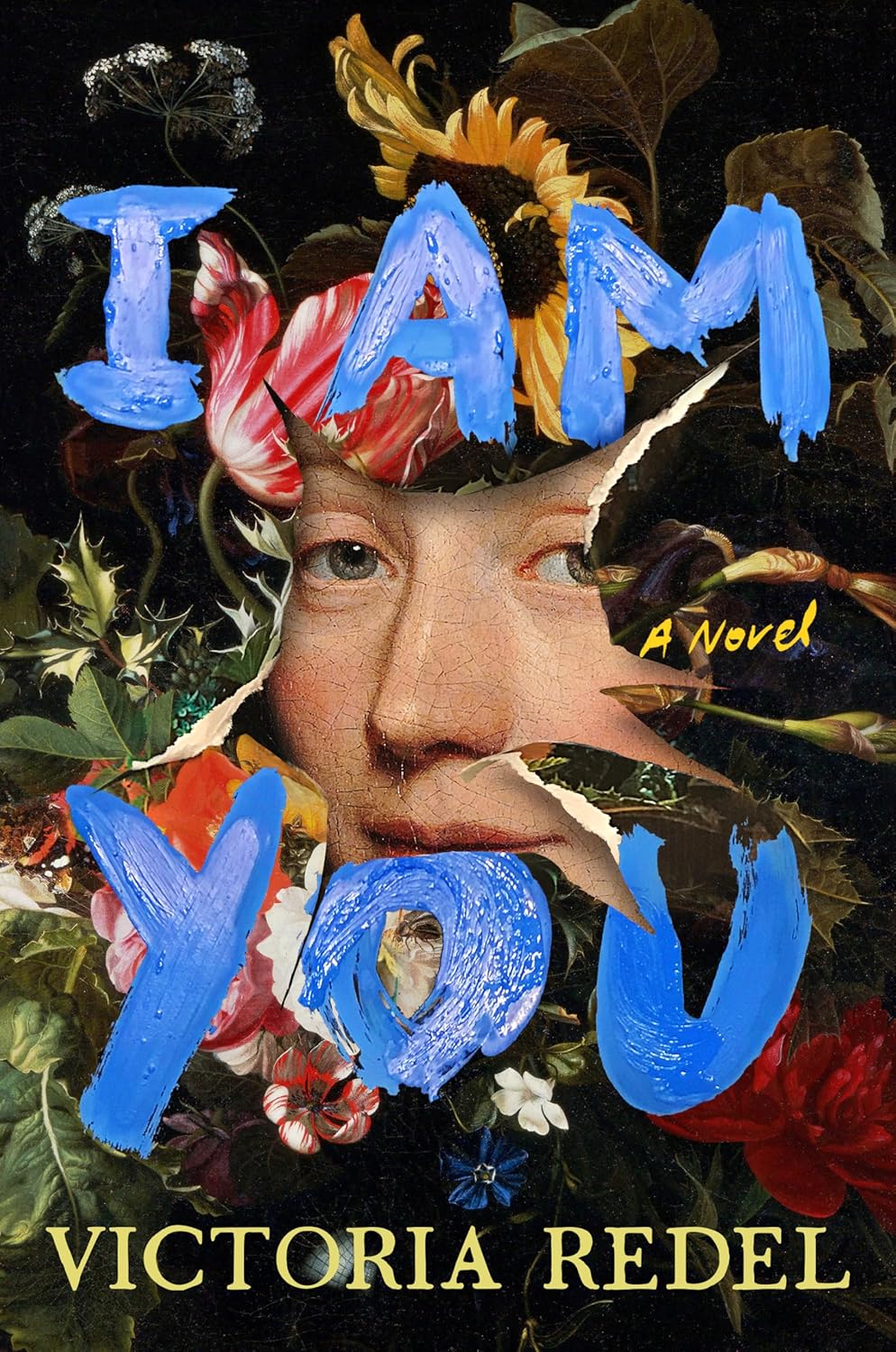
Following Friday’s review of I Am You, here’s Victoria Redel: Our Obsessions Reveal Themselves.


Victoria Redel is the author of Paradise and three other books of poetry; three novels, including Before Everything; and two story collections. She has received fellowships from the Guggenheim Foundation, the National Endowment for the Arts, and the Fine Arts Work Center. She is a professor in the Creative Writing programs at Sarah Lawrence College and lives in New York City. I Am You (SJP Lit/Zando, September 30, 2025) is an expansive novel about two 17th-century Dutch women painters and the hardships and joys they experience together.

These characters are based in history, but upon scarce information. How did you deal with such a shortage of fact?

Victoria Redel
(photo: George Rings)

It is great to have a shortage of facts because it provides freedom for invention. I encountered Maria Oosterwijck and my first whiff of a novel reading Russell Shorto’s Amsterdam, where he says little is known about the painter Maria Van Oosterwijck. I was curious and began to research, and what he’d written turned out to be true. I believe I’ve learned all that’s known about her–maybe there’s untranslated Dutch sources–but, mostly, the same scant information was repeated everywhere: that Maria had not been allowed in the Guild because she was a woman; that she’d had a prominent reputation and a prosperous life as a painter despite that; that she trained the family servant, Gerta, to be her paint-maker and assistant. They lived together for a time, though they were not together at their deaths. This posed the question of why? What transpired between them? These seemed like interesting questions for a novel.

I also gave myself the freedom to challenge the received facts. For example, because of the nature of her paintings, it’s assumed that Maria was highly religious. I’ve imagined her spiritual choices differently. I also did a ton of research about life in the 17th century. It’s an essential moment in Dutch history and much is written about trade and everyday life. When the novel expanded to include England, I needed to learn about the English court.

One pleasure in writing a novel has always been diving into research. But the trick is to learn and learn and then not exactly try to forget it all, but, hopefully, create a seamless world, not so jammed with details that you feel the writer bragging, “look what I know.” That’s the hope: that the world is effortlessly stitched on every page. I want the world I shape to feel inevitable.

Do you have a background in the visual arts, or paint-making?

Yes, I was a visual studies major in college. In many ways this book has been gestating for 20 years, when I walked into a paint and pigment store on the Lower East Side, saw shelves stocked with jars of pigment. I wanted to know about and use every one of those brilliant colors! I read about the very storied global history of paint and pigment with the idea of writing a novel, but I couldn’t find the story.

Then, a few years ago I had the opportunity to spend a couple of months living in Amsterdam, and it occurred to me that I might find a clue for that long-abandoned paint book. Every day, I went to the astonishingly beautiful art library in the Rijksmuseum to finish another book. But also to study the Dutch Golden Age. Then I’d leave the library to roam the canal streets. It was wandering through Amsterdam that I began imagining Maria and Gerta.

You excel at sensory writing: food, painting, color, sex.

Thank you for saying that. I say to my writing students, you have to love the thinginess of the world. Witness, observation, that’s at the core of my job on the page. If I want you, the reader, to engage with characters and a world of my making, my task is to render a believable and sensual world. In 17th-century Amsterdam, smells and tastes were right in your face, for good and bad. There were fewer opportunities to be discreet about what you did with garbage. You threw it in the canal! You threw bodily waste in the canal. Those same canals were the lifeblood of the city. My job as a writer dovetails with Gerta, my narrator, who moves from a profound physical knowledge–caring for animals, for a house, making food–and, over the course of the novel, extends her range from house servant to studio assistant, to painter, and lover. Paint-making, botany, lovemaking are beautiful and messy. Her awareness expands. She has an artist’s awakening. I want the reader to accompany her on that journey.

Gerta and Maria’s story offers commentary on power dynamics, especially gender and class, in society and in interpersonal relationships. Was that by design or a natural feature of their lives?

It’s what I learned through writing the book. There was an initial glimmer of power dynamics, understanding that Maria had a maid and assistant. And I right away knew it was Gerta who must tell their story. I needed to learn what Gerta needed to learn. As the story of what happens to them and between them unfolded, I saw that both interpersonal and societal power became more layered. What was at stake for each person? Their situation, their story complicates as it unfolds. What were their essential questions? I had to discover how they would each respond. I knew none of this when I started the book. I know very little when I begin. Which I think is good. Otherwise, I’d want to protect them from their choices and actions. The surprise and mystery of my characters’ choices is the hardest and greatest fun of the whole enterprise.

Where does this novel fit in your larger body of work? What was different this time?

I started as a poet. My relationship to language as a poet is, I’d like to believe, present inside all the fiction. My prior novels take place in loosely contemporary periods–though I’d argue every novel is a historical novel–and I Am You takes a leap back in time. If one of the goals in writing fiction is to enlarge and engage the empathic imagination, to let oneself enter into what it is to be another human, here I had the opportunity to consider people in another historical moment with all that might entail. Certainly, there’s much that reverberates in a contemporary way, but my task was to honor my characters, the choices and limitations of their present-day lives, and not impose current ideas and values on them. I didn’t think about overlaps while I was writing, but perhaps obsessive love, devotion, autonomy, and secrecy are themes that ribbon through all my work. But as I say to my writing students, we don’t choose our obsessions; for better or worse, they reveal themselves to us.


This interview originally ran on June 10, 2025 as a Shelf Awareness special issue. To subscribe, click here, and you’ll receive two issues per week of book reviews and other bookish fun.

Maximum Shelf: I Am You by Victoria Redel

Maximum Shelf is the weekly Shelf Awareness feature focusing on an upcoming title we love and believe will be a great handselling opportunity for booksellers everywhere. The features are written by our editors and reviewers and the publisher has helped support the issue.

This review was published by Shelf Awareness on June 10, 2025.


Victoria Redel (Before Everything; The Border of Truth) presents a bold, poignant historical novel about art, love, power, and authorship with I Am You. In the 17th-century Dutch Golden Age of painting, two women with greatly contrasting social and economic status achieve enormous closeness. One is a successful still life painter, the other her maid and assistant. Through their shared story, Redel finds room to muse on art and observation, the wonders of paints and pigments, social strata, interpersonal relationships and power dynamics, gender expressions, and much more. I Am You is no treatise; it is firstly a story of human relationships. But like all great stories, it allows for reflections beyond its literal subjects.

The novel opens in the town of Voorburg in 1653. A child named Gerta is put out to work by her family. Because the household where she is to live needs a boy, Gerta becomes Pieter in service to the wealthy Oosterwijcks. At age seven, Pieter is fascinated by the 14-year-old Maria Oosterwijck: “Her particular words. The varieties of her laughter. The concentration of her fingers as she skimmed or flicked the board with a paintbrush.” Pieter is a quiet child and a hardworking servant, gentle with the rabbits he cares for and butchers for the family meals. Maria, an aspiring painter, is permitted to study only still life, a form considered appropriate for “woman’s art.” She compulsively sketches and paints young Pieter at work: he is “the body most available” to a girl forbidden the study she craves. In his turn, and in his fascination, Pieter begins preparing inks for Maria’s use. He collects the materials–black walnut husks, alder cones, willow bark, oak galls, lichen, marigolds–and crafts them into inks and reed pens. In this way, Maria and Pieter grow up together, intertwined by art and separated by their stations in life. Then Maria, bound for Utrecht to continue her studies, peremptorily declares Pieter a girl once more, in order to to take her as her maid to the larger city.

In Utrecht and then Amsterdam and beyond, Maria and Gerta remain joined. Maria is an increasingly successful painter, commercially and socially, despite the significant impediment of being a woman. Gerta, serving as her maid, becomes progressively indispensable as a talented maker of paints and pigments. Eventually, she teaches herself to sketch and then to paint, becoming Maria’s studio assistant in more functions.

Sometimes Gerta still goes out as Pieter: “How could I erase all I’d known as a boy? Why would I? How much more useful to have known the world both male and female, to traverse brazenly with the rude mind of a boy or angle delicately with a girl’s careful polish.” Her gender-bending is a mode of social expediency, more than of self-identity: “Inside both costumes was me.” In this and other ways, I Am You comments on gender in society, which is only one of Gerta’s disadvantages, but Maria’s chief one. Gerta (or Pieter, as Maria will call her in private all their lives) narrates the novel from start to finish, providing a nuanced perspective on their world, with an evolving appreciation of her limits in it. Even as Gerta’s privileges in Maria’s household expand–she has a nicer bedroom, furnishings, and clothing than any maid should expect–she is reminded that she enjoys these advantages only by Maria’s whim.

Their relationship deepens until the two women become partners in every aspect of life, but Gerta remains subservient. Her devotion to Maria is total, so that even when Maria’s circumstances change and she finds herself ever more dependent on her maid, Gerta is glad to provide a broad range of support. But calamities arise, and there may come a time when the subordinate’s need for recognition, for identity, surfaces. Maria has had a painter’s eye for detail in the visual world from a young age, thanks to both talent and training, but it is Gerta who sees the changing nature of all. “Every day since childhood, hadn’t it been my daily job to make one thing into another? Nut into ink. Stone into viscous paint. The chicken I clucked to as I scattered melon scraps became the stew I spooned into bowls. Even myself, a constant transformation–girl child to boy, servant to budding girl, woman to man to woman, maid to painter to lover….” In the end, it is Gerta who will navigate the hardest choices for the two of them.

Redel excels at sensory and imagistic writing, particularly in the thrilling qualities of color, inks, paints, and pigments, and revelatory art. Her descriptions of the sights, smells, and sounds of daily life, food, and housekeeping are visceral. She writes expressively about sex, which in this novel can be both pleasure and communion, and also disturbing–as an abuse of power, and with questionable consent. The canals of Amsterdam, the butchering of dinner, and the disposal of bodily wastes alongside tender caresses and vivid achievements on the canvas: Redel offers compelling descriptions of both splendor and pain.

I Am You is a novel that deals with heavy themes and tough choices. Gerta’s sensitive, incisive perspective often reveals sad and distressing events, as well as the transcendent revelations of creative work. In considering art, love, gender, and class, her story confronts injustice and tragedy as well as beauty. The result is sensual, thought-provoking, and unforgettable.


Rating: 7 rabbits.

Come back Monday for my interview with Redel.

Maximum Shelf author interview: Eliana Ramage

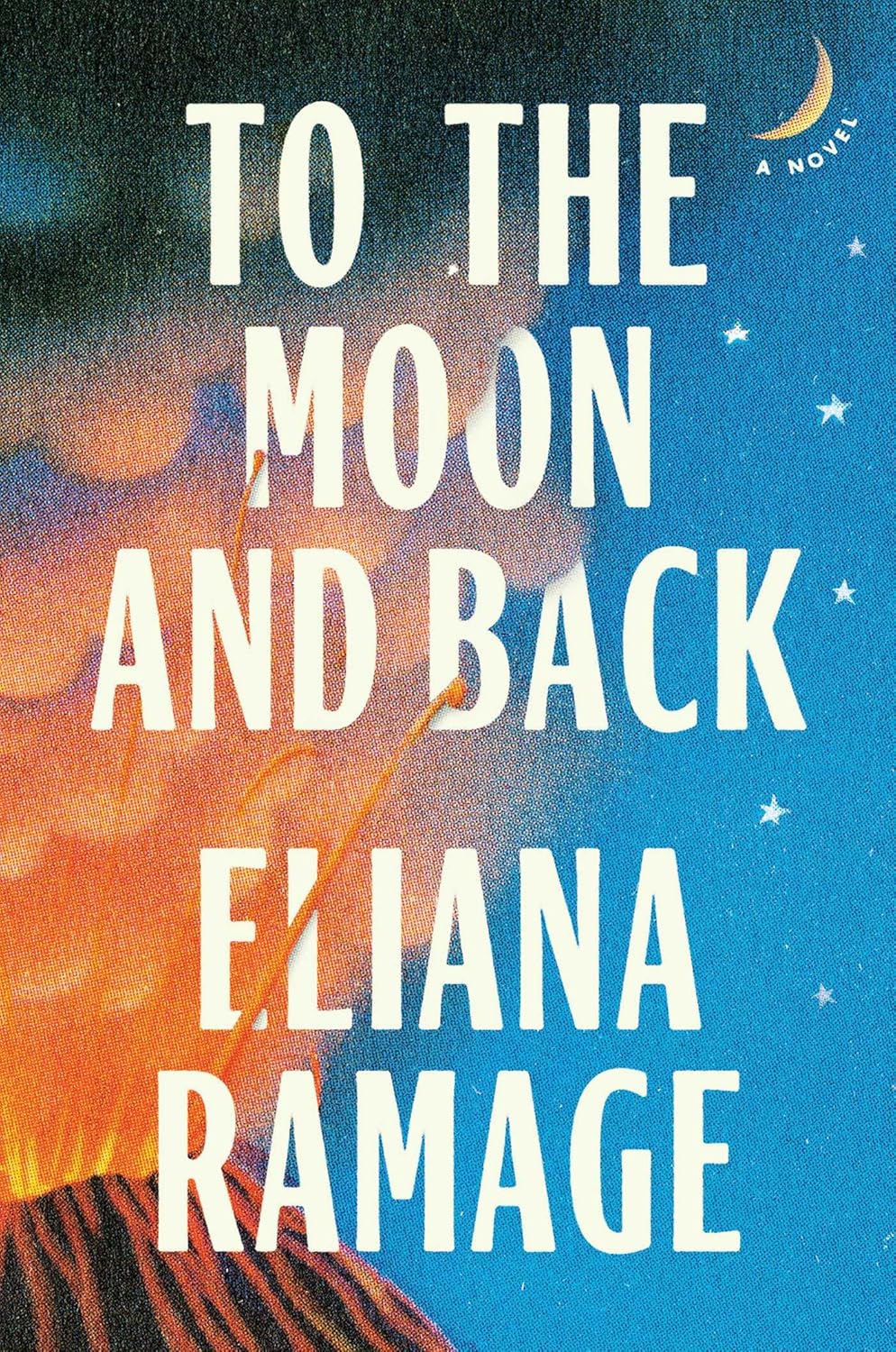
Following Friday’s review of To the Moon and Back, here’s Eliana Ramage: Personhood Isn’t Static.


Eliana Ramage holds an MFA in fiction from the Iowa Writers’ Workshop. She has received residencies and fellowships from the Kimmel Harding Nelson Center, Lambda Literary, Tin House, and Vermont Studio Center. A citizen of the Cherokee Nation, she lives in Nashville, Tenn., with her family. Her first novel, To the Moon and Back (Avid Reader Press, October 28, 2025), is the spellbinding story of a woman who aims to become the first Cherokee astronaut, with her loved ones and generations of history as backdrop.

Why space? (Which came first: Steph or the astronaut dream?)

Eliana Ramage

(photo: Leah Margulies)

Actually, Della came first! I started writing about Della when I was about 23 years old. I loved her. For me, she’s the easiest to love. I wrote a novel draft from her perspective, astronaut-less, and when I brought in Steph there was still something missing. When Steph turned out to really want something (space travel!), and when she came to live in the same fictional world as Della instead of in a separate project, I got what it meant to need an engine in a novel for the long haul.

As for why space? I love space! I’ve always loved it, since I was a kid watching Star Trek: The Next Generation with my brothers. The show taught me to have optimism when it comes to the far future. It’s easy to feel like there’s no point in our efforts towards good–for other people, for the earth, for both–when you assume we will always do terrible things to each other. Space exploration, an extremely long-term group project, carries a lot of weight for a novel that’s interested in who we are and what kind of world we’ll leave behind. When I say “group” I mean humanity, and I also mean specifically Cherokees. I wanted Cherokee people in the novel to grapple with their identities, as people everywhere have done forever. What does it mean to be Cherokee? When we’re living on Mars–an inclusive and optimistic “we,” because I’d be dead or unwilling–that question will still be there.

Is this a coming-of-age novel?

At first the book was heavily focused on Steph’s early years, because I defined “coming-of-age” more narrowly and as the kind of writer and reader I was. And that’s still true, I’ll read any yearning queer kid with big ambitions!

What changed is that I got older. This book took me up to age 34, with stops like coming out and having a child. The mom-as-side-character turned out to be (of course!) more complicated than I’d thought, and I revisited Steph’s first love with different expectations for what it could hold.

This is still a coming-of-age novel, but now I know personhood isn’t static after a character makes it through their teens. We see how much Steph changes and surprises herself, all the ways her life expands outwards for better or for worse, which is something I didn’t know to expect for myself in my early 20s. Now it’s one of my best hopes for anyone.

You’ve created an interesting blend of points of view and epistolary fragments. How did you choose which voices to highlight?

Kayla, Hannah, and Della are all characters who are or who become hyperaware of how they’re understood by others. For Kayla there’s the pressure to be a certain kind of Native woman on social media; for Della there’s the worry that her story will continue to be told for her after her Native identity was picked apart on a national scale; and for Hannah there’s the tension between what to share with her children and what to keep for herself.

A few years ago, I was messing around with my computer on an airplane and thought it would be a funny exercise to ask how Steph might represent herself on Tinder over about a decade. But 10 years of Tinder profiles is 10 years of choosing how you want to be seen and judged. It went from a joke to something deeper, and I leaned into epistolary forms for other characters. Stepping outside of first-person point-of-view for Kayla, Hannah, and Della meant a more conscious engagement with questions of representation.

Your characters navigate identity, trauma, science, ambition, romantic and familial relationships. How did you handle keeping so many threads balanced in the larger narrative?

I’m so glad I get to talk about school supplies! There were so, so many school supplies. While the novel itself went through a lot of change, I stayed obsessed with trying to organize it. Post-it notes, highlighters, stickers on top of Post-it notes to indicate several things tracked within a single scene… I was inspired by [author] Claire Lombardo, who back in grad school built the most beautiful storyboards and color-coded charts that I’ve ever seen.

Between drafts, I’d make storyboards where different threads were different colors (i.e., “Green is science, according to this green index card this scene is science-y, oh NO wait, why have we not seen a green sticky note for 100+ pages?!”).

By the time I made it to my last three years of edits, I had an evolving system of checklists. As I read each chapter, I’d make myself check off that yes, this chapter had addressed/touched on/hinted at [insert long list of threads I was determined to keep in balance]. Some of the things I’d check for were broad, like the heading “Astro!” to make sure the novel hadn’t strayed from its interest in space. But some were weirdly specific, like (for example) “[Bicycle] Where?” That one meant that for a few objects that really don’t spend much time on the page, I wanted to remember where they’d been stashed and ask myself if they were needed.

To what extent are Steph’s or Della’s remarkable lives based on true stories?

Steph became a character after the first Cherokee Tri-Council meeting, which I attended in 2012 with my family and two Cherokee friends. That first version of Steph wasn’t interested in space, which is wild to me now. Looking back, I think No-Space Steph would react to other people and their actions, but she didn’t have that drive to push forward on her own.

A few years later, long after Steph had become an aspiring astronaut, my brother began a Ph.D. program. He was studying the political and economic history of the Cherokee Nation between 1866 and 1906. Just about everything I was starting to learn from him was surprising to me–regarding both our nation and our own ancestors.

One day, when I was visiting friends in Oklahoma, my brother invited me to join him in the Western History Collections at the University of Oklahoma. That, along with several years of sibling talks that would follow, complicated and deepened my understanding of Cherokee identity and how it was understood in the past and today.

I wanted that for Steph, particularly as she looks to the future, so I decided that up until the year 1860 her ancestors would be my ancestors. Lending Steph a real, research-based history wasn’t the key to many answers for Steph. But it raised questions! And, importantly, it added Steph to a conversation that had begun long before her.


This interview originally ran on March 25, 2025 as a Shelf Awareness special issue. To subscribe, click here, and you’ll receive two issues per week of book reviews and other bookish fun.

Maximum Shelf: To the Moon and Back by Eliana Ramage

Maximum Shelf is the weekly Shelf Awareness feature focusing on an upcoming title we love and believe will be a great handselling opportunity for booksellers everywhere. The features are written by our editors and reviewers and the publisher has helped support the issue.

This review was published by Shelf Awareness on March 25, 2025.


Eliana Ramage’s debut, To the Moon and Back, is a far-reaching, ever-surprising, intricate novel about identity, family, ambitions, career, romance and, yes, astronomy.

When readers meet Steph Harper, she is almost six years old. “I imagine her terrified. Our mother. Two children in the backseat. She drove like a woman followed, even after we left him at the foot of that tall hill. There was blood there, back in Texas, and tiny shards of glass still covered my sister.” Their mother, Hannah, is in flight from a vague threat–abuse, trauma–with her two little girls in tow. Precocious Steph is already developing her obsession with astronomy. Kayla is just a baby, sparkling in broken glass but unscathed by what haunts the others: “Our mother would never have Kayla’s confidence because Kayla had no memory of another self. Of another place. Of what was possible, here on earth. Maybe what was wrong with our mother was also wrong with me.”

From Texas, the fragile family resettles in the Cherokee Nation, in Tahlequah, where Hannah hopes to recover community and reclaim her heritage. Steph and Kayla learn to speak Cherokee. Steph watches the sky and fine-tunes her plans to become an astronaut: when readers meet her for the second time, she is 13 and concerned only with getting into Exeter Academy, which she hopes will put her on course for Harvard and then NASA. She studies the biographies of astronauts and the hard science she will need, with the help of a telescope gifted to her by her mother’s new boyfriend, Brett. “It had been my goal to understand the origins of earth, the universe, and everything in it by my fourteenth birthday. I was behind schedule.” This dream is what gives Steph’s life focus; she needs this to live. “I’d picture an astronaut watching me back. Some astronaut would call his daughter through mission control and she’d say tell me what you see and he’d say oh, the Northern Hemisphere, North America, and that would be true, but also true was Oklahoma, a field, a tree. A girl alone, looking up.” It is also true that the dream, which in some ways saves her, may be what keeps her from finding happiness in relationships on Earth: with her mother, her sister, or the love of her life.

Distracting her along the way are her feelings for girls, which she suspects will not be appreciated in Tahlequah: “If I could figure out the money and the applications and the getting myself to college, I decided I would be gay. Or bi, maybe? At schools like Harvard, they let you figure that out.”

As Steph moves from Tahlequah to Hollis College in rural Connecticut, a parallel character is introduced. She was named Della Owens at birth, when she was adopted by a Mormon couple in Provo, Utah. But as the center of a legal case resting upon the Indian Child Welfare Act, she became known as Baby D. Many Native Americans believe she belongs with her people. Della’s path intersects Steph’s when they find themselves at Hollis together, and they will intertwine from there, coming of age in parallel and navigating romance, Native heritage, and ambition.

For a portion of the book, Della’s first-person voice alternates chapter-by-chapter with Steph’s, which otherwise dominates. Later, these perspectives are joined by various epistolary elements: e-mails, social media posts, text messages. To the Moon and Back excels in surprise; these points of view are only one area in which Ramage takes her reader in unexpected directions, geographically and otherwise. The novel is gloriously expansive, epic, and sweeping. It covers just a couple of decades, from 1995 to 2017, although the history of previous generations certainly comes to bear on the present timeline. But like Steph herself, the story keeps reaching beyond its expected limits. It is not only a coming-of-age story, but also about a variety of Native American experiences, and about queer experiences and those intersections. It’s about lofty goals, astronomy, and yearning. Just when readers grasp the enormity of Steph’s single-minded focus on becoming an astronaut, she reaches further, to becoming a better human being. The events of Steph’s life are often sensational, but always, in Ramage’s expert storytelling, believable.

So many threads would be too much for a less skilled writer to wrangle, but these characters are developed with such steady pacing, depth, and perfect detail that they always feel natural. A plot summary with spoilers would sound, perhaps, absurd. But To the Moon and Back is anything but. It is a complex, absorbing, thought-provoking novel, compulsively readable. Steph is exceptionally eccentric, and her story is also universal, all-encompassing. Her impressive character arc comes, eventually, to wisdom and an unlikely peace: “I want to love the universe, even if I don’t know what it is. I do not have to know what it is.” Readers will be enriched for having shared these pages with her.


Rating: 9 M&Ms.

Come back Monday for my interview with Ramage.