When is it fair to criticize a galley for its mistakes?
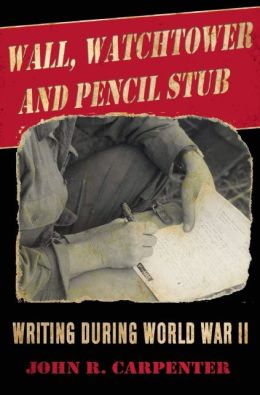
Full disclosure: I was sent a pre-publication galley copy of this book. The errors I am about to complain about may be corrected in the final published product. However, I am doubtful. This is a well-finished, glossy-covered galley, and my observation is that such copies rarely undergo massive revamps, which is what this one would need to satisfy my complaints. [Even when I have received unfinished copies, including typed manuscripts on loose pages, I’ve found far fewer errors than this.] I have found the odd typo in ARCs and galleys I’ve been sent, or the odd note clearly intended for someone in the editorial process (“need caption here” or “photo credit?”). What I see here looks to me like more of a consistent stylistic choice. Still, it’s only fair to point out that the final publication will be different from this one in some ways. I definitely like the concept, so I hope corrections are made… many of them.
 I read through the preamble, the preface, and chapter 1, which concludes on page 15, and I couldn’t take any more. I found distracting multiple uses of a comma to connect two independent clauses, as in:
The outcome is no longer in doubt, the names of the victors and defeated are well-known.
Correct grammar would demand either a semicolon or a conjunction to connect these two clauses, or alternatively, they could be two sentences entirely.
The outcome is no longer in doubt; the names of the victors and defeated are well-known.
The outcome is no longer in doubt, because the names of the victors and defeated are well-known.
The outcome is no longer in doubt. The names of the victors and defeated are well-known.
A few more:
Hillary was a pilot, in the first chapters of the book he presents himself as arrogant and immature.
Hillary did not survive the war – he died in January 1943 – but he was unequivocal, his whole act of writing and his book were an act of communication with his readers: a call to end delusions.
Again, I read 15 pages, and these are just a few examples I chose out of many.
Other usage oddities:
It could have ended entirely different.
(Differently, I’m sure he means…)
The realization by a civilian he could be treated as an insentient thing often came suddenly.
This is the only one that strikes me as possibly a simple mistake, the omission of a word that would have made the sentence flow easily and understandably, so the reader could pay attention to content and put away her red pen.
I feel like I read this concept somewhere, or maybe I made it up, but it seems a good rule of thumb to me that a galley should not be judged negatively on the basis of a few errors throughout, that one assumes will be corrected in final publication. However, at the point where those errors are prolific enough to be distracting, they must be addressed. After all, publishers send out galleys to promote the upcoming book, don’t they? It would seem to be very counter to that cause to send out a copy so full of errors that I can no longer pay attention to the purpose of the book. That was the case here, and I couldn’t continue.
For those interested in the quite attractive topic of “writing during WWII,” you might still want to check out the final version of this book. But maybe browse its pages first to see if this consistent misuse of commas is corrected. Or maybe you’re less sensitive than I am…
Filed under: book reviews | Tagged: DNF, history, nonfiction, writing craft | 4 Comments »













 pagesofjulia