rerun: The Warmth of Other Suns: The Epic Story of America’s Great Migration by Isabel Wilkerson (audio)

Now seems like a fine time to revisit Isabel Wilkerson’s excellent 2010 work, in my 2012 review here. (For later reads, also check out Caste and a corresponding interview I was lucky to get.)

I didn’t really know what this book was about when I picked it up – only that it was well-regarded. I’m so glad it found its way into my hands. Isabel Wilkerson has taken on a large-scale, ambitious subject here, and rendered it beautifully. And the audio reading by Robin Miles is lovely to boot.

The “great migration” in the subtitle refers to the movement of black Americans out of the South and into the northern and western United States in 1915-1975. Wilkerson starts from the very beginning, looking at the experiences of former slaves just after Emancipation in an impoverished region struggling to rebuild with a new order of things. The creation and expansion of Jim Crow laws designed to hold blacks down took time after the end of the Civil War to take effect. In the new caste system, former slaves and their descendants were unable to move up in the world and were in constant fear for their lives if they were to misstep around Southern whites. By 1915, they had begun to move out of the South, in what became a mass migration along lines so distinct that enclaves of blacks from specific towns and states were recreated in new locations.

Wilkerson shifts between two ways of studying the Great Migration. Sometimes she takes a broad view of history, in which she cites her own interviews (she states that she did over 1,200) with migrants and their descendants as well as a number of historical sources, to render the story of the Migration generally. And sometimes she follows the specific personal stories of three individuals who she interviewed at great length over a long period of time, traveling the country with them and becoming part of their lives. (In this respect, the journalist/author becoming part of the family of her subject, I was reminded of Rebecca Skloot’s amazing The Immortal Life of Henrietta Lacks.) George Swanson Starling moved from Eustis, Florida to New York City, later sending for his wife Inez to join him there. He had to leave Florida suddenly because a friend tipped him off that a lynch mob was coming for him; he had been involved in organizing his fellow citrus pickers to demand higher wages. Ida Mae Brandon Gladney moved with her husband George and their two children, with a third on the way, from Mississippi where they had been sharecroppers. They would eventually end up in Chicago, by way of Milwaukee. And Robert Joseph Pershing Foster was an ambitious surgeon and veteran from Monroe, Louisiana, with his heart set on Los Angeles. Known as Pershing in Monroe, he would resettle as Robert (or Bob, or Doc) in LA and send for his wife and daughters to join him there, where he built a new life in high society with the big house and booming practice he’d always wanted.

I found this shifting back and forth between the broad view and three personal histories extremely effective. Anecdotes from the lives of Southern blacks drove well home the misery of their bottom-rung status there; some of these stories are horrific, but important to show the desperation some migrants felt when they left their homes in the South. National trends played a role – for example, during WWII demand for Florida’s citrus was high while the supply of labor to pick the fruit was low, with everyone off at war, and this imbalance led to George Starling’s ability to demand higher wages. And the history of Chicago’s race relations and residential segregation puts Ida Mae Gladney’s home ownership into the proper perspective. You get the point. The history is well-documented and, I’m convinced, well-researched; and the personal stories make it all, well, personal. I was deeply involved with our three representative individuals by the end of the book and, yes, I cried.

I love that Wilkerson brought such a large-scale, important trend, that has had such huge effects on American history, to life the way she did. I also like that she examined the broad effects of the Great Migration, in terms of the cultures of both white and black residents of the North and the South, and took the time to show that black migrants were really far more like immigrant groups in history than like migrants within their own country. I recommend this book as part of a study of American history – but one need not be an academic to appreciate it. The story of the Great Migration is made accessible here, and I’m glad I know more about it now. This 19-disc audiobook (over 600 pages in print) went by easily. This is how I like to take my history lessons. Check it out.


Rating: 8 train rides north.

rerun: Soundings: The Story of the Remarkable Woman Who Mapped the Ocean Floor by Hali Felt

Please enjoy this time capsule from August of 2012.

I’m so glad I picked this book up (and bought it for the library where I work). It sounded like just the sort of thing I appreciate: a biography of a little-known historical figure who made an important contribution to the world as we know it but was herself forgotten. In this case, the “remarkable woman” of the subtitle is Marie Tharp, whose meticulous study and cartography of the ocean floor established the concept of plate tectonics that science now recognizes as fact, but was at best a blasphemous and ridiculous notion before Tharp came along. Her achievements, however, were minimized by a scientific culture in which women did not belong. This biography is additionally appealing to me for its mood: author Hali Felt takes a whimsical, dreamy, almost fanciful tone at times. She describes her own attraction to Tharp’s story (born in part of Felt’s mother’s, and her own, fascination with maps) and the relationship she felt to her subject. She dreams of Tharp coming to her to explain the mysterious and unspoken parts of her life. This book is nonfiction, but it’s honest, personally related, and warm.

There is also an enigmatic love story of sorts hiding within Soundings: Tharp’s career and life were both tied to a man named Bruce Heezen. Heezen was her coworker, then her technical superior; but they shared a partnership in work, in science, in discovery, and apparently in all things. It is known that they were a couple, although they never married and the details of this side of their relationship are very few.

Felt follows Tharp from her childhood with a science-minded father she adored, through her education in English, music, geology, and mathematics, and to her first job in the oil & gas industry (oh, how familiar to this Texas girl). But she was held back: this was the 1940’s, and women in science were mostly expected to make copies, compute numbers, and brew coffee. Eventually Tharp found her way to New York, to Columbia University and the Lamont Geological Observatory. This is where she would meet and work with Heezen and quietly make history.

The science in this book is very friendly and accessible to a general reading public; the story that Felt set out to tell is more that of a woman’s life and accomplishments despite the limitations of her society, than that of tectonic plates per se. For that matter, Felt shows that it was Marie’s combined backgrounds in art as well as science that made her perfectly suited to play the role she did in history. Her meticulous re-checkings of data and attention to detail were indispensable – but so was her interest in visually representing the data available in a way that would show the general public (not just academics) what she’d discovered. So her achievement was artistic as well as scientific. Soundings does make the science side clear, but doesn’t dwell, and is never dry. Rather, Marie Tharp comes to life: she is a precocious child; an ambitious, able, frustrated student; a dedicated scientist; a life partner; an eccentric aging woman caught up in her own past, campaigning to honor and preserve the legacy of her other half.

Hali Felt was honest about the role she plays in the story she relates. She begins in her Introduction by briefly describing her own attraction to maps, and then follows a chronological format, beginning with Tharp’s childhood and following her life, and eventually her death. And then Felt returns to the story: her discovery of Marie Tharp’s existence, her interest, her decision to follow that interest, her research, her relationships with the living descendents of Tharp and Heezen’s world (the “Tharpophiles”), and in the Acknowledgements at the end, she even hints at the process by which she came to write and publish this book. I found all of these Felt-related details interesting too.

In a word, this is a lovely biography, and the style and tone of it may be my favorite part.


Rating: 9 double-checkings of data.

I remember it fondly.

The Talented Mrs. Mandelbaum: The Rise and Fall of an American Organized-Crime Boss by Margalit Fox

In the late 1800s, a female crime boss ruled New York City, as colorfully detailed in this exhilarating narrative history.

Margalit Fox (Conan Doyle for the Defense; The Riddle of the Labyrinth) brings a lively storytelling style and a flair for conveying personalities to a history that’s stranger than fiction with The Talented Mrs. Mandelbaum: The Rise and Fall of an American Organized-Crime Boss.

“‘You are caught this time, and the best thing that you can do is to make a clean breast of it,’ one of the Pinkertons… advised Mrs. Mandelbaum as she was led away. In reply, Fredericka Mandelbaum–upright widow, philanthropic synagogue-goer, doting mother of four, and boss of the country’s most notorious crime syndicate–whirled and punched him in the face.” To the modern mind, attuned to Scarface-style organized crime, Mandelbaum was an unlikely candidate for her role: Jewish, female, an immigrant, penniless upon her arrival in the United States in the mid-1800s. But through shrewd business practices and motivated by her desire for her family’s survival and comfort, the woman known as Ma, Mother, and Marm Mandelbaum established what would become a multi-million-dollar empire. She backed her staff of shoplifters, pickpockets, and bank burglars with training, supplies, project funding, bail money, and lodging–indeed, mothering them while setting a standard for criminal organization, including a highly specialized school for safebreakers.

Fox successfully tells this story by letting colorful characters stand out. “About six feet tall and of Falstaffian girth (she was said to have weighed between 250 and 300 pounds), pouchy-faced, apple-cheeked and beetle-browed, [Mandelbaum] resembled the product of a congenial liaison between a dumpling and a mountain.” She is pursued less by the New York police departments (multiple, corrupt, and at odds with one another) and more by the detectives of the nascent Pinkerton Agency who were hired to bring her down in a changing world. Both police and Pinkertons provide memorable characters to boot, on top of the regular and freelance lawbreakers Mandelbaum employed. Fox has a sharp eye for humor: “At the interment, it was reported afterward, some mourners deftly picked the pockets of others. Whether they did so in tribute to their fallen leader or simply from occupational reflex is unreported.” And she sets this wild narrative in the context of its time, Gilded Age America, aglitter and crooked and facing massive economic and social change. The world of Herbert Asbury’s Gangs of New York both provided the long shot for a Jewish matron, and punished her for her nerve.

With copious notes and research, Fox offers a tale as madcap and thrilling as it is illustrative of American history and culture. The Talented Mrs. Mandelbaum is riveting for fans of both history and entertaining storytelling.


This review originally ran in the April 16, 2024 issue of Shelf Awareness for the Book Trade. To subscribe, click here.


Rating: 7 diamond stickpins.

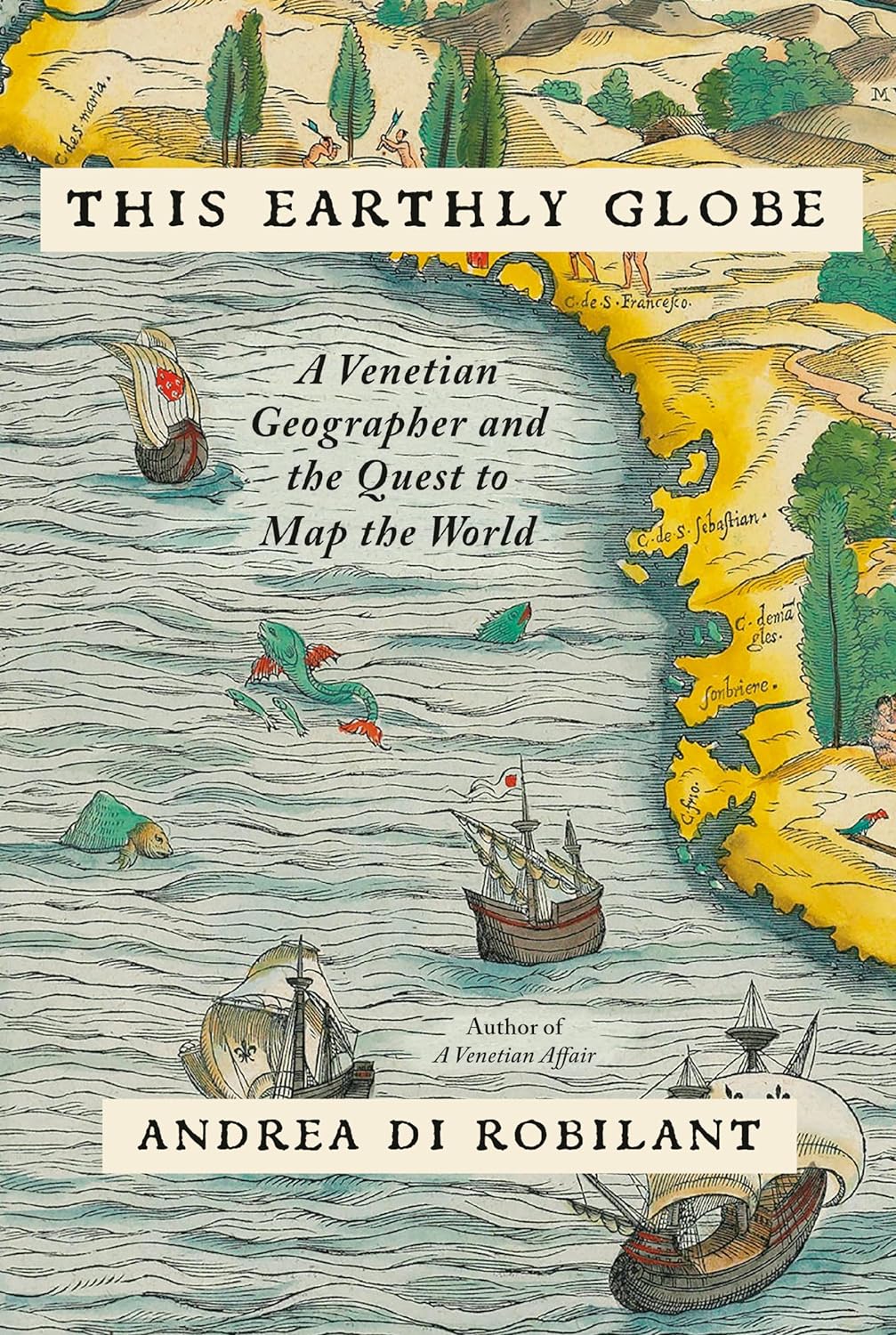
This Earthly Globe: A Venetian Geographer and the Quest to Map the World by Andrea di Robilant

This romp through history relates the lives and adventures of many travelers whose stories were compiled by a self-effacing Venetian civil servant in an extraordinary publishing feat.

With This Earthly Globe: A Venetian Geographer and the Quest to Map the World, Andrea di Robilant takes a convoluted but purposeful journey through history as well as geography to follow a remarkable achievement: the publication in the 1500s of an unprecedented three-volume collection. Navigationi et Viaggi, or Navigations and Journeys, was the life work of Giovambattista Ramusio, a career civil servant in Venice, but his name was not at first attached to “this remarkable collection of travel narratives, journals, private letters and classified government reports.” Humble and hardworking, Ramusio spent a lifetime compiling documents and notes from an impressive assortment of travelers. He found an early version of Marco Polo’s travel writings, corresponded with contemporary European explorers, and nurtured sources for long-secret documents; he was a dedicated editor, translator, and collector responsible for “one of the great publishing feats of the sixteenth century. It played a vital role in the final emancipation from a vision of the world still anchored to antiquity and became an indispensable source for the great cartographers of the second half of the sixteenth century.”

The world travelers whose notes, journals, drawings, and maps informed Ramusio’s work provide most of the color for di Robilant’s lively history. Ramusio’s own life is described, but it is Marco Polo, al-Hasan ibn Mohammad al-Wazzan, Antonio Pigafetta, Andrea Navagero, and many others whose adventures brighten these pages. Di Robilant (A Venetian Affair, Chasing the Rose, Face to Face) recounts their stories in vibrant detail. Marco Polo, in the region of present-day Afghanistan, saw “the landscape… stark against the deep blue sky: steep barren mountains, silvery green poplars along the banks of the river, the occasional mud village, and always a few flocks of sheep here and there nibbling at the rocky terrain.” Al-Wazzan, a “careful observer and diligent note taker… amassed a wealth of information on everything from the price of grains to particular weaving techniques to the quality of local wines in the places he visited.” He and Ramusio shared a “notion of what geography should be: not just maps and place-names but a more encompassing description of territory that might include observations on local crops, on manufacture, on trade patterns, on systems of transportation, irrigation and communication, on the social and political organizations of villages and towns, on religious practices.”

Di Robilant unfolds centuries of history, a dizzying array of characters, and a wide world of geography and culture in an easy storytelling style without falling into a dry recitation of facts and dates. This Earthly Globe offers a broad, accessible narrative about a publication that changed the world as it helped define it. Obviously for fans of history and geography, this sparkling story will also please general readers.


This review originally ran in the April 12, 2024 issue of Shelf Awareness for the Book Trade. To subscribe, click here.


Rating: 7 pomegranates.

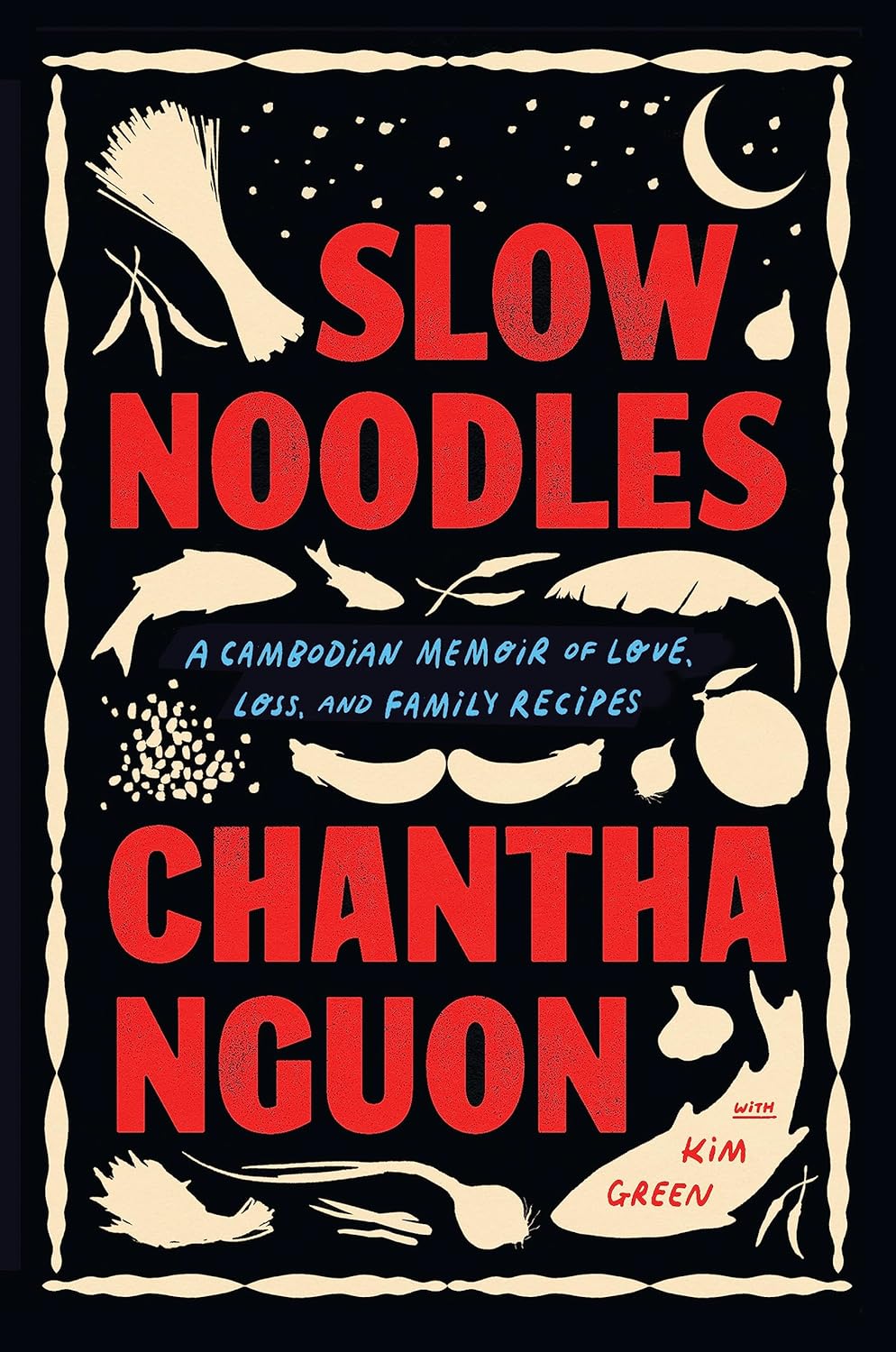
Slow Noodles: A Cambodian Memoir of Love, Loss, and Family Recipes by Chantha Nguon & Kim Green

This memoir of food, family, feminism, and Cambodian history, which includes enticing cookbook-quality recipes, is breathtaking in its emotional resonance and lovely writing.

Slow Noodles: A Cambodian Memoir of Love, Loss, and Family Recipes tells a story that is, by turns, heart-wrenching, inspiring, harrowing, and mouthwatering. Chantha Nguon’s memoir, written with Kim Green, encompasses both world history and an intimate personal account. Nguon, born the youngest child in a comfortable family in Cambodia’s Battambang, had nine years of soft living and good eating before Pol Pot reset time to Year Zero in the 1970s. Moving first to Saigon, where she weathered the end of the Vietnam War, and then escaping as a refugee into Thailand, Nguon gradually lost everyone she loved, ending with her mother’s death when Nguon was 23. She was a food-focused young child with a mother who took cooking very seriously; she became a young refugee in peril of starvation. For Nguon, rationing or missing entirely the most basic of ingredients is not only a literal life-or-death issue but also symbolically life-altering. With the loss of her family and, to some extent, her culture, she views herself as a repository of recipes, culinary knowledge, memories, pain, and strength.

Food metaphors enrich this book, which sparkles with poignant, deeply lovely writing: “The green-fresh fragrance of young rice is as lovely and fleeting as childhood itself.” Nguon’s mother “taught [her] the art of rebelling as quietly as a whisper of silk.” Twenty-two recipes learned from Nguon’s beloved mother, or developed throughout her own accomplished cooking life, are included, with clear instructions and helpful notes on ingredients (and accompanied by a glossary for potentially unfamiliar terms). These are joined by cleverly figurative recipes, such as the recipe for silken rebellion, which begins: “Find the pockets of freedom available to you. Exploit loopholes.”

By the end of the story, Nguon has transformed into an impressive woman, acting as her husband’s equal (a radical concept, encouraged by her quietly rebellious mother) and a fierce advocate for social change. Nguon, who becomes a staunch feminist, eventually undertakes medical and humanitarian work with AIDS patients and sex workers, fights for education and independence for Cambodian women, and with her husband, founds the Stung Treng Women’s Development Center in rural Cambodia.

Nguon’s titular noodles contribute enormous metaphorical meaning. In her childhood household, slow and proper cooking was prioritized (“my mother despised the flavor of shortcuts”). In Thai refugee camps and in the Cambodian jungle, instant noodles became a prized delicacy. And by the memoir’s end, this thoughtful narrator has integrated these experiences, valuing both the careful preparation of fine foods and the stark relief of basic nutrition. Slow Noodles is a rare gem of a story, gorgeously written, humble and stirring, and packed with tempting recipes.


This review originally ran in the December 14, 2023 issue of Shelf Awareness for the Book Trade. To subscribe, click here.


Rating: 9 silk threads.

In the Pines: A Lynching, A Lie, A Reckoning by Grace Elizabeth Hale

A historian with personal connections to its players expertly researches a specific lynching case in this razor-sharp report.

In the Pines: A Lynching, a Lie, a Reckoning is a story with personal significance for Grace Elizabeth Hale (Making Whiteness), who tackles some of the greatest race-relations demons–historical and continuing–in the United States. In this thoroughly researched account, Hale investigates the 1947 murder of a man named Versie Johnson in rural Jefferson Davis County, Miss. The author’s beloved grandfather served as sheriff at the time, and her mother originally offered this tale as one of righteous heroism: her white grandfather stood up to a mob and refused to release his Black prisoner, who was somehow nevertheless removed to the woods where he died. But Hale learns that her grandfather’s involvement was neither innocent nor heroic.

In her thoughtful narrative, Hale places the death of Versie Johnson in layers of context. She works to find personal information about Johnson, with limited results: one theme of her book is the lack of recorded facts about people judged inconsequential by the record-keepers. She struggles to reconcile very different accounts of Johnson’s alleged crime (rape of a white woman). She studies the history of lynching in the United States, by its various definitions; the history of Jeff Davis County and Mississippi; and a handful of similar cases in nearby counties before 1947. By the end, she reconstructs a passable version of events: possibilities about the life of Versie Johnson and an estimation of her grandfather’s decision-making on the night he was among the group that drove his prisoner from the town’s jail out to the field where a crowd of white locals witnessed Johnson’s murder.

A historian of American culture, Hale began her research for this book as she finished a doctoral dissertation on southern segregation, Jim Crow, lynching, and white supremacy. She brings this expertise to a subject about which much information has been lost. “Family trees, genealogies filled with relatives’ names and the dates when they were born and died, depend on archives. And official repositories of documents in turn depend on a society’s ideas about who matters.” Research skills and informed guesses (always clearly indicated) do, however, yield a story. “The past does not have to be ancient to be made of splinters and silence,” Hale writes, and what she reveals is important for a national reckoning as well as Hale’s personal one.

In the Pines is elevated by lovely writing: “Family trees are metaphors. They share with pines both a basic structure and a tendency to flourish only when conditions are right.” It is also marked by incisive thinking about race in history and in the present. Hale’s work is a significant contribution to that larger conversation.


This review originally ran in the September 18, 2023 issue of Shelf Awareness for the Book Trade. To subscribe, click here.


Rating: 7 unrecorded details.

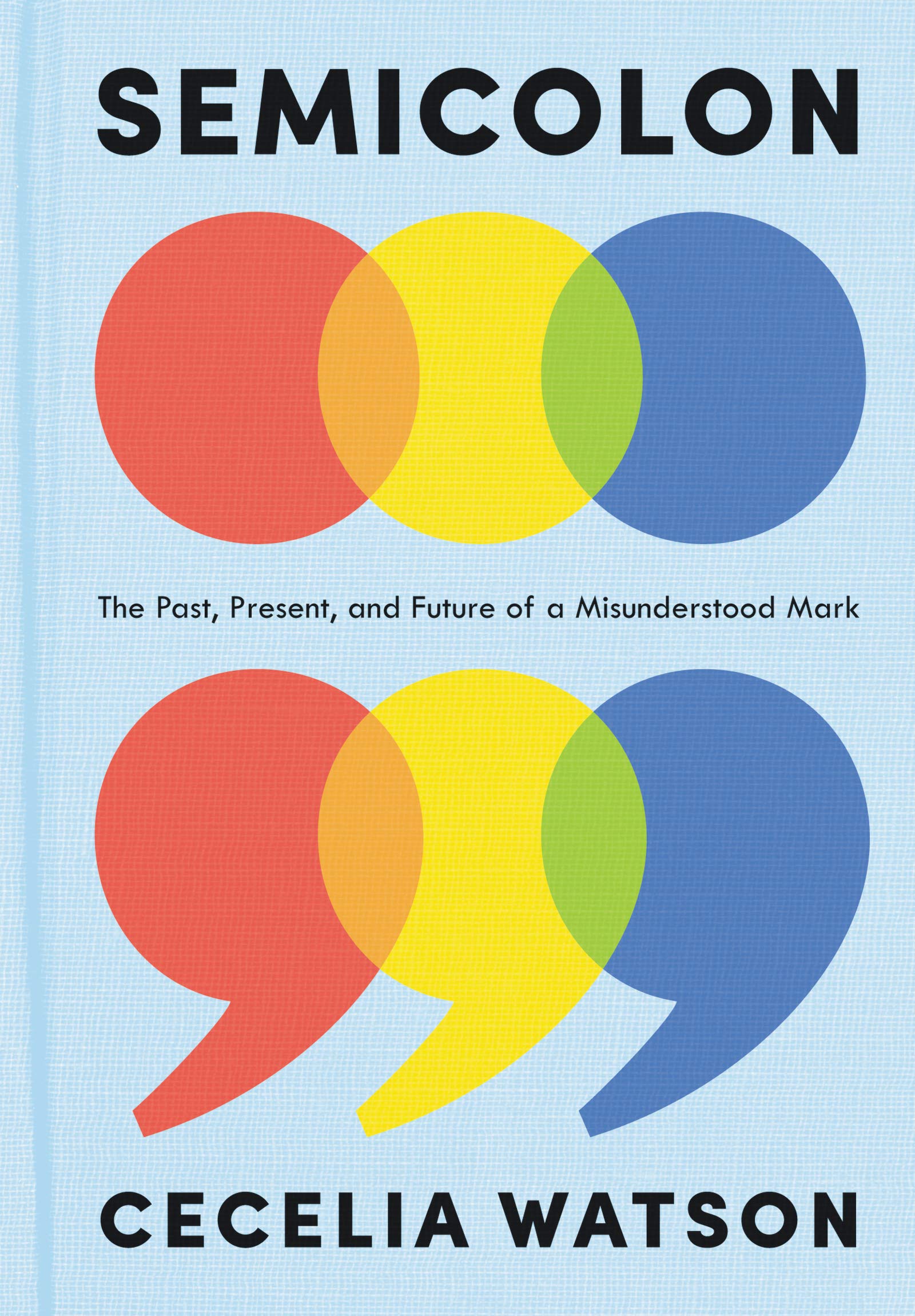
Semicolon: The Past, Present, and Future of a Misunderstood Mark by Cecelia Watson

This one is a surprisingly quick and easy read, considering that it undertakes the history of a much-debated punctuation mark. Early on it made me giggle and brought me great joy. Later, it took me into Moby-Dick and Henry James, which I did not enjoy. At over 60 pages, the Melville & James chapter (“Semicolon Savants”) was by far the longest in the book, and occurred late in it, so it disproportionately colors the impression I walk away with, and not for the best. But earlier chapters on semicolons in legal arguments and the ever-changing nature of language rules, and pithier (than Melville) examples of semicolons as style (Twain, Irvine Welsh, Raymond Chandler, Rebecca Solnit!), made me very happy. Perhaps I felt that the Melville and James examples misportray the semicolon; perhaps it’s merely an expression of my preferences. I very much missed a discussion of the semicolon’s present symbolism in mental health awareness movements and tattoos, since I feel like that usage is cleverly figurative (even if it misconstrues my own semicolon tattoo, which is actually about punctuation). But maybe that aspect is too of-the-moment and has not yet stood the test of time.

I do love that there are books about this.

And I enjoyed where the book wraps up. Watson has spent its length periodically referring to her own movement from (more or less) grammar nerd and prescriptivist to descriptivist admirer of language and style in their diversity. She finishes by reminding us not to get too caught up in the rules. I appreciate this message very much, and I agree with it, although it’s hard to find where to fall as an English teacher of reluctant students. I many times found myself wishing I could convince them all to read this book, which feels like endorsement enough.


Rating: 7 clauses.

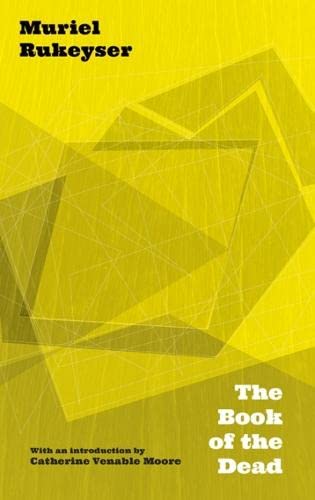
The Book of the Dead by Muriel Rukeyser; introduction by Catherine Venable Moore

Muriel Rukeyser’s The Book of the Dead was originally published as a poem cycle in her 1938 collection U.S. 1. It was unearthed, if you will, by Catherine Venable Moore, and republished in a new edition in 2018 with Moore’s introduction. (Disclosure: Moore was a visiting faculty member in my MFA program when I was a student there; I have met her, very briefly.) That introduction is lengthy, occupying fully half the pages of this book, which I hadn’t realized in advance; that is to say, while Rukeyser’s poetry is its raison d’etre, Moore’s essay is indispensable to the reading experience I’m reviewing here. That essay was published in Oxford American (a magazine I adore) in 2016, in its entirety – I did a pretty close page-by-page spot check, and if the two versions differ, it’s by words or punctuation marks, not paragraphs. (OA actually offers more images, too.) You can read Moore’s work here, and you absolutely should (I write, at the risk of unselling a copy of this book; but you will still want Rukeyser’s poems!).

The subject is the years-long industrial disaster at Hawk’s Nest Tunnel near Gauley Bridge, West Virginia. Miners were tasked with both tunnel construction and the mining of silica, a convenient byproduct of the tunneling; they worked without protective equipment and inhaled quantities of silica, which caused silicosis (as it was known at the time it would), of which they died by the hundreds. Most of the miners were migratory Black Southerners housed in temporary work camps. The death toll is still unknown.

Rukeyser, a young lefty poet/journalist, traveled to West Virginia to document these events in 1936, as the last of the miners testified before a congressional committee even as they coughed and died. She was accompanied by a photographer friend (whose photographs, but two, were lost). The Book of the Dead was Rukeyser’s result: documentary, poetry, journalism, testament. Moore’s essay places this and much more information in context so that the reader is ready to appreciate Rukeyser’s poems when they come. Recall that I am infinitely more at home with essays than with poetry, but I found Moore’s work to be very moving, beautifully done, and informative. I found the poems more challenging, and I would not have gotten as much out of them without Moore’s help. Perhaps my favorite was the title poem, which is also available online at The Poetry Foundation, for whom I am grateful.

I’m very glad I spent a day immersed in this story, certainly an important one in our national and regional history. This was a bit of homework before, hopefully, visiting the recently dedicated memorial myself. I am very glad that Moore did the work of getting these poems and this story out into the world again.


Rating: 8 hills of glass.

Why Fish Don’t Exist: A Story of Loss, Love, and the Hidden Order of Life by Lulu Miller

Another one hit way out of the park by Liz. I no longer remember what she said, but I think it involved some superlatives; I bought the book and finally got around to it and now have some superlatives of my own. It was just early April when I read this book, but I’m confident stating this will be the best book I read all year.

Why Fish Don’t Exist is one sort of book I love, in that it involves several threads woven together. In her prologue, Lulu Miller pits our most precious loves against the force of a capitalized Chaos. “Chaos will crack them from the outside–with a falling branch, a speeding car, a bullet–or unravel them from the inside, with the mutiny of their very own cells. Chaos will rot your plants and kill your dog and rust your bike. It will decay your most precious memories…” Etc. Then we first meet David Starr Jordan, as Miller did. He was a taxonomist specializing in fish. An earthquake destroyed his collection of thousands of specimens, dashing them in their glass jars to the ground, separating them from their identifying tags. To which he responded by hand-stitching tag to fish specimen, and starting over. Miller is entranced by this “attack on Chaos.” She struggles herself with the forces that tend to defeat us, and wonders of Jordan: “Who are you?… A cautionary tale? Or a model of how to be?

From here we accompany Miller on her study of Jordan – his life and his thoughts – in search of a model for how to be, how to live with joy and be indefatigable in the face of all frustrations, all forms of Chaos. Why Fish Don’t Exist is thus partly a biography of Jordan and a layperson’s introduction to fish taxonomy and its principles. (The title is not a joke. There are existential arguments and philosophies to be discovered, too.) It’s also part memoir, as we get to know Miller better, the demons she’s faced and the tools she’s used to try to mend herself. Her father is a delightedly nihilistic scientist, with some parallels to Jordan, which is of course fascinating. The book is perhaps most of all an inquiry into Miller’s original concern: how to live and not despair, not choose to die, in such an overwhelmingly imperfect world as this one.

Miller’s writing style is colorful, phantasmagoric, impassioned, with high highs and low lows. She sees beauty and desolation in the world, and describes them evocatively. Among Jordan’s discoveries are

A small lantern fish with glowing spots, “which had risen from the deeps in a storm.” A tiny, rainbow-scaled fish that was found inside the belly of a hake, which was found inside the belly of an albacore. A crimson fish with yellow stripes that they nicknamed “the Spanish flag.”

The only fish he ever named after himself, “breathtaking, absolutely, but frightening, too, in the way of an M.C. Escher drawing.” “Its fins look like dragon wings, serrated and sharp.”

Without ruining too much of the story, I will say that Jordan, like all our heroes, is not purely heroic. He turns out to be in fact profoundly problematic, as our heroes tend to, and so Miller must wrestle with that, too. Chaos again. His methods are ruthless –

He began inventing more aggressive techniques for capturing fish. Blowing them out of the water with dynamite, hammering them out of coral, and perhaps most ingenious, for the “myriads of little fishes” that hid inside the tiny cracks in tide pools: poison.

and he’s harder on people than he is on fish. In more than a few ways I won’t give away here he will disturb our modern sensibilities. He disappoints us, as he disappoints Miller – horribly – but her own perspective never disappoints.

Illustrations by Kate Samworth open each chapter and advance their contents; these lovely black-and-whites resemble woodcuts (if that’s not in fact what they are) and will be part of what makes this book memorable for me. I think Samworth deserved to have her name on the book’s cover.

Transcendent. Best book of the year. Wrecked me, but in the best way. I’ll be thinking about this one for a long time.


Rating: 10 holotypes.

Let Me Be Frank: A Book About Women Who Dressed Like Men to Do Shit They Weren’t Supposed to Do by Tracy Dawson

Humorous profiles of more than 30 women in history who broke gender barriers offer righteous inspiration.

In 2013, television writer and actor Tracy Dawson was passed over for a job writing shows because they didn’t have any “female needs.” Naturally infuriated, she became interested in women over the centuries whose opportunities and options have been limited by their sex. From this curiosity is born Let Me Be Frank: A Book About Women Who Dressed Like Men to Do Shit They Weren’t Supposed to Do, in which Dawson profiles several dozen women from the 1400s BCE through the present. In a pithy, one-liner-laden style, she brings these remarkable and little-known histories to light with comedic flair.

Some of the women are classics: Joan of Arc, Kathrine Switzer and a chapter’s worth of once-anonymous literary figures who are now household names (Jane Austen, Mary Shelley, the Brontës, George Sand). But the majority are more obscure: Maria Toorpakai, professional squash player born in 1990 who defied the ultra-conservative norms of her region of Pakistan when she disguised herself as a boy to play sports; Hannah Snell, who served as a Royal Marine in the 1750s; Ellen Craft, who fled slavery in 1848 disguised as a white male slaveowner. A teenaged Dorothy Lawrence, rejected as war correspondent in World War I, took herself to the front by boat, bicycle and soldier’s garb. The 1890s entertainer and male impersonator Florence Hines, 1941 comic book creator Tarpé Mills and 1980s miner and entrepreneur Pili Hussein are among these diverse, colorful stories. Others are antiheroes, like witch-pricker Christian Caddell or all-around scoundrel Catalina de Erauso. Dawson is careful to point out that her focus is on “women who dressed as men to gain access and opportunity, not on gender identity,” since the latter is notoriously difficult to parse from a historical perspective, particularly since many of the women she profiles have left scant records. Their motivations vary as widely as other aspects of their identities and stories, but each of these women pushed boundaries in ways that remain inspirational for Dawson and her readers today.

Let Me Be Frank is peppered with punchy jokes in an informal, conversational tone that suits Dawson’s background in television. Joan of Arc is compared to Beyoncé; U.K.-born Annie Hindle’s stage name is received with “I’ve fallen and I can’t get up.” Dawson delivers these historical profiles, born of research, in a lighthearted voice. Tina Berning’s portraits evoke the women’s personalities and literally color the narratives. The result is an easy-to-read, eye-opening look at female bravery amid the sexism and misogyny throughout history; it is funny and rousing and proud.


This review originally ran in the March 25, 2022 issue of Shelf Awareness for the Book Trade. To subscribe, click here.


Rating: 6 clusters of tanzanite.