Girl Waits with Gun by Amy Stewart (audio)

When I heard, some years ago, that the author of The Drunken Botanist had written a women-centered detective story, you can bet I couldn’t wait to get to it. Because it’s a touch longer than I usually have time for, it took me some four years to get to it, but I finally did, in a very nice audio format performed by Christina Moore.

Constance Kopp lives with her two younger sisters, Norma and Fleurette, on the family farm in the New Jersey countryside, even though their brother keeps insisting they sell it and move into town, because three “girls” shouldn’t be out there on their own. In the summer of 1914, their buggy is struck by an automobile driven by silk merchant Henry Kaufman. Constance insists that Kaufman should pay for damages, but Kaufman is a jerk and sort of a gangster type, and he refuses. The rest of 1914 and well into ’15 are absorbed with the Kopp-Kaufman conflict: Kaufman and his unsavory friends harass and stalk the Kopp sisters, eventually attempting to burn down their house and shooting at them, and sending letters threatening to kidnap young Fleurette and demanding money. At every point the “girls” (Fleurette is a teenager, but Constance is closer to 40 than 30) are encouraged to just let this thing drop, but Constance will not be deterred. She sues Kaufman for the damages and then pursues charges against him for the rest of the violence and threats; a friendly local sheriff’s assistance is critical to her persistence. Constance will prove a better detective than many real detectives, and this novel ends with her being offered just such a job. (The series of “Kopp Sisters” novels follows that thread.)

These events are closely based on the true Kopp sisters, and if you want to avoid spoilers for the novel, you’ll avoid reading the history just yet, too.

I had mixed feelings for this one. It’s got a solid plot, but one that dragged on far longer than it needed to; well-portrayed characters with complexity and flaws and quirks, but a bit more likeability would have helped me enjoy them far more. (I don’t require that I absolutely love all, or even any, characters in a book. But there has to be enough that I invest in them in some way. And while I appreciated Constance quite a bit, and Sheriff Heath, almost everyone else grated. You don’t want your reader to spend most of your book exasperated.) I dig the feminist pluck, the setting in time, and the period-appropriate details. The sisterly interactions were cute at first, but started to irritate me. I was often impatient. Nearly 500 pages? This novel could have been done in half that, I think, and would have been a snappy ripping little novel at that length. I would definitely be signing up for book 2 in the series in that case; as it is, I’m not sure I won’t look into it, which is of course a vote of some confidence. But I’m not sure I will, either, because it bogged down for so long. Why was this book as long as it was? We spent entirely too much time watching the same things happen over and over again.

The reading of this audio format was above average. I enjoyed the voices for the different characters and the contribution to Constance’s character.

Some high points for sure, but I can’t give a strong recommendation. Many readers have loved this book, so feel free to seek other opinions. To each her own.


Rating: 6 blue bands.

Time and Chance by Sharon Kay Penman

Sharon Kay Penman writes epic historical novels that I love to sink into. (I have read 7 of her 15 to date, and she’s still writing, thank goodness!) It’s funny, but for me, what lasts about these books is not detail, but feeling. Individual characters, emotions, and relationships resonate, but I find I can retain almost nothing about the monarchies, battles, and power struggles – the real *history* – she has so meticulously researched. I’m resigned; this seems to be a feature of how my brain works (or doesn’t), as I certainly don’t think it’s a feature of Penman’s work. Also, the English monarchs tend to reuse the same names over and over. It makes it very hard for me to keep them straight.

Years ago, I read the first novel in the Angevin “trilogy” (now at five books, ha), When Christ and His Saints Slept (also here). Here I am finally with book two in that series. “It began with a shipwreck on a bitter-cold November eve in God’s Year 1120,” which kills the one legitimate son of King Henry I. He names his daughter Maude, widow of the Holy Roman Emperor, as heir, but the people balk at the rule of a woman, and her cousin Stephen seizes power. The Empress Maude makes an armed bid for the throne which fails, but in her remarriage to the Count of Anjou she produces a son who will call himself Henry Fitz Empress and rise to great heights. At nineteen he marries Eleanor of Aquitaine, an older woman, a great beauty, former wife to the King of France; at twenty-one she is a queen again when he becomes King of England. …All this is prelude; Time and Chance covers several decades of Henry’s rule over England, his passionate and eventually rocky marriage with Eleanor, and his changing relationship with Thomas Becket. More than 500 pages flew by for me, as I was entirely spellbound by the characters, their relationships and machinations.

Henry is controlling, confident, charming, single-minded, arrogant, and brave. For a king, he can be quite informal, appreciating simple clothes and food and bawdy humor; but his temper flares easily (much talk of the Angevin temper) and he does not tolerate disrespect. Eleanor is quite his equal, passionate and ambitious, not to be crossed; she is wise and clever, and he doesn’t take her advice as often as he should. They’re well-matched and truly love each other, in Penman’s telling, but he’ll betray her late in the book. Betrayal is central to this story, because the third main character is Thomas Becket, who has risen from a low birth to serve as Henry’s chancellor and one of the few (alongside Eleanor and the Empress Maude) whom the king fully trusts. When Henry promotes him to Archbishop of Canterbury, though, Becket’s loyalties shift. The two men will spend the next eight years as enemies, with Becket pushing for Church powers while Henry pushes for his own. Henry, Eleanor, and Becket form the triangle that is the heart of this book. But for me, a loveable fourth figures heavily as well: Ranulf, Maude’s brother and Henry’s uncle, had a Welsh mother and has made a home and a life for himself in Wales, with a Welsh wife and children who consider the English to be an ‘other’ (if not an enemy). Ranulf’s loyalties are obviously split, but they are deep; he feels himself bound to Henry but also to the Welsh King Owain, and when the two come into conflict he is sorely pained. As impressive as Henry and Eleanor can be, Ranulf is the one who feels most human, most the friend whose eyes I see this story through.

The book is written in a third person perspective that moves around, close to one character and then another; the reader gets views inside of Eleanor’s heart and mind, glimmers into Henry’s, but I think we do get closest to Ranulf, and even his wife. (Rhiannon is blind, which is quite a remarkable condition in this time.) Thomas Becket remains an enigma, as I think he is to history, and we know Penman takes her historical accuracy very seriously. It’s one of the things I love and respect about her, even if I can’t seem to retain the historical details of her novels once I put them down.

My first Penman, which I fell in love with, was The Reckoning, which centers the Welsh. I don’t know if she writes especially lovingly of Welsh characters or if I respond especially to them, but Ranulf won my heart, again. Interestingly, he’s the character in this novel that Penman entirely invented: she writes that Henry I had so many illegitimate children (at least 20) that one more couldn’t hurt.

When these characters get in ships or on horses and go charging over land and water and meet with dignitaries and offer gifts and make agreements, and break them, and when the lists of names get long, I tend to glaze over a little. But when they are engaged in close, interpersonal relationships – when Ranulf and Henry joke, or Ranulf and Rhiannon discuss decisions, or Eleanor and Henry fight or make love, or Ranulf and his brother Rainald catch up, or the Welsh prince Hywel makes poetry and flirts and jests, or Eleanor and Maude and Maud (yes, another one) confer on the role of women… these moments compel me. The larger power plays are interesting, and they are the plot points that coerce the interpersonal relationships. But it’s the private and interpersonal that drive my devotion to the story. There is a certain romance to the way that Penman lets these characters generally be their best selves, a sentimentality in some (not all) marriages and in parent-child relations. I cynically suspect that this perspective is a rather optimistic reading of history, but it certainly makes for enjoyable fiction.

I still admire this author so much, and I find her work so enjoyable. She makes decades of political intrigue feel like an intimate drama among people I could be friends with. Five hundred pages of historical fiction about the Plantagenet dynasty sounds like it would be a slog, but here it’s an indulgence. I’m still committed to reading all her work, over the years!


Rating: 8 shared trenchers.

Luncheon of the Boating Party by Susan Vreeland (audio)

Hello, yes, it’s Wednesday! With school just about done, I’m returning to book reviews as a more-or-less full-time venture, and social distancing is still in full effect, so it seems I’ll be producing plenty of blog content for the summer and we’re going back to a three-day-a-week schedule. Thanks for tuning in.


I have loved Susan Vreeland’s ekphrastic fiction for years now. In spirit of Tracy Chevalier’s Girl With a Pearl Earring or Vreeland’s Girl in Hyacinth Blue, this 2007 novel fictionalizes the story of the real-life painting Le déjeuner des canotiers (Luncheon of the Boating Party) by Pierre-Auguste Renoir.

It opens with Renoir riding his three-wheeled steam-cycle to a village on the Seine outside of Paris to paint. We immediately meet several of the characters who will become models for his ground-breaking painting; and it does revolve around characters. While this is in part the story of the painting itself coming into being, issues of composition and light and technique, it is most about people. Renoir chases women; he is obsessed with beauty and must “love” (read: make love to) all his female models. He is also committed to “the impressionists” as a group and a movement. After reading Émile Zola’s indictment of the impressionists, that they “are inferior to what they undertake. The man of genius has not yet arisen,” Renoir knows he must get ambitious. He plans an enormous painting that will be landscape, figure painting, study of light and personality all in one. This novel follows him from discontent and conception through to the end of the painting, plus a years-later epilogue-style reflection.

But again: people. Renoir selects his models carefully, and then navigates their comings and goings; several bow out and new ones must join; he agonizes over the problem of having 13 around a dinner table (an unacceptable reference to the Last Supper), and must make a number of replacements. (Vreeland’s Author’s Note explains that all the models in her novel are the true and established models of Renoir’s painting, with the exception of the 14th, a brief glimpse of a man whose identity is unknown.) These changes in lineup, as well as the luncheons where the modeling and painting actually takes place, are the drama and plot of the novel. Over eight Sundays (the limited span of painting opportunity, because of seasonally changing light), the party meets to flirt and drink and joke and laugh and love. They take boating trips, of course, and several boat races close out the season. Part of the overall feel of the novel is this laughter, love, and conviviality. Partly too it is stressful and sad, but Renoir is always chasing joy.

Most of the story is told from a limited-third-person perspective that follows Renoir, but a handful of chapters track a few of the models. I think these might have been my favorites, actually: Renoir is engaging, and it makes sense that he forms the heart of this story in some sense, but he can be a bit exasperating (especially in his womanizing), and I loved getting to know some of his models a little better. The chapter that followed Angèle might have been my favorite departure from Renoir’s self-absorption. He is an engaging character in his own right, but not always very likeable.

The general feeling is indeed one of the appreciation of beauty, joy, and living in the moment, which (at least as portrayed here) are pillars of Renoir’s own worldview. I enjoyed being immersed in such appreciations, and in the love of lines, colors, light, and brushwork. I genuinely liked almost every character we met, and it felt like escaping into something lovely to rejoin this audiobook. (As I’m saying about everything I read and take in these days, I can’t separate the experience of this book from the pandemic. This one took me longer than usual because I usually listen to audiobooks in the gym and while driving, and midway through this book I lost access to the gym and had nowhere to go. It was a delicious escape, though, when I did get into it.) There was also an elegiac tone to things, especially late, and especially in the character of Alphonsine, who closes things out for us. She’s a somewhat tragic figure who I would happily spend more time with. In fact, I loved the women of this story most of all. I think Vreeland does women beautifully, especially in my favorites of hers, The Forest Lover and Clara and Mr. Tiffany.

Karen White’s reading of the audiobook feels right to me, and I greatly appreciate having all that French spoken aloud for me; it is a language I find confounding, and I can’t imagine how I would have heard all the names and vocabulary in my head if I’d read it off the page myself. I’m so glad I found this book in this format. I learned some things about art, about impressionism, and about period France; in the author’s note, Vreeland notes where she stuck to the historical record and where she diverged, and I feel pretty good about historical accuracy here. (Divergences were minor enough, and my retention vague enough, that I don’t think I’m leaving with any meaningful misinformation.) I’m still a fan of this author, who, incidentally, I just learned died in 2017. Luckily there are still a number of her novels that I haven’t yet read; I will look forward to those.

Lovers of historical fiction, art and ekphrasis, human dramas, and beauty for its own sake should take note.


Rating: 8 canotiers.

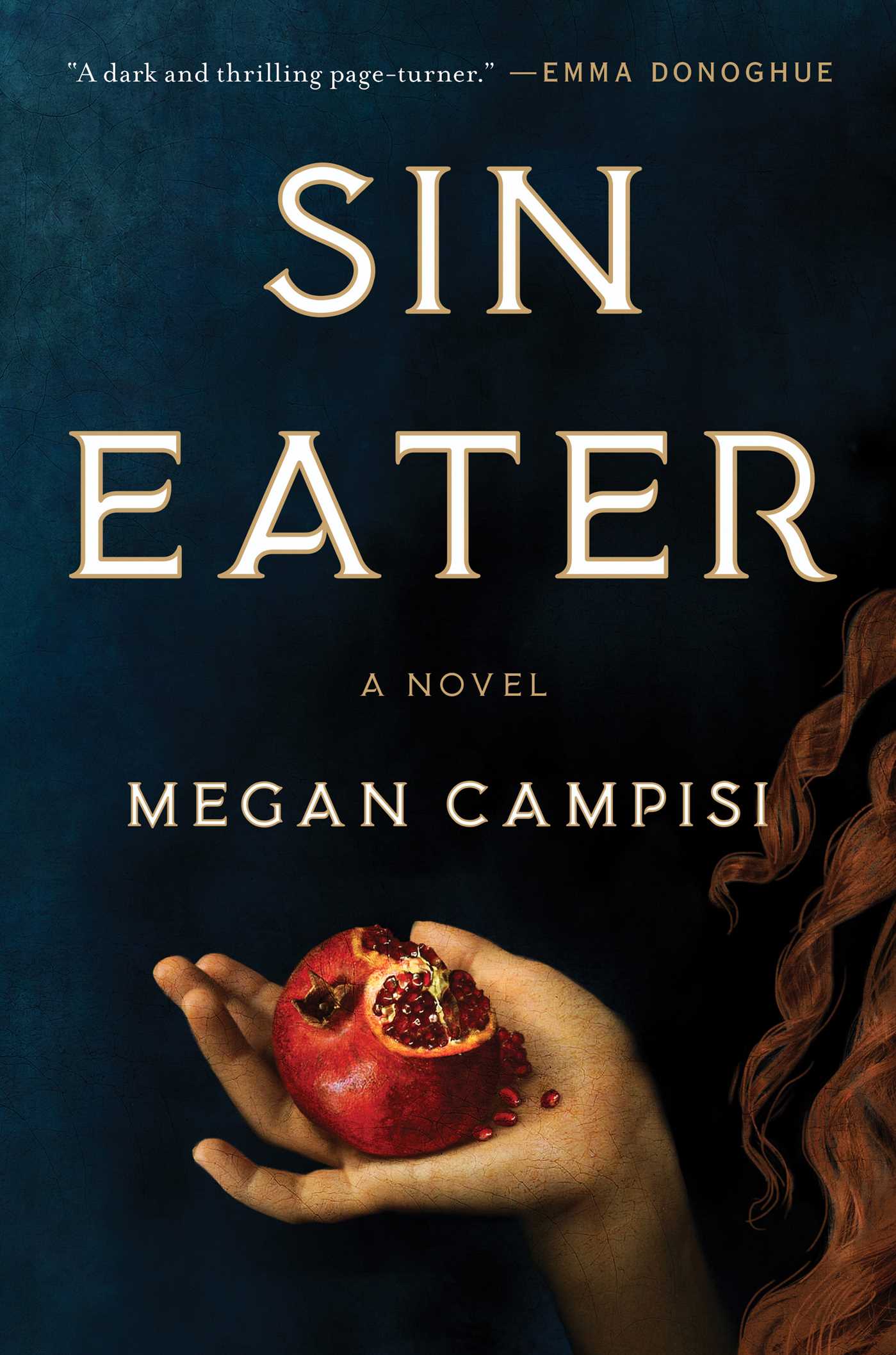
Sin Eater by Megan Campisi

In this enchanting alternate history, a Sin Eater consumes the misdeeds of others, and may have a chance to right some wrongs.

Megan Campisi’s Sin Eater opens with a 14-year-old girl named May being arrested for stealing a loaf of bread, in an alternate version of Elizabethan England. The royal family of Angland is entangled in court intrigue and murders, including of babes, to secure favored heirs to the throne, even considering marriage to the hated Northern lords. Common people work hard for a meager living; some starve unless given special permission from the queen to beg in the street. The penalties for petty crimes are high: vagrants have a hole “burned through the gristle of [the] ear with a hot iron as thick as a man’s thumb.” The penalty for a second offense is death.

In this cruel world, below even dung men and woad dyers in the social order, lies a cursed role: that of the Sin Eater. “It’s always women who eat sins, since it was Eve who first ate a sin: the Forbidden Fruit.” Marked by the iron collar locked around her neck and her tattooed tongue, she may be neither seen nor heard. She is called to deathbeds to hear the Recitation, a confession of sins; she translates these sins into foods, which the family will prepare for the Eating. By taking the sins of others into herself, the Sin Eater absolves the deceased. Every child in the street knows the basics. “Salt for pride. Mustard seed for lies. Barley for curses.” When a deer’s heart appears on a noblewoman’s coffin, the city’s older Sin Eater will not eat it, for the terrible sin it refers to was never confessed. She is tortured and killed, leaving May on her own to wrestle with a deadly royal plot.

Recently orphaned and terribly talkative, May is now forbidden to speak. Her apprenticeship as Sin Eater was both silent and short; she’s still learning which foods match the more esoteric crimes. In her favor, May discovers the strange power of the Sin Eater: afraid to touch her, people move out of her way, granting her access to prison cells and royal bedchambers. Chance introduces her to a group of fellow misfits, including a disfigured man, a leper and a roguish theater player. But she must solve the royal mystery alone and, just maybe, create a new fate for herself.

Sin Eater is a fully fleshed work of speculative fiction, abundant with the fine details of Elizabethan life and, of course, food. May is a damaged and sympathetic heroine, at once intelligent and innocent. This is an opulently imagined debut, horrific and weirdly beautiful, filled with earnest feeling as well as cruelty. Set aside time to read this engrossing novel in one go.


This review originally ran in the March 16, 2020 issue of Shelf Awareness for the Book Trade. To subscribe, click here.


Rating: 7 small loaves of bread.

Maximum Shelf: The Book of V. by Anna Solomon

Maximum Shelf is the weekly Shelf Awareness feature focusing on an upcoming title we love and believe will be a great handselling opportunity for booksellers everywhere. The features are written by our editors and reviewers and the publisher has helped support the issue.

This review was published by Shelf Awareness on January 29, 2020.


The Book of V. by Pushcart Prize-winner Anna Solomon (The Little Bride; Leaving Lucy Pear) explores the lives of three women, apparently unconnected yet increasingly intertwined as the pages turn. The braided result is moving, surprising, so touchingly detailed and authentic as to seem more real than life.

In biblical times, a king of Persia takes a second wife. Solomon’s epigraph comes from Elizabeth Cady Stanton’s The Woman’s Bible: “I have always regretted that the historian allowed Vashti to drop out of sight so suddenly.” This first wife simply disappeared: “No one knows. She’s gone.” Solomon takes steps to correct the oversight of Vashti, but she is more concerned with the second wife–Esther, a Jewish orphan girl, chosen by the king as his replacement queen against her wishes.

Esther, meant to be homely and invisible, tried to shrink from the spotlight but somehow charmed the king despite herself. She casts a long shadow here, telling her own story–how she resisted the role of queen, and later used it to save her people–and then influencing several lives that come later.

Lily and her family live in Brooklyn in 2016. Lily gave up her academic career to stay home with her children: two girls who keep asking her to read the Esther book to them, even though she is thoroughly sick of it. Her husband works as deputy director of programs for Rwanda at a major humanitarian aid organization. It’s not that Lily misses academia, but she’s a little dissatisfied with the life she traded it in for. She is also a second wife.

And then there is Vivian, wife of a senator from Rhode Island in the 1970s. Vee is the daughter of a senator’s wife who was the daughter of a governor’s wife. In D.C., she is torn between the women in her consciousness-raising group–“with their circle-talk and their red wine and unmade faces”–and the other senators’ wives: “They are dazzling, these wives of politicians and company presidents, these tigresses who openly dislike and disagree with each other.” Vee is a little of each–and a little contrarian, driven to thwart both.

The title, The Book of V., refers to Vee, to Vashti and surely, to a part of the female anatomy. “This is what the women’s group women insist on calling it. Vagina, [Vee] thinks dutifully, though the word disgusts her.” Solomon shows a careful attention to words. “A blowhard, Esther called him, perhaps not with that word but with another that meant the same in that time and place.” Her writing is lovely, incandescent; paradoxically, it has that ability that fine writing often has to disappear into the background, so that readers seem to hear the characters directly without a writer’s mediation at all.

Readers follow Esther as she is thrown into a pageant (in several senses of the word) against her will, by an uncle who hopes she will solve problems bigger than herself, problems that have been plaguing the Jewish camp outside the city walls. Vee challenges her husband’s authority repeatedly, finally disobeying him in the same way that, legend has it, got Vashti banished or killed. Lily struggles with an attraction to another woman’s husband, just as her mother takes ill.

Chapters alternate among the perspectives of these three women. Individually stunning, their stories also intersect and meet in unforeseen ways. Though each takes center stage in turn, it requires all three to form the complete picture. They illuminate each other. The women’s relationships with men are very much at issue: Esther’s unkind king and his more powerful minister; Lily’s essentially good but somewhat boring husband; and Vee’s rather sadistic senator. They are joined by other male characters, sex symbols and brothers and abusers. But relationships between women are privileged. The Bechdel test–the idea that a book (1) should have at least two women in it, who (2) who talk to each other, about (3) something besides a man–is easily passed. Esther, Lily and Vee are joined by many interesting women: one of the maidens forced alongside Esther to compete for the king’s favor; Lily’s inscrutable mother; an old friend of Vee’s; a fellow Brooklyn mom who makes suspicious attempts to befriend Lily.

Each story is gripping in itself, and to balance them in alternation is a trick; it is to Solomon’s credit that the reader moves so smoothly among them, always sorry to step away but eager to return to the next woman, so that the pages fly by with unusual momentum. For a novel to offer such delightfully realized characters as well as such taut pacing is a fine accomplishment. The interweaving of the women’s lives is cleverly done, hinted at early on (as with references to Vee’s senator as royalty, or Lily’s daughters’ interest in Esther) with a light hand, and then growing as past secrets come to light.

With tense, deft plotting, memorable characters and writing that glows with each sentence, The Book of V. is a striking effort that will leave readers long inhabiting the worlds of Vee, Lily and Esther.


Rating: 8 zipper pulls.

Come back Wednesday for my interview with Anna Solomon.

guest review: The Water Dancer by Ta-Nehisi Coates, from Pops

Ta-Nehisi Coates’ first novel is The Water Dancer, a victim of my high expectations I’m afraid; so this is an ambivalent, and very subjective, review. First, the challenges: an indirect narrative style that often confounds and obscures, with overworked symbolism and metaphor that just didn’t work for me. I appreciated the general sweep of the story and many key characters, and ultimately, the ‘message’ or ‘meaning’ I think it all carries. But ultimately the journey was not as satisfying as it may have been with a more comfortable form. Nevertheless, I match this with Whitehead’s The Underground Railroad, and films 12 Years a Slave and Harriet*, all providing healthy realistic images of slavery, and the human stories embedded in that history.

We follow first-person narrator Hiram Walker from a failing Virginia tobacco plantation (owned by his white father, who owns his slave mother), to a vibrant, diverse and urban Philadelphia before the Fugitive Slave Act, front-line base for the ‘Underground’; and then his return to the plantation. The story’s sweep is like the contrast of those places: from stifling oppression and decay, to liberating promise, and back again. That middle is also a high point in this work; it encompasses Coates’ version of important real characters and events at a time of social ferment wider than just abolition. Notably: William Still (a monumental historical figure whose book The Underground Railroad Records Coates credits in a brief Author Note); wonderful characterization of the vibrant city at a social moment in time that was creative and liberating; and Harriet Tubman, by that name a character in this story, including a slave-liberating foray into her native Maryland, based on fact. (It was uncanny and tremendously satisfying to see the wonderful film Harriet on opening weekend, just as her story was unfolding in my reading.) Sophie (focus of Hiram’s affection); episodic ally Corrine and her loyal aide Hawkins; the tragic Dr. Fields; and the whole White family in Philadephia – are all important and endearing supporting characters.

In his telling, Coates shows a sophisticated sense of history as he describes the workings of plantation economics, terribly destructive to human lives, rich naturally abundant soil and the values of a nation in the process of forming itself. The central idea that anchors Coates’ tale is one to embrace: nothing in this world is ‘pure’ – not simple, and not just one thing (except perhaps the evil institution of slavery, a touchstone never questioned by our protagonist and his cohort). It’s a lesson in dialectics, in nuance; life is messy and non-linear, throwing us unexpected curves, confusion and tragic irony. Individuals thought to be one thing, can surprise in their complexity. Bloodlines are all mixed up, connecting people in surprising ways, and not always predictive of their soul. Freedom is not a place one can entirely escape to; it is much more complicated than that. In all this, Coates offers useful space for observing both our history, and our human-centric world.

Given that I know Coates to be a thoughtful and helpful social observer, and a skilled writer, I suspect he wrote exactly the book he wanted to write. I also expect it will age well with me, and perhaps more perspective will emerge as Coates’ career matures.

Sounds like a careful and considered response, Pops, and thank you. This is why an unusual narrative structure is a risk. Metaphor can be overdone; and we all have different thresholds, of course. I appreciate you wondering how it will age with you, too, though.


*I want to acknowledge that the movie Harriet has seen some very mixed reactions. There have been some concerns (like about casting). There have also been some counterpoints; this source claims the white savior allegation is not factual. I thought Buzzfeed and Business Insider (of all places) did a decent job of trying to parse the controversies. (I haven’t seen the movie, so I’m just sampling a few other thinkers here.)

Galley Love of the Week: The Book of V. by Anna Solomon

Be among the first to read The Book of V. by Anna Solomon, a Shelf Awareness Galley Love of the Week. Presented on Mondays, GLOW selects books that have not yet been discovered by booksellers and librarians, identifying the ones that will be important hand-selling titles in a future season.

Anna Solomon (The Little Bride; Leaving Lucy Pear) offers a scalding, gripping story of three intertwined lives in The Book of V. The biblical Queen Esther, a 1970s Rhode Island senator’s wife and a former academic stay-at-home mom in 2000s Brooklyn have more in common than one might think. Holt editor-in-chief Serena Jones comments on “how similar–though they are actually separated by centuries–these characters’ stories feel, and how they converge and clash over the same themes. Agent Julie Barer observed how women’s lives have–and really more profoundly, have not–changed since biblical times.” Solomon’s storytelling is seamless and deeply engaging; readers will be living with Esther, Vee and Lily long after closing these pages.

Galley Love of the Week, or GLOW, is a feature from Shelf Awareness. View this edition here.

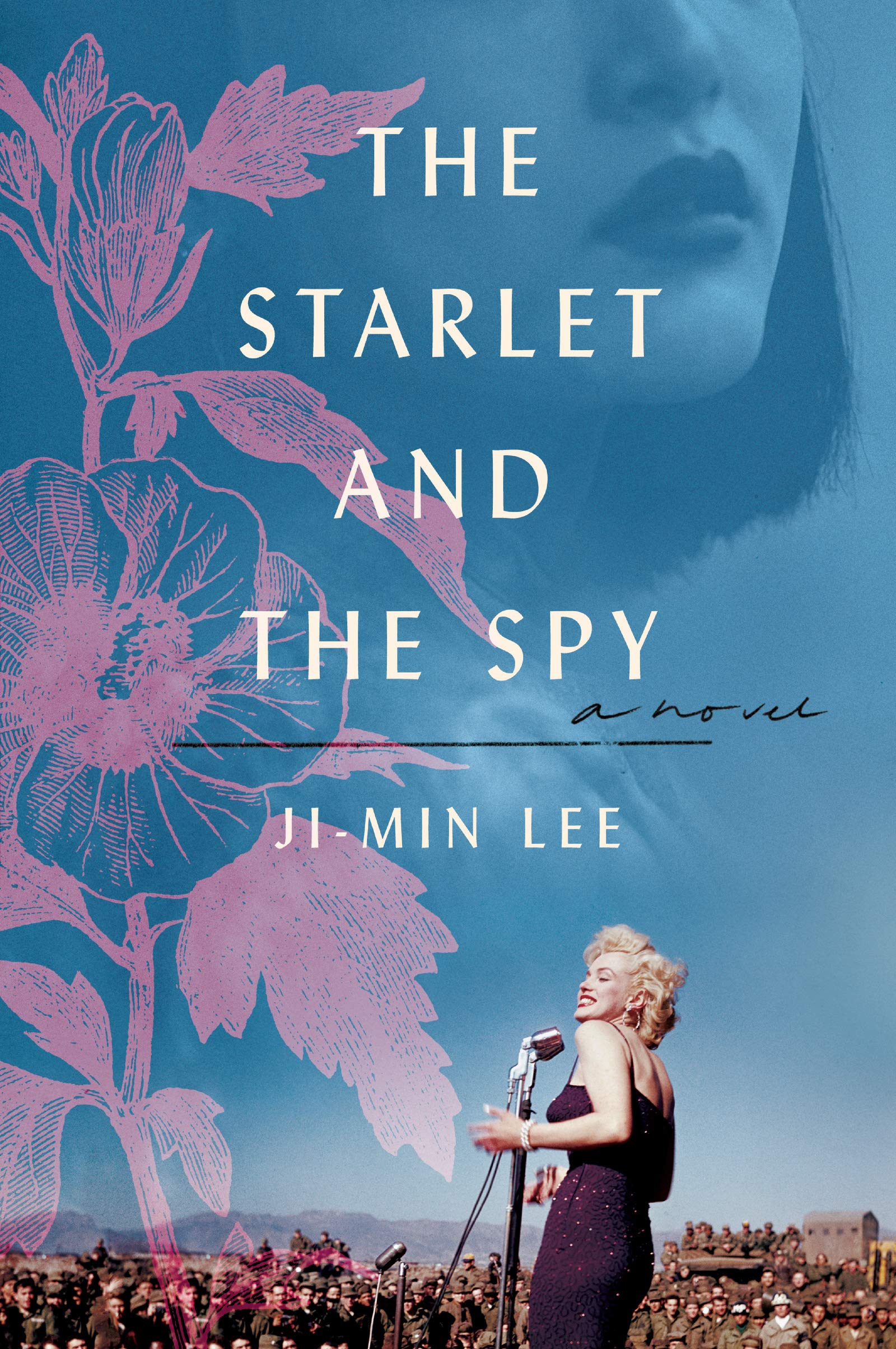
The Starlet and the Spy by Ji-Min Lee, trans. by Chi-Young Kim

In 1954 Seoul, a war-weary young Korean woman and Marilyn Monroe share a brief but crucial sojourn, and learn they have more in common than they thought.

“I go to work thinking of death. Hardly anyone in Seoul is happy during the morning commute, but I’m certain I’m one of the most miserable.”

At the opening of Ji-Min Lee’s The Starlet and the Spy, Alice J. Kim works as a translator for the American forces a year after the armistice and ceasefire. Her life and outlook are as dour as these introductory lines represent: the traumas of the war have left her hopeless and joyless, taking her day-to-day life as a series of tasks to be completed. When her boss tells her about an upcoming assignment, he expects she’ll feel excited and honored to serve as escort, interpreter and handler for Marilyn Monroe, on a tour to entertain American troops. Alice is unmoved–what does she care for an American movie star?

During the course of four days with the bombshell, however, Alice will be forced to broaden her perspective on her own life and options. Her two former lovers both reappear, shaking her understanding of what exactly happened during the war. There seems the hint of a chance that she will find someone she’s lost. As Alice struggles with her will to live, the American beauty surprises her. Stunning, sexy, charismatic, yes; but Monroe is also unexpectedly approachable. And she will make a small but essential difference in the life of the less famous woman.

Lee’s novel is rooted in historical fact and inspired by two photographs: one of Monroe performing for American troops, in a slinky dress, in the snow; the other of an unknown female Korean interpreter. It is the intersection of these two lives that interests her. Two women, one famous, the other a novelist’s blank slate. What if they had met?

The Starlet and the Spy is bleak but whimsical and, yes, hopeful. Seoul has been beaten down; food is scarce and orphanages overflow. Alice dyes her hair with beer and steals pornography from work to sell to her landlady. A former artist, she doesn’t draw anymore; being forced to create endless portraits of Stalin during the war has dulled her passion, another loss that it seems she will not recover from. But she may have more friends than she thinks she does. Chi-Young Kim’s translation is both spare and emotionally evocative, suiting a narrator who is simultaneously desolate and childishly yearning.

Born of a curiosity about human relationships in unusual times, The Starlet and the Spy asks the questions: What if we met across a divide? What if a despairing young Korean woman reached into Marilyn Monroe’s makeup bag for a lipstick, or a way out? In a decidedly optimistic turn, Lee leaves her ending open, and her reader free to wonder what might be next for Alice.


This review originally ran in the August 5, 2019 issue of Shelf Awareness for the Book Trade. To subscribe, click here.


Rating: 7 propaganda fliers.

movie: Matewan (1987)

Having recently visited the museum, I knew I had to track down this movie, which was not easy – thanks Barrett for your help!

Matewan is the retelling of the story of Bloody Mingo County and the Battle of Matewan, where the humble coal miners stood up to the bosses and lives were lost. It’s an iconic story in American labor rights history, and it’s movingly told here.

We begin with Joe Kenehan (Chris Cooper, in his film debut) arriving in the town of Matewan, West Virginia as a union organizer sent to help the locals with their ongoing strike. (I was immediately reminded of the adage that there are only two stories in the world: a person goes on a journey, or a stranger comes to town.) On the same train that brings Kenehan are a group of Black miners from Alabama who are being brought in as strike-breakers; the local miners attack these men before they even reach Matewan, presaging racism and violence that will plague organizing efforts. Kenehan exhorts the locals, however, telling them that it’s workers against bosses, not white against Black or anybody else (there is a recently arrived group of Italian miners in town, too).

It’s uphill work getting the white WV miners to let Blacks and Italians into the union, just as it’s uphill work getting the latter groups to strike, but Kenehan’s speeches, and the poor conditions and disrespect of the mine bosses, do achieve this. Everyone puts down their tools; the miners and their families construct a tent city on the edge of town (as their housing is all company-owned), and the workers bumpily navigate their union. Meanwhile, hired guns with the Baldwin-Felts Detective Agency try repeatedly to do the work of intimidation: evictions, repossession of food and furnishings, and general pressure and violence. They are repeatedly thwarted by the town’s major and sheriff, and once by armed “hill people” from outside of town. For a time, it looks like the ragtag union bunch are well-positioned to win their fight, because of the tight local community. But hanging over this impression is knowledge that the company, and Baldwin-Felts, has only to bring in more and bigger guns, and eventually the town will be outnumbered.

The action of Matewan proceeds from Kenehan’s arrival through organizing and early conflicts and concludes just after the Battle of Matewan, the shootout where the mayor and Kenehan, and seven Baldwin-Felts guys, are killed. Voiceover by Danny from a later date (he is now a grown man, and still a coal miner) indicates that the union was eventually defeated in the West Virginia Mine Wars by the US military, and that conditions have more or less returned to their starting point.

Remarkable characters include the boarding-house proprietress who initially puts Kenehan up – a miner’s widow – and her teenage son Danny, a coal miner, budding Baptist preacher, and passionate union man; Few Clothes (delightfully played here by James Earl Jones), leader of the Black contingent; a flirtatious widow with a role to play; and two miners’ wives in the camp, one West Virginian and one Italian, who begin as antagonists but forge a friendship even without benefit of a common language. Several miners, union men and Baldwin-Felts thugs play individual roles, as well, but these are less developed personalities. While there is no question that this is a film with a message and that takes a side, these flawed human characters make it something more and better than propaganda.

While Few Clothes, the sheriff and mayor, and several union men and Baldwin-Felts guys were true historical characters, Kenehan and Danny are both inventions for the purpose of this film. On the one hand, I find they work very well as central characters to focus our sympathies and make the story come alive. On the other hand, I regret that it took fictional characters to do this work, and I wonder if the same emotional results could have been achieved using only true figures. I believe so; but I guess it would have been harder to focus it, with a larger cast and no one central hero like Kenehan. But isn’t that a beautiful fact of the union, that there is no one, single hero?

True events are also compressed, and sometimes conflated. I feel more forgiving of this move; this being not history, but a stylized version thereof, it’s okay with me that we made the storyline a little tighter and easier to follow, and more dramatic for its brevity. Inserting a fictional central hero feels less faithful to me that compressing a timeline. Maybe that’s just me? At any rate, if you’re learning the history of Matewan and West Virginia’s Mine Wars, do look further than this film, excellent though it is. (This should go without saying and applies to all historical fiction.)

Although a sad story and therefore hard to watch, I found this movie also beautiful and well done. I appreciated the cinematography, darkness and shadow moving, the feelings of tragedy and betrayal; it made me cry. I highly recommend it, if you can find it. Know your history, friends.


Rating: 7 rabbits.

The Darwin Affair by Tim Mason

Playwright Tim Mason’s first adult novel, a rousing mystery set in Victorian England, has it all: thrills, engrossing characters, taut pacing and historical interest.


Playwright Tim Mason’s first adult novel, The Darwin Affair, is a rousing mystery set in Victorian England. In 1859, the publication of Charles Darwin’s On the Origin of Species poses a menace to the powers that be, and some of society’s upper echelon want him squelched. Amid the conspiracy lurks a tall, shadowy man with deep-set eyes; death seems to follow wherever he goes. The dogged Chief Detective Inspector Charles Field is on the case, although his findings are not necessarily welcomed by all. Field tracks his suspect from meat market to tavern to the royal court, from England to Germany, and even to the high-profile Wilberforce-Huxley debate on evolution at Oxford. Scenes of crashing action and adventure include a racing carriage on a collision course with a speeding train. With cameos by Charles Darwin, Charles Dickens, Karl Marx and a variation on Typhoid Mary rounding out the peripheral cast, this is a wild tale that engulfs the reader from start to finish.

Satisfyingly plot-driven, then, The Darwin Affair also offers very engaging characters: approachable Albert, Prince Consort; Queen Victoria, haughty but not humorless; a comic Marx; and a gracious, gentle Darwin.

But Mason’s less famous hero definitely steals the show. Field has difficulties with authority that will be familiar to fans of contemporary fictional detectives like Harry Bosch and Dave Robicheaux. Mason’s playwriting skills are evident in realistic dialogue and well-constructed, easily envisioned scenes. Readers of historical fiction, murder mysteries, action/adventure and thrillers will be equally entertained and perhaps edified: beneath the excitement lie thought-provoking questions about class and order, the interplay of science and religion and intellectual curiosity. The Darwin Affair has it all: thrills, engrossing characters, taut pacing and historical interest.


This review originally ran in the June 21, 2019 issue of Shelf Awareness for Readers. To subscribe, click here, and you’ll receive two issues per week of book reviews and other bookish news.


Rating: 7 monkeys.