
Maximum Shelf: Church of Marvels by Leslie Parry

Maximum Shelf is the weekly Shelf Awareness feature focusing on an upcoming title we love and believe will be a great handselling opportunity for booksellers everywhere. The features are written by our editors and reviewers and the publisher has helped support the issue.

This review was published by Shelf Awareness on April 2, 2015.


church

Leslie Parry’s debut novel, Church of Marvels, is set in 1895, in phantasmagorical New York City, and stars a weird, lovable cast. Four protagonists share the spotlight in alternating chapters: recently estranged twin sisters Belle and Odile, orphaned loner Sylvan Threadgill, and the mysterious Alphie.

Belle and Odile’s mother was the indomitable and fabled Friendship Willingbird Church, a runaway who at age 14 dressed as a boy to fight for the Union army, and later established her own circus theater on Coney Island, called the Church of Marvels. After the Church caught fire and Friendship died in its embers, Belle (ever the adventurer) left for the city with a secret that readers must wait for and wonder about. Odile stayed behind, wondering herself at her sister’s abandonment. Belle writes home: “You, dear sister, have always been the brave one, the good one, the strongest of all.” But Odile is not the brave one, and her sister’s letter illuminates nothing about Belle’s new life.

Sylvan Threadgill earns his wages as a night-soiler, cleaning out tenement privies on the Lower East Side. He moonlights by competing in fights that take place and are bet upon in back rooms and on the docks. In the novel’s opening pages, Sylvan, at work one night, finds an unusual treasure in the filth: a baby girl, pale and green-eyed, “with a small nose and a dimpled chin like a pat of butter someone had stuck their thumb in.”

Alphie is an undertaker’s wife with a scandalous past who awakes one morning, disoriented, to find herself imprisoned in the asylum on Blackwell’s Island. She is desperate for rescue, sure that her husband will come, sure that her plight is another evil trick of her mother-in-law’s.

These four characters occupy separate stories for much of the book, and are joined by a colorful supporting cast. There are actors from the sideshow: a boy who is half girl, a girl with four legs, the man who throws knives at Odile as she rotates slowly on a wheel. There is the woman Sylvan turns to for help with the baby, and the very different woman Belle turns to for a very different sort of help. A strange parade of children who dwell underground put on a show for Odile when she reaches Manhattan, with implications she takes personally; Alphie’s fellows, from her past life, shed a harsh light. This array is completed by the baby Sylvan liberates. An orphan himself, he is unable to turn away from her stark need. But a part-time pugilist who was never parented himself makes an inapt caretaker for a newborn.

However fantastical they may be, these eccentrics do not populate a fantasy, but a realistic, heartbreaking and sympathetic story of resilience and connections lost and found. Appropriately, the action of the novel begins with Odile’s breaking character. She had found familiar if uncomfortable circus work with another theater company following her mother’s death, but now leaves to pursue Belle, a journey that leads her into underground opium dens, a hothouse flower nursery curated by an enigmatic woman, and the back alleys of the tenement district. She finds an unlikely ally in her hunt for her sister, just as Belle finds her own, “in this city [where] the lights burn ever brighter, but they cast the darkest shadows.” In chapters alternating among third-person perspectives, we track the movements of the four protagonists as they close in, geographically and philosophically, on the end of their individual and shared stories.

Parry’s central players are each mysterious and multi-layered, and readers will receive shocking new intelligence in the final pages of this masterful novel. In gradually, teasingly unveiling myriad deceptions, Parry shows perhaps her greatest strength.

The atmosphere she evokes is both whimsical and grotesque. The gruesome, appalling asylum, roiling with violence and refuse, and the babies abandoned in privies paint a brutally harsh picture. But the free-wheeling circus performers and the Church family history contribute a note of fancy. Alphie’s life story in particular provides a showcase for this dualism, where horror meets magic–she once worked on the street as a “penny Rembrandt,” painting men’s faces with great skill to cover up the bruises and sallowness of their dissipated nights, so that they could go home to their respectable lives. Church of Marvels demonstrates fascinating characterization and atmosphere as well as a riveting plot.

The bizarre and fanciful world contained in New York City at the turn of the last century is a playground for Parry’s magnificent, alluring prose. These enchantments make Church of Marvels memorable. But it is the compelling characters, both larger-than-life and poignantly real, that exhibit beauty, wonder and distress, and will most beguile readers in the end.


Rating: 7 swords swallowed.

Come back Wednesday to read my interview with Leslie Parry.

Tug-of-War by Judith Somborac

This touching story plainly told provides a captivating view of wartime Serbia, its tensions, and its effects on ordinary working people.

tug

Judith Somborac’s Tug-of-War follows the fictional experience of one young woman’s coming-of-age in World War II Serbia. Teenage Miriana sees upheavals to the size and shape of her household, grasps for fortitude, and glimpses hints of love. Her war years are stressful but formative, and the resulting tale is compelling and heartfelt.

…Click here to read the full review.


This review was published on March 3, 2015 by ForeWord Reviews.

growing


My rating: 6 Christmases.

Luigi’s Freedom Ride by Alan Murray

A novel of love and bicycles, both funny and poignant, beginning in Mussolini’s Italy and traveling around the world.

luigi

Alan Murray (The Wealth of Choices; Showdown at Gucci Gulch) tries his hand at fiction with Luigi’s Freedom Ride, and achieves a rare blend of humor, solemnity and grace in this sweeping tale. Luigi Ferraro was born in 1921, in a small Tuscan village where he learned metalworking and a love of bicycles from his Uncle Cesare. Under Mussolini, Luigi is conscripted into the Italian army with his two best friends and trains in the cycling corps; he escapes and joins a group of partisans resisting fascism, and experiences both love and loss. The heartbroken young man then sets out on an international tour via bicycle and train, visiting Jerusalem and Sri Lanka and circumnavigating Australia, that “furthest place” he’d been seeking. Finally, Luigi dismounts in Sydney, where unexpected good fortune awaits him. With friends, family, love and pain spread around the globe, will he ever make it back to Tuscany?

Murray’s quirky tone is absolutely charming, managing to express both the brutality and ugliness of war as well as the sweetly naive foibles of a young man learning about the wider world. Luigi is deeply endearing: he is well-intentioned but inexperienced, confounded by the English dialects of the Scots, Australians and Americans he meets, loyal and quick to love. Employing the bicycle as a symbol of freedom, fun, adventure and forward movement, Luigi’s Freedom Ride is a novel about hope, self-determination and fresh starts, both heartfelt and surprisingly optimistic.


This review originally ran in the February 24, 2015 issue of Shelf Awareness for Readers. To subscribe, click here, and you’ll receive two issues per week of book reviews and other bookish fun!


Rating: 8 clicks.

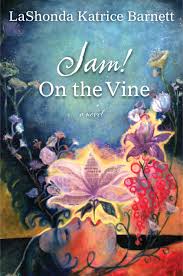
Jam! on the Vine by LaShonda Katrice Barnett

The vivid life of an African American newspaperwoman, civil rights activist and lover both entertains and inspires.

jam

LaShonda Katrice Barnett’s debut novel, Jam! on the Vine, is filled with color, suffering and feeling. Barnett’s protagonist Ivoe Williams is inspired by the life of Ida B. Wells-Barnett, newspaperwoman, suffragette and civil rights leader, and she sparkles from the first page, when she steals newspapers from her mother’s white employer to revel in the smell of the ink and the magic of print. Her mother, a Muslim and a former slave, is a talented gardener and cook, her father a masterful storyteller, so she is surrounded by art and encouraged in her education. The plucky Ivoe, a native of rural Texas born just after Emancipation, receives an unlikely scholarship to attend college in Austin, where she studies printing and journalism. She returns home overqualified for the kind of work available to young black women. Under the forces of power and prejudice, the Williams family will ultimately fracture and be forced to migrate to the city, where new challenges await. Ivoe finds love and purpose in work, eventually founding a Kansas City newspaper called Jam! on the Vine, which pursues the rights of African-Americans and women.

The connections to Wells-Barnett’s life are vague; the vibrancy of Ivoe’s trials and loves are a credit to Barnett the author. Sensual evocations are among Jam!‘s greatest triumphs: the Texas dirt and the tomato vines it sprouts, the savory jam crafted by Ivoe’s mother from their fruit, the family’s music and laughter, blood and pain and pleasure. Ivoe is stimulated by her study at the university, the tactile challenge of setting type and the intellectual exertions of politics and social justice. She grows from a gutsy child to become a famished student, then a frustrated young woman and, finally, finds love and joy and danger, in the Red Summer of race riots in 1919.

It is no exaggeration that the beautifully written Jam! on the Vine recalls Alice Walker and Zora Neale Hurston. Sensuality, pleasure and pain, as well as the righteous difficulties of the early civil rights movement, yield a story that is passionate, inspired and lively. Barnett’s (editor of I Got Thunder and Off the Record) prose flows with rhythm and feeling, and her characters both major and minor are intriguing. While Ivoe’s hard, important work and her love of written words will endear her especially to readers interested in the history of journalism and the civil rights movement, this literary novel has broad appeal.


This review originally ran in the February 3, 2015 issue of Shelf Awareness for Readers. To subscribe, click here, and you’ll receive two issues per week of book reviews and other bookish fun!


Rating: 7 jars.

West of Sunset by Stewart O’Nan

F. Scott Fitzgerald’s final, less glorious years in Hollywood, fictionalized with nuance and grace.

sunset

“A poor boy from a rich neighborhood, a scholarship kid at boarding school, a Midwesterner in the East, an Easterner out West,” F. Scott Fitzgerald “knew better than anyone how to live in an imaginary world.” In West of Sunset, Stewart O’Nan (The Odds) fictionalizes Fitzgerald’s final four years in the late ’30s, spent in Hollywood scraping by, writing and editing screenplays while Zelda rides out her own ups and downs at Highland Hospital. Their years of wealth, fame and adventure are behind them, and though he lives modestly by Hollywood standards, Scott’s finances are increasingly desperate, with Zelda’s hospital bills to pay, their daughter Scottie’s tuition and his own living expenses.

Between pills to sleep and pills to wake up, Scott struggles to hide his heavy drinking from his employers and eventually falls in love. He continues to visit Zelda as her mental illness persists and sees Scottie on holidays, while his girlfriend, Sheilah Graham, barely tolerates his drinking (not to mention his marriage). In these years, Fitzgerald begins but does not finish The Last Tycoon, his last manuscript.

O’Nan brilliantly, sensitively portrays Fitzgerald’s internal drama with a tone of wry wit and doom. The nuances of Zelda’s character are apt and appropriate, and appearances by Dorothy Parker, Hemingway and Humphrey Bogart add color and humor. O’Nan’s characterization and dialogue are spot-on, and his choice of the less-glamorous years of his subject’s life yields a beautiful, elegiac novel worthy of its model.


This review originally ran in the January 13, 2015 issue of Shelf Awareness for Readers. To subscribe, click here, and you’ll receive two issues per week of book reviews and other bookish fun!


Rating: 8 Cokes.

Screenplay by MacDonald Harris

An enthralling, time-traveling version of Alice, in dual wonderlands of 20th-century Hollywood.

screenplay

Originally published in 1982, Screenplay by MacDonald Harris (The Balloonist) exhibits remarkable sleight of hand with two parallel versions of Los Angeles. Alys was raised in the late 20th century by fabulously wealthy, unconventional parents and orphaned at age 18. With no personal connections and unlimited money to burn, he amuses himself with unusual old books and music and soulless sexual liaisons. An odd old man shows up at his doorstep and requests to rent a room–though no room has been advertised. He introduces himself as Nesselrode, a film producer, and says he can get Alys into pictures.

Soon Alys’s tenuous link to modern 1980s L.A. falters as he steps through a screen into black-and-white 1920s Hollywood with Nesselrode as a surly, time-obsessed guide. In this alternate world, he falls in love with a beautiful starlet, but can they make a life together in her time? Or in his?

In addition to the unmistakable overarching reference to Alice’s Adventures in Wonderland, Harris’s novel recalls the moral questions of The Picture of Dorian Gray and Alys himself could have stepped from the pages of The Great Gatsby. Even with such classics for comparison, Screenplay is a masterpiece of darkly playful cunning. Harris’s evocative prose, in Alys’s disturbingly clinical, coldly self-indulgent first-person narrative, is both intoxicating and disquieting; the altered reality here is more sinister and sensual, even erotic, than in Carroll’s Wonderland. The tension in this memorable and singular dreamscape builds with perfect pacing to an ending that raises more questions than it answers.


This review originally ran as a *starred review* in the December 30, 2014 issue of Shelf Awareness for Readers. To subscribe, click here, and you’ll receive two issues per week of book reviews and other bookish fun!


Rating: 8 toasters.

book beginnings on Friday: Jam! on the Vine by LaShonda Katrice Barnett

Thanks to Rose City Reader for hosting this meme. To participate, share the first line or two of the book you are currently reading and, if you feel so moved, let us know what your first impressions were based on that first line.

jam

The first novel from a professor with several nonfiction titles to her name, Jam! on the Vine has both a beautiful cover and a striking title. It’s set in Texas, and stars a fictional version of Ida B. Wells-Barnett. We begin:

Ivoe liked to carry on about all she could do. Still, how to mend a broken promise had her beat.

I think this is both sweet and intriguing. As opening lines, they’ll do. As ever, stay tuned…

This quotation comes from an uncorrected advance proof and is subject to change.

Teaser Tuesdays: West of Sunset by Stewart O’Nan

Teaser Tuesdays is a weekly bookish meme, hosted by MizB of Should Be Reading.

sunset
A new novel is coming out about F. Scott Fitzgerald’s final years, spent in Hollywood eking a living while Zelda wobbled along at Highland Hospital. You know I’m all over this one. Just behold the characterization in these lines.

…as he cleaned out the closets and dresser drawers, he discovered empties he couldn’t remember hiding. He would have said he’d been good about drinking, but he’d only been here six months and just upstairs there were a dozen bottles. He gathered them in a burlap sack, waited till the night watchman had passed and stuffed them deep in Bing Crosby’s trash.

And I love the oddball addition of Bing, that this suffering drunk, sordidly hiding his empties in somebody else’s trash, hid them in Bing‘s trash. Because that was his world.

I think it’s going to be a good one. Any Stewart O’Nan fans here?

This quotation comes from an uncorrected advance proof and is subject to change.

Maximum Shelf: Wolf Winter by Cecilia Ekbäck

Maximum Shelf is the weekly Shelf Awareness feature focusing on an upcoming title we love and believe will be a great handselling opportunity for booksellers everywhere. The features are written by our editors and reviewers and the publisher has helped support the issue.

This review was published by Shelf Awareness on November 25, 2014.


wolf winter
“It’s the kind of winter that will remind us we are mortal. Mortal and alone.”

In 1717, the Swedish Laplands are home to indigenous nomadic Laplanders and a mere sprinkling of Christian settlers. A new family has just arrived, fleeing an enigmatic unpleasantness in their native Finland, to take over a vacant homestead on the shoulder of beautiful but harsh Blackåsen Mountain. Frederika is 14, Dorotea six; their mother, Maija, is strong and resourceful, while their father, Paavo, is so crippled by vaguely defined fears that he seems to disappear even in the ever-present light of summer. In the opening pages of Cecilia Ekbäck’s debut novel, Wolf Winter, the girls discover a dead body on the mountain: a man, with his torso torn open. Maija rushes to the scene and is told by other settlers he was killed by wolves, or a bear. But the cut is long and clean, nothing has fed upon the corpse, and she wonders. She picks up a small item off the ground nearby.

The settlers do not live close to one another; it requires a purposeful hike to visit with a neighbor. Nonetheless, there is a priest in the village–a place generally vacant, where the settlers gather for Christmas and several weeks after, as required by the King–under whose purview a murder might fall. Just as Maija feels compelled to investigate the death of a man she never knew, the priest has his own orders, and his own secrets as well.

In the autumn, as the days in this far northern land shorten, Paavo leaves to find work far away. Maija capably runs her remaining household, and frustrates her neighbors, who feel that a woman should not speak at meetings. Frederika is haunted by the dead man she and her sister found. She begins to discover certain strengths, or powers, taught by her great-grandmother. Is she being haunted, or is she calling the dead? Frederika seeks guidance from the Laplanders, who used to commune with the spirits, but they have been (nominally) converted to Christianity by the Swedish king. And the priest remains a figure of mystery: Why investigate the death on Blackåsen Mountain? What is he hiding? While always told in third person, the perspective shifts subtly, between that of Maija, Frederika and the priest.

As winter falls, there is a palpable feeling of danger on the mountain and in the scattered, tenuous community. Paavo does not write home, the cold intensifies, food is scarce. Maija feels a continuing urge to solve the mystery of the murdered man on Blackåsen, which makes her no friends, and the priest clearly has motives of his own. War looms in the background, frostbite in the foreground. Maija cannot be sure which of the Swedish settlers she might be able to trust; each time she turns to a new acquaintance, she receives a cold shoulder or an alarming intuition. Even her daughter Frederika feels unreachably distant in their tiny, draughty house. Both Frederika and Maija attempt alliances with the nomadic Laplanders who move through their lives, but each gets less than she’d hoped. And Dorotea, seemingly too small to engage in adult machinations, is in danger from the obvious as well as the most surprising and sinister of threats.

Wolf Winter‘s scope is enormous. Maija struggles to keep her family afloat; struggles for autonomy and reason in a community ruled by secrets, fear and corruption; and seeks a voice as a woman in her own fate. Several levels of organization push and pull against one another: the household, the loose network of homesteads, the village which is only inhabited in darkest winter, the church and state, the King’s decrees and the wars he engages in–all will eventually supply tension in a story set on a sparsely populated and apparently cursed mountain.

Ekbäck imbues her tale with a sense of foreboding from the very start, and her austere writing matches the landscape: occasionally colorful but often in muted shades of gray, stark, cold and unforgiving. The range of topics touched upon–women’s place in society, isolation and community, political corruption, family, the power of superstition and fear–is daunting, but Ekbäck never attempts too much. Instead, the questions her characters ask themselves do the work of the novel’s examinations. Frederika struggles with her ability to see things that others do not; Maija resists such a possibility, to keep a grip on her family’s survival; and the priest strains to maintain the appearance of well-being.

The strengths of Wolf Winter clearly begin in its atmosphere, masterfully chilling with its literal weather–particularly a deadly snowstorm–as well as the isolation and withdrawal practiced by almost every character. Ekbäck’s pacing is expert as well, tension building as the snow rises and the settlers gather together. The characters’ secrets are many, and are revealed slowly throughout, up to the final pages. Even the characters more sparingly described are engaging; the central characters are deeply, thoroughly captivating. In the end, multiple faceted mysteries add to the allure of a debut novel that is both frigidly unnerving and wise, and ultimately satisfying in its resolution.


Rating: 7 toes.

Come back Wednesday for my interview with Ekbäck.

book beginnings on Friday: Wolf Winter by Cecilia Ekbäck

Thanks to Rose City Reader for hosting this meme. To participate, share the first line or two of the book you are currently reading and, if you feel so moved, let us know what your first impressions were based on that first line.

wolf winter

Wolf Winter is set in northern Sweden in the 1700’s – a heck of a dramatic setting, and as potentially chilling as its title suggests. It begins:

“But how far is it?”

Frederika wanted to scream. Dorotea was slowing them down. She dragged behind her the branch she ought to be using as a whip, and Frederika had to work twice as hard to keep the goats moving.

Tamely enough, I’d say. But I bet it ramps up…

This quotation comes from an uncorrected advance proof and is subject to change.