Under the Wide and Starry Sky by Nancy Horan (audio)

starryI love-love-loved Nancy Horan’s Loving Frank, so I was easily sold on the idea of this, her second novel, on audiobook. Under the Wide and Starry Sky is the story of Fanny Van de Grift Osbourne, an American woman who fled a troubled marriage when she took her three children with her to Europe to pursue her studies in the arts. There, Fanny met a young Scotsman, a sickly lawyer with a passion for writing rather than the law. This man, 10 years her junior, is Robert Louis Stevenson. He is attracted to her first; her reciprocation comes a little later; but they end up in a passionate love affair, complicated by her married-with-children status and his family’s disapproval (of his writing, as well as of Fanny as an adulterer and an American). She goes back to California; he follows her; she eventually divorces, and they marry. Fanny and Louis (as he is called) live in a wide variety of locations all over the world, as he battles persistent health problems and writes such classics as Treasure Island and Dr. Jekyll and Mr. Hyde.

As Loving Frank touched on the life of the more-famous Frank Lloyd Wright while focusing on his longtime mistress Mamah Borthwick, so does this story cover Stevenson by covering his wife. Fanny is brave, and strong-willed, and protective of her own, but also strong-tempered. She is creative, and sees herself as an artist in her own right – a painter, a writer – but is overshadowed by Louis. His health is best when at sea, while she gets deathly seasick as soon as she steps aboard. Their romance, their shared life, is deeply felt, ardent, and loving, but also rocky; both are passionate people with strong personalities, and they have their troubles.

This novel was not the overwhelming success for me that Loving Frank was, although I certainly enjoyed it. Both books are novels, works of fiction, but also shed a great deal of light on the real lives of men (and women) I didn’t know much about. As I’ve discussed before, fiction is not the most reliable source of knowledge, but I know more now than I did, and I won’t go writing any nonfiction monographs based off this reading (in other words, good enough). More, I enjoyed getting to know both strong women, Mamah and Fanny. However… Under the Wide and Starry Sky slowed down for me considerably in the middle. This might be partly my fault. Due to my own life’s events, I slowed way down in my listening patterns; maybe I was too far away from regular “reading” to appreciate the rhythm of Horan’s writing. But I think more objectively that the story of Louis and Fanny was faster-paced and more engaging early on, during their courtship and the grand achievement of their marriage, and later on, as they battled some significant late-life challenges, than it was in the middle when they bickered with friends and set up a few different homesteads. Also, I think Mamah got the spotlight of Loving Frank much more decisively, where Louis was a stronger costar in Under the… Sky. This is a loss from the feminist perspective (that I suspect Horan was pursuing, and that is part of her books’ attraction), of giving the women behind these men a little of the focus and attention they deserve. On the other hand, Stevenson himself was a great character to get to know (and I loved the Scottish accent as performed by Kirsten Potter), so that if you were not concerned about the feminist angle, you might be happy to have more Louis and less Fanny. Frankly, she was a little less likeable to me.

Although it lacked the magic sparkle that made Loving Frank a near-perfect achievement in my book, Under the Wide and Starry Sky was enjoyable, and I will miss Fanny and Louis in my life. For historical fiction about the strong women behind their better-known strong men, I continue to recommend Nancy Horan. And Potter’s narration was nuanced, had personality, and improved the experience.


Rating: 7 cacao seeds.

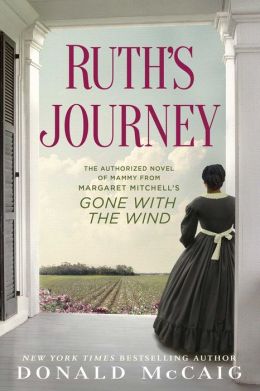
Ruth’s Journey: The Authorized Novel of Mammy from Margaret Mitchell’s Gone with the Wind by Donald McCaig

A familiar, but not unoriginal, expansion on a beloved character from a classic American epic.

ruth

In Ruth’s Journey: The Authorized Novel of Mammy from Margaret Mitchell’s Gone with the Wind, Donald McCaig (Rhett Butler’s People) tells the full story of Scarlett’s beloved nursemaid. He begins in France with Miss Solange, a wealthy heiress who travels to Saint-Domingue (now Haiti). There she takes in a local child to be part servant, part daughter, and names her Ruth, then moves to Savannah. Switching focus to Ruth, McCaig details her eventual brief marriage to a free man in Charleston, years of tragedy and rebellion, and her return to Savannah.

Though McCaig does touch a bit on Scarlett’s well-known story, the bulk of the narrative is focused on Ruth’s early life: the voyage to the U.S., her transition to adulthood, her loves and losses, and the moment she deliberately gives up her name and identity in favor of a new moniker: Mammy. Miss Solange has a daughter, Ellen, who in turn gives birth to the memorable Katie Scarlett O’Hara. Where Scarlett is petulant, Mammy is resilient. Through decades of love, death and betrayal, she consciously puts on a smile. She is cursed to foresee the ugly futures of those she cares for, but, as she repeats to herself, it is not for mammies to speak all that they see.

McCaig echoes the saucy, tongue-in-cheek tone of Mitchell’s classic. Mammy’s story is complex, and she commands respect. Lovers of Gone with the Wind will be the most obvious fans of Ruth’s Journey, but it stands on its own merits as a sweeping epic of time, place and history, thoroughly worthy of its inspiration.


(Final comment: Those readers who were concerned with the racial insensitivity of Mitchell’s original will not find any clear redemption or compensation here; but McCaig’s treatment is respectful and nuanced, certainly no worse and arguably slightly better than the classic in this regard.)


This review originally ran in the October 24, 2014 issue of Shelf Awareness for Readers. To subscribe, click here, and you’ll receive two issues per week of book reviews and other bookish fun!


Rating: 7 husbands.

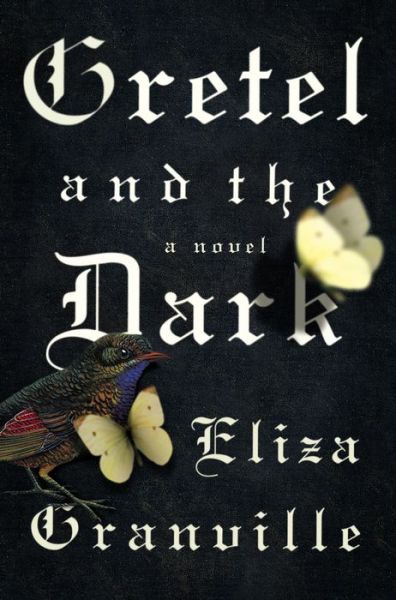
Gretel and the Dark by Eliza Granville

Two historical storylines, great evil, and an abiding mystery combine into one sinister and memorable fairy tale for the stout of heart.

gretel

As the title Gretel and the Dark suggests, Eliza Granville’s debut novel is a grim, spooky fairy tale. But keeping with the nature of any good fairy tale, there is another layer: it is also a meditation on historical good and evil, set both in Nazi Germany and fin de siècle Austria.

In 1899, a shockingly beautiful young woman is rescued off the street and delivered to the home of celebrated Viennese psychoanalyst Josef Breuer. She claims to have no identity, so the besotted Josef calls her Lilie, a name that will come to have greater significance than he originally intended. She is emaciated, bruised and beaten, hair shorn, with numbers inked on her arm. The story she tells is simply not possible: when questioned, Lilie tells Josef that she is not human but a machine, sent to kill a monster, whom she must find before he grows too large. She frightens him with her dreamy fantasies of how she’ll do it–“it doesn’t take long to kick someone to death”–but she casts an irresistible spell, and Josef (and his equally smitten gardener) is driven to puzzle out the truth of her history and the abuses she has experienced.

In the parallel plot, told in alternate chapters set several decades later, a little girl named Krysta pouts as the world around her changes. Her father works in a “zoo” during the days and can’t stop washing his hands at night; she is surrounded by unfriendly people, and retreats into her imagination to avoid the hazards and hatred she can’t understand. As her personal situation deteriorates and her circle of trusted acquaintances shrinks, Krysta hopes to save herself using the fairy tales on which she was raised–even, or especially, the nasty ones, with wolves, witches, beheadings and gore.

In precise balance and crafted in lovely, lyrical language, Gretel and the Dark is a masterpiece of fantasy, horror, childhood innocence and the evils of both our innermost imaginings and our shared history. Deliciously chilling and both fantastical and gravely real, with momentum building throughout, Granville’s extraordinary debut holds its crucial secrets to the last, adding suspense to its virtues. The connection between the not-entirely-likeable little Krysta and the enigmatic Lilie remains an open question until the final pages, and the power of imagination and storytelling is a prominent theme. This chilling, fantastical tale will simultaneously entertain and provoke serious contemplation on the depths of human depravity.


This review originally ran as a *starred review* in the October 7, 2014 issue of Shelf Awareness for the Book Trade. To subscribe, click here, and you’ll receive two issues per week of book reviews and other bookish fun!


Rating: 10 cherries.

The Lodger by Louisa Treger

In a lively debut novel, H.G. Wells takes a back seat to his lover, the rebellious Dorothy Richardson, a literary figure deserving of the spotlight.

lodger
Louisa Treger’s debut novel, The Lodger, opens in 1906. Family tragedy has landed Dorothy Richardson in a boarding house in a less-than-savory part of London, working at a dentist’s office for a pittance and living hand-to-mouth. She is relieved when Jane, an old friend, extends an invitation to visit her country estate for a weekend of relaxation. Jane has recently married an up-and-coming writer, H.G. Wells. Bertie, as he is called, turns out to be a strong personality: “He was like a volcano, continually bubbling over with urgent thoughts and incandescent ideas.” Dorothy is not sure at first whether she is attracted or repelled; his lively eyes and magnetic intensity are marred by zealous and sometimes off-putting opinions. The comfort of an intellectual who listens seriously to her ideas, however, proves irresistible, and between arguing about science and admiring Bertie’s writing, Dorothy finds herself helplessly falling for the husband of her best and oldest friend.

Bertie assures Dorothy that he and Jane have an agreement that allows for extramarital relationships, although this arrangement is as emotionally complex and problematic as it sounds. Having fallen headlong into an affair, Dorothy is then torn between her hard-won independence, which she feels is worth even the high price of poverty, and her love for a man who needs more of her than she can give. When a strikingly beautiful suffragette named Veronica Leslie-Jones moves into Dorothy’s boarding house in London and becomes a singular new friend, Dorothy’s energies and loyalties are still more divided. Writing becomes the outlet for her pain; Bertie has long encouraged her to make such an effort but, fittingly, Dorothy discovers this outlet, and her talent, on her own terms and schedule.

The Lodger is based on the real life of Dorothy Richardson, a groundbreaking but little-known author of the early 20th century. Treger’s taut evocation of Dorothy’s life and emotional struggles is gripping from the very first page, and readers are thrust into Bertie’s overwhelming presence just as helplessly and thoroughly as Dorothy is. While an unflattering light is shed on her famous lover–H.G. Wells comes off as obnoxiously self-centered–Dorothy herself is undoubtedly the star. She is a sensitive, passionate woman wrestling with the conventions of her time, and even while she experiences several traumas, Dorothy is a source of inspiration–for Treger, for those around her and for the contemporary reader as well.


This review originally ran in the October 2, 2014 issue of Shelf Awareness for the Book Trade. To subscribe, click here, and you’ll receive two issues per week of book reviews and other bookish fun!


Rating: 7 hot London attics.

Teaser Tuesdays: Gretel and the Dark by Eliza Granville

Teaser Tuesdays is a weekly bookish meme, hosted by MizB of Should Be Reading.

gretel

This is a delightful blend of dark, gloomy fairy tale, historical fiction, and horror. I don’t want to say anything more about it at this point, but I think I’ve found a real winner.

For now, enjoy these lines, which are a fine example of the emphasis placed on the importance of storytelling.

“When I make up stories I’ll write them down so they won’t disappear or be changed.”

Greet shrugs. “Then they won’t be proper stories, will they?”

Also, who doesn’t love a little girl who thinks this:

When I grow up I shall be a famous author like Carol Lewis or Elle Franken Baum, but the girls in my books will be explorers, they’ll fly planes and fight battles, not play down holes with white rabbits or dance along brick roads with a silly scarecrow and a man made out of metal.

Stay tuned. Gretel and the Dark looks like a star.

This quotation comes from an uncorrected advance proof and is subject to change.

De Potter’s Grand Tour by Joanna Scott

A fantastical mystery of historical fiction, peopled by amiable eccentrics.

de potter

Joanna Scott (The Manikin) spins a mysterious, slightly fanciful historical yarn in De Potter’s Grand Tour. The titular character is variously called Armand de Potter, Pierre Louis Armand de Potter d’Elseghem or (to the immigration authorities) Pierce L.A. Depotter Elsegern; his personal history is as amorphous and changeable as his name. De Potter lives a legend of his own design, beginning with his immigration to New York from Belgium in the early 1870s, determined to become a person of note. He joins a local society in dredging up oddities from the harbor, which sparks his interest in antiquities. With a few astute investments, he soon becomes an accomplished collector specializing in Egyptian artifacts. He simultaneously works as a teacher (educating aristocratic young ladies in multiple languages), and eventually channels all his skills and interests into a travel and touring company, which has great success. Years later, his wife, Aimée (a former student, born Amy), is devastated when he is lost at sea.

The grieving Aimée finds herself unexpectedly debt-ridden and receives a disturbing final letter from her late husband, which prompts her to examine his past more closely. It now appears that Armand looked to The Count of Monte Cristo as a model for the building of his myth. As Aimée ages, she yearns for her husband, and wonders what really happened on that ship that sailed from Constantinople.

Scott’s tone is whimsical, and her characters are idiosyncratic and appealing. De Potter’s charming tale, told in split chronology both before and after Armand’s disappearance, will please readers seeking a playful trip back in time.


This review originally ran in the September 2, 2014 issue of Shelf Awareness for Readers. To subscribe, click here, and you’ll receive two issues per week of book reviews and other bookish fun!


Rating: 7 gold watch charms.

The Rathbones by Janice Clark (audio), finished

rathbonesSee also my review of the first half.

The Rathbones finished, as it started, an odd and unusual book; which is not necessarily a good or a bad thing, and in this case worked out nicely. It was certainly memorable. I don’t want to give away any more plot than I already have (not much), because I think this unique reading experience does best when the reader goes in blind, as I did. So this review will be brief.

In regards to an earlier stated concern, I will say that the threads were pulled together in the end, but only in a loose weave. All the stories connect, but aren’t tied up with great neatness. I’m fine with this. It’s a dreamy tale, with vaguely supernatural elements. It nods to the Odyssey and Moby-Dick – or maybe more than nods. I liked the characters very much, by which I mean both that they are well crafted (with some complexities), and also likeable; they are not drawn in firm black lines, but a little blurrily, which is true of the book as a whole, and part of its charm.

The story of the Rathbone family is centered around the sea, with notes on the whaling industry that shaped the New England coast for a time. There are elements of a bildungsroman, a literal journey as well as a journey toward adulthood, the uncovering of family legacy and forming of new bonds. Travel and adventure on the sea are only part of what brings the Odyssey into play; more explicit references are made with The Rathbones‘ own Circe character, for example. But I’m going to stop there.

My experience in listening to this audiobook was excellent, even if I was perplexed halfway through. The reading is grand. The story is fanciful, and the narration fits it well. For those who enjoy relinquishing control and floating along with a fine author’s imagination, I think The Rathbones is an engaging and entertaining adventure.


Rating: 7 sons.

book beginnings on Friday: The Lodger by Louisa Treger

Thanks to Rose City Reader for hosting this meme. To participate, share the first line or two of the book you are currently reading and, if you feel so moved, let us know what your first impressions were based on that first line.

lodger

The Lodger is a novel about a woman – a true historical figure – who went again the conventions of her time, and about a famous author as well. Those are several elements likely to attract me; and then the cover features a woman in full gown and bonnet with a bicycle? Sold. And check out this opening paragraph:

Dorothy stepped off the train. She could feel the clammy sinking sensation beginning to creep round her, as though she was a ghost drifting through the world of the living. Taking a deep breath to anchor herself, she looked around. It was a small clean station, brightened by hanging baskets of ruffled mauve and white Sweet Peas, the sharp green of their leaves almost translucent in the May sunlight. She told herself there was nothing sinister; no one was going to find her guilty. It was just a visit to an old school friend, recently married.

I find this a fine beginning, designed to hook the reader in. The juxtaposition of clean, bright, ruffled, leafy, and sunny with sinister – and the idea that someone would find Dorothy guilty?? What on earth? Tell me more!

Stick around!

This quotation comes from an uncorrected advance proof and is subject to change.

The Rathbones by Janice Clark (audio), first half

rathbonesI am not quite halfway through The Rathbones, and I am at no proper stopping point – nor am I stopping – but I do feel the need to pause and report back to you. I am intrigued and bemused by this book. I don’t love it, although I might in the end; but I don’t dislike it either. I’m just a little perplexed.

The Rathbones is told mostly from the perspective of 15-year-old Mercy Rathbone, the last of that clan. She lives in the large, old Rathbone mansion on the Connecticut coast with her rather crazy mother and her reclusive tutor & cousin Mordecai. She wonders about the fate of her father, gone to sea many years ago now, and her little brother, whose existence is denied by mother and cousin. An unpleasant visitor sends Mercy and Mordecai fleeing in a little boat… into strange seas. They light upon one island and then another, meeting strange people who reflect in different ways on the paired mysteries of Mercy’s missing father, and the Rathbone family legacy. As I pause to write this, we are mid-journey, and I don’t know appreciably more about these mysteries than I did at page 1; and in a way I am worse off, in terms of knowing where the heck we are going, because I still haven’t figured out which thread of this story is the lead.

The writing and language are lovely, and well read by four narrators in turn: Erin Spencer, Cassandra Campbell, Malcolm Campbell, and Gabrielle De Cuir (itself an unusual convention, though I approve). The imagery is impressive as well. Moment to moment, this book is engrossing – sentence to sentence, scene to scene. But as for the overall story, I’m still baffled. Are we concerned about finding Mercy’s father (who is not, by the way, a Rathbone)? Or about unraveling the sinister, and apparently supernatural, history of the Rathbone family? Are we going to deal with the worn-out wives again, or is their episode past? Where are we going??

I’ve chosen a somewhat random example of Clark’s descriptive stylings for you here. Perhaps you can hear the dreamy, fantastical, and outlandish tone that draws me in…

Though the man was not Oriental, he wore wide scarlet silken trousers beneath the jade robe and pointed slippers of embroidered silk whose long tips quivered at each step. Mordecai stood beside me as the man approached. They were of a similar size and bearing, and each boasted a pigtail, one pale, one dark. The man bowed first to Mordecai, pausing for a moment with a troubled look. They might have been two sides to a single coin. He then bowed to me, sweeping off his pointed hat. The pigtail came away with it. Beneath the hat curled a powdered wig. Beneath the wig, a face that made Mordecai seem the fairest of men. It was all sharp angles and harsh planes, the skin rough and pale and faintly gray, though he was a young man. I judged him to be near Mordecai’s true age. It was a face that might have been hewn from the granite on the islands that the Starks had worked so hard to smooth. I thought that if I touched his cheek I might slice my finger open.

Don’t get me wrong, I am not here to criticize. I think I am charmed by this work. But so far it is working on me more like a series of vaguely connected short stories than as a coherent novel. We’ll see; maybe she will pull it all together soon. Mystery and obscured connections seem to be a theme, so I am hopeful that this is the case.

I also want to note that there are clear influences here of the whale-obsessed culture of Moby-Dick, as well as the fantastic interconnected adventures-at-sea of the Odyssey. The latter is one of my all-time favorites (although Moby-Dick, not so much. maybe I just need another seminar course on it), so that’s a good thing.

I am having no doubts about sticking around for the second half of this odd novel, so stick around for the next review to come. I am (at least) as curious as you are.

Maximum Shelf: The Goddess of Small Victories by Yannick Grannec, trans. by Willard Wood

Maximum Shelf is the weekly Shelf Awareness feature focusing on an upcoming title we love and believe will be a great handselling opportunity for booksellers everywhere. The features are written by our editors and reviewers and the publisher has helped support the issue.

This review was published by Shelf Awareness on August 6, 2014.


small

Kurt Gödel was a mathematician, logician and philosopher, best known for his incompleteness theorem, and often referred to as one of the greatest logicians since Aristotle. Born in Austria in 1906, he immigrated to the United States in 1940 to escape Hitler’s growing power and to pursue his scholarly work. Plagued by mental illness but also highly accomplished in his field, he would easily make an interesting subject to pursue. But Yannick Grannec’s first novel, The Goddess of Small Victories, is not about Kurt Gödel; it is about his wife, Adele.

Adele was six years older than Kurt, and was employed as a dancer at a cabaret when they met in 1927. They were a couple for more than a decade (during which time she nursed him through several rounds of institutionalization) before they married, with the continuing disapproval of his family. Adele would face rejection and isolation in the academic community as well, particularly when the couple finally settled at Princeton, where he worked at the Princeton Institute for Advanced Study (IAS).

These details are a matter of historical record. Grannec’s foray into fiction begins with her other protagonist: it is 1980, Gödel has recently died of anorexia, and Anna Roth, an employee at the IAS, has been tasked with recovering Gödel’s archives from his widow. Adele lives in a nursing home, and continues to hold a grudge against the academic establishment that shunned her; she is known to be a prickly old woman, and at first lives up to her reputation. But she sees something she recognizes in Anna, the daughter of two egomaniacal Princeton professors, who never felt that she fit into that society, being a more timid sort. Gradually, as Anna makes regular visits to the nursing home, the two women begin to open up to one another. Adele calls it a trade: she’ll tell her story if Anna tells hers. Chapters of The Goddess of Small Victories alternate between a third-person view of Anna’s visits to Adele in 1980, and a first-person telling of Adele’s story as it happened chronologically, beginning in 1928.

In this way, “the younger woman” (as Anna is often labeled) gets to visit Adele’s past worlds: Vienna in the 1930’s, postwar Princeton, McCarthyism, the Cold War; the difficulties of being an immigrant with poor English, the thrill of close friendship with Einstein and other luminaries and, centrally, the challenge of marriage to a tortured genius. Gödel is concerned with the infinite, but unable to handle the minutiae of his life: he is a consistently and increasingly troubled man–gifted, but also cold and demanding. He suffers from depression and paranoia, starves himself, meticulously tracks his body temperature and bowel activity, and refuses to see anyone outside a small circle that includes Einstein, Oskar Morgenstern, Robert Oppenheimer and their wives. He harangues his friends with conspiracy theories and an insistent rehashing of his unpopular notions. These few individuals naturally compose Adele’s entire social world, as well. Gödel tests Adele mightily, but in the end her love persists, as does her belief in infinity (a popular topic in the Gödel marriage and within their intellectual circle).

In exchange, Adele enjoys hearing about Anna’s life, though it has been marked by broken relationships and fear. The elder woman is outspoken, where the younger is reticent; Adele is enlivened by the challenge of spicing up Anna’s professional and love lives. Anna, as it turns out, has had a gifted-but-troubled mathematician in her own life as well. As the book and the women’s relationship unfold, the reader’s perspective moves more deeply inside Adele’s head, hearing her more intimate thoughts and becoming privy to her fears and insecurities, which increase as she ages and her marriage disappoints her. Anna and Adele make a journey together, and soon Gödel’s archives are no longer the point (except for Anna’s employer).

In an author’s note at the end, Grannec succinctly outlines which parts of the story are historically confirmed, which are relatively safe conjectures, and which she has created. Sticklers for historical accuracy should be satisfied. The translation from French to English by Willard Wood is smooth, establishing appropriate voices for the two different protagonists, and creating the evolving atmospheres of nervousness, fear and, eventually, desperation that characterize the Gödel household.

In the end, The Goddess of Small Victories delicately evokes both Adele’s varied experiences, in historical context, and also Anna’s more circumscribed life, which leaves room for future decision-making. While light is shed on the life and work of Kurt Gödel, he takes a backseat to his dynamic wife in Grannec’s compassionate telling. The finer technical details of Gödel’s work are outlined in narrative form, as Gödel reluctantly tries to tutor Adele, or discusses theories of philosophy with Einstein and the others. (Grannec also inserts footnotes regularly to offer further explanation, or to attribute quotations.) These mathematical and philosophical dialogues, the reader is reminded, are oversimplified; but they are enough to either whet the appetite, or impress upon one the magnitude of Gödel’s genius. The stars of this story, however, are two strong and intriguing women, who are stronger together.


Rating: 8 chocolates.

Come back tomorrow for my interview with Grannec!