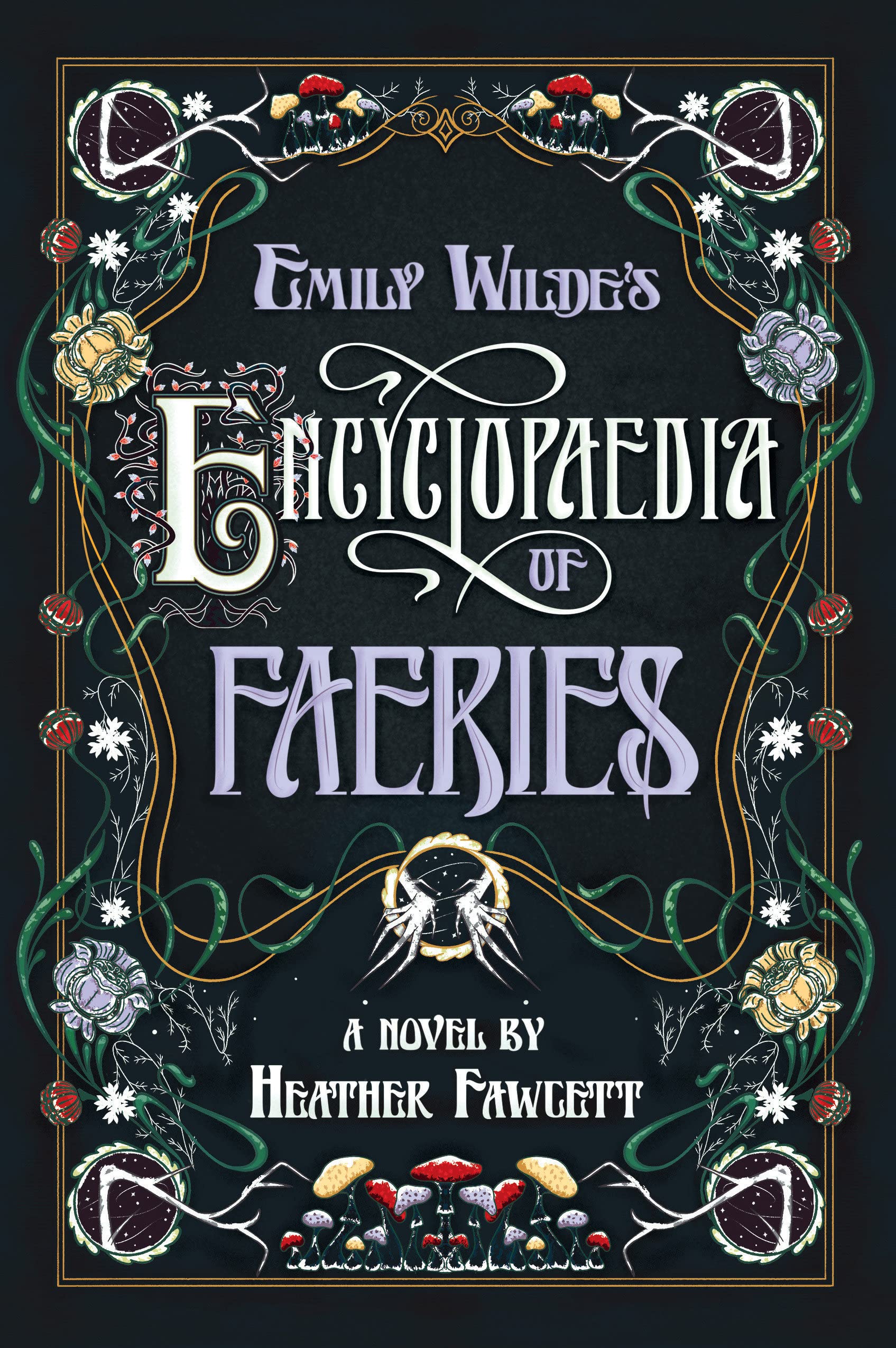
This is book 2 in a series, following Emily Wilde’s Encyclopaedia of Faeries.
This review contains spoilers for book 1.
 Having wrapped up adventures in Hrafnsvik, Emily has returned to Cambridge and a more comfortable *tenured* position there. Her nineteen-year-old niece, Ariadne, has arrived on the scene as a student, as Emily’s self-appointed assistant, and as a fan and annoyance. Wendell remains nearby, also a fan: his proposal (from near the end of book 1) remains an open question. Now we know his own courtly-faerie identity, it also transpires that would-be assassins have begun to hound him, to reduce his threat to a distant and fearsome fae crown. Meanwhile, an antagonistic department head (ha) is also hounding Wendell and Emily both, seemingly out of some combination of suspicion about their academic integrity and a sense of late-career threat. Obviously, then (that is sarcasm), the whole troop winds up traveling together – Emily, Wendell, Ariadne, and the grumpy Dr. Farris Rose – to a tiny village in the Alps where a controversial dryadologist named Danielle de Grey disappeared some 50 years ago.
This returns readers to a little-populated setting Fawcett clearly favors. Not quite a closed room, the village and surrounding natural world still offer a useful limitation on outside distractions. Compared to Hrafnsvik from the last book, the residents of St. Liesl play a smaller role in this novel’s cast. It keeps that character list neat: Emily (still curmudgeonly, genius, deeply socially awkward, and more caring than she’d like us to know), Wendell (hedonistic, lazy, compulsively neat, and in love), Ariadne (enthusiastic and committed, but oh, young), and Rose (who may have something to offer, if he could get past his own unpleasantness), as well as the famed de Grey and the lovelorn scholar who has chased her, in turn, into misty faerie worlds. With this limited cast, Fawcett does well with humor and the tension Emily feels about her good friend and would-be lover. The fae creatures she studies continue to be a diverse and diverting bit of world-building. Action and development occasionally felt a bit rushed to me, more than I remember from book 1, but it was still a good time, and this is a book with momentum, that motivates the reader to stay up for just one or two more chapters. Also, I’m still pleased by the mild snark about academia, and the quirk of Emily’s character that she’s always thinking about what a good paper or conference presentation her current adventure will make, no matter how dire as it happens. I’m in for book 3.
Filed under: book reviews | Tagged: fairies, fantasy, Heather Fawcett, romance | 1 Comment »