Julia by Sandra Newman

This feminist retelling of Orwell’s 1984 brings the original’s philosophies, wit, and horror to modern readers with a strikingly reinvented protagonist.

Julia returns the timelessly relevant world of 1984 to readers’ attentions with a female protagonist more clever and feeling, and perhaps more cynical, than George Orwell’s Winston Smith ever was.

Sandra Newman’s retelling matches closely Orwell’s familiar and disquieting original. Big Brother is the leader of the nation of Oceania, at war with Eastasia (or was it Eurasia?). Telescreens squawking nonstop propaganda constantly observe every move of the Citizens of Airstrip One, formerly London. Where Orwell offered Julia as colleague, lover, and co-conspirator to his antihero, Winston Smith, here Julia Worthing gets a backstory.

She grew up in Semi-Autonomous Zone 5, previously Kent; had her first affair with a Party member at the age of 14; and won a Hero of the Socialist Family badge for denouncing her mother (a more complex story than it immediately sounds). As an adult, Julia works in the Ministry of Truth’s Fiction Department as a mechanic, repairing and maintaining the machines that design plots for the mind-controlling entertainment of the masses. “She was perpetually fascinated by the plot machinery,” Newman writes, but “about the books that were the end result, she knew little and cared less.”

Julia lives a straightforward, self-serving life, outwardly obedient to Party regulations and a member of the Junior Anti-Sex League, but is secretly involved in a number of minor sexual affairs, trading in black-market goods for the simple pleasures of real chocolate. Though fond of Winston in some ways, she has no illusions about the possibilities their narrow world allows them and lives mostly at peace within her limits. Newman’s version does not differ from Orwell’s in these particulars, but it does expand Julia considerably, and appealingly, as a character increasingly wrestling with not only the contradictions between lived experience and the Party’s narrative but also questions of right and wrong. “Anything was possible when one was never told the truth.”

Newman (The Country of Ice Cream Star) offers a tragic and harrowing story in lovely, evocative prose, revealing all the ugliness and beautiful possibility of a world hopelessly scarred by hate and manipulation and yet, somehow, still capable of hope. Julia is double-, triple-, and quadruple-crossed: “All was false. It was known to be false, but everyone lied about the lies, until no one knew where the lies began and ended.” Electrically memorable, Julia is as startling and incendiary as 1984 ever was, with dark humor and pathos commenting on perennially timely questions.


This review originally ran in the August 31, 2023 issue of Shelf Awareness for the Book Trade. To subscribe, click here.


Rating: 7 questions.

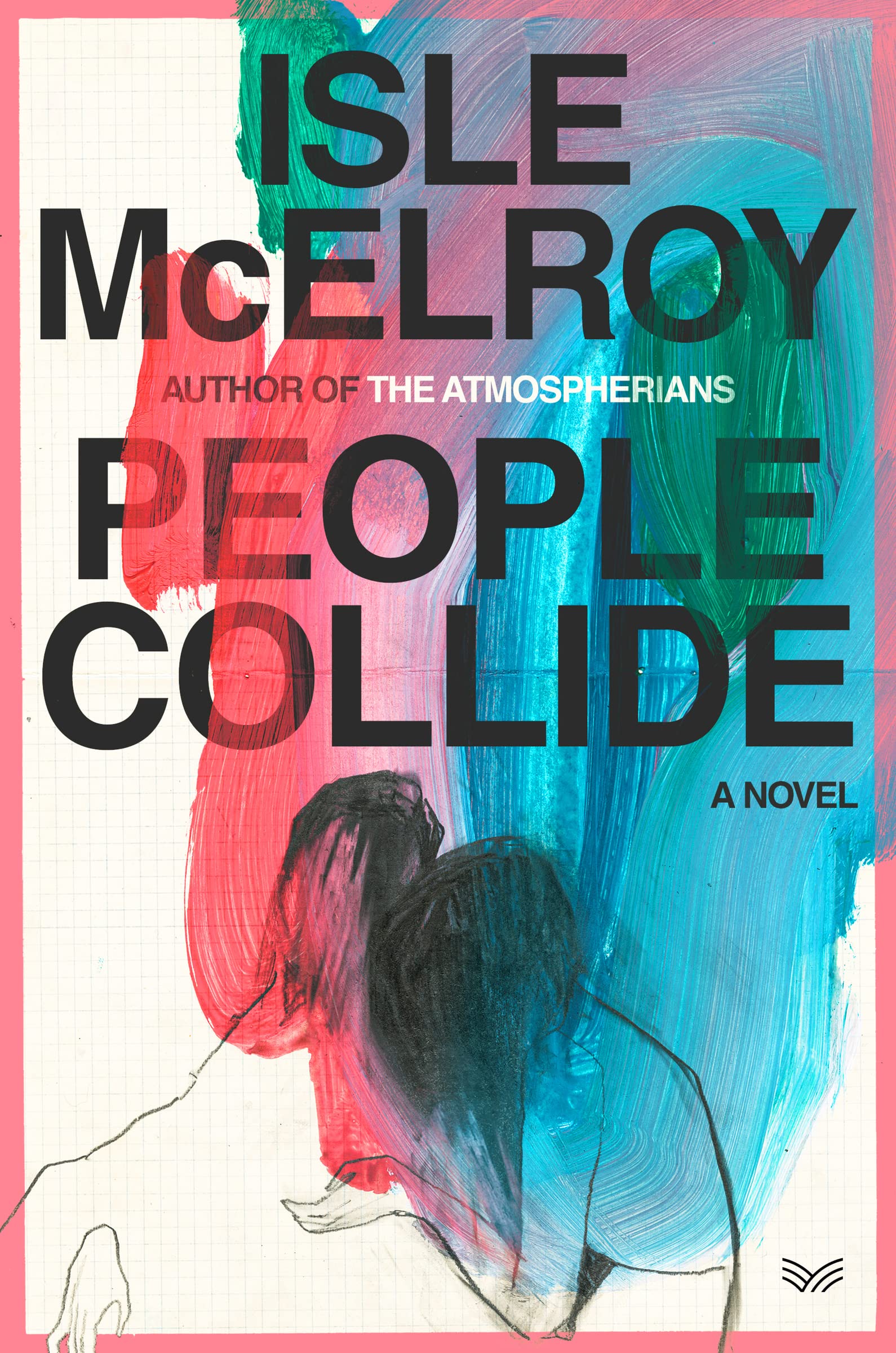
People Collide by Isle McElroy

In this smart, absorbing, thought-provoking novel, a husband and wife mysteriously swap bodies and experience widely varying impressions and reactions.

Isle McElroy (The Atmospherians) takes readers on a mind-bending journey of gender exploration and body politics with People Collide. Much of the novel is told from the perspective of Eli Harding, an American man living in Bulgaria with his wife, Elizabeth, a highly accomplished writer with a prestigious teaching fellowship. Eli is also a writer, but less successful–at everything–than his impressive spouse. In the novel’s opening pages, he discovers that he has woken up in Elizabeth’s body. Elizabeth herself has disappeared.

Eli first hides away in the couple’s apartment, waiting for Elizabeth–whom he assumes now occupies his body–to return, or for this mysterious “Incident” (as he thinks of it) to right itself. When he ventures out, he dresses Elizabeth’s body, applies makeup, and decides that she was right: a male friend was condescending to her all this time. Then both Eli’s mother and Elizabeth’s parents push for action: he is sent to Paris by his own mother (who believes he is Elizabeth) to search for her vanished son. He finds his wife–indeed, in his own body–and the surreality intensifies.

People Collide comments on gender and the roles that the larger world expects from people who present as men and as women. Elizabeth is an ambitious, dominant, talented, driven, no-nonsense individual; Eli is a hardworking writer but has mostly made his living as a restaurant server. He’s followed her to Bulgaria for her more prestigious work. They do not disagree that she is his superior: “‘I’m smarter than you, I’m kinder than you, I’m more talented and better looking. And you benefit from all of that. It’s exhausting. And I want to benefit. Things should be easy for me.’ It didn’t hurt to hear her say those things. I felt the same way.” Eli’s well-muscled body is six inches taller than Elizabeth’s, and she carries it “with a graceful confidence that I had never shown in my life.” He used to walk too quickly for her, which she found “frustrating and selfish.” In her body, he notes: “I never slowed down for her. Not until now, when I had no other choice.”

Beyond the gender binary and the public’s assumptions based upon appearances, McElroy’s insightful novel also examines class, privilege, the art world, and family relationships. Elizabeth’s parents are smugly satisfied with their money, connections, and community in a small, liberal, artsy town in Michigan; they look down upon Eli’s thrice-divorced mother. Everyone judges Eli harshly for abandoning his wife–an irony, because it was, in fact, Elizabeth who did the abandoning, in his body.

People Collide is sly, clever, funny, provocative, and compelling. It offers a world and a story to get lost in.


This review originally ran in the July 28, 2023 issue of Shelf Awareness for the Book Trade. To subscribe, click here.


Rating: 7 steps.

Hedge by Jane Delury

In this profound novel about love, loss, and choices, a summer’s exciting work and exhilarating affair will reverberate through the lives of a deeply likeable protagonist and her family for years.

Hedge by Jane Delury (The Balcony) is a roller coaster of a novel about family, creation, love, and shifting priorities, lush with detail and delicately rendered. Readers will be thinking of Delury’s protagonist long after these pages close.

Maud is a garden historian, “with her odd mix of botany, archaeology, history, and practical gardening skills,” and she loves her work. Originally from California, she was well suited to England, both London (where she finished her education) and the countryside, but reluctantly returned to the United States for her husband Peter’s career. When Hedge opens, Maud is at work on a restoration project in New York’s Hudson Valley. It is beautiful, stimulating work, and she is likewise stimulated by the company of Gabriel, a handsome, intriguing archeologist at work on the same site. Her two daughters, Ella and Louise, are about to join her for the rest of the summer. Peter remains in California: the couple has separated “both geographically and maritally,” and Maud plans to make this separation permanent and legal, but their girls don’t know this yet. On the cusp of an affair with Gabriel, she feels enlivened, awakened by his attention, her own physicality, the thrill of discovering flower beds from the Civil War era and the turning of the earth. She allows herself to dream of what a new life could look like for her as well as for the scotch roses, lilac, clematis, and honeysuckle she plants. But when the girls arrive from California, 13-year-old Ella suffers a trauma that snowballs into life-changing events for all involved.

The idyll in New York ends suddenly, and Maud’s next months and years are spent dealing with hard choices between undesirable outcomes. She wrestles to balance meaningful work and practicalities; lustful, soulful connection, and the mundane compromises of marriage; her own needs and those of her children. “You could comfort yourself with statistics, tell yourself that a twenty-year relationship was a good run. After all, when marriage was invented, no one lived this long. But it was still a jagged gash through your life, even if it was what you wanted.” Delury’s prose is finely detailed, saturated with color and feeling; Maud’s passion for her work is as substantial and sympathetic as her love for her daughters. Both a quiet domestic tale and a novel of surprising suspense, Hedge cycles from hopeful to harrowing and back again. Maud is nurturing and steely, riveting and unforgettable.


This review originally ran in the May 8, 2023 issue of Shelf Awareness for the Book Trade. To subscribe, click here.


Rating: 7 slices of pepperoni.

Burnt: A Memoir of Fighting Fire by Clare Frank

This exceptional memoir shows wide emotional range in spanning the complexities of firefighting and fire prevention in California and the American West, gender issues, family, work, love, and loss.

Clare Frank’s Burnt: A Memoir of Fighting Fire is a heart-racing, heartfelt story that will make readers laugh, cry, and consider what matters most in life. The author is an indomitable character, from self-supporting teen through a decades-long career in California firefighting (beginning in 1982, when women were few and generally viewed askance), with impressive achievements in her career and personal life. Frank’s memoir is packed not only with adrenaline but with sensitivity, thoughtfulness, and creativity. Beware the impulse to race through these 300-plus pages in a single sitting.

After talking her unorthodox parents into emancipating her at 16, Frank becomes a firefighter at 17 (faced with an age requirement of 18, she simply leaves her birthdate blank on the employment form). Despite being “the youngest, shortest, and lightest person in an academy for the brawniest of professions,” she is indefatigable: stubborn, hardworking, short-fused, and tenacious, earning nicknames like Flipper, Tiger, and Poindexter–as well as degrees in fire administration, law, and creative writing–along the way. Frank rises through the firefighting ranks in her 33-year career (with a five-year doctor-mandated medical break), finishing with the lofty position of State Chief of Fire Protection, six ranks above captain, the highest she once thought she would be willing to attain. She works on structure fires and wildfires, in small firehouses and large ones, in the field and in positions of leadership, on labor and legal issues, prevention, forestry, and more, across the behemoth California Department of Forestry and Fire Protection, aka Cal Fire (the largest fire department in the state).

While she does meditate on firefighting’s gender issues, her response to the question for much of her career is encapsulated in an anecdote: “While I pulled hose through tangled manzanita, the reporter jammed a microphone in my face and yelled, ‘What’s it feel like to be a female on the line?’ I yelled back, ‘The same as it feels for the guys, except I have chee-chees.’ ” She hoped that if she ignored what made her different, everyone else would as well–a strategy that worked frequently but not always.

Frank is a renegade overachiever in all areas: athletic, career, and (after a late return to the classroom) academic. Her writing is not merely serviceable, but thoughtfully constructed; her memoir’s sections are labeled for stages of fire development: ignition, sustained heat, free burn, growth, full development, and decay. Fire is present in every aspect of Frank’s life and work, including writing, but this always feels natural rather than effortful. By the end of this memorable book, readers will reconsider fire policy as well as family, risk, and hard work. With thrilling momentum and a heat of its own, Burnt is a sensation and an inspiration.


This review originally ran in the April 27, 2023 issue of Shelf Awareness for the Book Trade. To subscribe, click here.


Rating: 9 bird’s nests.

Old Flame by Molly Prentiss

A young modern woman explores and redefines her roles as advertising copywriter, creative writer, friend, daughter, lover, partner and mother in this exquisitely detailed rendering.

Following Tuesday Nights in 1980, Molly Prentiss presents another ambitious and brilliant novel. Old Flame stars a young woman seeking connection in busy New York City and picturesque Bologna, while wrestling with its many permutations.

Emily is performing a life. She’s about 30 years old, has graduated from bartending to a “real job” writing advertising copy for an iconic department store. She has a boyfriend and “a shitty but workable basement apartment in Williamsburg that, because of my real-job salary, I did not have to share.” She steals time at work to read poems and even do a little writing, but her lofty artistic goals aren’t coming together in the gaps between witty headlines about bras and descriptions of leather satchels. She perpetually feels the absence of her mother, who died in childbirth, and the shortcomings of her rigid, distant adoptive mother.

As the novel opens, Emily’s creative department is finalizing the Women’s Book, a biannual catalogue, and Emily is moving from just-work-friends to real-friends status with Megan, a graphic designer. Megan sends Emily a drawing, Emily responds with a short story, and the two are off and running on a truly creative project: The Other Women’s Book, Emily proposes, and Megan responds: YES. In quick succession, a troubled affair, a layoff and a wedding invitation both cement the women’s friendship and upend their circumstances. More or less spontaneously they travel together to Italy, where Emily spent an important year abroad when she was about 20. And in Italy, an unplanned pregnancy and a devastating fight with Megan shatter Emily’s tenuously structured life.

Old Flame considers the particular challenges of being a young artist in New York, balancing the kind of work that pays (“the magnet was capitalism, but I couldn’t see that then”) with the kind that inspires. It considers feminism and appearances, how people see themselves versus how others see them: in literal terms, Emily’s boyfriend is a photographer, and she questions the pictures he takes of her and the ones he displays in his studio; figuratively, of course, the possibilities multiply. Prentiss is a master of detailed descriptions, character studies, highly specific lists and meaningful settings. New York is hectic, fast-changing and inspirational; Bologna is romantic and somehow simultaneously disorienting and comforting. Emily’s deepest struggle is in navigating personal relationships: as a romantic partner, a daughter, a friend, a mother. By novel’s end, she will have learned a little about what these roles mean.

With Old Flame, Prentiss offers a sensitive story, gorgeously detailed and painfully realistic, about the lives and ordeals of women and artists, and what it means to seek and shape connection in the modern world. Filled with both snark and wisdom, this novel is a gift of love and forgiveness.


This review originally ran in the March 17, 2023 issue of Shelf Awareness for the Book Trade. To subscribe, click here.


Rating: 7 pajama shirts.

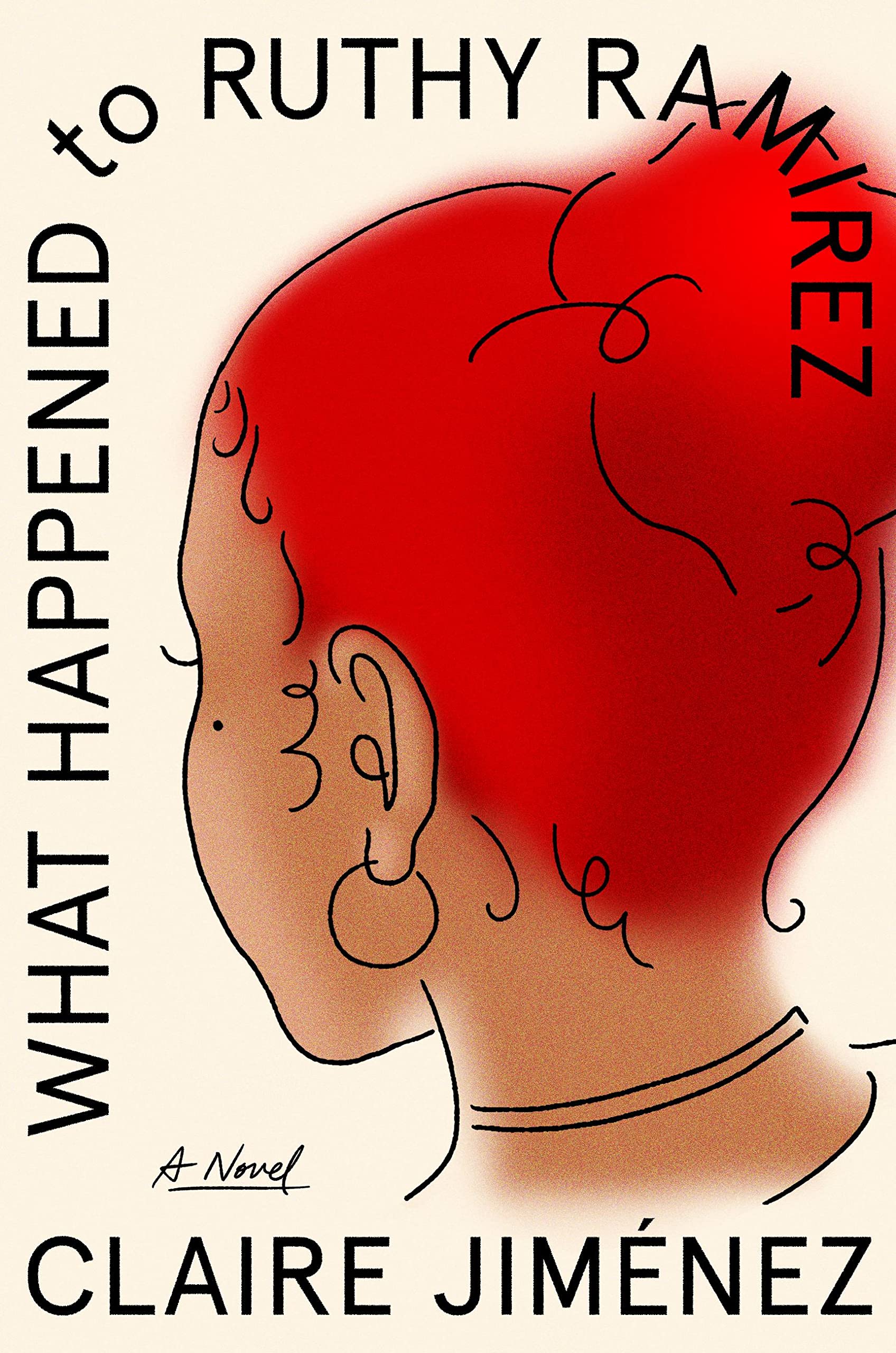
What Happened to Ruthy Ramirez by Claire Jimenez

This debut novel about a family still searching for a long-missing daughter and sister brims with voice, attitude and yearning.

Claire Jimenez’s first novel, What Happened to Ruthy Ramirez, brings to life a close but troubled Puerto Rican family in Staten Island, N.Y., carrying on but rocked by loss. “The five of us seem normal for a while, up until Ruthy turns thirteen and disappears…. Draw my mother sixty-two pounds later. Give her diabetes. Kill my dad. Cut a hole in the middle of the timeline. Eliminate the canvas. Destroy any type of logic. There is no such thing now as a map.” No one ever figured out what happened on the day Ruthy didn’t come home from track practice on the S48 bus as expected.

More than a decade later, Nina, the baby, is “blessed with the brilliant luck of graduating [from college] into the 2008 recession,” the first in her family to attend college but now returned home to live with her mother and work at the mall selling lingerie. Jessica, the eldest, lives with her boyfriend and their baby; she works as a patient care technician at the hospital, harried and tired but proud of her work. Their mother, Dolores, depends on her relationship with God and the church. What Happened to Ruthy Ramirez unfolds in alternating chapters, through the first-person perspectives of these four central characters: Nina, Jessica and Dolores in the late 2000s and the stormy, troubled 13-year-old Ruthy in 1996 when she disappeared. The latter is all attitude: You really want to know what happened to Ruthy Ramirez, she asks? Most people “think they got it all figured out, about who I am and what happened. Whatever, who cares? Not me, I promise you.” She describes the day it happened, the schoolgirl dramas and fights, whose pain appears superficial only from the outside. Years later, her sisters and mother struggle with everyday life and with moving on–until the day Jessica believes she sees Ruthy’s face on a sordid reality TV show: the woman shares the missing girl’s beauty mark, her laugh, the toss of her head, a couple of key phrases. And the remaining Ramirez family is off on a mission to recover their lost member.

One of Jimenez’s greatest achievements lies in the individual voices of her narrators, crackling with life, wit, humor, pain and personality. Jessica and Nina wrestle with the complicated love they feel for their family; Dolores rants in a well-meaning but frustrated one-sided conversation with her God; Ruthy oozes teenaged bravado and angst. Readers will be tugged by hope and despair alongside these true-to-life characters. In the end, What Happened to Ruthy Ramirez offers observations about race, class, family and the fate of missing girls beyond its title character.


This review originally ran in the February 7, 2023 issue of Shelf Awareness for the Book Trade. To subscribe, click here.


Rating: 7 grilled cheese sandwiches from the school cafeteria.

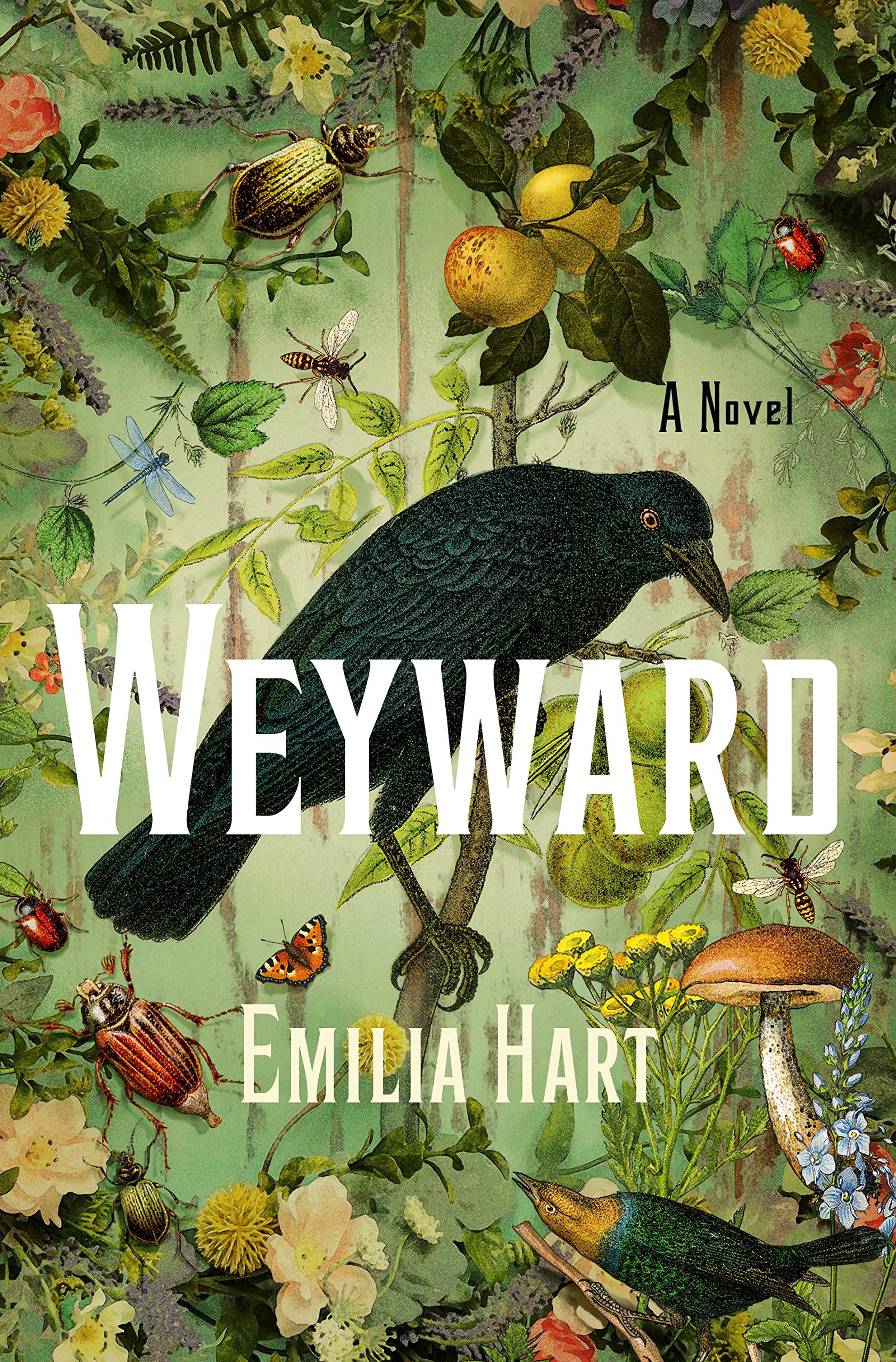
Weyward by Emilia Hart

The stories of three imperiled protagonists across centuries connect in this suspenseful, magical debut about the power of women and the natural world.

Emilia Hart’s first novel, Weyward, glows and glimmers with hidden powers, thrills and danger, a close connection with nature and between women across time. Three distinct stories eventually link to form a larger tale about strength, resilience and love.

Altha goes on trial for witchcraft in the English countryside in 1619. In 2019 London, Kate attempts to escape an abusive partner while harboring a significant secret. And at a grand estate in 1942, teenaged Violet struggles against the limitations of her father’s strict household rules, consumed by an unladylike love for trees, insects and other natural wonders. In alternating chapters, each of these stories deepens. Altha, the daughter of a healer, tries her best to follow in her beloved late mother’s footsteps, helping her neighbors and causing no harm, while dodging the increasingly avid witch-hunters of her time. Locked in a Lancaster dungeon, Altha does what she can to protect herself. Kate flees the city undetected, holing up in a cottage inherited from a great-aunt she hardly knew, but her safety there is tenuous as she plans for an uncertain future. Violet is a tenacious and spirited 16-year-old, but powerless as she is imprisoned in her father’s world; she dreams of becoming a biologist or an entomologist, but cannot even visit the local village. Men in the Weyward world, in all three timelines, are sources of power and abuse, not kindness, but Violet’s loyal brother forms a notable exception.

Each woman must learn about and come to terms with her powers and her connections to the natural world. Violet is passionately entwined with a particular beech tree, with damselflies and weasels, but no one will even tell her her mother’s name, let alone the family history that she senses casts a shadow on her life. Having lost her father at a young age in a curious accident, Kate lives in fear of the birds and insects that most call to her. Altha is reluctant to exercise her full powers, having promised her mother she would be careful. But, she says, “I had begun to suspect that nature, to us, was as much a life force as the very air we breathed.”

Hart expertly weaves together disparate but connected storylines, with leaves and butterfly cocoons and a mountain stream. Her protagonists are strong, but hard beset by the forces around them, even across centuries. Her prose sparkles with wonder and simmers with danger. Weyward‘s atmosphere is compelling, as each plot thread offers suspense. With a momentum of its own, this debut draws readers inexorably to a glorious conclusion that celebrates connectedness and the power of women and nature.


This review originally ran in the February 2, 2023 issue of Shelf Awareness for the Book Trade. To subscribe, click here.


Rating: 7 feathers.

Stone Blind by Natalie Haynes

Natalie Haynes splendidly showcases classical scholarship, witty humor and an appreciation for nuance in this reframing of the story of Medusa.

With Stone Blind, Natalie Haynes (A Thousand Ships; Pandora’s Jar) brings her authoritative expertise in Greek myths to bear on Medusa, whose story is fresh and surprising in this telling. Haynes is both a scholar of the classics and a stand-up comic, and that combination is brilliantly evident in this sardonic, darkly funny adaptation.

Stone Blind combines several threads familiar to fans of Greek mythology, although readers need no previous knowledge to follow along. Zeus, king of the gods on Olympus, philanders and bickers with his wife, Hera; this narrative will witness Athene’s birth and a battle between gods and giants, among other Olympian events. Medusa is delivered as an infant mortal to the two elder Gorgons who will be her sisters–in this version, they are monsters only in their unusual appearance, and they care for their fragile mortal sister with great tenderness. As a young woman, Medusa is raped by Poseidon in Athene’s temple. The goddess is so offended by this sacrilege that she punishes the victim, replacing Medusa’s hair with snakes and bestowing her most famous attribute: the ability to turn any living creature to stone by eye contact. In a third thread, the demigod Perseus comes of age as a bumbling incompetent: self-serving, lazy, whining, unnecessarily violent. And Andromeda, legendary beauty and princess of Ethiopia, is cursed to death by her mother Cassiope’s hubris.

These threads come together in complex ways when gods are offended and angered and play out their dramas with mortal pawns. Traditional storytelling has cast Perseus as a hero and Medusa as a monster, but Haynes does not concur: “The hero isn’t the one who’s kind or brave or loyal. Sometimes–not always, but sometimes–he is monstrous. And the monster? Who is she?”

“Who decides what is a monster?” Medusa’s sister asks. To which Medusa responds: “I don’t know…. Men, I suppose.”

Haynes’s genius lies not only in her subtle recasting of this story–with an emphasis on who assigns roles and draws conclusions–but in her dryly scathing humor. Her gods are (even more than usual) immature, selfish and often silly. Athene is “delighted with herself” for the simplest of observations about humanity; she burst forth from Zeus’s head fully formed, but not necessarily with the emotional maturity or world knowledge her physical perfection would imply. Poseidon’s bluster and Zeus’s carelessness of his children are exaggerated. Perseus is a dolt, impervious to learning the lessons of his (mis)adventures. Haynes writes in many voices: those of olive trees, Medusa’s snakes-for-hair, a crow, the gods and mortals that make up this twisting tale. A surprising ending caps off her truly delightful and novel version of a very old story.


This review originally ran in the January 6, 2023 issue of Shelf Awareness for the Book Trade. To subscribe, click here.


Rating: 8 birds.

Peaces by Helen Oyeyemi

For this review I created a new tag, Oyeyemi, to represent my continuing confusion about how to categorize her mysterious novels. I was tempted to call it ‘mystery’ but I’ll settle for ‘puzzle,’ with suspense and speculative elements, a contemporary/magical setting and absolutely its own set of rules. My enjoyment outweighed my bemusement – not that the latter prevents the former but it can make it a little harder. I am charmed and perplexed. I’ll do my best here.

Our narrator for most of the novel is Otto. He’s on a train with his partner Xavier. They are taking a honeymoon but not really because they are not married. They are traveling with their pet mongoose, Árpád XXX (as in the roman numerals), who is descended from a long line of mongooses called Árpád who have been companions to Otto’s family. The train is a former tea smuggling train with a most unusual full-time resident, its owner, Ava Kapoor, who receives copious hate mail for her family’s past crimes. She is an heiress set to inherit under unusual terms which have led her to live on her train, served by a staff consisting of her girlfriend and a sterner woman with more sinister outside employment… She also keeps a pet mongoose (naturally?!) and plays a theremin. So far I’m just listing weird elements, right? That’s part of the point. There are invisible people, or people who may or may not actually exist, and who may or may not be the same person. And it is on this weird train – whose most unusual cars possess (of course) strange traits – that the partnered Otto and Xavier discover they may have some history in common that they didn’t know about, not only with each other but with Ava Kapoor.

It was a raucous adventure and a puzzle whose solution I’m still not sure of. I enjoyed the locked-room aspect of the train as setting (very Agatha Christie), and the mongooses, and the eccentric old aunt character (who sends our non-honeymooners on their trip), and the questions about art and pursuing one’s creative processes. It is, I think, about that concept of “being seen.” I am all the way off balance about the whole thing but still intrigued by Helen Oyeyemi’s singular mind. I don’t know what to tell you at all; your mileage may vary.


Rating: 8 letters.

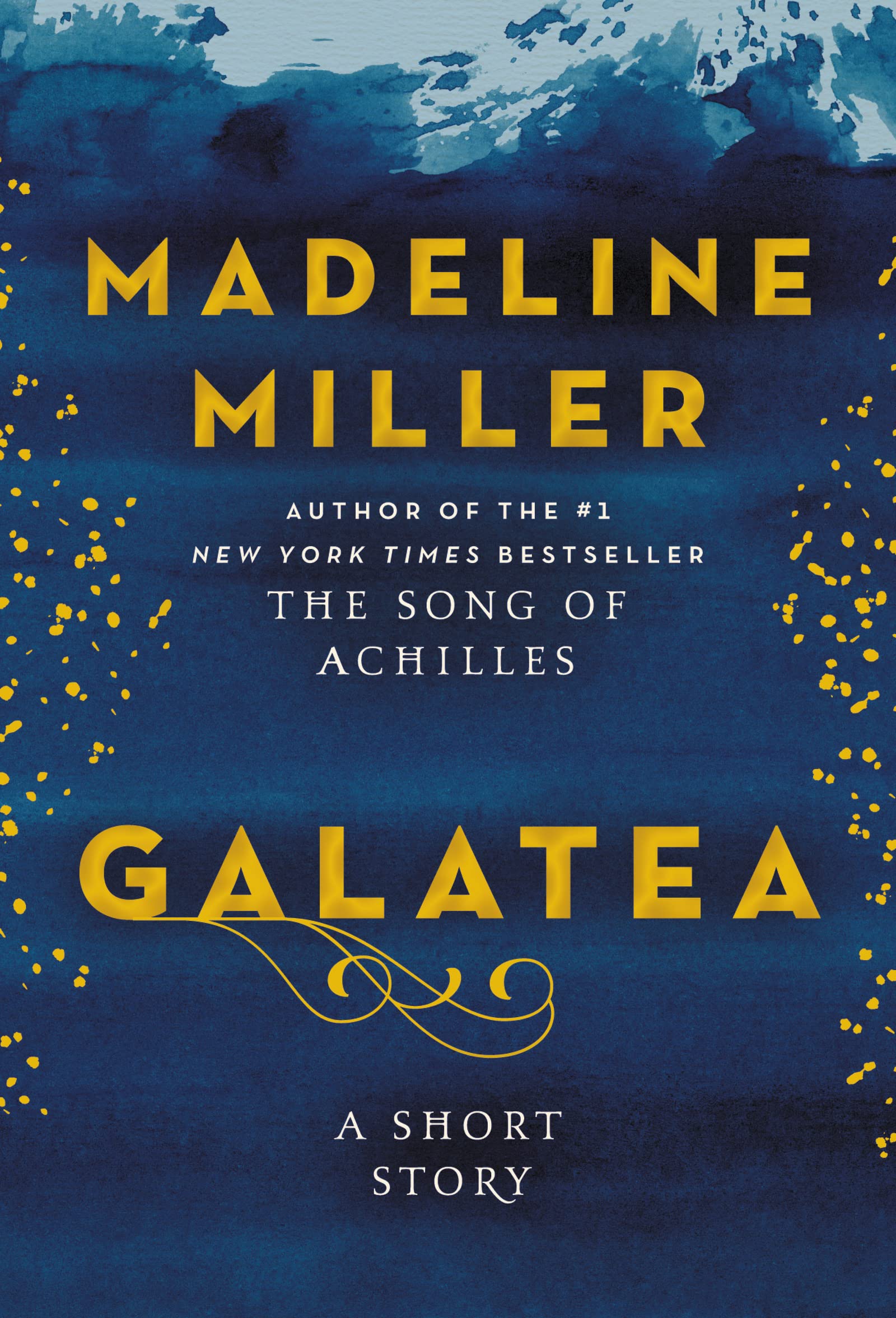
Galatea by Madeline Miller

Although I found Circe less mind-blowing than I did The Song of Achilles, I will still follow Madeline Miller anywhere. I was very excited about this new book, which is labeled as a short story, but packaged as a freestanding little hardback. The story is very short – just 50 pages plus an afterword.

50 little tiny pages

According to Wikipedia, “Galatea is a name popularly applied to the statue carved of ivory by Pygmalion of Cyprus, which then came to life in Greek mythology.” In Ovid’s version of the myth, in Metamorphoses (which Miller indicates is “almost solely” her source for this work), she does not have a name. Pygmalion is a sculptor so horrified by real, live women that he can only be happy with the ivory statue of one he creates for himself, in perfection and perfect, chaste silence; he prays to Venus for her to come alive, and she does, to bear him a child but (in Ovid’s telling) to remain silent and modest. (Delightfully, and disturbingly, in the poem “Pygmalion’s Bride” by Carol Ann Duffy in The World’s Wife, she defeats his sexual advances by pretending to reciprocate them.)

Here, Miller gives us Galatea’s first-person voice from the hospital room where she is institutionalized, imprisoned, on Pygmalion’s orders. He visits in order to fetishize and rape her. Having born him a daughter and seen how limited their child’s life will be with such a domineering, misogynistic father, Galatea has tried to escape him and save her daughter, but so far failed. When he tells her what his latest project is, however, she tries again.

In Miller’s writing, Galatea’s voice is lyrical and grim. “The door closed, and the room swelled around me like a bruise.” She handles her husband’s abuses with an impassive stoicism that reads as strength rather than stoniness, because she feels strongly toward her daughter (and hides well her disgust with Pygmalion). She is brave, clever, and grandly terrible, worth of Greek myth and the empowerment we want for her. This is a brief but powerful triumphant retelling of an upsetting myth. Miller is awesome and I will preorder anything she writes. Go read it now.


Rating: 8 cups of tea.