Teaser Tuesdays: Wolves of the Calla by Stephen King

Teaser Tuesdays is a weekly bookish meme, hosted by MizB of Should Be Reading.

wolves

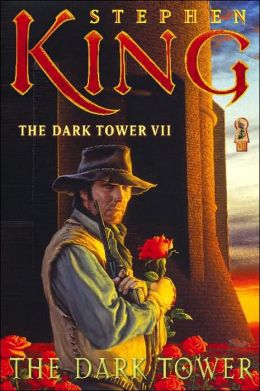
Hooray for Stephen King as usual! This is a long one, which I appreciate, as I get to lose myself in the Outworld of this novel, the fifth in the Dark Tower series.

For our teaser today: I was struck by these lines.

“But if you get her killed, Roland.. you’ll take my curse with her when you leave the calla, if you do, no matter how many children you save.”

Roland, who had been cursed before, nodded.

Doesn’t bode particularly well, does it?

What are you reading this week?

book beginnings on Friday: Wolves of the Calla by Stephen King

Thanks to Rose City Reader for hosting this meme. To participate, share the first line or two of the book you are currently reading and, if you feel so moved, let us know what your first impressions were based on that first line.

Hooray! The next Dark Tower novel! This is number 5.

wolves

I am passing over the rather lengthy introductory bit entitled “the final argument,” in which we are reviewed on the first four books of the series. I found this part mildly entertaining but could have done without it, considering how recently I’ve been speeding through the series; I think it’s extremely good to have, though, for readers beginning with this book or picking up after a long break. I do not think it suits today’s book beginnings theme, however.

So we start here with the prologue.

Tian was blessed (though few farmers would have used such a word) with three patches: River Field, where his family had grown rice since time out of mind; Roadside Field, where ka-Jaffords had grown sharproot, pumpkin, and corn for those same long years and generations; and Son of a Bitch, a thankless tract which mostly grew rocks, blisters, and busted hopes.

That makes for a fine echo of the classic Western thread that runs through these books. I am very glad to be back in the hands of Roland Deschain today.

Wizard and Glass by Stephen King (audio)

wizard and glassHow to continue to describe the outrageously imaginative, engrossing masterpiece that is Stephen King’s Dark Tower series? Oh my word.

Wizard and Glass is book 4 and, I think, my favorite so far. We met the gunslinger in book 1; met his three compatriots in book 2; and were reunited with the boy Jake in book 3. As this next installment opens, the ka-tet of Roland, Eddie, Susannah, Jake and Oy find themselves in Kansas; but it is a strange, other-worldly Kansas, perhaps parallel to the one we recognize. Along the road, the group stops for the night and Roland tells a story. This telling will fill the vast bulk of the book, so that as in The Wind Through the Keyhole, it’s a story within a story, with the inner one taking top billing.

Roland’s tale is that of his first love, his first adventure and battles as a gunslinger, and the genesis of his quest for the Dark Tower, which is by this point a quest willingly shared by his companions. It’s a great story, what King does best.

Roland begins by referring to the way he won his guns, and his right to be a gunslinger, in a fight against his teacher, Cort. Roland was 14, and his father was angry, and also worried, and sent Roland away along with his two best friends, Cuthbert and Alain. They travel to the back-country town of Hambry, in the barony of Mejis, where they are given a deceptively simple task that immediately complicates. Roland encounters a young woman named Susan and falls in love; their love is (naturally) thwarted by her unwilling role in the intrigue in which Mejis is entwined. Roland, Cuthbert and Alain, assisted by Susan and a deeply likeable local named Sheemie, will end up doing battle with the forces of “the good man” (who is of course bad) in this outer barony; and Roland’s love is doomed.

This story is endlessly moving, and engrossingly suspenseful. There is something sweepingly large and yet entirely believable about the teenage love story of Roland and Susan; and Cuthbert and Alain, who until now have been referred to only obliquely, become fully-developed great friends to the reader as well as to Roland. The reader is every bit as enthralled as Roland’s contemporary ka-tet (Eddie, Susannah, Jake and Oy) are; and I loved the slight jolt King inserts when Eddie breaks in to ask how Roland could know the story from all angles: what Susan thought, what the witch did when she was alone… this reminds us just when we’re starting to lose ourselves in Roland’s tale, that we’re actually still on the side of the road in Kansas with the new ka-tet, at the same time.

When Roland finishes talking, the five companions continue on the road towards… the emerald city. Genres, and worlds, mash up again when they come to the emerald castle and encounter the Wizard (of Oz?) – he of the book’s title, and we’ll also see the glass for the first time (which played such a role in Roland’s story). At the finish of the book, relatively little has happened to our main characters; they return to following the path of the Beam in search of the Dark Tower. But the wizard does entreat them to abandon their quest, and each in turn gets to articulate that he or she is by Roland’s side by choice now and from now on. The saga continues.

I am reeling; I never wanted this book to end; I reveled in it and rather tore at my hair when I realized I’m still wait-listed at my local library for the next in the series. (The horror!) My former policy of reading series willy-nilly with no respect for their order is gone; I am a purist. Stephen King has reformed me.


Rating: 9 pulses of pink.

A Wind in the Door by Madeleine L’Engle (audio)

wind in the doorThe second book in L’Engle’s Time Quintet series stars the same quirky, likeable Murry family members: chiefly Meg, along with her brother Charles Wallace; and to a lesser extent, their mother and twin brothers. (Their father is again away in this story. I wonder if he’ll come to play a stronger role in later books.) Calvin, friend of the family and Meg’s tentative romantic interest, plays a lead role alongside Meg. Where their task in A Wrinkle in Time was to save the Murry father, this time it’s Charles Wallace himself who’s in danger: there’s something wrong with his mitochondria, and the farandolae who dwell therein.

As A Wrinkle in Time used outside supernatural influences – Mrs. Whatsit, Mrs. Who, and Mrs. Which – to direct Meg and Charles’s actions, A Wind in the Door features a Teacher named Blajeny and a cherubim named Proginoskes (Progo for short). Yes, cherubim is generally considered to be plural, but Proginoskes is “practically plural” – he is at first mistaken for a drive of dragons by Charles Wallace.

To save Charles Wallace from the rebellion of his farandolae (and you can look it up: while farandolae are fictional, mitochondria are as real as the tesseract that starred in A Wrinkle in Time), Meg and Calvin, along with Blajeny and Progo, must become very very very small and get to know one of Charles Wallace’s farandolae intimately, going inside Charles Wallace to fix him up.

I enjoy the characters that L’Engle creates. I will say that her young people don’t always sound like young people – which is explained in Charles Wallace’s case because he is nothing like a normal young person (this book opens with him being constantly beat up at school for talking about mitochondria and the like); but I think Meg is supposed to represent a more approachable, normal-ish girl, and along with Calvin, Sandy and Dennis, she can be a little odd. But somehow, even as I note this, it doesn’t bother me. Realism is not a central dogma of this series; it is fantasy after all.

I love the science (even though it’s science fiction, and I suppose might confuse the young readers – and the not-so-young – as to what’s real; that’s a concern), and I love that L’Engle makes science interesting and relevant in a series starring a girl. That’s no small thing even today, but these books were published in the 1960’s, 70’s, and 80’s, and I think this deserves note and applause. That said, Meg is on the one hand a mathematical genius, and on the other a little whiny and reliant upon big strong Calvin. Perhaps that’s where the realism comes in.

With a few quibbles, I definitely did, again, enjoy this listen. It’s read by the author in a somewhat gravelly voice, and she does voices for her characters. I recommend the books, for readers of all ages (I am not much of a YA [young adult] reader, myself), and I recommend the audio. I’ll be continuing with the series: next up is Many Waters.


Rating: 6 snakes.

The Waste Lands by Stephen King

waste landsThe Waste Lands is book 3 in King’s Dark Tower series. (See my reviews of book 1 and book 2.) As Jeff said in a comment on an earlier review, they keep getting better and better! (He also said that the first 4 are the best, meaning that we’re headed downhill here soon; but I am optimistically hoping that the slope will be gradual, and/or that I will disagree with him!)

Plot-wise, I’m going to be brief here. There are copious summaries all over The Internet. See my reviews of the first two books for discussion of what this series is really about, in all its sweeping epic genre-mashup glory.

Roland and his two new companions, Eddie and Susannah, are continuing on their quest towards the Dark Tower; but really, this is Roland’s quest, with the other two along as less-than-eager fugitives from their own world. One of the plot arcs involves Eddie and Susannah becoming increasingly invested in the quest for its own sake, rather than accompanying Roland as a self-preservation method. The central struggle of this book, however, is to get Jake (“The Boy”) over from his world to theirs. Jake played an important role in The Gunslinger, where he… seems to have died… twice… but here he is again, because as he so importantly cried out in book 1, “there are other worlds than these.” Jake and Roland both have memories of their shared experiences, which conflict with parallel memories that say they never met. Both are in the process of being driven crazy by these warring memories; bringing our four characters together in the flesh will resolve that threat. Finally, we pick up a 5th: a billy-bumbler (that is something like a cross between a raccoon and a dog, that talks, and likes people) they call Oy. He’s really Jake’s billy-bumbler, and turns out to be a very clever one, who helps save the day repeatedly. I am over-the-moon smitten with Oy and delighted to have him along for the ride. I want a billy-bumbler, too.

At the close of The Waste Lands, our newly minted, secure, united ka-tet of Roland, Eddie, Susannah, Jake and Oy is headed towards likely death in a monorail train with a consciousness that likes riddles. However, there is a book 4 to come, so I suspect they will manage to elude destruction once again!

I love this series; I’ve already ordered the rest of the books so I won’t have to take any more breaks! Hooray for Stephen King and his mind-boggling ability to create immense, epic, complex and fascinating worlds in his head and then invite the rest of us into them. I think somebody should write a dissertation on why King is Literature despite also being Popular With The Kids. Keep ’em coming.


Rating: 8 gold-ringed eyes.

The Drawing of the Three by Stephen King

drawing threeThis is book 2 in the Dark Tower series. I reviewed book 1, The Gunslinger, here (and a later installment, The Wind Through the Keyhole, here). And I have just ordered my copy of book 3.

At the end of The Gunslinger, Roland – the title character, the last gunslinger in his changing world – met up with the man in black (not Johnny Cash), and fell into a deep sleep; when he awoke, it seemed that a long time had passed, maybe years. This is the beginning of The Drawing of the Three; we’ve lost no time, except what Roland lost while he slept. As the man in black read in his tarot cards, the gunslinger will now encounter three individuals who will shape his future, and enable him – maybe – to reach the dark tower, his only goal.

He awakens on a beach with a strange creature approaching him – something like a giant lobster, with the ability to verbalize nonsensical questions, and with menacing claws. These figures he will call the lobstrosities (I love it), and they’ll be a constant threat. Roland does encounter the characters that the man in black predicted: the Prisoner, the Lady of Shadows, and Death (though Death will come under a different name). I’ll leave the plot alone at that.

This is a fantasy novel with all the captivating elements I mentioned when I reviewed The Gunslinger. It is perhaps less overtly a genre mashup; this struck me more as a whimsical mashup of worlds. Roland travels back and forth between his world, which shares characteristics with ours but is clearly other, and a New York City that the reader recognizes. This world-shifting fascinates me. I am reminded of a book I read as a kid called Eva, by Peter Dickinson. I was transfixed by the question of whether Eva lived before our time, or after our time; it could have gone either way. Similarly there was another “chapter book” called Enchantress from the Stars, by Sylvia Engdahl, around the same time that raised the same questions for me: is the enchantress from our planet? before or after our time? or another “star” altogether? Something along these same lines struck me with The Drawing of the Three.

What I think I’m trying to say here is that Stephen King, as always, excels at representing both realism, and fantasy or “other”, all at the same time. The backstory for each of the four characters in this book – Roland, the Prisoner, the Lady, and Death – is meticulous. King doesn’t give the Prisoner a life just as he relates to Roland, our star; he gives him a history, and it’s magnificent. As for plot tension, there’s nothing higher-stakes than the fate of the world, which is the epic conflict of this series.

If The Gunslinger was slightly less impressive than The Wind Through the Keyhole, this second in the series more than recovers. I am transfixed; I am riveted to Roland’s world, committed to his costars (I hope King doesn’t kill them off too quickly!), and even though I’ve read a few books since this one as I write this review, I can’t stop thinking about the Dark Tower series. I can’t get my hands on book 3, The Waste Lands, quickly enough. Stephen King continues his winning streak.


Rating: 7 lobstrosities.

The Gunslinger by Stephen King (audio)


This is my 1000th post! Thanks for your support, friends!

gunslingerI so very much enjoyed The Wind Through the Keyhole from Stephen King’s Dark Tower series that I had to find The Gunslinger, book one in that series. I was captivated by King’s own narration of the former, and disappointed to find that he didn’t read this one himself; but narrator George Guidall did a fine job, and I shouldn’t punish him for not being Stephen King.

In a fantastical spin on the western genre, we open with Roland Deschain walking alone with his mule, his guns holstered at his hips. He is pursuing “the man in black”, with an eventual destination of “the dark tower.” These terms are archetypal and possibly metaphorical. He has to cross a desert. He talks with a lone farmer (accompanied by a talking crow), and tells the man a story. (The story-within-the-story is repeated in The Wind Through the Keyhole, very enjoyably.) In the gunslinger’s story we experience the town of Tull, where Roland had also stayed for a spell, in pursuit of the man in black, with some nasty consequences. This is the first of the gory-bloody bits in The Gunslinger, but not the most extreme. We are also learning something of the magical nature of this world that the gunslinger inhabits. The man in black casts spells to entrap Roland; time doesn’t flow normally. At a glance, however, this could be our own world – possibly following war or other disaster.

Next, Roland meets “the boy,” Jake, who has himself come from some other world. As he describes it, Roland thinks he must be making things up; but the reader recognizes modern-day New York City. Jake and Roland travel together for a spell, still across the desert, and then have to climb a mountain, and then go into the mountain. I’ve put off saying this for long enough: The Lord of the Rings is strongly present. The dark tower, the linguistic touches, the lone-ranger type which is borrowed both from western books & movies and from Tolkien, and now the trip into the evil mountain with the ghoulish parahumans threatening them along the way, are all clearly inspired by that exemplary world-building trilogy. Come to think of it, I’m pretty sure I referenced Tolkien in my review of The Wind Through the Keyhole, too.

Anyway. They’re traveling, and Roland tells Jake a story, too – another story-within – this time about his training as a gunslinger, and the climactic, life-determining moment when he fought his teacher. This is the truly gory bit: it made me cringe a little, and I don’t consider myself a squeamish reader, so take note. This is Stephen King, after all. Horror joins western and fantasy-epic in King’s genre mashup. Roland and Jake will have a final meeting with the man in black; and I shall leave you there.

I enjoyed this book very much. Stephen King is, without question, expert at world-building and believable, fully-wrought, finely detailed backgrounds. Roland is both an archetype and a real person I easily learned to care about. The tension, suspense, and dramatic action are engaging and had me sitting up straight waiting for the next blow. The boy Jake is sympathetic. There is a mystery surrounding the man in black, and the final confrontation – I said I wouldn’t go there. On the other hand, The Gunslinger felt to me grittier, grainier, less literarily refined than The Wind Through the Keyhole, which in my memory, at least, was a superior book; but not by much. And for that matter, a grainier, less refined beginning feels like it suits this series. I am enchanted by the pulling together of genres, as I stated: western, horror, fantasy, and epic adventure. I don’t think I’m doing it justice in this review, but this is fine work, friends. I’ll be seeking out book two.


Rating: 7 slow mutants.

Teaser Tuesdays: The Gunslinger by Stephen King

Teaser Tuesdays is a weekly bookish meme, hosted by MizB of Should Be Reading. The idea is to open your current read to a random page and share a few sentences. And try not to include spoilers!

gunslinger

Today I am thrilled to finally be finding time for book one in the Dark Tower series by King, which I entered with a later installment, The Wind Through the Keyhole. I loved it. I’m just sorry this one isn’t read by Stephen King, too!

I picked out my favorite early lines for you:

He had laid his fuel in a pattern that was not artful but only workable. It spoke of blacks and whites. It spoke of a man who might straighten bad pictures in strange hotel rooms. The fire burned its steady, slow flame, and phantoms danced in its incandescent core. The gunslinger did not see. The two patterns, art and craft, were welded together as he slept.

I love this pictorial expression of the gunslinger’s melding of art and craft, and how it “speaks of blacks and whites.” I am a King fan. I feel confident this one will be good…

A Wrinkle in Time by Madeleine L’Engle (audio)

wrinkleWhat fun to dig back into this children’s classic. I only vaguely remembered enjoying this as a kid, and I got to rediscover it via this audiobook, read by the author. My memory didn’t provide much: I think I was most familiar with the opening scene, in which Meg Murry is awake and frightened in her attic room alone by a storm outside. She is grumpy, frustrated with her family: her father for being away for so long; her baby brother Charles Wallace for not feeling her pain and coming to her as he usually does.

Next, of course, Meg and Charles Wallace meet the not-quite-mortal Mrs. Whatsit, Mrs. Who, and Mrs. Which, and an unusual boy from Meg’s school named Calvin. This unlikely team will adventure together via the “tesseract” – a wrinkle in time and space as well, if you will – to try and find Mr. Murry, and save him, and save the world (and all the worlds) from the Black Thing.

This is a children’s chapter book. Madeline L’Engle notes in an introductory section that publishers thought it would be too hard for children; but her own kids loved it, and as it turns out, so does the world. It’s won several awards including a Newberry, and remains popular today. (Originally published in 1962 and still in print.) I can see how it would be “hard” for children, particularly the physics bits; but then, we don’t have to understand it fully to enjoy it, do we? And lots of adults are puzzled by physics too! This book has appeal for adults – perhaps obviously, here I am, and I don’t read a whole lot of children’s books. It still rings like a kids’ book, but I found the characters and the plot both engaging. I have a slight criticism that Meg occasionally sounds a little adult for her age; she does whine appropriately, but sometimes her observations are startlingly astute. It’s a common complaint with young characters in books. But only slightly, here.

Meg, Charles Wallace, and Calvin are all likeable but human; their parents are similarly well-rounded, sympathetic characters. The Mrs’s are charming, and the world-building – in the world of Aunt Beast, for example – is well done. I like that Meg grows some in the course of the story; and L’Engle certainly leaves us open for a sequel, what with the possibility of a burgeoning romance, and the happily-ever-after-at-least-for-now ending (with the Black Thing still looming). Mostly I was just disappointed that it was over so quickly! (Another feature of children’s books.)

I was a little surprised to find religious references within; I didn’t remember those. Not many, but a few mentions of having God on one’s side, or being the chosen ones, fighting for good. It got me thinking. I’m not particularly good at spotting religious allusions, not having been raised in church or on the bible. They mostly pass me by. But spelling out G-O-D will catch my eye every time! It’s not a technique that appeals to me but it wasn’t a central enough theme here that it threw me off much, either. A theme that is central is a good-versus-evil dichotomy, which of course could be interpreted as being religious; but the book-banners have protested certain aspects of this story, too – including the grouping of Jesus with mortal fighters-for-good such as Da Vinci, Michelangelo, Shakespeare, Pasteur, Einstein, Gandhi, Beethoven, Copernicus and a lone woman, M. Curie. So there you are: all matters of interpretation.

In a nutshell, I found this book a delightful, too-brief romp in another world. I am tempted to pursue further work by L’Engle; four books follow this in a quintet, and others of her oeuvre reference the same characters. Realistically, I don’t know if I’ll get to them. But this was an enjoyable read, and not just for children.


Rating: 7 pairs of spectacles.

book beginnings on Friday: A Wrinkle in Time by Madeline L’Engle

Thanks to Rose City Reader for hosting this meme. To participate, share the first line or two of the book you are currently reading and, if you feel so moved, let us know what your first impressions were based on that first line.

wrinkle

I am just as pleased as can be to experience again a book I enjoyed in childhood, a book that won several awards including a Newberry. Madeline L’Engle’s A Wrinkle in Time begins:

It was a dark and stormy night.

In her attic bedroom Margaret Murry, wrapped in an old patchwork quilt, sat on the foot of her bed and watched the trees tossing in the frenzied lashing of the wind.

L’Engle is winking at us, I believe, when she uses this well-worn literary opening line; but it works beautifully, don’t you think? It’s atmospheric, and if it’s “pre-owned,” I find it still effective. It brings to mind the attic reading scene in The NeverEnding Story, which I also loved.

I’m just a few minutes into this audio recording, read by the author, but I’m glad to be back in L’Engle’s world. Happy weekend!