The Travelers by Regina Porter

Looks like I need a new way to talk about novels like this: huge and sweeping in its scope, but in a neat, tidy package, right at 300 pages. The Travelers opens with a Cast of Characters, like a play, which made me a little nervous, and indeed I needed to use it some throughout, although less so in the second half once I got situated. These characters come from a few families over a few generations. Cast of Characters is followed by Time (“from the mid-fifties to the first year of President Obama’s first term”), Settings of Note (Amagansett, Long Island; Buckner County, Georgia; New York; Memphis, Tennessee; Portsmouth, New Hampshire; Brittany, France; Berlin, Germany; and Vietnam”) and Background, which discusses Rosencrantz and Guildenstern Are Dead, which made me still more nervous; what is this book I am entering? But it turned out wonderfully.

Where to begin? Clearly I cannot tell you about all these characters and happenings on several continents over several decades. I’m still not sure how Porter has managed to do it in 300 pages. Among my favorites, though, are definitely Agnes and Eloise, who were lovers as young women in Buckner County, Georgia, but who go on to live long, full, well-traveled lives, while never ceasing to circle each other at least in their minds and at least a little. (“Just because you couldn’t stand someone didn’t mean you no longer loved them.”) The man Agnes marries has an obsession with Rosencrantz and Guildenstern that begins when he is serving in the Vietnam War, and remains ties to a trauma from that time period; his odd relationship to an odd play, and its impact on his and Agnes’s two daughters, was a fascinating through-line for me. There are plotlines that are linked to race, as well as gender and sexuality, another expansive dimension to the novel that I appreciate. I think what I’m most marveling at here is the compression: now that I’m trying to tell you about this book, I’m amazed at how much was in it, at how much American history got slipped into a story about regular people.

It’s absorbing. There are some problematic characters that I still felt for, and some downright entrancing characters (like Eloise, who trains as a pilot in homage to her hero, the real-life Bessie Coleman) who I already miss. The overall impression is spellbinding, really. I like that settings recur, and characters appear and reappear in new arrangements with each other – new relationships. These threads form a weave that help this somewhat sprawling plot and cast to cohere. It could have been too much to keep together, but it makes just enough sense, with the recurring connections. Oh, and photographs: chapters are headed by small black-and-white images, and there are a few more within the text. A ‘photo credits’ section is a great bonus. The images come from true history, while the novel is of course fiction, but they add historical authenticity; so this Black soldier in Vietnam is not the one I’m reading about (because the latter is a fiction), but it adds a layer.

I think I’m going to be thinking about this enormous, deceptively slim novel for a long time.


Rating: 8 pieces of pecan pie.

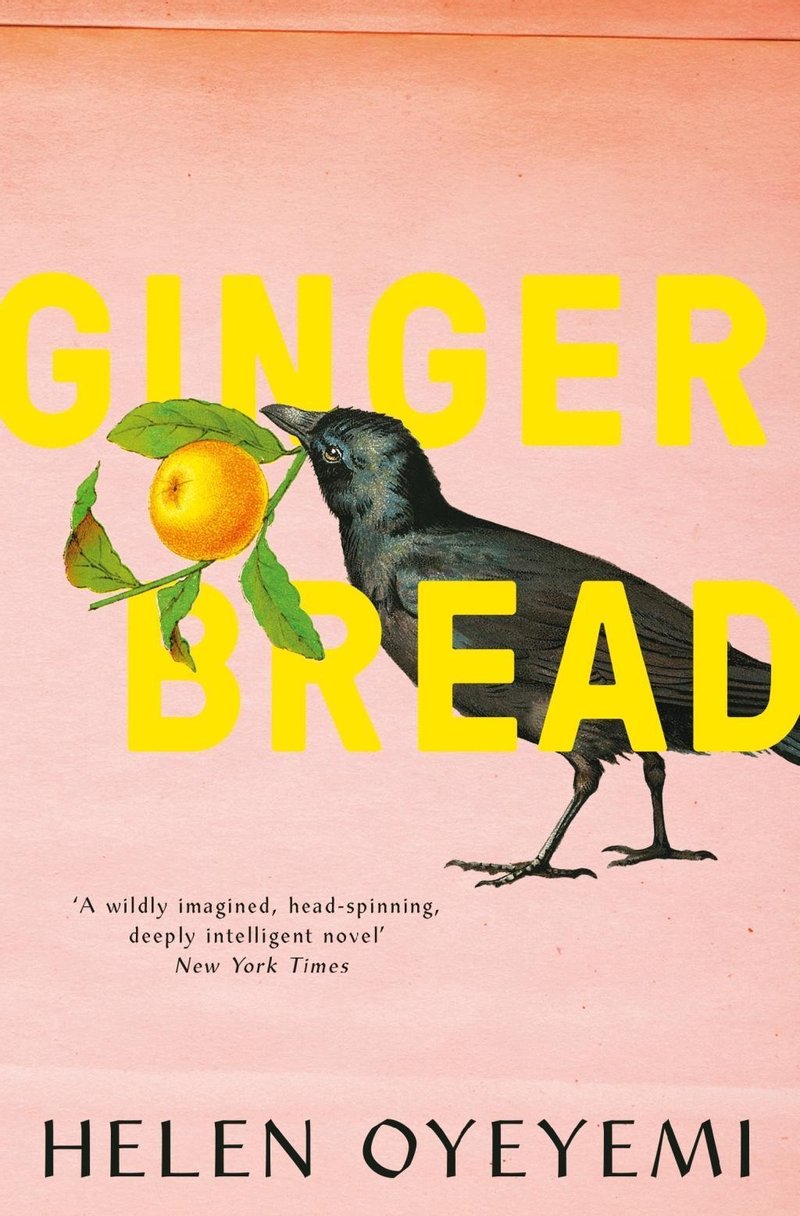
Gingerbread by Helen Oyeyemi

Helen Oyeyemi’s reputation is stellar, and her backlist is healthy: six novels besides this one and a story collection, and she’s just 36. (Wow.) With this, my first of her books, I’m adding my voice to the chorus. Oyeyemi is a prodigious talent.

Gingerbread is under 300 pages, but I’m still a little intimidated by the task of saying what all is in it. There are three generations of women in our story from the start, and they remain our focus. Margot Lee, her daughter Harriet, and Harriet’s daughter Perdita make up a very close family, and the titular gingerbread is a family recipe with magical powers, apparently – but literally, or figuratively speaking? They live in London, but Margot and Harriet come originally from a country called Druhástrana, where Perdita has never visited. [I was immediately intrigued by the name Perdita: this word in Latin means lost; it is the name of a moon of Uranus; and it is the name of the heroine of Shakespeare’s The Winter’s Tale. Which of these undertones is intended or instructive here? Maybe all of them.] “Several prominent thinkers have proposed reclassifying Druhástrana as a purely notional/mythical land”; at any rate, it is unclear how one would get there, or from there to here.

There are magical elements sprinkled throughout, in a book that is mostly realistic; just enough magic, then, to keep me a bit off balance in my reading of this world. Perdita has four dolls that speak (and not just to her); they are like her chorus, in the classical Greek sense. The Lee family gingerbread has powers, certainly. Druhástrana is a land of rather more magic: “She’d seen some plant-vertebrate combinations in the clearings, glassy gazing dormice and owls that earth had risen up around; the ground was growing them, and they looked uncomfortable, as if they’d been stretched and stuffed with straw. There was a leaf that people chewed for relief from pain, and the girl brought this leaf to the plant-vertebrate combinations when she had time; it seemed to make things a bit better for them.” Another girl “had two pupils in each eye; that’s why her eyes looked like bottomless lakes in the torchlight.”

Perdita, being a remarkable 17-year-old, manages a rather extreme act in search of her motherland. As she lays in bed recuperating from this adventure, Harriet sits with her (and her four speaking dolls) and tells the story of her own – Harriet’s – childhood and coming of age. This is the story of growing up in Druhástrana, the legacy of the gingerbread, and Perdita’s heretofore unknown paternity; it’s a story of families and class distinctions, and it takes up the bulk of the novel, right up until the story told at Perdita’s bedside moves into the present, when they get up and go continue to live it.

I love these characters: strong women with strong senses of humor and independence, and wise one-liners. “Everybody around her was living out a different story in which events had different causes and motivations according to how they were perceived.” “Life isn’t ill-natured; it’s just dirt poor, like any other public resource.” Harriet’s anxieties about the intimidating, insular Parental Power Association (what Perdita’s school has in place of a Parent Teacher Association) and its social structure are priceless, hilarious, and relatable.

I’m a sucker for a blend of realism with a few key points of wild unreality, which we find here, and I fell hard for Margot, Harriet, and Perdita. There is a real satisfaction to this novel’s ending, even if it doesn’t tie up all loose ends. I’m definitely in for more from Oyeyemi.


Rating: 8 powders.

Mary Jane by Jessica Anya Blau

In this heartwarming, hilarious novel, a dutiful child from a conservative household becomes nanny to a family of riotous hippies, and her world beautifully explodes.

“I had just turned fourteen, it was 1975, and my ideas about home, furniture, and cleanliness ran straight into me like an umbilical cord from my mother.” In the upper-crust Baltimore neighborhood of Roland Park, Mary Jane’s emotionally distant father thanks God every night at the dinner table for giving him an obedient child. Her world is exceedingly neat and regimented, until she begins working as a summer nanny for the Cone family down the street. This is the summer that will change everything for the protagonist of Jessica Anya Blau’s Mary Jane.

Mary Jane’s first-person narration and extremely limited experience of the world make this story both poignant and tremendously funny. While her own family oozes Stepford-style 1950s values, the Cones are consistently barefoot and scantily clad, and their home is a shock. “I’d never before been in a house where every space was crammed with things to look at or think about (could it be that all messes weren’t evil and didn’t need to be banished with such efficiency?).” Mary Jane’s charge, Izzy Cone, is a completely delightful five-year-old girl with untamed curls, copious energy and few boundaries. And then Dr. Cone (a psychiatrist) moves a patient and his wife into the guest quarters. They turn out to be a heroin-addicted rock star and a movie star, respectively–even Mary Jane has heard of them. She finds herself newly enfolded in boundless affection, acceptance, good humor and nonstop (mostly harmless) shenanigans. How will she reconcile this wild, disruptive, noisy new world with the life she’s known?

Mary Jane is unendingly charming and fun. The lovable Izzy; the messy but endearing details of the Cones’ home life; the surprisingly kind, down-to-earth pair of stars; and Mary Jane’s own earnest, bewildered narration combine for a romping good time. Music is an important thread: Mary Jane enjoys Broadway show tunes (from the shows her mother finds appropriate) and singing in the church choir. Her new “family” at the Cones’ teaches her about rock, soul and blues, encouraging her to sing along, and takes her to visit “Night Train Music: The Greatest Record Store in America.” There is of course a lesson to be learned in this coming-of-age story: “that adults weren’t always right and could be just as confused and make just as many mistakes as kids,” among other things. But Blau’s appealingly naïve narrator is at her best when she leaves such conclusions to speak for themselves and simply wonders at the colorful world just emerging, in this enchanting novel about personal growth and changing times.


This review originally ran in the April 20, 2021 issue of Shelf Awareness for the Book Trade. To subscribe, click here.


Rating: 7 silverware drawers.

Salvage the Bones by Jesmyn Ward (audio)

Following on Ward’s excellent (nonfiction) Men We Reaped, I found her earlier novel Salvage the Bones, read by the same narrator, Cherise Boothe. This one I loved less for a while in the middle, but I loved it at the end. And I’m afraid my one real criticism of this novel is my fault and not Ward’s. I’ve read 14 and a half books since I started listening to this audiobook – the shape of my life involves so little listening time these days. The long middle of the book dragged for me; I felt the pacing was off, but it might be the pace at which I took the story in, and not the pace at which the story is told.

Esch is fifteen years old, the only girl in the family. She has three brothers. Skeetah, sixteen, is entirely consumed by his love for his fighting pit bull, the china-white China. Randall, seventeen, is a gifted basketball player, whose friends occupy much of Esch’s attention – especially Manny, who she can’t keep her eyes off of. Then there’s Junior, seven, fed and diapered by Esch and Randall after their mother died giving birth. They live in Bois Sauvage, Mississippi, and their father is present, but only physically. He is drunk and a bully, and more concerned with hurricane season than his four children. Only halfway into these pages do we hear the name Katrina for the first time.

The novel opens with China giving birth in a poorly lit shed to her first litter of puppies. The whole family gathers round. Skeetah is rapt; his dog and her puppies are his whole world. Esch watches him watching them. He is the brother she is closest to, but China’s motherhood also holds new meaning for the girl, who is just realizing she is pregnant. In the novel’s twelve day span, from the birth of China’s puppies to the aftermath of Katrina’s devastation of their coastal town, that pregnancy feels like the subtext of every other story: Daddy’s obsession with the approaching storm; Skeetah’s obsession with his dogs; Randall’s focus on his sport; Junior’s low-level whining and neediness; Manny’s distance from the girl he treats as sex toy and not human; Edith Hamilton’s Mythology, which Esch is reading for school. This thread makes a significant contribution, even though its screen time (if you will) is brief. Esch is captivated by the strength and singlemindedness of Medea, the crooked model of motherhood she presents. In the world of Bois Sauvage – poverty, lack of parenting, the closeness of siblings who care for each other when no one else does – Medea offers a surprising outside point of reference. Also, I read the same book for school at the same age (under very different personal circumstances), and I found the parallel striking.

There is a stagnant time in the novel’s middle, again, where I got a little adrift. And again, it may have been my slow reading (listening) pace. But Esch takes her time acknowledging her pregnancy; she vomits and can’t get enough to eat; China’s puppies begin to die one by one; Daddy behaves badly; the weather hangs heavy and humid. Actually, the weather and restiveness feel a lot like the time before a hurricane hits. Also, Manny is such a terrible guy that I got sick of him very quickly and was forced to spend more time considering his awfulness than I’d have liked. So there was a hard bit for me in the middle.

But once Manny’s betrayal becomes clear, and the storm begins its approach, things pick back up. The stakes rise before the water does; there is a dog fight, and a human one (or several). In the end, this novel considers the profound effects of Katrina and the fierce love of kids who look out for each other. The account of the storm itself is striking and impactful. Esch is a hero, not a victim.

Katrina: the mother that swept into the Gulf and slaughtered. Her chariot was a storm so great and black the Greeks would say it was harnessed to dragons. She was the murderous mother who cut us to the bone but left us alive. Left us naked and bewildered as wrinkled newborn babies, as blind puppies, as sunstarved newly hatched baby snakes. She left us a dark Gulf and saltburned land. She left us to learn to crawl. She left us to salvage. Katrina is a mother we’ll remember, until the next mother with large merciless hands committed to blood comes.

Motherhood is bloody when it is taught by Medea, and by China, the mother who fights and rips, whose white coat is streaked with blood in her victories. Her own mother is gone, so Esch learns this fierceness. It’s not romantic or pretty, perhaps, but it is something to marvel at.

There is no question that this story is beautifully told and I think masterfully told, my problems with pacing notwithstanding (again, perhaps mea culpa). Ward continues to impress. I am hypnotized by the storm, and the storm in Esch. I do recommend this novel, and Boothe’s narration here.


Rating: 8 shoes.

The Changeling by Victor LaValle

This is a difficult book to review. I want to use lots of superlatives, and I want to rate it a 10, but with a big asterisk, because I think it should come with a warning label of some kind. I am no longer sure where I got this recommendation from, but I missed a major headline: this is a horror novel, and a truly horrifying one of those, too. I had grasped it as fantasy, which is not wrong but it’s not all. So let me start off here: this is an excellent, mindbending, outstanding novel, but it is likely to upset even hard-to-upset readers (I consider myself one of these). Also, I want you to go in spoiler-free, which makes this review even harder to write.

Shelf Awareness’s review begins:

The Changeling is Victor LaValle’s version of the marshmallow test: forgo the quick thrill of a mass-market mystery/horror and be patient as the author genially paces you through 120 pages of buildup, and you’ll receive the kind of shock that fairy tales are made of.

and I think that part is well done. (I’m not a fan of the rest of it, which gets one important detail wrong and includes a spoiler, and that’s why it’s not linked here. Please avoid spoilers.) Truly, part of why I was so shocked is that those first 100+ pages are so delightful and unhorrifying. LaValle lulled me with the completely realistic, imperfect but sweet story of our protagonist, Apollo, beginning with his parents (white father from Syracuse, Black mother a Ugandan immigrant) and their romance in New York City, Apollo’s birth, and his father’s disappearance when the boy is quite young. Apollo grows up quickly to become a used book dealer (in the best of times, a rare book dealer, but you take what you can get), a kind and driven man. He in turn enjoys his own romance with Emma, a librarian and profoundly independent woman. These are complicated and nuanced people we really like and root for. Their first child, in an unlikely turn, is delivered on a stalled and stranded A train, underground, by Apollo and a few motley fellow passengers; but he is born healthy. Emma appears to suffer from a severe postpartum depression, however. And then things take a strange, strange turn.

I love the characters: Apollo, his mother Lillian, Emma the badass librarian, her sister Kim, her old friend Nichelle. Apollo’s best friend and fellow book dealer, Patrice, is a delightful giant of a man, an Iraqi War veteran with a great sense of humor and a hobbyist’s interest in computers. They’re all fully developed, with small background details that make them real humans rather than types. That these characters are Black is not the point of the book and rarely needs pointing out, except when it very much does (“you and me are two black men sitting in a minivan in the middle of the road in the middle of White Ass, Long Island,” Patrice reminds Apollo. Time to go). That full realization of characters, the round shape of them, applies to the general setting in time and place as well. I can tell that LaValle is an author who knows things about these characters and this world that didn’t make it into the pages; they’re complete like that. It’s a wonderful story to sink into for these reasons. There is commentary on fatherhood: Apollo’s continuing reckoning with his own absent father (and related nightmares), and his role as proud father himself. The passage about New Dads and how they are different from Old Dads is priceless, and self-deprecating: “New Dads do half the housework (really more like 35 percent, but that’s still so much better than zero).”

And then there’s the horror story – which is fantasy and fairy tale too. It’s a delight, actually. I just didn’t have my seatbelt buckled up for it. And if the idea of harm coming to children is a trigger point for you, fair warning here. (Fairy tales can be pretty awful in this regard, to be fair.) When things go south for Apollo, he will have to step out of the modern Queens that he knows and into something more ancient, awful, elemental. “For a moment he pawed through the contents [of his suitcase]: a mattock, some clothes, a children’s book, and a gravestone. This was how you packed for a trip to another world, not another borough.” Just put your seatbelt on.

I am deeply impressed with LaValle’s skills and have just added to my purchase list all of his books: three more novels, a story collection, a novella, and a comic. I’m completely sold. I was horrified! But it was worth every minute for this transporting read.


Rating: 10 moldy hardcovers, but be careful.

The Vanishing Half by Brit Bennett

The only difference between lying and acting was whether your audience was in on it, but it was all a performance just the same.

I’m on a roll: here’s yet another book that threatened to keep me up all night. When I finished reading this novel, I went immediately to buy Brit Bennett’s first book, The Mothers. So far there are just the two; I hope she’s writing right this minute.

The Vanishing Half begins in a curious town called Mallard in Louisiana, just two hours west of New Orleans, founded by a man whose father once owned him and whose mother hated his lightness. “He’d married a mulatto even lighter than himself. She was pregnant then [1848, when he thought up the town] with their first child, and he imagined his children’s children’s children, lighter still, like a cup of coffee steadily diluted with cream. A more perfect Negro. Each generation lighter than the once before.” And so Mallard, “a town for men like him, who would never be accepted as white but refused to be treated like Negroes. A third place.”

This colorism suffuses the novel, which is about family and secrets and the identities we inherit and choose for ourselves and those we cannot, and so much more, but always about race and color too. From that founder, generations later, are descended a pair of girl twins who watch their daddy get lynched and then run away from Mallard to New Orleans, where they part ways. One lives her life as a Black woman, and eventually returns to Mallard with a child “blueblack… like she flown direct from Africa.” The other crosses over, and becomes White.

You could drown in two inches of water. Maybe grief was the same.

Usually I get nervous when I read about ‘multigenerational sagas’ that I’m looking at a 500+ page book. This one is just 343 in my hardback edition, but does span generations – chiefly the twins and their daughters – and the country, from Louisiana to Hollywood to New York City, with other brief stopovers. It went by quickly (again, I had to force myself to sleep and finish it on day two). And yet it feels enormous. I’ve traveled so far, I feel like, with these women (centrally) and men. The plot centers on problems of race and of colorism within the Black community, but it also handles gender, sexuality, class, art, personal agency, and especially and in several forms, questions about family and love and hurting those we love, keeping secrets (as a form of love and wounding), and those questions about chosen identities (gender as well as race). I do love these Big Questions. But Bennett is also astonishing at plot, scene, and character – there are so many characters here whose stories, even briefly, captivate. I mourn closing this book (which is why I instantly ordered Bennett’s other one). Don’t even wait: do yourself a favor and get into The Vanishing Half, if you haven’t already. I wish I could read it again for the first time.


Rating: 9 worn calculus textbooks.

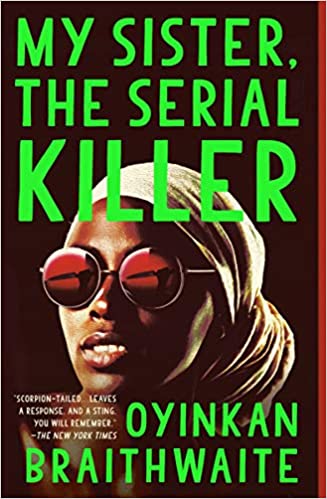
My Sister, the Serial Killer by Oyinkan Braithwaite

Readers of this blog might by now know that I am capable of calling a book about a serial killer light-hearted. Here it is. This is a fun romp about a serial killer.

First-person narrator Korede is a competent nurse at a hospital, where she has a serious crush on a doctor named Tade. He considers her a friend, but nothing more. She is also the responsible sister, and good thing, because her younger sister Ayoola needs one. Their mother is a bit flighty and detached; Korede’s one ally at home is the house girl, otherwise unnamed, another competent but invisible type. Korede and Ayoola’s abusive father, thank goodness, is dead.

Ayoola is a very different sort: stunningly beautiful, she attracts attention everywhere she goes. Men court her and buy her things; women want to be her. She is utterly spoiled, possibly a sociopath, and she has a bad habit of stabbing her boyfriends to death. Thank goodness for Korede’s (perhaps unhealthy) obsession with cleaning products. She knows just how to get the blood out, cover up smells, and where to dispose of the bodies. Her conscience is beginning to nag, however, and so she does what any invisible hospital worker would do: she confides at great length to a kindly-seeming man deep in a coma. You might guess how that winds up.

The delicate arrangement Korede and Ayoola have established to deal with Ayoola’s violent habit is beginning to fray for several reasons, but one event that pushes it to a head is when Tade, Korede’s beloved doctor, asks for Ayoola’s number. The long-overlooked elder sister is forced to decide: is she really willing to protect Ayoola in all scenarios? At all costs?

Chapters are very short, at most a few pages, which is part of what contributes to My Sister, the Serial Killer‘s sense of momentum. I had to force myself to put this one down and get to bed on a school night; it rather demands a single-sitting read. As the present-tense story of Tade’s infatuation with Ayoola unfolds, we also get flashbacks, in chapters titled “Father,” to the story of that patriarch. Braithwaite in no way answers all the reader’s curiosities about this dysfunctional family, but there are surprises along the way, nonetheless.

This novel is set in Lagos, with some Yoruba language sprinkled in, and the family’s foods were often foreign (and interesting) to me. The Lagos police are woefully corrupt and/or incompetent, but other than these details for flavor, if you will, the setting didn’t have an enormous effect on the story.

Despite Ayoola’s murderous tendencies (and generally annoying personality), there is, again, a sense of fun about Korede’s situation: the antics of the women she works with, and Ayoola’s completely ridiculous nonchalance. I felt like the story could keep going, and I would definitely read another installment about Korede’s hapless existence.


Rating: 7 shoes.

The Care and Feeding of Ravenously Hungry Girls by Anissa Gray

Once there was a family. The mother died when her children were young; the father, a traveling preacher, remained mostly absent. The eldest sister, Althea, raised her younger siblings. They are Viola, Joe, and the baby, Lillian. A generation later, Althea and her husband Proctor have twin girls, Kim and Baby Viola. Until recently, they also had a successful restaurant in a struggling Michigan town following a devastating flood (locally called the Great Flood). The couple was trusted in town; they ran fundraisers and charity events for those who lost everything. But then it came out that they’d been skimming off the charity donations. Now, Althea and Proctor are facing a trial and possibly serious time for this transgression. The townspeople have turned against them (Althea’s lawyer says, “the community probably wants to see a public hanging”). Lillian has care of the disgruntled teenaged girls; Viola is en route home from Chicago to lend a hand, although she is beset by problems of her own. And Joe turns up, which is not necessarily a good thing.

Althea refuses to let her daughters visit her. Lillian is losing control, particularly of Kim, the difficult child to Baby Vi’s obedient one. Viola is breaking down mid-road-trip. Joe’s past sins remain unresolved. The legacies of their parents do not rest easy. They come together in the family home, which Lillian has renovated to remove some – but not all – its painful stains; she’s also moved in her former-grandmother-in-law, just to enliven this mess of relationships.

The Care and Feeding of Ravenously Hungry Girls is an emphatically character-driven novel, and these characters are wonderfully formed: a mess in all the best ways. Viola is a practicing therapist plagued by her own eating disorder and her failing marriage to a rather saintly, patient woman whom the reader really wants to see her with. Lillian’s childhood trauma has left her obsessive-compulsive and guilt-ridden – it is in part this guilt that causes her to care for the elderly Chinese woman with broken English whose grandson she’s wronged, but the friendship that results is in fact a gift. Althea’s mood is foul enough to keep her somewhat opaque, but she is also the heart of this family; just because she was the responsible eldest does not mean she’s escaped her own wounds. The novel follows the three sisters most closely, with chapters moving among their points of view. The title refers to Viola’s eating disorder, to the various literal and figurative hungers of the sisters, and beyond.

Proctor, whom we see less of – in flashbacks to the time before the arrests; in emails to his wife as they are both incarcerated – is still a lovely character, whose love of music has been a gift to his daughters, and who sends punny musical hints to Althea as a game they used to play. He at one point quotes the lyrics of Jason Isbell (whom he leaves unnamed, but I am the reader for this moment, y’all, so you know that gave me a thrill). There are other still more minor characters who make a real impact on the world Anissa Gray builds here, including Viola’s and Lillian’s respective childhood friends, Kim’s goofy stoner boyfriend, and the women Althea serves times with.

There are a few plot-level details that never especially coalesced for me. The Great Flood this small town has experienced feels like a looming matter of importance that never quite comes to life, although the long-dead mother had some comments to make about women, water, and rivers that should have connected a bit more strongly there. The crimes Althea and Proctor committed – fleecing their neighbors – are sort of neither here nor there; the plot needed them incarcerated, but it never matters much what they did. I spent some time considering this: Gray had to define their crime, of course, couldn’t just leave it unnamed; but this feels like an odd choice. It’s ethically quite off-putting, while in the grand scheme of things (murder, for example) also relatively minor (embezzlement?), and we’re left with a vague sense of the agency with which the crime was committed. It felt a little bit like Chekhov’s gun never went off. These are minor concerns, and it’s not unusual that a novel so gorgeously and richly character-driven might have some plot weaknesses, but I noticed.

The timeline of Care and Feeding is pretty tight, mostly contained within a few weeks as Althea and Proctor’s trial approaches, their sentences are set, and the immediate fallout occurs. There are flashbacks to earlier times (all the way back to the four siblings’ youth), and a final epilogue-style section set after the dust has settled. But chiefly, this novel is concerned with the quasi-locked-room situation when Lillian and Viola come together to sort out family histories and unhealed wounds. It’s about relationships, the pull of the past, the question of cycles broken or continued, and love.

I found it absorbing; I enjoyed sinking in to the lives of these women and girls, getting to know them, accompanying them. I cared, and they felt very real and immediate. If I cocked my head at the odd and somewhat unresolved crimes Althea and Proctor have committed, so be it; life is sometimes confusing in this way. As a story of regular, imperfect, but good people dealing with life’s confusions, The Care and Feeding of Ravenously Hungry Girls was more than satisfying. Gray’s brief “Beyond the Book” essay at the back of my paperback edition tells us that Viola was a fictional character who just wouldn’t go away, who demanded her story be told. And that makes perfect sense to me; I too would follow Viola wherever she wants to take me, narratively speaking. I would read more.


Rating: 7 1/2 Snickers bars.

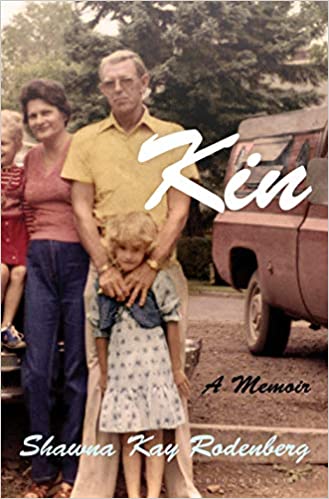
Maximum Shelf: Kin by Shawna Kay Rodenberg

Maximum Shelf is the weekly Shelf Awareness feature focusing on an upcoming title we love and believe will be a great handselling opportunity for booksellers everywhere. The features are written by our editors and reviewers and the publisher has helped support the issue.

This review was published by Shelf Awareness on February 17, 2021.


Shawna Kay Rodenberg’s harrowing memoir Kin leads the reader backward and forward in time and across an American landscape of trauma and healing. With a persistent focus on family and home, Rodenberg documents a process of learning and personal growth that is both unique and universal.

Kin opens in 2017, as the author guides CBS reporters though her native eastern Kentucky. They seek to crack open what they see as Trump country, and Rodenberg hopes to complicate that story. The backdrop is “my family’s mountain, the mountain where my grandfather mined coal, where my father was reared with great love and brutality, where I picked my grandmother’s strawberries and my grandfather’s roses… the mountain on which my family sought refuge after leaving The Body, an end-times wilderness community, cloistered in the woods of northern Minnesota, that my father joined when he was red-eyed and mad with fear, following his tour of duty in Vietnam.” The narrative then moves back in time to Rodenberg’s childhood in Grand Marais, Minn., and the purposeful deprivations of The Body.

Rodenberg’s upbringing in this strict religious sect gives her a cultural background that will make it hard for her to fit in later, and she suffers more than one form of abuse within The Body, including her father’s recurrent rages. “Instead of following in alcoholic, workaholic footsteps, he made religion his primary vice, religion that was unconventional, ecstatic, even perhaps rebellious–and virtually militaristic, which must have felt familiar.” The family eventually moves back to the secular world, to Ohio, to Kentucky and finally to the mountain of family origin. The austere, often angry influences of The Body will follow them.

This memoir recounts family stories, some from Rodenberg’s memories, some passed down. She writes of each of her parents’ childhoods, and of her aunts, uncles, cousins, grandparents and neighbors. She recounts the history of her hometown, Seco, Ky., a former coal-mining camp. Kin begins well before the traumatic story of Shawna’s birth, “bruised-ass-backward into a world of chaos.” The chronology is disjointed, jumping back and forth, shifting timelines as well as locations, which can be disorienting for the reader, but that effect feels true to the narrator’s experience: Kentucky exerts a strong pull even in Minnesota, and pains felt by generations past are ever present.

At each stage, Rodenberg struggles with the meaning and shape of love and caring, and the confusing truth that those who love us most can hurt us most. Religion will continue to play a large role in her life, complicated by her father’s movements to and away from a strict adherence to The Body’s teachings. She will continue to wrestle with sex and the aftermath of childhood sexual abuse, through her troubled first attempt at college and beyond. Kin closes with Rodenberg on the cusp of pregnancy and marriage, but hints at what is to come: “I wish I could tell [that earlier version of myself] she had come to the beginning, not the end.”

Rodenberg’s prose is graceful and effortless, vulnerable and raw, beautifully descriptive without drawing attention to itself. She emphasizes character of place, from coal country where women “kept the food covered and draped cribs with quilts to keep the dust off their babies” to “town-sized time capsules, stoppered and sealed…. Barns sank beneath fields of kudzu and the roofs of old houses bowed in the middle like the backs of the ancient, singular mares that waited outside to be fed and put away.”

While Kin is first and centrally a memoir of family, it is also about Appalachia, about histories more complicated than the opening scene’s reporters care to see. It is ultimately about forgiveness, understanding and love. Rodenberg seeks an emotional reconciliation with her parents, especially the father she has butted heads with all her life. Of that battle, “even now, writing about it fills me with worry that I might be inadvertently reengaging, and that is why talking about it, why telling was and still is the hardest thing…. This is what it means to come from people who have been broken and exploited, they see the world in sides, theirs and the other, and disloyalty is the gravest offense, the blasphemy of the mountains.” In a world of just two sides, it might be an act of rebellion to both love someone and hold them responsible.

As narrator, Rodenberg is intelligent and insightful. As character, she is resourceful, scrappy, defiant, brave and exposed. Her memoir is heart-rending and hard-won. “I didn’t know when I started writing this book that it would become my own book of Revelations, rife with warning and promise, an account of my own and other apocalypses that created me, end times that predated me but shaped me as surely as if I’d lived through them myself.” That sense of regional and filial legacy defines Kin, a work of nuance that complicates received narratives in all the best ways.


Rating: 7 skirts.

Come back Monday for my interview with Rodenberg.

Red at the Bone by Jacqueline Woodson

At just under 200 pages, Red at the Bone is a brief novel, but rich. I read most of it in a single day and finished it the following, but that doesn’t mean it’s not full of feeling. In fact, it has the kind of multigenerational sweep that we usually find in big, fat novels of 500+ pages, the kind that require lots of time and rest to take in. I appreciated the compressed depth.

Each chapter takes a close third-person perspective (sometimes first person) of a different person in the family, beginning with sixteen-year-old Melody, on the night of her presentation to society in a formal ceremony in her grandparents’ Brooklyn brownstone. The first word of this novel is ‘but,’ which you don’t see very often: “But that afternoon there was an orchestra playing.” They’re playing Prince’s “Darling Nikki,” but without the lyrics, naturally.

In other words, the novel begins in media res. Gradually we move through the perspectives of Melody’s mother Iris and father Aubrey, and Iris’s parents Sabe and Po-Boy; in their memories, especially Sabe’s, we learn of earlier generations. This family has come from all over – Aubrey from cities up and down the Gulf Coast, his mother from Santa Cruz and Berkeley; Sabe’s family stretches back to Tulsa and, crucially, the massacre of 1921. When Iris gets pregnant as a teenager, Aubrey is all in, but she wants to get out, and eventually goes away to college at Oberlin where her world widens while Aubrey and baby Melody make a family with Sabe and Po-Boy in the brownstone of the opening scene. The “fire and gold” remembered from Tulsa reaches forward in time to 9/11, and beyond.

This is a story about family and legacy, about what does and doesn’t carry from one generation to the next, about love and changing cultures and also about class. It has tragedy and comedy and love and heartbreak and love – again, that large and sweeping scope, but in a compact form, easy to take in practically in a single sitting. This is some very fine storytelling, especially because each chapter inhabits a different voice. And I appreciate all the markers of culture and time, like music, literature and fashion. In other words, Red at the Bone checks a lot of fine-fiction boxes in a really accessible package (no small feat). Woodson makes it look effortless. I enjoyed Another Brooklyn, but I think this one is better still. I’ll look for more from this author.


Rating: 8 drops of milk.