World of Wonders: In Praise of Fireflies, Whale Sharks, and Other Astonishments by Aimee Nezhukumatathil, illustrated by Fumi Nakamura

World of Wonders is a lovely, thoughtful series of meditations, charmingly illustrated, with love and awe on every page but never shying away from the prickliness of life.

Poet Aimee Nezhukumatathil (Oceanic) stuns with her nonfiction debut, World of Wonders: In Praise of Fireflies, Whale Sharks, and Other Astonishments, delightfully illustrated by Fumi Nakamura. These essays explore the natural world and the human experience, finding parallels, meaning and beauty in the intersections.

“A catalpa can give two brown girls in western Kansas a green umbrella from the sun,” Nezhukumatathil begins. This is an apt and representative line: place-specific, beautifully phrased, with reference to some of the identities these essays will explore. They are mostly titled for the plants and creatures they center–peacock, comb jelly, narwhal, dancing frog–with a few exceptions, such as the expressively named “Questions While Searching for Birds with My Half-White Sons, Aged Six and Nine, National Audubon Bird Count Day in Oxford, MS.” The red-spotted newt and dragon fruit that title their respective essays receive Nezhukumatathil’s attentive study and yes, wonder, but the author’s own experience is always a second thread. She brings a poet’s ear for language and an eye for commonality and metaphor, both reverent of the natural world and specific in her personal story.

Fireflies, touch-me-nots and flamingoes offer her a way to talk about being a brown girl in a white man’s world, growing up in the era of Stranger Danger and feeling disjointed between continents. A young Aimee is asked to draw an animal for a class assignment in Phoenix, Ariz. She responds with a resplendent peacock, India’s national bird, but is chastised and asked for an American bird. Her bald eagle wins a prize but causes her shame. Fumi Nakamura’s accompanying illustrations are whimsical and warm–who doesn’t love an axolotl’s smile?–and sweetly complement Nezhukumatathil’s prose.

World of Wonders offers a series of brief naturalist lessons, but is perhaps at its best in drawing connections, as between the axolotl’s smile and what to do “if a white girl tries to tell you what your brown skin can and cannot wear for makeup.” When it goes boom, “the cassowary is still trying to tell us something.” “And just like the potoo, who is rewarded for her stillness by having her lunch practically fly right to her mouth–perhaps you could try a little tranquility, find a little tenderness in your quiet. Who knows what feathered gifts await?” Wisdom, wonder and beauty make this slim collection one to treasure.


This review originally ran in the August 11, 2020 issue of Shelf Awareness for the Book Trade. To subscribe, click here.


Rating: 9 pale berries growing in spite of the dark.

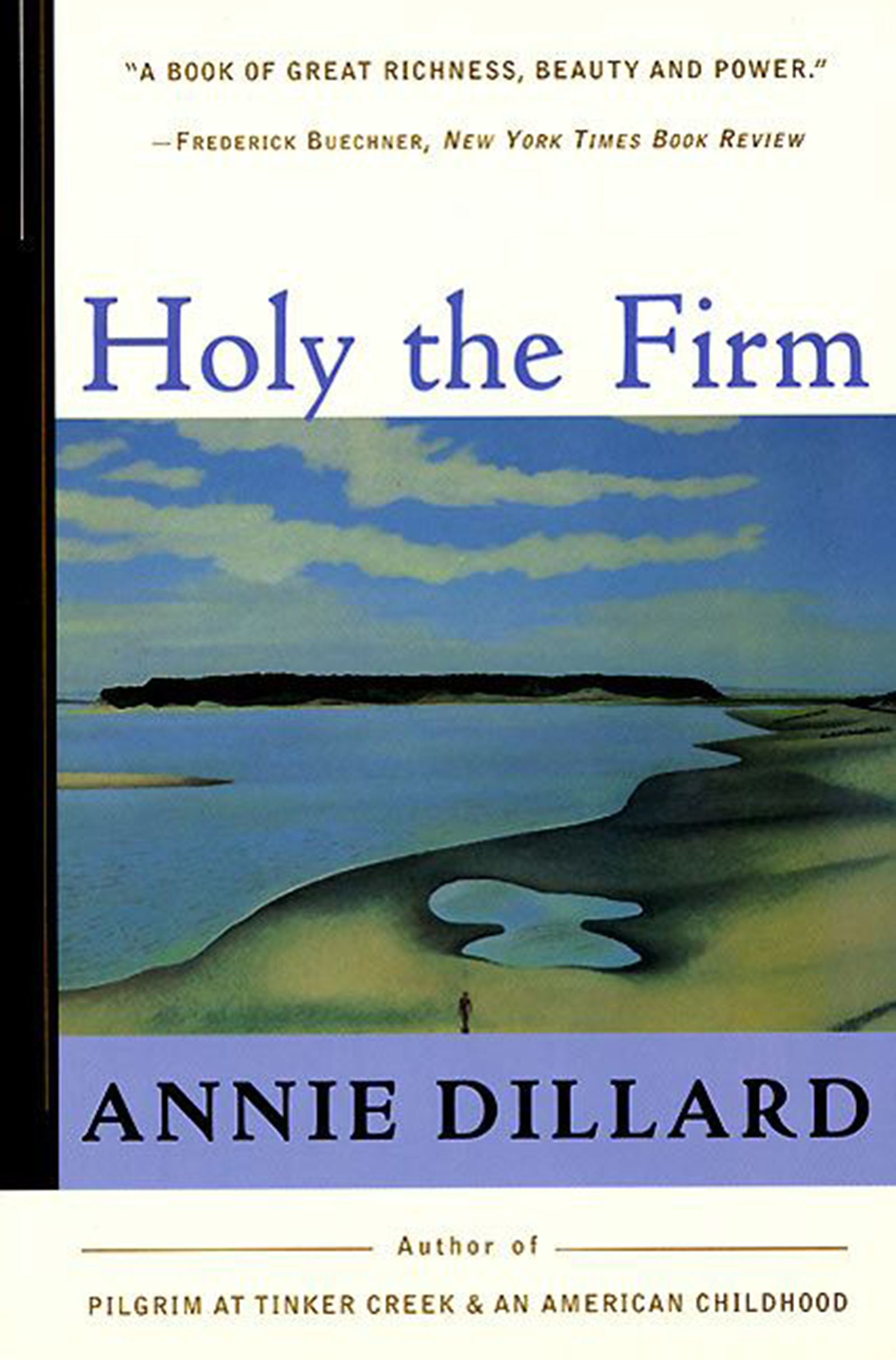
Holy the Firm by Annie Dillard

My buddy Vince lent me his copy of this very slim collection (just three essays, under 70 pages), saying he’d found it very comforting early in the pandemic and social isolation, and pointing out that the essays refer to Dillard’s time in the Pacific Northwest, when isolation was a bit of a theme for her.

My relationship with Dillard’s writing has been complicated since the beginning, when I read Pilgrim at Tinker Creek and loved it, but not without qualification. We’ve had our ups and downs. When I found out that the rose-printing, bloody-pawed cat at the beginning of that book was a fiction, my trust was broken, and it turns out that I’m still dealing with that.

The three essays that make up Holy the Firm feel representative of Dillard’s work, although perhaps a bit at the abstract end of the spectrum, with fewer (as I told Vince) sticks and bugs than I prefer. It’s the minutia, the close attention to sticks and bugs, that I loved most about Pilgrim. And I am not the intended audience for musings on God, religion, or the church. I found myself often screwing up my face, a bit impatient with her (and when she describes her cat’s behaviors, I’m still hung up on the made-up cat, and unable to buy in). Put briefly, I’m sure this brief collection has a lot to offer the right reader, but it wasn’t for me on the whole.

There were, however, some lovely lines.

The earth is a mineral speckle planted in trees.

It is the best joke there is, that we are here, and fools–that we are sown into time like so much corn, that we are souls sprinkled at random like salt into time and dissolved here…

Yet some have imagined well, with honesty and art, the detail of such a life, and have described it with such grace, that we mistake vision for history, dream for description, and fancy that life has devolved.

On the other hand, I was suspicious of Dillard’s claim that “No drugs ease the pain of third-degree burns, because burns destroy skin: the drugs simply leak into the sheets.” (Indeed, a few websites indicate otherwise.) I’m not sure I believe in the burning moth in the first essay; I’m suspicious of the story of Julie Norwich (and offended by some of Dillard’s gendered expectations for her). This author and I may not be made for each other. We may have different priorities; we certainly have different rules for what constitutes nonfiction. But I still get to keep what I loved about Pilgrim. It’s nice that books work that way.

My favorite passage in the whole book was the one about buying communion wine.

How can I buy the communion wine? Who am I to buy the communion wine? Someone has to buy the communion wine… Shouldn’t I be wearing robes and, especially, a mask? Shouldn’t I make the communion wine? Are there holy grapes, is there holy ground, is anything here holy? There are no holy grapes, there is no holy ground, nor is there anyone but us…

I’m out on the road again walking, and toting a backload of God.

In the end, I’m left with a sense of dissatisfaction with the essays as a whole, and a sense of grumpiness toward Dillard. But in the details, in individual lines, I definitely found moments to love. Perhaps more than ever, keep in mind that your reaction to this book will be different than my own – recall Vince’s recommendation and appreciation. To each her own.


Rating: 5 accidents.

Curious Atoms: A History with Physics by Susanne Paola Antonetta

Full disclosure: the author was a professor and mentor of mine at Western Washington University.

Curious Atoms is an essay chapbook, 50-some pages in length, dealing with physics and the author’s own life experiences: part memoir and part science, told by a serious reader of physics but with no formal training in the hard sciences (as far as I can tell). “A History with Physics” feels like an apt subtitle.

There is a certain density to this subject matter. For one thing, admittedly I neither much understand nor much care about the theoretical physics discussed here; I had to let it go by, try to meet it where I found it and move on. But it didn’t hinder my appreciation for the writing, because a great writer can carry us through any subject. (Although I might have gotten more out of this had I been more comfortable with quantum whatnots.) The physics might challenge you as it did me. The personal material is heavy in a different way; Antonetta delves into her experience with bipolar disorder, with mental health and treatment, stigma, medication, and more. She’s also a deeply intelligent and well-read narrator, ranging widely. It’s not an easy read in a few ways, but a rewarding one. I love that wide-ranging headiness, and I loved feeling like I could hear the voice again of a woman I got to hear speak in a classroom a few days a week – that was a real privilege.

Here are a few lovely, thought-provoking, representative lines.

To bring to the lyric the mind and body that I have, and speak from the lyric soul, I cannot. I’m not sure what of mine can be called mine, body or mind; the lyric, with textbook definition of “the personal emotions and thoughts of a single speaker,” wants a warm hand, not mineral. I am not an individual, quite, but a chemo-dual.

That “our bodies of difference,” as Stephen Kuusisto writes, “offer crucial ways of knowing” I do believe. I can only give the cellular knowing of my chemical history, with the punctuation of what I suppose I really am, unmixed: hysteria under the bed, glitter. I can talk about 1970s psychiatry, the time I first encountered as a girl patients preyed on sexually, the awful, always visible electroshock machine, used as treatment and threat, its aftermath a gelled amnesia. I do not think, however, that such memoirizing would get to the question.

Gifted memoirist writes that memoirizing is not the solution. Note the interest in the idea of dualism or multiplicity, as in the multiverse, as in bipolar, as in the highs and lows of minds and lives.

Better still – I apologize that this review is half quoted text, but David Lazar’s brief introduction is too perfect to pass up. I think he describes the collection perfectly, and I couldn’t agree with his final statement more.

Susanne Paola Antonetta’s essays are full of erudition and stunning self-appraisals, hair-pin turns between metaphysics and splintered pieces of autobiography, dark energy and light asides, tossed off like hand grenades. These essays are sculpted – I’m tempted to say forged (so necessary is each sentence, even each word one feels). Yet in the midst of work so exorbitantly cooked, the raw springs of the felt occasion drive the essayist through her thought-projects. I loved being in the company of this mind.

You can view the entire chapbook here, and you really should.


Rating: 8 sides.

Stratford Festival on Film presents King Lear (2015); and my weekly update

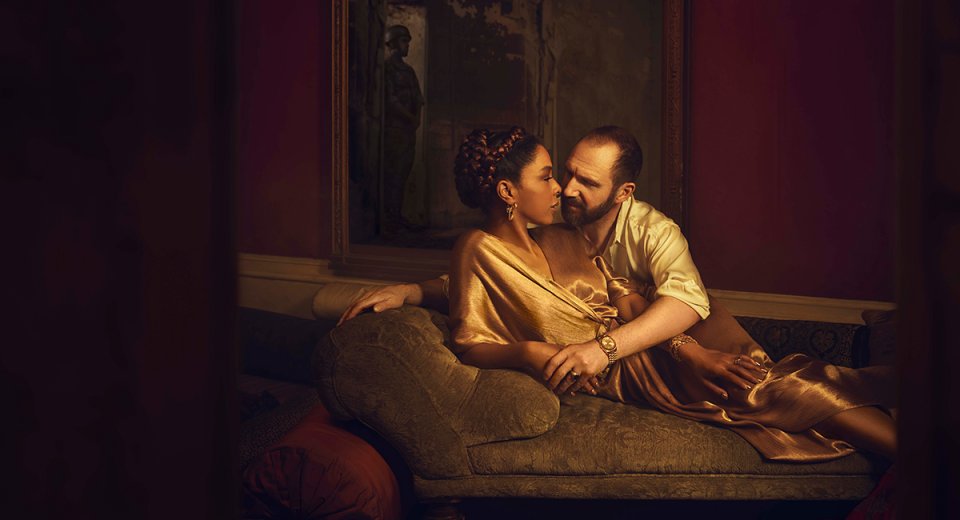
I tried to watch NT Live’s Antony and Cleopatra. I’m far more enamored of Shakespeare’s comedies than his tragedies, and this tragedy/history (with lots of battles and allegiances that I do not find compelling), with which I’m not previously familiar, just didn’t work for me. If you expect a different outcome, by all means give it a look here. I’m sure it’s a fine performance, and Ralph Fiennes looks to be a passionate Antony (who incongruously drinks St. Pauli Girl), and Sophie Okonedo is a powerful Cleopatra. But I couldn’t get into it, and sometimes it works out that way. I’m pretty excited about the next few shows, though! Check those out here.

Antony and Cleopatra: certainly gorgeous.

Happily, my father had just passed on some additional Shakespeare opportunities via Bard on the Beach – truly a wealth of options. I had planned on the Stratford (Ontario) Festival’s production of King Lear until a friend of mine posted up the access to the New York Shakespeare Festival’s production of same – starring James Earl Jones! It’s a strange, Shakespeare-rich pandemic we are living through. I was a little tempted to try to watch both, sort of side-by-side, a few minutes at a time, but questioned whether I had five and a half hours of Lear in me.

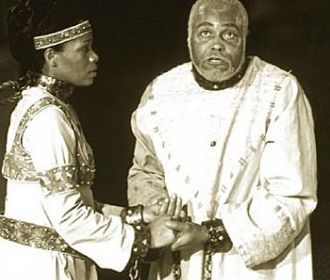
Stratford’s Lear and Cordelia

Well, I just couldn’t choose, and so I began with the first half-hour of New York and then the first half hour of Stratford. After that sampling, my judgment was: James Earl Jones is an excellent Lear; Colm Feore was an equally excellent Lear, but the rest of the cast at Stratford won by a landslide. (The latter’s 2015 production date, compared with 1974 in New York, didn’t hurt – the more modern was understandably much more slick and visually appealing, and the sound quality much superior.) I settled in to watch the Stratford production. But I couldn’t leave Jones, either, and so every time Lear had a compelling scene I switched over to see Jones’s version of it. I ended up watching about four and a half hours of Lear after all.

New York’s Lear and Cordelia

…Which puts the lie to my statement that I find Shakespeare’s tragedies less appealing. This is really an outstanding play, and one I hadn’t revisited in many years. It seems questionable, but I remember studying this one in middle school, and watching a film version? I don’t know. I love that this play has it all: comedy, treachery the wise fool, and truly a quintessential tragedy of hubris and temporary blindness (as well as literal blindness). The father/child relationship is explored in several different plotlines, which I found a pleasing but not overdone parallel. It’s also the play that yields such famous Shakespeare lines as

How sharper than a serpent’s tooth it is to have a thankless child!

That way madness lies

I am a man more sinned against than sinning

‘Tis the times’ plague, when madmen lead the blind.

As well as the quotable

Thou art a boil, a plague sore, an embossed carbuncle in my corrupted blood.

I was deeply pleased with the play itself. But also the acting – I was thoroughly absorbed in Feore’s Lear, the compelling Goneril and Regan, and the scheming Edmund. Even Cordelia, who can be a bit prim, was played feelingly by Sara Farb. Albany, Cornwell, and Kent – all memorable roles. The fool was masterful. By contrast, I found the New York company a bit under-dramatic; maybe it was the theatrical fashion of 1974 to downplay the drama. (The Stratford cast was much more white, and I appreciated the diversity in New York’s, but my feeling about the acting remains.) I except Jones from that criticism, of course; he was passionate and resounding, as he is at his best. The two Lears were quite different but both lovely; I loved being able to see them side-by-side. I do recommend this way of immersing yourself in the play, if you’ve the time and inclination! And hey, as usual your mileage may vary as to the relative strengths of each show. Try ’em both. I’m very pleased with how I spent my Saturday night.

In other news, Pops sent me this essay from Orion: “Losers Keepers” by Robert Michael Pyle. I love Bob Pyle, and I love an objects focus (as you may have noticed). This is a beautiful short meditation on objects, loss, and the temporary nature of people and things; he explores the sort of materialism that causes us to love our old and battered possessions even if we maybe don’t entirely fit the standard definitions of materialism. I found the final line spellbinding, and I really enjoyed what felt like revisiting an old friend with this quick read. Thanks, Pops.

Also this week, I attended a Patterson Hood concert on the evening before my birthday (thank you, thank you), livestreamed from his attic. It was very special – he read an excerpt from his memoir-in-progress, and played some deep cuts, and said we should all #runwithMaud, and generally treated us to what felt like a really intimate, personal evening. I loved being able to see this show in my PJs with my dog in my lap, as a special birthday treat.

Patterson Hood in my living room

In other news I’ve been painting and making some solar prints, reading a lot and sort of bouncing off the walls – after a week of up-and-down weather it snowed for two days this weekend, just in case this wasn’t already an exceptionally weird time to be alive. Hops and I will be looking for some good hikes once things clear up again. I’m getting to know my Kindle well. I poked into a few new television series but rejected each of them. I really wish there were more of The Wire. Let’s see… I worked two jigsaw puzzles and I won’t be doing any more of those; I’m too obsessive. In the absence of gym or lap pool, I’ve been doing exercise videos when the weather turns crappy, and Hops gives me the most withering, disgusted looks – I should document his reaction to my workouts for you all! Okay, back to books on Wednesday (and back to NT Live this weekend!). Thanks for bearing with me, all.

The Hero by Lee Child (audio)

Not a Jack Reacher novella, but an essay. Lee Child (as himself, for the first time in my reading experience) explores the concept of “the hero,” as archetype and as cultural tradition, in this hour-and-change. It opens with the history of opium, or rather of humans’ relationship to opium, in its various forms, as revealed by the archaeological record. This brings us to the book’s subject via that coined name for an opium derivative: heroin, as relates to hero. Etymology as guiding principle! I love it! Some of the reviews on Goodreads are laughably harsh, but that’s an issue of people not appreciating etymology or failing to grasp the concept of “essay” (and to be fair, some of these poor souls thought they were getting a Reacher novella. Which actually I did as well, but I transition between Reacher and the essayistic form more easily than some).

From opium and heroin we move through archaeology and the history and development of human societies (comparison of homo sapiens to homo neanderthalensis), including the move from the hunter-gatherer lifestyle to agriculture, always with a focus on the developing importance of storytelling. Storytelling, Child writes, is a survival mechanism, part of evolution. “Encouraging, empowering, emboldening stories… somehow made it more likely the listener would still be alive in the morning.” Stories are instructive, he explains, and developed from the first use of language which was strictly nonfiction. There was no evolutionary advantage to claiming that there was a predator over the next rise, or prey or berries to be had around the next bend of the river, if it wasn’t true. The move to fiction was a big jump, and had to serve other purposes. Encouraging, empowering, emboldening, and instructing. The girl who met a tiger and ran fast and got away; later, the girl who met a tiger but she carried an axe and successfully fought it off.

Which brings me to a feature of this essay that I appreciate: that it centers women. Child tracks his own link to early homo sapiens and homo sapiens sapiens through the female line. As his own mother had no female child, he considers that line to have died out. Women tend to be the storytellers, and the early protagonists, in the histories he tells. It’s refreshing, when history is so often male-centered.

Another central feature is the importance of language, etymologies, and the joys and rigors of linguistics. (Child’s daughter Ruth is a linguist.) Words matter; and they tell stories. Rivals were originally in competition for rivers or for riverfront real estate. Heroin is named for the concept of the hero.

Reacher’s usual confidence in making logical connections and claiming theories is recognizable here as Child’s own. I’m not an academic in the field of human evolution as told through the archaeological record, nor am I a linguist; I have the sense that he sets forth some theories that are perhaps less than orthodox, but he does so with great assurance. It’s a style of writing that works well for me. This is Reacher as an academic. Jeff Harding’s narration feels spot-on.

A contemplation of language, story, and the archetypal (and ever-evolving) hero in human history: if this stuff sounds like your cuppa, and especially if you like Reacher too, do yourself a favor and check out this novella-length essay. It’s engrossing. (Also, there’s a nice, representative sample available here. Or another here.) Or if you just want a laugh, go check out those Goodreads reviews. Not every book for every reader…


did not finish: Erosion: Essays of Undoing by Terry Tempest Williams

I stopped at page 238 of 314, in my galley copy, but that’s three quarters of the book, and I feel warranted to share my reactions. This was to have been a Shelf Awareness review, but I had too many concerns about this book. And you must know how it pains me to criticize a writer I love; but I have to say honestly that this book does not live up to her best work.

Erosion: Essays of Undoing is a collection of Williams’s work in the last few years, in the disturbing times of Trump, concerned in particular with the decimation of Bears Ears and Grand Staircase-Escalante National Monuments (but of course all of the disturbing trends we’re seeing). In the spirit and style of Williams as many of us have come to know and love her, she reacts: with pain, with home, with spirituality, with connection, with often lovely writing. But in many ways, Erosion falls short.

For one thing, there are several ways to put together an essay collection, and this one feels clearly like a gathering up of published work of the last several years, putting them into a certain order and stapling them at the corners. There is an enormous amount of redundant information here: in particular, the signing of the two National Monuments into existence by Obama and their undoing by Trump are explicated a number of times in very few pages, and in similar wording. This feels really lazy. I just recently put together my MFA thesis, sort of a memoir-in-essays, and those essays started out with quite a bit of redundancy; I spent months reworking them to be sure they flowed smoothly and didn’t restate; my thesis advisor worked me pretty hard, because we had high standards for that product, which is just a little ol’ MFA thesis that maybe no one will ever read. I certainly intend to hold Williams to the same standard. I think it shows a lack of respect for her readership to throw this collection together like this. The inclusion of several poems, and an interview with Tim DeChristopher, could certainly have worked in a more carefully put together book, but here they feel haphazardly inserted, as if trying to make a certain page count.

The Williams style can be a little vague and mystical; I have a lower tolerance for (shall we say) the woo-woo than some readers, but in the past she’s made it work for me – beautifully, in fact – in the right proportions and with the right subject matter. In those successful books, she earns it with a careful attention to her surroundings, a quiet, humble voice that I read as an authority on her subjects. Here, that signature style failed to perform. I think it’s in part because this book is much more polemic, timely, policy-related; the vagueness doesn’t resonate as wisdom but rather feels like a shortcoming. I marked the line “Scientists credit the ESA for saving 227 species from going extinct,” wondering which scientists and when they said it; but with no bibliography or footnotes, I regret that this author loses some credibility.

An essay about her losing her job was revealing in a few ways. To sum up: in an act of civil disobedience, Williams purchased at auction the oil and gas leasing rights to a plot of public land. Shortly thereafter she was fired from her longtime position at the University of Utah, which she feels was politically motivated (and it makes a lot of sense to me that it was), although that is denied. The university, she says, claims “I was making too much money for doing too little compared to teaching fellows who were teaching several classes a semester, something like that.” It’s the “something like that” that got under my skin; it felt dismissive of the teaching fellows, and dismissive of the concern that the university may need to spend its limited funds (or didn’t you know that education funding is decimated these days, Terry?) on teaching hours rather than the author’s pet project (which I’m sure is a fine one, certainly). She goes on to claim that being asked to teach out of a classroom with four walls, and have field trips approved rather than happen at her whim, felt like a “straitjacket.” This strikes me as a bit shrill, and feels like the voice of privilege: a longstanding professor who is used to going outside the rulebook is appalled that she is being asked to at least start from a classroom. It’s a the-rules-don’t-apply-to-me sort of attitude which I think makes her case much less sympathetic.

From here we learn that, having lost her job, the narrator is interested in selling more articles and essays for publication to make a little income while she figures things out; and this was an aha! moment for me. Aha! Terry Tempest Williams sees that, with her name, she can sell a book of collected essays, a few poems, and an interview, many (all?) of them previously published, without massaging them into place or editing them at all. I see the book in my hands taking shape.

I can see now that Williams’s oldest books have worked best for me, and more recently they fall a little short. You know that my admiration for Pieces of White Shell continues. I had begun to think that maybe my criticism of this book came from my recent time in a writing program, that I was too quick to see where sentences, paragraphs, whole essays needed further editing. But I taught from Pieces of White Shell within the last year, and I’ve read and admired other books recently; it’s not like I’m impossible to please. I’m even forgiving of a few weak lines here and there, because none of us is perfect (although not all of us have access to the editing teams at FSG’s Sarah Crichton Books, either).

There’s something else I noted here that I don’t think counts as a vote against Williams, but it’s something I want to remember for clarification’s sake: I (and perhaps others) had been thinking of Williams as an environmental writer for the U.S., but that’s not right. She’s really about her own region, and not the rest of the country. I think this accounts for part of my concern with The Hour of Land, that she was so hard on Gettysburg and mostly stuck to the west. It’s normal, I believe, for us to have regional loyalties; no one can know a place as big as this country as well as they can know their own backyard. But be clear: Williams is not here for the Pacific Northwest, or Appalachia, or the Midwest or the South or, or – she’s here for the desert Southwest, her homeland and her love. Nothing wrong with that. But I need to remember it and not get confused.

I know I’ve been harsh here. Maybe it’s hard to be let down by an author I’ve admired; maybe I’m harder on her than a new reader would be, because I’m holding her to the high standard of her earlier work as it affected me. It’s hard to see our heroes fall. But this book struck me as lazy, and Williams’s narrative voice as increasingly self-referential and unaware of privilege. I’m disappointed.

On the other hand, of course, her heart is still very much in the right place as far as I’m concerned (although our regional focuses are different), and I have a sense of nostalgia for a voice I recognize. I only wish I didn’t feel like she were phoning it in.


Rating: 5 pronghorns.

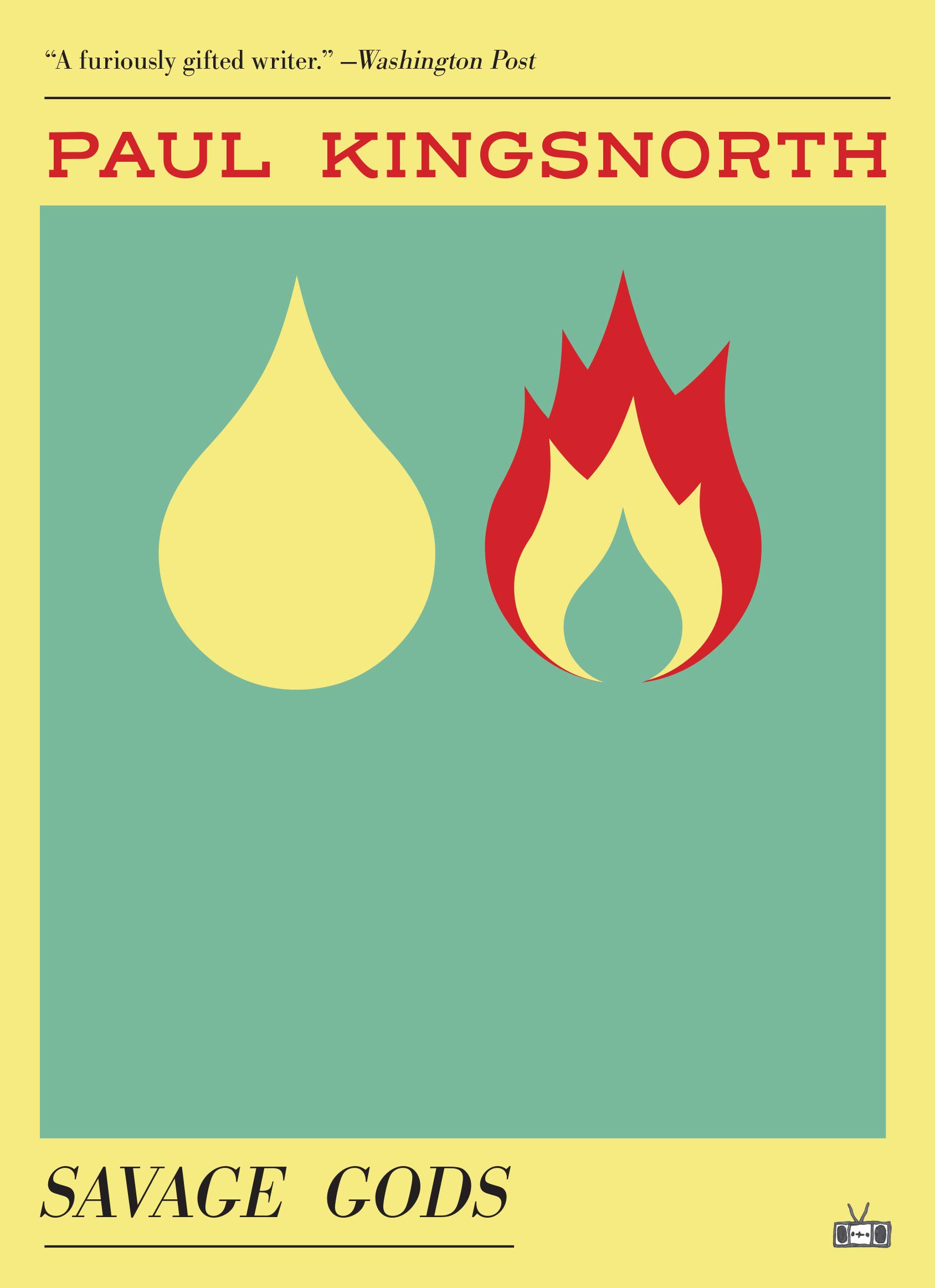
Savage Gods by Paul Kingsnorth

Disclosure: I was sent an advanced copy of this book in exchange for my honest review, because I was a preexisting Kingsnorth fan.


If I read nothing for a year and if I wrote nothing for a year, would I, could I, begin to clear away the scaffolding which language, written language, conceptual, abstract language, has built up around my poor right brain? Could I fend off the assault which logic, reason, empiricism, analysis has been raining on my inner poet all my adult life? Could I silence the watcher? Could I split the gauze?

(I would quote the entire first two pages to you if I could.)

Savage Gods is a raw piece of questioning nonfiction, an honest and open view into the soul of a writer at a loss for words and mission. Paul Kingsnorth has moved with his family to a home in rural Ireland, where he hopes to finally feel at home in a place, to finally belong. This plan has failed, and he is compelled to contemplate all the ways in which plans fail, and people–especially writers–especially Paul–fail to fit in, even when they think that’s what they really want. This wandering, seeking style of writing is one I especially love, and my feeling of kinship for Kingsnorth made it especially poignant to read these struggles. Also, let it be said that although he feels his words abandoning him, he’s written another remarkably articulate, lovely, moving book.

Kingsnorth pulls in the outside voices of D. H. Lawrence, Annie Dillard, Milan Kundera, a mythologist from Botswana named Colin Campbell, a Zen teacher named Charlotte Joko Beck, poets R. S. Thomas and W. S. Graham, cultural ecologist David Abram, American Indian activist Russell Means, Mark Boyle*, Bruce Springsteen, gods Loki and Buddha and Freya, and many, many more. He spends time with the tension between poets Yeats and Patrick Kavanagh, which serves as metaphor for a tension within himself. “My inner Kavanagh is bloody-minded and self-destructive. It wants to strip away the world’s delusions and my own, detach from all notions, be joyful, have fun and do good work and screw the rest. My inner Yeats wants to go hunting for wandering Aengus in the Burren at dusk, prefers the inner flame to the outer ashes and is constantly disappointed that his imagined world is nothing like the real one.” I love the recruitment of other voices, all of these in conversation with Kingsnorth’s fine, inquiring, discerning mind, but it is still his voice that sits center stage.

Having moved to a small rural holding in Ireland, Kingsnorth thought he knew what he was doing, thought he was moving in the direction of his goals: to settle, to be rooted, to be self-sufficient, to be involved with the land, “to be closer to nature and further from the Machine,” to learn new skills, to be the best parent possible, and to write “truer books than I had ever written before.” Instead, he finds his relationship with the thing he does best–words, language, writing–troubled. He worries if language is not in fact part of the problem.

I would love to have access to a searchable electronic version of this book, and some statistics, because I suspect there are far more (literal) question marks in this than in most nonfiction books of similar length. (Not long, scarcely over 100 pages.) The narrator is constantly questioning; the mood of the book is best described as lost. Here, I took a short survey for you from over several pages:

But lessons don’t work like that, do they?… Can you have a concrete cottage?… I knew this, so why didn’t I know it?… What does that incident carry for me?… What would that be like? And could I have it?… What does a writer do when his words stop working?… Can you write from silence?

This is one of those wonderful works of nonfiction in which basically nothing happens but still it leaves my head spinning for days. It’s a beautiful, all-encompassing book, and it captures quite well the sense of nihilism and despair that can come of considering the state of our world; but it captures as well the thrush’s song, which is both joy and pressure: “My kids would just have heard him, reacted, and moved on, but I stood there listening rapt while, at the same time, berating myself for not having the kind of spontaneous experience of the thrush’s song that I wanted to have and I felt I ought to be able to have, especially if I was going to write books with thrushes’ songs in them.” I feel it deeply. I will follow this writer anywhere; I hope he is able to keep working, keep “wrangling that beast and then going down to make dinner for the kids.”


Rating: 8 red-tailed bumbles.

*Boyle wrote in The Way Home of meeting Paul at the pub for conversations of significance, and Paul reciprocates here, which I find strangely thrilling.

Meander Belt: Family, Loss, and Coming of Age in the Working-Class South by M. Randal O’Wain

Disclosure: Matt O’Wain is a visiting faculty member at my MFA program and a friend.


I was the son who left, after all, the boy who packed a bag and tramped back and forth across the country in place of stability, but what grounded my wanderlust was the belief that I was never too far from my childhood home, my loving parents. And though I had no right to lament the loss of [that childhood home], the act of boxing it all up or throwing it all out or driving it to Goodwill made me keenly aware that the home I’d been fleeing was the very foundation that allowed me to run.

M. Randal O’Wain’s first book is the essay collection Meander Belt, subtitled “Family, Loss, and Coming of Age in the Working-Class South.” But to me, it is at least as much about home, the competing human urges to settle and to flee, and a sense of belonging.

I said the competing human urges; but within this narrator, the clear winner is the urge to run. O’Wain is originally from Memphis, where his father Chris works as a carpenter and his mother Linda collects the detritus of other lives off curbs. She is a survivor of childhood polio, and sensitive about her distinctive gait. He is a man who values hard work, preferably the manual kind, and while he loves his sensitive younger son, he doesn’t understand him. Matt (as the young narrator is called) doesn’t see a place for himself in the world he’s born into. He idolizes his father, and his older brother, also named Chris, who follows neatly in the older man’s footsteps and fits into his value system: goes to work as a mechanic, steadily builds toward a home and a family, falls asleep alongside their father in front of the television in the evenings. But Matt, from a young age, feels driven to run. At sixteen, he runs away to Montreal; at eighteen, he moves with his band to Olympia, Washington. He has just moved to Oakland, California when his father dies. He has just (finally, improbably) settled down in southern West Virginia when his brother dies.

These are the losses that give Meander Belt its subtitle, and offer the essay collection a certain shape, but I don’t feel they define it. This is a mostly-chronologic memoir-in-essays, and it ranges beyond family and beyond home. The opening essay is an inspired choice: “Mirrored Mezzanine” briefly, beautifully shows the love of a young child for his father, whom he does not understand. “The Junk Trade” explores trauma, sex, and work. With “Thirteenth Street and Failing,” O’Wain considers death. In “Halfway Between,” he recognizes the importance of place and what we lose in the compromise that is growing up. “Memento Mori Part One” (of three) takes up nearly a third of the book; the other seventeen essays vary in length but none compare to this, the long story of a father’s decline and death. Subtitled “Calls in the Night,” one of the movements it charts is ironically a growing closeness between father and the son who moved away.

After three mementos mori, the collection sees O’Wain’s adult life settle in some ways, and several essays tend to sum up, where many earlier essays stuck more closely to narrative storytelling. The essays marking brother Chris’s death, and a new love with Mesha Maren (she of Sugar Run), fit this more expository model. This is not a criticism, though; as the subtitle promised, coming-of-age is the book’s work, and it feels appropriate to see O’Wain’s later years laid out only in service to the whole, if that makes sense. Also, let me note that the essays take various forms throughout; some are segmented with numbered sections, and “How to Walk as a Nontraditional Graduate” uses the second person.

I appreciate these essays because they are both narrative and essayistic, meaning that they search, seek, question, assay. I trust the narrator because he is so honest about his confusion, the ways in which he’s lost in the world, the ways he is surprised by life. This is a narrative voice with a grasp of the difference between the man or boy these events happened to and the writer telling them now, but even now, he doesn’t claim to know all the answers. I also appreciate a writer equally pleased to bring in the voices of Virginia Woolf, DC Comics, and Leonard Cohen to help him see his own life. These reference points serve as cultural markers but also as conversationalists as O’Wain interrogates the past.

I’m very pleased I got to read an advanced copy of this collection, which will be published October 1; look for my interview with O’Wain coming up at Shelf Awareness (and eventually here as well). Meander Belt is thoughtful, brave, and unflinching, and I think it’s a book for every reader who cares about real lives, whether they have much in common with O’Wain’s background or not.

Preorder here.


Rating: 8 cigarettes.

reread: Still Life With Oysters and Lemon by Mark Doty

This is my third review of this book – sorry if you’re getting bored! – and I’m probably close to ten times reading it, what with it being near the center of both my critical essay and my graduate seminar. Obviously a favorite. This time, I am motivated by Jessie van Eerden’s seminar, “Valley of Dry Bones: Bringing Non-Narrative Prose to Life” (see also Monday’s post). Because I’m traveling and almost all my books are in storage, I bought a fresh copy. (As I’m graduated and attending these seminars not for credit but for fun, Jessie encouraged me to skip the reread, but really.) It was a joyous adventure to mark up a clean copy: you may recall I rarely mark up books at all, but this one is special, and I went for it. I’m pretty sure my markings are very different this time around, which is an interesting story. When I have the two side-by-side one day, I will certainly compare them, which may make for a fourth blog post! Welcome to pagesofjulia, the Still Life With Oysters and Lemon blog… (First two posts here and here.)
This is an increasingly perfect book, at least for this reader, and as is the case with books like this, every read deepens it for me. On my first reading, I definitely didn’t get the full impact; I know the second was significantly more rewarding, but each time since, I see more through-lines and subtle echoes, and I am more appreciative of the lovely language and imagery. The narrator has just given a man a ride home:

On the front porch of the unpainted wooden shotgun house, his ancient wife sat reading her Bible aloud, Praise the Lord after every passage, and as Chris led me inside, she said, Chris, don’t you go gettin’ in that liquor in there, and though he said, Why no, Esther, I won’t do that, he led me right to the big Victorian armoire that concealed his treasure: beautiful glass jars of his own plum brandy, whole fruit preserved in pickled sleep, and poured each of us a shot of the most delicious brandy I’ve ever known, before or since, dusky, fiery, perfect.

And these lines have long been a special place for me in the book, but this is the first time they made me cry. A page later,

jars of plum brandy, whole fruit turning in their sleep like infants in the womb.

Whole fruit turning.

I marked many phrases like this, just a few words that made my heart sing: “floors sloped with fun-house abandon,” “what tugs at my sleeve and my sleep,” “that’s what we are, facts,” “not the thing itself but the way of seeing,” “if bodies could flower out.” “I feel possessed by the things of the day.” “There is nothing anywhere just like this.”

I marveled more than ever at the bodily, physical, intimate nature of all of Doty’s observations. I wondered, did I really never notice this before, how the “sexual presence, physicality, bodiliness” he ascribes to still life paintings of seashells is also inherent in everything else his eyes touch? Paul’s jacket, “shiny and blue-black,” and his black shoes “gleaming with droplets; his shoulder pushes against mine.” The men in the sauna, “these beautiful physical presences, all this skin, framed here–like works of art–by the little doorways.”

I noted again the repetition of a line of Cavafy’s poetry – “They must still be around somewhere, those old things.” But perhaps for the first time I saw its echo in the scent Doty recognizes in his mother-in-law’s house: “Is it still out there, in the houses of old women somewhere?”

I recalled but never before noted how perfect this description is:

An unfinished violin, of bird’s-eye maple, in two parts–the top carved out as a single piece, complete, and the violin-shaped block of uncarved wood that would have been the fiddle’s bottom half, the two parts together purchased for a dollar, and feeling, in the hand, like music emerging out of silence, or sculpture coming out of stone. A perpetual wooden emblem: something forever coming into being.

And I appreciated anew the (I will call it) theory of art he lays out, in saying that old things that belonged to someone else (the things you buy at an estate auction), or still life paintings, are beautiful because of what’s invested in these objects – stories, emotions – even when we don’t know what those stories or emotions are. It reminds me of Hemingway’s iceberg metaphor, or the idea that a novelist must know her characters’ backstories even when those backstories never enter the story on the page; the reader will feel them.

Also, having just suffered the loss of a friend, I was comforted in some small way by these lines:

Not that grief vanishes–far from it– but that it begins in time to coexist with pleasure; sorrow sits right beside the rediscovery of what is to be cherished in experience. Just when you think you’re done.

In short, it seems I concentrated on words and sentences this time around, having gotten more or less comfortable with the larger narrative (such as it is) and philosophies presented by the book as a whole. (Recall that this book is really a longform essay at just 70 pages.) I have struggled with the latter, with those philosophies, over multiple readings. This time I just let it feel good to read words and sentences.

I am terribly excited for Jessie to teach from this book. I’ve never had an outside guide to it before, and the subject of Jessie’s seminar is so close to my heart, and she feels so simpatico with my thinking and feeling in general; this will be a real treat. Reading this book is always a real treat. Also, I’m finally going to get around to reading Doty’s other memoirs, I swear it…


Rating: for me, a perfect 10 quinces.

residency readings

Again! I know! I’m graduated; but I’m still back. This summer I’m honored to be serving as residency assistant for the usual residency period. This gets me in to all the seminars, so I’m doing all the reading as usual. Also as usual, you can view seminar descriptions here. Note that not all seminars assign readings at all; there may be others there you find interesting even though they’re not mentioned here.

Also note that this post is written as if residency is in the future, even though it’s past by the time this publishes – such is my review backlog these days!

I thought I’d just cover what are, for me, the highlights.

Savannah Sipple, who will teach on “Right to Discover: Conventions in Queer Writing in Appalachia and Beyond,” assigned three online pieces: “To Suffer or To Disappear,” “Who Cares What Straight People Think?,” and this essay by Carter Sickels. I appreciated hearing from Sickels again (he has also served as guest faculty at Wesleyan, but before my time), and his story was moving. The other two pieces both address the great success of Hanya Yanagihara’s novel A Little Life, which I have not read but which I know is much loved by my Shelf editor Dave, who is a serious reader and writer, and a gay man; these perspectives are complicating and therefore interesting. I’m certainly interested to hear from Sipple on this topic.

For Jon Corcoran’s seminar on “The Analytical Hybrid: Using Notes, Texts, and Poetry to Push Your Narrative Toward a Deeper Truth,” I read excerpts from Rachel Hadas’s Strange Relation, Joan Didion’s The Year of Magical Thinking, Francisco Goldman’s Say Her Name, and Jenny Offill’s Dept. of Speculation. I felt warmly toward Didion, pleased to recognize something I appreciated at the time. But the Hadas memoir and Goldman novel were the real winners here: I have added both of these books to my hopeful-someday list. I was sorry when each excerpt ended.

Devon McNamara’s assigned reading for “Utterly Present,” her cross-genre generative session, included an excerpt from Virginia Woolf’s Moments of Being, which I was not particularly happy to see again (mercifully it was short). But it also included a short story called “Foster” by Claire Keegan which blew me away. Read this one immediately: here. Of the two assigned poems there was also one standout: “The Same City” by Terrance Hayes. Whew.

Cynthia McCloud is graduating this residency, and for her graduate seminar, “Ordering Your Private World: Discovering the Structure That Fits Your Project,” she began with a couple of chapters assigned from John McPhee’s Draft No. 4. I need to thank Jeremy Jones again for that recommendation; the whole book was outstanding, and I’ve so enjoyed rereading these pages (but my favorite essay in the book, one of my favorite essays of all time, is still “Frame of Reference“). It was a real treat to see both “Progression” and “Structure” again. Thanks, Cynthia! She also asked us to read Jean-Dominique Bauby’s The Diving Bell and the Butterfly, which will come in its own review on Wednesday: in a nutshell, I was moved by this minimalist (and for good reasons) memoir. Finally, Cynthia had us listen to a podcast: “The Murder Ballad of Spade Cooley” from Cocaine and Rhinestones (found here). I like dark and gritty crime stories and I like country music, so I liked this podcast – that is, aside from the goriest of details. (I thought the warnings about how bad it was were slightly exaggerated. Only slightly.) She recommended reading Fun Home, but I don’t have a copy of that with me, and decided not to bother with the reread (though it’s a very good book). I’m very interested in the topic of Cynthia’s seminar, and pleased with all her readings, so I’m looking forward to this one.

Richard Schmitt always assigns enjoyable readings. This time he’s teaching “Stereotypes: An Aspect of Characterization,” which sounds like ‘stereotypes but in a good way’ in his description. Okay. Here he’s assigned a series of short stories and novel excerpts (one of which he totally assigned us to read very recently – okay, it was two years ago, summer 2017 – don’t ask how long I just spent tracking down that fact in my hard drive). It was a good packet, but some pieces stood out more than others. “Sunday in the Park” by Bel Kaufman was memorable, even accounting for the fact that it’s the repeat from ’17. Cheever’s “The Swimmer” is sort of a favorite of mine. The rest each had some sparkle, and I can see why they were included.

And finally, best for last (this is the order they came in!), Jessie’s seminar: “Valley of Dry Bones: Bringing Non-Narrative Prose to Life.” For one thing, I think this is a topic I’m going to love. For another, she assigned two of my all-time favorite books: a chapter from Amy Leach’s Things That Are, and the entirety of Mark Doty’s Still Life With Oysters and Lemon. Swoon. Finally, she gave us a short piece by Robert Vivian called “Hearing Trains” that was lovely but, for this reader, probably overshadowed by the other two stars.

I’m so very much looking forward to this residency. For a change, I have extra mental space: no deadlines pressing down (except for the odd book review!), no workshop to attend or prep for, no pressure to “do” school at all – but rather the privilege of attending seminars as I desire. And there is some richness here. I am lucky, lucky.