Weeds: A Farm Daughter’s Lament by Evelyn Funda

A memoir about the loss of the family farm, and everything it means to the child of immigrant farmers–and to us all.
weeds
Evelyn Funda’s mother escaped Nazi-occupied Czechoslovakia in a wine barrel, eventually landing in the United States. Her father was the son of Czech immigrants, early homesteaders who sought to make farmland of the Idaho desert. The family farm never felt like it would be Evelyn’s: this “farm daughter,” unwelcome among the tractors and irrigation pipes, would leave to become a college professor. Her musing memoir opens in the fall of 2001 with a triple tragedy: the sale of the family farm; her father’s cancer diagnosis; and her mother’s death, closely followed by her father’s.

Weeds is an elegy, an academic’s personal tale of research and disillusionment, and Evelyn’s own story–with hints of a botanist’s or social historian’s study. (The chapters are named for weeds, beginning with dodder, which she long misheard as “daughter,” when her father cursed the unwelcome growth.) The pursuit of her mother’s joyful youth in a series of cities and countries, of the truth of her grandfather’s apocryphal tales, of her parents’ romance and of the history of her own hometown takes Evelyn to dusty library stacks and to small Czech villages, where she meets dozens of cousins and examines old bones.

Meditative and lyrical, Weeds smoothly braids weeds with family. Funda is sometimes frustrated along the way, but finally satisfied with the personal history she builds for herself–and the conclusion that, even in exile, one can find a sense of place and of belonging.


This review originally ran in the September 6, 2013 issue of Shelf Awareness for Readers. To subscribe, click here, and you’ll receive two issues per week of book reviews and other bookish fun!


Rating: 7 kolaches.

remarkable bits from Pilgrim at Tinker Creek

Correct: we are still not done with Annie Dillard. I may have to make her a tag as I have done for Abbey and Hemingway. (…Haven Kimmel, Norman Maclean…)

EDIT: here we are.

On top of my reviews, I felt the need to share some of my favorite lines and passages with just a few notes. Enjoy.

There are seven or eight categories of phenomena in the world that are worth talking about, and one of them is the weather.

One wonders very much what else would make her list!!

I want to think about trees. Trees have a curious relationship to the subject of the present moment. There are many created things in the universe that outlive us, that outlive the sun, even, but I can’t think about them. I live with trees. There are creatures under our feet, creatures that live over our heads, but trees live quite convincingly in the same filament of air we inhabit, and in addition, they extend impressively in both directions, up and down, shearing rock and fanning air, doing their real business just out of reach. A blind man’s idea of hugeness is a tree. They have their sturdy bodies and special skills; they garner fresh water; they abide. This sycamore above me, below me, by Tinker Creek, is a case in point; the sight of it crowds my brain with an assortment of diverting thoughts, all as present to me as these slivers of pressure from grass on my elbow’s skin.

I loved this because I, too, love trees; and this is a well-articulated (but still rather charmingly airy, too) explanation why. Also, I enjoy Dillard’s use of the semi-colon, my personal favorite punctuation mark. (Yes. I’m a librarian and a reader and writer. I have a favorite punctuation mark.)

My God, I look at the creek. It is the answer to Merton’s prayer, “Give us time!” It never stops. If I seek the senses and skill of children, the information of a thousand books, the innocence of puppies, even the insights of my own city past, I do so only, solely, and entirely that I might look well at the creek.

“It never stops.” Golly, I hope she’s right. Climate change has us receiving too much rain here and not enough rain there; the forests are burning; the glaciers are melting; I fear the creeks are stopping (and starting up elsewhere). But in 1974, I can understand this thinking.

I suspect that the real moral thinkers end up, wherever they may start, in botany.

This, too, is charming: a nerdy confirmation of the power of trees and other green things (and non-green things as well).

John Cowper Powys said, “We have no reason for denying to the world of plants a certain slow, dim, vague, large, leisurely semi-consciousness.” He may not be right, but I like his adjectives. The patch of bluets in the grass may not be long on brains, but they might be, at least in a very small way, awake.

Who is Dillard to say that he may not be right? Goodness, with all the time travel and metaphoric “patting the puppy” she gushes and coos, why not let trees have a certain semi-consciousness? And those complaints aside, does anyone else hear the Ents walking through those lines? Lovely.

All the green in the planted world consists of these whole, rounded chloroplasts wending their ways in water. If you analyze a molecule of chlorophyll itself, what you get is one hundred thirty-six atoms of hydrogen, carbon, oxygen, and nitrogen arranged in an exact and complex relationship around a central ring. At the ring’s center is a single atom of magnesium. Now: If you remove the atom of magnesium and in its exact place put an atom of iron, you get a molecule of hemoglobin. The iron atom combines with all the other atoms to make red blood, the streaming red dots in the goldfish’s tail.

And that blows my mind: a scientific, tiny-scale, real-life confirmation, like a metaphor but grounded in reality on the molecular level, of our intricate connection as living, breathing, animal things to living, breathing green things. I love that.

Pilgrim at Tinker Creek by Annie Dillard, part the second

pilgrimattinkercreekI’m afraid I am continuing with my mixed feelings here, as in my first review. Pilgrim at Tinker Creek, for me, comes in sections, or in three parts. As I wrote, the early bits were difficult for me, a little too metaphysical and spiritual. And then, remember how I said that chapter 7 blew me away? Well, chapter 8 is even better.

Chapter 8 is entitled “Intricacy,” and addresses the amazing, extraordinary intricacy, complexity, tiny detail and huge scale and huge scale of tininess in the natural world. Dillard relates statistics that are mind-boggling: “the average size of all living animals, including man, is almost that of a housefly.” “There are… two hundred twenty-eight separate and distinct muscles in the head of an ordinary caterpillar.” “Six million leaves on a big elm.” She writes about the Henle’s loop in the human kidney, the lower lip of the dragonfly nymph. Tiny, infinitely complex things that make our world so strange. She uses this phenomenon to explore the idea of a creator – and here Dillard and I will disagree a little, but that’s okay. “Look… at practically anything… and see that not only did the creator create everything, but that he is apt to create anything. He’ll stop at nothing.” She takes the strange and prolific nature of our world to be proof of a creator – “no claims of any and all revelations could be so far-fetched as a single giraffe” – and I don’t. It’s all right, though; this book is plenty safe for atheists; she’s not preaching. She’s just exploring. And I love the science, all that tiny tiny trivia, the explanations of the human kidney and the aquatic horsehair worm.

Next is chapter 9, “Flood,” and here I am going chapter by chapter – that’s how good this book is. “Flood” addresses Hurricane Agnes, and hurricanes are something we’re increasingly familiar with, not only in Houston but in New York City these days as well. (Which leads me to point out that Dillard is blissfully unaware of climate change and ecological collapse; happy her in 1974.) There is more of what I love in Dillard: detail, observation, science, and a glorious, joyful celebration of the world.

And then it falls off again, descending (or ascending, depending on your feelings) into the spiritual once again. My level of detail falls off here, too, because what can I say? I paid less attention when she zoomed back out into the mistiness. The last few pages of this book were an effort, and I didn’t retain anything I can tell you about now.

Verdict? Rather a difficult one. Liz said, great, I’ll just read those middle chapters! But of course that’s no way to go unless you know your tastes are mine.

I am glad I read this book; it yielded some inspirational moments and great quotations (as you will see). But those came overwhelmingly from the middle portion of the book. Others, I have no doubt, will swoon over the “patting the puppy” and the tree with the lights in it. Discover for yourself; but I do think it’s worth the effort, in the end. If I were to do it again, I would just read the middle parts. Rather like Walden, then, in my final conclusions – just as I thought at the beginning.


Rating: in an attempt to be fair, 6 mushrooms.

Writing Down the Bones by Natalie Goldberg

bonesI bought this pocket-sized book on the recommendation of one of Haven Kimmel’s fictional characters, if you believe it. That’s the most common cover at left; mine is pleasingly worn and small (see below), and I appreciated that about it. I carried it around off and on for about six weeks before I finished it, including on an overnight backpack in Colorado. It is an instructive work on writing, with chapters just a few pages long, so one doesn’t feel that she has to read it cover to cover or as one piece. I will be referring back to it. photo

Natalie Goldberg is foremost a poet, it seems to me, although she has written one novel and other how-to-write books as well; she teaches writing in various formats. She is also a Buddhist, and her meditation practice and study with a Zen master (I hope I’m saying that right) are quite central to her message here; she is big on letting go of the self, of self-criticisms, and letting the writing flow out of oneself; writing is, for her, a form of meditation. She is very serious about a writing “practice,” which I interpret in several ways: it is a practice like meditation or yoga is a practice; also one has to practice it in the way one practices anything to improve at it. She counsels a regular writing schedule, even just ten minutes a day – keep the hand moving for ten minutes, don’t cross anything out, don’t edit.

Her advice seems to be most aimed at creative writers, perhaps most of all at poets, but I think (and I think she thinks) it is also useful for any kind of writer. Partway through my reading, I recommended this book to a friend’s nephew who wants to be a sports journalist. On the face of it, sports journalism is pretty far from poetry, but I think Goldberg’s advice (immersion in the form; daily practice; exercises on set topics) would still serve.

One of the greatest gifts I feel that I’ve taken away from reading this little book is the message that I am a writer, already, and should own that and move forward in it. I’m not waiting to be a writer when I can do it full-time, or when I’m published, or anything silly like that. (Although those milestones will/would be nice!) I’m a writer, now; I just need to do more of it.

The message I take with greatest caution, on the other hand, is her exhortation to write by hand. She talks about the usefulness of a computer (or typewriter), but feels strongly about handwriting. She writes about what kind of pen, paper, notebook a person might should use. I wonder if her advice would be any different today – this book was originally published in 1986 – but I suspect not much. My problem is that I have done the bulk of my writing on a keyboard and am much, much faster at that than at handwriting! I’m of the generation that had a computer fairly young. For me, handwriting means slowing down, and it means cramps. On the other hand, I could write a book on a keyboard without much stress. If she’s preaching a fast, obstacle-free flow of words out of my head and onto the page (screen), shouldn’t I type? But then, perhaps the more mechanical relationship to those words is something that should be cultivated. (What about the cramps??)

Either way, I found this book inspirational and full of thought-provoking little tips, not to mention a few writing prompts I will need to follow. I am pleased. Not dated in the least (with the possible exception of the handwriting issue!), I find Writing Down the Bones to be a fine assistant to the aspiring writer.


Rating: 8 minutes.

Pilgrim at Tinker Creek by Annie Dillard, part the first

Clearly I will need to publish this review in two parts, for the sake of your patience with my long-windedness. Actually I fear three posts. This is a fascinating book about which I have mixed feelings and many tangential thoughts; also at about halfway through, I’ve filled three bookmark slips of paper with notes rather than the average one-or-less-per-book, so there you are. This is my review of roughly half the book.


pilgrimattinkercreekDespite a promising beginning, I am not sure that I love Annie Dillard as much as do many of my favorite authors. Odd, that. In fact, I enjoyed Christine Byl’s Dirt Work far more. And she hasn’t won any Pulitzers (yet).

For one thing, there is too much theology for my taste, and too much metaphysical rambling metaphor: seeing visions, entering the past and seeing the future. Too much philosophy, man’s (“man”! too much “man”! 1974 this was published, by a woman, and still the universal creature is “man” rather than person or even woman for goodness’ sake) …man’s self-consciousness, relativism… and not enough just being. I’d rather spend more time in the picture and less time examining the frame and the picture-maker, if the picture is our world.

Wikipedia brought some interesting thoughts to mind. [I take Wikipedia with salt; but I still find it a useful starting point for general knowledge.] For example: “The author has described [Pilgrim at Tinker Creek] as a ‘book of theology’, and she rejects the label of nature writer.” What is up with people “rejecting the label of nature writer”? Edward Abbey did, too, which rejection I think in turn his readers reject. Of course, Dillard’s point – that this is more theology than nature writing – helps explain part of my problem with it. But then, there is excellent nature writing within it: I love the finely detailed discussion of insect habits. Oh, and while we’re mentioning him: “Edward Abbey in particular deemed [Dillard] Thoreau’s ‘true heir’.” Both these quotations from Wikipedia come sans specific reference, although there’s a solid-looking reference list at the end of the article. So, take that with salt, as I said.

Dillard did remind me of Thoreau, which is both a compliment (obviously) and a qualification, for me personally, as I struggled a little with Walden, too. Walden was apparently the subject of Dillard’s master’s thesis, so we can expect some parallels there. I would call these two books a readalike pair, and recommend the one if you liked the other.

Now, on the Annie Dillard Wikipedia page, I found more useful phrases: “one critic… call[ed] her ‘one of the foremost horror writers of the 20th Century'” for her apt descriptions of the natural world (I imagine that critic had the mating practices of the praying mantis in mind!), which I find delightful, and true in a most positive sense. And “In The New York Times, Eudora Welty said the work was ‘admirable writing’ that reveals ‘a sense of wonder so fearless and unbridled… [an] intensity of experience that she seems to live in order to declare,’ but ‘I honestly don’t know what [Dillard] is talking about at… times,'” which is, again, a great way to put it, and I couldn’t agree with you more on all counts, Ms. Welty. Both these quotations are attributed, by the way: the first, to Dillard’s website, and the second, to the NYT review in question. Not attributed, however, is the assertion that “In 1971 she read an old writer’s nature book and thought, ‘I can do better than this.'” This would seem to belie the phrasing of the Wikipedia Pilgrim article that she “rejected the label of nature writer.”

But oh, then I got to chapter 7, “Spring.” I am entranced! She writes about learning languages and yearning to decode birdsong, about the mockingbird that sings from 2am til 11pm in her chimney in springtime; about newts, to whom “no one pays the least attention… except children”; more about trees (I love it); and then the part about the duck pond, which is hilarious, wise, and again hilarious. This is where we meet the plankton about whom she is rather passionate, and she studies them under the microscope.

I don’t really look forward to these microscopic forays: I have been almost knocked off my kitchen chair on several occasions when, as I was following with strained eyes the tiny career of a monostyla rotifer, an enormous red roundworm whipped into the scene, blocking everything, and writhing in huge, flapping convulsions that seemed to sweep my face and fill the kitchen.

Rather, she does it as a “moral exercise”, because “if I have life, sense, energy, will, so does a rotifer.” In chapter 7, I love this woman and this book. It was in chapter 7 that I got up from my lunch – during my lunch break, I walked away from lunch – to find Liz, who was on duty at the reference desk, to read her a page aloud. (That was the page about the duck pond and the frogs.) So along with my complaints, there is much to love in this book. Take for example the section on the mating habits of the praying mantis: Dillard portrays these practices as horrifying, hilarious, and disturbingly like our own; it is a feat. I think I like her best when she digs into the science and minutia of the natural world, and exclaims in joy, fear, disturbance, or wonder at it. In other words, when she is a nature writer (wink).

Stay tuned for my review, part the second, and we will all find out together what my final feelings for Dillard will be.

Dirt Work: An Education in the Woods by Christine Byl

dirt workChristine Byl opens her memoir with the pleasant scene of herself and three fellow crew members, crusty and dirty, having a post-hitch beer at a small-town Montana bar. A young woman approaches and asks how she keeps up with the boys, one of whom volunteers that it’s all they can do to keep up with her.

She then backs up and tells the story of how she got there. Like many young women in our culture, Christine was expected and expecting to go to college, to do cerebral work and keep her hands (literally) clean; but a summer gig held her, and she reveled in physical challenges, in learning new things, in the mechanical world. Eventually she reveled in her hardening muscles and her expertise, in surprising men with her ax-work and in mentoring other young women coming up in the “matriarchy” of trail work (still predominately male) within Glacier National Park.

After six seasons in Glacier, alongside boyfriend and eventual husband Gabe (a delightful character: mostly off screen, but clearly a capable young man in his own right, and clearly happy to stay lovingly out of Christine’s way), she does return to graduate school, in Alaska. But during the summers she still works on building and maintaining trails, this time in Denali. Christine and Gabe come to love Alaska – yes, even the winters: there is a delightful passage arguing that the light summers are in some ways harder than the dark winters, and I made both my parents (recently moved from the Mexican to the Canadian border) read it. They settle a few miles outside the borders of Denali National Park, and Christine finds a balance between the cerebral – she gets an MFA in fiction, and writes this beautiful book; and the physical – she and Gabe now run their own independent trail-building company.

So many things to love in this book; where to begin? As a sometimes volunteer trailworker myself, I don’t pretend to know 2% of what Christine does; but I might know just enough to appreciate what she loves about it, and what a challenge it can be. I still haven’t mastered the efficient, all-day ax swing myself, but I’d like to. Also, I have a friend named Susan who I’ve written about before, who has a great deal in common with this author. (I briefly wondered if “Christine Byl” was a pseudonym.) Susan, like Christine and apparently like many trail workers, has an advanced degree but chooses to labor for a living; she’s a woman in what is clearly a man’s world, and is half of an independent trailbuilding company. I get the impression that while it’s hard work, Susan and her husband Ryan wouldn’t do anything different.

Christine writes beautifully about the phenomenon of choosing to do physical work when she could be keeping her hands soft. She writes about the well-intentioned questions her family asked, about when she was going to get a “real job”: she says that they have confused happiness with orthodoxy. (I can only imagine how many of us can sympathize with that concept!) She writes about the “sorority” of men in trailwork, and the way that pulls women together; she writes about the pride she feels when upending male expectations of her blonde head and small frame. As a writer, and clearly a gifted one, she structures this book as solidly as she would a bridge or retaining wall. Each of 6 chapters is represented by a tool (axe, rock bar, chainsaw, boat, skid steer, shovel), a location (North Fork, Sperry, Middle Fork, Cordova, Denali twice) and a locale (river, alpine, forest, coast, park, home). Within those chapters she roves and rambles, musing on natural phenomena, social relations, her own body and personality, strengths and shortcomings, and then returns to tool and place to ground herself. The structure of this book, then, is both well-anchored and floating, and I found that it worked very well.

I was charmed by Christine Byl’s honesty; her love of place; her range of experiences and understanding of two worlds, that of universities and that of woods; and of course her lovely writing. She’s hard as nails, with two hernia surgeries and a preference for outhouse over indoor plumbing. She’s brash and can tend towards a loud and dirty mouth (that makes two of us), but she’s got a soft core. I like her; I’d like to be her friend, and of course I’d really love to learn from her.


Rating: 10 pulaskis (my personal favorite trailwork tool).

I fear I’m getting out of control with the perfect-10 ratings, friends, but what can I say: it’s been a great year for reading. I will take a little of the credit, in that I think I’m getting better at picking what I’ll like, and not wasting time on what I won’t. But mostly, wow, there are some amazing books out there!

Young Men and Fire by Norman Maclean

EDIT: more of my notes on this book available here.

Black Larry told me I should read this book, and I’m so glad I did. Thank you, sir.


young men and fireI struggle to tell you how good this book is. You know I loved Maclean’s A River Runs Through It. This, though lesser known, is better.

Young Men and Fire is the true story of the Mann Gulch fire in Montana in 1949, in which 13 smokejumpers of a crew of 16 were killed. Maclean was in the area in the days after the deaths, and was moved – as any of us would have been moved, but more intimately, because he had worked with the Forest Service and fought fires himself, and had one particularly frightening close call. He hiked out to see the still-smoldering forest as the Mann Gulch fire died out, and he knew even in 1949 that he would tell the story of those 13 men and what happened there.

He started his research and writing in earnest in his late 70’s, years later, after the publication of A River Runs Through It that made him moderately famous, and which too he had written after retirement. But Mann Gulch had always been on his mind.

As I said in my book beginning post, I learned quickly that this was a posthumous publication, a cooperative effort by his publisher and his son to put together as faithfully as they could what he had been working on. He died in 1990 and the book was published in ’92. In my observation, it must have been very nearly finished, and/or their editing work is seamless, because it feels decidedly like a finished work to me, and it all feels like Maclean.

It begins with a story, Black Ghost, about Maclean’s visit to the scene of the tragedy while the fire still sputters, in which he compares it to his earlier experiences. This short story sets the background of Maclean’s continuing fascination with the Mann Gulch fire. Then the bulk of the book is divided into three parts. They are untitled, but I saw a clear method of division; I’ll share my impression here, and note that it’s my own and from memory. Part One is about the events of 1949, told narrative-style with what information Maclean has and relatively less commentary than we’ll find later on; it relates the events of the days on which a fire was spotted, men raced towards it, the fire blew up, men ran, and men died and their bodies were found. Part Two relates Maclean’s research: it’s the story of his life since 1949, in which he thinks and muses, travels, researches, draws diagrams, visits with the two survivors, and climbs the steep gulch repeatedly to examine minutely the remaining evidence. Part Three is a brief 9 pages in which he tries to say what the Mann Gulch fire really was, and what young men might have felt and thought in their final moments. Throughout, and concluding in Part Three, Maclean discusses the meaning and power and definition of tragedy in life and in art. There are also plentiful religious allusions. I’m not clear on Maclean’s own relationship to a church – he doesn’t make it abundantly clear – but he does make very clear that he was raised by a Presbyterian minister (which we know well from A River Runs Through It), and his religious training comes through, not least with many references to the stations of the cross.

Briefly, the Mann Gulch fire looked routine to a team of Smokejumpers from the air (and to the pilot and spotter who released them), although there were some especially challenging elements of wind that required men and equipment to be spread out over a larger area than usual, which cost them time in regrouping. Also, the team’s radio did not survive its “jump,” which would come to be significant. Once on the ground, their very experienced fire foreman went off to investigate and quickly concluded that they had better head the other way; while heading his team one way, they found fire suddenly in front of them as well as behind; and thus began what Maclean calls their race against fire. In minutes, a fire of such ferocity and speed that they could not understand it had overtaken the team and… the details are ugly. Five men survived the fire, two so badly burned that they died around noon the next day, which appears to have been a mercy. One of the remaining three survivors was the foreman, who would receive a lot of flak for the deaths of his mean; the other two were the youngest and most inexperienced of the crew, one of whom had lied about his age and was still not old enough to actually be jumping out of airplanes into forest fires.

To say that this is a powerful story is both understatement and unnecessary. Sixteen men, the majority of whom were just boys really, thought they were going to do a routine job; they were brave, but their bravery was born of confidence rather than a comprehension of what they were up against. The Smokejumpers were a brand new part of the Forest Service – established in 1940, and slowed during World War II by the bulk of them going overseas to jump out of planes for other purposes – and the boys themselves were young, too, “still so young they hadn’t learned to count the odds and to sense they might owe the universe a tragedy.” It doesn’t work to accuse them of hubris. Simply, a whole lot of just rotten luck, a failure to understand fire, a lack of experience (both personally and institutionally), and a confluence of events that created a perfect storm of fire, caused these young men horrible suffering and created an event that rocked the lives of many. Obviously, their families & loved ones were effected; also the Forest Service, which reacted very defensively and was sued by several families; and ramifications were felt in the burgeoning scientific understanding of forest fires and how they work, all of which Maclean explores.

This is a beautiful eulogy to 13 men, and an eloquent and compassionate chronicle of a significant event. It’s also a story personal to Maclean, about his fascination with this fire and the fate of those 13 men, and the telling of this story as his “homespun anti-shuffleboard philosophy of what to do when I was old enough to be scripturally dead” (meaning, he’d lived his three score and ten). I love that the process of researching the story and writing it is the story itself; they are inextricable in Maclean’s version, and that feels right. Of course, as a reader, writer, and lover of books and stories, that makes perfect sense to me.

Maclean’s version is beautifully written, complete and complex, with a respect for all the nuances, unknowns, and conflicting version and conflicting points of view. He examines the accusations made against the foreman who saved himself by setting an “escape fire” and was unsuccessful in convincing his men to join him – which might have saved them, too – and thereby invented a technique which is now a part of fire defense. He examines the different impressions of events by the two survivors and the ranger who was one of the first on the scene after the deaths (and who took copious notes and was a meticulous observer). In fact, he examines everything available to him in exhaustive detail, and justifies his conclusions and questions with a base in science: geography, weather, and what we know about fire (which is more than we knew in 1949, thanks in part to those 13 deaths).

The title derives from Maclean’s discussion of the four elements, earth, air, fire, and water, of which the Smokejumpers interact with three in their normal line of work: earth, air, and fire; by the end of the book he makes reference to the elemental nature of young men. Thus the title: the action of this book is at the intersection between the elemental forces of young men and fire.

Young Men and Fire is a work of art and of poetry, and so much more. It’s definitely one of the best books I have read or will read this year.


Rating: a rare 10 feet downgulch.

Further thoughts…

My personal tragedy now is that Maclean only wrote two books and I have now read them. I do see, though, that The Norman Maclean Reader includes “previously unpublished materials with incidental writings and selections from his two masterpieces” (says the University of Chicago Press), so I have that to look forward to. Also, I just learned that Maclean’s son has written a parallel work about a later fatal wildfire, Fire on the Mountain: The True Story of the South Canyon Fire, and my copy is on its way to me now.

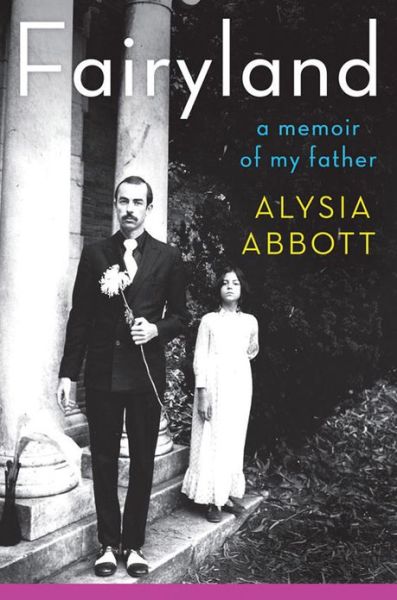
Fairyland: A Memoir of My Father by Alysia Abbott

A daughter’s tender memoir of her father’s life as a single gay man in 1970s Haight-Ashbury.

9780393082524_p0_v2_s600

When Alysia Abbott was two years old, her mother was killed in a car accident. Her father, Steve, moved her across the country to raise her alone as a gay man and single father in 1970s San Francisco–a pioneer in several senses. Alysia’s childhood and teen years took place against the backdrop of a magical Haight-Ashbury district filled with creative, adventurous people like her father (a poet and political activist), recreational drugs and minimal supervision.

Their father-daughter relationship was loving but rocky. When Steve develops AIDS and his health begins to plummet, he calls 20-year-old Alysia home from her studies in Paris and New York City to nurse him, a full-circle caretaking demand that she resents at the time.

Fairyland is foremost a daughter’s memoir of a much-loved parent. She continues to become acquainted with him through her research, most notably in reading copious notebooks filled with his poetry and journal entries. She colorfully renders an iconic epoch in San Francisco, together with the city’s gay culture and politics, and the early days of the nationwide gay rights movement. Alongside beautiful characterizations (often morphing into eulogies), Alysia paints a stark image of the AIDS epidemic and the Reagan administration’s non-response to it. As a personal story and as a portrayal of an era, Fairyland is powerful, loving, authentic, and contains Steve’s artistic legacy in its lyricism. It acknowledges Steve’s impact on Alysia–and both their shortcomings–with gratitude and grace.


This review originally ran in the June 7, 2013 issue of Shelf Awareness for Readers. To subscribe, click here, and you’ll receive two issues per week of book reviews and other bookish fun!


Rating: 9 brightly colored t-shirts.

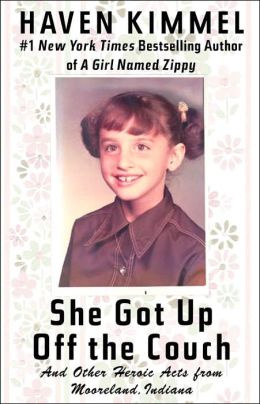
She Got Up Off the Couch by Haven Kimmel

couchHavel Kimmel aka Henrietta Krinkle, you are still my favorite.

This book follows A Girl Named Zippy, and I adore Kimmel’s explanation in her Preface: that she would definitely never write a sequel to Zippy, but that people kept on asking her if her mother ever got up off the couch; and here we are. This is an extension of that first memoir, then, with the focus being not on the girl called Zippy (Haven Kimmel herself) but on her mother, who in that first volume was a somewhat shapeless woman who mostly inhabited the couch and read a lot, talked on the phone, watched television, and didn’t worry too much about her children. This is told not unlovingly, but as fact. Zippy’s childhood is on balance awfully joyful and fun, and although a critical adult’s eye might point out lots of points of minor neglect, she clearly loves her family very much. This tone is continued in She Got Up Off the Couch. The family and each of its members is still, realistically, flawed, but lovable and well-loved. Kimmel’s brother is now mostly absent, with a family of his own; her sister marries and has two babies; her father finds work as a sheriff’s deputy (or similar job title); but her mother’s is the great change of this second memoir. This was, what, the late 1970’s I suppose, in a tiny Indiana town of a few hundred people. Zippy’s dad, Bob Jarvis, holds the keys: her mother Delonda doesn’t know how to drive. This will work as a fine metaphor (and indeed is part of the literal action), as Delonda calls a phone number on a television commercial to look into going to college. She wrangles a ride into the next town over for an entrance exam, which places her out of fully 40 hours of college credits. Under Bob’s clear disapproval – he says of the woman who takes Delonda to her test, “time was, a woman wouldn’t have gotten in a man’s marriage that way” – she persists in attending classes, studying, reading, talking to new people, and in 23 months, graduates summa cum laude – and continues on to graduate school. Eventually she earns a Master’s degree in English and becomes a high school teacher. This is all a stunning change. Along the way, to get to school and back, she learns how to drive and purchases a vehicle that is, in itself, a good joke.

She Got Up Off the Couch also follows the format of A Girl Named Zippy: chapters jump around, more as connected anecdotes than as clear narrative. Each chapter stands alone admirably as a hilarious or heartfelt – usually both – nugget of tears, joy, preadolescent confusion, and filial love. [In fact, as soon as I finish writing this review I’m off to read my favorite chapter out loud to Husband, if he’ll let me, while he smokes a brisket in the backyard. If you’re curious, it’s called “Treasure,” and is about a hippie college student hiking cross-country who camps out in the Jarvis backyard for a few days. It’s hilarious and heart-wrenching.] It’s a great structure, this anecdotal style. If I ever write my own mother’s biography, which I keep dreaming about, I have something similar in mind. Yes, there are odd characters that the reader of just one chapter would wrinkle her forehead at; but this is true of the whole book, too. Zippy has had an odd and happy life, and that’s exactly why we enjoy reading about it.

Zippy herself, naturally, also grows and changes in this book. Delonda is our star and makes the most life-changing journey. Kimmel writes in her preface, “I will never do anything half so grand or important,” and I know exactly what she means: the decision of Delonda and other women of her time who broke out of where they were told they belonged have done something for the women of my generation that we are now saved from having to do, if that makes any sense. It is something I’ve long felt about my own mother. But I was saying that Zippy continues to grow up: we see more of her engaging and eccentric friends, Rose and Julie Ann, and we meet a new friend, Jeanne Ann. And when she gets a nephew and then a niece, Zippy becomes hopelessly devoted. The blizzard that sweeps through when her niece is long overdue and panics the family is, again, funny and riveting at the same time.

I’ve now read everything that Haven Kimmel has written except for every single one of her blog posts, and that one children’s book. I hope she is getting to work right now on another book – fiction or non, more Haven Kimmel, stat.

I love it. Funny, true, humble, real.


Rating: 9 cherry-red polyester suits.

The Solace of Open Spaces by Gretel Ehrlich

Edit: see Pops’s review here.


solaceThe observation that sticks with me most from this slim, beautiful book is: it’s interesting how poetic nature writing never grows old for me, even though in some ways Ehrlich’s work here is not particularly new. She is unique, like every one of us snowflakes – I don’t mean to call her derivative; read on – but she definitely follows in a tradition; and what I’m trying to say is, I am always ready for another literary descendant of Thoreau, Leopold and Abbey. Especially when she’s a woman and offers a little different take in that respect.

Gretel Ehrlich is decidedly special, for all that I’ve compared her to the greats that she has followed. For one thing, her writing is exquisite, like perfect drops of water with points of light shining on them. Her story is her own, too. She was a filmmaker in New York City who traveled to Wyoming in 1976 to shoot a film, and also to escape the way in which her life was falling apart: the man she loves, her business partner, had just been given only a few months to live. She hangs around sheep ranches until she becomes one of them, a sheepherder, a ranch hand, a rancher. She visits with the dying man, keeps in touch, in pain, and then he dies far away while she’s preparing to fly home to see him. So her time in Wyoming, in the wild, on the frontier, with animals and laconic men, is a time of mourning and healing, as in Mountains of Light, or somewhat as in Fire Season.

Ehrlich’s wild is not Ed Abbey’s, or Phil Connors’, or Derrick Jensen’s, or Aldo Leopold’s wild; hers is populated by humans, nonnative stock animals and plant species, and irrigation. But it is far wilder than New York City, and far wilder than most of our country then and certainly most if not all of it now. It retained a wildness, including a human wildness. I love her descriptions of the human and animal personalities she comes to know. I also love her discussion of what it is to be a cowboy (or cowgirl, of which there are also several stunning examples).

But the best part has got to be her writing. And as I’m inclined to do in such cases, I’m trying to write less myself and share more of her lovely thoughts and phrases.

Disfigurement is synonymous with the whole idea of a frontier. As soon as we lay our hands on it, the freedom we thought it represented is quickly gone.

The old conundrum. We love it; we want to save and preserve and conserve it so we can enjoy it; but every act of enjoying is a failure of preservation. If we all lived in the wild it would be gone. (Which we’re headed towards, anyway.)

True solace is finding none, which is to say, it is everywhere.

As the title indicates, Erhlich is seeking solace – in the mourning of her lost partner, but also in the need for change more generally, I think.

Because she is the granddaughter of Ralph Waldo Emerson, I imagined she possessed unusual reserves of hardiness. But she protested. “I don’t do a very good job of it,” she said modestly. “I get in these hoarding moods and get mad at myself for all the stupid things I do. Then I pick up this old kaleidoscope and give it a whirl. See, it’s impossible to keep just one thing in view. It gives way to other things and they’re all beautiful.”

Isn’t that lovely? It’s always changing, and always beautiful. (Can’t say I’m not partial to an Emerson allusion, either.)

Winter scarified me. Under each cheekbone I thought I could feel claw marks and scar tissue.

Great imagery here, about the harshness of the world out there, in a Wyoming winter.

The seasons are a Jacob’s ladder climbed by migrating elk and deer. Our ranch is one of their resting places. If I was leery about being an owner, a possessor of land, now I have to understand the ways in which the place possesses me. Mowing hayfields feels like mowing myself. I wake up mornings expecting to find my hair shorn. The pastures bend into me; the water I ushered over hard ground becomes one drink of grass. Later in the year, feeding the bales of hay we’ve put up is a regurgitative act: thrown down from a high stack on chill days they break open in front of the horses like loaves of hot bread.

Derrick Jensen would like that. Ever since I read him (and before; but especially since), I’ve been thinking about the concept of land ownership, so this struck a chord.

And finally –

Leaves are verbs that conjugate the seasons.

Could a person ask for more than this? Leaves as verbs. Gretel Ehrlich, you have won me over.


Rating: 9 cowboys.