A War of Swallowed Stars by Sangu Mandanna

This review contains spoilers for books that precede it in the series, but is spoiler-free for this book.
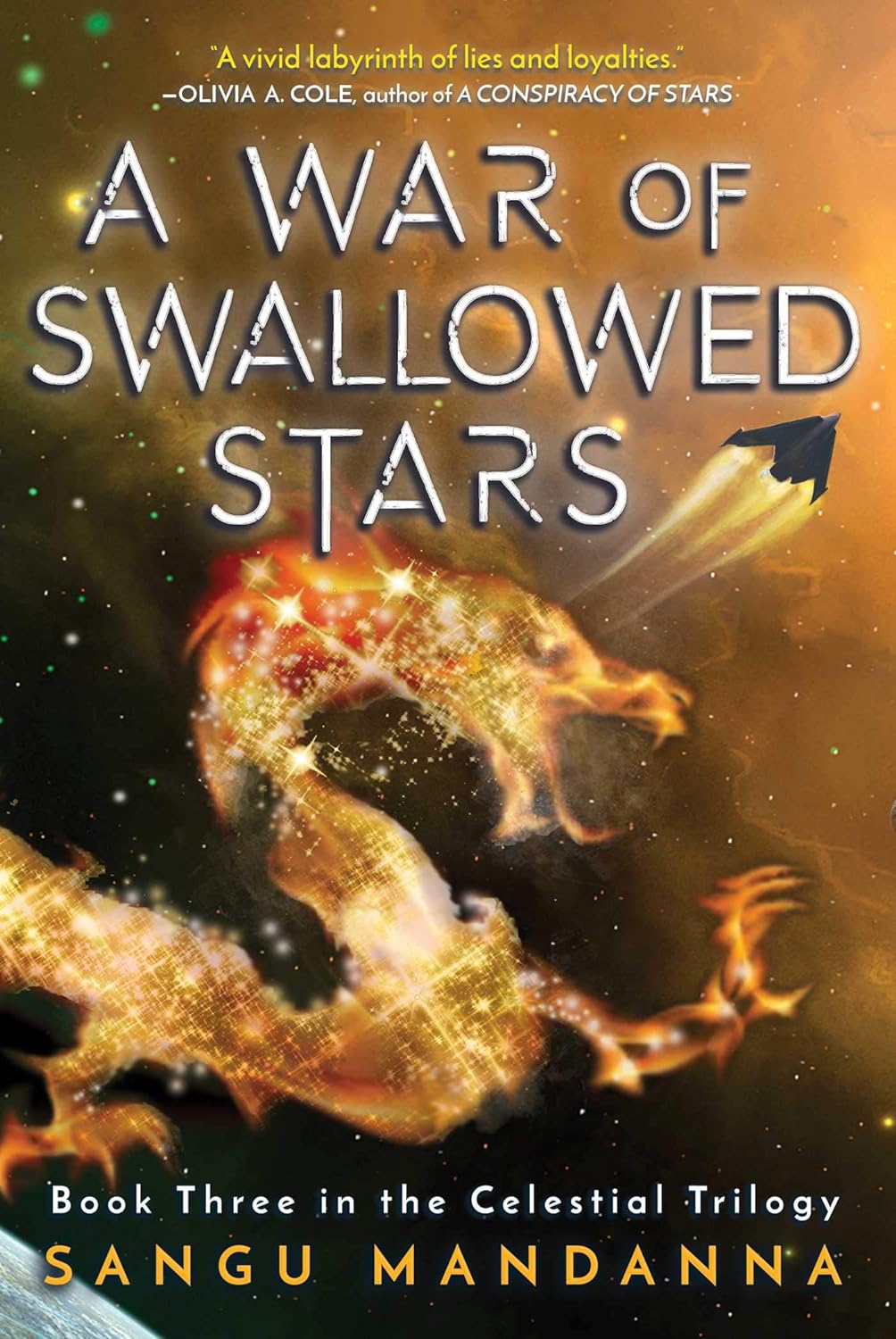

This is the third in a trilogy, following A Spark of White Fire and A House of Rage and Sorrow. And it had me pretty rapt, y’all. I was on the edge of my seat throughout, and I cried at the end, but in a good way, which makes me feel glad for the newly-12-year-old I’ve just gifted it to for her birthday. (I teased her that she had to wait because these books are labeled 12 and up!) The world we have come to care about over three books is in great peril, as are the relationships we’ve invested so much in. And it’s not that nobody we love is lost in this book; but it all ends in a way that feels right.

The Celestial Trilogy has featured magical weapons, gods and monsters, murderous family members, and friends where we’d least expect them. Esmae has experienced great and intense trauma, and weathered some very real depression. “I don’t know how to make my way through to the other side of it… I can’t see anything but the dark. I feel like I’ve fallen down a cold, dark hole and I’ll never get out.” Whew. But she has good friends. And she has good on her side. Hang in there, readers.

Mandanna took us through a lot in this series, but the emotional roller coaster has been well-earned, and it pays off in a big way. I can’t wait to hear what my young friend thinks. And you all.


Rating: 8 moments of eye contact.

A House of Rage and Sorrow by Sangu Mandanna

As I’ve decided will be my regular procedure around here, this review contains spoilers for books that precede it in the series, but is spoiler-free for this book.


Following A Spark of White Fire is A House of Rage and Sorrow, book 2 in the Celestial Trilogy by the author of The Very Secret Society of Irregular Witches. I love it.

Esmae is still reeling from the loss of her best friend at the end of book one. Also quite painful is the fact that Rama was killed by her twin brother in a duel, as he thought he was fighting Esmae herself: not only did Rama die, but her brother meant to kill her. Esmae’s anger is beyond description. She wants to burn it all down. She is also carefully avoiding a burgeoning romance, because (I judge) she is as angry with herself as with anyone, and doesn’t think she deserves it.

She is also, however, making friends. Surly Sybilla has cracked open and become as loyal to Esmae as to Max; beloved Rama’s sister Radha has appeared on the scene and begins making her way into the group, not without hiccups. There is a small, new, perhaps fragile, but very real family of friends forming around the girl who has always mourned not having a family.

Then again, the political intrigues and betrayals surrounding her flesh and blood keep multiplying, and the revelations and bad news keep coming. Just how much can one teenaged girl go through? A House of Rage and Sorrow ends on a cliffhanger, not unlike book one; but unlike that finish, this time I had the next installment at hand. Stay tuned for book three in this trilogy.

I love that romance keeps developing (and not just for Esmae!) alongside anguish and intrigue, and a very real and believable coming-of-age arc in which Esmae tries (at least a little) to balance her rage against her better wishes for her loved ones and her wider world. I can’t wait to see where we’ll go next.


Rating: 7 lions.

Junia, The Book Mule of Troublesome Creek by Kim Michele Richardson, illus. by David C. Gardner

Well, I was sure I’d been sold on this book by one of my talented colleagues at Shelf Awareness, but I cannot find that review. Somebody sold me on it, and I’d credit them if I could, because it was a solid recommendation.

Junia is an absolute delight. Aimed at readers aged 4-8, it’s a sweet picture book in simple but fun prose, starring the mule Junia that some readers will know from 2019’s successful novel The Book Woman of Troublesome Creek. Junia and her Book Woman travel the hills and hollers of eastern Kentucky during the Great Depression as part of that state’s Pack Horse Librarian project, under the WPA. (The books are fiction but strongly rooted in fact; Richardson is a recognized researcher of this unusual bit of history.) The book follows them for a single day of environmental and climactic hardships, including encounters with wildlife and a narrow miss when a bridge washes away. They visit diverse households and communities, delivering reading material and having amiable interactions with readers. The relationship between Junia and her Book Woman is loving; it’s an all-around wholesome story.

There is alliteration, fun onomatopoeia, and perfectly wonderful illustrations that reward a close look: note the identifiable rhododendron, the child with the paper airplane and a book called Flight, and a faraway fire tower that we’ll approach on later pages. The visual style is sort of soft-edged but quite detailed, with a bit of whimsy, and lots of personality for the starring mule. I love the regional, historical focus, and I feel it strikes a lovely balance between entertaining and readable, and educational. The book’s text is followed by an Author’s Note with “real” facts and historical photographs, so the young reader (perhaps with extra help in this section) can get a bit more enrichment out of it, and quite painlessly, I think.

I did buy this book with a particular reader in mind, who is eight years old, and I thought of her several times as I read: I know her dad will tickle her with his own “soft whiskered muzzle” as Junia does to her favorite little readers, and I know they’ll enjoy the farts. This quick read was really fun for me – I’m glad I stepped out of my usual zone to check it out. I guess I’ll try the Book Woman novel next!


Rating: 8 shiny red apples.

A Spark of White Fire by Sangu Mandanna

A very fun sci fi novel and first in a trilogy. Aimed at younger readers, it still has plenty of plot and character to engage us kids-at-heart.

I’d call this ‘light’ sci fi in that the science isn’t ‘hard’ and doesn’t contribute crucially to any plot points. You might call it speculative fiction instead: political and familiar intrigues, with coming-of-age issues and romance, set in a world that is not quite like our own. Esmae has grown up in the spaceship kingdom of Wychstar, but she belongs on Kali. By winning an archery contest, and therefore winning a gods-blessed undefeatable warship, she is able to return to the home she’s never known; but reuniting her fractured family and putting the rightful heir back on the throne may be a bigger job than she’s realized.

Esmae is a teenager who’s lived most of her life appearing as an unremarkable orphan, although she also enjoys the close friendship of Wychstar’s youngest prince Rama. He’s a true and lovely friend. Secretly, she has also enjoyed training under a famous warrior named Rickard, who is bound to teach no one but the offspring of Kali’s late king. Rickard and the gods are the only ones who know Esmae’s true identity at the novel’s start.

So, like I said: speculative fiction, at the juncture of fantasy and sci fi, with political intrigue and the challenges of coming of age. Esmae’s troubles winning a kingdom may be outside the experiences of most young readers, but exploring the larger world and finding one’s place in it, struggling to find one’s truest identity, making friends and feeling attraction and navigating conflicting loyalties – all these are absolutely universal. I think it’s a very accessible story for young readers.

I read this book for my own pleasure, absolutely, but also because I was hoping to pass it on to my favorite almost-12-year-old, and for that reason I paid more attention than usual to anything that might cause concern for the younger set. There’s some very mild bloodshed, and some intro-to-sexual content: basically a quick but passionate kiss, and some reference to wanting hands on one’s body and feelings of warmth. By my standards, this is plenty appropriate for a middle schooler. I pointed these passages out to my friend’s parent, and we agreed that she’d be fine. (You know I’m not inclined to censorship, and I was reading far spicier stuff at a younger age. And sometimes confused by it! I also appreciate that this kid is doing other reading about bodies, and doing a fair amount of reading with her parents. All solid.)

Fully invested in books two and three. I’ll read more by this author, too.


Rating: 7 birds of feathers and buttons.

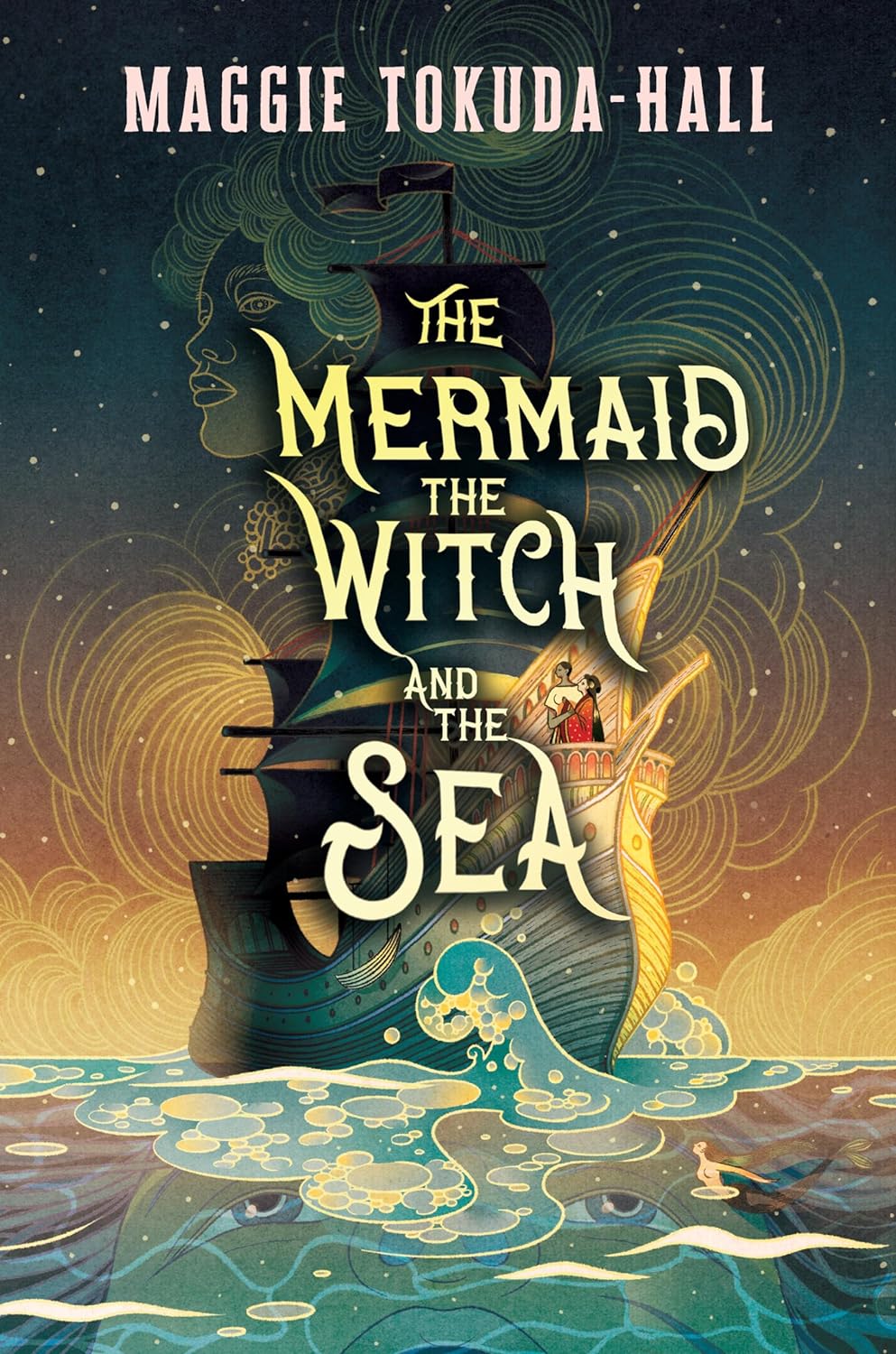
The Mermaid, the Witch, and the Sea by Maggie Tokuda-Hall

There’s a little bit of everything in this unusual fantasy novel for older kids or young adults (or any of us, obviously). Sweet, heartwarming, and surprisingly bloody, The Mermaid, the Witch and the Sea offers mermaids, pirates, and young love. Imagine a bit of Treasure Island, but gender-bending and with a greater emphasis on political workings and class divisions. And magic.

We open with a murder on a pirate ship, then shift to high tea in a house of wealth and privilege. In the first scene, a teenaged boy named Florian earns his keep, having gambled on a life of piracy to save him and his brother from a life of deprivation and scant survival on the streets of the Imperial capital city. In the second, a girl named Evelyn chafes at the bounds of her household, where she enjoys status but not the love of her parents, who plan to send her away to be married to a man none of the family has ever met. Evelyn winds up on the same ship as Florian, where loyalties are split between factions supporting the Empire (who have colonized almost all of the known world, to the discontent of many) and the Pirate Supreme, who serves the Sea. “The Pirate Supreme’s forces were the only thing standing in the way of complete Imperial rule on the open sea. If pirates could still disrupt the merchants, still stymie the trade routes, then the Imperialists could not claim full control. Every robbery, every kidnapping, every galleon destroyed was a protest against the Emperor.” Some loyalties have yet to reveal themselves. And oh, Florian is also Flora, whose pronouns and identity as ‘boy’ or ‘girl’ shift throughout the story. “Both, maybe, but not neither.” “Both were equally true to her” (or him); “neither told the whole story.” Florian is Black and Evelyn is something like Japanese, although these seem to be descriptive details rather than identities that affect status or prejudice in their world.

Flora has lived life on the margins, making hard choices, fighting for life in the most basic ways. Evelyn has suffered a different kind of privation, unloved and lacking agency, but has never imagined the kinds of challenges Flora has faced. The two have much to learn from each other. And I haven’t even mentioned the effects of mermaid blood or its price on the open market, the scarcity of witches in Imperial colonies, or the far-seeing powers of a conscious Sea.

Delightful, weird, fanciful, queer coming-of-age with murder and magic. Violence, rather than sex, may recommend a readership in their teens more than their tweens, depending on blood tolerance, but the themes are solid: finding oneself, living one’s truth, navigating ethical puzzles, being a good friend. And it’s a page-turner to boot.


Rating: 7 haircuts.

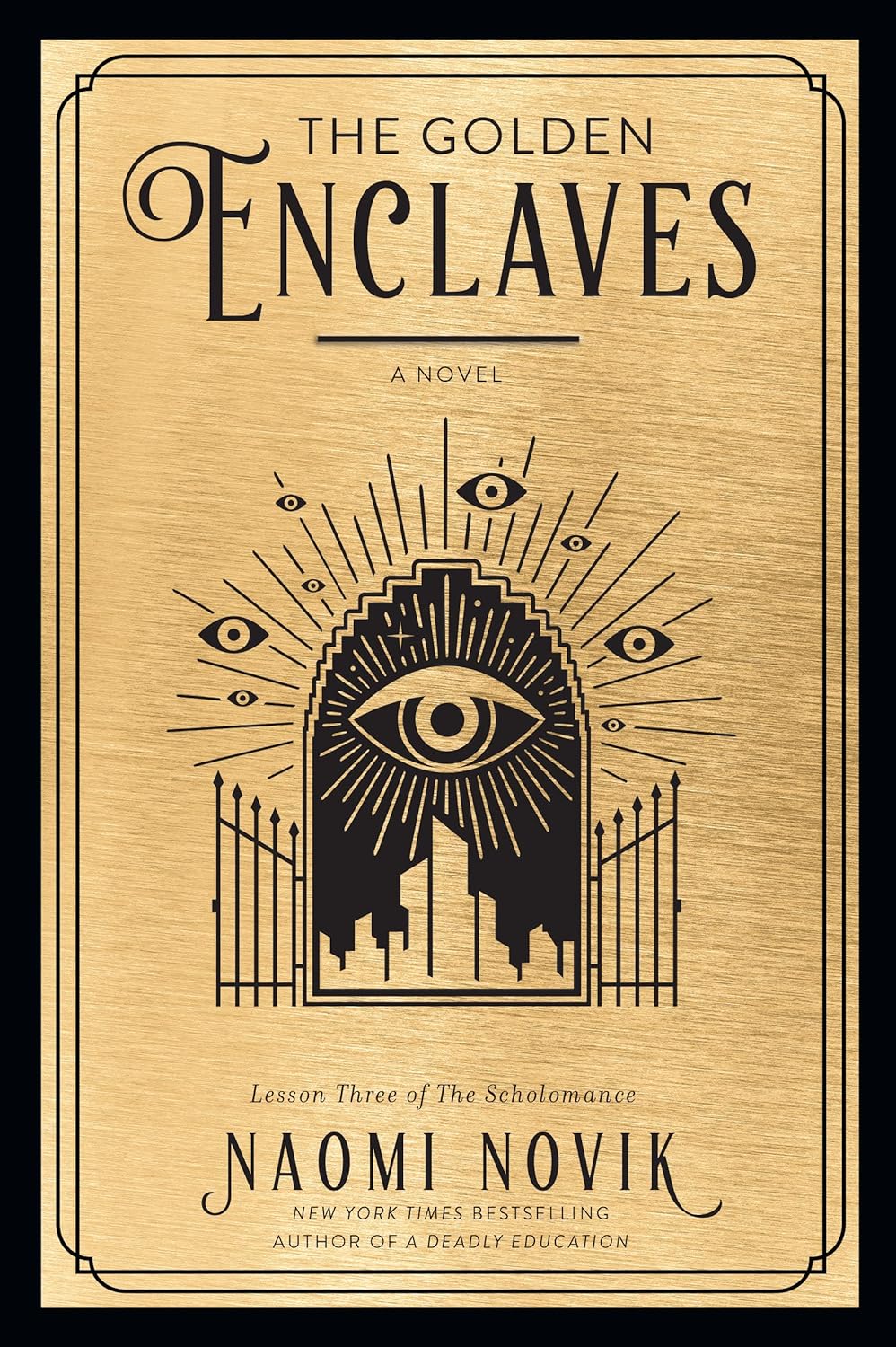
The Golden Enclaves by Naomi Novik

**Spoiler-Free!**

Following A Deadly Education and The Last Graduate, The Golden Enclaves wraps up the Scholomance series. I am very pleased with this conclusion and the whole series. For spoilers’ sake, this review includes practically no plot summary.

As a series finale, The Golden Enclaves takes on a lot, and involves a ton of action, ranging very widely in the ‘true’ geographic world as well as in the void and the magical spaces that populate Novik’s imagined world. A number of characters take great steps; this is indeed a coming-of-age for El, who has graduated from the Scholomance and achieved some real victories, but only to step out into a larger world where the monsters are decided not all neatly taken care of. She’s suffering some losses, not least in realizing the limits of her powers: she is one of the most powerful wizards ever, but there are still limits. We see her take less advantage of the friendships and alliances we’ve seen her form up til now, but also find news ones and/or revive some that have lain dormant.

I love about this whole series that it offers commentary on class divisions and the ethics of who gets to be safe and cared for in the world. Those themes are strengthened here, and complicated. There is a very pointed conflict of interests that she calls a trolley problem, of the highest order; El must face that she cannot (so to speak) save them all, that every choice has a cost. In the face of this frustration, she wavers, considers giving up. We have learned that El is incredibly strong and strong-willed; she doesn’t give up easily. But we have also never seen her tested like this.

I love the characters, including one or two who are still ‘rising’, coming to center stage. I love El herself so dearly; she struggles so hard with this book, even after having accepted help and friendship, and her struggles often yield some good snarky humor and fun amid the pathos. Novik has enormous world-building power, which was evidenced at the series’ start but is still at play here, because our understanding of the world (and El’s understanding of it!) must expand considerably in this book. I’d recommend her to anyone.


Rating: 8 bricks.

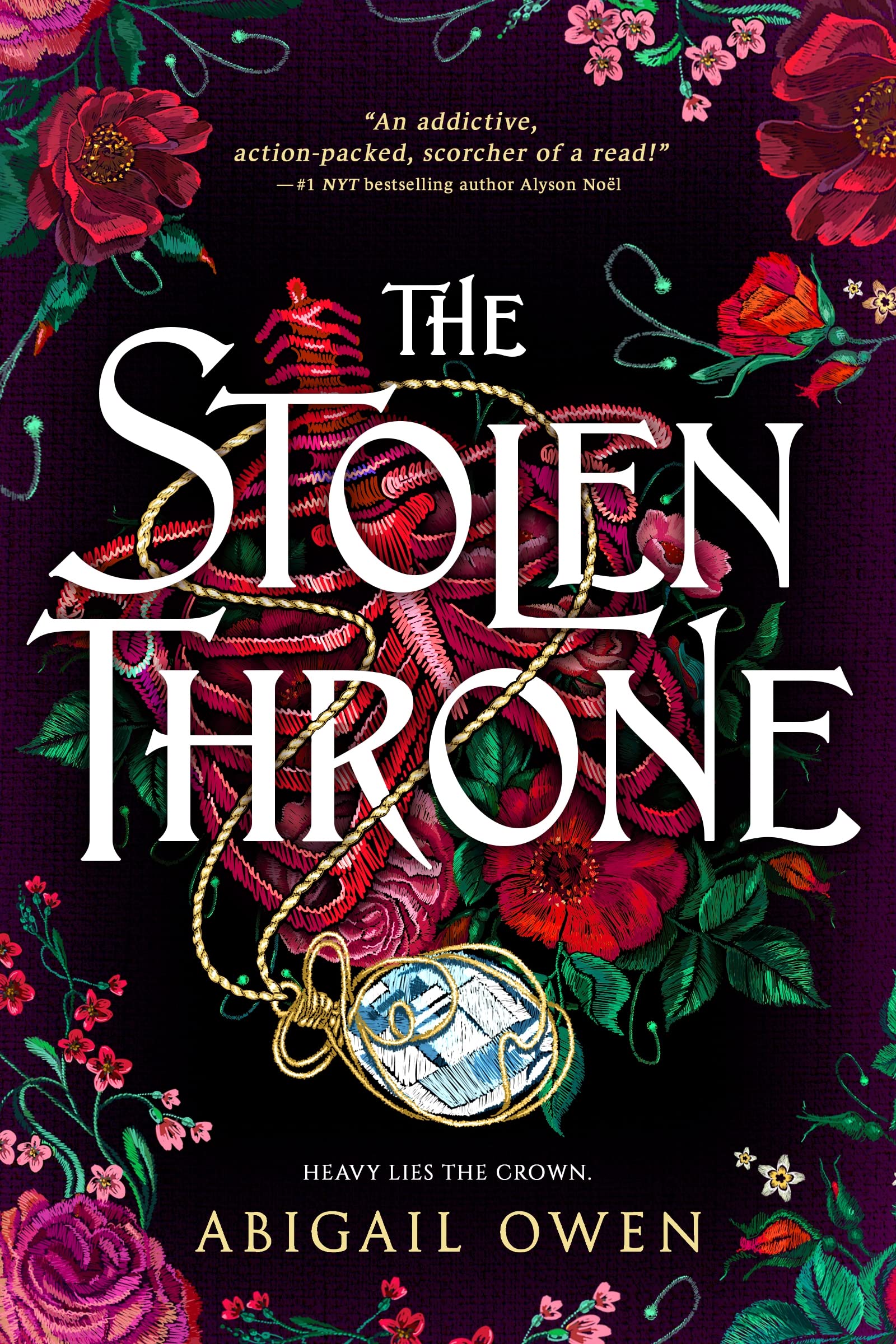
The Stolen Throne by Abigail Owen

Book two in the Dominions trilogy picks up where The Liar’s Crown left off. Meren continues to carry the weight of great responsibility, even over her twin, Tabra, who is ostensibly the “real” princess – now queen – half of their twinship. Tabra carries the privileges and Meren the hard work. We don’t resent Tabra for this, however, because she is so sweet. In fact, I’m inclined to say she’s a bit too sweet – a little boring and a little less realistic than our hero, because if Meren is sometimes frustrating, she’s also a realistic teenager, as well as a brave, hard-working young woman, fighting for the good of all the people in her world, and growing up at the same time. In this installment, she realizes what good friends she has – even if some of them betray her. And she’s still navigating love, romance, and sex. There are still the two young men in her life. One is her lifelong best friend, Cain, who wants to marry but whose love tends toward overprotection and limitation. And then there is Reven, who represents risk and danger to Cain’s security, but for whom Meren feels actual fireworks; also, the two of them are bound (magically) by their trauma and having saved one another’s lives. That drama progresses here, as does the larger drama of risk to Meren’s very world and the people she (or is it Tabra?) rules over and is responsible for.

I find the interpersonal dramas more compelling than the magic in this series; the amulets, goddesses, monsters and political machinations are trappings, or framing, for the interactions between people (and gods, Shadows, monsters, etc.) that interest me. Which is not especially a criticism, but an observation. I returned to this world in search of a comfort read, and in spite of danger and death and violence and all that, I absolutely find it here. I appreciate Meren’s struggles and the push/pull she feels with Reven, especially. I remain invested in these characters and am looking forward to book three, which is promised for April of 2024.


Rating: 7 glimpses of golden thread.

Ellie’s Story by W. Bruce Cameron

Another one from my young friend. I knew this was a risky book for me, because dogs are my kryptonite, or my Achilles’ heel, if you will. My young friend does not know this. I read the book anyway, but I knew it would hurt me, and it did.

It’s a good book, and I enjoyed it in some ways, but an important part of this review is to say that it hurt me.

Librarians I have known have a shorthand code for a way to talk about whether books will hurt us. We say, does the dog die? This is generally metaphoric – there may not even be a dog – but you get the idea; if ‘the dog dies,’ the story takes a tragic turn that might make readers cry. In this book, the dog does not literally die, but I did still cry. (Note that I am an especially messy reader on the topic of dogs. Your mileage as always may vary. But if you have a soft spot like I do, beware.)

The title dog Ellie narrates her story from birth. Cameron does a good job with this voice: not only a voice of innocence but a canine one, Ellie tells what she sees and hears around her, her comprehension gradually growing, but the reader mostly understands more than she does. (She is, in a strange turn, able to relate human dialog, which we understand but she does not.) A German shepherd puppy, she’s chosen by a police officer out of her litter, and trained to be a search-and-rescue dog. She bonds with this owner/handler, Jakob, but he is injured in a shooting and she’s reassigned to a new handler, Maya. Ellie is an especially talented search-and-rescue dog, and continues to do excellent work with Maya. Ellie’s Story entails several great, heroic events, culminating in one I’m going to call pretty unlikely; but it’s a very impactful tale, emotional and moving (obviously), and with some fun educational info about search-and-rescue dogs built sneakily in. I also like that this edition includes discussion questions and activities both for the family at home (warning: this book has your family signed up for some significant work!) and for the classroom. Solid.

A good book, but risky for some of us. I’ll steer clear of more like it, myself.


Rating: 7 socks.

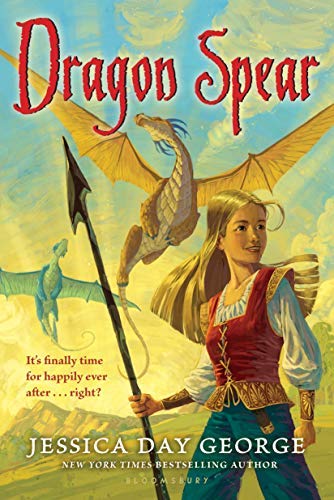
Dragon Spear by Jessica Day George

Dragon Spear is the final volume in the Dragon Slippers trilogy, and I remain glad I was handed that first book by a young friend. These have been entirely fun, with positive messaging and enough grit and humor to keep me engaged. The dragon characters are as sweet and diverse as the human ones, and the women and girls, and female dragons, tend to be both clever and strong. It’s very appealing material for this age group, and I found it perfect, easy reading while on a recent trip to see family.

In this episode, once again, we think the dragons are safe until they aren’t. This time something’s different: the threat comes from other dragons, under their own power and not that of malicious humans. In fact, these dragons enslave humans. And there are some young ones at stake–as well as Creel’s wedding dress, as her union with the younger prince approaches. We lose track of Marta, which is a shame, but get a new human buddy: Creel’s brother Hagen has shown up. He’s an interesting new feature. Dragon friends, and the prince Luka, remain steadfast.

It seems like faint praise to say that this one offers nothing especially new. But I truly feel comforted by knowing what to expect, especially at this reading level. This one is faithful to the series in pleasing ways.

A final strong recommendation. And I’m a little bit considering looking into George’s other works.


Rating: 7 holes.

Girls with a Voice and Girls with Courage by Ann Turnbull and Adèle Geras

Another loan from my favorite 11-year-old, this is a pair of historical novels linked by location. Girls with a Voice, by Ann Turnbull, is about a 12-year-old girl named Mary Ann who travels from London to a boarding school in the nearby village of Chelsea in 1764. She is excited to study singing and the harpsichord there, because she wants to perform as an opera singer onstage (an ambition her family is not especially supportive of). She makes good friends, not only with her fellow pupils, but with a maid in the large house where the school is located. The maid, Jenny, also has a fine singing voice, but because of her class, cannot have the same training as Mary Ann. Jenny sings ballads in the streets for money, however, which Mary Ann finds extraordinary. When circumstances change for Mary Ann’s family, she has to get creative in problem-solving to continue following her dream.

In Girls with Courage, set in 1857, Adèle Geras tells us about Lizzie, also 12, who is on a journey from her home in the country into London, to stay with family in their large, impressive home on Chelsea Walk. This is the same home that housed Mary Ann’s boarding school nearly 100 years earlier; what was then an outlying village is now part of the city, and Lizzie, a country mouse, is awed by the bustle. Lizzie’s father died when she was young, and her beloved mother Cecily is now remarried to a dour man who has suggested Lizzie go away for a spell, as Cecily is pregnant. Lizzie will stay with her father’s brother’s family: uncle, aunt, three cousins including a boy her own age, another uncle who has been injured in the Crimean War, and a grandmother, as well as several servants. Compared to her spare country upbringing, this life strikes Lizzie as grand and luxurious, although also limiting: she enjoyed learning about plants and trees from a local orchardist, and now is forced to do needlework that she finds very tedious. Cut off from her late father’s books by the mean stepfather, she now yearns to learn the math and science that her cousin Hugh gets to study. She misses her mother terribly–and when something seems to have gone amiss back home, Lizzie will have to be brave to help.

As you can tell from these summaries, both stories are a bit sweet and instructive. While I like these protagonists, they are earnest and simple and good-hearted in a way that leaves off the grit and snark and fun I like in all my reading, children’s and young adult of course included. Compared to the Dragon Slippers trilogy this same young friend introduced me to, Girls is less delightful. That said, I passed a pleasant enough day-and-a-half here, and have no argument with the messaging about girls following their passions – whether in music or botany – and standing up for themselves (and their mothers). This messaging is not exactly radical, but still solid. And I’m glad my young friend is interested in history. I look forward to hearing what she loved about the book, and will continue reading anything she brings me.


Rating: 6 walnuts.