Nemesis Games by James S. A. Corey (audio)

The Expanse series: Leviathan Wakes, Caliban’s War, Abaddon’s Gate, Cibola Burn, and now book five, Nemesis Games.

Reviewing the end of that last (book four) review I wrote, I am happy to report that we did indeed get Jefferson Mays back as narrator, and Avasarala and Bobbie Draper. Of all people, Clarissa Mao returns as well. Our four central characters, the ‘family’ of Holden, Naomi, Amos, and Alex, get split up in this story, which is excruciating for each of them (some more than others), and each on their separate adventures gets substantial backstory development. Bobbie doesn’t get backstory so much as she gets screentime in which to be a friend and developing character, particularly to Alex. I love it, put simply. I don’t want to say much more, plot-wise, but don’t think I have to. It’s my impression here that the hard sci-fi stuff falls away perhaps more than ever, and the people – their relationships, personalities, and interpersonal dynamics – step forward. Which of course is what I’m here for.

The Tor.com article is called “Team Dynamics”, which is telling. I appreciate this line: “The book is about whether or not the characters can successfully come back to each other when the world as they know it is ending and make the crew — and the family they’ve built — whole again.” That built family is the heart of what I love about this series, and I agree with Tor’s Renay Williams that splitting them up for this episode was a wise move; each gets to stand alone in the spotlight in a way that’s helpful to their development, and that question of the coming-together-again feels absolutely highest-stakes to the reader. The question is foreshadowed early in the book, when Naomi argues to Jim that they have to take on more crew; he is resistant because adding to the family, he fears, will loosen its bonds. Mild spoiler alert: he ends up having to take on new crew anyway, temporarily, when his goes absent. Another mild spoiler: Bobbie’s looking like a good candidate for addition to the family, which has me totally stoked for book six.

Williams has a good point (though she doesn’t state it in these terms) that the book barely passes the Bechdel test. [To review, the Bechdel test asks three things of a story: that it 1) has women in it who 2) talk to each other 3) about something other than men.] While I think Corey does well with interesting, badass female characters (something I understand is often absent from sci fi), they tend to relate here only to other men. Avasarala and Draper are an exception, although they certainly don’t have an emotional relationship. I’m heartened by character development in general, though, and have high hopes for more.

Just a word here in defense of Amos, who gets accused (within the books, and by the friend who introduced me to this series) of being something like a sociopath, of having no empathy, of using Holden as a sort of external conscience. (Naomi uses a term like that, or maybe precisely that: external conscience.) While Amos sometimes struggles with seeing why something is ‘wrong,’ and finds it easy to use violence to solve problems, I think the idea that he is without conscience is unfair. We’ve seen him time and time again step up for justice: he has a serious soft spot, if not a trigger, where the idea of exploited and injured children is concerned. He can be sort of a vigilante. He doesn’t care about established law & order, certainly, but he knows what he thinks is right. There’s a moment where he decides to do what we might agree is the ‘right’ thing in this book, not because he feels it’s right (he tells us), but rather because he figures it’s what Holden would do. That would seem to support Naomi’s idea that Holden serves as auxiliary conscience. Except that Holden’s not there, and Amos figures out what Holden would do, which shows that he can guess what Holden would do, which means he can see the arguments in favor of right and wrong among the choices available to him. I say this refutes the idea that he is without conscience, so there. Amos is a weirdo (aren’t we all), with maybe a looser grasp of morality than some have (but that whole thing is relative, anyway), but I say Amos is fine. I trust him.

I’m totally hooked. I look forward to more: more tough decisions and strain on relationships, more backstories and developments, more challenges and adventures. This series has everything I need; I just need more.


Rating: 8 years.

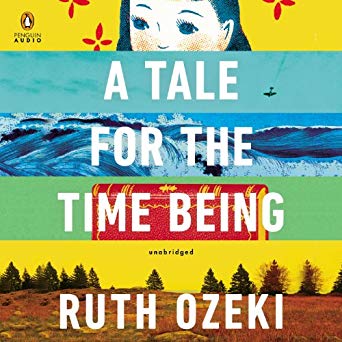
A Tale for the Time Being by Ruth Ozeki (audio)

A time being is someone who lives in time, and that means you, and me, and every one of us who is, or was, or ever will be.

My mother gave me this audiobook for my birthday. With her own print copy ready, we set out to read together. She had already very much enjoyed the audiobook. Now I’ve finished, and she hasn’t yet, so we haven’t done our final debrief together; but we have discussed as we’ve leapfrogged down the middle.

A Tale for the Time Being is unusual in a few delightful, fresh ways. The opening voice is that of Nao, a sixteen-year-old girl living in Tokyo. (In this time-obsessed novel, you can bet her name is a meaningful homonym.) Nao is Japanese but has lived most of her life in Sunnyvale, California, and the recent move to Tokyo has been very hard on her. She is the victim of criminal bullying at school, and has decided to end her life, but before she does, she wants to record the amazing life of her great-grandmother Jiko, a Buddhist nun and radical anarchist feminist. She sets out to do this in a diary. The diary is being read by Ruth, a novelist living on Canada’s west coast on a remote island with her husband Oliver and their cat, named Schrodinger but more commonly called Pest, or Pesto. (Ruth’s life matches that of author Ruth Ozeki suspiciously closely.) Ruth found the diary and a few other artifacts, well-wrapped in a barnacle-encrusted ziploc bag, on a beach near her home: the beach near Jap Ranch, as she calls it, her own Japanese heritage giving her the right and motivating her to remember the mistreatment of her people during World War II in these parts. (Oliver, who is of German heritage, cannot call it Jap Ranch.)

The story is told in alternating sections, in Ruth’s present and in Nao’s diary-recorded recent past, and then supplemented by other artifacts: documents found with the diary, and Ruth’s email correspondance as she begins searching for Nao in the present. There are several voices, then. And in several senses: there is the narrative first-person voice of Nao in her diary; Ruth’s perspective, told in third person; and then there are the voices as recorded in this audiobook. The author reads her book herself, which I love, and she does a lovely job of performing her set of characters. Oliver is stoic, a man of intellect and not emotion. Ruth is pensive; their neighbor Muriel is a bit nasal-y, and a bit annoying anyway. Nao is whimsical and impatient, sometimes immature and sometimes resignedly dour: a teenager indeed. The audio performance is absolutely perfect. It’s always comforting knowing we’re hearing the voices the author does.

The story expands and swells like a less well-packaged diary would have done in the ocean waters… We learn about Nao’s family, her depressed and defeated father, her no-nonsense mother, the deeply loveable Jiko, and more. It turns out that there is a thread of suicidal thoughts in her family: her father makes several suicide attempts, which they do not talk about; and his uncle, Nao’s great-uncle, died as a kamikaze pilot in WWII. Call that a reluctant suicide, perhaps. Three generations, then, dealing with tendencies to suicide in very different ways and originating in very different places. Meanwhile, Ruth’s family includes a now-dead mother who had Alzheimer’s but experienced a relatively sweet decline; Oliver is a decidedly quirky but, I felt, very likeable guy. He is a self-taught naturalist seeking to replant a preserve on their island so as to weather climate change. Even Pesto the cat plays an important role.

As the title indicates, this is a story about time, about moments, about whether we control the past or the future or even the present. As in the quotation that heads this review, the phrase “time being” takes on a new meaning here, in Nao’s dreamlike, imaginative ruminations. Ruth and Nao are both distant and very close together; the question of how far or near takes on a mystical quality, as Ruth worries if she is going crazy (or developing her mother’s disease – a worry I’ve seen in people I know too). Under Oliver’s wise guidance, even quantum physics comes into play late in the book, where I got quite lost but I think (hope) that I followed the ideas, the feeling of mystery and wonder.

Ruth Ozeki is a remarkable writer. This tale is multi-layered: mental health, the bendiness of time and space, linguistics (Japanese and English and also French, the bendiness of language, too), literature, and the love and personalities of animals… there is something here for everyone. For example, I thought of my father every time Oliver worries over the trees he’s planted in the preserve. Technically, the species he’s chosen violate the covenant of the trust because they are not native to the region; but he’s planted them for the climate-changing future, when species move north, and he’s put great thought into his choices, and the idea of destroying them is indeed heart-breaking. This issue is glancing within the book, but clearly opens up into something large and thought-provoking and timely – qualities that apply to every aspect of A Tale for the Time Being. Add to all of this Ozeki’s pitch-perfect performance, and I can scarcely recommend this audiobook highly enough.

And speaking of bendiness, consider the similarities between the author Ruth and the character Ruth. Of course I have 100 questions about their boundary lines. And what of Nao’s washed-up diary? What is its real-world equivalent? There are some mind-expanding puzzles here to be sure. It’s delicious.

Note: Ozeki (as herself) comments at the end that the print version includes footnotes, illustrations, annotations, and appendices. She appreciates the audio version very much for some reasons – she writes for musicality and sound, and loves its immediacy – and the print for others. Hopefully my mother, who is finishing the print version now, will have some thoughts to share with us about those differences. I suspect audio first, followed by print, is the right order.

If you love cats, trees, or people; if you’re interested in history and legacy, the power of words, or the questions posed by the passing of time – then this delightful, expansive novel is for you.


Rating: 9 crows.

The Plover by Brian Doyle (audio)

And no thinking on this trip, either, he said to the gull floating over the stern. No recriminations and ruminations. No logs and journals and literary pretensions neither. Thinking can only, like the boat, proceed forward.

Thank goodness for Brian Doyle. I had been in a bit of a blue funk and looked for something cheerful to pick me up; a Brian Doyle novel was just the thing, I thought, and I was right.

Based on Martin Marten and Mink River, I foolishly thought the plover in this story would be an actual plover – a bird. Ha! No, the Plover is a boat. (And to be fair, the protagonist of Mink River turned out to be a crow.) Classically, for Doyle, we open with epigraphs: from Robert Louis Stevenson, George Harrison, and Annie Dillard. (Perfect.) Then we plunge right in and meet our protagonist, an eccentric fellow (aren’t they all) named Declan O’Donnell. An Irishman (read here with an accent) who hails from the Oregon coast and a fractured family, he’s invested himself totally in a small trawler he calls the Plover for perfect reasons. He’s “edited” her by, among other things, fitting a small mast and sails; and he heads off from Oregon, intending “west and then west.”

Declan is explicitly trying to escape humankind and all their “emotional complications… expectations and illusions… analysis and explications.” But of course, he is immediately joined (page 1) by a gull, to whom he holds forth at length: we already suspect he enjoys having the company. And the comedy of the book is in all the passengers he takes on: the narrative tells us that the census reaches over one thousand, if we count barnacles, but it also at one point reaches seven human beings. Declan is in fact a more social creature than he aspires to be, and that’s the central storyline here: Macmillan’s blurb calls it “the story of a cold man melting,” and I think that’s not too far off, although I might amend to call it the melting of a man who tried to be cold. Declan has had some trauma in his life, and his reaction is to try and shut himself off. He fails, and that’s one of the joys of this book.

There are so many joys, although also much trauma. Declan’s best friend, Piko, is one of Doyle’s exuberant characters – “he had legally changed his name for a while to an adjective, he played the flügelhorn in a jazz band that deliberately played only such events as weddings between Lutherans and Presbyterians and baptisms of babies named for animals, and he had once flensed a whale by himself, over the course of three weeks, on the beach, living in a tiny blue tent about the high tide line. He was one of those guys who seemed electrified by everyone and everything, the kind of guy who totally lit up when he saw a sparrow-hawk helicoptering over a corn shock, the kind of guy who liked every kid he ever met and every kid liked him… But he had been wounded by a storm, this guy, his little daughter hit by a bus driver when she was five years old waiting for the kindergarten bus, and his light was dimmed.” Pippa, the daughter, cannot move except for a possibly meaningless fluttering of her hands; she cannot speak except to make possibly meaningless squeaks and coos that sound like bird sounds. But she has a rich inner life. (Spoiler: Piko and Pippa will become passengers and crew on the Plover.) Both Piko and Pippa are very Doylesque characters: peculiar, delightful, brimming, wounded. There are more of these in the book – a Doyle novel is made of such characters. Again: just what I needed.

So Declan explores the world, becoming increasingly reluctant to set foot on land. He cares for his boat and weathers storms. He picks up passengers and rails against their very presence, but still they come on. He and his growing crew-family have a conflict with another ship and its ill-intending captain, but everything comes out well in the end. As the small, green, red-sailed Plover swells in population, tensions rise, but so does the incidence of miracles. Doyle is unafraid to take his whimsical characters to the brink of death and then snatch them, in unlikely fashion, back. Once you’ve made peace with this inclination (and I have), it’s great fun.

Declan is a devoted reader of the Irish author and orator Edmund Burke, who is much quoted here, along with a reference or two to Robert Louis Stevenson (upon whom Doyle would base a later book). Through these outside voices, through Declan’s own and the wise voices of his friends and comrades (including one very quirky minister for fisheries and marine resources and foreign affairs), The Plover is a novel of philosophy as well as the story of one plucky little boat and its captain.

David Drummond’s reading feels perfect to me. I love the many different voices, accents, rhythms he plays. Pippa’s exuberance, Declan’s grumpy Irish lilt, the minister’s volubility and interesting speech patterns, and so much more. (Somebody should write a paper on the minister’s word coinages.) A good narrator makes all the difference, and I’m so glad we got a good one here.

Doyle’s usual strengths are all present. Characters and story are brimming and bubbling with good cheer even in the face of significant and imaginative tragedy. Sentences are often long, convoluted, and performative of their content. Details are numerous and precise and bizarre. Nothing has changed; this man is a near-perfect novelist, for this reader. I’m still so sad he’s gone.


Rating: 8 crucial silences between notes.

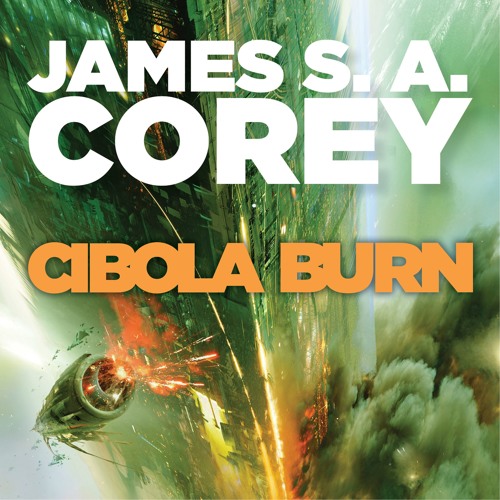
Cibola Burn by James S. A. Corey (audio)

Following Leviathan Wakes, Caliban’s War, and Abaddon’s Gate, Cibola Burn makes book four of The Expanse.

First remark: I noticed within seconds that this audiobook is read by a different narrator than books 1-3. I guess it is one of those quiet tragedies that we often don’t notice or remark on the narrator at all if they do a good job; done right, their work kind of fades into invisibility behind a great story. (I do try and recognize narration, and sometime comment on it, but I’ve probably failed to credit some fine work. In this format, no news is probably good news.) The earlier narrator of this series, Jefferson Mays, has given me each of the characters’ voices and accents; he gave me a world that I invested in. And this new guy is messing it up.

According to this fan wiki, Erik Davies stepped in to read book 4 because Mays had a scheduling conflict, and a later audio edition was released with Mays reading again. I regret that I didn’t find this out earlier and go seek that one out! I’m sure Davies is a nice man, but he butchered this reading. It would seem reasonable to go back and listen to the earlier narrations (this is a series; fans are invested) to find how each character was played and try to follow that, but maybe the scheduling issue provides a clue: too rushed to research? Not only are characters played inconsistently with past portrayals (Avasarala loses her accent; Amos’s voice moves way down in pitch), they are played inconsistently within this one book. Alex’s famous accent (practically defines his character) comes and goes, sometimes entirely absent. Our villain Captain Murtry has the accent Alex should have, but it sort of comes on slow and ramps up as the story unfolds. He changes the pronunciation of Coordinator Chiwewe’s name partway through, then changes it back. This is sloppy work. Additionally, Davies has a sort of droning monotone style in general, and he is apt to deliver lines like… remember Horatio Caine from CSI? The way he would take off his sunglasses and put them back on again and sigh and emphasis. every. word. very. slowly? Davies does this too, and it drives me crazy.

I know I’m going on at length about a single element of this audiobook and have not even gotten into its contents yet, but this is important stuff, friends. It took me every bit of half the book to get my bearings in this new world. I’m sorry I never gave Mays credit for his earlier work.

And my narration complaints don’t help my overall impression, certainly, but I also think this was the weakest installment in the series (interesting, because my friends at Tor.com loved it). The plot shows promise – shall I get around to plot, now? Following the opening in book 3 of “the ring” as a station to access a bunch of new solar systems, one of the “new” planets has been colonized by Belter refugees from Ganymede. Only now, a ship from an Earth corporation has shown up ready to do a sanctioned scientific study, and the two groups (to put it very simply) don’t get along. Blood is shed immediately, and the OPA/Earth alliance headed by Fred Johnson and Crisjen Avasarala sends Holden and his Rocinante crew out to set things right. For political reasons, they share a thinly veiled hope that Holden will actually fuck things up.

So here come Holden and Amos down to the surface of a planet… not quite at war, but certainly very tensely at odds. (Alex and Naomi stay up in the Rocinante in orbit nearby, along with the two much larger ships held by the two factions who beat them there.) Besides the political/social complications, we face challenges like superstorms, “death slugs” (which crawl out of the ground and kill on contact), and a mysterious growth that threatens to blind every person on the planet except Holden, for whatever mysterious reason. (I was calling this bullshit – the way Holden is such a superman and is the only one immune to this blindness threat – but it turned out to be explained pretty neatly, so okay.)

Again, the plot shows promise. We get (as usual) a couple of engaging new characters, especially the brilliant, work-obsessed scientist Elvi Okoye, who has one misguided crush and then finds true love, and her sidekick Fayez. The clear villain, as I said (and I don’t think this is a spoiler) is one Captain Murtry; he is a sociopath, I think, and I enjoyed him not one bit, but I suppose we need him for the story. We also meet again a few characters from earlier books: Miller’s old partner Havelock, and Basia Merton, from Caliban’s War. The Tor writer, Stefan Raets, found these reappearances a little too unlikely, but I’m on board. I also cheered the return of Sergeant Bobbie Draper in the prologue, but she scarcely shows her face past that beginning.

I loved the new world being discovered here, the new planet, with its totally unique biology and scientific challenges; Elvi’s overwhelming enthusiasm and love for her work is contagious. The mimic lizards captured my imagination and reminded me of Oy the billy-bumbler from King’s Dark Tower series. I remember Oy so fondly, this gave me a good feeling. (Corey is good, but King is better, hands down.)

Plot, check, characters, check. But the weakness comes in in the actual writing. I felt that where we used to see subtlety we are now being banged over the head. The emphasis on Holden’s crew being like family used to be mentioned offhandedly or merely demonstrated; here we have repeated overt references, as in “these are my family. I’m not going to let them die” sort of things. One of the book’s clearest themes is this idea that it’s silly for us to fight when we should be working together… we’re facing so many dangers, why can’t we remember that we’re all people, and band together… and then finally, common enemy, working together against dangers… look, we did it, we pulled together! And I think this theme would have been perfectly evident, and impactful, without saying all those things all the time. It got really cheeseball; I think it’s insulting to the reader to spell things out so thoroughly; and most importantly, it ruins the effect. Dialog, as well, moved from clever and quippy (especially among the Rocinante‘s crew) to over-explainy. Somebody actually said “I said that so you’d know I know.” The writing felt so different to me here that I wonder if something changed in how the writing team (that goes by the name Corey) works together; it just really didn’t feel like the same authorial voice. Of course, I have no idea how much Davies’s sub-standard reading played into this impression. The way a line is delivered can very much change how it’s read.

Finally, the interludes. A new addition here, these short sections seem told from the aliens’ point of view (I am following Raets’s usage here), and they remind me thoroughly of Gertrude Stein and not in a good way.

I do appreciate (as Raets points out) the way this book integrates some of the material of those that have come before. I appreciated Alex getting a bit more backstory – I said in my last review that he was little more than an accent, and finally he gets more characterization, which is just as well since he just about lost his accent in this narration… And if we get Avasarala and Bobbie Draper back together again in the next book, I’ll be very pleased. I’m still in, is what I’m saying, but please let’s get back to Jefferson Mays’s narration and back on track. C’mon, team…


Rating: 6 blue fireflies.

Abaddon’s Gate by James S. A. Corey (audio)

His words were full of hope and threat. Like the stars.

Following Leviathan Wakes and Caliban’s War, Abaddon’s Gate makes book three of The Expanse.

Thank goodness, after that angry-making book I reviewed for you the other day, that this one was so lovely. I think I like each of these better than the one before. Corey (actually a pen name used by collaborators Daniel Abraham and Ty Franck, but I shall treat “him” as one) keeps introducing new characters to play as central in each book, alongside our consistent leads Holden, Naomi, Amos and Alex, and these new additions continue to amaze me. Also, so many of them are badass strong women, which makes me feel good.

In this edition, we meet Clarissa Mao, Carlos “Bull” de Baca, and Pastor Anna Volovodov, among others. Clarissa (aka Claire, aka Melba) is initially a villain, but she will undergo several upheavals over the course of the story (as her multiple names hint). I love a complication. Pastor Anna is more strictly a positive figure – if anything, too positive, a little saccharine in her portrayal; but she also frustrated me for some other reasons, giving her as well the complications I appreciate. Bull was more closely a “typical” (I mean this in the best way) troubled police-detective-type, à la Harry Bosch or Dave Robicheaux; and he gets an ending that I wouldn’t call deserved, but that feels appropriate. We get as well a self-important, probably corrupt major religious leader to whom Anna remains sympathetic, but I can’t say the same for myself. Also Anna’s sidekick (if you will), an unrepentant rich lady loyal to her friends. Even though the book’s plot threatens the end of humankind, the characters were tons of fun.

I’ll go light on summary as usual, because sci fi, whew. This installment of The Expanse sees all three major politic powers – Earth, Mars, and the Outer Planets Alliance (OPA) – congregate near what they’re calling the Ring, the manifestation of that alien beast thing that formed on Venus in previous books. Our villain sets up an act of terrorism and frames Holden for it; she wants him both discredited and killed. Holden enters the Ring itself to avoid his attackers, where he encounters the ghost (or what the heck is it?) of Miller, who’s been dead (we’re pretty sure) since book one, but who Holden has been regularly conversing with. From here, the basic idea is that the Ring has the ability to destroy all of humanity – not only the many ships who are loitering near the Ring, but everybody back home well – and our usual heroes have to stop it. The factions basically battling to get humanity destroyed don’t do so knowingly, but possess various motivations having to do with power-hunger, mental illness, misguided rage, a sort of hero-sacrifice-complex, and more. I appreciate that we get the usual Holden-Naomi-Amos-Alex team (yay, go team!) as well as a few new hero figures, including an unlikely surprise. I found the “surprise” element both somewhat predictable and also poetic; I’m not sure that makes much sense but it’s how I felt.

I turn again to Tor.com, whose brief reflections on this book (and its adaptability for screen) I find wise. Their writer Liz Bourke calls Anna “the emotional (even, dare I say it, spiritual) centre of this part of the narrative arc. Anna knows how to forgive. Anna cares about people. And Anna can look out into the vast depths of the unknowable, and asks, ‘But what does it mean?’ not in fear or horror, but in wonder and hope.” Well put: she’s a new element, I think, in this world where (as Amos says to Anna) “everybody in this room except maybe you and the captain has a flexible sense of morality.” Bourke is not wrong in calling Holden “bland” (though I love him still), but Anna is a little less so.

Naomi’s character development has maybe slowed down a little in this book, but I still love her, and all the other strong women (I see you, Sam). I’m a little anxious to get back to developing our central four-person team: we didn’t spend much time with just the four of them together in this book, and I’m realizing that we know almost nothing about Alex (he’s hardly more than an accent). But Amos – I think I’m ready to admit I have a crush on Amos. He’s like an even more bad-boy Jack Reacher.

Long story short, my devotion to this series continues to strengthen. See you in book four.


Rating: 8 engineers.

writers in video (audio)

A few links for you today that came from my parents.

My mother sent this recording of a Bellingham local Whatcom Reads program, in which Timothy Egan discusses his book The Big Burn: Teddy Roosevelt and the Fire that Saved America (and, in Q&A, a few more – remember Mom reviewed The Worst Hard Time for us). I really enjoyed listening to this one (thanks Mom for the tip that the visual part was not entirely necessary), and I am reminded that I need to try some Egan one day – he sounds in the vein of Jon Krakauer and Erik Larson, who were among the first writers I recognized as creative nonfiction and as something I loved. While I really enjoyed it, I also took exception a few times to some of Egan’s comments: his chauvinism about geography, for example, and his statement that “Indians all have creation narratives,” as if to imply that his/our own culture doesn’t have creation narratives. (I guess it’s only a creation narrative if somebody else believes it, and what *I* believe is just truth?) (Also, any time you say “all the [ethnic group] do such-and-such” you’re probably on thin ice.) These quibbles were not fatal for my appreciation, and if anything indicate that I was engaging. One of these days I will read some Egan…

And, my father sent this episode of Oregon State University’s About Words, featuring Ben Goldfarb about his book Eager: The Surprising, Secret Life of Beavers and Why They Matter. Pops appreciates beavers; we have a mutual friend (and friend to Goldfarb, apparently) named Rob Rich who is a beaver fan and advocate, and writer; and I have been seeing a lot of beavers these last few weeks on my travels. But this short video (very short, after an hour-plus with Tim Egan) is less about the beavers and more about the imperative to write, among other things.

So, a little extra to add to your listening queue! [That’s a tip: although YouTube videos, I did not watch but only listened to both clips, which was fine (visuals were just background). I signed up for a free 30-day trial of YouTube Premium, which allowed me to download these videos for offline viewing/listening.]

Thanks, Mom and Pops!

LeVar Burton Reads

A new podcast, kids: new to me, although coming up on two years old now. I live in a van now (as you may recall), and although my drive time varies from day to day and week to week, I am always looking out for new listening material. (I am also totally loaded up with audiobooks, podcasts, and music; I guess I’m looking for new listening material like I’m looking for new books to read. Sigh.)

LeVar Burton Reads was an obvious choice, at least for those of us who grew up with Reading Rainbow – which, with over twenty years on the air, many of us did. This is the voice and performance we love applied to short fiction for adults, hand-picked by the man and storyteller himself.

I’ve only just begun, with six episodes under my belt. So far, I’d especially recommend Daisy Johnson’s “The Lighthouse Keeper” – that’s Daisy Johnson of Everything Under, and recognizably so.

Also so far, there is perhaps an emphasis on sci fi and fantasy, but he promises an assortment to come, and I believe him. Do come with me… Just take a look, it’s in a book

Caliban’s War by James S. A. Corey (audio)

I raced through book two of this series (book one here). Boy, that last one was a long review, wasn’t it? I’ll try and be more brief this time. To start with: I’m definitely hooked on The Expanse.

Caliban’s War keeps Holden and his deeply likeable crew at its center, while Detective Miller is nearly absent, having flown off to Venus with the protomolecule version of Julie Mao. Tor.com’s article on this volume (which, again, I found an excellent guide) says that “Holden is the through line, but only in a way that centers things for the reader. He’s really a vehicle for everyone else,” which I think is nicely put. A few new characters enter the spotlight. Prax, or Dr. Praxidike Meng, whose daughter has been kidnapped, is a meek botanist big on brains and short on street smarts. I occasionally found him maddening, but he makes an interesting contribution to the little family that is Holden’s crew. He also, through the crisis of his missing child and her link to the protomolecule, provides the novel its central one-off storyline. Chrisjen Avasarala is a UN (Earth) politician, and a delightfully nuanced character with all the backstory required to make her interesting and believable; she could carry a whole book on her own. And Sergeant Bobbie Draper of Mars is like a female Jack Reacher: huge, badass, clever and loveable (as long as she’s on your side). Avasarala recruits Bobbie, and the two of them work together to try and avert disaster in the tenuous cold war between Earth, Mars and the Outer Belt following the events of book one.

Whew.

Although Wikipedia calls Holden, Prax, Avasarala, and Bobbie the four main characters of this book, I think that sells Holden’s crew short. His love affair with Naomi is progressing, with its issues. Alex is offscreen for part of the story, and receives somewhat less character development, but Amos is coming right along. The friend who turned me on to this series calls him a psychopath, but I think that’s not the least bit fair. He cries for children in danger. I love Amos. And the family togetherness of the crew of the Rocinante (Holden named it) is a sweet point – approaching saccharine, actually, but I seem to have a high tolerance for that, once I’ve bought in. And I’ve definitely bought in here.

My endorsement of this series continues. It’s sci fi for people who care more about people than the science. It’s right up my alley, action-packed but also all about character development and human conflict and feelings. On to the next one.


Rating: 8 children.

A Sense of Place by Wallace Stegner (audio)

To write about this essay collection, I must first tell you about the format.

From my research, it looks to me like the collection exists only on audio, and only on audiocassette. I bought the set of two cassette tapes some years ago, and have had them all this time, waiting for a way to listen to them. The only cassette player I could locate in my friends-and-family circle was a desktop item my father dug out of the attic for me; but its volume only goes so high, and Stegner came out of the machine so low that I could only hear him if I pressed my ear against the tape player, which I quickly tired of. (Thanks anyway, though, Pops.)

Then finally a friend bought me this outstanding gift: a cassette-to-MP3 converter! Who knew! Thank you so much, Margaret; it was a shame to use it for just the two tapes, but hopefully the guy I passed it on to gets some use out of it with his old rock tapes. Anyway, I was finally, after years of ownership, ready to listen to my Stegner as I drove north across west Texas.

And it is Stegner himself reading, which I think is a nice bonus, although he does have a bit of a somnolent monotone. The essays are not titled; he simply rolls from one into another, so that I was rarely clear on when one ended and another began, although changes of subject serve as loose guides. It’s an intriguing problem, the format of these essays and their absence from the world otherwise. I am a bit interested in transcribing them myself for posterity, if I could find the appropriate person to work with on that project. Hmm.

Now on to the essays, yes? I enjoyed listening. Stegner has a lot to offer: he has known several corners of this country very well at several times in particular, and he specializes in detail and color (literally and figuratively, as in “local color”). He can be relied upon for commentary about conservation issues, and although his positions sound a little obvious in 2019, coming from 1989. His storytelling style is soothing, especially read aloud in that drowsy voice of his. I do wish I had these on paper to read and look at; as it was, I had to let the stories and reflections wash over me, which was pleasurable, but leaves me with less to say for this review.

I made a few short recordings of lines that appealed to me. I have no idea what essays they are from.

The Wasatch in Utah… taught me the feel of safety… A man can tuck back in against mountains, the way Hemingway used to tuck back into the corner stool at Sloppy Joe’s, his back covered and all danger in front of him.

(Guess why I like that one. That would be Sloppy Joe’s in Key West; I’ve been there.)

We manage to breed saints, brutes, barbarians, and mudheads in all sorts of topographies and climates, but what country does to our way of seeing is another matter, at least for me. By and larger I do not know what I like, I like what I know.

I wish I had the line that came just before, too: his point was that topographies and climates don’t make people who are smart or stupid, moral or evil. It’s a point that’s important to me. People judged for their geographies is becoming a pet peeve of mine. And that last line: “I do not know what I like but I like what I know.” It makes sense somehow.

Every night in season [the frogs] conducted love concerts that could drown out conversation even inside the house. Stamp on the patio bricks and they fell silent so suddenly from such a crescendo of noise that the silence rang like quinine in the ears, the sort of silence I’ve heard nowhere else except in the middle of the Amazon jungle.

Silence rang like quinine! What an unexpected simile; and I’m not sure exactly what it means, not knowing what quinine sounds like in one’s ears; this is a line that I think would get picked apart by certain creative writing professors I’ve known, but I appreciate it. I don’t know what quinine rings like, but the surprise pleases me, and I’m willing to take it on faith that that was some silence, whew. Now, the Amazon jungle as a place of silence I trust a little less: I imagine a jungle being rather a noisy place, what with all the life going on there, the peeps and rustles and dripping that surely must be going on. But perhaps Stegner has been to the Amazon. I have not.

There were other startling lines, and worthwhile observations. I wish I could share the text of these essays with you. Barring that, take my word for it, unless you have a tape deck and $16.48 (which will buy you the tapes right now on that other Amazon; more from AbeBooks).

Even with all the hassles it took me to listen to A Sense of Place: worth it.


Rating: 7 names.

Leviathan Wakes by James S. A. Corey (audio)

This was a definite departure from my usual reading, in part because it was listening and not reading. Two life changes contribute: one, that I live in a van now, and do a fair amount of driving, therefore time to listen. And two, I graduated! and have far fewer reading commitments, so I thought I might have brain-room for audiobooks again. Yay!

This was also a genre departure. A friend set me up with The Expanse series on audio, highly recommended. He calls these books “hard-boiled film noir in space,” which all rings true, although I would have said sci fi as a first-level categorization.

I did a little research and reading around as I wrote this review, which is fairly unusual, but I’m so unfamiliar with the genre that I felt at a loss. I am glad I poked around like I did. I learned, in this article from Tor.com, about the “space western” sub-genre, which made instant sense for Leviathan Wakes even before I read the full description of that genre distinction. On the other hand, it was interesting to note in that article that its author found Miller a trying character and was always anxious to get back to Holden. While I can’t say the opposite – I certainly found Holden compelling – I did feel Miller was sympathetic and genuine. Some people really are that depressed, depressing, and self-sabotaging. Or maybe it’s just that I love noir mysteries, with their disturbed PIs.

But I’m getting ahead of myself. Leviathan Wakes takes place in a future in which humans have colonized Mars and a good chunk of the solar system. The major political players in this world are Earth and Mars, with an outer asteroid belt roiling and muttering rebellion under the name OPA (Outer Planets Alliance), which has been labelled a terrorist organization by the major powers. In this setting, we have a handful of protagonists, chiefly two men: James Holden, Earthborn captain of a commercial ship and former officer in the United Nations Navy, and Joe Miller, a rundown Beltborn detective and classic noir figure (his wife left him, he drinks too much, he’s dysfunctional but still has a good heart). There’s also Holden’s crew, Naomi, Amos, and Alex; and Julie Mao, rich girl turned OPA fighter, who we meet only briefly at the beginning of the book. She becomes a missing person and Miller is assigned (by nontraditional means) to find her. He becomes obsessed.

This is a hard plot to summarize because a lot happens (the paperback is some 600 pages, the audiobook 21 hours). If you want more, the Wikipedia page does a pretty good job of summary, but beware spoilers there. I’ll turn to another’s words again: Aidan Moher, the writer at Tor.com, praises this book “for being open and approachable for anyone with even a remote interest in science fiction, but specifically for those who are intimidated by the hard science that often forms the backbone Space Opera. It focuses instead on the intricacies of the human machine — relationships, anxieties, dreams, loss, redemption, acceptance.” Well put, and explains why I was able to enter so easily into this world. Human relationships, etc., are definitely my main interest in literature.

I had a great time listening to this one. I felt pulled in by the momentum of both character development and plot; it stayed entertaining always. There were a few elements I let slide by me: the tech (and anything I missed was not a problem), and also the lovely patois spoken by Belters, which mixes a few languages (English, Spanish, Hindi, and more: there’s a great page here). That pidgin language offered great color and I felt like I understood enough to get along. (I’m often a fan of foreign languages used in English writings, where context clues or cognates give me enough to get by, and I’m generally able to trust the author that what I miss is unnecessary to my understanding of the larger work.) In other words, I thoroughly agree with Moher: this was an easily accessible sci fi novel that I loved for its human elements. Despite being a longish book, pacing was snappy, and the alternating viewpoints of Holden and Miller kept things lively as well. I am absolutely looking forward to the next book in the series, which is Caliban’s War. Stand by: I’m going to switch gears in a big way and listen to some Stegner next, and then back to the old space western. My friend who has given me the series tells me this one will be “more horror and psych thriller,” with which I am right on board.

Thanks for the hook-up, Paul.


Rating: 8 vomit zombies.