Teaser Tuesdays: Tripwire by Lee Child (audio)

Teaser Tuesdays is a weekly bookish meme, hosted by MizB of Should Be Reading. Anyone can play along! Just open your current read to a random page and share a few sentences. Be careful not to include spoilers!
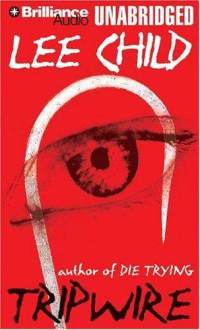
Love my Lee Child on audio, y’all. It was especially fun to find this one starting off in Key West, since we (thought we) were headed there on vacation a few weeks ago. Not that Reacher sticks around in Key West for long, though; this one mostly finds us in New York, so far.

Here’s your teaser:

An hour later Reacher was drifting down Duval Street, thinking about new banking arrangements, choosing a place to eat an early dinner, and wondering why he had lied to Costello. His first conclusion was that he would cash up and use a roll of bills in his pants pocket.

Stop back by and I’ll have a review for you shortly! What are you reading this week?

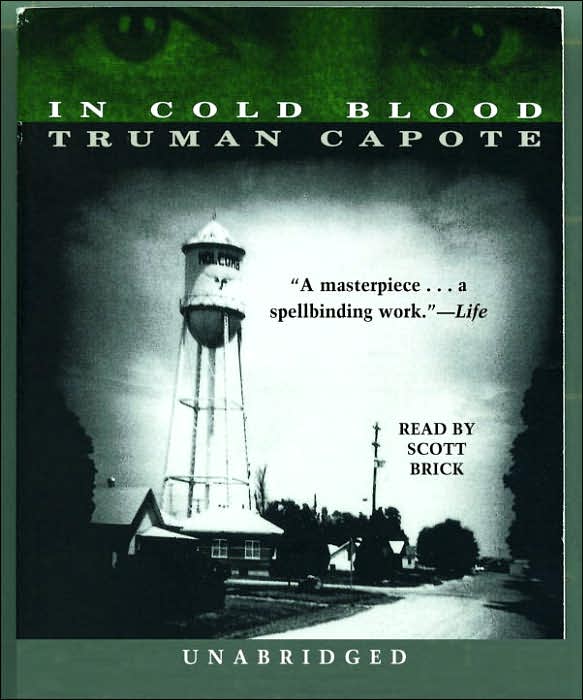
In Cold Blood by Truman Capote (audio)

Truman Capote captured my undivided attention with this medium-largeish* book in remarkable fashion. My first issue for this review: is this fiction, or non? It is most commonly referred to as a “nonfiction novel,” a term I have a lot of trouble with. The story is either based very closely on, or is, the true story of the quadruple murder of the Clutter family in small-town Kansas, and the investigation, arrest, and eventual execution of the two perpetrators. (My library’s OCLC listing calls it “postmodern fiction.”) Capote himself said, “I wanted to produce a journalistic novel, something on a large scale that would have the credibility of fact, the immediacy of film, the depth and freedom of prose, and the precision of poetry.” So, fiction or non? I’m going with fiction, but clearly this is one of those areas where the line blurs. More on that in a bit.**

I came across this book recently in several blogs, which is curious because it’s not new; it was first published serially in Life magazine in 1965, and in book form in 1966. I already had the book on my radar, but these fine fellow bloggers definitely solidified my interest. In telling you about the story, and the book constructed about the story, I’m going to be fairly spoilery, because this is history. If you want to read it yourself and be surprised, I’m not your top-choice review.

So. The subtitle reads, “A True Account of a Multiple Murder.” On the night of November 15, 1959, the Clutter family was bedding down on their farm in Kansas, just outside the small town of Holcomb, itself a suburb of Garden City. Herbert Clutter, the patriarch, was a respected member of the community and devout Methodist; his wife Bonnie had been suffering from depression and had been in and out of hospital, but at this time was home. Sixteen-year-old Nancy, the belle of local society, sweet, talented, generous, and universally beloved, had just sent her boyfriend Bobby home and was getting ready for bed. Fifteen-year-old Kenyon was slightly socially awkward but friendly and respected as a member of a well-liked and important family. The two older Clutter daughters were living on their own outside the home – one married, one about to be.

Meanwhile, two paroled convicts of the Kansas state prison system were on the road. Perry Edward Smith and Richard Eugene “Dick” Hickock had been cellmates and although very different in temperament, had teamed up for an endeavor that Dick described as being the perfect crime. As you’ve already guessed (or already knew), these six characters converge when Dick and Perry kill the Clutters in the night and make off almost as perfectly as Dick imagined. They spend months traveling, living briefly in Mexico where Perry hoped to become a successful treasure hunter, and then roaming the US again until they were apprehended in Las Vegas. They were tried in Kansas, convicted, and finally hanged in April of 1965.

Capote follows both groups of characters – the Clutters, and Perry & Dick – alternately in the days leading up to the night of the murder. Then he follows Perry and Dick in their roaming, and then through their imprisonment and trial, and right up to the hangings. His voice is omnipotent third person, and he quotes extensively from letters, documents, and trial proceedings, as well as from his interviews with various players and especially Dick and Perry themselves. Capote was on the case (so to speak) well before they became suspects, and published after they were killed, so his perspective and the timeline of his coverage is pretty extensive.

But, perhaps not entirely objective. The Clutters are painted in admirable detail, in lovely little vignettes. But their role is minor and short-lived (ouch, pun not intended). And of the two killers, Perry Smith is treated far more sympathetically and examined more deeply. I was pondering this as I listened to the book, wondering if this was all Capote’s apparent subjectivity, or if Perry was inherently more sympathetic; in other words, would I have found him so if I had been researching this case myself? There are a few fairly easy markers for this, at least for me: for one, Dick liked to rape little girls. Perry apparently stopped him from raping Nancy (by both their accounts). Dick ran over stray dogs with his car for fun, which Perry found revolting (as do I, obviously). Perry’s childhood was patently rough, while Dick’s is characterized as fairly normal. Perry seems to more clearly have a mental illness or defect that “causes” his criminal and violent tendencies. But, I’m not sure we get all of Dick’s story; Capote looks much more closely into Perry’s past. So what I’m trying to say is, I think there may be a bias in favor of poor Perry the murderer, having been manipulated by evil Dick. Apparently, it was alleged that Capote in fact had a sexual relationship with Perry while he was imprisoned, although obviously I can’t speak to that. This is not a criticism. I just want to point out that perhaps Capote is not entirely impartial with regards to his two main characters.

I found this book incredibly powerful. Capote has a fine sense of drama and of timing. Scenes and people are sketched artfully, sometimes quickly and with broad strokes that paint a pretty complete picture just briefly, and sometimes in painstaking detail. The stories of the Clutters’ deaths and Dick and Perry’s adventure and executions are fascinating and engrossing, yes. But it’s Capote’s rendering that makes this book, more than his subject matter. (I guess this is always the case.) I was blown away by the emotional effect of this story. I couldn’t get enough; I wanted more of the inside of Perry’s head, of Dick’s (ew, how creepy), of the small-town life of Holcomb and Garden City. This is my first experience with Truman Capote, and I’m a fan.


Also, as Marie said at The Boston Bibliophile, Scott Brick’s narration is excellent. I recommend this book on audio if you’re so inclined. (I also picked up a paperback, though, to have on hand. I never did reference it while listening but I think I’d like to have it for future use.)


*My audio version is 12 cd and 14.5 hours; my paperback edition is just under 400 pages.

**Back to the fact vs. fiction question. It does seem that Capote behaved like a journalist in putting this book together: gathering facts, interviewing key players, confirming dates. It could pass as “true crime,” a genre which itself may have trouble with fact vs. fiction. The biggest place where Capote appears to leave the realm of nonfiction behind is in dialogue; he has recreated a great many pieces of dialogue, mostly between Perry and Dick, that were unrecorded. He has relied upon Perry and Dick themselves in this recreation, I think, but memory being what it is, some creativity definitely come into play. I did note that on the night of the Clutters’ deaths, Capote has not tried to recreate their experience or any dialogue, except in the accounts shared by Perry and Dick in their confessions. This seems to show a reluctance to just “make things up,” and a respect for the question that (I think) still remains: did Perry kill the two male Clutters and Dick the two women, as Perry originally claimed? Or did he Perry kill all four, as he amended his story to say, and as Dick claimed all along? Capote doesn’t answer this question for us – presumably because he respects the fact that he can’t answer it authoritatively. (I do wonder what he thought, though, considering that he apparently was very close to Perry in particular.)

Teaser Tuesdays: Die Trying by Lee Child

Teaser Tuesdays is a weekly bookish meme, hosted by MizB of Should Be Reading. Anyone can play along! Just open your current read to a random page and share a few sentences. Be careful not to include spoilers!


These days I’m listening to Die Trying on audio. It’s the second of the Reacher series; I’m going back and reading the ones I’ve missed in order, catching up. The new one, The Affair, comes out this month. I will probably keep going in order and thus avoid the early rush to it. So, here’s our teaser from page 432:

Holly had wanted to see the sky. She was standing there under the vastest sky Reacher had ever seen.

EDIT: I had to change my teaser because I had quoted the wrong BOOK! I’m so sorry, friends. Stay tuned for the next in the Reacher series, where the first-posted teaser came from…

The Picture of Dorian Gray by Oscar Wilde (audio)

I am having some trouble writing up my experience with this book. Please bear with me if I ramble.

I struggled with this book, which frankly surprised me a bit. I tend to enjoy The Classics; I expect to enjoy them. I’ve had relatively few failures (ahem, Faulkner and Henry Miller, I’m looking at you). But I fear that Oscar Wilde may not be for me. I listened to this book on audio. Is that the wrong way to do it? It may be my first attempt at a classic in this format. You’d think it would be more accessible this way.

We open with a scene in which Lord Henry is visiting his friend Basil, a painter. They admire Basil’s masterpiece to date, a portrait of a beautiful young man. Basil expresses a deep infatuation with the young man, whom he does not want to share with Lord Henry in any way, not even to tell him his name; but shortly, Dorian Gray appears. His new friend Lord Henry makes him a speech about the glorious and fleeting nature of his (Dorian’s) youth and beauty, which leads Dorian to make a speech (there’s a lot of speech-making, more so than dialog, if you ask me) in which he wishes that he could always be young and beautiful, and his portrait grow old and ugly in his place.

Well. In case you haven’t heard of this famous story, he gets his wish.

Dorian follows other advice of Lord Henry’s, which is not advised. A large part of his new life philosophy involves taking every pleasure one can without considering consequences, seeking beauty. Dorian courts a young woman from the lower classes and then dumps her, resulting in her suicide; this is when he first notices that the portrait has begun to change. It shows marks of sin; there was a “touch of cruelty round the warped lips.” After some agonizing, he decides to go on living an evil and dissolute life, and letting the portrait shoulder the results.

I found my interest fading in and out. Wilde has these moments of brilliant, shining beauty: his descriptions of people can be remarkably fancifully, finely painted. For example, the people Lord Henry finds when he comes in to dinner at his aunt’s:

Dorian bowed to him shyly from the end of the table, a flush of pleasure stealing into his cheek. Opposite was the Duchess of Harley, a lady of admirable good-nature and good temper, much liked by everyone who knew her, and of those ample architectural proportions that in women who are not duchesses are described by contemporary historians as stoutness. Next to her sat, on her right, Sir Thomas Burdon, a Radical member of Parliament, who followed his leader in public life and in private life followed the best cooks, dining with the Tories and thinking with the Liberals, in accordance with a wise and well-known rule. The post on her left was occupied by Mr. Erskine of Treadley, an old gentleman of considerable charm and culture, who had fallen, however, into bad habits of silence, having, as he explained once to Lady Agatha, said everything that he had to say before he was thirty. His own neighbor was Mrs. Vandeleur, one of his aunt’s oldest friends, a perfect saint amongst women, but so dreadfully dowdy that she reminded one of a badly bound hymn-book.

But I found Lord Henry to be entirely intolerable, and Dorian and Basil only slightly less so. When any combination of these three self-centered gentlemen of leisure shares dialog, I want to throw things.

“Harry, you are dreadful! I don’t know why I like you so much.”

“You will always like me, Dorian,” he replied.

I can’t stomach the tone of self-satisfaction. (I wonder if if the voice of the narrator is part of my aversion.) Lord Henry, especially, philosophizes endlessly and meaninglessly. I can’t pay attention to him, no matter how hard I try. He is forever telling his young, impressionable friend Dorian that things will “always” be one way or the other. It irritates me. Perhaps this is Wilde’s point? Maybe I am responding just as he intended me to. I don’t care; I don’t enjoy it.

So to carry on. Dorian hides his portrait and lives a life of sin and pleasure. The storytelling speeds up; we see many years go by while the (anti)hero pursues one indulgence, then another. There are more gems of beautiful, poetic writing in the description of the items Dorian collects, like jewels, tapestries, and music. Here, discussing the lore of the gemstones he collects:

In Alphonso’s Clericalis Disciplina a serpent was mentioned with eyes of real jacinth, and in the romantic history of Alexander, the Conqueror of Emathia was said to have found in the vale of Jordan snakes “with collars of real emeralds growing on their backs.” There was a gem in the brain of the dragon, Philostratus told us, and “by the exhibition of golden letters and a scarlet robe” the monster could be thrown into a magical sleep and slain. According to the great alchemist, Pierre de Boniface, the diamond rendered a man invisible, and the agate of India made him eloquent. The cornelian appeased anger, and the hyacinth provoked sleep, and the amethyst drove away the fumes of wine. The garnet cast out demons, and the hydropicus deprived the moon of her colour. The selenite waxed and waned with the moon, and the meloceus, that discovers thieves, could be affected only by the blood of kids. Leonardus Camillus had seen a white stone taken from the brain of a newly killed toad, that was a certain antidote against poison. The bezoar, that was found in the heart of the Arabian deer, was a charm that could cure the plague. In the nests of Arabian birds was the aspilates, that, according to Democritus, kept the wearer from any danger by fire.

There’s a lilt, a rhythm to that passage, that makes it almost musical, itself.

And through it all, the portrait bears the ugliness of his actions. I guess this is where I say, I had some trouble with all the discussion of the physical manifestation of sin and of goodness; Dorian’s society takes for granted that beautiful people are good and evil people become ugly, so no argument against Dorian’s virtue can be entertained, since he’s so youthful and beautiful even 18 years after the story begins in Basil’s painting studio. This may be one of those fancies one should just accept in fiction, and maybe I was just too grumpy at my other complaints to accept it, but it didn’t work for me. Or, more to the point: perhaps Wilde is actually attacking this very concept, and I’m missing his point. The whole thing grated on me, though, instead of making me think, if that was indeed his intention.

My gripes are numerous, aren’t they? Am I being unfair? There were definitely a few moments of glistening gorgeous writing; but the philosophizing was intolerable, and the dialog was more like a series of monologues, and I just couldn’t buy into the gravity of the ideological arguments. It was all fluffy talk, and I fear Wilde meant for it to be taken seriously.

I spent the bulk of this book waiting for it to be over so I could go on to Truman Capote’s In Cold Blood, which by the way is so far really wonderful. (Timely bonus link: 10 Writers Who Moonlighted as Dandies lists both Wilde and Capote, naturally.) I feel sorry I couldn’t appreciate more of this classic work, but I couldn’t. On the other hand, because of those beautiful bits, and Wilde’s reputation, I sort of wish I could take on this book as a subject of study with an expert – maybe in a college course – and have its quality explained to me. I’m really baffled.

Do you love this book? Can you please explain its redeeming qualities?

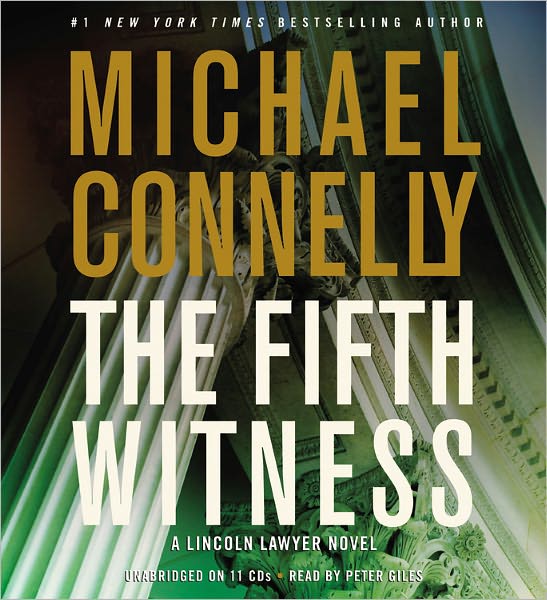
The Fifth Witness by Michael Connelly (audio)

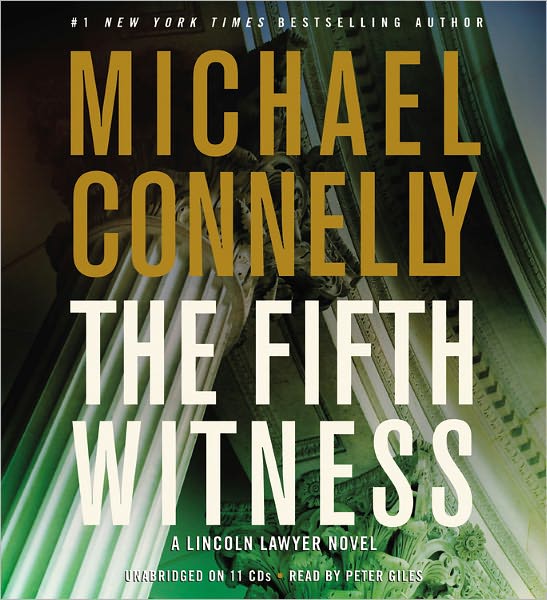
Finally got around to Michael Connelly’s latest via audiobook. This was a good way to fit it into my somewhat busy print-reading schedule (I’m working on two clunksters, Newspaper Titan and Don Quixote), but there was a drawback: I had a real problem with this narrator, and I fear that it effected my reception of the whole book, sadly. Peter Giles’ narration was so heavy and serious it weighed down the story and its potential humor.

Quick synopsis: Attorney Mickey Haller has picked up home foreclosure cases (civil) to fill out his business. But he returns to his roots as a criminal defense attorney when one of his home foreclosure clients, Lisa Trammel, is accused of the murder of a big-time banker involved in foreclosing on her home. There may even be mob involvement: is Lisa being set up?

I’m afraid my disappointment extended to Connelly as well as narrator Giles. I didn’t like how this one felt very didactic. Early on I was offended by lots of Mickey explaining things to his 14-year-old daughter, where the very awkward dialog was obviously just a mechanism to explain things to me, the reader (listener). And that daughter, by the way, seemed awfully juvenile for 14. Almost shades of Sophie’s World, shudder, which I despised. There was a didactic feel to most of the novel, in fact; Haller went out of his way in dialog to explain courtroom procedures, to his client, yes, but also to his staff, who should well know this stuff by now. His client, Lisa, is an unsympathetic character. She was meant to be unlikeable, so I guess I should give Connelly credit for the fact that she drove me nuts. But I’m not sure it was necessary that she be quite so bleating. It’s one thing to successfully pull off an unlikeable character, and another to make me cringe every time she appears.

I did like the little joke whereby Mickey is asked if perhaps Matt McConaughey wouldn’t do well playing him in a movie; but that brings me to another beef with this narrator. McConaughey’s smooth, suave, slightly fast-talking portrayal in The Lincoln Lawyer was very true to Mickey Haller’s persona on the page; whereas this audio narrator has him EM. PHA. SIZING. EVERY. WORD. in an aggressive and abrasive way that I find offputting and inaccurate. Isn’t Mickey Haller’s charm, and effectiveness as a lawyer, wrapped up in his ability to be, well, charming? Likeable? This grunting character in the audiobook doesn’t sound like the Mickey I know from his last three book appearances. It makes me wonder how much control Connelly has over these creative productions of his work – ideally, lots, and maybe that’s why Giles is the third narrator I’ve encountered in, count ’em, three Connelly audiobooks. Mr. Connelly, if you’re reading this (ha), I vote against Giles. It was all I could do to finish this book on audio. I wanted to switch over to print but oh, woe, little reading time and prior commitments.

Things did pick up considerably when we finally got into the courtroom. Haller, and Connelly, both shine in this setting, and my enjoyment of the story and the drama and the action and the dialog all increased when the trial began. I felt that the pace really ramped up; instead of feeling exasperated, I really looked forward to the next installment. But even here, Connelly’s not up to his own standards. Some of the dialog was still contrived, and there were at least two instances were Haller expressed (in his first-person narration to me, the reader) that he didn’t know how to handle a new and surprising incident. These struck me as relatively commonplace courtroom events, though, and his confusion didn’t ring true for me. I mean, I almost knew how to handle things (at least in fiction-land) from my reading in this genre. Haller’s sudden ineptitude – when his character is supposedly so slick and expert – didn’t work for me. These were minor moments, but they drew my attention because they didn’t fit.

I’m mulling over this reading (listening) experience now, wondering how things took such a poor turn for me. I have always been really excited about Connelly’s Bosch novels, and not much less so, all the rest of his work: the standalone The Scarecrow, the first Haller book The Lincoln Lawyer, etc. From his first novel on (and I have now read them ALL), I’ve enjoyed everything I’ve read. How sad and concerning, then, that this latest, The Fifth Witness, is my least favorite so far!

The courtroom drama did work. Some new characters were introduced who might hold some promise, namely Haller’s new assistant counsel, Jennifer “Bullocks” Aronson. And the big revelation at the end? Well, the jury is out (ha) on this so far. I like the future and the new directions it opens up for Haller, and for Maggie McFierce. I think I’m on board with the overarching change of heart it indicates. I am relatively sure I’m on board with the idea that this is a natural progression for Haller. But I’m not completely sold on any of these arguments; and I think the reason I’m not completely sold is that Connelly didn’t sell it. This was not his strongest work.

I hope very much for more to come, soon, and better, and maybe with Bosch, rather than or in addition to Haller? Bosch is my favorite. I realize Haller’s the new star, what with The Lincoln Lawyer movie making such a big splash. It was a good movie – entertaining and well-done and perhaps most important to me, fairly faithful to the book. But I hope Connelly isn’t letting this success dictate his work.

I’m sorry to have to write anything less than glowing about my guy Connelly, but I call ’em like I see ’em. I give The Fifth Witness a “meh” and hope for more, better, soon.

Killing Floor by Lee Child (audio)

My love affair with Jack Reacher is going strong; or perhaps it should be just starting here? This is the very first Reacher novel published. (While Child did later publish prequels, he recommends they be read in publication order rather than chronological order. Read all about it.) So, in this book, the Reacher I’ve come to know is just six months out of the army. He’s a former MP – military policeman – just roaming, trying to figure out what he’s doing with himself. He was raised in the army, living just a few months at a time at barracks around the world. When it was time, he went to West Point, and found spending four years in one place bizarre. Then he graduated, entered the army himself, and has lived the rest of his life a few months at a time at barracks around the world, too. So roaming comes naturally. (This is the first time I can remember finding Reacher to be a music fan. The song “Rambling on My Mind” recurs.)

Reacher roams into small-town Margraves, Georgia, and is arrested immediately on a murder charge. He’s calm; he knows he’ll be cleared, since he didn’t do it. But when he finds out who the murder victim was… he’s involved, and has to stick around. The victims start stacking up, and he meets a pretty girl who’s also a local cop, and Reacher is pulled into a big mess. The team of killers is stalking him, and he’s not afraid to do battle, especially considering who they started with.

I’ve written about Reacher quite a bit. He continues to be big and burly and frankly, sexy, and tough and uber-capable and clever. The plot line is actually pretty predictable: Reacher will kill people. He’ll get away with it. He’ll probably get laid, although the sex is not graphic. (The violence is.) He’ll amaze you and make you gasp. Like a sighing reader of romance novels (who reads not to find out if they’ll hook up, but just to be there when they do), I’m not here to find out how he’ll win – I know he will. The suspense is in who the bad guy is and how it all comes out. I feel a little bit wrenched every time he walks away from the town, the situation, the girl, and the new quasi-friends he’s made. But he’ll keep on walking away.

But this is the FIRST time he’s done it! I was thrilled to meet him near the beginning of his lack of career, his aimless wandering, and see his plans formed. This is the first time I’ve seen him consider hanging around – because it’s his first retired adventure. Later in the series he’ll learn not to consider it. We also get to meet his brother (well, sort of) which gives me a differently-angled view into his background. I look forward to reading the prequels, too, for the same reason.

Come meet Reacher at the beginning, y’all. This is a classic of Reacherdom and I love it.

book beginnings on Friday: In Cold Blood by Truman Capote (audio)

Thanks to Katy at A Few More Pages for hosting this meme. To participate, share the first line or two of the book you are currently reading and, if you feel so moved, let us know what your first impressions were based on that first line.

Ooh, I’m very excited about this one. For some reason, I’ve been hearing a lot lately about this (not new) book and am anxious to get started. We begin:

The village of Holcomb stands on the high wheat plains of western Kansas, a lonesome area that other Kansans call “out there.” Some seventy miles east of the Colorado border, the countryside, with its hard blue skies and desert-clear air, has an atmosphere that is rather more Far West than Middle West.

Okay, well, it’s not a GASPworthy start, but I still feel the pull. For one thing, the idea of “hard” blue skies and “desert-clear” air, and a Far West atmosphere, feels both familiar and alluring to me. I’m all in.

What are you reading?

Teaser Tuesdays: The Picture of Dorian Gray by Oscar Wilde

Teaser Tuesdays is a weekly bookish meme, hosted by MizB of Should Be Reading. Anyone can play along! Just open your current read to a random page and share a few sentences. Be careful not to include spoilers!


I am tackling another classic, this time via audiobook in the car. Unabridged, of course! Here is your teaser. Happy Tuesday.

I remember her bringing me up to a truculent and red-faced old gentleman covered all over with orders and ribbons, and hissing into my ear, in a tragic whisper which must have been perfectly audible to everybody in the room, the most astounding details. I simply fled.

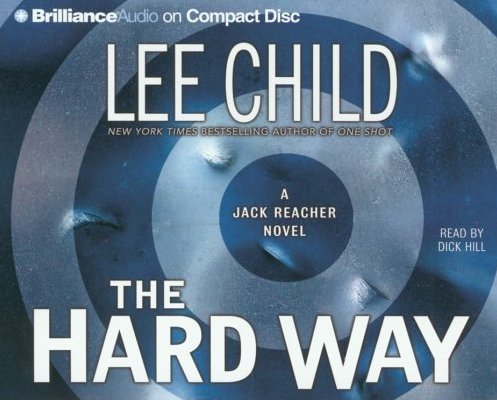
The Hard Way by Lee Child (audio)

Okay, you all know I’m a big fan of the Jack Reacher series by Lee Child. I have read 9 of the 15 currently out (with The Affair to come in September, yay!). So please take me seriously when I say this is the best one I’ve read yet!

As has become my habit, I listened to this one as an audiobook in the car. I love the narrator, Dick Hill. I think he has just the right mix of slow, serious cadence (imbuing Reacher’s words with the gravity they deserve), and a lightheartedness in the right moments.

And like all the Reacher novels, this novel is fast-paced, suspenseful – I mean real edge-of-the-set, sitting-in-the-driveway-biting-my-nails-while-Husband-wonders-what-I’m-up-to suspense – and action-packed. Reacher is his usual superhero self. Mysterious characters approach him as he tries to mind his own business, and (with limited reluctance) he enters their world, to try and save a kidnapped woman and child. But wait! Are the bad guys really who we think they are? There is intrigue, including military and international intrigue. There are beautiful, sexy, strong, independent women; some of them are also traumatized. There are loyal sisters. Reacher is cool, funny, comforting, and simultaneously rock-hard strong and smart, and brutally violent. (Only when it’s appropriate, of course.)

In The Hard Way, Reacher is recruited by a team of mercenary ex-special forces soldiers to assist in solving the kidnapping of the boss’s wife & step-daughter. As things unfold, he discovers that he hasn’t been told everything – like the fate of the boss’s first wife, kidnapped five years prior, and the fate of two former employees. His loyalties shift; he’s not sure who he can trust. He meets a former FBI-agent, who was involved in the earlier kidnapping case, who may turn out to be a partner of sorts.

I think part of what made this one extra-special to me was the extremity of the danger and trauma at stake, and the happy ending that our sympathetic characters are teased with, the happiness they MIGHT achieve if Reacher is successful. There are some gruesome images offered up; this is not for the faint-at-heart. But if you love a lone ranger with iron-clad morals, a heart of gold, and a Rambo-style ability to inflict pain on those who deserve it, in a world of beautiful/handsome good guys and really bad bad guys, Reacher may be for you. In fact, it’s rather like the traditional Western novel in that lone-ranger sensibility. But these have an intelligence lacking in the traditional Western (not trying to call them stupid; bear with me). Reacher thinks things through in a split second, and we get to share his thoughts on bullet trajectories, angles, percentages, and the weighing of one possible outcome against another. It’s very cerebral at the same time that it’s very physical. I love it.

Before this novel, I didn’t think I’d have favorites within the series. They’re all pretty great. But I’d put this one up there, and if you’re curious, I’d also pick out Echo Burning as a favorite. It was my first Reacher novel, and I picked it up because of the setting: far West-Texas desert on the Mexican border, which is an area where I have spent some very good times. That got me in the door, and opened up the whole series for me, and I’m SO grateful. It had another extra-high-stakes plot (at least for me… I mean, they’re all high stakes, but these two got me somehow, I don’t know. maybe you’d be “got” by a different pair of them) and that setting that I appreciated so much. Also a real knock-down, drag-out OK Coral sort of final scene that really got me going.

Do you read Reacher? Which one is your favorite? And if you don’t – why not?!? No, I jest, sort of. We don’t all have the same tastes. But for suspense and action, I couldn’t recommend it more highly. If not this one, what’s your favorite series? And do you have a favorite within it?

book beginnings on Friday: The Fifth Witness by Michael Connelly

Thanks to Katy at A Few More Pages for hosting this meme. To participate, share the first line or two of the book you are currently reading and, if you feel so moved, let us know what your first impressions were based on that first line.

My current audiobook (for the daily commute) is the latest from Connelly, also the fourth of his books featuring Mickey Haller. Here we go!

Mrs. Pena looked across the seat at me and held her hands up in a beseeching manner. She spoke in a heavy accent, choosing English to make her final pitch directly to me.

“Please, you help me, Mr. Mickey?”

I’ve got to say this narrator may not be my cup of tea; but it’s early days yet and I’m certainly glad to be back in Connelly’s competent hands.

Thanks for stopping by. What are YOU reading this weekend?