Teaser Tuesdays: Juliet by Anne Fortier


Teaser Tuesdays is a weekly bookish meme, hosted by MizB of Should Be Reading. Anyone can play along! Just open your current read to a random page and share a few sentences. Be careful not to include spoilers!

I’m doing it again: getting slightly out of my usual reading habits to try something that sounded appealing. Juliet references Romeo and Juliet and is a romance in its own right, and that’s about what I knew of it when I started. I have selected an extra-special teaser for you today.

Within the coniferous greens of his eyes, I now got a warning glimpse of his soul. It was a disturbing sight.

Kids, I don’t know about you, but this is the sort of thing that concerns me about romance novels. Coniferous greens of his eyes? Really? Anybody love this or (ahem) anybody else find this ridiculous?

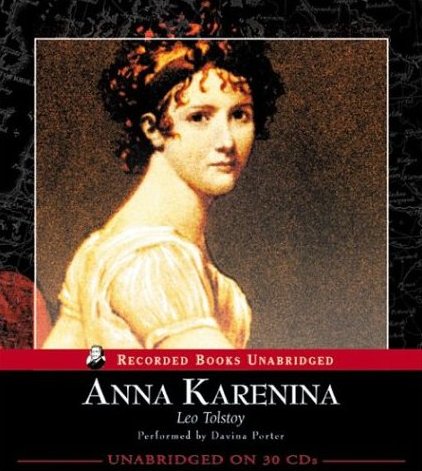
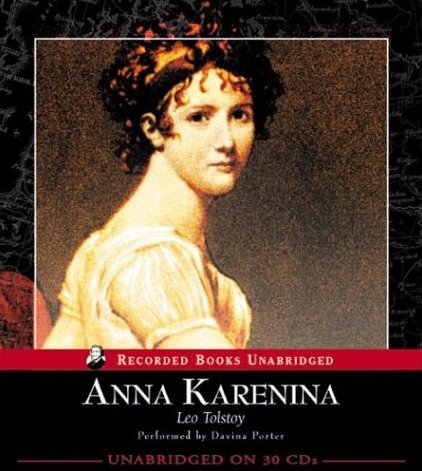
Anna Karenina by Leo Tolstoy (audio)

This is a very long book, and I am trying to keep this from being a very long review. In a nutshell, I did not find it the life-changing masterpiece that I hoped it might be. (This is alarmingly often true of the very big name classics, it seems. Maybe too much hype?) However, it had some redeeming features, especially early on.

I will refrain from much plot summation (to keep my review shorter!); you can find that online if you like (for example, here’s Wikipedia). But, quick plot points: Levin is in love with Kitty, the youngest daughter of a good family. He proposes and is rejected, because she is expecting a proposal from Count Vronsky. However, just then the married Anna Karenina comes to town, Vronsky is taken with her, and abandons Kitty. Now we have a sad Levin, a sad Kitty (rather ruined, in fact, with her marriage prospects suddenly bleak), and Vronsky chasing Anna. Slight spoiler: he succeeds, and they become lovers, cuckolding Karenin (her husband). There are other characters, other couples mostly, with their own marital issues. Levin is a landowner with a restless intellect; he is probably the character most actively questioning his society’s unwritten rules, debating new ways of running his land and his peasant laborers, etc. One thread of the book follows discussions of society in various forms. The real spoilers follow in white text (highlight to read) if you want to follow it through: Levin does eventually marry Kitty. Anna has Vronsky’s baby, and goes to live with him after leaving her husband, but they are relatively ostracized by the society they were accustomed too, especially Anna; she is increasingly jealous and insecure, and finally kills herself. Levin finds God. There, that’s my quick plot summary. I have left out a great deal.

I struggled with this book for one main reason: I couldn’t find a sympathetic character. I thought I had one here and there, but they failed me time and time again. Kitty & Levin both overcome obstacles; but they never move past the tragedy of Kitty’s losing Vronsky – they continue to let his shadow lean across their lives, and I got sick of that. For all their observing their own happiness, I was unconvinced. Jealousy plays a large role in their relationship. Anna and Vronsky, too, call themselves happy but the jealousy and the quarreling just went on and on; I was annoyed. I went back and forth: poor Anna, she needs her man, he took her out of her home and life and now he leaves her home alone and lonely! And then again, poor Vronsky, this woman is a total drag! It comes back to the same point: I found none of these characters particularly sympathetic, and I did not have the patience for the woe-is-me drama. Tolstoy seems to use lots of superlatives. I think this is what contributed to my feeling of high drama (rolls eyes).

On the other hand, the ideological musings and discussions Levin indulged in failed to perk up my ears, as well. I would have been interested in working through some of these theories, but I never felt that we got any concrete experimentation with them; rather, Levin thought to himself or mentioned to his gentlemanly peers, and then plodded on. I don’t know why this made me impatient, when Jurgen’s struggles and ideologies in Upton Sinclair’s The Jungle hold me so rapt, but so I found it.

I remained engaged, entertained, and concerned for the characters, and caught up in what I’m calling Tolstoy’s high drama, for a time. I would say more than half of this tome. But it dragged on too long; he lost me. I couldn’t care for that long. The characters who started off as semi-sympathetic, or potentially sympathetic, or at least interesting, dragged on into repetition and selfishness that eventually bored me; I would have found them, the story, and the writing style more interesting if he had wrapped up a little sooner. And I do not fear the chunky epic novel, either; I’m capable of enjoying books of this length when they keep me engaged.

While I’m on the subject of length, though, I wonder if the audio format was perhaps the wrong choice here. I read faster than the narrator reads aloud. It would have taken me less time to read this one in print, and maybe that would have allowed me to get through it without becoming exasperated. A reader feeling the need to rush through a book is not a particularly strong endorsement, though.

In fact I was tempted to quit. Towards the end I was very frustrated, with Anna in particular, as she descends into jealousy and insanity. I recognize the misogyny in this book (for example, see my earlier Tuesday Teaser), and perhaps it should be interpreted as a compliment to Tolstoy that it was so convincing: Anna increasingly struck me as weak and nagging. I realize the difficulty of her “position” as it is referred to, and her shortage of options. But her continued complaining rubbed me the wrong way. I wanted to stop listening to this book; but as I completed disc 27, then disc 28, of 30 (!) cds, I knew I’d come too far to turn back. I had to know how it ended – not because I cared about Anna’s fate, you see, but because I was curious to know if Tolstoy was going to finally engage or impress me, or if his finish pulled something off that I had been missing all along.

And I’m afraid he didn’t. Back to the white text here so you can avoid my spoilers (highlight to read): Anna’s suicide almost relieved me. She was suffering, and she was complaining, and I’m glad she put us both out of our misery. See? I’m sure I missed the point here, but I can only report my own reaction. And as for Levin’s finding of the faith… it happened a little bit too fast for me, although the scene with the lightning was certainly interesting. And to be fair, I’m not your ideal audience for finding-God endings, as I’m a confirmed atheist and just fine with that fact.

I regret that I wasn’t more excited by this one, especially considering the weeks it took me to get through it; but I can’t say I regret those weeks. Now I know. The real question is: is there any chance I’ll enjoy War and Peace, or should I cut my Tolstoy-losses now??


Rating: 4 fancy dresses.

Teaser Tuesdays: Anna Karenina by Leo Tolstoy

Teaser Tuesdays is a weekly bookish meme, hosted by MizB of Should Be Reading. Anyone can play along! Just open your current read to a random page and share a few sentences. Be careful not to include spoilers!

Still working on Anna Karenina (and I will be for a little while longer!). Today I had to give you this noteworthy teaser…

…she felt such terror at what she had done, that she could not face it; but, like a woman, could only try to comfort herself with lying assurances that everything would remain as it always had been, and that it was possible to forget the fearful question…

From Part 2, chapter 23. Anybody else a little offended?

book beginnings on Friday: Anna Karenina by Leo Tolstoy

Thanks to Katy at A Few More Pages for hosting this meme. To participate, share the first line or two of the book you are currently reading and, if you feel so moved, let us know what your first impressions were based on that first line.

I have begun listening to Anna Karenina on audio! Am I crazy? It’s almost 40 hours long! But I enjoy it so far.

I wanted to share the beginning with you. It’s a famous line, and one I recognized, but I didn’t know where from.

Happy families are all alike; every unhappy family is unhappy in its own way.

Lovely, no?

It is likely to be a while before you see a review of this one. 🙂 With my usual listening time, I figure I can finish this within a month. Stay tuned! Anybody out there have anything wonderful (or not) to say about Tolstoy? This is my first experience with him.

The Moon is Down by John Steinbeck (audio)

I don’t remember where I got the recommendation for Steinbeck’s The Moon is Down. As far as I can tell, it’s not one of his better-known works; I know and love his Of Mice and Men, Cannery Row, Travels with Charley, saw the movie East of Eden though I haven’t read it (yet!), also have The Grapes of Wrath on my radar. But this one I hadn’t heard much of. It was recommended to me (by someone) and I found the audio, and it’s just a short little thing on three cds, so it was easy to make time for. I do love Steinbeck’s style and subject matter, and this one is worthy of his high reputation.

Published in 1942, it handles the occupation of a small town in northern Europe by an army that has a lot in common with Hitler’s Germany, though it’s never named. There are references to “The Leader” and a war twenty years past that bears a resemblance to WWI.

This small coastal town is conquered with very little fanfare; 6 of the town’s 12 soldiers are killed, and it takes the people and the mayor a little while to realize what’s happened. The town is a center for coal production, which makes it an important possession, and the occupying force lodges its officers in the mayor’s house while managing coal production. Colonel Lancer has seen war before, and is weary of the tragic consequences of the orders he must carry out; he’d rather rule in peace and order, but the occupation quickly turns ugly. The local people learn to resist, and the occupiers live in fear. One memorable line occurs when one of the occupying officers – lonely for his homeland, friendly faces, and female attentions – wails at the senselessness and unpleasantness of their situation. “Flies conquer the flypaper!” he bitterly says of the occupation.

It’s been a while since I’ve read any Steinbeck, but I recognized his style. The prose is simple, yet moving. This is both a straightforward story of one fictional town’s experience, and an allegory and statement about the futility of war. I’m sure this short novel would make for extended discussion in an educational setting, and I wish I had a professor to help me pick it apart! But as a quick read for entertainment’s sake, too, it’s satisfying, if not happy.

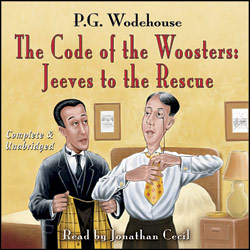
The Code of the Woosters: Jeeves to the Rescue by P.G. Wodehouse

Here we are again with Bertram Wooster and his unrivaled valet, Jeeves. This is the third full-length novel in the series (see my reviews of the first two, Thank You, Jeeves and Right Ho, Jeeves). In this installment, Bertie is recovering from a hangover following his old pal Augustus “Gussie” Fink-Nottle’s bachelor party, when his Aunt Dahlia sends him off on an errand to sniff derisively at a silver cow creamer (it only gets weirder from here, stay with me) and thereby hopefully lower the price for his Uncle Tom who desires it. But a rival collector buys it out from under Uncle Tom, and Aunt Dahlia sends him off a step further: to the country home of the cow creamer’s new owner, Sir Watkyn Bassett, to steal it from him. Bertie was already on his way there, at Gussie’s request, to help patch the rift in Gussie’s engagement to the Bassett daughter, Madeline. Upon arrival, he finds the cow creamer extremely well-guarded, suspicious and threatening parties all around, and a second couple on the rocks: the Bassett niece, Stephanie “Stiffy” Byng, and the local curate Harold “Stinker” Pinker, another old school chum of Bertie’s. Before he knows it, he’s engaged to steal cow creamers on the behalves of several rival parties, and that’s just the beginning of the mix-ups to come. Bertie (and Gussie, and Stinker) are threatened with incarceration and bodily harm as well as called-off weddings, or Bertie’s enforced marriage to one or the other of the girls, among other frightening fates.

If you haven’t figured it out, funny names are among Wodehouse’s several areas of genius. Husband is still laughing at What-Whatley from Thank You, Jeeves.

This was decidedly another delightfully laugh-out-loud funny and silly Jeeves book. I had a grand time. The antics of Bertie Wooster, his many incompetencies, and the completely deadpan assistance provided by his “man” are incomparable. This series is also incomparably silly, so if you struggle with silliness, beware. If, however, you appreciate silliness, also beware: other drivers think I’m crazy as I laugh out loud while driving around with these audiobooks in my car. I highly recommend Jonathon Cecil’s narration and hope I can listen to him narrate the entire series.

On the other hand, I struggled with something in Code of the Woosters that I don’t remember encountering in the first two books: misogyny. This is Bertie’s misogyny as opposed to Wodehouse’s – although of course there is not necessarily or even very often a difference, is there? (This book appears to have been published originally in 1938, partially explaining the issue.) Bertie is afflicted by the women in his life. These are generally his female peers in their relationships with his old school friends, and his aunts (“the aged ancestor” etc.). The first person voice of Bertie, then, laments the difficulty of the female sex. What the reader finds easy to observe, of course, is that it is not just the perversities of the females that accosts him – it is also his own ineptitude, and that of his male friends. (Gussie Fink-Nottle is a hopeless wreck in ways that can be blamed on no female, unless of course one blames his mother.) If this element was present in the first two books I loved, I missed it. Here, it came up repeatedly, until I got a little exasperated with hearing about how obnoxious, trying, immoral, and difficult Bertie finds women. I wonder if he ever becomes attached to one throughout the series? I’m not put off enough to give up, so I’ll let you know in our next installment of the comic Bertie & Jeeves duo.

My final (and minor) quibble with The Code of the Woosters is in the final fate of Constable Oates. I won’t give the finish away, but suffice it to say: when we first meet Oates he is assaulted by a vicious Aberdeen terrier while riding his bicycle, resulting in a crash, and he earned my sympathy (obviously) immediately. He does nothing more offensive in the rest of the story than want his personal property returned to him; he doesn’t even appear to share in Sir Watkyn Bassett’s ambition to throw the thief in the “chokey.” For him to come up for Bertie’s hostility seems unfair to me; I felt for Oates, myself. But that’s the final quibble.

I enjoyed this hilarious book far more than I was bothered by it, and highly recommend Wodehouse for giggles aloud. Audiobook lovers, please look out for Jonathon Cecil; he has come to embody Bertie, Jeeves, and the rest to me. Laugh on.

book beginnings on Friday: The Code of the Woosters by P.G. Wodehouse

Thanks to Katy at A Few More Pages for hosting this meme. To participate, share the first line or two of the book you are currently reading and, if you feel so moved, let us know what your first impressions were based on that first line.


I am always delighted to jump into another Jeeves episode by Wodehouse; they are just too darned funny! And I’ve been hooked on Jonathon Cecil’s narration of them from the start. I definitely recommend his versions on audio. Here’s our beginning of The Code of the Woosters:

I reached a hand from under the blankets, and rang the bell for Jeeves.
‘Good evening, Jeeves.’
‘Good morning, sir.’
This surprised me.

Review to come soon. Please keep your eyes open for Wodehouse; I don’t think you’ll regret it!

Girl in Hyacinth Blue by Susan Vreeland (audio)

This was a lovely little audiobook. The writing beautifully, lyrically evokes the setting. At the start of the book, I recognized the tone and I’m sure there’s a literary term for it, although it escapes me; it actually reminded me of The Picture of Dorian Gray (which, however, I didn’t like). There was that same tone of desperate passion for a work of art; there was a similar element of a painting dominating a man. It was emotional, emotive. But it seemed to calm down as the book progressed, getting more contemplative, quieter, more introspective. And that was really nice, too.

The book is about a painting of a girl in a blue smock, taking a moment’s break from sewing buttons onto a shirt to look out a window. It is variously named by different characters in the story; the title is one name for it. The book opens in a present-day setting: a teacher invites a colleague back to his house to show him a painting he’s kept secret until now. He claims it is a long-lost Vermeer. (Vermeer is the real-life Dutch master who painted The Girl with a Pearl Earring.) From there, we trace the painting’s history backwards through time, through its various owners and caretakers, back to its painter and the moment of inspiration, visiting the girl who sat for it.

An obvious comparison to this book presented itself immediately: Tracy Chevalier’s very successful Girl With a Pearl Earring, which was made into a movie starring Scarlett Johansson. I thought both the book and the movie were lovely, and for others who enjoyed either, I highly recommend Girl in Hyacinth Blue. Not only is the subject matter very like (a fictionalized explanation of the history and inspiration of a Vermeer – or a questionable Vermeer), I found the tone to be reminiscent, as well. It’s interesting to think of these two as companion pieces. It’s been a few years since I read Pearl Earring (maybe that was 2004 or thereabouts?), so maybe my memory is warped, but they struck me as very alike. And for the record, it looks like both were originally published in 1999, so I don’t think anyone copy-catted anyone else!

The portraits of life painted (no pun intended – really she’s an artist) by Vreeland are remarkable. They’re very clear and realistic and whimsical, lovely vignettes into a nice selection of times and places. We meet Dutch, German, and American characters spanning several centuries, and each is neatly portrayed and very enjoyable even as brief snippets – meaning, each might stand alone nicely even without being part of a larger story. In fact, they stand alone so well that in the audio format, with a different reader for each, I kept thinking the book had ended! A person might even say each brief portrayal of a person or family’s life resembles a Vermeer painting, particularly when we get to the middle-class Dutch folks of his own period.

Girl in Hyacinth Blue is an effortless read with beautiful characterizations and scenes of life from a number of times and places, presenting the engaging puzzle of a beautiful painting and its questionable provenance. I highly recommend it.

book beginnings on Friday: Girl in Hyacinth Blue by Susan Vreeland

Thanks to Katy at A Few More Pages for hosting this meme. To participate, share the first line or two of the book you are currently reading and, if you feel so moved, let us know what your first impressions were based on that first line.

I enjoyed Vreeland’s Clara and Mr. Tiffany so much that I was happy to find this audiobook at my local public library. So far it’s beautiful. We’re just meeting the eponymous Girl, in a painting that may or may not be an undiscovered Vermeer – evoking another lovely Girl, Girl With a Pearl Earring. But first, let’s meet Cornelius. Here’s your beginning.

Cornelius Engelbrecht invented himself. Let me emphasize, straight away, that he isn’t what I would call a friend, but I know him enough to say that he did purposely design himself: single, modest dresser in receding colors, mathematics teacher, sponsor of the chess club, mild-mannered acquaintance to all rather than a friend to any, a person anxious to become invisible.

Haven’t we learned a lot in just a few lines, and aren’t they well done? I’m liking this so far. How does your weekend reading look?

Left Neglected by Lisa Genova (audio)

Left Neglected evoked strong reactions from me, which I think is always a recommendation.

Sarah Nickerson is in her late 30’s, happily married to Bob, with three children (Charlie, Lucy and Linus), and a successful career in a male-dominated hectic corporate world of 80-hour work weeks. She is accustomed to using every odd moment to send emails, make phone calls, or read up on work; she would be lost without her nanny Abby; a slight traffic delay costs her the chance to read to her daughter before bed. In other words, she likes her life, but it’s jam-packed-full with no room for error.

The error comes one rainy day on the freeway; a traffic accident leaves Sarah with a unique sort of brain injury called “left neglect.” She’s missing the left side of her consciousness of the world. She can’t find or use her left arm, her left hand, her left leg; she can’t see things or people on the left side of the room, her dinner plate, her world. She can’t conceive of left. Sarah wakes up in a hospital and has to laboriously relearn everything. Juggling international corporate intrigue with a staff of 1000’s is no longer her primary concern; she can’t even dress herself.

Sometimes post-accident Sarah’s whining and frustration with her condition annoyed me, and sometimes pre-accident Sarah irritated me with her material and work-related priorities. But overall, she was definitely a sympathetic character; and if I was sometimes mad at her, that only made our relationship stronger in the end. As in a real friendship, we had our ups and downs, and our bond increased through those trials.

I sometimes felt that Genova tried to maximize the angst. Sarah’s flashbacks to the childhood death of her brother Nate, and its repercussions for her present-day relationship with her mother, might have been pushing the psych-drama angle a little bit. But overall, it worked.

I was reminded of another book, My Stroke of Insight by Jill Bolte Taylor. I read that one pre-blog so no review here, but it touched me very deeply. Taylor’s book is nonfiction, and deals with a different brain injury; but the two are similar in that they describe a brain injury from the patient’s perspective, along with the recovery. I suffered a brain injury in a bicycle accident in 2007, and while I was lucky to suffer less severe injury than either of these protagonists, I still found myself identifying. My own recovery was fascinating to me and made me think about things I’d never considered before; when I read My Stroke of Insight a year or so later, it helped me look at my own experience and learn from it. Left Neglected held a similar self-referential interest for me. (To go even further out on a limb: I’m now doing physical therapy following my knee surgery, and trying to get back to mountain bike racing. The connection is vague and yet I can’t help but compare my frustrations to the fictional Sarah’s. Again, my injury is very minor by comparison. But the cycle of optimism and pessimism, frustration and success, crosses over.) All of this means that when Sarah gets annoying – failing to recognize how lucky she’s been; refusing to work hard with her therapists; wanting to give up and cry – I’m annoyed, and yet I understand, too.

The massive change in the way Sarah views her world – and not just in terms of right and left – may seem ambitious, even unrealistic, to some readers. This might be said too of Taylor’s change in philosophy in My Stroke of Insight. But in both cases it rang very true for me. I felt that I had traveled so far with the protagonists, both fictional and non, that I was right there with them at the end of their stories. Is my outlook unique? Possibly, but I doubt it. I think we’ve probably all had some life-changing experience (hopefully less painful than the ones detailed here) that allows us to get inside Sarah Nickerson’s head a little bit.

Maybe it’s odd that I’m drawing such a strong parallel between two books that are really rather different, but they both affected me strongly. In the end I give Left Neglected very high marks, and I’m interested in Genova’s earlier novel, Still Alice. For those who are curious, she does have credibility in this subject matter: she has a PhD in neuroscience. Check it out. And if/when you have/do, please let me know if this book touches you as it’s touched me. Here’s to being thankful for our health!