Teaser Tuesdays: Claire DeWitt and the City of the Dead by Sara Gran

Teaser Tuesdays is a weekly bookish meme, hosted by MizB of Should Be Reading. Anyone can play along! Just open your current read to a random page and share a few sentences. Be careful not to include spoilers!

I’ve only just started this one, but this line struck me immediately.

New Orleans was a little like England. People were comfortable with class distinctions.

These two sentences are very expressive. I’m not your #1 expert on New Orleans or anything, but I live just 5-6 hours away and have been a number of times; I love the city and Katrina has certainly affected me and all Houstonians. With my moderate level of New Orleans knowledge, I see what she’s driving at here. I like this book so far.

What are you reading?

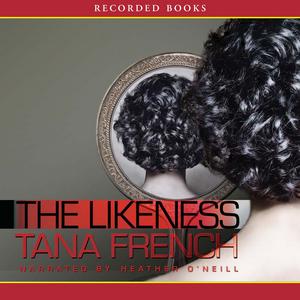
early review: The Likeness by Tana French (audio)

I’m doing something a little bit different here today. I’m so bursting with enthusiasm for this book that I’m going to post my review-ish thoughts now, even though I’m only about 1/3 of the way through. Then I’ll write my normal review when I’ve finished, and we’ll see if I still love it. Ready?


Ohhh I am reeling over this wonderful book! This is my third Tana French, and three is all she’s written so far; hurry, Tana! I need more!

First of all, I find the plot to be very imaginative and engaging. I think about this book all day and at night, and itch to get back into my car or somewhere I can listen to more of it. I think it’s a unique premise; at least I’ve never encountered anything quite like it.

Cassie Maddox is a Dublin detective. She worked undercover, then murder, but these days is cooling her heels in domestic violence, recovering from the trauma of an old case and cautiously enjoying a relationship with a fellow detective, Sam, from the murder squad. Sam calls her up early one morning in a panic: he needs her at a murder scene right away, which doesn’t make any sense. When she gets there, she’s reunited with her old boss from undercover, Frank Mackey, which also doesn’t make sense. Then she sees the body. Not only is this girl her virtual twin (Sam’s panic explained: he thought it was her), she’s using the name Alexandra “Lexie” Madison. She’s using Cassie’s old undercover identity. She was pretending to be who Cassie used to pretend to be.

Frank talks Cassie into returning to undercover, becoming Lexie Madison again, and infiltrating this second pretend Lexie’s life, living with her housemates and teaching her classes and working on her thesis, pretending Lexie was just injured and not killed at all. Ostensibly the goal is to solve the murder, but everyone has their own motivations. Cassie needs to understand why this mystery girl took on her old cover, and what threat may still remain to her. She suspects that Frank is excited at the challenge of this unprecedented investigatory technique. And Sam just wants her safe, doesn’t want her undercover living a pretend dead girl’s life; but he recognizes yet another reason she needs to do this: she desperately misses the electric buzz of working undercover.

So Cassie enters Whitethorn House, to share her life with four fellow English students. The five are unnaturally close; they share a chemistry, and clearly, they share secrets. But is one of their secrets the identity of Lexie’s murderer?

This is a remarkable work of suspense and atmosphere. There is an undercurrent, too, of psychological terror; Cassie is frequently stunned, pinned, by what she and the dead version of Lexie share, finds herself frighteningly at home in this other person’s clothing, relationships, home, routine. I never leave Cassie’s dramatic, pins-and-needles double life. She absolutely has me wrapped up in her world, her tendency to relax in Lexie’s life even though that’s the last thing an undercover should do, her total focus on who this girl was. Add clever turns of phrase; moments of laugh-out-loud hilarity; the brusquely loving relationships between Cassie and Sam and (even better) Cassie the hardnosed detective and her old boss Frank; a fully-developed Irish setting; and an enormously complex, real, and likeable heroine… and you have far and away the best work of fiction I’ve encountered this year.

Oh, and the audio production: more raves. Heather O’Neill does Cassie’s Dublin accent delightfully. I love the singsong, lilting quality and the emotion she puts into every scene. The voices of Cassie, Frank, Sam, and Lexie’s housemates – not to mention Lexie herself, whose voice is different from Cassie’s – are distinguishable from one another. And she perfectly imparts that suspenseful, atmospheric tone, which reminded me from the first lines of du Maurier’s Rebecca. Whitethorn House, like Manderley, is almost a character in itself; it seems to have moods, personality, and secrets.

I can’t say enough good things about this book, or about the audio production. Rush out and find yourself some Tana French. Tana: write more books!

book beginnings on Friday: The Likeness by Tana French

Thanks to Katy at A Few More Pages for hosting this meme. To participate, share the first line or two of the book you are currently reading and, if you feel so moved, let us know what your first impressions were based on that first line.

I loved Tana French’s In the Woods and Faithful Place, and as I plan an upcoming trip to Ireland (my first), it seemed natural to pick up another Irish-set mystery. Bonus: this one is an audiobook, so I’m hoping to adjust a little bit to the accents I’ll be encountering soon! (I’m not always so good with accents. At least it’s not Scotland; that’s an accent I really can’t decipher.) We begin:

Some nights, if I’m sleeping on my own, I still dream about Whitethorn House. In the dream it’s always spring, cool fine light with a late-afternoon haze.

That’s lovely, in my opinion. It’s atmospheric. One of the things I love about French is the sense of place she creates in her books, which of course is of special interest now since I’m planning a trip there. And this beginning is almost reminiscent of Rebecca, isn’t it? Last night I dreamt I went to Manderley again…

Juliet by Anne Fortier (audio)

Juliet is a fanciful play on Shakespeare’s Romeo and Juliet, with a modern-day romance and a historical mystery. Julie Jacobs of today’s Virginia is a little bit aimless and drifting at 25, when her beloved great-aunt Rose dies and leaves her a mysterious set of instructions: Julie is to go to Italy, where she was born, even though Rose had always refused to discuss her childhood there. She has a key to what appears to be a safe-deposit box at a bank, and not much more. There is some connection to Romeo and Juliet, a play Julie has always been a little bit obsessed with. Her twin sister Janice is cut out of the Italian connection – a relief to Julie, since Janice has always been the evil twin.

Upon arriving in Italy, the sheltered and naive Julie is accosted by whirling, complicated forces. Apparently she is descended from the ancient Tolomei family, in fact from Giulietta Tolomei, who seems to have been the real-life inspiration for Shakespeare’s play, whose romantic drama played out in 1340 Sienna. The Tolomeis have had a centuries-old rivalry with the Salimbeni family, and today’s Salimbeni matriarch befriends Julie – who we now know as Giulietta – with suspicious eagerness. There is an antagonistic Siennese man lurking around right from the start – and pardon my spoiler (because I don’t really think it is one), but you know how these mysterious antagonists are apt to turn into romantic interests…

Soon Julie/Giulietta is being stalked by faceless motorcycle riders, befriended or harassed by ancient cults, discovering centuries-old artifacts, and searching for a nameless treasure she thinks her mother – who she can’t really remember – has left for her in Sienna. She gradually learns that she is the modern-day Juliet, and only finding her Romeo will save the day, ending an ancient “curse on both your houses.” And, of course, the bitchy-to-the-point-of-caricature Janice shows up to muck up her adventures.

I was conflicted for most of this book. Often I was fascinated, or at least invested in the characters and wanting to know what happened. I was curious about the question of whether Julie was a little nuts – imagining things – and living out the ancestor-worship of beautiful, historic Sienna, or if there was an actual metaphysical/ghost story element to the book. In other words, would the mystery turn out to have supernatural causes, or were there merely real-life villains behind the smoke and mirrors? This question I will not answer for you, as it was one of the only sources of real suspense for me.

The biggest problem for me was some of the overwrought language Fortier employs. See my recent Teaser Tuesday for an especially ridiculous turn of phrase; and see also “…a wave of warm oblivion rolled onto the shore of my consciousness” or “…I wished more than ever that I could conk out just like her and fly away in a hazelnut shell, leaving behind my heavy heart” or “…the clues I needed were somehow bobbing around aloft, like newborn balloons trapped by a ceiling high, high over my head.” Newborn balloons? Really?? There was something else about her slipping through a doorway like a dryad between the cracks of time or something (I can’t find the passage right now). This style got in the way of my ability to focus on the story.

And the story was mostly good, but not always. For one thing, as alluded to above, certain elements of the romance were predictable. As I understand it, readers of typical romance novels do not care to be surprised; it’s okay if we know all along that Jack and Jill will end up together. But this, trying to be a little more of a suspense, was a touch predictable for my tastes (considering, too, that I’m not a reader of typical romance novels). There were definitely some moments when the characters left something to be desired, too. For example, the heroine realizes, when her inheritance turns out to be a dud at her beloved great aunt’s funeral, that maybe she was unwise to run up $20,000 in credit card debt while relying upon the expected inheritance. Her reaction does not seem to be that running up that kind of debt was unwise, but that it has turned out to be unwise in light of the absent inheritance. I have to say that this is not the most sympathetic quality to give your heroine if you want me to like her. She’s a little flimsy for my tastes. In addition, the pathetic nature of her self-loathing, and the supreme bitchiness of her infinitely more glamorous twin sister Janice, were too superlative to feel real. These are archetypes, not people.

But the characters grow and develop some, to be fair. Janice and Julie are both bigger, better people by the end, the romance is fairly satisfying, and the mystery is fairly well-resolved. This is not the most literary book you’ll find, nor the most deeply-felt or fully-wrought mystery or romance. But there is some suspense, and some enjoyable history and appreciation of Sienna – a lovely place I now want to see for myself. The characters are quirky and grew on me despite my protests. And even in my occasional frustration, I couldn’t put it down, so that’s a vote in favor.

Cassandra Campbell’s narration also gets a mixed review. Julie’s voice, with Southern twang, got on my nerves a little but also felt very realistic; the Italian accents I cannot judge for authenticity, but they felt right to my ignorant ear, and Alessandro the handsome Siennese antagonist came off as appropriately smoldering. Janice was almost intolerable – just as she was supposed to be. Both the twins’ voices were immature and verging on the Valley girl (in Southern translation) when they bickered: again, this was faithful to the story, but sometimes grating. In the end I give Campbell good marks; I was often bothered by the voices she played, but I think that was just her faithful portrayal of those in the book.

My final judgment seems to be that this was a fairly satisfactory book in the end, but I had my reservations throughout. It might work better for a lover of “pure” romance than it did for me, and I know it has its fans out there. Have you read this book? Please share your thoughts. I’m always interested in how these things grasp us differently.


Rating: 3 conifers.

Teaser Tuesdays: Juliet by Anne Fortier


Teaser Tuesdays is a weekly bookish meme, hosted by MizB of Should Be Reading. Anyone can play along! Just open your current read to a random page and share a few sentences. Be careful not to include spoilers!

I’m doing it again: getting slightly out of my usual reading habits to try something that sounded appealing. Juliet references Romeo and Juliet and is a romance in its own right, and that’s about what I knew of it when I started. I have selected an extra-special teaser for you today.

Within the coniferous greens of his eyes, I now got a warning glimpse of his soul. It was a disturbing sight.

Kids, I don’t know about you, but this is the sort of thing that concerns me about romance novels. Coniferous greens of his eyes? Really? Anybody love this or (ahem) anybody else find this ridiculous?

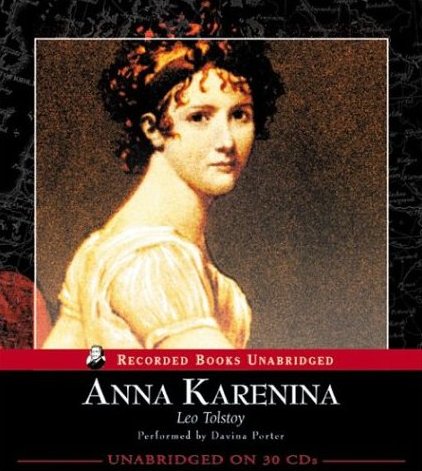
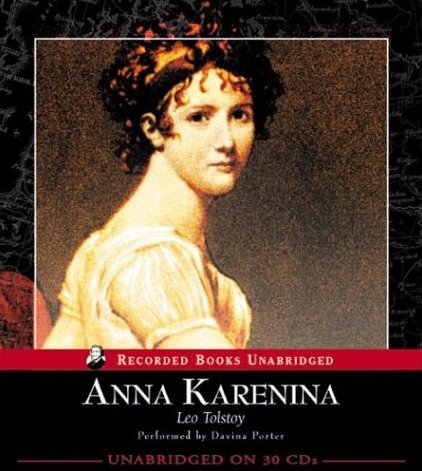
Anna Karenina by Leo Tolstoy (audio)

This is a very long book, and I am trying to keep this from being a very long review. In a nutshell, I did not find it the life-changing masterpiece that I hoped it might be. (This is alarmingly often true of the very big name classics, it seems. Maybe too much hype?) However, it had some redeeming features, especially early on.

I will refrain from much plot summation (to keep my review shorter!); you can find that online if you like (for example, here’s Wikipedia). But, quick plot points: Levin is in love with Kitty, the youngest daughter of a good family. He proposes and is rejected, because she is expecting a proposal from Count Vronsky. However, just then the married Anna Karenina comes to town, Vronsky is taken with her, and abandons Kitty. Now we have a sad Levin, a sad Kitty (rather ruined, in fact, with her marriage prospects suddenly bleak), and Vronsky chasing Anna. Slight spoiler: he succeeds, and they become lovers, cuckolding Karenin (her husband). There are other characters, other couples mostly, with their own marital issues. Levin is a landowner with a restless intellect; he is probably the character most actively questioning his society’s unwritten rules, debating new ways of running his land and his peasant laborers, etc. One thread of the book follows discussions of society in various forms. The real spoilers follow in white text (highlight to read) if you want to follow it through: Levin does eventually marry Kitty. Anna has Vronsky’s baby, and goes to live with him after leaving her husband, but they are relatively ostracized by the society they were accustomed too, especially Anna; she is increasingly jealous and insecure, and finally kills herself. Levin finds God. There, that’s my quick plot summary. I have left out a great deal.

I struggled with this book for one main reason: I couldn’t find a sympathetic character. I thought I had one here and there, but they failed me time and time again. Kitty & Levin both overcome obstacles; but they never move past the tragedy of Kitty’s losing Vronsky – they continue to let his shadow lean across their lives, and I got sick of that. For all their observing their own happiness, I was unconvinced. Jealousy plays a large role in their relationship. Anna and Vronsky, too, call themselves happy but the jealousy and the quarreling just went on and on; I was annoyed. I went back and forth: poor Anna, she needs her man, he took her out of her home and life and now he leaves her home alone and lonely! And then again, poor Vronsky, this woman is a total drag! It comes back to the same point: I found none of these characters particularly sympathetic, and I did not have the patience for the woe-is-me drama. Tolstoy seems to use lots of superlatives. I think this is what contributed to my feeling of high drama (rolls eyes).

On the other hand, the ideological musings and discussions Levin indulged in failed to perk up my ears, as well. I would have been interested in working through some of these theories, but I never felt that we got any concrete experimentation with them; rather, Levin thought to himself or mentioned to his gentlemanly peers, and then plodded on. I don’t know why this made me impatient, when Jurgen’s struggles and ideologies in Upton Sinclair’s The Jungle hold me so rapt, but so I found it.

I remained engaged, entertained, and concerned for the characters, and caught up in what I’m calling Tolstoy’s high drama, for a time. I would say more than half of this tome. But it dragged on too long; he lost me. I couldn’t care for that long. The characters who started off as semi-sympathetic, or potentially sympathetic, or at least interesting, dragged on into repetition and selfishness that eventually bored me; I would have found them, the story, and the writing style more interesting if he had wrapped up a little sooner. And I do not fear the chunky epic novel, either; I’m capable of enjoying books of this length when they keep me engaged.

While I’m on the subject of length, though, I wonder if the audio format was perhaps the wrong choice here. I read faster than the narrator reads aloud. It would have taken me less time to read this one in print, and maybe that would have allowed me to get through it without becoming exasperated. A reader feeling the need to rush through a book is not a particularly strong endorsement, though.

In fact I was tempted to quit. Towards the end I was very frustrated, with Anna in particular, as she descends into jealousy and insanity. I recognize the misogyny in this book (for example, see my earlier Tuesday Teaser), and perhaps it should be interpreted as a compliment to Tolstoy that it was so convincing: Anna increasingly struck me as weak and nagging. I realize the difficulty of her “position” as it is referred to, and her shortage of options. But her continued complaining rubbed me the wrong way. I wanted to stop listening to this book; but as I completed disc 27, then disc 28, of 30 (!) cds, I knew I’d come too far to turn back. I had to know how it ended – not because I cared about Anna’s fate, you see, but because I was curious to know if Tolstoy was going to finally engage or impress me, or if his finish pulled something off that I had been missing all along.

And I’m afraid he didn’t. Back to the white text here so you can avoid my spoilers (highlight to read): Anna’s suicide almost relieved me. She was suffering, and she was complaining, and I’m glad she put us both out of our misery. See? I’m sure I missed the point here, but I can only report my own reaction. And as for Levin’s finding of the faith… it happened a little bit too fast for me, although the scene with the lightning was certainly interesting. And to be fair, I’m not your ideal audience for finding-God endings, as I’m a confirmed atheist and just fine with that fact.

I regret that I wasn’t more excited by this one, especially considering the weeks it took me to get through it; but I can’t say I regret those weeks. Now I know. The real question is: is there any chance I’ll enjoy War and Peace, or should I cut my Tolstoy-losses now??


Rating: 4 fancy dresses.

Teaser Tuesdays: Anna Karenina by Leo Tolstoy

Teaser Tuesdays is a weekly bookish meme, hosted by MizB of Should Be Reading. Anyone can play along! Just open your current read to a random page and share a few sentences. Be careful not to include spoilers!

Still working on Anna Karenina (and I will be for a little while longer!). Today I had to give you this noteworthy teaser…

…she felt such terror at what she had done, that she could not face it; but, like a woman, could only try to comfort herself with lying assurances that everything would remain as it always had been, and that it was possible to forget the fearful question…

From Part 2, chapter 23. Anybody else a little offended?

book beginnings on Friday: Anna Karenina by Leo Tolstoy

Thanks to Katy at A Few More Pages for hosting this meme. To participate, share the first line or two of the book you are currently reading and, if you feel so moved, let us know what your first impressions were based on that first line.

I have begun listening to Anna Karenina on audio! Am I crazy? It’s almost 40 hours long! But I enjoy it so far.

I wanted to share the beginning with you. It’s a famous line, and one I recognized, but I didn’t know where from.

Happy families are all alike; every unhappy family is unhappy in its own way.

Lovely, no?

It is likely to be a while before you see a review of this one. 🙂 With my usual listening time, I figure I can finish this within a month. Stay tuned! Anybody out there have anything wonderful (or not) to say about Tolstoy? This is my first experience with him.

The Moon is Down by John Steinbeck (audio)

I don’t remember where I got the recommendation for Steinbeck’s The Moon is Down. As far as I can tell, it’s not one of his better-known works; I know and love his Of Mice and Men, Cannery Row, Travels with Charley, saw the movie East of Eden though I haven’t read it (yet!), also have The Grapes of Wrath on my radar. But this one I hadn’t heard much of. It was recommended to me (by someone) and I found the audio, and it’s just a short little thing on three cds, so it was easy to make time for. I do love Steinbeck’s style and subject matter, and this one is worthy of his high reputation.

Published in 1942, it handles the occupation of a small town in northern Europe by an army that has a lot in common with Hitler’s Germany, though it’s never named. There are references to “The Leader” and a war twenty years past that bears a resemblance to WWI.

This small coastal town is conquered with very little fanfare; 6 of the town’s 12 soldiers are killed, and it takes the people and the mayor a little while to realize what’s happened. The town is a center for coal production, which makes it an important possession, and the occupying force lodges its officers in the mayor’s house while managing coal production. Colonel Lancer has seen war before, and is weary of the tragic consequences of the orders he must carry out; he’d rather rule in peace and order, but the occupation quickly turns ugly. The local people learn to resist, and the occupiers live in fear. One memorable line occurs when one of the occupying officers – lonely for his homeland, friendly faces, and female attentions – wails at the senselessness and unpleasantness of their situation. “Flies conquer the flypaper!” he bitterly says of the occupation.

It’s been a while since I’ve read any Steinbeck, but I recognized his style. The prose is simple, yet moving. This is both a straightforward story of one fictional town’s experience, and an allegory and statement about the futility of war. I’m sure this short novel would make for extended discussion in an educational setting, and I wish I had a professor to help me pick it apart! But as a quick read for entertainment’s sake, too, it’s satisfying, if not happy.

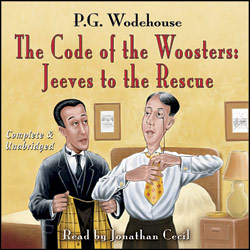
The Code of the Woosters: Jeeves to the Rescue by P.G. Wodehouse

Here we are again with Bertram Wooster and his unrivaled valet, Jeeves. This is the third full-length novel in the series (see my reviews of the first two, Thank You, Jeeves and Right Ho, Jeeves). In this installment, Bertie is recovering from a hangover following his old pal Augustus “Gussie” Fink-Nottle’s bachelor party, when his Aunt Dahlia sends him off on an errand to sniff derisively at a silver cow creamer (it only gets weirder from here, stay with me) and thereby hopefully lower the price for his Uncle Tom who desires it. But a rival collector buys it out from under Uncle Tom, and Aunt Dahlia sends him off a step further: to the country home of the cow creamer’s new owner, Sir Watkyn Bassett, to steal it from him. Bertie was already on his way there, at Gussie’s request, to help patch the rift in Gussie’s engagement to the Bassett daughter, Madeline. Upon arrival, he finds the cow creamer extremely well-guarded, suspicious and threatening parties all around, and a second couple on the rocks: the Bassett niece, Stephanie “Stiffy” Byng, and the local curate Harold “Stinker” Pinker, another old school chum of Bertie’s. Before he knows it, he’s engaged to steal cow creamers on the behalves of several rival parties, and that’s just the beginning of the mix-ups to come. Bertie (and Gussie, and Stinker) are threatened with incarceration and bodily harm as well as called-off weddings, or Bertie’s enforced marriage to one or the other of the girls, among other frightening fates.

If you haven’t figured it out, funny names are among Wodehouse’s several areas of genius. Husband is still laughing at What-Whatley from Thank You, Jeeves.

This was decidedly another delightfully laugh-out-loud funny and silly Jeeves book. I had a grand time. The antics of Bertie Wooster, his many incompetencies, and the completely deadpan assistance provided by his “man” are incomparable. This series is also incomparably silly, so if you struggle with silliness, beware. If, however, you appreciate silliness, also beware: other drivers think I’m crazy as I laugh out loud while driving around with these audiobooks in my car. I highly recommend Jonathon Cecil’s narration and hope I can listen to him narrate the entire series.

On the other hand, I struggled with something in Code of the Woosters that I don’t remember encountering in the first two books: misogyny. This is Bertie’s misogyny as opposed to Wodehouse’s – although of course there is not necessarily or even very often a difference, is there? (This book appears to have been published originally in 1938, partially explaining the issue.) Bertie is afflicted by the women in his life. These are generally his female peers in their relationships with his old school friends, and his aunts (“the aged ancestor” etc.). The first person voice of Bertie, then, laments the difficulty of the female sex. What the reader finds easy to observe, of course, is that it is not just the perversities of the females that accosts him – it is also his own ineptitude, and that of his male friends. (Gussie Fink-Nottle is a hopeless wreck in ways that can be blamed on no female, unless of course one blames his mother.) If this element was present in the first two books I loved, I missed it. Here, it came up repeatedly, until I got a little exasperated with hearing about how obnoxious, trying, immoral, and difficult Bertie finds women. I wonder if he ever becomes attached to one throughout the series? I’m not put off enough to give up, so I’ll let you know in our next installment of the comic Bertie & Jeeves duo.

My final (and minor) quibble with The Code of the Woosters is in the final fate of Constable Oates. I won’t give the finish away, but suffice it to say: when we first meet Oates he is assaulted by a vicious Aberdeen terrier while riding his bicycle, resulting in a crash, and he earned my sympathy (obviously) immediately. He does nothing more offensive in the rest of the story than want his personal property returned to him; he doesn’t even appear to share in Sir Watkyn Bassett’s ambition to throw the thief in the “chokey.” For him to come up for Bertie’s hostility seems unfair to me; I felt for Oates, myself. But that’s the final quibble.

I enjoyed this hilarious book far more than I was bothered by it, and highly recommend Wodehouse for giggles aloud. Audiobook lovers, please look out for Jonathon Cecil; he has come to embody Bertie, Jeeves, and the rest to me. Laugh on.