
The Silence of the Girls by Pat Barker

This retelling of the Trojan War by one of the women on the side of defeat is essential, and essentially human.

The Iliad is the story of the Trojan War told by the victors, and by men. At long last, another perspective is offered, in Booker Prize-winner Pat Barker’s The Silence of the Girls. Briseis was queen of a city near Troy and, after it fell to the Greeks, she was given as prize of honor to Achilles. After Apollo compelled him to forfeit a concubine, Agamemnon took Briseis for his own. This indignity inspires Achilles’s famous sulk, which begins the Iliad.

In the tradition of Margaret Atwood’s Penelopiad, The Silence of the Girls is a much-needed retelling. Where men sing of honor and glory, women experience a different war. They are controlled by men: by their fathers and husbands, and then by their captors. Briseis is beautiful and royal; she hates her new status as concubine, but sees the far worse treatment of the “common women” who sleep under the Greeks’ huts, with their dogs, and are used by any man who pleases. She is clever and gives nuanced portraits of many characters in the Greek encampment below Troy’s walls. She is proud, angered by the indignities of slavery. One of the book’s themes is the question of authorship: she knows that it is Achilles’s story that the world will hear, but she searches for her own within narratives of men and war.

Strong, beautiful Achilles is cold, but stops short of cruelty. Gentle Patroclus eventually befriends Briseis. Ajax, Agamemnon, Odysseus and Nestor are profiled; but equally important are the other slave women. Briseis has friends, allies and antagonists among them, but always considers their struggles. For example, Ajax’s concubine is one of several women who recommend pregnancy above all other strategies. Briseis does not love her captors. But one of her revelations involves how the Trojans will survive, in the end: the sons of the Greeks will remember the Trojan lullabies their captive mothers sang to them.

The Silence of the Girls, like the classic it’s modeled on, is an epic. Briseis’s uncertain situation brings tension and momentum. At just 300 pages, this novel feels much bigger than it is, but is never heavy. Even with the atrocities, violence and loss it portrays, the protagonist’s thoughtful, compassionate point of view emphasizes humanity. It would be too much to say she weighs both sides of an issue evenly; she is loyal to her family and angry with her captors, but she also sees the tragedy in ranks of young Greek boys killed.

This mature, reflective narrative manages the cataloging of Homer’s telling (how many tripods offered, how many bowls of wine mixed), but with a grace and an interest in individual people that is fresh and novel. Barker uses metaphor and animal imagery deftly. Her prose flows easily, like storytelling between friends. It’s an absolute pleasure to read for any devoted fan of the Iliad, but equally accessible to those new to the Trojan story; indeed, The Silence of the Girls might make the perfect entry.


This review originally ran in the August 9, 2018 issue of Shelf Awareness for the Book Trade. To subscribe, click here.


Rating: 8 waves.

movie: The Gleaners and I (2000)

Recommended by the fabulously talented Jessie van Eerden. Writing my thesis with her this semester is a dream.

However, first thoughts on this movie were “wow, this is weird, why am I watching this?” and then I got into the groove. For one thing, it’s an interesting work of narrative nonfiction. Ostensibly, director Agnès Varda is concerned with an external subject: the longstanding tradition of gleaning, or collecting the leftovers of a harvest. She enters this subject via art – the paintings of Millet and Breton – but among and in between this external material, Varda looks back at herself. The moments that become personal make the whole thing work, for me. Which is not to say that I wish the whole thing had been personal, or I spent the rest of the movie waiting to learn more about our narrator, you understand. I’m just voicing again my preference for a present narrator. I appreciate external material that is commented upon by a personal voice. In fact, I pretty much require it, as a personal preference. Perhaps this is on my mind now because I’m working on my thesis, that book-length project “of publishable quality”… and I am appreciating that Jessie shares my feeling of being an essayist, of commenting on outside material from a personal perspective, rather than simply airing all my own thoughts and feelings. Personal essay, not memoir, if you will.

And that is what I’m getting out of this movie: the narrative stance. As well as the subject matter: not gleaning in particular, but the entry through art into a larger subject (I am writing about the Drive-by Truckers, Jason Isbell, Guy Clark, and Dominique de Menil, among others), as well as its metaphoric possibility. I really lit up when Varda noted the new, metaphoric uses of ‘gleaning’:

On this type of gleaning, of images, impressions, there is no legislation, and gleaning is defined figuratively as a mental activity. To glean facts, acts and deeds, to glean information. And for forgetful me, it’s what I have gleaned that tells where I’ve been. From Japan, I brought back in my case souvenirs I had gleaned.

She does a lot of using one hand to film the other hand, which is an interesting statement about art, right? (All that commentary about the memoir as navel-gazing!)

The Gleaners and I is a piece of art, concerned in part with art – the original paintings as inspiration; the artists Varda meets who create out of the refuse they scavenge – as well as several meanings of gleaning. The people in the French countryside consider gleaning in its old sense, bending down to pick up leftover crops lying on the ground after a harvest. Some see a difference between this act and picking, which is picking fruit or nuts or whatever off of trees, vs. bending to take off the ground. Then there is urban scavenging, dumpster diving and combing through curb leavings. And finally that metaphoric sense, in which I watch this movie and take with me – figuratively – the parts that are of most value to me.

Varda interviews a “painter and retriever” who picks up other people’s discards from the curbs to make art, not unlike a dear friend of mine: he says, “what’s good about these objects is that they have a past, they’ve already had a life, and they’re still very much alive. All you have to do is give them a second chance.” (I also love that he points out that the city council puts out maps of where this not-junk is going to be, and Varda responds that really, aren’t the maps so that the people can put out their junk? And he sort of chuckles and says yes, well, I read the maps in my own way.)

I’m really fascinated though at the assumption throughout – never challenged! – that this food is all “wasted” if people don’t eat it. One guy did say about unharvested grapes that otherwise “the wild boars and the birds will get them.” So… how is that a waste? No human got it, but it didn’t go to waste. Even the fruit that rots on the ground contributes to a system. Even if we’re compelled to make it about us: dirt is necessary for people to live, for everything to live, and rotting grapes help make dirt. I wrote to my artist-scavenger friend about this movie, and he responded: “There is an edict in the Old Testament about leaving behind a percent of crops for the animals. Old wisdom makes sense sometimes.” This seemed like a gaping hole to me. After all, we didn’t invent grapes. They grew on their own, for their own purposes: the purpose of the grape, and the bird and the wild boar. Shades of Amy Leach here…

The film is in French, with subtitles, and it’s dated. (It was released in 2000, but the narrative voice is very much “what is this new millennium nonsense” – filmed in the 90s, of course.) It’s also arty, a little slow-paced and introspective, which could contribute to its being a little less than accessible – it worked that way for me, early on. It had a little bit of the tone of Sherman’s March, but not nearly so off-putting for this viewer!

All in all, I was a touch slow to get involved but Varda’s Gleaners ended up being fascinating, thought-provoking, and memorable. It’s been haunting my thoughts. There’s a lot going on here, and I do recommend it, if you’re at all interested in… trash, food, the end of the world, reuse, art, or narrative perspectives. So, good for all thinking souls.


Rating: 8 cages interesting like boats, like violins.

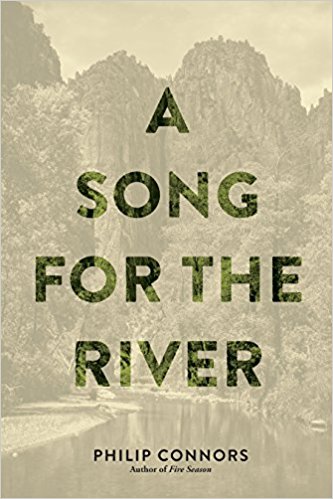
A Song for the River by Philip Connors

Today a simple repost of my review from back in June. Philip Connors’s A Song for the River was released yesterday, and you should get yourself a copy.

Connors writes,

On one quiet stretch of water I looked up at the tiered mesas above us and felt it might be true that my life was both a fire and a river, depending on the moment and the vantage from which it was viewed–and never more like a river than in moments like this.

My review, again, is here. Thank you.

Houston Shakespeare Festival presents Comedy of Errors

I went home a few weeks ago to see a favorite Shakespeare play as part of a favorite annual event. I’ve been attending the Houston Shakespeare Festival and other events at Miller Outdoor Theatre since I was a small child, and I’ve always loved seeing productions of Shakespeare, as I’ve written about before.

This year’s comedy was Comedy of Errors, a classic. This is Shakespeare’s first comedy, or among his first, and one that establishes several Shakespearean tropes: mistaken identities, twins separated at birth, love triangles (squares, hexagons…). Two sets of twins have been separated, forming two sets of master-and-servant in two rival cities. One set has a father; one set lives near their mother, but doesn’t know it. When the four younger men come into the same setting, hilarity ensues: wives mistake the wrong twins for husbands; goods are delivered to one twin, payment denied by the other. Classically, though, it all comes out right in the end.

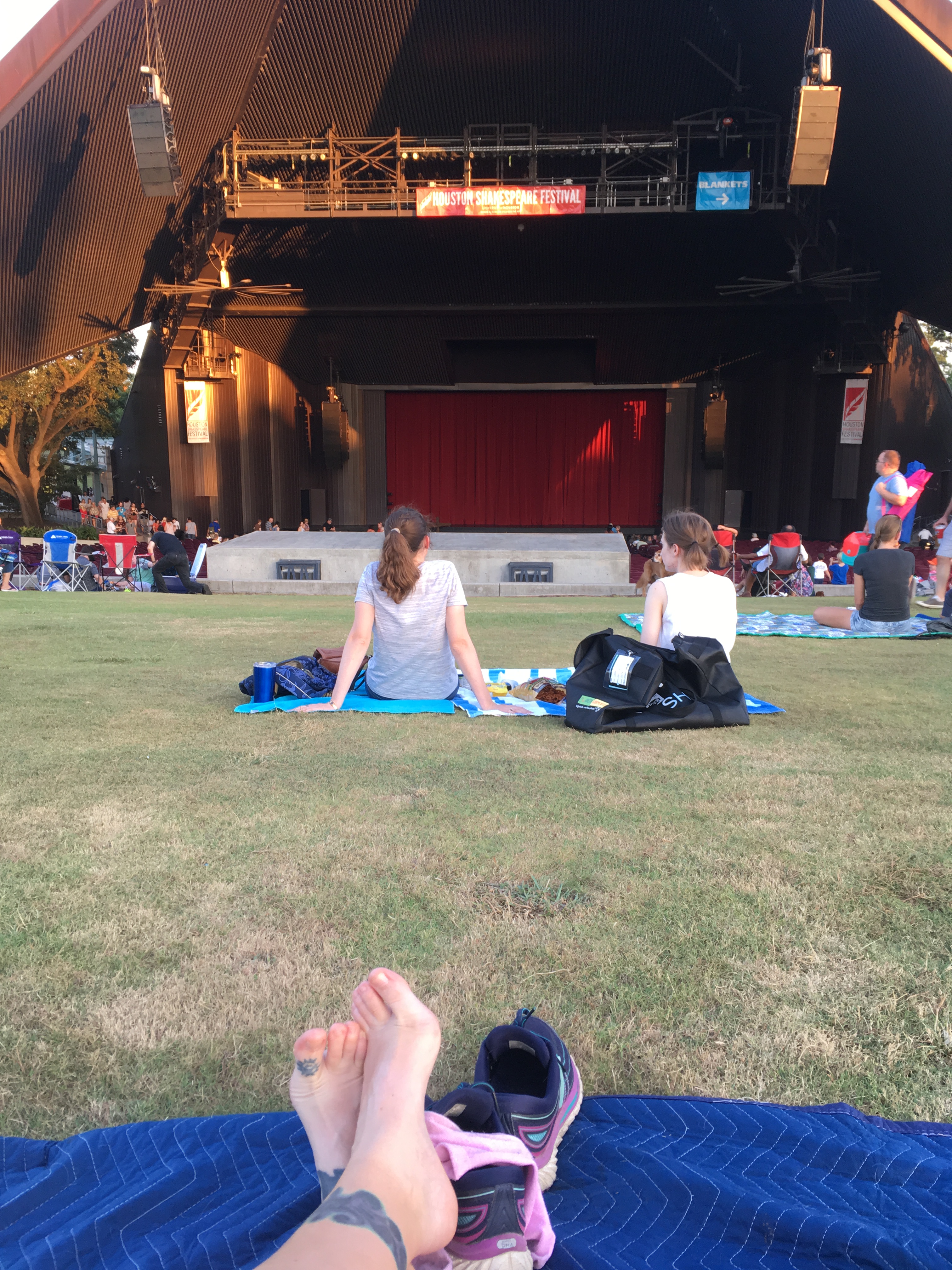
my feet before the show

It was lovely being back on the hill at Miller in Hermann Park, with a blanket and a date and a bottle of wine. The setting was so much of it: with people all around me of all ages, skin tones, and configurations; families and couples and groups of friends and solos; picnics ranging from boxes of fast-food fried chicken through elaborate cheese-and-charcuterie spreads. I have to say, though, that this was not the best production I’ve seen the Festival put on. The Houston Press‘s review saw a show in which sound issues had been resolved, but the show I saw had some difficulties; the sound effects to match the slapstick comedic blows were often off, and there were some issues with the actors’ microphones. This was a shame, because the acting was overall very good. A few actors fumbled a few lines, giving a more amateur impression than I remember from years past. But I’m patient with artists doing their best. I was both puzzled and amused by the “exit, pursued by a bear” joke, which comes from The Winter’s Tale and not Comedy of Errors at all, but okay. There were some modernizations, including references to sports and the use of a group of (I’m guessing) elementary school-aged kids. I’m not sure what this contributed, other than to give young actors a chance at the stage, which is a thing I generally support and so I’m amiable about it, but again, puzzling as an inclusion here.

The thing that troubled me most was use of a stereotyped AAVE by the characters played by black actors. A prologue-style opening involved a rap performed by two actors, one black and one white, offering two rather different effects; this made me uncomfortable from the first moments, and every time a black actor stepped onstage, it continued. I don’t see how this contributed to any positive feature of the play. It seems to me that Shakespeare can be produced in two ways. First, it can be done “straight,” that is, played as Shakespeare wrote it, by actors of all races and appearances, without their race making any difference to the characters they play. Or, it can be modernized, and race (along with other constructs, social issues, identity politics) can be brought into the play. But this was neither. This was like straight Shakespeare but with black bodies played for laughs. Ouch. I’m quite surprised that other reviewers didn’t mention this aspect, because it bothered me considerably.

When I can look past this problem with the play–which is on the one hand a huge problem, but on the other hand present for rather few minutes of the evening overall, because the black actors were few–I’m glad to see Shakespeare in the park, for free and produced for the love of it. My date found this, his first Shakespeare play, funny and accessible and fun, for which I’m grateful. I’m glad to see the crowds gather to take in a classic comedy, and I’m looking forward to seeing further endeavors. But this one, not the finest effort of a long-lived institution. I hope they do better next year.


Rating: 5 chains.

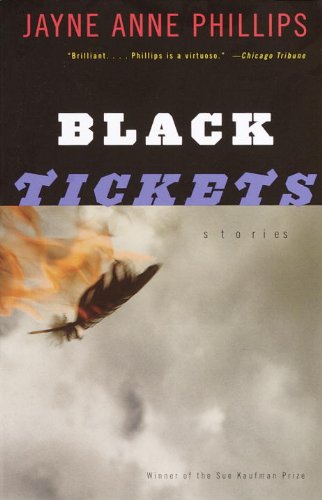
Black Tickets by Jayne Anne Phillips

I read this book for its structure: a short story collection with some longer pieces, of as many as 20 pages, but a number of shorter ones, just a page or two. With my advisor this semester, Jessie van Eerden, I am considering a similar structure for my thesis: interstitial pieces in among long ones. (I also read Jessie’s own thesis from her MFA program, which was awfully wonderful and I wish I could review it here for you! Also with the interstitial pieces, and so lovely. But as it’s not published, I guess I’ll leave it at that.) I was also glad to read Jayne Anne Phillips because she is important to West Virginia’s literary legacy. And she is from Buckhannon, where my own West Virginia Wesleyan College is located.

This is a beautiful and impressive collection in its effect. I found myself lost and involved in each story, one of those reading experiences where you forget where you are, look up baffled by the everyday world around you, thinking you were really in a dark bar in El Paso or walking the streets of an unnamed town decades ago. This effect makes it hard for me to analyze the craft of the book itself, but it is certainly to be admired. While these stories are, I think, unconnected, they share themes: the types of characters and the types of settings are all rough-hewn and struggling. Dwight Garner’s review in The New York Times calls these “lush, violent, elegiac and sexually charged worlds,” and he writes that this book “would help light the landscape of the so-called dirty realists (Raymond Carver, Bobbie Ann Mason, Richard Ford, Phillips and others), though the adhesive has pretty much come off that label.” I am turning to Garner’s words in part because this book so challenged me, and in part because I love that idea, the adhesive coming off the label.

Here is menace, violence, and sex, a good amount of it menacing and violent sex. It’s about loneliness and despair and the odd, quiet contentment. I’m not sure what to think, actually. And as to my original reason for reading Black Tickets – to examine its structure – I’m a bit lost, too. I would say the shorter stories contributed to the overall themes, tone, impression that make this book so strong. So did the longer ones.

How different is a story collection from an essay collection? What explains my difficulty here? If I find out, I’ll let you know.


Rating: 7 Ripple bottles.

Hood by Alison Kinney

This is the third that I’ve read in the Object Lessons series (Sock, Souvenir).

Kinney examines the hood’s sinister appearances in history: worn by executioners, torturers, and (not by choice) their victims; worn by the Ku Klux Klan; given as an excuse for the murder of Trayvon Martin. This last – the hoodie – was, for me, the most obvious application of ‘hood’ and the one I was most expecting (to what extent this was suggested by the cover, I can’t say), and none of these focal points surprised me. I was a little surprised to learn that the executioner and the torturer did not wear hoods til pretty modern times – our attribution of the hood to the medieval bad guys is a modern error (or, perhaps, a calculated strategy). But I was more surprised that Kinney’s hood is so consistently an image of violence. She mentions the hoods worn by professors, judges, and academics – the honorable hood – but only as a point of contrast.

In the opening pages, Kinney lists the hood’s uses: by “judges, athletes, rappers, torturers, politicians, and toddlers… to attend school, commute… go to war or protests, take a hike, walk the dog, ride the Maid of the Mist, or visit our grannies in the woods… coaches, firefighters, fishers, boxers, beekeepers, and Mark Zuckerberg… skaters, cosplayers, fetishests, presidents, and the entire Knowles-Carter family.” She apologizes: “Sorry, but you’ll have to wait for the sequel to get car hoods, stove hoods, and Mount Hood.” This promise of exhaustivity is not carried through, however. I recall Sock, wherein Kim Adrian reached back to the origins – the invention of the sock. That part of the hood’s story is missing here. I guess Sock and Souvenir had conditioned me to expect a really broad, start-to-finish, far-reaching treatment, and that’s not what Hood does. Hood focuses on injustice, violence, death, and abuses of power. It’s an important story; I’m not necessarily against Kinney’s approach, but it’s not what I’d been expecting.

The other way in which this book differs from the others I’ve read is that Kinney, as narrator, as researcher, and as holder of opinions, was lacking from her narrative. It has long been a reading preference of mine to find the author in her work; in nonfiction, I find it essentially dishonest to act like an impartial observer or researcher, because there’s no such thing. In this book, in particular, because Kinney takes decided political stances on a variety of issues, I really felt the hole left by her absence. Let it be said that I agree with her politics. But I regret that she didn’t reveal something of herself in stating them. I think it would have strengthened the book.

I’m interested to learn that the Object Lessons series takes more varied forms than those I’ve already encountered. I think I prefer the other model: the exhaustive, whimsical, present-narrator one. But Hood has much to offer, including a strong indictment of capital punishment, a chilling glimpse into Abu Ghraib, and a discussion of the black bloc of protesters at the Seattle WTO meeting and beyond.


Rating: 7 images.

Writing the Personal Essay

Hey folks, another quick digression here (and bonus Saturday post!). I didn’t want anyone to miss a great opportunity. Creative Nonfiction‘s online classes are about to get a great boost, when Matt Randal O’Wain teaches an upcoming section of “Writing the Personal Essay.” Matt is a visiting faculty member with my MFA program this semester, which means I got to study with him at this recent residency, and I was really pleased to get to know him. He’s a great guy, personable and thoughtful and considerate and we share some interests; more importantly for these purposes, he’s also a well-read, thoughtful, insightful teacher. Register here! This Monday is your last day to get discounted registration for this course, and I have a coupon code to share with you to get an additional $50 off! I’m not sure I should post that here, but drop me a line at julia@pagesofjulia.com and I will get you the code asap.

If you have any questions about CNF’s courses, or about Matt, also drop me a line or comment here and I’d be glad to share what I can.

Thanks for reading. Back to your weekend.

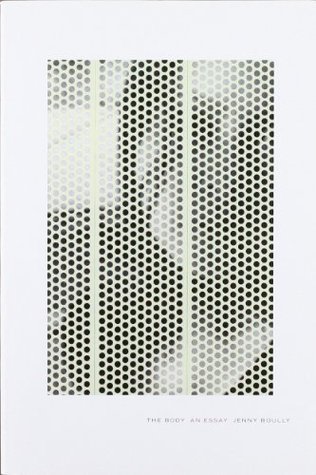
The Body: An Essay by Jenny Boully

The Body is an essay in footnotes. Footnotes to a body text which is absent. Just the footnotes.

Pages are often more blank than not, with a line demarcating the footnote section of the page, and then (in rather small font) the text below. Some footnotes are nothing more than Ibid., with a page number. Does this sound infuriating? Yes.

Some of the footnotes are long enough and weird enough to get lost in, themselves; when I consider them poetry and dwell in the moment, there is something to be enjoyed. But overall, not a concept that works for me. Other, better-known writers and readers than I have found much to value here. A meditation on the concept of absence, loss or disappearance, etc. But it was too weird for this reader. I was here for the body, if you will, and not its leavings.

For me a fail, but I’m certainly interested to know if you are differently minded. If any of my readers have enjoyed this book? Please explain.


Rating: 4 quotations.

in loving memory

Please indulge me with today’s digression from our regularly scheduled broadcast.

Just a few days after returning from this summer’s residency at West Virginia Wesleyan, my classmates and our faculty members and I heard some terrible news. One of our own had died suddenly in the middle of the night of a heart attack. Okey was well-loved. We entered the program together, both of us nonfiction students, although he was set to graduate a semester later, because he took on a semester of cross-genre study in fiction. He was well on his way to completing an autobiographical novel. This semester was his critical essay semester, and he was excited to compose a play at the same time.

Okey

I wrote these words for a post at the MFA program’s blog:

My friend Okey was a caretaker. The first, last, and middle memories I have of him involve him inquiring into my various small troubles: he wanted to be sure I was safe, healthy, and had what I needed to be happy. He wanted to give advice and assistance where he could. He was concerned for me. He wanted pictures of any man I would consider dating; he wanted to know how my mother was doing. He had many fine qualities: he was funny, sassy, wise, and selfless. But what I remember most was his deep concern for me, and in this respect I know I was not special. He cared for the many people he loved in this way. He wanted to take care of us.

Others in this program have written about him finding a home here, support and community that he needed. I’m glad we had that to offer him, and I don’t doubt the truth of these statements. But I never much considered what we had to give to Okey; I always saw much more what he gave to us. Thank you, friend.

Okey James Napier, Jr.


I haven’t come up with anything better than this, although he deserves better. It’s been another month or so and I’m still having trouble articulating what we all lost. I still miss Okey. He was a fan and cheerleader of this blog. He was anxious to help me through any minor, personal troubles I encountered. He used to “stalk” my social media account (his word!) so he could ask after the people and issues in my life. We didn’t live near each other, so I didn’t realize, til he was gone, how big a role he played in my day-to-day life. I miss him terribly.

All of this is to say that there’s a plea in today’s post, y’all, and again thank you for listening. The MFA program has set up a scholarship in Okey’s honor, and as we are hoping to get it endowed, we have a fundraising goal. This is a scholarship in support of diversity and inclusion, causes Okey cared about greatly.

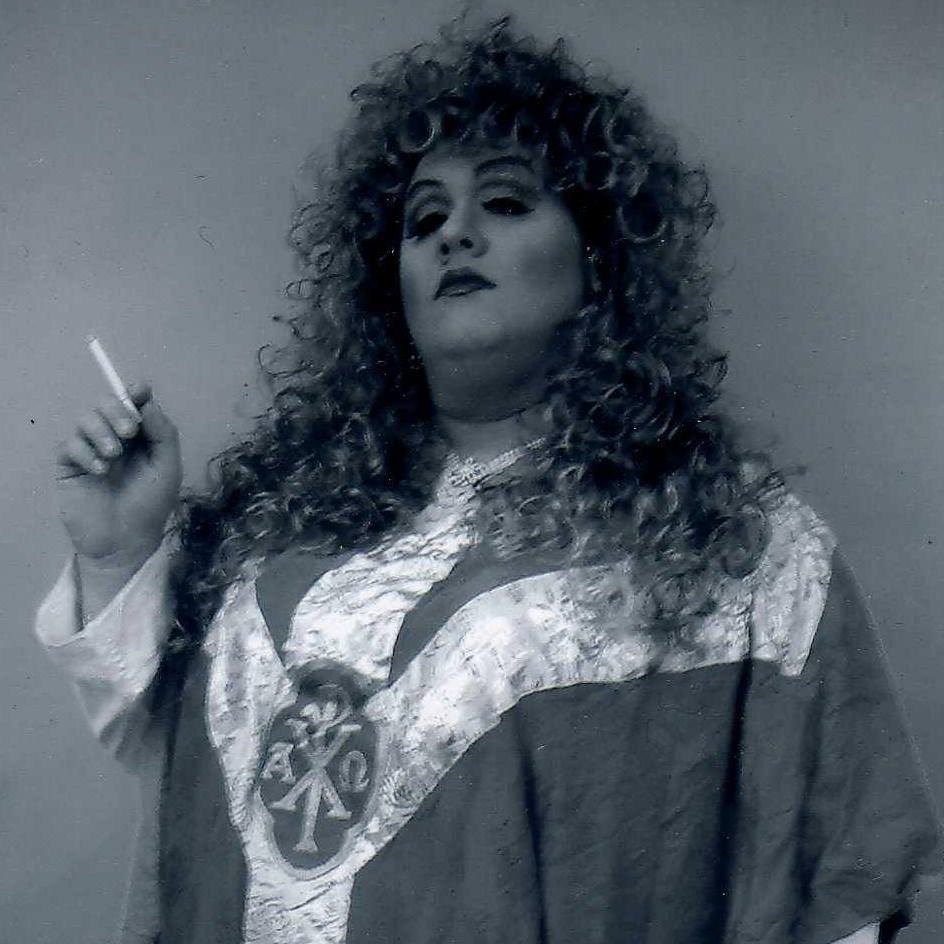
Okey’s drag persona, Ilene Over


I have never and would never ask you for money for myself, but this is a good cause for a program, and in honor of a person, I care for deeply. If you’re able to give anything at all, won’t you please consider giving here? And if you’d rather save the fees assessed by this web service, there is a way to give offline. Please drop me a line at julia@pagesofjulia.com for those details.

Again, that’s the Okey Napier, Jr. Diversity & Inclusion MFA Scholarship at West Virginia Wesleyan College, and I appreciate you considering, and reading this post.

Hug your loved ones. Tell them you love them.

The Rope Swing: Stories by Jonathan Corcoran

Disclosure: this author, Jonathan Corcoran, is a repeating visiting faculty member at my MFA program, and one of my favorite people. I always aspire to tell you exactly what I think of a book, but I can’t claim objectivity here because I think Jon is wonderful.


That said, The Rope Swing is also a wonderful book. This is a collection of linked stories, sharing not characters, so much (although there are some glancing exceptions), but setting and theme. Most of the stories take place in a small town in West Virginia; the last two take place in New York City, where a native of the small town has resettled. Some of the stories are told in first person, some in third, and the first story, “Appalachian Swan Song,” is told in first-personal plural, using the ‘we’ pronoun. I appreciate this choice. This first story is really about setting the scene and the tone for the rest of the book: we are in a small town that is seeing a twilight of sorts, on the day the last passenger train leaves town. It is a mood of elegy, and with some conflicted feelings about the place. The use of a collective pronoun is perfect, because this story focuses on no person in particular, but on the town and its inhabitants collectively. In this story we see a few characters very briefly who will star in their own stories later; but this collection doesn’t follow anyone in particular. The title story, “The Rope Swing,” is referred to in a later story, but it’s a quick glance.

The theme-thread that unites these stories is the experience of LGBTQ characters in this particular setting. There are a few characters that the town acknowledges as a little different, like the florist, who was “funny, we knew, in a light green shirt and a darker green ties the color of a rose stem, but he was also harmless.” Others have a harder time, like the young man who leaves for New York City.

The strengths of the collection are as broad as these characters. Having heard Jon read a few times, I was not the least bit surprised to find lovely writing at the sentence level; he has clearly paid close attention to sound and rhythm and word choice. The small actions and attentions of his characters portray lots of personality economically. About a woman who has inherited the house of a close friend, who had in turn inherited it from his parents:

She had thrown everything out of the refrigerator. She didn’t care if the jam was good for another year; that jam didn’t belong to her. In this way, she had claimed dominion over an appliance.

The place as character is one of my favorite features of the book; I love a strong sense of place, as you know, but also it’s just so beautifully done here. The book opens, “We had forgotten how much we loved our mountains in the summertime.” Such a simple sentence, but it has a definite beat and lilt to it. And what follows is description; but description with momentum and pull, easy to read and easy to see and feel. Perhaps the key is that all the details–“young leaves of the maples and sycamores,” “rivers of meltwater sprint[ing] down the cliff faces”–are experienced by the ‘we,’ seen and heard and felt and thought and remembered, rather than just delivered to us as exposition.

This author knows how to use metaphor, as in this lovely image, when a grieving woman looks up at a tree:

But then, there was the thing she hadn’t noticed before: the end of that same branch had begun growing up again, at a right angle, the wood bending toward the sky.

But it’s not heavy-handed. My quick impression is that this is not a book that relies much on metaphor, but rather, it tells the world as seen and experienced, and leaves it to the reader to make meaning. That may be a deceptive impression. If I were to go back over these stories looking for literary devices or tricks like metaphor, I might find many. But their subtlety only speaks of their power.

I appreciate, too, how these stories are organized. As I work, this semester, to write a thesis in the form of an essay collection, I’m thinking a lot about organization. I have the impression that these stories come chronologically, although that feeling is somewhat loose, since we don’t follow a single character. The timeline feels organic, though. And most impressively (as I struggle through my own work!), there is a definite feeling of accretion: each story references oh-so-subtly what’s come before, builds on the details of the town or a single image from three stories ago, to increase its impact.

Clearly, a fine example of many skills: sentence-level writing, characterization, setting, subtlety in theme, organization and structure. I’m deeply impressed, and that’s not something I would say just because I like Jon. As a bonus, this is a region, and particularly a set of experiences within a region, that’s not been written about enough. Do check out The Rope Swing. It’s well worth your time.


Rating: 9 mottled leaves of the philodendron plant.