movie: Milk (2008)

While I recognize it’s risky to learn history from a biopic, I really appreciated all I learned about Harvey Milk and his fine work in this movie, which was visually pleasing and well-done–through heart-wrenching–as well as educational. I do recommend it.

Milk begins with Harvey Milk’s fortieth birthday in New York, then quickly follows him to San Francisco, where he gets involved with politics, and through to his end by assassination. Sean Penn plays a beautiful Milk, and his partners played by James Franco and Diego Luna make striking, attractive characters as well. I found the acting all-around admirable. I loved the characters of Cleve Jones and Anne Kronenberg; and I appreciated the way Dan White was handled. He comes off not as a straight villain, but as a flawed, a troubled human being. His actions are hard to stomach. But I appreciate the nuance with which he was handled in this film.

San Francisco and the Castro feel real to me (and what do I know about how authentic they are here; but I bought it). The styles felt right for the time (same caveat). In other words, I was convinced and in fact spellbound by the whole thing; and that’s before saying that obviously I find Harvey Milk’s life and work inspirational, and his demise saddening. I would watch this movie again. You should watch it, too.


Rating: 8 votes.

PSA: pre-ordering books

Because I recently posted my review of Phil Connors’s forthcoming book, A Song for the River, I wanted to make sure you knew about pre-orders. Of course, you already knew that you could pre-order books before their publication date on Amazon and Barnes & Noble and the like (no sign of pre-order capabilities, sadly, on Alibris or Biblio or Powell’s). But you may or may not have thought about the benefits of your pre-order. For your own sake as the consumer, a pre-order is a good way to make sure you get the best price. Even better, for the author, pre-orders often help determine print runs (how many copies of a book the publisher chooses to initially print), and can cue large retailers to up their orders of a book before it’s even published. In other words, your pre-order can make a huge difference, particularly for a lesser-known or new author.

All of this is to say that if you’re interested in Philip Connors’s A Song for the River, or, say, Mesha Maren’s forthcoming Sugar Run–another one I’m excited about–you should really consider placing your order for one of these books before the publication date comes up. Final bonus: getting that book in your mailbox months after ordering it can really feel like a happy surprise!

best of 2018, first half

As I mentioned Wednesday, it’s been an outstanding year in my reading life. I feel so fortunate. I think like I’ve given almost every book Jeremy assigned me this semester a rating of 8 or better: what a guy! Such success motivated me to share a list of my favorite books I’ve read this year, to date. Of course, the full list is still due to you at year’s end.

These are among the best of the year, so far, with ratings of 9 or higher.

And I have two favorites, above and beyond.

Rising: Dispatches from the New American Shore, by Elizabeth Rush is just published this week. It is a somber book about climate change and injustice; but despite the bad news, I eventually found Rush’s search for empathy and peace uplifting, and her prose positively glitters.

Philip Connors has a new book coming out in August, and I was lucky enough receive an advanced reader’s copy, based on my admiration of his first, Fire Season, a book that changed my life. The forthcoming A Song for the River may be even better. I am reeling. Like Rising, A Song is a sad book. Both made me cry, more than once. But this book, something of a sequel to Fire Season, is as beautiful and vital and true and alive as anything I’ve ever read.

I don’t know how I got so lucky as to read two books in the first half of this year that could each be the best book I’ve read in years. Happy reading this weekend and onward, friends.

wrapping up semester three

I am now on a break* of sorts between semesters three and four of my MFA program, meaning that I will graduate in January**, if all goes well with my thesis this fall. I thought I’d let you all in on how the last six months have gone, school-wise.

Third semester in WVWC’s program is critical essay (CE) semester. This means that on top of the usual creative output (which can be somewhat reduced, but ideally will not be), the students writes a 20-25 page essay on the topic of her choosing, studying a few central works. Instead of the usual output of fifteen craft annotations or craft essays in semesters one and two, only four annotations are due, followed by the critical essay itself; ideally those four annotations serve the essay, as they did for me. Anybody nerdy enough to want to learn more about these products (annotations, CE) are invited to peruse the MFA student’s handbook.

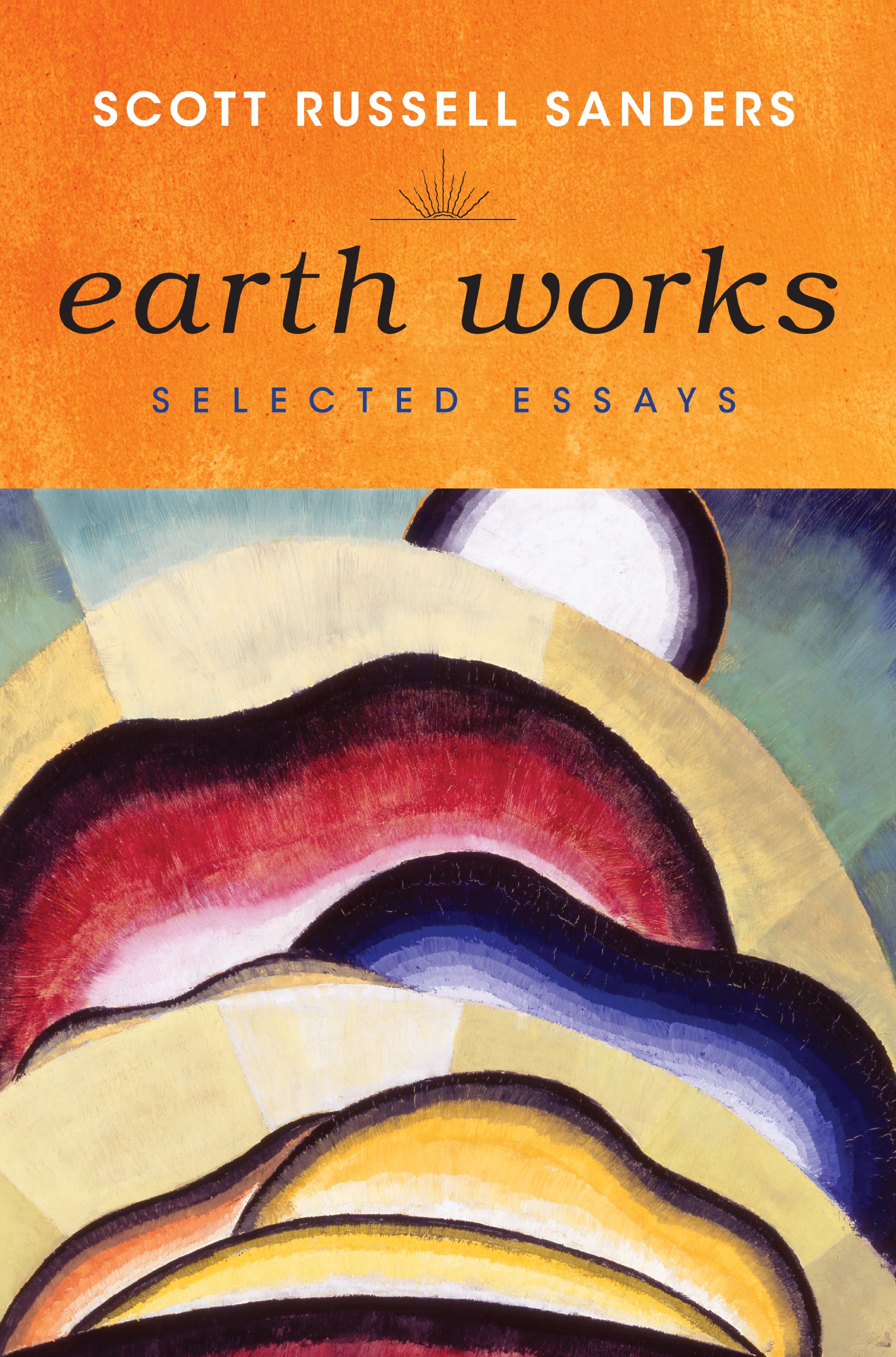
I had two ideas for my CE topic heading into last winter’s residency, and was quickly convinced in discussions there to write about objects, stuff, or things in the works I admire. Two of my early annotations covered two of my CE’s central texts: Terry Tempest Williams’s Pieces of White Shell and Mark Doty’s Still Life With Oysters and Lemon. (Are you sick of hearing about those two books yet? I’m not.) The other two, still on-topic, covered a couple of Guy Clark songs (“Stuff That Works” and “The Randall Knife”), and Cutter Wood’s Love and Death in the Sunshine State, respectively. The latter did not make the CE, but Guy Clark made a few cameos, and my final central text was Scott Russell Sanders’s work in two essays, “The Inheritance of Tools” and “Buckeye,” from his collection Earth Works. My critical essay is titled “Yucca, Lemon, Buckeye: The Strangeness and Singularity of Things.”

I am moderately proud of it, and glad it’s over. I do feel the benefits of studying so closely one craft aspect I admire; but it was also a rather awkward adjustment for me. This work felt more like “school” than anything I’ve done in this MFA program. Getting back to a slightly more academic style was like slipping back into a comfortable groove, in that it’s something I’ve done before and feel competent with; doing creative work, for the first time in my life, just recently, had been a real challenge, and not always a happy one, but I missed it when I slipped back into that groove. I hope that makes some kind of sense.

I did keep up the creative work, more or less; I think I had one writing packet that was light on page count, which was also true in my second semester (I believe I buried Katie Fallon, in semester one, with the maximum allowable page count throughout). And now I’m very excited about heading into semester four, when I’ll write my thesis–or rather (I hope) edit and revise heavily and also do some connective-tissue writing to build a thesis out of the last few semesters’ work.

I had my best semester of reading yet, and had a wonderful rapport with my advisor, Jeremy B. Jones (author of Bearwallow). His comments on both my critical and my creative writing this semester always felt incisive, productive, and specifically geared at my own needs as a writer: personalized, and with a fine understanding of what I am and what I’m up to. I felt very lucky. He also recommended just the right books for me to read. (Look for a post on Friday about my favorite books of the first half of 2018.)

Looking back, then, it was a good semester for me as a writing student. It didn’t always feel that way in the moment! If nothing else, I have the angst of a creative writer down, I think.

I’ll probably be writing soon about the readings I’m doing for residency. It goes by so fast, and now that I’m more or less three-quarters of the way through this program, I’m a bit panicked at the idea of it ending, even as it looks like a relief, too. I’m glad to have written this post so I can remember the satisfaction of semester three, and the critical essay, feeling like accomplishments along the way.

Program director Jessie van Eerden continues to impress me with her promptness, combined professionalism and warmth, and enormous wisdom and talent. Jeremy Jones was a special gift to me this semester. My classmate Delaney McLemore, who will be graduating** this summer, has been a friend throughout, but this semester provided substantial support along the way. (I’m happy for her to be graduating, but I will miss her terribly!) It’s been grand, y’all.

Onward to West Virginia in July!


*Breaks are nearly a fallacy: as soon as my semester portfolio is due, it’s time to start working on my workshop sample for next residency; and almost as soon as my workshop sample is in, I get back other people’s workshop samples to read and comment on, as well as my reading assignments for residency, which number in the hundreds of pages. But technically, break.

**While there is a graduation ceremony at residency, the degree is not officially conferred until the college’s next graduation date, which in my case is May 2019. For that matter, following the January residency where I “graduate” and teach a seminar to my peers, I have something like six weeks to keep working on my thesis before its final-final due date in mid-February or so. January will be a major milestone, but there will be later milestones before the MFA is truly done. And I’ll be learning as a writer forever (hopefully). The process is ongoing, and then goes on.

A Song for the River by Philip Connors

Philip Connors’s first book, Fire Season, changed my life and the way I thought a book could work. I’m still reeling. I need to find time to reread it someday.

His second, All the Wrong Places, worked on me differently but still impressed.

Along the way I got to meet the author and consider him a friend, although not one I’ve kept in touch with closely in the last few years. His new publisher’s email about a third book actually caught me by surprise–very, very happy surprise. I was of course thrilled to get an advanced reader’s copy, in exchange for my honest review (although I can’t at this point claim I’m unbiased about Phil’s work).

A Song for the River is a sort of sequel to Fire Season. In one sense, it’s a third memoir, and therefore refers to the events of the first two books, because all three track the life of an individual. But they do more work than that, too.

Fire Season was about the narrator’s work as a fire lookout in the Gila National Forest. It’s a personal story, a memoir, yes; but it’s also about the history of fire management in the United States, the flora and fauna of one mountain in one forest, about solitude and philosophy and the ways we deal with grief, and so much more. It’s nature writing, political writing, personal writing. All the Wrong Places concentrates more, on a particular loss: a brother’s suicide, and the narrator’s search for answers, and his self-destructive behaviors along the way. A Song for the River returns to Connors’s mountain and forest, and to some of the larger themes and breadth of Fire Season.

Since the timeline of that first book, the narrator has been through a divorce; suffered severe medical issues; lost several people he loved deeply; and seen epic wildfires tear through the wilderness he’s come to feel a part of. Amid loss and pain, he writes, “I found I wanted nothing so much as to be near moving water.” In ways that feel familiar to fans of Fire Season, Connors tracks a number of themes and challenges–pain, grief, personal inquiries–through the physical space of the Gila, with detailed attention to its trees, mosses, grasses, flowers, insects, birds, fish, and mammals. Where in his first book he devoted space to fire management policies and their effect on the natural world, here he adds a new concern: attempts to dam the Gila River, the last wild river in New Mexico and one of a small and shrinking number nationally. Among the people he mourns in this book are a dear friend and fellow fire lookout, “a forest guardian while he lived,” and a young woman he calls an inspiration, “a river guardian while she lived.” He undertakes to help protect the wild river in their honor, and to be closer to them, “gone before me in ash down the river.”

As he visits and revisits a river and travels through this wide range of topics, Connors profiles a number of people: the two in particular that he mourns, as well as other fire lookouts and sundry characters. He studies griefs, and physical pains and ailments, and questions what does and does not belong in nature writing (not, he feels sure, a discussion of his prostate troubles, and yet here they are). He explores themes of empathy and humility, ponders Catholicism, and investigates the nature of friendship and the unavoidable blank and blurred spaces in any attempt to write about a life.

There are refrains.

I reviewed my life and it was also a river, Herman Hesse wrote, in the voice of Siddhartha, a line that stayed with me through the years. Whenever I recalled it, I felt an impulse to revise it for my own purposes and replace the word river with the word fire: I reviewed my life and it was also a fire.

More than a hundred pages later,

On one quiet stretch of water I looked up at the tiered mesas above us and felt it might be true that my life was both a fire and a river, depending on the moment and the vantage from which it was viewed–and never more like a river than in moments like this.

To me, this pair of lines brings together so much of all three of Connors’s books: fire, river, duality and commonality, the connectedness of all things, human and nonhuman, from the obvious and literal fire in book one to river in book three and through the figurative fires of book two, ending in a synthesis: fire and river being one in the way that watershed and ash are part of a unified cycle. Late in the book, Connors references Puebloan beliefs: water moving from sky to earth to soil to plant to animal to death to sky again as a cycle. “The ebb and flow of drought and flood are like the pulse in a human body,” water as blood and nutrients moving through arterial systems in body and on earth. As a writer and a student of writing, the way this book closes these circles is deeply admirable to me. This kind of work can be done too neatly, but Phil allows the world to stay complicated.

I remember feeling this way when I tried to review Fire Season: I am not up to this task, putting into words why these words are so powerful. A Song for the River is deeply sad but deeply beautiful, full of love and truth. I expect it’s something like what Phil felt, trying to properly eulogize, honor, and remember his friends, and feeling less than able to do the job they deserved. This book is essential. I hope you love it, too.


Rating: 10 firm and well-placed fingers.

Rising: Dispatches from the New American Shore by Elizabeth Rush

This study of rising sea levels puts both science and poetry to work in honoring human and non-human coastal communities across the United States.

Journalist Elizabeth Rush’s Rising: Dispatches from the New American Shore is science, poetry and personal witness, concerned with human and more-than-human communities. It is a reckoning with the ugly reality of climate change, with numbers and predictions becoming grimmer each year. It is a poetic meditation on the nature of change, on how people can make peace with a changing world and our agency in it. And it is an impassioned consideration of the injustices humans perpetrate on one another, and on the non-human world.

Rush saw firsthand the reality of rising sea levels in inland Bangladesh, when a boy named Faharul showed her his dying mustard greens, their veins filling with salt. It took her years to follow that story to the U.S. communities she visited in researching and writing this book. In Rhode Island, Louisiana, Maine, Florida, New York, Oregon and California, Rush interviews local residents, observes local flora and fauna and questions scientists. She studies climate change and the rise of sea levels globally, but particularly in wetland ecosystems.

Rush’s concerns begin with plants and animals: salt marsh harvest mouse, roseate spoonbill, Caspian tern, rufous hummingbird, red knot, black tupelo. But she quickly extrapolates them to tell a human story, too, about the people threatened alongside greater egret and cypress, and about her own struggle to navigate hope and action within despair. “I have a hard time separating excavation from elegy.” The loss of islands on Louisiana’s coast means the loss of Native communities there, and to understand that loss, one must recognize that those communities were formed by relocated tribes of Chitimacha, Biloxi, Choctaw and Acadian people pushed out of their original homes all over the continent. This is but one example of the vulnerable populations most at risk and least assisted by social supports.

Appealingly, Rush puts her research and writing to work alongside the perspectives of coastal residents: interwoven chapters are told in other voices. She makes allusions to the story of Noah and his ark, and to Leslie Jamison’s The Empathy Exams, seeking the right reference point. Striking black-and-white photographs from Rush’s travels add another gorgeous, elegiac layer to the narrative she helps to construct. Finally, an alliterative organizational structure stemming from wetland botanical structures makes this a book to be admired on many levels.

Rising is in some ways a difficult read. Its subjects are sobering and saddening, and survivors of flood events may be re-traumatized by some descriptions. The human-on-human crimes Rush documents include both discriminatory lending practices and sexual assault. These are important subjects to consider, regardless of the pain they may cause, but Rising has more to offer: pulsing, gleaming prose and a stubborn search for, if not hope, then peace in the face of disaster.


This review originally ran in the May 24, 2018 issue of Shelf Awareness for the Book Trade. To subscribe, click here.


Rating: 10 rampikes.

(Yes, that good, even though it made me terribly depressed too.)

Convenience Store Woman by Sayaka Murata, trans. by Ginny Tapley Takemori

A quirky novel about a convenience-store clerk who seems to be the ideal employee.

In the opening pages of Convenience Store Woman, Keiko Furukura is in her element, at work in the Hiiromachi Station Smile Mart. She knows what the displays need, how properly to promote the day’s featured item, when the cold drinks need replenishing; she reads her customers expertly: “Instantly I deduce that he will use electronic money.” She is a valued employee and good at her job. The mingled beeps, dings, rustles and clacks of the convenience store form a “sound that ceaselessly caresses [her] eardrums.”

Few situations in Keiko’s life have been so easy. In primary school, she often responded to the world in ways others thought wrong: offering to cook and eat a dead bird on the playground, applying a shovel to the skull of a classmate in order to break up a fight. She wasn’t a violent child; these just seemed like practical strategies. She couldn’t understand why the teachers at school got upset. Life presented a series of puzzles she could not decipher, until the day she went to work at the Smile Mart. The convenience store offers Keiko a uniform, a series of set lines to be spoken to customers and a manual for staff behavior. She copies her coworkers’ choices in clothing and cosmetics, mimics their speech patterns and facial movements, and learns to play the part. She’s never felt so successful: no one notices that she’s different anymore. “Here in the convenience store we’re not men and women. We’re all store workers.” And so she has been a store worker for 18 years.

Convenience Store Woman, Sayaka Murata’s English-language debut, is a compelling novel about conformity in society, and the baffling rules applied in work and life. Murata’s protagonist is likable, if a bit baffling herself. Ginny Tapley Takemori’s translation feels just right for the slightly off-kilter reality of this thought-provoking story: Keiko’s first-person narrative is earnest, if continually challenged, in attempting to decode the world around her.

Keiko is attuned to the ways people act, speak and move; she suspects they are all imitating each other, just as she is imitating them. She studies these behaviors to lower her own profile, but remains honestly unclear why careers, marriage and children are desirable goals. When a new employee comes along who also has trouble fitting in–but who hasn’t mastered the act as much as Keiko has–she is intrigued. Tired of everyone questioning her lack of a husband or a “real job,” Keiko takes a risk. But it may cost her the carefully constructed mask she’s learned to wear.

This brief, brisk novel is an engrossing adventure into an unusual mind. Is it a subversive, satiric criticism of societal norms? Is it a surrealist take on extreme workplace culture? Or simply the perspective of a woman wired a little bit differently? Murata holds the reader rapt, wondering what Keiko will do next. Convenience Store Woman is for all kinds of readers, for anyone who’s ever questioned the status quo.


This review originally ran in the May 21, 2018 issue of Shelf Awareness for the Book Trade. To subscribe, click here.


Rating: 7 rice balls.

Cove by Cynan Jones

Disclosure: I was sent an advanced reader’s copy of this book by the publisher’s publicist in exchange for my honest review. I rarely do this anymore, because I’m so busy, but I was happy to receive a copy of Cynan Jones’s new novel, because I so enjoyed his Everything I Found on the Beach. Also, this one is short.


Cove is a brief, nearly stream-of-consciousness, minimally sketched narrative of a man in a boat. At under 100 pages and with lots of white space on the page, it’s easily read in a single sitting, and you’ll want to, to find out what happens to our nameless protagonist.

The epigraph offers a dual meaning for the title:

Cove1 (kəʋv) n. a small bay or inlet; a sheltered place.

Cove2 (kəʋv) n. a fellow; a man.

The story opens in second-person perspective: “You hear, on the slight breeze, the tunt tunt, tunt tunt before you see the boat.” This “you” is a pregnant woman on a beach, and she is looking for someone, or something. She finds a doll; and her section closes. Then, Part I.

The story from here is presented in third person, starring an unnamed “he,” a man alone in a fishing kayak. In the opening moment, he has caught a fish, is washing its blood off his hands, and sees a storm coming in. Time jumps around: we see the man catch the fish, see him approach a small bay. He carries his father’s ashes with him; it becomes clear that he means to scatter the ashes in this cove, but there are people there, tourists, and he heads out to sea, planning to return for a more private moment. He’s left his lover with a brief note, not told her where he’s gone; he’ll return later with fish for their meal. It’s implied that this task, his father’s ashes, is one to be completed in privacy perhaps from her as well. But then the storm.

After a lightning strike, the protagonist loses his memory, except in flashes–flashes of details much like lightning, much like the fragmented, imagistic telling of this story. He loses as well the use of one arm, and spends the next hours and days fighting: for fish, for drinking water, for safety, for shore. This book owes something to The Old Man and the Sea, and I mean the comparison as a compliment. Jones’s prose is sparse, and operates on images. Fish, bird, light; memory, the sound of a father’s voice, and the look in a lover’s eyes. This is a book of moments, thoughts and visions, searing pain and flashing hope.

I wrote the above paragraphs before returning to my review of Jones’s early book, for fear of being influenced by my own words; and now I return and see how similarly I characterized his writing then. I’m reproducing here what I wrote more than two years ago, because it is so true of this book, too:

Jones’s writing is deceptively simple, often employing short, declarative sentences that belie his poetic mastery of language. His words have a marching rhythm to them that recalls Hemingway: “The first time he ever shot rabbits he was alone and it was with a shotgun and he had been looking for a long time…” His tone is deliberate, resolutely unexcitable despite the extraordinarily high stakes of his story, peopled almost entirely by the three men, whose interior monologues do much of the work to characterize them.

Substitute one man here for the three men in that other book, and these lines apply beautifully, down to the Hemingway comparison.

The two novels (of five total Jones has published to date) are similar in several respects, then, including their beach/sea setting. I don’t think this is a bad thing. I admire this style, and I’m glad to know there’s more to be explored.

lots of white space emphasizes the minimal narrative style

Brief, and composed in deceptively simple prose, but no “beach read”: Jones’s themes are dark, but vital, and more than thought-provoking, perhaps mind-opening. What is perhaps most appealing to me about this style is the work it asks the reader to do in completing the tale. Minimal storytelling compels me to interpret, to make meaning. I’m a fan, and I’m glad I got a chance to read this book.


Rating: 8 wren feathers.

guest review: The Solace of Open Spaces by Gretel Ehrlich, from Pops

Pops has been making his way through my backlist. See, while we’re at it, his comments on Dream Team. Here, he’s sent a full discussion of The Solace of Open Spaces, which I reviewed here (see his comments there, too). Thanks as always for weighing in, Pops!

Thanks for yet another good recommendation, although belatedly honored.

Ehrlich’s work is as special as you describe, although you commended it with one more cowboy than I might have, likely accounted for by personal taste and happenstance, that nebulous coincidence of reading the right book at the right time (or not).

Two other, little things I noticed. One is her occasional unabashed use of urban references in metaphors or similes describing wild and natural (albeit inhabited) places. This is not so typical in literary works about the wild, but it works well here supporting her personal story as a ‘straddler,’ as she once refers to herself, shifting between places.

The other is a brief mention in her chapter “To Live in Two Worlds,” a title with meaning for her book’s personal backstory, but also for the chapter’s subject describing the parallel Wyoming culture of native Indian tribes. She attends two tribal events; one is the annual Crow Fair, where an Indian friend remarks on tribal mythology about a ‘berdache’ (p.123), a French word which she parenthetically defines as transvestite.

I have read that the American Indian or First Nation usage of a French word derives from French voyageurs, the French trappers in early North American history who were the first European contacts with many native tribes, who then adopted many French terms in their learning of English. The voyageurs encountered the cultural fact of native gender ambiguity, and recognizing a common social reference, contributed their word to an emerging hybrid language of native, English and French words.

From multiple references I have read, Wiktionary seems to get it right: berdache is “a person who identifies with any of a variety of gender identities which are not exclusively those of their biological sex.” An added comment there goes beyond what I have seen elsewhere: “Considered offensive by many Native American communities because of its pejorative and non-American etymology, berdache began to fall out of use in the 1990s; two-spirit and various tribe-specific terms are now used instead.” The latter is wonderfully explicated here by a gay blogger in Montana.

Nevertheless, I find the history fascinating, including that last reference with very helpful context: the contemporaneous accounts, from both Indians and early explorers, suggest both surprising awareness and a more tolerant acceptance of a cultural and social issue that US culture still wrestles with today.

In reading northwest history I have seen berdache, as a word and cultural phenomenon, repeated in things I’ve read lately. Notable are two excellent works of creative non-fiction history, Jack Nisbet’s Sources of the River and Peter Stark’s Astoria. The narrative lines of the two books briefly but importantly overlap, and a berdache is, remarkably, at the center of that historical confluence.

Nisbet’s work references contemporaneous journals of Scot-Canadian David Thompson, who led (and amazingly, accurately mapped) the first European expedition from Columbia River headwaters in Canada to its mouth near Portland, Oregon, in 1811 immediately after Lewis & Clark journeyed overland to the mouth. In his journeys through true wilderness, meeting some tribal parties who have never seen a white person, Thomson first hears tales of a berdache, then meets the person named Qánqon – twice! First is early in the trip, near the headwaters; second is later, at the mouth.

Astoria describes a complicated American expedition of the same period (they and Thompson were vaguely mutually aware), which involved two groups, overland and by sea, converging on the mouth of the river. All three parties converge in the summer of 1811 at the Astorian camp near present-day Portland – and, defying odds, the mysterious Qánqon also arrives, with a companion, to make it four. This motley combination clashes to provide a bit of historical human drama and political intrigue. And it all makes for wonderful reading.

So that’s what I know about berdache. And thanks to Ehrlich for providing yet another reference to an interesting historical thread.

What a turn this review took! I did not remember the term berdache at all, so there you have it. (Also, that was five years and how many hundreds of books ago? Probably nearing a thousand?) Also, although we all know I do not have time for more titles added to my list, I love a review that comes with additional reading recommendations. Thanks as always for weighing in, Pops!

The Poetics of American Song Lyrics ed. by Charlotte Pence

This book took me an inordinately long time – weeks – to finish, but not because I didn’t love it. I loved it. It’s just dense, and took a lot of mental energy. And being a collection of discrete pieces, it was easy to take breaks. And it hit just at the end of a wonderful but wearying semester, so my mind was fatigued. [Post about the semester wrap-up to come.]

I’m going to let editor Charlotte Pence introduce this book to you as she did to me.

Not many editors can pinpoint the exact moment a specific project began, but I can say for certain that it was September 12, 2003, the day Johnny Cash died. I was living in Nashville, teaching composition and poetry writing at Belmont University where 27 percent of the entering freshmen are part of the Mike Curb College of Entertainment and Music Business. The university sits on a hill that hovers at the end of Music Row, those legendary two streets that Nashville record labels and studios call home. When students miss class at Belmont, the reason often involves the words “touring schedule.” Essentially, the music business is an extension of the campus, and there I was teaching poetry and having students ask if they could bring their guitars to class for backup as they read their “poems” for the class to critique.

She goes on: when Johnny Cash died, Tennessee senator Lamar Alexander gave a speak on the Senate floor in which he wondered why Tennessee English professors (“including those at Belmont specifically”) didn’t teach lyrics alongside poetry. Pence acknowledges their “differing politics,” but answers the call nonetheless, to explore this question. Poetry professors have a number of quick-and-easy answers to the question of how poetry and song lyrics are different – I’ve had this conversation with my own favorite poetry professor, Doug Van Gundy, who among others things (like citing a lovely quotation from Glyn Maxwell’s On Poetry) recommended this book to me. But Pence understood that it remains a question in many minds, Lamar Alexander’s and her own undergraduates’, and created a course investigating the issue. In seeking assigned readings for this course, she quickly realized that there was a major shortage of articles analyzing the content and techniques of song lyrics. Long story short, this book was born to answer that shortage.

Pence has more than this to say in her introduction, which I read with great interest. She explains the mix of contributors she’s pleased to present: poets and teachers of poetry; literature professors; and music scholars. They write on a wide range of musicians: Johnny Cash, Sam Cooke, Bob Dylan, Michael Stipe, Bruce Springsteen, Okkervil River, Magnolia Electric Co., Leonard Cohen, and a litany of country and rap artists. They generally depart, I venture, from the more standard poetry professor’s position that music and poetry are too different to share the same conversation. Obviously, here they share the room.

Each essay, naturally, varied in how it worked on me. There were a few I ended up skimming past or not finishing; but only a few. Unsurprisingly, many of them tempted me to stop and listen to an album or four before continuing (I mostly did not indulge in this further slowing of my reading, although I found a few single tracks online to aid me). Some of them made points that surprised me or opened my mind.

A few highlights, for me personally:

Pence’s own contribution, “The Sonnet Within the Songs: Country Lyrics and the Shakespearean Sonnet Structure,” was a good discussion of the traditions of a particular poetic form, accessible to my level of knowledge coming in. And it was exciting to see poetry and lyrics lining up.

“Gangsta Rap’s Heroic Substrata: A Survey of the Evidence,” by John Paul Hampstead, was another thrilling example of traditions of one form recognized in another, apparently very different form. Hampstead considers ancient and medieval heroic poetry (Homer, Virgil, and ninth and tenth century Anglo-Saxons) alongside Lil Wayne, Notorious B.I.G., Short Dawg, and a number of others. He finds five common threads: feasting, raiding, treasure, misogyny, and fatalism. I do mean thrilling: it gives me a thrill to see connections like this made.

Pat Pattison’s “Similarities and Differences between Song Lyrics and Poetry” serves as a good overview discussion of, well, the similarities and differences between song lyrics and poetry, and concludes that they are indeed different beasts: a view held in common with my friend Doug and the Maxwell quotation. It’s well defended here but also pulled apart.

I enjoyed David Kirby’s “The Joe Blow Version,” about the various versions of Otis Redding’s song “I’ve Got Dreams to Remember,” and the richness offered by variability, as opposed to a single, definitive, correct version of a song, poem, play, etc. He quotes a textual scholar, Anne Coldiron, who says “The nineteenth century in particular was an age of canon founding,” the establishment of definitive texts; but the Bible, Shakespeare’s plays, Auden’s poetry, and Brecht’s music are all examples of work with variations. Kirby offers that “Some of the songs that get under our skin the most aren’t written so much as assembled,” that differing versions “remove the mystery and, in so doing, heighten the pleasure.” This essay, by the way, is itself a lovely work of art: Kirby’s arguments are packaged within a narrative of his travels in Macon, Georgia, researching a book on Little Richard and visiting with Otis Redding’s widow and daughter. It is a finely crafted essay and a beautifully executed argument about the value of variation in art, and of the transparency of the creative process.

I also responded to essays studying Okkervil River and Magnolia Electric Co. (the latter a band I’m just discovering through a friend, which is a story unto itself, and a synchronicity that strengthens the reading experience). Those essays are by Stephen M. Deusner and Jesse Graves, respectively. And while the two essays studying Michael Stipe and R.E.M. appealed to me less in their particular subject matter, I was enchanted by the idea of “investigat[ing] the assumption that lyrics should provide literal meanings… ultimately inviting listeners to co-create rather than simply receive meaning from the lyrics.” (Jeffrey Roessner’s “Laughing in Tune: R.E.M. and the Post-Confessional Lyric.”)

I’ll stop there for now. I found The Poetics of American Song Lyrics a stirring and challenging read. For one thing, I lack an enormous amount of the vocabulary and background required for literary criticism of poetry; many of the terms confused me at least a little, and although there is a glossary, it didn’t solve all my problems. Maybe I’m holding myself to an unnecessarily high standard, but I don’t feel qualified to fully appreciate the criticism and in-depth critique in these pages. I felt like I was missing a fair amount. However, the most exciting part is that these essays do the kind of work I dream of doing for some of my own favorite musicians and lyricists: Jason Isbell, Guy Clark, Patterson Hood. I’m not much closer to being able to do that work myself, but I can see now that it’s possible to do such work, and that is exhilarating.


Rating: 9 fading trails.