television: a new discovery

It’s been a weird year.

Say it again: it’s been a weird year.

I made a post to this effect at about this time last year. The trend continues: I’ve been watching television. (I still don’t own a television, but technology has allowed me to become a TV-viewer on my little laptop; wonders never cease.) I still find this so strange. And I struggle somewhat with the stigma I was taught as a kid: that is, that television is tooth-rotting junk food, while books are healthy and nourishing. Well, there may be something more passive about watching, while reading requires a bit more reader participation. There’s no coincidence in this compliment to one of my favorite shows: “They required a level of attention from viewers of The Wire not normally demanded by television shows… but a level of attention a step closer to the level you might have to apply to reading a book.”* But also, as Liz points out (I paraphrase): “Television was junk when you were a kid. But in the last 15 years or so, they’ve figured out how to make some really good television. And you’ve been watching good television.” And you know what? I have been. There is some astonishingly good television out there.

It’s not normal for me to feel this involved with a television show. But on the other hand, it’s not all that unusual for me to feel really involved with a fictional world, with plot and characters invented by impressive creative minds. And it’s been really exciting to discover a whole new medium for exploring story and character. Not that I entirely had all the craft elements of writing under control! but there’s so much more to watch out for, no pun intended, on the screen. The pure writing alone, from plot construction to lines of dialog to stage direction, is a whole course of study; then there’s the acting, the sound and scenery, and the cinematography. I’m sort of reeling at all of this. I’m a little tempted to sign up for another graduate degree in how to pick apart a television show. (Not really. Maybe a little.)

I’m not sure what’s led me in this direction, toward the screen. I definitely think the pandemic and shutdown and isolation and increasingly depressive news of the world have played a role, but again, I started watching last year. The bad world out there has just pushed me further. I’ve also noticed that in my reading, I crave lightness and fiction to leaven the important but unpleasant reality I take in. But when my favorite novels of the year include Sun a Fun Age, Leave the World Behind and The Prettiest Star, maybe I don’t skew as ‘light’ as I claim to. Maybe it’s just that I’ve finally found a new-to-me medium, and I was ready for it. At any rate, there are whole worlds out there. When television is done well, those worlds are thrilling and enthralling and worthy of all the time and attention I have to offer.
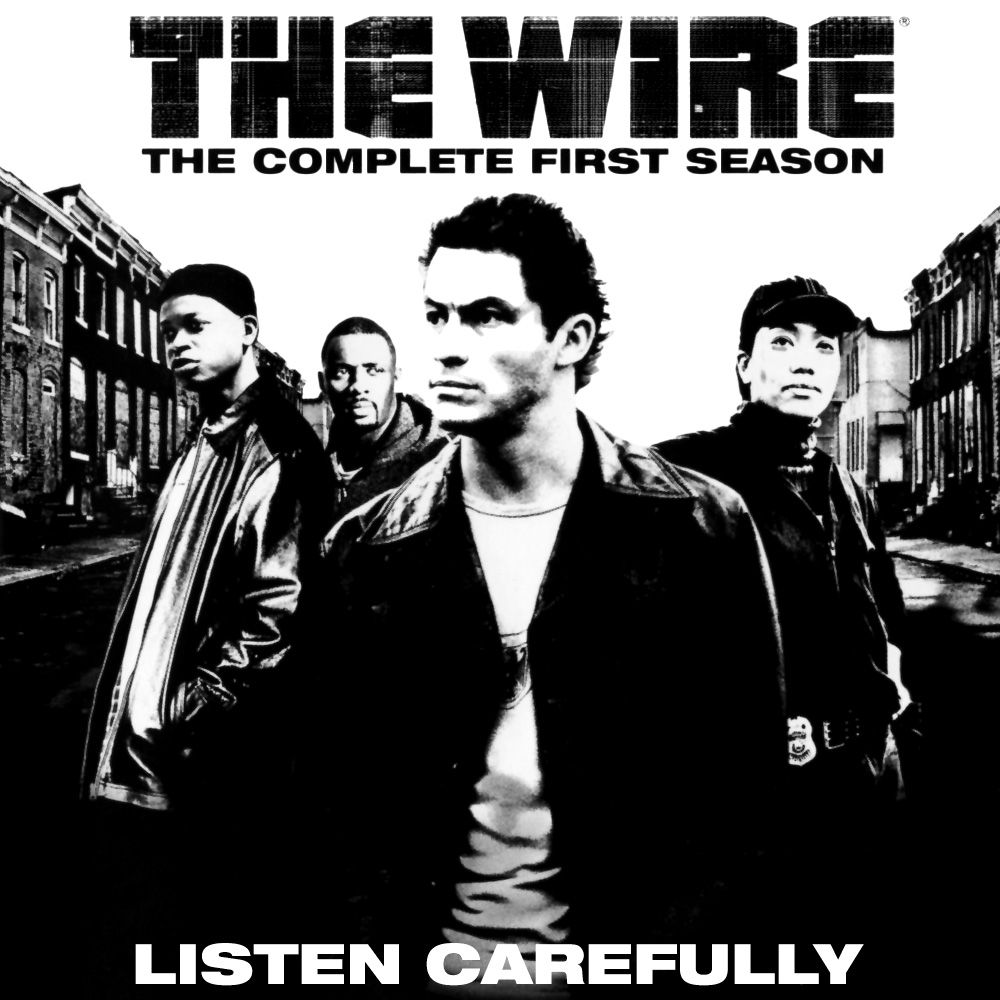
Case in point is definitely The Wire, a piece of creative work I can scarcely wrap my head around after two full viewings – thanks as always to Liz, who not only told me to watch it in the first place, but then sent along a great piece of criticism. The above *quotation comes from “Why The Wire is one of the Most Brilliant TV Shows Ever,” which is spoiler-free, and a better review than I feel able to write. I will say that this show is not only visually appealing, extremely witty and funny, but also very very smart, and tackles the kinds of Big Issues that I like to see tackled in fiction. I’ll watch it again.

My television obsession of the year is Shameless (the US version). Early in pandemic shutdown, I started watching this show and got hooked. This scrappy, resourceful, problematic, crazy-but-real family just got inside my head and my heart, with their struggles and their relationships which are both strong and messy, and their colorful southside Chicago setting. It’s absolutely a comedy and absolutely a heart-rending drama, and it runs for ten seasons, with season 11 delayed by the pandemic but now filming, and set to be the last. I am most in love with the relationship between Ian and Mickey, but many characters’ arcs strike me as nuanced and engrossing. This is less a perfect show than The Wire; there are errors and inconsistencies, but I still find it completely compelling. And while it’s less serious, too, there is no shortage of Big Issues – mental illness, addiction, sexual assault, poverty, tolerance, love – which are here presented as simply the backdrop facts of life, rather than problems to be solved as on The Wire. This is another show I’d take a master course on.

My love for Shameless character Mickey Milkovich led me to seek more work by the actor who portrays him, Noel Fisher, which led me to other shows and movies, many of them good – The Booth at the End, The Riches, The Long Road Home – but most remarkably, The Red Line. This series of just eight episodes begins with the shooting of an unarmed Black man by a white cop, and just keeps adding in the Big Issues from there. It’s jam-packed with them, in fact, which could be seen as a liability, especially in less capable hands (these are very capable hands – Ava DuVernay is a producer); but I decided it felt rather like life, in which we are indeed surrounded by Big Issues that we don’t get to fully untangle. (I was also charmed by a matter-of-fact background element: one of our protagonists has a BFF who is non-binary in their gender identity and uses the pronouns they/them. I expected this would become another Issue but no, it’s just a fact of life. Which is part of what representation means. Hat tip.) A little more time would have been great, to see these stories more deeply explored, but I’m very impressed by what is here.
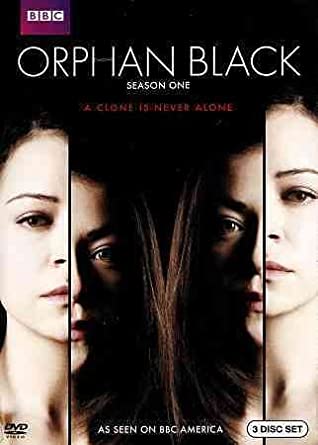
Finally, Orphan Black is a mind-blowing story and set of characters, including some of those loving, messy, built-family relationships I love as in Shameless. It’s addictive in many ways, but what I can’t miss mentioning is that a whole slew of characters are played by a single actor. Some of these characters then play each other within the show, so that the completely masterful superstar Tatiana Maslany not only plays Sarah and Allison (and others) but also Allison pretending to be Sarah, etc. It’s the big bad world against our heroine, iconoclastic rebel Sarah Manning; episodes and seasons keep twisting and riffing on that basic plot structure in a way that might be tiresome, if there weren’t so much imagination in the twists and riffs, and humor and love (and completely genius secondary characters like Sarah’s sidekick Felix). I was bereft when I finished the final season.

Liz tells me there’s plenty more great television for me to catch up on. What a world. I wouldn’t say Noel Fisher’s body of work makes up for what’s going on out there in the real world, but it’s pretty thrilling to continue to discover works of creativity that change the way I think and feel. Thank goodness. Keep ’em coming.

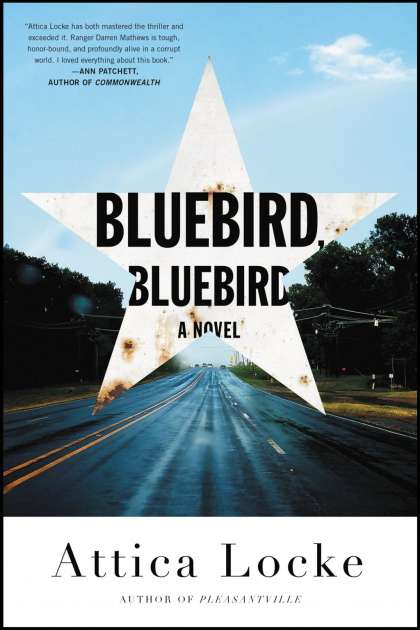
guest review: Bluebird, Bluebird by Attica Locke, from Pops

I reviewed the second book in the Ranger Darren Mathews series, Heaven, My Home. Pops is taking us back to the highly-decorated first in that series, Bluebird, Bluebird. He tells me it ends in a classic cliff-hanger.

This is a great, compelling mystery; by a Black author; about a Black Texas Ranger; about mostly Black characters; set in familiar East Texas locations; interwoven with Blues music (songs on Geneva’s jukebox are our playlist, including “Bluebird” by John Lee Hooker, about a man seeking a lost love ‘down south’, alluding to our plot); and with an epigraph from a Lightin’ Hopkins song, “Tom Moore Blues.”

And besides all that, she discreetly includes insightful social commentary about Black roots in the South, White privilege and racism, and the fraught legacy of biracial offspring from conflicted Black-White intimacy. E.g Ranger Darren Mathews’ family is rooted generations-deep in East Texas soil, stolid landowners now become proud and successful patriarchs of a clan determined not to be moved:

It was an arrogance born of genuine fortitude and a streak of hardheadedness six generations deep, a Homeric shield against the petty jealousies and lethal injustices that so occupied white folks’ free time, their oppressive and intrusive gaze into every aspect of black life – from what you eat to who you marry to the clothes you wear to the music you play to the way you wear your hair to how you address them on the street. The Mathews family recognized it for what it was: a fevered obsession that didn’t really have anything to do with them, a preoccupation that weakened a man looking anywhere but at himself.

And: Darren contemplating how to explain to Randie, wife of murder victim Michael Wright, his desire to return home from Chicago.

[Randie:] ‘Michael always wanted to make excuses for these racists down here, had some kind of twisted nostalgia about growing up in the country that made him blind to all the rest of the bullshit down here.’ [Darren:] ‘It’s not making excuses. It’s knowing that I’m here, too. I’m Texas, too. They don’t get to decide what place this is. This is my home, too.’ …this thin slice of the state that had built both of them, Darren and Michael. The red dirt of East Texas ran in both their veins. Darren knew the power of home, knew what it meant to stand on the land where your forefathers had forged your future out of dirt, knew the power of what could be loved up by hand, how a harvest could change a fate. He knew what it felt like to stand on the back porch of his family homestead in Camilla and feel the breath of his ancestors in the trees, feel the power of gratitude in every stray breeze.

And: that troubled sexual intimacy, and even love, amidst entrenched racist culture.

Michael’s and Missy’s murders were race crimes, yes, but that was mainly because of the ways race defined so much about Lark, Texas, especially in terms of love, unexpected, and the family ties it created. [Darren] had forgotten that the most elemental instinct in human nature is not hate but love, the former inextricably linked to the latter. …[These white men’s] lives revolved around the black folks they claimed to hate but couldn’t leave alone.


Rating: 9 blues songs.

I’m not the least bit surprised that this sounds like an incisive novel, with complicated social issues in its heart. What I remember about book two is that the mystery plot is also worthwhile. I’d love to find time for more Attica Locke! Thanks, Pops.

My Life as a Villainess: Essays by Laura Lippman

I entered this collection at the end, because Liz recommended to me the final essay, “Men Explain The Wire to Me.” (My post about a few favorite television shows is forthcoming.) I liked it, so she recommended a few more which I also liked, and then I went back to the beginning and read the collection cover to cover. It’s not a perfect book; the best essays are very good and the less compelling ones are not very good, which was maybe Liz’s point. But I’m left feeling close to the author in a way that’s rare for me, and full credit for that.

I guess I would say that there’s nothing earth-shattering about the writing itself. But Lippman’s experiences, the conclusions she draws from them, and her sharing of all of it is very appealing to me. To call someone’s writing ‘relatable’ in a workshop isn’t always seen as meaningful praise, but I’m not sure why; I think getting the reader to relate is a pretty important goal, not necessarily easily accomplished. I say these essays are relatable as hell, and I mean that as a compliment. I think that Lippman is correct that loving one’s own face and body, as a woman in this culture (let alone as a sixty-year-old woman), is indeed a radical act. I appreciate her observations about gender and power and privilege, and work and parenting. I appreciate that she concedes her own villainy without wallowing in it; she remains more or less a good girl, even while pissing some people off.

Some of these essays can feel a little pat, a little neat in their concluding lines, like there is a trick at work in the writing and the trick shows through the weave of it. But the heart is good, and the observations and philosophies are real and of value. I want to be friends with the woman who wrote these essays; I feel like we could be friends; I feel a little bit like we are friends, which is pretty unusual for me and totally weird but comforting. (Perhaps if her writing were transcendent I wouldn’t be able to feel this. To every cloud, a lining.) This is plenty good enough for me.

If you’re interested in dipping in slowly like I did, here are the essays Liz especially recommended to me: “The Art of Losing Friends and Alienating People,” “My Father’s Bar,” “The Waco Kid” (about moving to Texas for work), and of course that finisher which is where I started, “Men Explain The Wire to Me.” I agree with these recommendations, although I think I’ll add “A Fine Bromance” and “Saving Mrs. Banks.” I’d read more essays by Laura Lippman.


Rating: 7 tennis volleys.

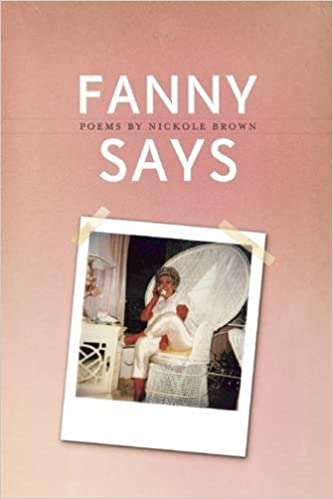
Fanny Says by Nickole Brown

It took me years to feel ready to open this volume of poetry. I saw Nickole Brown read at my first residency (as a student) at West Virginia Wesleyan College, where I now teach, in the winter of 2016-17. I cried the whole time; her poetry nearly killed me, and I bought two copies of this book (one for Liz), but was too intimidated or starstruck to ask her to sign them or to speak to her at all. (She also give a really great seminar titled “Learning by Design: Using Imitation in Creative Writing.”) Finally, I’ve enjoyed reading Fanny Says.

Fanny is the author’s maternal grandmother, and as the note at the book’s beginning says, many lines and whole poems “are not words I wrote but words I wrote down, transcribing best I could as my grandmother spoke to me.” Not surprisingly, then, one of this book’s strengths is the clear, distinctive voice I hear throughout, and one word that comes to mind is conversational: it often feels like we’re all in a room together, with this strong, sometimes abrasive, brave, take-no-shit woman.

I don’t think I’ve ever encountered poetry where I felt such an absence of a wall of poetry standing between me and the content of the poems. Does that make sense? I’m often distracted by the form when I read poetry, and worried about what I’m missing, or lost in the not-quite-literal words themselves. Here I feel no barrier up between me and Fanny’s words as (I trust) she spoke them. I think it probably helps too that I first heard these words read aloud by the poet, so I have her voice with me, as well. I’m still not sure I’m capturing what is special about this work to me, but it touches me deeply.

Fanny is often eccentric and, what, uneducated, superstitious, sometimes hard to sympathize with (see the long poem “A Genealogy of a Word,” about Fanny’s use of the n-word and her relationship with her Black housekeeper). She’s from a world I don’t quite recognize. But she feels very real and immediate, and I can feel Brown’s love for her. And I do sympathize with her, very much, although not the part about the n-word. These things are hard to reconcile, and that’s why Brown writes about them, I think.

I love Fanny for her colorful and precise and unapologetic cursing – the book’s second poem is “Fuck,” a close examination of the word and its uses, forms, and sounds, “with the ‘u’ low / as if dipping up homemade ice cream, waiting to be served / last so she’d scoop the fruit from the bottom, where / all the good stuff had settled down.” And then there’s “Flitter,” a poem both about the linguistic choice for “your privates, your girlie parts” and about Fanny’s relationship with her flitter. I guess I appreciate the directness both of Fanny and of Brown’s profile of Fanny. I have too many favorites here to list. I’m just grateful to feel let in to these poems in a way that has been so rare for me, even with poetry I love. I’m not sure what makes the difference. But thank you, Nickole.


Rating: 8 plastic cups of Pepsi.

podcast: the “Seeing White” series from Scene on Radio

“Seeing White” is a 2017 series on the podcast Scene on Radio, from the Center for Documentary Studies at Duke University (in a very podcast-rich part of the country, it seems to me). Host John Biewen (a white guy) is upset by racial injustice in the United States, and curious about the invisible forces that go beyond simple, mean, interpersonal racism and account for the systemic, institutional forms that do still more damage and are less easily identified. Noting that our discussions about race tend to manifest as discussions of people or communities of color, he wants to “turn the lens” back on whiteness. What the heck is that?

My father recommended this podcast series to me, pretty forcefully, and my first reaction was to say, 2017? His recommendation came in the height of this summer, the summer of George Floyd and Breonna Taylor and a new energy behind BLM protests, and it felt a little weird to look back three years for an angle on these events. Three years is kind of a short time, but also rather a long time, in the evolution of our (national-level) thinking on race. Well, I was wrong about the timeliness concern. While the most recent event markers have changed – Charlottesville being the landmark event when this podcast was released – the conversations we need have not. I’m adding my voice to my dad’s: this podcast presents ideas, facts, and history to help along that conversation, one that I found thought-provoking and useful, and that I absolutely still think is useful – nay, imperative – in 2020.

John Biewen and Chenjerai Kumanyika

Biewen examines whiteness via conversations with experts and scholars, including historians, researchers, and educators. On each episode (save one, I think), he then consults and reviews his new content with Dr. Chenjerai Kumanyika, professor of critical cultural media studies, cultural industries, “and things like that” at Clemson University and then Rutgers. Kumanyika (a Black man) serves as a sounding board and a gut-check for Biewen, there to offer both a personal and an expert perspective and make sure Biewen doesn’t head off in any funky directions; he’s the Black friend, which is a concept that should give us some pause. (I hope he got paid for his role here.) But the two are friends in the real world, and Kumanyika signs on for this project eyes-open. The two do share a joke about his role: “You’re not asking me to speak for all people of color, are you?” “Yes! of course!” “Well good. Because that’s what I do…”

Big, complicated topics here; writing this review/response is intimidating, but here’s my best effort.

I thank my parents and my upbringing for the fact that I’m not new to concerns about race and racism. But it’s clear to me, too, that nobody (and most particularly no white person) can sit back contented, thinking that she’s got it all worked out. To be a good anti-racist means being constantly ready to keep learning and finding out where I’ve been wrong. One of the greatest offerings of “Seeing White,” for me, was its help in wrestling with a certain concept. 1) I see and understand that race is a social construct in our society, rather than a biological fact; that makes sense to me. 2) And yet race is also a reality in our society and culture: it affects people’s experiences in education, law enforcement, finance, real estate, health care, and so much more; we have a (wildly imperfect) system of identifying people by race just by looking at them. So 3) How can race be both made up and a reality at the same time? …I don’t think I would have articulated this philosophical puzzle before listening to the podcast, but it’s definitely been a puzzle for me for some time. After listening, I feel like I have a better handle on it. Race is indeed both a reality within our culture, and something we made up. We’ve manifested it. Suzanne Plihcik of the Racial Equity Institute, episode 2:

We know, for example, since the human genome project, that we are 99.9% genetically the same. There is more genetic variation in a flock of penguins than there is in the human race. There is more genetic variation within groups that have come to be called races than there is across groups that have come to be called races.

However, after more than 400 years of entrenched racism, discrimination, and enforced segregation on this continent, we have built in differences that weren’t there. Health disparities are not a result of racial difference, but a result of different treatment over lifetimes and generations.

From episode 8, Dorothy Roberts, professor of law, Africana Studies and sociology at the University of Pennsylvania and leading scholar on racial science:

The sickle cell example is the resort of people who know that there’s a mountain of evidence showing that race is an invented category, and so they grasp at sickle cell all the time… Peoples who live in areas where there’s malaria have developed this mutation, or have a higher prevalence of this mutation, because it protects against malaria. But it’s not confined to Africa, it’s not present in all of Africa, and so it simply is not a ‘Black’ disease. It just says nothing about race whatsoever. It’s linked to groups that developed in areas where there’s a lot of malaria, that’s all.

This was a lightbulb moment for me: sickle cell has nothing to do with race! It’s about where the mosquitoes are!

So yes, 1) race is a social construct and simultaneously 2) race is a reality in our culture because 3) we have made it one, over centuries of social construction. Which means that 4) we have to consciously, purposefully, effortfully, and over years, decades, possibly more centuries, deconstruct it. Race and racism will not go away because we wish them to, and they certainly won’t go away because we turn our gazes in another direction and claim to not see color. We made this, and it’s now on us to unmake it, at personal and collective cost.

There is much to be gained and learned here, no matter how openminded you think you are.

I think perhaps the best single episode to catch might be the penultimate, episode 13: “White Affirmative Action.” This episode spells out in hard facts and figures and a thorough study of history how white people have gotten ahead, methodically, throughout American history, how we’ve been given advantages at the expense of other groups. It offers some good answers to those who would say “How could I owe reparations? I was born in 19–. My people didn’t even own slaves. My people only came over in (whatever year).” Etc. Answer: if you’ve been white in this country for more than a few minutes, you’ve benefitted from institutional racism, period. Even if you’re well meaning. Even if you didn’t want to. Even if you’re not, personally, racist. Even if you grew up poor! (I’ve linked to it before, but still good: “Explaining White Privilege to a Broke White Person.”) To become better versed in explaining this concept, I highly recommend episode 13. (For the record, I am absolutely in favor of paying reparations to Black Americans.)

I’m barely scratching the surface of what’s available in these 14 podcast episodes, of course. I am not particularly qualified to teach this content to you, but what I can do is offer my review: this is deep and rich and complicated content, excellently explained and articulated and discussed, in fairly manageable chunks. Spend some time with it. Improve yourself and try and improve the world.

Good tip, Pops. Thanks.


Rating: 9 questions to sit with.

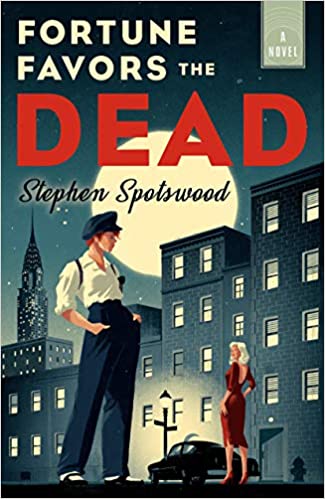
Fortune Favors the Dead by Stephen Spotswood

This classic noir-style mystery recast with humor, female leads and superb style is both satisfying and great fun.

Willowjean Parker (who goes by Will) ran away from home at 15 to join the circus. She’s working on the side, a security job at a construction site–the kind of job women get to do now that “the men who’d usually have taken them were overseas hoping for a shot at Hitler”–when she first meets Lillian Pentecost, the famous lady detective. A few clever deductions and a little knife-throwing skill later, and she finds herself in Ms. Pentecost’s employ, apprentice to the aging lady detective. Stephen Spotswood’s first novel, Fortune Favors the Dead, sparkles with the wit and personality of this bold, unconventional heroine. Will may revere her boss, but readers know that it’s the intrepid younger woman who stars.

In Will’s delightful first-person telling, peppered with vernacular asides, the two women initially clash in a violent midnight action sequence worthy of the kind of pulp novel Will so loves. She now relates this and other stories from a distance of some years, confiding in her readers the difficulties of choosing what to include. The major case she highlights is that of the Collins family: the patriarch dead of an apparently self-inflicted gunshot wound, matriarch bludgeoned with a crystal ball following a séance–in a locked room–leaving twins Randolph and Rebecca to tease and manipulate their hired detectives, Ms. Pentecost and Will. The twins’ godfather is now acting CEO of Collins Steelworks; his loyalties are unclear. And the medium and “spiritual advisor” whose crystal ball became a murder weapon is another wild card: she seems to have unusual power to intimidate Ms. Pentecost, which unnerves Will entirely.

This mystery plot has all the twists and surprises a fan of the genre could ask for, but it is Will’s distinctive, captivating voice and background–from difficult childhood to the circus to lady detective–that is Spotswood’s real triumph. Fortune Favors the Dead resets classic noir elements (smoky nightclubs, femmes fatale, unexplained midnight gunshots) in 1940s New York City as experienced by women who like women and men who like men, as Will discreetly frequents a slightly different kind of nightclub, and no one is precisely who they seem. Ms. Pentecost’s expertise and no-nonsense attitude are appealing and entertaining, but gutsy Will, with her snappy, slangy narrative style, ultimately wins readers’ hearts and carries the day.


This review originally ran in the October 2, 2020 issue of Shelf Awareness for the Book Trade. To subscribe, click here.


Rating: 8 pockets.

Dreadful Wind & Rain by Diane Gilliam

Disclosure: Diane teaches as recurring guest faculty in my MFA program, and I think she’s a lovely person.


I feel tentative in writing about poetry, but here goes. Dreadful Wind & Rain is beautiful, and more accessible than some, because (as Vince pointed out to me), this is a lyric narrative, which should help things to hold together. In addition to a narrative development from beginning to end, there are two threads of allusions to follow, although neither was familiar to me before I read this book.

Poems appear in four sections. The second and third are substantially longer than the beginning and ending ones. To paint in very broad strokes: “Girl” indeed features a girl, Leah, who is oppressed by family and by society, in favor of her younger, more beautiful sister, Rachel. “Anyone” features a man, and a marriage which doesn’t serve Leah any better than her first family did. (It finishes with a poem titled “First Divorce.”) In the third section, “Or Else,” Leah finds her way out of her marriage to the unsuitable, adulterous man. I think it is here that we begin to get mentions of poetry; Leah is finding her voice? Rachel is somewhat held to account for her role in the unhappiness and the ending of Leah’s marriage. Finally, the four poems in “After” feel like an actualization for Leah, a settling in.

The book’s title and epigraph refer to a traditional murder ballad in which an elder sister murders a younger sister, in part over a man. Many readers will recognize the sisters Leah and Rachel from the Bible, in which they are (among other things) rivals and both wives to Jacob. The threads of both these stories are woven through Dreadful Wind & Rain, although Gilliam does not strictly retell either story. This Leah and Rachel are recast in modern times, for one thing, in which Leah is able to own her own home and lock Rachel out of it in the end.

I had many favorite poems, and I would love to reproduce one for you here, but an entire poem feels like too much to reprint without permission. Some of these are prose poems, which somehow make me feel more comfortable. They are all lovely and layered, and made me slow down to read them. I’m never confident I’ve gotten everything out of a poem, but I got a lot out of these. It felt good to hear Diane’s voice again; I could hear them read in her voice and that was comforting. I would be glad to reread this slim, thoughtful book again (and get somebody more poetic than me to explain them better).

Highly recommended.


Rating: 8 stones.

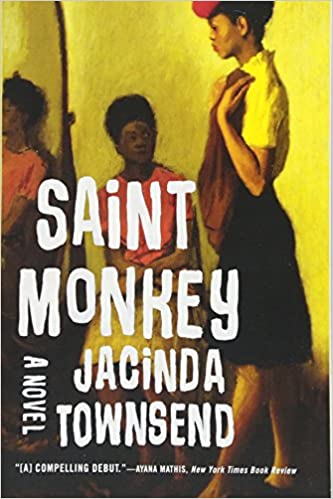
Saint Monkey by Jacinda Townsend

Disclosure: Jacinda is a friend and I love her.


Saint Monkey is a rich novel full of detail, color, sound, and texture. In the 1950s, two girls, Audrey and Caroline, grow up as neighbors and (mostly) friends on the “colored” side of the small community of Mt. Sterling, Kentucky. For all that happens to both of them as they grow into womanhood, it is the rocky relationship between them that’s the heart of this book. Audrey is bookish and quiet (Caroline, in her head, calls her Poindexter), while Caroline is a bit more out in the world; the latter dreams of making it to Hollywood, but it is passive Audrey who gets out. Each girl loses a parent in childhood, and halfway loses the other as well: Audrey’s father is killed fighting in Korea, her mother then descending into the bottle; Caroline’s father brutally murders her mother and is then incarcerated (although not for long). These tragedies do not serve to bring them together. Often halfheartedly, but with enormous talent, Audrey plays the piano, and it is this that gets her spotted by a talent scout and packed onto a train for New York City. There she plays in the house band at the Apollo and gets romanced by a man the reader recognizes at once is not worth it. Meanwhile, back home, Caroline samples the young men in town and chooses not to respond to Audrey’s letters.

The novel alternates between the first-person perspectives of the two girls, so that we get Audrey’s close observations of her beloved friend, her earnest hopes and fears, her tentativeness, then Caroline’s brash, prickly, brave face and the vulnerability underneath. Their voices are distinct, and Caroline’s humor and vernacular is one of the highlights of the book, for me. From both angles, this is a world fine-grained and full of sensory details – rich, lush, dense with them – such that I had to slow down to take it all in. Saint Monkey‘s pace is unhurried; we’re here to look around and think and feel, not rush through lives that are hard enough in the first place. There is plenty of hardship: poverty, various forms of abuse, and the persistent low hum of abuse that is being both Black and female.

Audrey loves her grandfather. She loves living in Harlem and playing at the Apollo, loves the scene and even the music, for all that she approached it lackadaisically at first; she loves the man who becomes her husband, although I don’t. But she loves Caroline most of all. Caroline in turn relates to everything and everyone with a simmering rage, including her childhood friend, Poindexter; but the preoccupation is mutual. For all that this book is wide-ranging and handles well so many subjects – segregation, local culture, settings, music, families, frustration, and Caroline’s exquisite voice – I think it’s most about that intersection between two women who can neither come together nor separate. It’s fairly rare that a book insists that I slow down the way this one did. (I think the last was Giovanni’s Room, which is referenced in this one, of course.) I look forward to reading more like this: vibrant voices and the true emotions of human relationships. Look out for Townsend’s second novel to come from Graywolf in 2022.


Rating: 8 cases of cosmetics.

*ten years later*

Ten years ago yesterday, I published my first post here.

Early in 2019, when I was on the road full-time in my van, I got a phone call from an old friend and we did some catching up. He was interested in the van travels, and said, “you know, if it were ten years ago, you’d have a blog to report on this whole trip.” Well, I’d missed the memo that blogs were no longer hip, and indeed did have a van-travel blog, as well as an alive-and-well book blog (that’s where you are now, for reference). Nobody had told me it wasn’t cool anymore. And yet here we still are, Brad.

This blog has brought me good things. I used a few of the reviews I’d written here to apply for my job at Shelf Awareness, which has been nothing short of life-changing. (I’ve written reviews for pay for a few other publications, as well, but the Shelf is my longest-standing employer, and I hold dear the relationships I’ve made there.) I’ve been privileged to interview famous authors and authors I greatly admire (frequently these are the same people), and I’ve been offered more review copies than I have time to accept. I’ve felt a part of something larger than myself, and my reading has taken turns I’m not at all sure it would have otherwise. I’ve kept track of every book I’ve read for ten years now, which is itself a feat.

I’ve also lived a life in these ten years. I’d been married a few years when the blog was born, and am now divorced. I was a newly minted librarian, and would later take different jobs in the library system, then move cross-country (away from my hometown for the first time) and leave the profession. I moved back to Texas, then took that van trip and earned a second master’s degree and started a new career, and a new life here in West Virginia.

My friend Liz said recently, “change never doesn’t come,” and I’ve been thinking about that. In another conversation with Liz, we talked about how difficult it is to judge something like, say, a book at two different readings. There are too many uncontrolled variables in the experiment that is life. The world changes (The Stand doesn’t hit the same in 2020 as it did in 2010); we change as people. I have been many versions of myself in the last ten years. Certainly, these are the best-documented years of my life, thanks to this blog (and Facebook), for better and for worse.

I’ve published 2,282 blog posts and reviewed 1,250 books, 111 movies, 59 plays, and a smattering of readings, television shows, and performances of various kinds. (I’ve also occasionally told personal stories or waxed on about bicycles, etc., and you’ve been very patient with me.) It’s overwhelming to think about. I am both proud and humbled that anyone reads this blog at all.

Thanks so much for being here. I guess we’ll just keep going and see if blogs survive another ten years. Books and reading, at least, I’m not the least bit concerned about. Cheers, y’all.

Maximum Shelf author interview: Anna North

Following Monday’s review of Outlawed, here’s Anna North: Choices People Make.


Anna North is a graduate of the Iowa Writers’ Workshop and author of two previous novels, American Pacifica and The Life and Death of Sophie Stark. She’s served as writer and editor at Jezebel, Buzzfeed, Salon and the New York Times and is now a senior reporter at Vox. She lives in Brooklyn. North’s third novel, Outlawed, will be published by Bloomsbury on January 26, 2021.

How much research do your books require?

photo: Jenny Zhang

My first book is a dystopia, so I mostly made a lot of stuff up. For Sophie Stark, I did a fair amount of research about directing and female directors and how people put movies together. For this one, I went to Wyoming for a week, to the Willow Creek Ranch at Hole in the Wall, a working ranch on the site where the real gang lived. We drove through the valley and out to Hole in the Wall, and I took a bunch of photos. There’s a little western history museum in Casey, Wyo., [the nearest town] that had a lot of funny stuff, like little mannequins dressed up in period costumes. There’s a Fiddleback Ranch in the book, which is inspired by the Fiddleback cattle brand.

I researched the history of the real Hole in the Wall Gang, real “outlaws” (a funny and loaded term) and the history of what is now called the American West, but obviously had not been that for millennia before Europeans came there. I read up on the Arapahoe people living in Wyoming, and other Indigenous nations in the area, on Black cowboys and Black Americans in what is now the American West and on the history of the Americas in the 19th century.

A book called Lieutenant Nun informed my thinking on Outlawed. It’s a memoir by a person who lived as a man, had a lot of adventures and fights and appeared to seduce women–sort of a swashbuckling adventure story–and then, at the end, is revealed to have been assigned female at birth, and enters a convent and becomes a nun. It’s from the 15th century. I love this book. It’s a window into the forever-long history of gender. For cis-normative American culture, there’s this idea that gender has been very fixed and it’s just now becoming fluid, but that’s just not true.

Why reproduction as the central issue?

When I had the germ of this idea, I was with a friend, visiting a Shaker dwelling. Part of their religion was not having children. I was interested in writing about a separatist group that would live off in the woods together. The story morphed and changed a lot. When I focused on Ada, I thought of making her mother a midwife. I know a fair number of midwives; it was just in my mind. Early bits of the book went through a bunch of drafts as I was trying to figure out, what’s the alternative history element? What’s the focus of this society? This group is set off from society; what’s set them off? What is that group like, what are its rules, its norms? The idea of a society that’s obsessed with reproduction and that ostracizes women who are barren came late in the process. There were a bunch of planets orbiting around that needed a unifying theme: reproducing, not reproducing, different kinds of families, different kinds of groups, different kinds of isolation and togetherness. Ultimately the framework that worked for that was an alternate history. I didn’t want this to be a one-to-one stand-in for America today. I wanted to think about the choices that people make, how they are constrained, what our society might look like if things were different.

Is this a feminist narrative that found its shape as a western, or a western that became a feminist tale?

Sort of both. The story only took off for me when I realized it was a western. I was thinking about the Shakers, writing about this group of people who live together, separate in this particular way, and I had them in New Hampshire, which is where I visited the Shaker dwelling. I’ve lived in New York for 10 years now, but I’d grown up in California, and I’m just not as good at writing about the East Coast as I am at writing about the West. As soon as I thought, I’m going to put these characters with some red rocks, it felt better.

I was reading Lieutenant Nun at the time. She didn’t live in North America–she was traveling around Central America, I believe–but it’s a colonial story of this “frontier” (obviously a loaded term). I was also reading a lot of Krazy Kat, set I think in Arizona–there’s a lot of red rocks, and sheriffs. It’s also gender-bending. It plays with sexuality, and you’re not sure what gender Krazy Kat is–he switches pronouns a lot; there’s a great essay in the New Yorker about this. Same-sex attractions are talked about fairly openly. I started thinking about the West as a space of, sometimes, freedom around gender and sexuality. The western states were some of the first states to give women, mostly white women, the right to vote. This could be a space of freedom–and obviously it’s also a space of colonization and genocide and unfreedom. There were interesting interplays there. But I guess the short answer is it just only became a book when it became a western. Then things started to fall into place.

What makes a captivating protagonist?

I’ve always been interested in heroes. Traditionally, the hero is a male concept. The Odyssey, the Iliad: the heroes are male. I’m interested in recasting that as a female hero. I don’t know if Ada is exactly a hero–in some ways the Kid is more the hero of the book. It’s complicated, whether the Kid is likable or unlikable, heroic or unheroic. And maybe in a way I want the Kid to be both. Throughout my writing, I try to put someone in difficult circumstances and watch them rise to that occasion. That’s a kind of heroism, I think.

We learn and grow with Ada–she’s so curious.

I wanted to get across her inquisitiveness and desire for knowledge. I wanted to think in the book about knowledge and science as these double-edged swords. Ada puts a lot of stock in knowledge and in science, like this is what’s going to convince people to not stigmatize other people, and obviously it doesn’t always. I wanted to talk about instances where science has been used to really horrible ends. I wanted to explore that tension with her. But I sympathize with her. I also like to read books and learn things, so that was fun for me.

Is there anything new you’re working on?

The pandemic has changed what I’m interested in working on next. In some ways it’s made me crave speculative fiction more again, because I don’t know what realism or reality is going to look like day to day. If I want to work on a long-term project, it has to be one that’s not grounded in this reality, because I literally don’t know what this reality is. We’ll see–it’s going to depend on what things look like when I can get back to my desk.


This interview originally ran on September 16, 2020 as a Shelf Awareness special issue. To subscribe, click here, and you’ll receive two issues per week of book reviews and other bookish fun.