Clara and Mr. Tiffany by Susan Vreeland

I was attracted by the idea of this book when it came out in January, and I’ve just now gotten around to it. I’m really enjoying reading books pre-publication for Shelf Awareness, but it’s also nice to sneak one in every once in a while that’s NOT a thriller/suspense/murder-mystery. For that matter, I have some classics to read for the Classics Challenge, and I’ve been talking about Don Quixote

But at any rate. Recently, on a whim, I picked up Clara and Mr. Tiffany, and it immediately grabbed me with its lovely writing, evocative of the artistic beauty the book revolves around. Clara, the narrator, works for a living in the 1890’s, and before the action of the book begins, has already had to choose between marriage (even… love?) and her passion for her work. Clara Driscoll, a real historical figure, was the artist behind much of the stained glass and the legendary lamps for which the Tiffany name is so famous. Vreeland has fictionalized her story for us here. Clara also has quite a bit in common with another historical figure I read about recently: Annie Londonderry took her extraordinary ride during the same years in which this book begins. It gave me a nice little thrill to recognize the historical setting, especially because the two female characters have so much in common. Reading these two books back-to-back allowed me to immerse myself even more in the times, and I’m tempted to head right into The Devil in the White City next. We’ll see.

I want to share a beautiful excerpt with you to illustrate the writing style.

…I carefully wrapped in a hand towel the one thing I had that no one could wrench from me – the kaleidoscope, his engagement gift to me. Bits of richly colored glass in a chamber served as his sweet acknowledgement that I’d had to give up my joyous work with just such glass in order to marry him. At the slightest turn of the maple-wood tube, the design collapsed with a tiny rattle of falling objects, and in a burst of an instant, nothing was the same.

Vreeland’s writing is quietly lovely and melodic; it expertly creates both a mood and a pacing to match the world in which Clara lives and works, and also evokes the colors, art, and beauty that involve her so deeply. Clara is an artist, first and foremost; she wants to design, to create, to replicate nature (she loves flowers, insects, the sea, leaves) and uplift the human spirit. As a woman at the turn of the century, though, she faces a number of challenges as a working woman, as a single woman, and as a craftswoman intent on earning a living, knowing she deserves one. She’s tormented by the frustrations of being unrecognized by Tiffany and by the world, as Tiffany (the man, and the company) receive accolades for her work. But she’s also tormented by guilt for what she thinks of as her narcissism – in that she desires credit at all.

Clara is a well-developed character. We see her progress, for example, as a feminist. She doesn’t set out with any high-minded ideals, but rather develops them as the world fails to treat her fairly. Clara heads up the Women’s Department at Tiffany, and her “girls” are described in varying detail; some of them become very real and sympathetic characters, and many of them serve to portray the experiences of immigrant workers in New York during this time. When their department comes under attack from the unionized male employees, Clara organizes the women to march into work together through a picket line – not striking, since the union doesn’t recognize them, but vilified all the same. This part of the story serves to underline that not all feminist demonstrators began as idealists or radicals, but rather that “regular” women were forced to stick up for themselves or die quietly. I appreciated that point.

Over the course of the book (spanning 1892-1908), she has a series of relationships: we meet her freshly widowed, she is courted by several men, and has a number of very close friendships. I found her heartfelt friendships, with men and with women, to be very touching. She struggles with love, with the idea that she’ll never find a satisfying romantic relationship with a man; with finding respect and fulfillment at work; with creating ideal art and beauty and being recognized for it. The story is of art, and of a time and a place, of love, and of women’s rights and a changing world. But mostly, it’s Clara’s story.

This was a beautiful book. The art and music bleed through the pages:

The sparrows of Irving Place were preening too, and gossiping pianissimo, and hopping about with an air of importance. Distant medleys of the city blended into a pleasant humming, punctuated at intervals by the Third Avenue elevated rumbling in a crescendo, grinding its brakes shrilly for the Eighteenth Street station, expelling its pfft of steam, then starting up again and fading away in a diminuendo.

I liked the historical aspects, too. As I like my hist-fict authors to do, Vreeland includes a note at the closing to explain where she took liberties. It does seem fairly clear that Clara Driscoll created many or nearly all of the leaded-glass lamps Tiffany got credit for; she did have two marriages; and a number of the figures in the novel did at least exist, with a few verifiable details. But much of the novel is purely fiction.

This was a really beautiful book, enjoyable to read, with a comforting, quiet rhythm and characters I cared about. It was a joy, and I recommend it.

Teaser Tuesdays: Mañana Forever? by Jorge G. Castaneda


Teaser Tuesdays is a weekly bookish meme, hosted by MizB of Should Be Reading. Anyone can play along! Just open your current read to a random page and share a few sentences. Be careful not to include spoilers!

Mañana Forever? Mexico and the Mexicans is a book about the Mexican national character, more or less. To tell you more fully what this book is about, I could refer you to the preface; but really, no. The preface was painful. As I’ve said before, I like my nonfiction narrative, friendly, readable, and interesting. I have high hopes for this book, as it got infinitely more accessible in the bulk of the book. But the preface, in which Castaneda (an academic, and a former foreign minister) explains the goal of his book and outlines it, is difficult. Full of references to academic and political theory, big words, and lengthy sentences, I’m sure it indicates his intellect, but it required some effort from me to wade through.

But! The book itself, it gets better. First of all, the first chapter is titled Why Mexicans are Lousy at Soccer and Don’t Like Skyscrapers. I see whimsy! There is hope!

Your teaser comes from page 120 (although I have not read this far yet):

As The New York Times put it in an article in 2009, “If Guinness World Records ever creates a category for the country most obsessed with being in the Guinness Book of World Records, Mexico will surely be in the running.” It goes on to list the strange records Mexico has sought to break: largest number of people dancing simultaneously to Michael Jackson’s Thriller; most mariachi musicians gathered in one place; the longest catwalk and St. Valentine’s Day kiss; the largest meatball, cheesecake, and, of course, the biggest taco and tamale.

I hope Castaneda can find an attractive writing style, because the subject matter interests me immensely. As a neighbor to Mexico all my life and a traveler there repeatedly, I have something between a strong interest and a mild obsession with the place, the language, the scenery, the culture, and the cuisine. I love Mexico. I got engaged there, and we would have been happy to have gotten married there, except that we chose to share our day with our friends and family without asking them to travel. I would like to know more about the country; I should really study its history as I’m woefully undereducated. But my greatest interest has got to be in that cultural identity or “national character” as Castaneda seems to want to talk about. I hope this book satisfies. I need it to read more like something I read out of interest, though, than something I’m being forced to read for class! I’ll let you know.

dueling stories

Just wanted to share with you this little anecdote; it made me laugh.

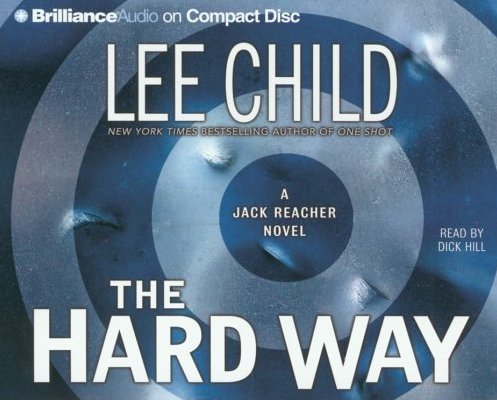
On Friday night, following a rough day that ended a rough week at work, I came home looking for some relaxation. I first checked with the Husband that we had no plans and then settled on the couch with a beer and a new, good book (The Devil in the White City). Just what I needed. Later we got ready to pick up some takeout dinner from one of our local Mexican restaurants, and I brought the book with me to ride with the Husband, because it had me really involved; but we got in my car and he started it up and Lee Child’s The Hard Way came through the speakers. Husband looked at my stricken expression and laughed at me and called it: “dueling stories!” I had to choose whether to put down the book or turn off the audio.

Care to guess?

And, how often does this happen to you?

Towards Zero by Agatha Christie (audio)

After my disappointment with going outside my known tastes, I have switched back to a tried-and-true. I’m sure somebody out there doesn’t like Agatha Christie, but they have yet to tell me to my face.

I had never heard of Towards Zero, and it involves neither Hercule Poirot nor Miss Marple. But it did have one of the most important Christie trademarks: a twisty-turny puzzle-plot that begs for the reader to try solving the crime before the end of the book. I, at least, am generally incorrect several times over because the plots of her books tend to double back on themselves so often.

This novel opens with a meeting of lawyerly minds (which you can see, incidentally, here), in which the title is explained. Most murder stories (and criminal trials), we are told, begin with the murder, when in fact the relevant story begins much, much earlier, and culminates in the murder as the result of all the previous action. Then we switch to the story at hand. In which…

Nevile Strange and his new wife, Kay, decide to visit Nevile’s mother-figure, Lady Tressilian, not at their usual time of year, but at the same time that Nevile’s first wife Audrey will be visiting. This, predictably, results in a number of uncomfortable, awkward, embarrassing moments and some conflict. (I found it interesting to observe the manners of the day which required referring to both women as “Mrs. Strange.”) Kay is rather bleatingly jealous and unsympathetic; Audrey is long-suffering and stoic but seems forgiving; Nevile is wont to refer to Audrey as “his wife” and ignore Kay, which of course irritates her still more. They make an interesting household, along with Audrey’s longtime admirer, Thomas Royde, just returned from overseas to pursue her; Lady Tressilian’s companion Mary Aldin; and visitor Ted Latimer, Kay’s childhood friend and admirer (parallel to Audrey’s Thomas, although rather opposite in temperament). So. All these folks in a classy country home together trying to be polite and play nice and dance around the love quadrangles, and then a murder takes place, and it’s one of those that could only have been committed by someone from within the household. Very Agatha Christie.

Love Suchet's Poirot.

Missing was Hercule Poirot’s biting wit, though. [Aside. Here is where I admit that I’ve never read Miss Marple! Only Hercule Poirot! Also, I grew up with Poirot on television as played by David Suchet and can’t hear or see him in any other way, for better or for worse. But didn’t he make a wonderful Poirot?] There wasn’t really much humor in this story, which is a Christie-staple in my mind, so that was odd; but it was very, very enjoyable without it, so no foul.

Into this closed household comes the vacationing Superintendent Battle and his nephew, the local Inspector Leach, to solve the crime. There are red herrings by the bucketful, and false leads, and I thought I knew whodunit SO many times, but Christie is a tricky one. The final scenes involve the Superintendent talking through the crime with the lot of them and eliciting a confession – also Christie trademarks. Finally, a little surprise romance which I did not entirely see coming topped off this charming, delightful, delicious little tale.

I love Agatha Christie. There’s a reason she’s hailed as a master (and Wikipedia claims she’s the all-time bestselling writer of books). I haven’t read anywhere near a majority of her works, but what I’ve read is always entertaining and clever and usually funny, too. Recommend.

Texas

Katie’s post last week really grabbed me. She wrote about her relationship with her home state of Texas: the love, the shame, the pride, what she does and doesn’t miss. I identified so strongly with her feelings that I wanted to share, too. I won’t try to top her very poetic tribute, but I will give a different perspective on my home environment than I did a few months ago.


I’ve lived in Houston, Texas all my life. I take pride and interest in being a somewhat unique creature: both a Southern, and a big-city girl. I have tried to leave a few times but never made the leap, and part of me still really wants to. (For one thing, I feel like we should probably all leave our hometowns at some point, in the interest of personal growth.) But Houston would be hard to top: I’d want another very big, very international city, along the lines of New York City, London, Athens, San Francisco, or Amsterdam, but each of these comes with a cost of living several times that of my hometown. Plus, the miserable, unbearable, humid Houston heat is what I’m acclimated to; colder winters than ours (which would be most of them) terrify me. And all of this times-two, because Husband is also a native Houstonian, who’s never left, and he’s even older and has deeper roots.

I didn’t come to this comfort with my home naturally or without some struggle, though. In high school all I could think of was getting out. (This is a typical symptom of being in high school, I think.) I was so sure that I wanted to leave Houston, and Texas. I shopped colleges all over the country. During this time I had an interesting experience: I was in Mexico with a group of kids from all over, and had asked to borrow something from a girl not from Texas that she didn’t have on hand. I said “thanks anyway,” to which she snapped, “you don’t have to be nasty about it. I just don’t have one.” I was shocked because I really meant… thanks anyway; thanks for checking; no worries. This tiny little moment opened my eyes to the idea that maybe there was something to this “Southern manners” concept. It was just a little thing, but in my 17-year-old mind it made an impression. For various reasons I ended up going to the University of Houston, and by the time I graduated I had no thoughts of leaving.

Several years later, when I got ready to go to grad school, I shopped schools, and places to live, again. This was, if anything, an even more enlightening process, probably because I was a few years older with a fuller sense of myself and what I wanted from the world. I had done some traveling all over the country, and had decided I definitely like a Southern pace and sensibility. The Pacific Northwest and New England are lovely places to visit, but I couldn’t imagine them ever feeling like home. Plus, the cold! I was all settled on North Carolina when, oops, I got engaged (not to mention changing my degree plan) and stayed in Houston, again.

I still get frustrated. It’s literally 100 degrees outside as often as not right now, and the humidity is often over 80%. You will absolutely sweat between the house and the car. On work days, I get up to ride my bicycle before the sun comes up, so I don’t have to do it in the evenings. As a cyclist, this city can be frustrating; urban sprawl, car culture, climate, and drivers’ inexperience with cyclists conspire to make it a deathtrap. And as a mountain biker, I’m thankful for the awesome trails all over this state, but also well aware of the superior options in many, many other locations. (We have a subscription to Bike magazine, which is a constant tease. On the other hand, we can plan vacations around their annual Trails issue…) And Katie was right-on when she referenced the religion-politics axis. For those who don’t know, Houston is a blue (Dem) city in a red (Rep) state, and my politics float left of blue. There are probably friendlier places for me, idealogically.

But being aware of shortcomings doesn’t mean you can’t still feel love. If I’ve had a complicated relationship with Houston, and Texas, over the years, is it possible that makes my love more complex and deeply felt? Because I love that we can ride bikes here year-round, and wear t-shirts on Christmas morning pretty regularly. I prefer to keep snow a novelty, thanks very much (hi Katie, definitely true here too!). I love it when the Husband’s mild southern accent sneaks out, and I guess the Drive-by Truckers are one of my favorite bands because they sing about “the duality of the Southern thang.” In other words, yes, we birthed the Bushes. Sorry, world. Some wrongs have been done in the South, but I’m not sure we have the world monopoly on racism, segregation, hate, or violence – or even ignorance. Let me borrow some more Truckers lyrics: “You know racism is a worldwide problem and has been since the beginning of recorded history, and it ain’t just white and black, either. But thanks to George Wallace, it’s always a little more convenient to play it with a Southern accent.”

Unlike Katie, I haven’t left yet, although I’d still like to. If and when I do, though, I may very well end up coming back. I can’t imagine anywhere else becoming truly home. If it does, it might have to be the Carolinas or Tennessee. Like Katie, I do say y’all, and I expect I always will. I don’t wear cowboy boots but I can appreciate them on my buddy Jimmy. I adore Mexican food, and I just don’t believe I could get it in Oregon the way I can here. It may not be perfect, but this is my home, and I’m proud of it.

Shelf Awareness: Enlightenment for Readers

It’s here, it’s here! Today marks the launch of a new e-publication,

Shelf Awareness: Enlightenment for Readers.

(This is where a few of my book reviews will be published.) I encourage you to go check out the inaugural issue, where you can always sign up to receive this twice-weekly newsletter if you like. Go ahead, take a look and enjoy the enlightenment.

book beginnings on Friday: The Hard Way by Lee Child

Thanks to Katy at A Few More Pages for hosting this meme. To participate, share the first line or two of the book you are currently reading and, if you feel so moved, let us know what your first impressions were based on that first line.

Welcome back to Jack Reacher’s hard-hitting, fast-paced, intelligent world of good-vs.-evil action. I’m psyched to step into this series again. My last audiobook was Agatha Christie’s Towards Zero which was wonderful, so I’m on a roll now. We begin:

Jack Reacher ordered espresso, double, no peel, no cube, foam cup, no china, and before it arrived at his table he saw a man’s life change forever. Not that the waiter was slow. Just that the move was slick.

Ah, Reacher. YOU’re the slick one.

What are you reading?

pets reading Brookner

In response to Thomas’s request for pictures of pets reading Brookner…

Ritchey and Hops are mesmerized

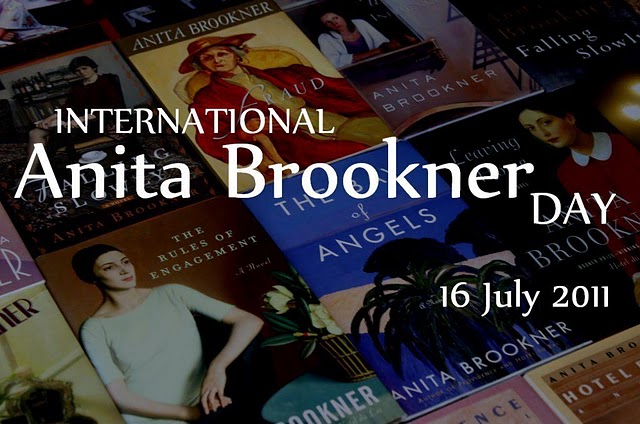
…and also in honor of International Anita Brookner Day, one month away today! Get ready, y’all!

the Guardian’s list: 100 greatest non-fiction books

More lists! Great fun! I found this list of the 100 greatest nonfiction-books according to the Guardian, thanks to Shelf Awareness, who had this to say in yesterday’s daily email newsletter:

Let the debate begin: The 100 greatest nonfiction books of all time were chosen by the Guardian’s book desk writers, who observed: “The list we’ve come up with rewards readability alongside originality, heaps praise on perfect prose and rounds it all off with a dash of cultural significance. It’s clearly a mug’s game to make any kind of claim for definitiveness but, whatever you make of our list and its (doubtless many) omissions and imperfections, there’s no question that it features a whole heap of truly great books.”

I was immediately interested, of course. Don’t we all love lists? The usual game is how-many-have-I-read, and I didn’t do all that well. It’s interesting to see what they chose, though, and to think about what I maybe *should* have read, or should read. I haven’t reproduced the entire list here – you can go read it at the above list, and you should! But I have reproduced some of the entries, recategorized. (Blurbs following titles are the Guardian’s, not mine.)

Books Already on my TBR shelf:
The Autobiography of Alice B Toklas by Gertrude Stein (1933)
Stein’s groundbreaking biography, written in the guise of an autobiography, of her lover
-has been on my list for years; actually just brought home a copy a few weeks ago
Bury My Heart at Wounded Knee by Dee Brown (1970)
A moving account of the treatment of Native Americans by the US government
-has always been on my shelf. still haven’t gotten around to it
Dispatches by Michael Herr (1977)
A vivid account of Herr’s experiences of the Vietnam war
-not on my shelf, but I’ve seen it on my parents’ shelves all my life
A Vindication of the Rights of Woman by Mary Wollstonecraft (1792)
Wollstonecraft argues that women should be afforded an education in order that they might contribute to society
The Souls of Black Folk by WEB DuBois (1903)
A series of essays makes the case for equality in the American south

Books I have read:
Silent Spring by Rachel Carson (1962)
This account of the effects of pesticides on the environment launched the environmental movement in the US
– read as a kid, maybe grade school
The Electric Kool-Aid Acid Test by Tom Wolfe (1968)
The man in the white suit follows Ken Kesey and his band of Merry Pranksters as they drive across the US in a haze of LSD
-one of my all-time favorites
The Diary of a Young Girl by Anne Frank (1947)
Published by her father after the war, this account of the family’s hidden life helped to shape the post-war narrative of the Holocaust
-of course. this is a staple. everyone has read this. right?

Read as part of my undergrad education in political science
Narrative of the Life of Frederick Douglass, an American Slave by Frederick Douglass (1845)
This vivid first person account was one of the first times the voice of the slave was heard in mainstream society
On Liberty by John Stuart Mill (1859)
Mill argues that “the only purpose for which power can be rightfully exercised over any member of a civilised community, against his will, is to prevent harm to others”
The Prince by Niccolò Machiavelli (1532)
Machiavelli injects realism into the study of power, arguing that rulers should be prepared to abandon virtue to defend stability
-my prof thought I’d be a JS Mill fan; but I reacted with far greater fascination (if not far greater sympathy) to Machiavelli. Go figure.
Leviathan by Thomas Hobbes (1651)
Hobbes makes the case for absolute power, to prevent life from being “nasty, brutish and short”
The Rights of Man by Thomas Paine (1791)
A hugely influential defence of the French revolution, which points out the illegitimacy of governments that do not defend the rights of citizens
Manufacturing Consent by Noam Chomsky and Edward Herman (1988)
Chomsky argues that corporate media present a distorted picture of the world, so as to maximise their profits

I also noted The Journalist and the Murderer by Janet Malcolm (1990): An examination of the moral dilemmas at the heart of the journalist’s trade. Not specifically on my TBR list, but Janet Malcolm in general is; maybe I should move this one up the list. My TBR reads from her, already, are The Silent Woman: Sylvia Plath and Ted Hughes and (I already have my copy of this one) Two Lives: Gertrude and Alice.

I also just wanted to note the range of dates covered by this list: pretty wide! From
The Art of War by Sun Tzu (c500 BC)
A study of warfare that stresses the importance of positioning and the ability to react to changing circumstances
to
Here Comes Everybody by Clay Shirky (2008)
A vibrant first history of the ongoing social media revolution

Something else I really appreciated about the Guardian’s list is that they have invited debate. No list will ever be final or uncontroversial, as we know! I’m not going to be so ambitious as to start my own list of 100 nonfiction books; I’m overwhelmed enough by my own list of 100, which is of course still incomplete. (Hey, my life is incomplete. As are all of ours.) But I’m sure it is and will be a fascinating debate. Are there any you think really shouldn’t be on this list? And I’m sure there are lots that we could think of that should be… Just looking back at my aforementioned list of 100 for nonfiction, I find quite a few. Here comes more list-making: I’ve reproduced them for you here, with a few words about each. I’m not sure they all belong on the all-time list, for various reasons…

The Immortal Life of Henrietta Lacks by Rebecca Skloot: I think this is an awfully important book. The only argument for is exclusion is its recent publication. I always wonder if a book’s importance will last the test of time. Although in this case I’m rather sure it will, I wouldn’t be against a sort of mandatory waiting period, if you follow.

My Stroke of Insight by Jill Bolte Taylor: This one might be extra important to me personally, because of the insight it allowed me into my own recovery from a brain injury. Maybe not so universally applicable; but still, I’d say, worth consideration.

Pretty Good for a Girl by Leslie Heywood: The author’s story of being a young female athlete and battling the problems common to that demographic, including eating & exercise disorders and an unhealthy relationship with an older coach. Another important book. Although it sounds like a niche subject, I think the issues are large ones: the struggles of being female in a male world.

Ten Points by Bill Strickland: Okay, this is a little more niche; it’s a cycling book. But really, it’s the author’s story about being a bike racer, struggling to win, as metaphor for trying to overcome the abuse he was victim to as a child, and trying to not repeat the cycle.

The Autobiography of Malcolm X as told to Alex Haley: How is this not one of the greatest and most important nonfiction books of all time? Really.

The Immortal Class: Bike Messengers and the Cult of Human Power by Travis Hugh Culley: Totally niche. Artistic little vignettes of life as a bike messenger in Chicago, enchanting to me as a (now former) bike messenger.

Nickel and Dimed: On (Not) Getting By in America by Barbara Ehrenreich: I recognize that the political leaning of this one may make it less universally appealing, but I thought there were some important points made. I fear its acceptance is harmed by the author’s obvious slant, which is a shame because I think her conclusions are true regardless of politics.

The Courage of Their Convictions: Sixteen Americans Who Fought Their Way to the Supreme Court by Peter Irons: I read this in college and found it instructive. It is, as the title says, 16 stories about regular people making history. A very readable way to learn judicial history.

Desert Solitaire by Edward Abbey: Nature, solitude, beauty. Poetic.

Travels with Charley by John Steinbeck: Steinbeck’s travels in Americana with his dog. Maybe a bit too concentrated on US culture for the Guardian’s list? But there are others on their list that focus on certain countries or cultures.

Dethroning the King by Julie Macintosh: Again, a recent publication, so there’s that. But wow – an international tale of business, culture, hubris, and beer. C’mon.

Fire Season by Philip Connors: 2011 publication. However! This might be my favorite book of 2011 so far, and it tells so many important and poignant stories of history, public policy, nature, beauty, solitude, relationships… and does it so beautifully. I’m still raving about this book.

Okay, well. I don’t have any major arguments with the Guardian’s list, but I do submit Malcolm X’s Autobiography, and really Henrietta Lacks as well. What do YOU think they left off?

did not finish: The Rocky Road to Romance by Janet Evanovich (audio)

To be fair, I barely even started this audiobook. I was trying to expand my horizons a little bit. I’ve never read anything by Janet Evanovich! –shocking, to many readers of genre pop fiction, as she’s one of the bestselling romance/mystery crossover authors out there. She’s also one of the big names here in my little library. But then again, not so shocking when you consider I’m not a reader of romance, really. I am a huge fan of mystery novels, but hers are known to be cozy, funny, romantic/sexy mysteries, which isn’t my style. But, so. I wanted to broaden my reading world and thought I’d pick up one of hers, just to know what I’m missing.

I’ll give JE the benefit of the doubt and assume I picked the wrong one. To be fair, this is a romance – not mystery – title, and not one of her more popular, just judging from circular numbers in my library.

I didn’t even make it through one cd. What I did get was the beginning of the sparks flying between Daisy – cute, hard-working, quirky – and Steve, boss at one of her several jobs and obligatorily hunky, mysterious, and distant. The dialog and general writing was just so stilted, and the characters so pat, that I couldn’t take it. I was eye-rolling so hard I couldn’t watch the road, which was a hazard, so I hit eject. The narrator, C.J. Critt, didn’t help matters any, but I don’t think I should blame her necessarily; she was playing along with the book.

I’m being completely honest about the fact that I couldn’t stand this audiobook. But note the qualifications: not my genre or my style; and not Evanovich’s star character (that would be Stephanie Plum, of the numbered series starting with One for the Money).

I think I’m still determined to give JE a try, but will aim for a Stephanie Plum mystery next time for sure. (Thanks to my mother, with whom I mostly share reading tastes, and who enjoyed One for the Money although not outrageously much.) This one made me grit my teeth.