book beginnings on Friday: Gone with the Wind by Margaret Mitchell

Thanks to Katy at A Few More Pages for hosting this meme. To participate, share the first line or two of the book you are currently reading and, if you feel so moved, let us know what your first impressions were based on that first line.

I know, I know. But I’ve never read it! I’m in good company, too, because I’m reading this one with The Heroine’s Bookshelf‘s readalong. It’s not too late to join in! (Okay, you might be a bit behind, because the discussion of the first 7 chapters is Monday. It is possible.) I’m very excited.

Beginning:

Scarlett O’Hara was not beautiful, but men seldom realized it when caught by her charm as the Tarleton twins were. In her face were too sharply blended the delicate features of her mother, a Coast aristocrat of French descent, and the heavy ones of her florid Irish father.

There you have it; we’ve met our lady. Have you read this book? Care to join us?

fitting it all in

This is a lovely problem to have, in the scheme of things, I think. I have too many reading materials! Here am I with a pen & paper, trying to plan & schedule how I will get all of these read in the time allotted. Sigh. Here’s what I’m up to these days…

Don Quixote, by Cervantes, trans. J.M. Cohen

I’m pleased with myself for getting into this chunky classic, and a bit surprised at what easy reading I’m finding it. Quite entertaining, in fact. But unfortunately, due to other commitments (ahem, a number of galleys and 1 scheduled readalong) I think it will have to be put down for a little while! Luckily, it reads as a series of short adventures and therefore I think it will tolerate being put down and picked up pretty well.

The Female Quixote, by Charlotte Lennox

To follow on the heels of Don Quixote, hopefully quickly. Don’t know what I’m getting into but I’ve been excited about the idea of this companion-read for quite a while.

Gone with the Wind by Margaret Mitchell

The Great Gone With the Wind Readalong is being hosted by The Heroine’s Bookshelf‘s blog. I have been meaning to read this book for the last several years (and funny that I made it that far in life without putting it on the list any earlier). I tried to resist the temptation of this readalong, but I couldn’t do it. I like Blakemore’s approach to the rest of the books in The Heroine’s Bookshelf, that I have read, and I like the idea of having companions. So here we go, kids. This is when my reading plate begins to look perhaps a bit overfull, because…

I have some galleys to review, too.

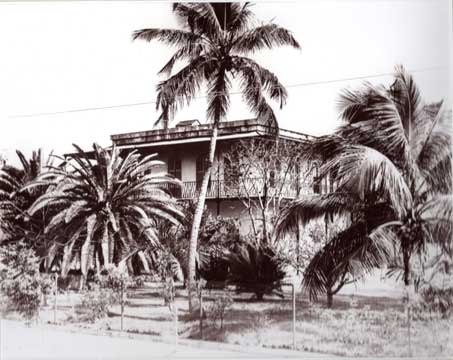
Hemingway’s Boat: Everything He Loved in Life, and Lost, 1934-1961, by Paul Hendrickson

If you’ve been reading my blog for any time at all you’re probably aware that I adore Hemingway’s writing and am fascinated by his life. I’m so excited about this one!

On Bicycles: 50 Ways the New Bike Culture Can Change Your Life, by Amy Walker (Editor)

Another based on my personal affinity, this time for bicycles. I don’t know much about this book but hope to find it wonderful.

The Barbarian Nurseries, by Héctor Tobar

A novel of multicultural Los Angeles and hidden family histories.

Into the Silence: The Great War, Mallory, and the Conquest of Everest, by Wade Davis

The product description claims, “Beautifully written and rich with detail, Into the Silence is a classic account of exploration and mountaineering, and a timeless portrait of a few iconic men.” That was enough to get me interested.

Belzoni: The Giant Archaeologists Love to Hate, by Ivor Noël Hume

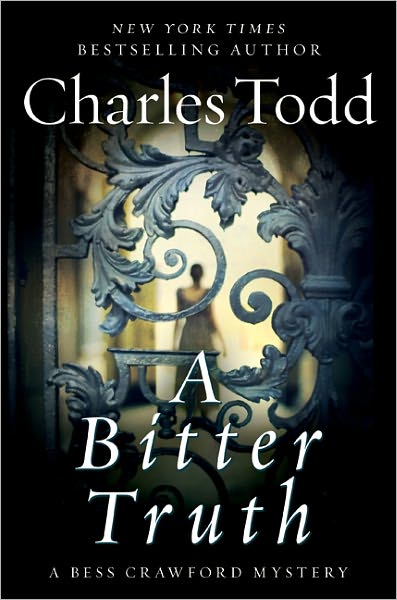
A Bitter Truth: A Bess Crawford Mystery, by Charles Todd

Dancing with the Queen, Marching with King: The Memoirs of Alexander “Sam” Aldrich, by Sam Aldrich

Shambles, by Debra Monroe

On the Outskirts of Normal, by Debra Monroe

Defensive Wounds: A Novel of Suspense, by Lisa Black

…and I’m also trying to reread Othello and The Taming of the Shrew before I go see both plays in the next week and a half.

Whew! That should keep me busy! What are you reading lately? Any of these excite you?

Who Was Changed and Who Was Dead by Barbara Comyns

Thank you so much to Simon from Stuck in a Book for this recommendation. Your future recommendations will be heeded!

Who Was Changed and Who Was Dead is an odd book, a short book, a unique book, and a very enjoyable way to spend an hour or two of your time. The setting is Warwickshire, “about seventy years ago” – published in 1954, so call it the 1880’s. We are mostly concerned with the Willoweed family. The grandmother is rather hateful and gluttonous and deaf; her son, Ebin, is cowed and unsympathetic as well. He has three children who are not in school, but who drift through the Willoweed estate trying to avoid unpleasantness. The town at large plays a role, as well as the Willoweeds’ domestic servants.

The book opens with a flood that disrupts normal life – “the maids pinned their skirts up high and splashed about in the water trying to prepare breakfast.” There are deaths, and then there are more deaths, and then it becomes clear that a plague of sorts has descended upon this sleepy town, which gives Grandmother Willoweed great pleasure. These deaths are treated less as tragedies than as facts of life, no more or less important than the deaths of the hens in the flood at the beginning of the book.

I haven’t given you much of a plot synopsis here, but that’s because the plot isn’t really the point. Things happen to the various characters, rather than them initiating action. But the unique thing about Comyns’ writing is that this book is not necessarily about Things Happening To People, as is usually the case in books. Rather, every event, large and small, and every observation, is treated with equal weight. The descriptions are brief and striking and evocative. The tone is really something different and special; I appreciate this writer’s ability to bring real interest and consideration to items and events that are mundane, or in other cases, horrifying, but in a democratic fashion.

An odd but fascinating book, short and easy to read: I started it in the airport in San Diego and was finished less than halfway into the flight home to Houston. I recommend it, and will be seeking more Comyns. Thanks Simon!

Teaser Tuesdays: The Scroll by Grant R. Jeffrey

Teaser Tuesdays is a weekly bookish meme, hosted by MizB of Should Be Reading. Anyone can play along! Just open your current read to a random page and share a few sentences. Be careful not to include spoilers!

Your teaser today comes from page 102.

Amber had always been an early riser. It was a family trait and one nurtured by many seasons spent digging in very hot climes. The best digging was done before the sun had time to scorch the cool from the day.

So Amber is clearly an archeologist, as is our protagonist, David. This one is shaping up interestingly: it’s a thriller involving archeological digs in the Middle East with biblical implications as well as current political ones.

This quotation comes from an uncorrected advance proof and is subject to change.

One Day I Will Write About This Place by Binyavanga Wainaina

Binyavanga Wainaina’s memoir, with details of various African backgrounds and his sensitive artist’s perspective, paints a poignant and lively picture.

Wainaina’s memoir of his life in Africa begins with his childhood in Kenya, follows him through university in South Africa, to a family reunion in Uganda, and on to his travels throughout Kenya, to land him finally in New York State as a writer and professor. His tale, however, is far from simply a recounting of one man’s life. At its heart, the book is the story of an artist, his struggles as a child to adjust to his view of the world and his discovery of writing as an outlet. His perspective as a child verges on the fantastical as he confuses colors with shapes and objects with sounds. The lyrical, imaginative writing throughout the book reflects this unusual vision. Wainaina paints pictures with words; his writing is reflective and playful and worth lingering over. Music, too, plays a role–almost as another character–as he describes his intense reactions to the music of Kenya, of Africa and of the world.

Another worthwhile aspect of this book is its intelligent and informed study of the politics of the African continent and the diversity of Kenyan perceptions. Wainaina tells of the battle between tribalism and a united Kenya, and the richness of linguistic and cultural perspectives there. Politics, however, is never the main subject; it is merely a background to his personal story. The Africa evoked is captivating and will be exotic and new to many readers.

Wainaina’s memoir is by turns funny, sad, hopeful and occasionally cynical, but always engaging. Fanciful abstractions of his environment and instructive tales of African politics combine to give us a fascinating vision of his world.


This review originally ran in the July 22, 2011 issue of Shelf Awareness for Readers. To subscribe, click here, and you’ll receive two issues per week of book reviews and other bookish fun!

how to build a home library

Katie over at cakes, tea and dreams published a lovely post the other day called a library of friends. She won me over by opening with a lovely quotation from Anne’s House of Dreams (one of the sequels to Anne of Green Gables, for those not in the know), which I recognized immediately – what fun. (Go read it over there.) And then she tells us about her home library, and asks, “How do you curate your library?”

Well. Unlike Katie, whose very ordered methods and selectivity I admire, I don’t have it all thought out quite that well. My home library consists of a few broad categories.

  • Classics and academic works from high school, college, and grad school. I have very few, if any, what you might call “textbooks” – they tend to be classic lit or philosophy. I confess that relatively few of these have been or will be reread, but I guess I like to have them there for reference or to remind me of what I’m supposed to know. Of course, a handful of these are among my favorite books and have enjoyed several rereads: the Iliad, the Odyssey, the Oresteia (all from high school). Others I’ve been pleased to reread, like Vanished Arizona by Martha Summerhayes, and The Courage of Their Convictions by Peter Irons (from college).
  • Classics, more generally. Shakespeare, Nabokov, Fitzgerald, Hemingway (of course), Austen, the Brontes, and Toni Morrison are all well represented, along with a number of singles. These aren’t going anywhere.

my Hemingway library

  • Genre fiction. I see no point in owning this sort of thing, really! I have very, very, very rarely purchased a mass market paperback copy of a thriller or murder mystery novel. These, in my opinion, should flow freely through the world, just as they do in the hospital where I work – share and share alike. Yes, human nature sometimes gets in the way of this. But mostly, I am happy with my mother handing me a book, or picking one up at work, and then leaving it somewhere when I finish – especially when traveling. My method of lightening the load is to carry many books at the beginning of a trip, and then leave them behind in hotels, train stations, or on trains, etc., as we go. For this reason I obviously wouldn’t take with me a book I meant to keep! But for genre fiction, I find this a good policy. I have tended to have trouble getting rid of these books (when not traveling), but working at a library has helped. I just donate them to my work library. Still have a number of genre paperbacks on my shelves, though; I think my problem is inertia. If a book has been on my shelves for long enough, it is unlikely to leave without good reason.
  • Special interest: I have books about beer and books about bikes, and just a few books about dogs. These are few, but important, and treasured.
  • ARCs? (Advanced Reader Copies – for review.) Not so much. I don’t tend to get attached to these unless they’re especially good, and generally they would have to be something other than genre fiction, too. I’m more likely to keep nonfiction/biography, because of the chance of referring back to it.
  • Good-looking older hardback books, either in beautifully good condition, or battered into an especially charming state. I have a weakness for these.
  • TBR!!! (to be read. you knew that, right?) As I’ve written before, I have a whole bookshelf of TBR books. :-/ These come from all kinds of sources. Some of them are given to me (physically) by friends (hi Fil, Amy) or my mother; many are given to me (as ideas) by friends, other book bloggers, bestseller lists, and (sigh) perhaps my greatest weakness, the book buying I do for the work-library. Also there’s my ever-expanding TBR list.

So I guess my conclusion is, I don’t have a terribly well-ordered method of deciding what to add to the library. Hypothetically, I like Katie’s plan of considering each book carefully as one that I will want to own, reread, refer to, and/or loan out. It should meet some sort of standard for inclusion on my illustrious shelves. In reality, however, I have a touch of the hoarder in me. ANY book is liable to end up on the shelf, at least until I find a good home for it. I recently purged: one book that had broken in three pieces and was only genre fiction in the first place, went into paper recycling, and I think I took another 8 or so to work to donate. How’s that for a purge? Single digits. Sigh. Of course, you could help me out by commenting on what to get rid of!

Katie makes an excellent point about bookstores and our need to support them. I don’t do very well at this. I agree with the principle, but don’t seem to get out there much. Mostly, this is because I work at a library, and have my city’s public library system at my fingertips (online). I just don’t find much reason to make new purchases, these days. When I do, I’m loyal to my local Half Price Books. Hey, it’s still a brick-and-mortar!

I think it might be a good project to try and have a more carefully curated home library. I love the idea of everything on my shelves being something I stand behind, found memorable, and could recommend. (Or, is still waiting TBR. This is why I like having a separate bookshelf. “See, these I know are good. These I’m not sure about yet.”) I have a ways to go. But this is a good project! And it would benefit my work-library, too.

How about you? How do you curate?

the boys win.

Thank you to Thomas of My Porch for recognizing my darlings in the Best Picture of a Pet Reading Brookner contest! You can see a cavalcade (great word) of pets reading Brookner here. Go check out the whole IABD blog for a bunch of reviews and other Brookner miscellany. Like cute pictures. Thanks Thomas!

Ritchey and Hops are mesmerized


My review of Brookner’s Hotel du Lac is here.

Shut Your Eyes Tight by John Verdon

A breathtaking thriller in which retired NYPD Detective Dave Gurney can’t resist involving himself in the grisly case of a decapitated bride even as the case threatens his personal life.

Retired NYPD Detective Dave Gurney lives in the Catskills with his wife, Madeleine, trying to adjust to their new life and learn to appreciate nature. Madeleine is content, but Gurney can’t seem to halt his obsession with criminal investigations, so when a former colleague offers him the sensational case of a decapitated bride connected to a bevy of juvenile sex offenders and an international crime family, he can’t resist. The seemingly impossible and horrifying details fascinate him. Gurney ends up endangering himself and threatening his relationship with Madeleine, who resents the gruesome menace he brings home.

The case of the murdered bride expands and contorts to involve sexual psychology and sexual abuse, and is complicated by police forces so bent on thwarting one another that they seem willing to risk the case itself. The puzzle of the murder mystery, in which we participate alongside Gurney, is suspenseful and challenging, and as a psychological thriller keeps the reader breathlessly turning the pages.

Gurney is a likable character, tortured by his own past, and conflicted in his view of himself as a talented detective but an imperfect husband and father. He worries that he may be uncomfortably similar to the sociopaths he hunts: incapable of compassion and caring, more concerned with the chase than with his family. The reader sympathizes, however, as he grows into a fully developed man, battling an evil that increases as the story progresses, until the suspense and fear come together in a final heart-stopping crescendo.


This review originally ran in the July 22, 2011 issue of Shelf Awareness for Readers. To subscribe, click here, and you’ll receive two issues per week of book reviews and other bookish fun!

quick miscellany

Link:

I discovered a tumblr the other day that I fell in love with. Check it out: Awesome People Reading. My favorites include Sid Vicious, Kurt Cobain, and Steve McQueen just for their incongruity; and of course I take all the Hemingway I can get (there are several of him).

Fun news item:

I just want to say I’m excited about the intersection of two things I love: the best of beer, and the best of books. The Theakstons Old Peculier Crime Novel of the Year Award has just been awarded to Lee Child’s 61 Hours. I love this beer and I love this book (and author). Great fun. Perhaps I should begin taking more book advice from beer companies! I didn’t know Theakstons Old Peculier gave a book award. Quick quiz item: which mystery series features a likeable detective’s sidekick who drinks Old Peculier?

book beginnings on Friday: Who Was Changed and Who Was Dead by Barbara Comyns

Thanks to Katy at A Few More Pages for hosting this meme. To participate, share the first line or two of the book you are currently reading and, if you feel so moved, let us know what your first impressions were based on that first line.

Today’s book beginning comes from an odd and engrossing little British novel by Barbara Comyns, recommended to me by Simon at Stuck in a Book, called Who Was Changed and Who Was Dead. It’s very enjoyable and unique.

And so we begin.

The ducks swam through the drawing-room windows. The weight of the water had forced the windows open; so the ducks swam in. Round the room they sailed quacking their approval; then they sailed out again to explore the wonderful new world that had come in the night. Old Ives stood on the verandah steps beating his red bucket with a stick while he called to them, but today they ignored him and floated away white and shining towards the tennis court.

This matter-of-fact tone regarding some decidedly strange events is one of the hallmarks of the book. Review is to come, but for now let me say, I like.