two-wheeled thoughts: Robert Penn

two-wheeled thoughts

You make a covenant with a bike like this – to ride it, and to look after it for as long as it bears you away to a refuge far from the present.

Robert Penn, It’s All About the Bike

Mmm. I’m feeling this one. Last summer I replaced all three of my mountain bikes with 29ers (learn more here), including my Best Bike to Date, a titanium hardtail. And then I hurt my thumb, and then I hurt my knee, and then I had all that time off the bike and then knee surgery, and I am feeling badly about neglecting ALL the bikes. I hope to be back on top of said covenant soon. Thanks again Pops for the inspiring quotations!

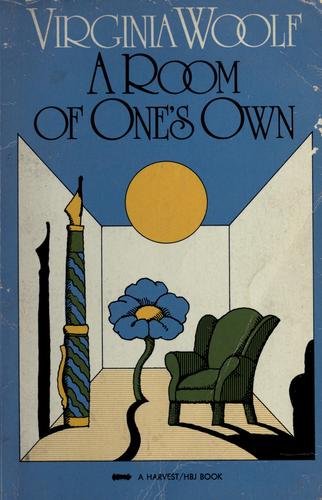
Teaser Tuesdays: A Room of One’s Own by Virginia Woolf

Teaser Tuesdays is a weekly bookish meme, hosted by MizB of Should Be Reading. Anyone can play along! Just open your current read to a random page and share a few sentences. Be careful not to include spoilers!

From Woolf’s famous essay on women and fiction, how’s this for a turn of phrase:

…it is doubtful whether poetry can come out of an incubator. The Fascist poem, one may fear, will be a horrid little abortion such as one sees in a glass jar in the museum of some county town.

Eye-catching and evocative! Poetry as abortion! Might be fitting imagery for the odd concept of “fascist poetry,” though. Woolf has some interesting points, I will say that for her.

What are you reading today?

The House on Mango Street by Sandra Cisneros

Another gift from my buddy Fil, and another hit! Fil says he hasn’t read this one yet, himself, and I say to him and to all of you: hurry up and read this slim but powerful book! My 25th anniversary edition includes an introduction entitled “A House of My Own” by Cisneros, which was gold; do find an edition with this intro, because it’s wonderful. I would say it was my favorite part of the book but I can’t relegate any other part to less-than-favorite.

So first, the introduction. (A bell rang for me as I opened this book, as I was reading A Room of One’s Own simultaneously.) Cisneros describes a former self, the woman pictured on the opening page, a young woman living in her own apartment in Chicago, after graduate school, working to become a writer. It’s a really lovely essay all on its own, describing some of the challenges that faced a young Latina writer and looking at that former self through her older, wiser eyes. It was beautiful. I cried a little, not because anything was too terribly sad (okay, there was that one bit), but because it was so well-done. And it served as a beautiful introduction, as it introduces the young woman who composed the short stories, the episodes, the anecdotes that make up The House on Mango Street, not yet knowing that they would become a book. Rather, she was working on her MFA thesis in poetry, so those fiction fragments (or “little-little stories”) were extracurricular, failed to fit into a known body of work. But oh, the book that they became…

The House on Mango Street is a collection of short stories, and I mean short – the longest run to 3-4 pages, most 1-2, some just a paragraph long. As a whole, they follow Esperanza (the narrator) through the first year of life at the first home her parents own, on Mango Street. It is not the home they aspired to and Esperanza doesn’t like it very much. She has a lot in common with Cisneros – the city, the time, and the ethnic background; but I know from “A House of My Own” that Esperanza is really a combination of Cisneros’s students, people she’s known and people she’s made up, and herself. There is a coming-of-age element, as well as a theme of home – what makes a home, what a person need from her home.

The stories are entrancing. The style is great, is dynamic; it’s both poetic and conversational. It’s not formal; sometimes a sentence runs on until it loses track of itself, but I’ve come away with the strong impression that every word was carefully chosen and exactly in its place. The economy of language reminded me of Hemingway, although I don’t suppose Cisneros gets compared to him very often, and I don’t mean to say that they’re very similar. Rather, they both seem to have very carefully created what looks like simple language but turns out to be poetry. (There is of course always the danger that I see Hemingway everywhere because I’m crazy about his work.)

The subject matter is mostly mundane and ordinary (a young girl’s life and disillusions, her disappointment that she has to wear old shoes with a new dress to a party) but also serious, weighty, and sad (because such things happen to a young girl, too). I only knew Sandra Cisernos by reputation before I picked up this book; that will have to change, because she’s amazing. It’s only about 100 pages long (including the introduction), a super-easy read, and so powerful. No excuse! Go get yourself a copy.

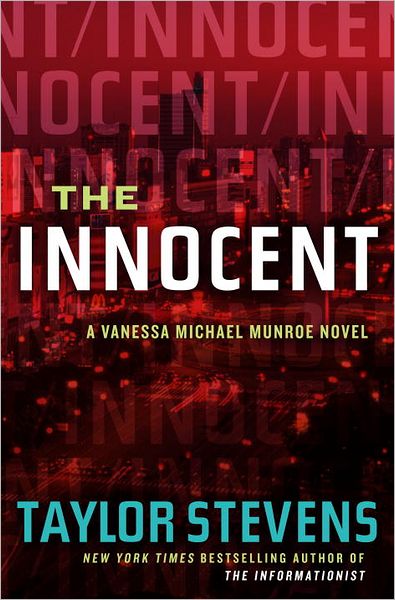
The Innocent by Taylor Stevens

A whirlwind thriller about a seriously ass-kicking female renegade’s battle against a hair-raising cult.


In this sequel to The Informationist, Vanessa Michael Munroe is back. Taylor Stevens‘s heroine has been compared to Jack Reacher, Jason Bourne and Lisbeth Sanders, and evokes each–but also possesses certain qualities all her own.

The traumatized Munroe, facing her horrific past every time she tries to sleep, vacillates between insomnia and drug-induced oblivion. Her private battles are interrupted, though, when her old friend Logan shows up begging for her help. Eight years ago, when she was five, Hannah was kidnapped by members of a religious cult called The Chosen. As a former member, Logan know first-hand how desperate her situation must be–and though his gruesome childhood is not quite like Munroe’s, he has an understanding of her damaged soul. Now, eight years after her capture, Logan finally knows Hannah’s location, and he needs the help of Munroe to free her. But to get Hannah out of The Chosen, Munroe will have to go in.

The Innocent is tight and fast-paced, an adrenaline rush of a novel with vibrant settings ranging from Morocco to Buenos Aires and characters who jump off the page. The descriptions of The Chosen’s abuses of its own members are heartwrenching; Stevens’s own experience in such a world makes this semiautobiographical novel’s emotional impact even stronger. But the story’s greatest strength may be Munroe herself: gender-bending, starkly violent, as lethal with her bare hands as she is with a knife, she steals the reader’s heart, tortured psyche and all.


This review originally ran in the January 10, 2012 issue of Shelf Awareness for Readers. To subscribe, click here, and you’ll receive two issues per week of book reviews and other bookish fun!

Spokesongs: Bicycle Adventures on Three Continents by Willie Weir

This slim (140-page) volume is less traditional travel memoir and more a series of one-to-two page reports on individual experiences, or meditations on what it means to be a cycle-tourist in underdeveloped areas. The eponymous three “continents” of India, South Africa and the Balkans make up only a small portion of Weir’s experience as a cyclist and as a cycle-tourist (that is, someone traveling by bicycle). He also has experience as a bicycle courier in Seattle, something which will always increase credibility in my eyes. (I did the same in Houston for a few years, in an earlier life.) He calls his brief vignettes “verbal songs of the road,” which I think is a nice turn of phrase.

Each episode or anecdote tells a very simple, brief story; as a whole they don’t make up much of a sum narrative, which is not a criticism. This could be a coffee-table book, to be picked up time and again at random. It’s very easy, an effortless glimpse into one man’s adventures, with a touch of a love story coming in at the end. The writing isn’t sophisticated (nor even consistently correct, grammatically) but it’s sweet, and it’s real. While there are certainly far more complete, involved stories of bicycle adventures of various kinds, this might be the simplest to enjoy and one of the briefest. It was a gift from our buddy Fil to Husband, the Not-Reader, and I think it actually has a chance of being read by him, at least in parts, which is saying something. I recommend it for what it is: a brief look at cycle-touring in the developing world, or a collection of brief, captivating experiences.

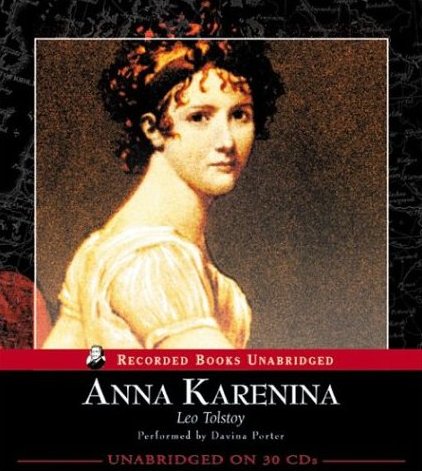
book beginnings on Friday: Anna Karenina by Leo Tolstoy

Thanks to Katy at A Few More Pages for hosting this meme. To participate, share the first line or two of the book you are currently reading and, if you feel so moved, let us know what your first impressions were based on that first line.

I have begun listening to Anna Karenina on audio! Am I crazy? It’s almost 40 hours long! But I enjoy it so far.

I wanted to share the beginning with you. It’s a famous line, and one I recognized, but I didn’t know where from.

Happy families are all alike; every unhappy family is unhappy in its own way.

Lovely, no?

It is likely to be a while before you see a review of this one. 🙂 With my usual listening time, I figure I can finish this within a month. Stay tuned! Anybody out there have anything wonderful (or not) to say about Tolstoy? This is my first experience with him.

The Moon is Down by John Steinbeck (audio)

I don’t remember where I got the recommendation for Steinbeck’s The Moon is Down. As far as I can tell, it’s not one of his better-known works; I know and love his Of Mice and Men, Cannery Row, Travels with Charley, saw the movie East of Eden though I haven’t read it (yet!), also have The Grapes of Wrath on my radar. But this one I hadn’t heard much of. It was recommended to me (by someone) and I found the audio, and it’s just a short little thing on three cds, so it was easy to make time for. I do love Steinbeck’s style and subject matter, and this one is worthy of his high reputation.

Published in 1942, it handles the occupation of a small town in northern Europe by an army that has a lot in common with Hitler’s Germany, though it’s never named. There are references to “The Leader” and a war twenty years past that bears a resemblance to WWI.

This small coastal town is conquered with very little fanfare; 6 of the town’s 12 soldiers are killed, and it takes the people and the mayor a little while to realize what’s happened. The town is a center for coal production, which makes it an important possession, and the occupying force lodges its officers in the mayor’s house while managing coal production. Colonel Lancer has seen war before, and is weary of the tragic consequences of the orders he must carry out; he’d rather rule in peace and order, but the occupation quickly turns ugly. The local people learn to resist, and the occupiers live in fear. One memorable line occurs when one of the occupying officers – lonely for his homeland, friendly faces, and female attentions – wails at the senselessness and unpleasantness of their situation. “Flies conquer the flypaper!” he bitterly says of the occupation.

It’s been a while since I’ve read any Steinbeck, but I recognized his style. The prose is simple, yet moving. This is both a straightforward story of one fictional town’s experience, and an allegory and statement about the futility of war. I’m sure this short novel would make for extended discussion in an educational setting, and I wish I had a professor to help me pick it apart! But as a quick read for entertainment’s sake, too, it’s satisfying, if not happy.

two-wheeled thoughts: Antonio Columbo

two-wheeled thoughts

You cannot build good bicycles with unhappy workers.

– Antonio Columbo, scion of the famous Columbus steel tubing dynasty & owner of Cinelli Bicyles.

Thanks (again) to Pops for contributing today’s two-wheeled thoughts. I think there’s more to this one than bicycles. A philosophy for workers’ rights or even LIFE here, no?

Teaser Tuesdays: The House on Mango Street by Sandra Cisneros

Teaser Tuesdays is a weekly bookish meme, hosted by MizB of Should Be Reading. Anyone can play along! Just open your current read to a random page and share a few sentences. Be careful not to include spoilers!


I had a difficult time choosing a teaser from this amazing book for you. My review is yet to come, but in a nutshell – read it.

From “Minerva Writes Poems,” here’s your teaser:

Minerva cries because her luck is unlucky. Every night and every day. And prays. But when the kids are asleep after she’s fed them their pancake dinner, she writes poems on little pieces of paper that she folds over and over and holds in her hands a long time, little pieces of paper that smell like a dime.

Speaking of poems… prose poetry, no?

Bad Luck and Trouble by Lee Child

I began reading Lee Child in late 2010, with Echo Burning, and loved him. In 2011, I ran through almost the entire Jack Reacher series. I’m glad I saved this one for 2012, because it’s the last one I hadn’t read yet (not the last in the series, you realize, but the last that I got to). It was a treat, and now I’m left waiting for him to write more books. I’m concerned that it may be a little while because maybe he’ll be busy helping make the One Shot movie. I don’t know, are authors involved, or is his work done?

That’s right, they’re making a movie out of One Shot, and so the controversy begins. Like many Reacher fans, I would love to see film versions of the whole series, but: the Hollywood folks have gone in the wrong direction picking a Reacher. For those who don’t know, Reacher is a charismatic, handsome, intelligent, super-strong post-military man, 6’5″ and about 250 pounds, and blonde. And they’ve chosen Tom Cruise to play him. Sigh.

The interwebs are in uproar over this choice; not surprisingly, followers of Reacher don’t feel that the short, skinny-ish, dark-haired Cruise can play Reacher appropriately. Apparently Lee Child has come to terms with this choice, which is something that I, personally, have not come to terms with yet. I will not be able to bring myself to see this movie. I think the movie – and if it goes that far, the film franchise of Reacher movies – will end up having a different fan base than the books. I fear that no one who has come to know and love the written Reacher will be able to love Cruise in that role.

But! Reacher-in-media updates aside, I was writing a book review. Sorry! Back on track.

Bad Luck and Trouble opens with a gruesome death, and then checks in with Reacher. The former military policeman has been roaming the country with a folding toothbrush in his pocket and is not looking for any trouble, but his past catches up with him. Specifically, Frances Neagley (whom we met in Without Fail) makes contact, requesting his help. A member of their one-time elite and closer-than-blood special investigations unit has been thrown out of a helicopter and, as Reacher will repeat, you don’t throw his friends out of helicopters and get away with it. A small group of Reacher-esque badasses thus reunite to avenge their friend’s death and save the world.

This is the 16th Reacher novel I’ve read, and I confess there are a number of predictable elements. For example: Reacher’s side will win. Sorry if this spoils the ending, but he always does. For another, the hot chick will insist on sleeping with him. And finally, he’ll fade out into the sunset rather than settle down at the end, after winning, and sleeping with the hot chick.

But you know what? Predictability in these areas doesn’t lessen my enjoyment. Reacher’s cleverness and the fast-paced action and ass-kicking have never gotten old. And the action itself is not predictable; I was trying right up to the end to figure out whodunit and how we were going to get out of this pickle. Knowing Reacher will get out of the pickle is not the same as knowing how he’ll do it. I continue to eat these books up, and will continue to do so. Child, more please!

Item of interest: Bad Luck and Trouble included a much more math-heavy side of Reacher than I can remember having seen before. We know he’s good with numbers, does complicated arithmetic problems in his head for fun and all that, but this special skill (I believe he calls it a “junior idiot savant” ability) plays a larger role here than usual, which is fun if you’re into that sort of thing.