A Sand County Almanac: With Essays on Conservation by Aldo Leopold

First, let me say a word about this edition. I requested A Sand County Almanac from my local public library, and took what they gave me. It was only by luck (or, more to the point, the wise purchasing decisions of said library) that I got this lovely anniversary edition, with introduction by Charles W. Schwartz and photographs by Michael Sewell. The introduction explains that Schwartz & Sewell spent time on Leopold’s ranch, the place where Leopold wrote, and that he wrote about; all the photographs were taken either on the ranch or in the surrounding environs (where Leopold wandered as well). If you can get a hold of this edition, by all means DO: the photos are to die for, and really add something to the text itself, and I found Schwartz’s introduction to be helpful in placing, and appreciating, Leopold’s work. I’m not completely clear on what’s included in every edition of the title ‘A Sand County Almanac‘, so please ‘scuse my ignorance, but this edition did include two essays following the twelve-month formatted almanac: “Marshland Elegy” and “The Land Ethic.” I’m not sure they’re included in every edition.

I was drawn to this book by its place in the genre of literary nature writings that I am recently enamored of; starting with Fire Season of course, which then led me through Edward Abbey and miscellaneous others. It was also recommended on the Gila National Forest’s recommended reading page (scroll to bottom), which I’ve been referencing in preparation for a trip there this summer.

Aldo Leopold was an pioneer in the conservation and restoration movement, early in the definition and creation of ecology or environmentalism. His Almanac belongs in line with the works of Muir, Thoreau, Rachel Carson, and Edward Abbey. This is a beautiful book. Leopold is among the best of his genre: he writes lyrically, passionately, bringing to life and recognition the smallest and most seemingly insignificant pieces of his world. There is humor, celebration, and thoughtful consideration and development of a philosophy for the burgeoning movement; Leopold is one of its fathers, without question (see Schwartz’s discussion in the introduction of how far his influence extends today). This book is filled with calls to action, as well as quiet, reverent praise and celebration of the minutest members of the natural world.

Leopold writes from his ranch in the “sand counties” of Wisconsin, where he dedicated himself on weekends to restoring the land and its inhabitants to their previous state of nature, before agriculture, cattle ranching, and industry encroached. Schwartz’s introduction emphasizes that Leopold’s great work on conservation and restoration is now perhaps best applicable to restoration, as “almost all the wilderness that can be saved has been saved. For the duration of our time on the planet – for whatever piece of eternity we have left here – restoration will be the great task” (Schwartz). Leopold was quite successful on the 120 acres under his care. “On the road to extinction, traffic travels both ways,” writes Schwartz, noting the repopulation of sandhill cranes in the state of Wisconsin since Leopold’s day.

The loving and thoughtful process Leopold undertook on this ranch is contemplated in this book, first in twelve month-chapters, January – December, in which he describes what he sees and discusses the significance of the passing seasons, the migrations of the sandhill cranes, the felling of “the good oak.” Thus the reader is let inside the process, not only of Leopold’s growing and maturing love for his world, but of the development of ecological philosophy. As Schwartz points out, the philosophy has continued to develop beyond Leopold’s understanding: for example, he overplanted pines on his land at the expense of other trees; he was an avid hunter, which habit would at least come under discussion today. But his legacy is palpable. Following the twelve-month almanac, in two essays, he further develops eco-philosophies, for example, the concept of the pyramid of life, in which he takes our well-known concept of food chains and ties these innumerable chains together into an infinitely complex pyramid.

I found much to appreciate in this book. Leopold is thoughtful, writes beautifully, poignantly, evocatively, makes me want to see and touch and smell the world he describes. Sewell’s accompanying photographs complete the experience; the only thing better would be to be there, myself. It is an important work; despite being more than 50 years old now, the philosophies Leopold develops are, heart-breakingly, more relevant than ever.

I’ll leave you with one of my favorite lines:

Books on nature seldom mention wind; they are written behind stoves.

Leopold has gotten out into the draft to bring back to us the sensation of movement. Read him!


Rating: 9 lovely drifting leaves.

Critical Wit Podcast interview: Erin Blakemore, author of The Heroine’s Bookshelf

Here’s a new venture for pagesofjulia! My very first author interview has posted over at Critical Wit Podcast today. I will be doing the occasional guest hosting over there. In the first such episode, I interview Erin Blakemore, author of The Heroine’s Bookshelf which you know I loved. Don’t forget to check out her website here. And now the interview!

me

Erin


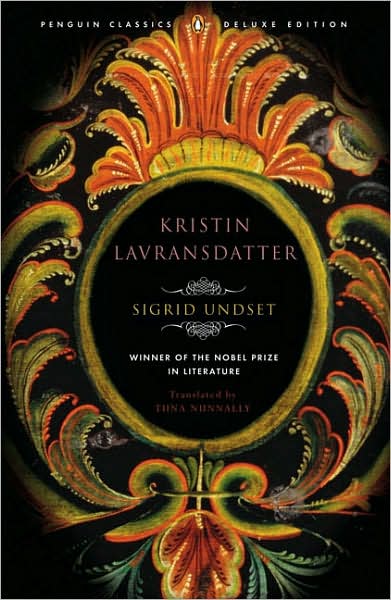
Oh and: I’ve already purchased the book she mentioned, Kristin Lavransdatter by Sigrid Undset, in the new Penguin Classics Deluxe Edition (single-volume) as recommended. Don’t know when I’ll get around to it! But I have my copy, so someday. ๐Ÿ™‚ Erin, thanks again for a lovely chat!

Ireland: final days in Dublin

(Days 1-3 here; day 4 here; days 5-7 here; days 7-8 here)


We drove into Dublin on day eight, Friday night, which was also Good Friday. PSA: They don’t sell alcohol in Dublin on Christmas Day or Good Friday. This was a significant piece of information to have missed, since pubs were pretty much the reason we were interested in the city of Dublin. I was frustrated. Let’s move on to day nine, shall we?

Day nine: Saturday morning. Breakfast at the Queen of Tarts (yum!) before heading out to the Guinness Storehouse. This is the longtime site of Guinness brewing in Dublin, and the adjoining property still brews beer; the Storehouse itself, where the public can buy tours, is no longer a working brewery, but a museum of brewing and (more so) of Guinness the brand. This was not entirely what I had in mind going in; perhaps in a different state of mind I would have been more interested in the museum setting, but at this point we were not sure we were actually going to get the full day in Dublin (for reasons relating to our flight arrangements) and having missed out on any chance to drink on “Dry Friday” the night before, I was frustrated. We drank our pint of Guinness, toured around some, and headed out to probably my favorite pub of the trip: the historic Brazen Head, oldest pub in Dublin, attached to the old city wall; Barrett tells me this is one of the pubs (just outside the wall) that used to lodge those travelers who hadn’t made it in before the gates closed (or those foreigners not allowed in). A lovely place. We saw a few pubs and took a nap before the evening’s big event:

the Dublin Literary Pub Crawl. Barrett had been on it before but liked it enough to repeat with us, especially considering my literary inclinations. It turned out to be perhaps a little drier and more literary than Husband was promised but he maintained his good spirits. This crawl is led by actors who perform selections from the great works (ahem Ulysses) and sing songs as well as imparting local lore and showing us around local landmarks (Trinity College) as well as pubs. I haven’t actually read much of the big Irish names, so it was less a familiar review of literary knowledge for me than it might have been, but still it was a good time. And as a bonus, towards the end we made friends with a German couple and an English one, and stayed out too late for our early morning flight the next day… whew! Home on Easter Sunday to prep for the week to come.

I made a map to indicate our travels


Weather-wise, we were so very lucky! We saw more sun than anything else; minimal precipitation, and what we did see was fleeting and light, more a novelty than an annoyance.

Highlights:
Oh boy! Inis Mhor in general… Westport as a town… Dunluce Castle… Belfast taxi tour of the murals… Saturday night in Dublin. Good times with good old friends and loved ones. Coming home to our little dogs.

Here’s hoping you make it to Ireland soon, too!

reporting on World Book Night

Hey hey! How was everybody’s World Book Night? On Monday night, I headed straight from work (after changing into my blue jeans!) to my favorite local pub, Liberty Station. Husband met me there, and I guess I gave away four books in about the first two and a half minutes! Wait, I’ll back up.

As I explained repeatedly that night, World Book Night enables regular people like myself to give away books they believe in, thanks to the cooperation of authors, publishers, bookstores, libraries, and impassioned bookies of all sorts. The book that I was able to give away was the amazing The Immortal Life of Henrietta Lacks, by Rebecca Skloot. Here is my review (from my early blogging days, as you may note). WBN gave me 20 copies of their special edition to give away, which I picked up at a local Barnes & Noble on Friday after work.

I got to the bar and unpacked my books on a table and got myself a pint, and it was that easy: people approached me while I was still unpacking. “What are you doing?” “What is this?” “Is that your book?” Ha! I got that last one a few times, which was fun. No, I’m not here pushing MY book, although that’s a fun thought. I actually had several people who were in from the get-go, ready to take my word for it, but more frequently they wanted to hear about the book. Luckily I have plenty of nice things to say in description of HeLa; it was an easy sell, especially for two bar patrons who are studying medicine but “never have time to read.” And you know I got the bartender hooked up, and the owner/manager, a friend of ours. Hi Charles!

One guy needed a harder sell: he was concerned that I was selling him a cult religion, or a self-help method, or a pyramid scheme, or that *this* book was free but in a month I’d want $50 for my kid’s school project… In other words, he needed to hear more about what WBN was all about. Luckily, the special WBN edition has that information in the front & back cover, and he was enthused once he understood.

I am kicking myself for not taking pictures! I talked with a bunch of people, almost every one of whom took a book with many thanks; one guy tried to tip me (I declined). I’m just sorry I didn’t save a copy for the guys in the Coreano’s food truck (I had a yummy burrito, thanks! that “el scorcho” sauce is no joke). I took a very casual 45 minutes or so to give away 20 books, while drinking beer (Lost Gold IPA from Real Ale, then Karbach’s Hopadillo IPA, then Karbach’s Weisse Versa – figured you might want to know) and eating my food-truck dinner. What more could a girl ask? Oh, I know, pictures. ๐Ÿ˜ฆ


Special thanks to our friends at Karbach Brewing for the beers – y’all are doing a great job! Keep it up!

Down the River by Edward Abbey

Down the River is a collection of Abbey’s essays, mostly (if not all) previously published in various publications but generally (if not always) reworked for latter publications, as was his habit. The theme here, of course, is rivers; but he uses his theme lightly and spreads it out wide. The collection has four parts. Part I, “Thoreau and Other Friends,” gives us “Down the River with Henry Thoreau,” a lengthy study of that man over the course of Abbey’s ten-day trip down the Green River in Utah with friends. “A crusty character, Thoreau. An unpeeled man. A man with the bark on him.” …about which the same could be said of Abbey himself. Also in this first section appears “Watching the Birds: the Windhover,” about a season spent as a fire lookout, looking out also for birds, in which he gives us this lovely image:

The redtail hawk is a handsome character. I enjoyed watching the local hunter come planing through the pass between our mountaintop and the adjoining peak, there to catch the wind and hover in place for a while, head twitching back and forth as it scans the forest below. When he – or she – spots something live and edible, down she goes at an angle of forty-five degrees, feet first, talons extended, wings uplifted, feathers all aflutter, looking like a Victorian lady in skirts and ruffled pantaloons jumping off a bridge.

Part II is “Politicks and Rivers” and earns its name; here Abbey waxes philosophical and praises nature while criticizing our treatment of her. Part III, “Places and Rivers,” tells more stories of Abbey’s river trips, to which I am especially partial; his descriptions of lost (or soon-to-be-lost) rivers and valleys and canyons are poignant and might in fact make you cry. Finally, Part IV, “People, Books and Rivers” contains “Footrace in the Desert,” detailing possibly Abbey’s first and last running race, and a lovely portrait of John de Puys (“My Friend Debris”), Abbey’s good friend. It finishes with “Floating,” another dirge for lost rivers.

Repeatedly Abbey is funny, even ridiculous, and often lecherous. But this is also a man who has me looking up words like ‘gelid’ (‘very cold, icy, or frosty’), ‘dithyrambic’ (‘wildly enthusiastic; wildly irregular in form’), ‘oleaginous’ (‘rich in, covered with, or producing oil’), and who uses phrases like ‘concupiscent scrivener’ (definition: Edward Abbey). Remember, he had a master’s degree in philosophy. But he also writes, in “Meeting the Bear,”

Though a sucker for philosophy all of my life I am not a thinker but – a toucher. A feeler, groping his way with the white cane of the senses through the hairy jungle of life. I believe in nothing that I cannot touch, kiss, embrace – whether a woman, a child, a rock, a tree, a bear, a shaggy dog. The rest is hearsay. If God is not present in this young prickly pear jabbing its spines into my shin, then God will have to get by without my help. I’m sorry but that’s the way I feel. The message in the bottle is not for me.

This collection, like *almost all the Abbey I’ve read, I highly recommend. It offers a great and varied example of his best nonfiction; it’s poignant, funny, light-hearted and deathly serious, and beautifully, beautifully done. I hope you love it as much as I do.


*Continue to beware of Black Sun for its self-indulgent and unrealistic fantasy of the middle-aged man landing a sex-hungry teenaged virgin for wild romps in a natural paradise.


Rating: 8 raft trips.

Ireland: days 7-8

(Days 1-3 here; day 4 here; days 5-7 here)


Ahem, continuing day seven: after finishing up at the Giant’s Causeway, it was getting lateish and we headed into Belfast for the evening, centering around the historic Crown Bar (or Crown Liquor Saloon), a CAMRA pub and masterpiece of ornate, garish Victorian decor – it’s almost a bit much, but it’s authentic. They still light the place with gas, even. We got our own little “snug” (like a booth with a door that closes so you can plot against the Brits) after a very good dinner upstairs at their dining room. We closed down the Crown and then the later-closing bar next door and then the latest-closing bar at our hotel, making for a successful evening.

in our snug at the Crown


Day eight, is it now? Which makes it a Friday again. We wake in Belfast and begin by chasing the Titanic, whose 100th anniversary calls for a full-on festival in this city that built and launched the doomed ship. Titanic festivities turn out to be expensive and sold out, but we view the area before chasing down one of the “black taxi tours” of the political murals that we’ve been told about. These murals were most prevalent in the 1980’s during the “troubles” (which I still find to be an odd and understated euphemism), and our cabbie John estimates only 20% remain today, but that was still lots of them. Barrett first vetted cabbies until he found one sufficiently middle-aged, native, and informed, and we spent a few hours driving around with him, viewing murals, hearing his (plentiful and fascinating and heartwrenching) stories, and generally interviewing him on the political turmoil of Northern Ireland from the 80’s through the present. Thanks, John, for one of the real treats of our whole week; you really brought Belfast to life. Most visceral, perhaps, was the still-standing wall at the “Peace Line” (or lane, I never was sure) where they used to lock down at night to keep the Catholic and Protestant neighborhoods safely segregated.

at the Peace Line (l-r): John, Barrett, me


We had a roadside picnic lunch on our drive down into Dublin.

meat. cheese. mustard. bread. strawberries. beer!


The next stop was in the town of Drogheda, where Husband’s maternal roots are based – going back a number of generations, yes, but the family name is recognizably… Droghedian? We wanted to get a picture of him at a city limit sign, at least, and ended up enjoying a walk through the main drag of this quaint, historic, larger-than-expected town dominated (it seemed) by shops selling either meats or sweets. Present company approved. ๐Ÿ™‚

And Dublin gets its own post. Stay tuned!

Lonely Planet Ireland

I took a fresh new 2012 copy of Lonely Planet Ireland with me on our trip there recently. My parents are fairly experienced travelers and users of travel guides, and my mother recommended Lonely Planet just barely above Rick Steves for our use on this trip. Also, the first Dublin taxi cab driver we encountered raved on and on (and on; he was a real talker) about the author of the Dublin & Cork sections, Fionn Davenport. The book was recommended, is what I’m saying.

And frankly, I was disappointed. This book frustrated me repeatedly. A few beefs:

  • A number of places and businesses that I was interested in appeared on maps of various cities but apparently had no other reference in the book. These include the hotel nearest the Guinness Storehouse (showed on the map with a name but no other info: no contact info, no price range) and, surprisingly, the Jameson Distillery. I know they give tours there because a friend of mine took one recently; but again, other than appearing on a map, no Jameson in the book.
  • The price of a train from Cork to Dublin was quoted in the book, and was within a Euro of being correct (it is a current book, after all; and I happily allow a few dollars’ discrepancy) but there was no mention of the fact that that price applies for online purchases only and if you show up to buy tickets in person the price almost doubles. This cost us almost $100 and is a great example of where a guidebook could have paid dividends. But didn’t.
  • Recommended that we not order Guinness in Cork but didn’t explain why. What is the cultural beef there? What are the consequences? Please teach me something!
  • Map unclear on national border between Republic of Ireland and North Ireland. As we drove from one to the other we kept wondering; no map in the book helped. Beyond that, I looked around for discussion of the two countries, their relationship, differences beyond the pound vs. the Euro, and found none.
  • Perhaps the biggest issue of all: no warning about “dry Friday” (Good Friday, when no alcohol is sold in the Republic). This, after saying something to the effect that “pubs are likely to be a large part of your reason for visiting” (they were) and “you may find it awkward to turn down a drink.” I think “dry Friday” deserved a mention. Even in the “Holidays” section, when I looked it up, it indicated that “many businesses close” but it is not a formal or legal holiday; which is not what we found there. Again, another failed opportunity for this guidebook to save the day.

I think this book missed several important points. But on the other hand, having it around was far better than having no book at all! The maps helped us get around on a few occasions (although they were far from ideal), and it gave us a few options for activities that we hadn’t considered. It helped explain Dunluce Castle after we saw a sign, and that helped us decide to stop. It told us about the Belfast black taxi tours of the political murals, that we ended up enjoying so much. It recommended the restaurant we ate at in Cork – which, by the way, despite being this book’s “top pick” we found just mediocre. Final verdict? Carry this book rather than no book at all. But in the future, I will look elsewhere than Lonely Planet for my travel guide needs.


Rating: 2 pubs.

Ireland: days 5-7

(Days 1-3 here; day 4 here)


Day five: back to the airport, the mainland, and our rented car.

Final glimpse


We were headed north, with Northern Ireland our ultimate goal but some time to play around with in the short term. This was our loveliest drive: we saw strange veils of mist, light rain, heavy rain, sleet, bright sunshine, and a rainbow, all for periods of five minutes at a time and quickly shifting; and the scenery was to die for.


I was terrified on those narrow twisty roads (and driving on the “wrong” side!) but it was beautiful, too. Coniferous forests opening up into wide seascapes and such vibrant colors: deep, bright blue lakes, brown mountains, and such shades of green. Oh, and the little lambs! Sheep everywhere, but I was most enamored of those little babies staggering on spindly little legs.

We found ourselves in the town of Westport, looking for lunch and possibly more at Matt Molloy’s Bar – that’s Matt Molloy of the Chieftains. Lunch, pints, a walk around this dreamy little town, and we needed to stay the night; we got another B&B, visited several pubs, had our first “hot whiskey” (that turns out to be a hot toddy) and a nap and headed back to Molloy’s for the promised evening’s entertainment: traditional Irish music. This started with our being serenaded by a classic Irish bard, who knew a song for every subject imaginable and filled the bar with his rich voice. It was a great night.

Day six: got up for a little shopping in Westport, which had several outdoors shops where we picked up some hiking gear for our trip to New Mexico later this summer, and hit the road, northbound. This was our longest day’s drive, ending in Coleraine in North Ireland, where Barrett had a pub picked out for us. I shall briefly say that the pub was a disappointment and move on to –

Day seven: Left Coleraine on a beautiful, mild morning for some sights: first stop goes to Husband’s credit when he spotted a sign at the last minute for Dunluce Castle, which turned out to be one of my favorite stops of the whole trip. Most of what stands today dates from the 16th and 17th centuries, but there is a room cut into the rock that they say is some 700 years earlier than that – ! – so it was really interesting to see all the layers, if you will, of civilization at this spot. It occupies a point jutting out over the ocean, and indeed part of the castle fell into the ocean in 1639, which marked the beginning of the end of its inhabitance. This site had by far the best pamphlets, guidance, visitor’s center, infrastructure in general to help me imagine what life was like here and comprehend the significance of this site in local and national history. It was a gem!

Dunluce Castle


1600's lodging for second-rate guests in the outer courtyard; you can imagine individual rooms, each with its own fireplace and window.


I like it here.


Next we drove into the town of Bushmills – that’s right, you guessed it, we toured the Old Bushmills Distillery and learned about their whiskey! I’ve been on maybe a couple dozen brewery tours, but this was my first distillery. Our young tour guide was very new and didn’t give us the best tour, but at least we got inside. I’m not so much a whiskey person, and confirmed that fact again, but they make some pretty good lasagna in their lunchroom.

whiskey


Next stop: the Giant’s Causeway, a series of geological formations along the very northern tip of Ireland that, in local myth, make up part of the causeway bridging from Ireland to Scotland so that two giants could do battle. I am running out of pictures but there are plenty on the internet for you! Great views, interesting rocks, a nice long walk making for a nice long day. I almost got to squeeze a lamb but then I didn’t. This is getting to be a nice long post, too, so I’ll finish up the evening in our next installment…

Edward Abbey: on Ernest Hemingway


You know I couldn’t resist one favorite writing about another.

Sheepmen and many others shoot [golden eagles] on sight, on general principles. Our hero Ernest Hemingway could not resist the temptation to bag an eagle now and then, though he hated himself afterward. Not an easy job to be, or to have been, Ernest Hemingway.

–“Watching the Birds: the Windhover”, from Down the River

Aside from the obvious criticisms that could be made of Papa shooting eagles (we’ll let Abbey do that), that final sentence says a lot, doesn’t it? Not an easy job at all…

Taco USA by Gustavo Arellano

A deliciously close-up look at Mexican food in the United States.


Gustavo Arellano is the author of the nationally syndicated column ยกAsk a Mexican! (and a 2008 book by the same title). Fans will recognize his voice in Taco USA: wise and knowledgeable, but always conversational and informal, even rambling–and very, very funny. Arellano capably handles the history of Mexican people and their cuisine, but Taco USA is less about Mexican food in Mexico than about its interpretations in the United States.

Several waves of Mexican food that have swept the U.S. (beginning with tamales and chile con carne or “chili”), and Arellano treats these as historical trends, tying them to larger themes in U.S. food history. We are reminded that Mexico is the source for global food staples such as corn, tomatoes and chocolate as well as the chile itself. Arellano refutes an emphasis on “authentic” Mexican cuisine in favor of the various permutations (Cal-Mex, Tex-Mex, southwestern, even Midwestern Mexican) that we know and love today. These are not bastardizations, he argues, but legitimate culinary heritages unto themselves, related to the Mexican tradition but not beholden to any of its rules. He is obviously passionate about his subject, which takes him from Taco Bell to Mission-style burritos to Rick Bayless.

Even the experienced border-dweller or Mexican food aficionado is likely to learn a lot, and giggle while doing so. What more can one ask of nonfiction? Just beware a growing desire to run out and get a burrito.


This review originally ran as a *starred review* in the April 17, 2012 issue of Shelf Awareness for Readers. To subscribe, click here, and you’ll receive two issues per week of book reviews and other bookish fun!


Rating: 8 delicious burritos.