Mad River by John Sandford

A series of bloody murders in Minnesota’s farm country, and the supremely likable detective who will stop them.


John Sandford’s Mad River stars Virgil Flowers, a supporting character in Sandford’s Prey novels who graduated to his own series with 2007’s Dark of the Moon. This sixth installment stands capably alone; series readers will recognize certain characters, but the plot twists and building suspense require no backstory.

Flowers is an investigator for the Minnesota Bureau of Criminal Apprehension called out to the tiny farm town of Shinder to investigate a string of brutal murders, starting with a highway patrol officer. The spree is quickly connected to a trio of local youths, and as the tension mounts and the murders spread across the state, the challenge is to catch the killers before the vengeful local cops get to them. Flowers suspects there’s a connection to something even bigger and needs the killers taken alive.

The central plot is riveting, but strained relations within the law enforcement community, Flowers’s visits with his loving parents and his dalliance with an old flame provide further drama. The story’s travels around the state add local color: expanses of empty farm land make the killers nearly impossible to track. Perhaps the greatest strength of Mad River, though, lies in Flowers himself. It’s hard to think of a more balanced and genial investigative hero, yet he’s still able to keep cops and bad guys alike in line. The bulk of the mystery is revealed fairly early on, though the killers’ motivations and dynamic remain riveting until the final pages–and the ultimate question persists to the tantalizing end.


This review originally ran in the Oct. 12, 2012 issue of Shelf Awareness for Readers. To subscribe, click here, and you’ll receive two issues per week of book reviews and other bookish fun!


Rating: 6 small town cops.

hemingWay of the Day: on being drunk


I am hoping to pick up some Hemingway next week while I’m on vacation. It’s been a while since I’ve read any, and I miss him. To inspire myself (and maybe you?) I have chosen a rather classic few lines from my favorite of his books, For Whom the Bell Tolls.

“No,” Pablo said, dipping up another cup. “I am drunk, seest thou? When I am not drunk I do not talk. You have never heard me talk much. But an intelligent man is sometimes forced to be drunk to spend his time with fools.”

“Go and obscenity in the milk of thy cowardice,” Pilar said to him.

This is classic Papa because 1. it involves drunkenness; 2. it includes that oh-so-quotable line, “an intelligent man is sometimes forced to be drunk to spend his time with fools” (which I picture as one of those I’m-with-stupid t-shirts, but the literary version); and 3. Pilar’s line is on the one hand crass and on the other hand, linguistically interesting. Hemingway has used the word “obscenity” in place of a presumed (ahem) obscenity, like bleeping it out; and “thy” translates the Spanish “tu.” For Whom the Bell Tolls also features some interesting Spanish-language word order, to emphasize the feeling that these Spaniards’ dialogue has been translated for our benefit. I like the flavor that that adds to the book.

That’s our short taste of Hemingway today. Hopefully I’ll have more to tell you about soon!

Teaser Tuesdays: Walden by Henry David Thoreau

Teaser Tuesdays is a weekly bookish meme, hosted by MizB of Should Be Reading. Anyone can play along! Just open your current read to a random page and share a few sentences. Be careful not to include spoilers!

As I’ll be in Concord, Mass. in just a few days to visit the very place (!), I am reading Walden this week. It shouldn’t have taken me this long! There is no shortage of quotable moments in this American classic, many of which you would recognize even if you never knew their provenance; but I chose one I thought especially clever, and a little humorous as well:

I say, beware of all enterprises that require new clothes, and not rather a new wearer of clothes.

Here, here, Mr. Thoreau. One of many gems.

For any Walden fans out there (like my friend I got to visit with this past weekend), I have a recommendation for further reading: I really enjoyed Edward Abbey’s short piece entitled “Down the River with Henry Thoreau.” I read it in the Abbey collection, Down the River, but you can also read it online here.

And what are YOU reading?

My Man Jeeves by P.G. Wodehouse (audio)


As recently noted, I am saddened to have to move on past Jonathan Cecil’s narration of the Jeeves audiobooks. Here I give Simon Prebble’s voice a go, with the very first published Jeeves book. This is a short story collection – not a format I’m a fan of generally, but I finally got around to starting at the beginning. Most of the stories here included had been published before, and only about half feature Bertie Wooster and his butler Jeeves. The other half star Reggie Pepper, a character I had not encountered before. Wikipedia claims he was an early prototype for Bertie, but I didn’t taste that flavor at all. I found Pepper much cleverer than Bertie (although he doesn’t always feel that way himself). And while Reggie’s stories were diverting in the usual Wodehouse way, they did begin to feel a little much like the usual Wodehouse: I started recognizing formulaic phrases and the like. It felt a little bit repetitive. I liked the Bertie Wooster stories much more. Were they less formulaic? Or am I just more forgiving of my old friend Bertie? Hard to say. But the ordering of the stories, which goes Jeeves-Jeeves-Jeeves-Pepper-Pepper-Pepper-Pepper-Jeeves, had me a little sad faced until that final Bertie and Jeeves story popped up. My preferences are clear.

These stories really do feel like early Wodehouse. I think he got better with time. And to be fair, there is something formulaic about his writing, and that’s not all bad, if you hit upon a successful formula. Funny and fun (and easily taken in chunks, of course, being short stories), but not the very best of Wodehouse that I’ve discovered.

And the narrator? Maybe he would have pleased me if he had been my introduction to Wodehouse, but having fallen for Johnathan Cecil’s voice, I cannot be persuaded of any other. This may be a problem independent of the specific narrators in question, however, so, grain of salt.

Enjoyable, but fewer belly laughs than I’ve come to expect.


Rating: 4 trouser creases.

Rules of Civility by Amor Towles (audio)

I have one to proselytize for, friends. Rules of Civility will certainly make the list of the greatest books I discovered in 2012.

The book opens with the story’s narrator, Katey, and her husband Val at an art opening in 1966. A few pages set the scene and the style of this book – and oh, the style! – before we’re whisked back into Katey’s reminiscences, beginning just a few hours before the new year of 1938 will be rung in. She and her best-friend-and-roommate, Eve, are out on the town, and they meet a man who buys them champagne for the toast at midnight. And then we follow Katey through the year.

Katey’s life changes a great deal in 1938, in all its aspects: career, home life, relationships, love, aspirations, her understanding of herself and of her world. I don’t want to mention any more of the plot, because I found such joy in discovering its twists myself, and you should too.

This book has many strengths. Its story is interesting: a single year, 1938, in the life of an ambitious young woman in New York City. And there are such surprises that I dropped my chin on my chest more than once. But the plot alone would not have made the book what it is. The characters are strong as well: Katey is pretty fabulous, as are a number of others. But neither is this the shining facet that draws the eye. I think the real victory is in the writing. You may have noticed (and I hope you’ve forgiven me) that I used not one but three teasers to whet your interest (here and here). It’s very evocative: I could see, hear, smell the New York City described; and further, I felt all the emotions Towles wrote. Driving to and from work and listening to this story (and Rebecca Lowman’s masterful, perfect narration), I arrived at my destination confident and optimistic, hopeful for the future, downcast, flabbergasted, or whatever that chapter called for. It was one of those very rare books that engaged me completely, made me lie awake at night worrying, wishing for certain events to transpire, caring deeply about fictional characters. It was amazing. And of course I have no great understanding of 1938 New York City; but Towles (and Lowman) have me utterly convinced that it sounded and looked and smelled and tasted exactly as described here.

And while I’m praising the writing, the style with which Katey’s voice comes alive, I must praise the reading of this audio version as well. Lowman has a frank, languid tone that feels precisely right for Katey; I love that she slows down. Her pacing is sometimes indolent and sometimes despairing, but it always adds to the sense of nostalgia in the beautiful piece of art that is Rules of Civility.

Oh, and it’s worth adding too that Katey is a reader, and literary references abound, which enriches the overall effect considerably for me and perhaps for you too.

Without having given away much plot, then, I assure you that the setting, the sense of style, and the writing on display in Rules of Civility are all remarkable. This will definitely be one of the best books I read this year, and the audio version is superb. Run out and get a copy.


Rating: 9 martinis.

literary travels: Concord, Mass.

Friends, I have a trip coming up. I’ll be joining my parents in Concord, Massachusetts for 4-5 days where they have a home for part of the fall; we’ll sightsee in Concord and Boston and visit the best pubs around. And then I’ll head a little further north to Vermont to see an old friend with a new baby, and her whole family, on their farm. I’m so very excited! I miss my parents (who base out of Houston, where I live, but travel so much), and I miss my girlfriend and her baby, and the weather in these northern locales will be so very dreamy compared to the heat that we are still experiencing down here. And I look forward to tromping around the Vermont woods – and seeing all that Boston, Concord, and the surroundings have to offer. This is where you come in.

One of the great attractions of Concord is literary in nature: the Transcendentalist movement is generally understood to have begun with Ralph Waldo Emerson in Concord, and other major figures include Henry David Thoreau and Bronson Alcott, also Concord residents. (The latter had a daughter you may have heard of as well: Louisa May Alcott wrote Little Women.) Local sights that interest me:

  • the cabin at Walden Pond where Thoreau wrote Walden (which I hope to read for the first time before I get there. I have a charming pocket-size red cloth-bound copy);
  • the Concord Museum, home to numerous artifacts relating to the American Revolution, Puritans and Native Americans, and Emerson and Thoreau;
  • the Old Manse, home to Emerson and later, Nathaniel Hawthorne (that of Hawthorne’s Mosses from an Old Manse);
  • the Wayside, home to Louisa May Alcott, then Hawthorne, and then Margaret Sidney;
  • the Emerson House, now a museum and National Historic Monument (where he lived after vacating the Old Manse); and
  • the Orchard House, where Bronson Alcott and his family lived, including daughter Louisa May who wrote and set Little Women there.

We’ll also be walking the Boston Freedom Trail and Minute Man National Historical Park, for their American Revolutionary War relevance (and overlapping some of the above – the Wayside is in the Minute Man Park, for instance). Apparently the Underground Railroad stopped off in Concord as well: the Transcendentalists were movers in abolitionism (or more commonly “anti-slavery”, in the contemporary term) and feminism/women’s rights, and the Alcotts helped slaves along their way to freedom.

So tell me, friends – TBM, I have you specifically in mind! – how’s my itinerary looking so far? What am I missing; is anything here redundant or less interesting? And one final important point: what’s the best, most authentic Irish pub in Boston?? My Pops hasn’t found it yet. Remember, we’ve been to Ireland; no green beer please. 🙂

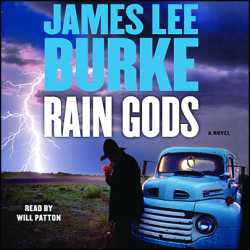
In the Electric Mist with Confederate Dead by James Lee Burke

As noted recently in my book beginning, Burke is an old favorite. Between this book’s title and its colorful cover, I felt especially drawn to it. The electric mist and the Confederate dead are some of the odder, more alluring moments in this story, too, but they are not its center.

Detective Dave Robicheaux is the star of Burke’s bestselling series. In this installment, he’s at home in New Iberia, a small community on the Gulf Coast of Louisiana. There’s a movie production in town, which brings with it various complications of the local scene: a group of gangsters come in from New Orleans; the Hollywood actors drive drunk and make trouble; several girls turn up dead in what looks like the work of a serial killer; and a body surfaces that relates to an event in Robicheaux’s own distant past. He continues to attend AA meetings and his alcoholism continues to be one of the sources of conflict in the story. There are some weird, almost paranormal forces at work – or are they just the manifestations of his alcoholism? – and that keeps things interesting and colorful.

This book shares certain themes with all Burke’s work, including racial injustice that persists in the South; a love of nature (and some outstanding, lovely writing conveying the natural beauties of south Louisiana); struggles with alcoholism; and corruption in positions of authority, manifested in the conflicts Robicheaux has with his workplace superiors. One of Burke’s greatest strengths, in my opinion, is the strong sense of place that he conveys with his lovely, lyrical writing. He waxes poetic about the beauty of nature; and both the natural setting and the cultural references evoke south Louisiana unmistakably. His stories, it seems, could be set nowhere else. (This is not true. Swan Peak is set in Montana and is equally successful. But my point about a strong sense of place stands.) While his plots are interesting and his mysteries do indeed keep the reader on her toes, Burke’s beautiful writing and obvious care for natural and cultural settings are the best and most unique parts of his work. I feel that his closest readalike author is Michael Connelly. Connelly’s writing is not nearly as lyrical, but his strong sense of Los Angeles, and Detective Bosch’s love for jazz and LA, and the dark, brooding mood both authors create, make them a matched pair in my view.

In the Electric Mist with Confederate Dead is vintage (1993), classic James Lee Burke, and thus strongly recommended.


Rating: 7 crawfish poboys.

Teaser Tuesdays: triple-dipping from Rules of Civility by Amor Towles

Teaser Tuesdays is a weekly bookish meme, hosted by MizB of Should Be Reading. Anyone can play along! Just open your current read to a random page and share a few sentences. Be careful not to include spoilers!

Forgive me, friends! I am having too much fun with Rules of Civility not to quote from it for a second week in a row – and twice today. (See last week’s teaser here.) It was too hard to get it down to even these three teasers, I could have done more…

First for today, a bookstore-lover’s teaser.

…I stepped into a used bookshop a few doors from the salon. The shop was aptly named Calypso’s. It was a little sunlit storefront with narrow aisles and crooked shelves and a shuffling proprietor who looked like he’d been marooned on MacDougal Street for 50 years. He returned my greeting reluctantly and gestured at the books with an annoyed wave as if to say, “Peruse, if you must.” I picked an aisle at random and walked far enough into it that I would be out of his line of sight. The shelves held highfalutin books with broken spines and ragged covers – the usual second-hand bohemian fare. In this aisle there were biographies, letters and other works of historical nonfiction. At first it seemed as if they had been stuffed on the shelves willy-nilly, since neither the authors nor the subjects appeared to be in alphabetical order. Until I realized that they had been shelved chronologically. Of course they had!

Author Amor Towles has graciously shared still more about Calypso’s on the “Baedeker” section of his website. Hover over #8 to read about this little real-life bookstore, including references to a few of my favorite literary figures. Not to mention the allusions built into the Calypso’s name, and Towles’s used of the verb “marooned”…

And nextly, how about a little linguistic confusion:

In front of me, a broad-shouldered man with the twang of an oil-producing state was trying to communicate with the maitre d’, an impeccably groomed Chinaman in a tuxedo. Though both men could travel the normal distance from their accents to the neutral ear of the educated New Yorker, they were finding the distance between their respective homelands difficult to traverse.

I love this image (not to mention the coy use of “oil-producing state”).

Review coming soon, but as you can see, I’m smitten.

footnotes, endnotes, othernotes

I teased you recently, in my review of On a Farther Shore (the new Rachel Carson biography by William Souder) with some thoughts on Notes. You may notice that this is my third post concerning Souder’s book. It has been rather thought-provoking, which is always nice.

Authors of nonfiction should cite their sources. I don’t think there’s much disagreement on this point. But to the question of how they should do it, there are several answers. The most common use a superscript number or other symbol in the text to refer the reader to more information elsewhere. Footnotes reside at the “foot” of the page, and endnotes are collected at the end of a chapter or a book. (I don’t read e-books, but surely there’s a clever way to imbed notes in the text in the form of little hyperlinks so that the reader can reference the note on the spot if she so chooses, which sounds convenient and reasonable [except that she’d have to be reading an e-book, so there’s a compromise].) The content of notes is often bibliographical, giving credit to the author’s source for a piece of information, but can also allow the author to further discuss a point, like a long parenthetical outside of the text itself.

There are pros and cons to footnotes and endnotes. Footnotes take up space on the page, and may be annoying to readers who don’t care about them. Endnotes can be inconveniently remote, for readers who do care – I’ve been known to use two bookmarks, one for where I’m reading in the main text and one for where I’m reading in the endnotes, so that I can quickly find the next note I’m directed to. I guess the main question, then, is whether the reader cares about the content of the notes in the first place. I suspect I’m fairly typical in that I am more likely to care about notes that offer further thoughts on the main text, than notes that only cite sources.

William Souder, in On a Farther Shore, uses endnotes, gathered all together in one long section (75 pages) at the end of the main text. At a glance, they appeared to be works cited, and I was going to leave it at that. Normally at the end of a nonfiction read, I look at the Acknowledgements, Notes, and sundry further thoughts, and read as much of it as attracts my attention (often most of it). In this case, I found that I had been wrong about the notes: most of them were citations, but there were some parenthetical-style remarks by Souder, describing his experience in researching the book (descendents of Carson and her friend Dorothy Freeman hosted him at their homes on the ocean; he wrote a chapter at Carson’s own desk) or expanding upon the text of the book. This was valuable! For example, I learned in a note that “in the 1950’s and 60’s it was common for doctors to discuss a cancer diagnosis with a woman’s husband and not with the patient herself – a disturbing practice that left the unmarried Carson in the dark about her condition.” (Souder notes in the main text that Carson’s ignorance about her condition and treatment options was all the more ironic and tragic because, as a scientist, she was more capable than the average man of understanding that information and using it to make decisions about her care.) This shocking detail seems important to me! I’m glad I came across it by accident – after which I read the notes through, and found other tidbits of value. For example, Souder emerges as a person with feelings and personal impressions only in his notes.

My point here is that I almost missed the notes that were valuable to me because I misunderstood their content. This isn’t necessarily an argument for footnotes over endnotes; but at least I might wish that Souder had made it a little more clear that there’s more than citations in that exhaustive 75 pages of notes at the back of his book. Keep your eyes open, kids.

What are your feelings about footnotes, endnotes, or othernotes?

book beginnings on Friday: In the Electric Mist with Confederate Dead by James Lee Burke

Thanks to Rose City Reader for hosting this meme. To participate, share the first line or two of the book you are currently reading and, if you feel so moved, let us know what your first impressions were based on that first line.

I felt like taking a break in between long-ish nonfiction reads (much as I enjoy those!), and James Lee Burke looked to be the perfect choice: high-quality, easy-reading fiction, tried and true entertainment, and thought-provoking to boot. He’s one of my longtime favorites, and yet somewhat strangely, I haven’t read anywhere near all his work. I’m all out of Michael Connelly and Lee Child until they write more; but there’s plenty of Burke out there I haven’t enjoyed yet, and (thank goodness) he’s still writing, too.

So here we are with In the Electric Mist with Confederate Dead (if that title doesn’t catch your eye I don’t know what will). It begins:

The sky had gone black at sunset, and the storm had churned inland from the Gulf and drenched New Iberia and littered East Main with leaves and tree branches from the long canopy of oaks that covered the street from the old brick post office to the drawbridge over Bayou Teche at the edge of town. The air was cool now, laced with light rain, heavy with the fecund smell of wet humus, night-blooming jasmine, roses, and new bamboo. I was about to stop my truck at Del’s and pick up three crawfish dinners to go when a lavender Cadillac fishtailed out of a side street, caromed off a curb, bounced a hubcap up on a sidewalk, and left long serpentine lines of tire prints through the glazed pools of yellow light from the street lamps.

What a lovely passage, and what an example of what Burke can do. He’s evoked a place, given us smells and colors and the feel of the air; this descriptive first paragraph is just dripping with local flavor. And that final sentence begins the action, too: what on earth is this lavender Cadillac up to? I’ll give you a hint: our narrator is a cop, and therefore likely to get involved.

Still loving James Lee Burke. And what are you reading this weekend?