The Longest Race: A Lifelong Runner, an Iconic Ultramarathon, and the Case for Human Endurance by Ed Ayres

An ultramarathon, run by a master of the sport, becomes a metaphor for the race for human sustainability we are all running.

Ed Ayres has been running competitively for more than half a century. On a professional basis, he’s also studied climate change, sustainability and a variety of issues facing the future of the human race and our planet. The Longest Race is the story of his 2001 run at the JFK 50 Mile, the United States’ oldest ultramarathon. As Ayres attempts, at age 60, to set a new age-group course record, he contemplates the relationship of human endurance to the sustainability of human life in a fast-changing world.

Ayres’s recollections a decade later are heavy on metaphor. The ultramarathon is a symbol not just for his life, but for any man or woman’s life, and ultimately for the lifespan of humanity. The attributes that work toward sustainability at an individual level are equally valuable in a large society, Ayres says, and today’s “sprint culture” would do well to reconsider the concept of pacing. He also touches on the atom bomb, human evolution, the U.S. crisis in physical fitness and the reasons for following a vegetarian diet. But for all its peripatetic allegory, The Longest Race is always the story of one epic 50-mile race in all its technical and visceral elements, and also a celebration of the sport of running and of our ability to keep running in changing times. For those readers inspired by his story, the appendix offers practical advice to the aspiring ultrarunner.


This review originally ran in the October 19, 2012 issue of Shelf Awareness for Readers. To subscribe, click here, and you’ll receive two issues per week of book reviews and other bookish fun!


Rating: 8 miles to go.

EDIT: See also my father’s glowing review of same.

Master of the Mountain by Henry Wiencek

The sad but enlightening story of Thomas Jefferson, a dedicated slaveowner masquerading as an emancipationist. Henry Wiencek studied George Washington’s convoluted relationship to slavery in An Imperfect God; with Master of the Mountain, he turns his attention to Thomas Jefferson. As one would expect, Sally Hemings is a crucial part of the story, but Wiencek also meticulously records the experiences of many others among the more than 600 slaves Jefferson owned in his life, offering a detailed portrait of daily life at Monticello.

After speaking out eloquently about the need for emancipation early in his life, Jefferson not only let pass several opportunities to push for abolition but worked to maintain the existence of slavery, noting the profits to be had–even though in public writings and correspondence with anti-slavery activists, Jefferson continued to claim a devotion to human rights and disgust with the “peculiar institution.” Wiencek appears briefly to consider the forgiving popular characterization of Jefferson’s relationship with slavery as “compartmentalized” or “complex.” But as Jefferson devolves from a youthful, idealistic opponent to a staunch defender of slavery, Wiencek firmly condemns Jefferson’s pretense of virtue, put to the lie by the abuses at Monticello. Master of the Mountain is well-documented and detailed without being tedious. The stories of real people come alive, making Jefferson’s wrongs all the more painful and his hypocrisy the more outrageous. The final chapter calls this founding father to account in no uncertain terms.


This review originally ran in the October 26, 2012 issue of Shelf Awareness for Readers. To subscribe, click here, and you’ll receive two issues per week of book reviews and other bookish fun!


Rating: 6 advantages taken.

vacation reading: a quick note (reviews to come)

Hello, friends! I’m home! It was a whirlwind week. I intend to write up the week’s activities in another post for you. In a nutshell, I visited lots of sites in Concord, Boston and Salem, Mass. of literary and historical interest; visited several pubs in Boston; kept a fast pace with my parents in Mass. generally; and then had a slower-paced few days in Vermont with a friend’s family on their farm.

As for the reading, I have less to report than I might have – this reflects the fast pace of the first part of the week, and the relaxation of the second part. I mostly gazed at the mountains rather than at the page. I did finish listening to The Shining (because listening is compatible with gazing), and I finished Walden on my long travel day homeward-bound. So those are two reviews that I owe you. Just give me a few days.

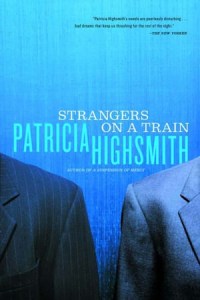
I also carried with me James Baldwin’s Notes of a Native Son, which I started but may have to return to the library unfinished… and Patricia Highsmith’s Strangers on a Train, and Edward Abbey’s The Brave Cowboy (wasn’t I ambitious?), neither of which I started but both of which I’m excited about when I find the time…

So I owe you two book reviews and one travel write-up. For now, I’ll leave you with a few choice photographs!

Salem, Mass. harbor

Walden Pond

unread books on the deck in Vermont

why books are better than movies: the non-reader’s version

I was so pleased the other day by something that Husband, who does not read, said to me. We were going out in the evening for a beer and an all-beef hot dog, and listening to The Shining because we were in my car – Husband does not usually like to jump into my audiobooks mid-story, unless they are P.G. Wodehouse or Stephen King – and heard a certain passage that he apparently found striking. It was a glimpse into the thinking of one of the characters, and Husband observed:

You know, this is better than in a movie, because in a movie she just would have been standing there looking at the pictures. We wouldn’t have known she was thinking about the future and dope-smoking rock stars.

I was so pleased and touched that he made this judgment in favor of the book format, and I thought it was worth sharing here.


(Also, I’m just back from vacation and need to get my feet under me so I can give y’all some book reviews!!)

hypothetical travels: drawing to a close

I am nearing the end of my weeklong vacation and I am homeward bound this weekend. Hopefully I have seen lots of sights in Concord, Salem, and Boston, Mass.; visited some great pubs; had plenty of quality time with my parents, and with my girlfriend and her family in Vermont; tromped the woods, tickled the baby, and possibly even slept in some. And what about my reading material?? So glad you asked! I do owe you some book reviews upon my return. (We’ll have to see if I can get on top of it for Monday morning…)

The books I packed for the trip include:

Henry David Thoreau’s Walden


Stephen King’s The Shining (audio version, on my iPod)


James Baldwin’s Notes of a Native Son


And something by either Ernest Hemingway or Edward Abbey. Reviews coming!

Thanks for bearing with me during this week that I’ve been away. I’ll be back in the flesh (so to speak) on Monday, assuming the creek didn’t rise! And back home to my Husband and dogs, which will be sweet.

hypothetical travels: tickling the baby

While not necessarily a big gushing cooing fan of babies in general, I’m genuinely excited to see my high school BFF’s baby again. When I saw him last he was something like five weeks old…

me with the new baby. Bearded Husband in the background.

And now he’s 4 1/2 months! Will be so much bigger. Baby book recommendations??

hypothetical travels: heading north

Mid-week sometime, so perhaps about now, I will be leaving Concord, Mass. behind and heading up to the mountains of Vermont. There, I have a dear friend from high school who has recently moved up to her parents’ farm, with her husband and new baby! The advantages to me are several and obvious, right? I hope to be hiking in the woods, tickling the new baby, and spending some quality time. While we may drive out into the world for a beer or some such (Rock Art Brewing is nearby!), I expect this will be the more relaxing, slower-paced part of the trip. Plus, check out the view from the deck:

And I get to visit with the dogs as well!

hypothetical travels: Concord, Mass.

Henry James called Concord, Massachusetts “the biggest little place in America.”* Concord was home to Ralph Waldo Emerson, Henry David Thoreau, Nathaniel Hawthorne, Bronson Alcott and his daughter Louisa May. Walden Pond is in the neighborhood. (More recently, according to Wikipedia, contemporary authors gather there as well, including Patricia Cornwell, Gregory Maguire, Doris Kearns Goodwin, and the late Robert B. Parker.) In other words, there is no shortage of literary sites to visit while I’m here. These may include…

the Concord Museum, filled with artifacts relating to the American Revolutionary War and the Transcendentalists


the Emerson House


the Orchard House, home to the Alcott family, and presumed setting of Little Women.

And without question, I will be visiting Walden Pond

and the cabin there.

(this is a replica.)

In truth, there are enough places to see in Concord that I may not fit them all in. It’s a delicate balance, while on vacation, to do all the things you want to do and still relax a bit – so as to not need a vacation when you get home!


*Henry James: Collected Travel Writings, “The American Scene: Concord and Salem,” 1907

hypothetical travels: Massachusetts on Monday

Good morning in the land of possibilities, friends. This post is the first of a weeklong series that I have scheduled to publish in my absence. As you may recall, I’m gone this week, visiting family & friends & seeing the sights in Massachusetts and Vermont. These posts give a quick sampling of the kinds of activities I may be engaged in while I’m gone – and act as placeholders while I’m not around writing book reviews & whatnot. (I’ve done something like this before.) And don’t worry, there are a few literary tidbits thrown in as well.

Okay! It’s Monday. Hopefully I made it to Concord, Mass. on Friday night to begin my time there with my parents. We will be making a few trips into Boston to explore the range of pubs on offer there…

And we also intend to make a day trip to Salem, Mass., for the pleasant harbor area and a few points of interest, literary and historic…

the Corwin House, for its role in the Salem Witch Trials


House of Seven Gables – see also Hawthorne, Nathaniel

And of course there’s plenty to do in Concord, as well! Stay tuned!

book beginnings on Friday: The Shining by Stephen King

Thanks to Rose City Reader for hosting this meme. To participate, share the first line or two of the book you are currently reading and, if you feel so moved, let us know what your first impressions were based on that first line.

Ooh, I’m excited about this one! Remember when I listened to that first chapter of his future release, Doctor Sleep? That’s the sequel to The Shining, due in 2013, and I loved it. So now I’m back to reading the first one. I’ve never seen the movie, either, although I’ve seen some images from it (Jack Nicholson’s face through that busted-up door is rather iconic) and have a vague impression. This audio version, read by Campbell Scott, came recommended (by Natalie), so here we go. It begins:

Jack Torrance thought: Officious little prick.

Ullman stood five-five, and when he moved, it was with the prissy speed that seems to be the exclusive domain of all small plump men.

I think that is fine imagery. I’m loving this book so far, and yes, Scott’s reading does seem to be letting me inside the head of the disturbing (disturbed?) Jack Torrance. Husband is pleased that I’m reading this book, too, although he was disappointed to hear that I will probably not be done with it by Halloween – he wants to watch the movie then, but I think November will have to do just as well.