beer and books

Well. This is about as easy as it gets: 13 of the Best Literary Quotes About Beer were clearly compiled with me specifically in mind. From beer brewed by “noble twins… in their divine alevats, cunning as the sons of deathless Leda,” to “a great pot, filled with some very fragrant compound, which sent forth a grateful steam,” these lines will make you… thirsty.

I can’t quite decide about Ray Bradbury’s statement that “Beer’s intellectual. What a shame so many idiots drink it.” (Maybe I’m afraid he’s talking about me?) And I rather disagree, respectfully, with Haruki Murakami’s preferences as to temperature, although I concur with his feelings about the progression of temperature as one drinks.

Edgar Allen Poe’s lines are among my very favorite:

Fill with mingled cream and amber,
I will drain that glass again.
Such hilarious visions clamber
Through the chambers of my brain.
Quaintest thoughts — queerest fancies,
Come to life and fade away:
What care I how time advances?
I am drinking ale today.

I am a little saddened by Hemingway’s lines. On the one hand they are a fine example of what I love about his writing: Papa’s descriptions of food and drink are in fact some of the best things he does, and I can’t read those passages without watering mouth. But that this example comes from an ad cheapens it.

And as for the best final line… it had to be the Bard: “a quart of Ale is a dish for a king.” Indeed, sir.

Here’s a tip: ale will make a fine accompaniment to your reading pleasure, too.

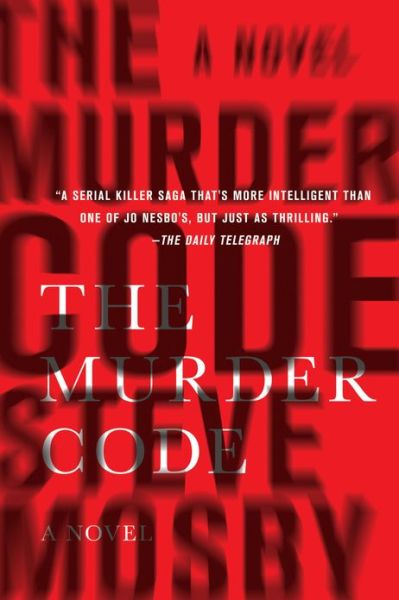
Teaser Tuesdays: The Murder Code by Steve Mosby

Teaser Tuesdays is a weekly bookish meme, hosted by MizB of Should Be Reading.

murder code

I wanted to share these few lines with you because they made me pause and wonder. The Murder Code is a thriller, and on the bloody side at that; but a line here and there hints at humanity, even romance.

Occasionally, it drives him to distraction, bu he also knows it is one of the things he would miss most about her if she was gone: that ultimately we love the rough edges of people more than the smooth surfaces.

And on the next page:

In such ways, he realises, do relationships grow over time. We begin by looking for perfection; we end up by loving flaws.

I found it remarkable that this author of hard-boiled gore also handles love so deftly. I’ve seen it done far less eloquently and realistically in this genre. And I had to stop and consider the truth of the statements.

Well done, Mosby. Stay tuned for my full review to come.

This quotation comes from an uncorrected advance proof and is subject to change.

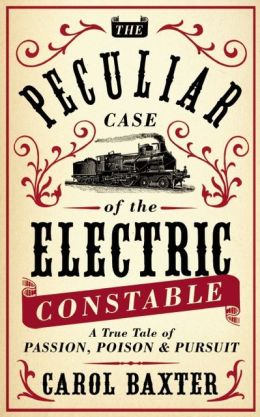
The Peculiar Case of the Electric Constable by Carol Baxter

An exhilarating real-life thriller about the murder that revealed the power of the telegraph.

peculiar electric

Australian historian Carol Baxter melds true crime and science in the gripping The Peculiar Case of the Electric Constable. The electric telegraph (or the “electric constable,” as it was known) was a newfangled, doubtful-looking invention in 1845, when a well-liked young woman was found gasping her final breaths in the small English town of Slough. Fortuitously, Slough was connected by an experimental telegraph line to Paddington Station; when a distinctively dressed gentleman was seen leaving the apparent murder scene and boarding a train, quick-thinking locals sent word along the line. The pursuit by telegraph of a criminal suspect marked a turning point, Baxter argues, and sparked the communications revolution that continues today. That the suspect, John Tawell, was a Quaker made this case still more sensational, and his personal history as a transported convict helped to transfix the public.

This peculiar case involved not only the “electric constable” but also the new fields of toxicology and forensic science. The murder trial riveted the medical and legal professions, setting new precedents; the public, already inspired by poisoning cases, was riveted by the cyanide evidence that “the Quaker murderer” provided. Baxter’s accounts of the telegraph’s technology, the prevailing cultural climate regarding murder and poisonings, contemporary forensic methods and Tawell’s personal history are all worthy of an engrossing thriller. (Her research was meticulous, though, she explains in an author’s note, and all the dialogue attributed and factual.) Expertly told, The Peculiar Case of the Electric Constable is a captivating accomplishment in nonfiction.


This review originally ran in the October 29, 2013 issue of Shelf Awareness for Readers. To subscribe, click here, and you’ll receive two issues per week of book reviews and other bookish fun!


Rating: 7 dark suits.

Antigone by Sophocles, trans. by Dudley Fitts and Robert Fitzgerald

oedipusThis is the third play in a trilogy. Please see my write-ups of the first two: Oedipus Rex and Oedipus at Colonus.

I have studied Antigone in some depth before, also in Fitzgerald’s translation, and I enjoyed it immensely again. The action is this: brothers Eteocles and Polyneices have done battle for the kingship of Thebes, and both have been killed, Eteocles within the city walls and Polyneices, attacking from without. Now king again, Creon – uncle to Antigone, Ismene, Eteocles, and Polyneices – decrees that Eteocles will be buried with full honors but Polyneices will not, because he was a traitor who attacked his own city. You have no doubt noticed the great significance of the oracles I’ve named so far in these plays: the gods were a very real, very important part of life in the ancient Greece represented in these works. One of the deeply serious principles at play in their culture would have been honoring one’s family, and respectfully burying one’s dead. Therefore, Antigone doesn’t hesitate to defy Creon’s royal decree – on pain of death – and bury her brother. She is caught, captured, makes no denial, and is sentenced. Creon is too cowardly to order her death, so he orders her locked in an underground cell and fed; whether she lives or dies, he says, is no fault of his.

The real conflict here is between god’s man and man’s law. Antigone asked Ismene to assist her in burying their brother but Ismene refused, citing man’s law as dominant; Antigone takes it as a given that god’s law, regarding the burial of one’s dead relatives, is superior. When Antigone is caught, Ismene changes her opinion, begging to be put to death with her sister, but Antigone refuses her this honor: she didn’t earn it. Creon, for his own reasons, refuses to punish her: he has begun to dread the consequences of his stiff policy, in light of public sentiment sympathizing with Antigone’s cause. From being steadfast and confident in his decree in the beginning, Creon is increasingly worried that he may be wrong; but – in another theme of the play – he is too proud (or has too much hubris) to back down. His son Haimon is engaged to marry Antigone, and comes to Creon to ask for her pardon – not because he is “girlstruck,” but because he cares for his father’s fate. This is the first of several warnings that Creon should heed; the next comes in the form of the respected seer Teiresias. Ironically, Oedipus had failed to listen to Teiresias in Oedipus Rex, and Creon will make the same mistake here. The Chorus eventually convinces Creon to pardon Antigone and bury Polyneices, but this decision comes too late. When the party arrives at Antigone’s cell, she has killed herself; Creon is there just in time to see his son Haimon do the same. This is a classic tragedy, in terms of its fatal flaw – Creon’s hubris in thinking to rule against god’s law, and then in his reluctance to admit he was wrong and change his policy – resulting in the death of his family. Because, oh yes, his queen wife (Haimon’s mother) also kills herself when she hears the news. Whew.

To me this is by far the strongest of the three plays. I noted a number of iconic lines that I felt the need to share with you. In fact, these lines taken together serve somewhat to give a feel for the action of this play, which is most importantly internal action: Creon is stiff and unbending; Creon doubts himself; Creon reverses. It is a conflict between moral stances. Also, as you can see, there is a feminist undertone here as well – represented not least by Creon’s idiocy.

Ismene to Antigone when Antigone asks her to disobey Creon’s rule:

We are only women,
We cannot fight with men, Antigone!

Same scene, Ismene to Antigone again:

Impossible things should not be tried at all.

Creon, arrogantly scolding Antigone for what he ironically sees as her pride in disobeying him:

She has much to learn.
The inflexible heart breaks first, the toughest iron
Cracks first, and the wildest horses bend their necks
At the pull of the smallest curb.

Creon again, betraying the real reasons for his reluctance to reconsider his stance:

Who is the man here,
She or I, if this crime goes unpunished?

And even worse – still Creon:

Whoever is chosen to govern should be obeyed –
Must be obeyed, in all thing, great and small,
Just and unjust!

(Just and unjust? Did you really mean to say that, Creon?)

If we must lose,
Let’s lose to a man, at least! Is a woman stronger than we?

Haimon, giving his father good advice:

It is not reason never to yield to reason!

Just a few of my favorite lines. I hope they communicate the power and drama in this short but very moving play.


Rating: 8 birds of augury.

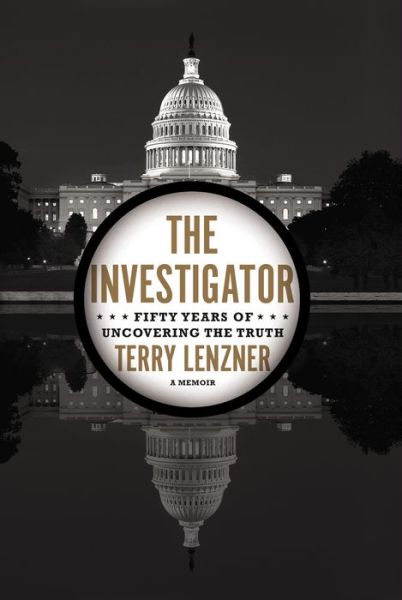
The Investigator: Fifty Years of Uncovering the Truth by Terry Lenzner

An investigator’s caseload over the decades offers a captivating glimpse of the intersection of politics, celebrity and money in the U.S.

investigator

Terry Lenzner’s career began in the Justice Department’s Civil Rights Division in the 1960s, and has ranged from the Senate Watergate Committee through private legal practice to his own company, Investigative Group International. A lawyer by training, he found his passion in research and sleuthing. The Investigator reads like a Forrest-Gump-style catalogue of cases that have caught the public eye–from the murders of three civil rights workers in Mississippi, to the Harrisburg 7’s federal case for antiwar activism, to Watergate, the Unabomber, Monica Lewinsky and the death of Princess Diana.

Lenzner’s clients include governments, politicians, businessmen and celebrities; the resulting wide-ranging subject matter in this memoir accounts in part for its appeal. Even the tedious financial fact-checking of an investigation into the Trans-Alaska Pipeline is brought to life by Lenzner’s passion. He gives character sketches of public figures he’s known, debunks public perceptions of certain events and offers investigative tips along the way. He is concerned with the truth, not satisfying the client at any price, and shares anecdotes in which the two goals were irreconcilable.

Impressively, this seasoned investigator is also a fine writer. His story opens compellingly, giving background while simultaneously jumping right into the action. Although “this isn’t meant to be a history book,” Lenzner writes, The Investigator is an absorbing and intelligent sampling of American history, told in puzzles and–sometimes–solutions.


This review originally ran as a *starred review* in the October 22, 2013 issue of Shelf Awareness for Readers. To subscribe, click here, and you’ll receive two issues per week of book reviews and other bookish fun!


Rating: 7 witnesses.

Oedipus at Colonus by Sophocles, trans. by Dudley Fitts and Robert Fitzgerald

oedipusThis is the second play in a trilogy; see the first, Oedipus Rex, here.

At the opening of Oedipus at Colonus, 20 years have passed, during which Oedipus has wandered in exile with his daughter Antigone as faithful companion and caregiver. He initially hoped for a sentence of death from Creon, but was given banishment instead. He arrives near Athens hoping for asylum, as his second daughter Ismene appears with news. Thebes is experiencing conflict: the two sons of Oedipus, Eteocles and Polyneices, are fighting for the kingship. An oracle has instructed that Oedipus can help; but he refuses, even when Polyneices shows up to ask for his father’s blessing. Oedipus resents that his sons heartlessly allowed him to be turned out of the city. Although he wanted death in the beginning, he has since decided that his crimes were unknowing – he killed his father in a fair fight, not knowing who the man was, and defending his life; and he married his mother not knowing his relationship to her, only knowing that she was a queen whose favor he had won. And he resents the life he’s earned by his innocent crimes. At Colonus, he meets Theseus, king of Athens, who defends Oedipus and his daughters against the treachery of Creon. Following another oracle that says Oedipus will bring peace and glory to the city that offers him refuge, Theseus welcomes Oedipus to die there at Colonus.

This middle play (the only one that I had not read before) was in some ways the quietest of the three, and apparently the least known. It was followed, in my edition, by a commentary that Oedipus Rex lacked. This commentary described the principles of translation ascribed to by Fitzgerald, and gave some background information on Greek theatre and tips for presenting this in the modern era. I found it useful. I was probably least moved by Oedipus Colonus; but it did portray the loving relationship between Antigone and her father (brother) that helps establish her love of family, which we will see so strongly in Antigone. She is growing as a character; she did not speak in Oedipus Rex, and in this play she is a speaking character but still subordinate to her father’s needs. She is kidnapped, apparently helpless to defend herself, but her strength is increasing as her father’s life ends.


Rating: 5 holy places.

thought for the day

Briefly, I felt compelled to share this line with you from my A.Word.A.Day email.

What I like in a good author isn’t what he says, but what he whispers.

–Logan Pearsall Smith, essayist (1865-1946)

Isn’t that well said. I don’t know this Mr. Smith but I am impressed. I’m sure I’ll feel the need to refer back to this concept in a book review one of these days…

Oedipus Rex by Sophocles, trans. by Dudley Fitts and Robert Fitzgerald

oedipus“The Oedipus Cycle” is made up of three plays by Sophocles: Oedipus Rex, Oedipus at Colonus, and Antigone. I cannot remember at this moment what motivated me to read or reread these plays; something else I read, no doubt. I remember Greek tragic drama very fondly from high school, where Mrs. Smith inspired me in many of my present-day literary loves (hello, Hemingway and Homer).

This triptych concerns the mythic curse on the House of Thebes, which I will retell quickly in my own words. Ahead: spoilers. Oedipus was both to the Theban King Laius and Queen Jocasta, but upon his birth, an oracle prophesied that this baby boy would grow up to murder his father and marry his mother. Wishing to avoid this fate, Laius took the boy out in the woods, pierced his heels and pinned them together, and left him to die. Now, this is no way to avoid the fates. Oedipus was raised by a foster father and mother who claimed him as their own, until as a young man he heard this prophecy given, and not wishing to fulfill it against the parents he knew and claimed, he fled them. Along the road on his travels, he came across an older man who wouldn’t yield the road as Oedipus thought proper. They quarreled, and fought, and Oedipus killed the older man (guess who this will turn out to be). He continues on the road to Thebes, a city-state that has just lost its king to a mysterious murder; he solves the riddle of the Sphinx, marries their queen, and happily begets four children.

When Oedipus Rex (or “Oedipus the King”) opens, King Oedipus is struggling to relieve his city of a plague. He must appease the gods, and the oracle tells him the way to do this is to finally avenge the former king’s murder. He agrees that Laius deserves justice – ironically volunteering to serve as his child should: “I say I take the son’s part, just as though / I were his son…” (as translated in my edition by Dudley Fitts and Robert Fitzgerald). And Oedipus curses the murderer, or anyone who would hide his identity, with death or banishment. This will have consequences. The action of the play, the tension and emotion, resides in Oedipus’s earnest cursing of the murderer who turns out to be himself; adding incest to his unknown crimes is too much for him, as his queen (wife, mother) kills herself and Oedipus gouges out his own eyes and puts himself at the mercy of his brother-in-law, Creon. Here the play ends.

There is some ambivalence, at least for me, in identifying the fatal flaw or crime of the tragic hero in this play. (It will be much clearer in Antigone.) Oedipus is indeed guilty of murdering his father and marrying his mother – terrible crimes, to be sure – but he did both unknowingly, and to his knowledge had every right to kill (in self defense) and marry. I think his fatal flaw is at least shared by his parents: the crime was in trying to avoid the predestined fate assigned them all by the gods. This you can’t do! One wonders, if Oedipus had been raised at home, how these things would have come to pass; clearly differently, as he would have known his parents. Presumably he would have been more at fault. But at any rate, the point is made that it is futile to avoid the fate assigned you by the gods. Perhaps his limited responsibility here is what earns Oedipus a somewhat reduced sentence – of which, more in the next installment.

I enjoyed this play for its feeling. The characters are passionate, emotional, and all of this is well evoked by the somewhat dramatic (but this is drama, after all!) but very understandable language. I think Fitzgerald’s translation is excellent; I find it moving, and the atmosphere of building doom and foreboding is exquisite.

Coming up: the next two plays.


Rating: 7 places where 3 roads meet.

book beginnings on Friday: NOS4A2 by Joe Hill

Thanks to Rose City Reader for hosting this meme. To participate, share the first line or two of the book you are currently reading and, if you feel so moved, let us know what your first impressions were based on that first line.

nos4a2

Do we all know who Joe Hill is now? The secret is out, correct? I’m kidding; the secret’s been out for years. Joe Hill is Stephen King’s son. I’m a King fan, but it took this recent article to convince me to get some of Hill’s work. And I’m glad I did; this recent novel started out with a bang and had me excited right off the first page. It begins:

Nurse Thornton dropped into the long-term care ward a little before eight with a hot bag of blood for Charlie Manx.

She was coasting on autopilot, her thoughts not on her work.

Nothing crash-bang in those first two lines; but we do get our first reference to blood. And it only gets creepier from there, in the most delicious way.

art and dirt

[I recently read Theo Pauline Nestor’s Writing Is My Drink, but my review won’t be published at Shelf Awareness for another week or two.]

I remember from Natalie Goldberg this thing that I also recognize in Theo Pauline Nestor: an aversion to the outdoors, a lack of appreciation for nature. It is apparently something to be avoided, cleaned off your shoes if you accidentally step in it, and this is every bit as disturbing to me as the people who react to the idea of exercise by saying that they “don’t like to sweat.” What!! What a bizarre concept, to not like to sweat. Sweat is not the first or primary goal of exercise, I want to tell them, any more than getting dirty is the primary goal of going outside; but both results (and they cross over quite a bit) feel good because they are of the nature of their parent: exercise, and the outdoors.

Nestor writes, of camping: “life’s hard enough; why turn it into a three-ring circus by trying to rub sticks together just so you can boil water for morning coffee?” And then later, in praise of her medium: “writing comes from the wild place, from the home of the undomesticated, the untamed, the feral.” As if that is a good thing. How can the undomesticated, the untamed, the feral, the wild place, be a good thing if camping is a bad thing? And oh how simplistic (and ill-informed) her picture of camping: that it involves rubbing sticks together, for chrissakes, to make coffee!

Why the disconnect? Why does art have to take place in clean and civilized environs? Don’t get me wrong, I like a good coffeeshop too; but I worry that there’s something missing from a person who appreciates art and beauty and yet thinks camping is an unnecessary complication. Some of us feel that camping is a necessary reduction in complications, in fact: think on that for a moment. You can even forgo the coffee and use trees and sky as your stimulant! I want to be clear that I very much enjoyed Goldberg’s Writing Down the Bones and Nestor’s Writing Is My Drink, and I found both useful. But I think I’m bound to identify better with Philip Connors and Christine Byl, artists unafraid to get dirty.