The Neighborhood Playhouse presents The Little Prince

little princeThe Little Prince is a magical tale, and I was immediately sold on the idea of a local production, performed by young people no less. The Neighborhood Playhouse Summer Drama Camp culminated in this production after less than two weeks; the ability of these teens to stand up with confidence and memorized lines after such brief prep is impressive enough, even if the play hadn’t been beautifully and feelingly done, which it was. Wow.

This was a musical production, and as I said about The Drowsy Chaperone, there were moments of less than perfect polish: these actors (whether youth or adult) are not professionals. But that’s okay! In fact, like when I go to watch college or adult-league sports, it’s part of the charm: I can see that these are “just” real people, like me, pursuing a passion. And I’m not criticizing. The level of performance here was very high – just not Broadway.

There were several very strong singers up there, especially the young lady who played the flower, but they all played their parts well. I felt the magic of St. Exupery’s original work, as these young actors communicated all the emotion of the pilot – his frustration, his regrets – and the prince, whose innocence is part of his appeal. I felt happy and lucky to be in the small audience. Thank you, Neighborhood Playhouse, and to the kids: bravo.


Rating: 7 snakebites.

Teaser Tuesdays: Mary McGrory: The First Queen of Journalism by John Norris

Teaser Tuesdays is a weekly bookish meme, hosted by MizB of Should Be Reading.

mary mcgrory

I am reading a delightful biography of a groundbreaking newspaperwoman, who wrote book reviews (ahem!) before her political coverage began; she would cover 12 political campaigns (and everything in between) in her lengthy and influential career. I am reminded somewhat of Newspaper Titan. But John Norris can tell it better than I can, of course.

In many ways, Mary was as much an anolmaly at the end of her career as she was at its beginning. When she broke through, during the Army-McCarthy hearings, she was the lone female reporter in the room. On the campaign trail, she was one woman surrounded by a hundred men. By the end of her career, she was working in an environment where there were more and more women, most female reporters were married, and employers like the Post provided maternity leave and benefits. To this new generation of women, Mary was a throwback: the woman who took on McCarthy and Nixon; the pioneer who was forced to decide between career and love; a beloved relic from an earlier era who drank with the Kennedys and crafted handwritten thank-you notes. Mary had gone an entire career without ever being the norm.

Stay tuned for my review of the book, followed by my interview with the author.

This quotation comes from an uncorrected advance proof and is subject to change.

Wondering Who You Are by Sonya Lea

A woman’s thoughtful account of life after her husband’s traumatic brain injury.

wondering

When Sonya Lea’s husband, Richard, had surgery to treat his rare appendiceal cancer, they knew there were risks. But they had not considered that Richard would wake up with no memory of his 23 years of marriage and two young adult children, or of his own personality and past. Sonya considers their shared history and difficult recovery in her memoir, Wondering Who You Are.

The details of Richard’s medical story are inarguably painful but often sweet. Sonya’s changed husband is empathetic, guileless and highly motivated to learn. Alternating chapters cover the trauma of his surgery and aftermath, and the story of their teenage romance and decades of marriage, until the timelines merge into one: Sonya’s quest for the husband she lost and her eventual acceptance of the one she’s found. This powerful, gut-wrenching narrative negotiates spirituality, hope and despair, sexual experimentation and a dedicated caregiver’s tireless research and advocacy. Sonya and Richard’s family story wanders geographically as well, from Kentucky to Ontario, Banff, Memphis, Seattle, California, France, India and more. Through assorted, arduous adventures, they learn again to rely on one another, to persist and to accept.

Sonya Lea is a fascinating narrator, by turns vulnerable and fierce, patient and maddened, always devoted. Her writing is contemplative and lovely, and contains just enough scientific detail. The result is a lyrical, intensely candid meditation on memory, identity and the stories we create for ourselves–and a love letter to both the new and old versions of Richard.


This review originally ran in the July 28, 2015 issue of Shelf Awareness for Readers. To subscribe, click here, and you’ll receive two issues per week of book reviews and other bookish fun!


Rating: 9 journal entries.

best of 2015, to date

I’ve had several requests lately for recommended reads, and I always try to have those ready for my friends & readers! As you know, I’ll always do an end-of-year best-of list, but maybe it’s time for an interim selection. Not all of these will make the final 2015 list, I’m sure, but some will: my first entry is still the only 10 rating I’ve given this year. Now with a few annotations… click the links for the full review, and in the cases where it hasn’t yet posted, I’ll do my best to come back and add those links when they become available.

This is a fairly varied list, which I always feel good about: something for everyone, I hope.

Best of 2015 to date! Thanks for caring, y’all.

  • Martin Marten, Brian Doyle – fiction. A novel of two young creatures, a boy and a marten, showcasing outrageously fine writing and a unique sensitivity to the fact that we humans are not the only ones living and breathing on this planet.
  • Of Things Gone Astray, Janina Matthewson – fiction. A whimsical novel of lost things and what they mean, and the stories of the people who lose them, and sometimes find them again.
  • Travels in Vermeer, Michael White – nonfiction. A lyrical memoir of recovery and art appreciation; the best writing about the visual arts that I’ve encountered.
  • Hammer Head: The Making of a Carpenter, Nina MacLaughlin – nonfiction. Memoir of a young female carpenter, about everything entailed in that life, and the balance between the mental and the physical.
  • The Light of the World, Elizabeth Alexander – nonfiction. Memoir of loss of a beloved husband by an excellent poet; lovely glimpses of global cultures.
  • Bird by Bird, Anne Lamott – nonfiction. Writing advice and wit from a respected mind, with a fun and singular voice.
  • Mislaid, Nell Zink – fiction. Quirky novel of mixed-up relationships with a strong sense of place (set in the South).
  • Wondering Who You Are, Sonya Lea – nonfiction. Memoir of a spouse’s traumatic brain injury: sex, love, art, identity.
  • Station Eleven*, Emily St. John Mandel – fiction. Imaginative post-apocalyptic novel of a traveling symphony and Shakespeare theatre company in a changed United States. Emphasis on character and story rather than sensationalism of collapse.
  • Old Heart, Peter Ferry – fiction. Brief, sweet, feeling novel of old age and end-of-life autonomy with impulses toward romance, but not an idealized version.
  • The Elements of Style, Strunk & White – nonfiction. Still an outstanding style guide, and surprising funny, enjoyable reading.
  • The Anger Meridian, Kaylie Jones – fiction. Novel of a traumatized widow seeking direction in vividly evoked San Miguel de Allende, with a little puzzle for the reader to work out.
  • Coming of Age at the End of Days, Alice LaPlante – fiction. Somewhat distressing, compelling novel well summarized by its title.
  • The Writing Life*, Annie Dillard – nonfiction. Lovely essays about Dillard’s writing life: glimpses into places and experiences and challenges.
  • South Toward Home, Margaret Eby – nonfiction. A review of one Alabama woman’s literary icons that resonated especially with me.
  • Dakota, Kathleen Norris – nonfiction. Lovely evocations of sense of place in essay form.
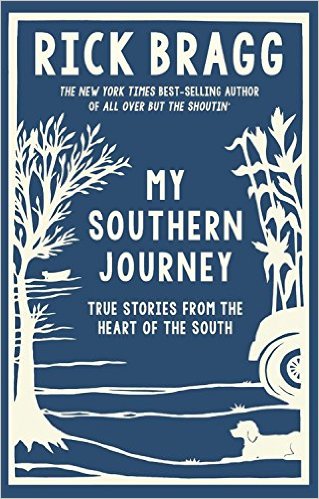
  • My Southern Journey, Rick Bragg – nonfiction. Funny, moving, evocative, beautifully crafted, very short true stories from the Deep South.

(* are audiobooks.)

Honorable mention goes as well to Paul Kingsnorth’s singular debut novel, The Wake, which tells a great story, a historical post-apocalypse set in England following the Norman Invasion. Kingsnorth makes the gutsy decision to tell the story in a modified version of Old English, making it quite hard to read: I fear he will lose readers by challenging them so greatly, but really, it’s a worthwhile book if you can struggle through. It gets better after 50 pages, I promise!

If you try any of these fine books out, I’d love to hear what you think. Thanks!

Coming of Age at the End of Days by Alice LaPlante

In this expert psychological thriller, a disturbed teenaged girl meets a doomsday cult and struggles for survival and identity.

coming of age

The title of Alice LaPlante’s third novel, Coming of Age at the End of Days, succinctly describes its plot. At the beginning, Anna Franklin is 16 and terribly depressed, fixated on death. Therapy and medication do nothing to bring her out of it. Her anti-religious mother begins reading to her from the Bible, just to give them some time together and to introduce Anna to literary references; this does not lighten Anna’s world, but instead gives its darkness meaning, as Revelations resonates with her mood. What finally causes her depression to break is a new family in the neighborhood. Lars and his parents introduce Anna to their church, where it is preached that the Tribulation at the End of Days is coming. There will be blood, violence and suffering. Her heart sings at the news.

Anna begins having a recurrent dream of a central image in her church’s system of beliefs; she has visions and becomes convinced she has an important role to play. Joyfully, she plans for the coming End of Days. Her parents are relieved that she no longer appears suicidal, but disturbed anew at this fresh challenge. Anna and Lars, a compelling, alternately magnetic and frightening young man, are socially isolated and bullied at school. On the other hand, Anna’s parents are loving, wise and committed to her well-being. Additionally, there is Anna’s neighbor Jim–back in his parents’ basement, in his mid-20s, suffering his own breakdown–and a chemistry teacher, the youthful, no-nonsense Ms. Thadeous. When Anna experiences a tragedy that “more than satiate[s] her hunger for death,” these few but remarkable friends represent a chance to reconsider the End she is working toward.

At the center of Anna’s story–and of all these characters’ stories–are obsessions. “Images. Sounds. The Red Heifer. Bosch’s depiction of hell. A rock hitting a tree.” Anna’s mother is a deeply devoted pianist; her father is an earthquake nut, eagerly awaiting The Big One, in a secular obsession otherwise not unlike his daughter’s. LaPlante (Turn of Mind) masterfully weaves a distressing plot in which complex, sympathetic characters, each with a complete and absorbing past, are brought to the brink of destruction and then seemingly asked: What kind of life, and death, will you choose? The reader’s imagination will be won by this brilliant, thought-provoking and memorable novel. Coming of Age at the End of Days perfectly captures the dynamics of family relationships and friendships, loyalties and priorities, and the nuanced workings of an unusual mind.


This review originally ran in the July 23, 2015 issue of Shelf Awareness for the Book Trade. To subscribe, click here.


Rating: 8 times vermillion.

Maximum Shelf: The Gap of Time by Jeanette Winterson

Maximum Shelf is the weekly Shelf Awareness feature focusing on an upcoming title we love and believe will be a great handselling opportunity for booksellers everywhere. The features are written by our editors and reviewers and the publisher has helped support the issue.

This review was published by Shelf Awareness on July 22, 2015.


gap of timeThe Hogarth Shakespeare project undertakes to reinvent the Bard’s classic works in novel form; the first installment is The Gap of Time by Jeanette Winterson (Oranges Are Not the Only Fruit; Why Be Happy When You Could Be Normal?), a “cover version” of The Winter’s Tale. In Shakespeare’s original, the kings of Sicilia and Bohemia are great friends until one accuses the other of sleeping with his wife. The jealous Leontes plots to murder his friend Polixenes, but misses his chance and instead takes out his rage on his pregnant wife, the queen Hermione. By the time his suspicions are proved false, he has lost both his son and his wife, and the baby girl Hermione gives birth to has disappeared. Leontes ordered the baby taken into the wilderness and abandoned, but the man he assigned this task died in the process, so the baby’s fate is unknown. Sixteen years later, a romance between Polixenes’s son and a beautiful, mysterious shepherd’s daughter may offer redemption and even a second chance.

The Gap of Time is set dually in modern London, just following the 2008 economic crisis, and the fictional American city of New Bohemia. Londoners Leo and Xeno were childhood friends and, for a time, lovers; as adults, despite very different values, the bohemian Xeno and the materialistic Leo have become business partners in Sicilia, a high-tech gaming company. Leo’s wife, MiMi, son, Milo, and his uber-capable assistant, Pauline, round out a highly functional, loving family of sorts, until Leo becomes obsessed with the idea that MiMi and Xeno are sleeping together. Leo reacts violently, and loses his son and wife. When he tries to ship MiMi’s baby daughter overseas to Xeno, whom he wrongly believes to be her father, the little girl goes missing.

In New Bohemia, Shep and his son, Clo, who run a piano bar, come across a carjacking too late to save its victim, after which Shep is able to pull a baby out of the nearby hospital’s BabyHatch, a high-tech receptacle for abandoned infants. He is convinced this child is a gift meant for him, to help him heal after his wife’s death, and raises the girl as his own. Her name, according to papers found with her, is Perdita. He could never conceal from her that she is adopted: Perdita is white, while Shep and Clo are black; but she grows up in a home filled with love and music, never doubting that she is wanted. As in the original, 16 years will pass before Perdita encounters a romantic interest who, though equally ignorant of their connected past, will lead to her learning about her origins.

A very brief recap of The Winter’s Tale at the beginning of the book informs the reader, so that no knowledge of the original is necessary to follow or enjoy this retelling. Indeed, The Gap of Time will please readers who have never given Shakespeare a second glance, as well as his committed fans. Winterson has fashioned the ideal remake: paying respect to the original and faithfully following many plot points, as well as the general spirit, she simultaneously builds upon it, not only making Shakespeare’s work accessible to modern minds but providing a freshly felt and relevant emotional experience.

Shakespeare’s sympathetic and intriguing plot involving several twists and changes of heart plays well with Winterson’s nuanced tone, while her characters are more multi-faceted than the originals. Leo is a deeply flawed man who nonetheless attracts the reader; Xeno is magnetic, beautiful and sensual; and MiMi is a woman of more complex feelings than the dignity Shakespeare gives Hermione. The next generation, Perdita and Zel, Xeno’s son, are appealing, with passions and interests of their own. It is Shep and Clo, though, Shakespeare’s nameless Shepherd and Clown, who get the most reworking, and to great advantage.

Most of The Gap of Time takes place in London and New Bohemia, but also visits Paris, the Seine and, of course, the bookshop Shakespeare and Company. As realistic as these settings are, it is the gaming world invented by Leo and Xeno that is most imaginative and vibrant. Leo is obsessed with the scene in Superman: The Movie where Superman zips round the world and turns back time to save Lois Lane. Their game is creative, vividly rendered and evocative of Xeno’s disappointment in what his life has become, as well as Leo’s preoccupation with the idea of time’s malleability. It is a game filled with angels of death, and it is called The Gap of Time.

As the title indicates, Winterson’s version of The Winter’s Tale plays with the concept of time even more than the original did, asking questions about what is changeable about our pasts and our futures. Leo wishes he could take back his madness and its consequences; Xeno wishes he’d handled it differently. This is a stirring tale filled with waste, simple mistakes and regrets. But as in the original, it also offers hope, young love and the possibility of new beginnings. In an unusual twist, Winterson herself steps forward in the final pages to speak in the first person about what she hopes for from this story–and then she steps back to allow her characters to finish it.


Rating: 7 feathers.

Season of the Body by Brenda Miller

season of the bodyBy one of the authors of Tell It Slant, Season of the Body is a collection of lovely essays which showcase Miller’s extraordinary, often poetic prose. She writes intimately about her own body and love affairs; two miscarriages when she was twenty which resulted in her inability to have children, and her feelings about that inability over the course of a life; her explorations in spirituality; different forms of family; and art. Her writing is sensual and muscular. I wonder if I use those words to describe it because the title, Season of the Body, cued me to do so. I think they ring true.

Without going back to investigate whether this is literally true, I am left with the impression that these essays run more or less chronologically in terms of the time in Miller’s life that they handle. So we meet her first as a young woman, dealing with the medical side of two miscarriages, and exploring her maternal ancestry and Jewish heritage. We see her pursuing relationships that work out more and less well; she becomes a godmother to a friend’s child, and wishes for her own. Later, we see her reflecting back from a certain distance. These essays also carry her through space, and because a sense of place is important to me, that intrigues me – all the more so because Miller and I now live in the same town, so I see some of her vistas out my own windows.

The fineness of this writing is indisputable. It is emotionally very powerful and evocative, and an extraordinary showcase for what language can do; her essays should really be read at least twice, for their content and again for their music. As craft, these essays are exemplary. In terms of their subject matter, they really got me thinking about the idea of the universal in personal writing. Writers of creative nonfiction are urged to find the universal in the personal story. I found myself sometimes distant from the sort of physical flesh of these essays: spiritual questing and yearning for babies are not experiences that resonate with me. I had to stop to consider how Miller’s writing did and didn’t speak to me. But I continued to feel pulled into the story, for the beauty of the writing as much as anything else. A friend characterized the themes of this collection a little less physically than I did: he cited “hope deferred and fractured desire.” In these terms, the stories Miller tells are much more universal, and maybe that’s where I responded to them, too.


Rating: 7 photographs.

The Insect Farm by Stuart Prebble

A disquieting puzzle starring two odd but loving brothers with distinct fixations.

insect farm

Stuart Prebble’s U.S. debut, The Insect Farm, follows the lives of two devoted brothers, Jonathan and Roger. As boys, they were close, but as they enter adulthood they develop separate passions. Jonathan is obsessed with his stunning, brilliant wife, Harriet, and deeply, disturbingly jealous of the attentions she receives from other men. Roger is consumed with his intricate collection of insect tanks and habitats, housed in a garden shed, where he goes to lose himself for hours on end. Roger is mentally handicapped, and his ability in caring for the insect farm is much greater than his abilities in other areas of his life.

When their family circumstances change, Jonathan leaves university to care for Roger, putting Harriet at a physical distance since she stays in school. From this point, a series of misfortunes and accidents raises faint questions about the minds of each brother, as they age together in quiet companionship.

This unsettling story is told in Jonathan’s retrospective voice, as he looks back on the tragedies that have befallen his family. While each brother is a complex and subtly disconcerting character, this dubious point of view obscures them somewhat, and the reader’s suspicions accumulate.

Suspenseful and ominous, The Insect Farm sketches a world of unstable truths, while posing questions about memory, relationships, perception and intuition. Through Jonathan’s shifting narration, Prebble skillfully evokes an increasingly unnerving atmosphere, as it gradually becomes clear how little each brother really understands about the other–and about himself.


This review originally ran in the July 21, 2015 issue of Shelf Awareness for Readers. To subscribe, click here, and you’ll receive two issues per week of book reviews and other bookish fun!


Rating: 7 cockroaches.

The Anger Meridian by Kaylie Jones

A newly widowed woman is forced to face her own secrets, in vibrant San Miguel de Allende.

anger meridian

Merryn is up late at night, awaiting and fearing her husband’s drunken homecoming, when she opens the door to find two policemen announcing that he has been killed in a car accident. She quickly bundles up their nine-year-old daughter, the precocious Tenney, and leaves Dallas, Tex., for her mother’s home in San Miguel de Allende, in central Mexico.

The rest of Kaylie Jones’s striking novel, The Anger Meridian, is set in San Miguel, where Merryn’s mother, Bibi, presides over an opulent home and her frightened daughter’s life. As Merryn struggles to navigate her husband’s legacy (the FBI has followed her to Mexico to investigate his business dealings) and her and Tenney’s future, she has the opportunity to confront many dishonesties, including her own. Lying is one of The Anger Meridian‘s central themes.

The tone of Jones’s writing quivers with tension from the opening page. Merryn is traumatized, anxious, grinds her teeth at night; she behaves like an abuse victim. But where does her damage come from? And whom should she–and the reader–trust? A handsome American expat doctor, a lawyer friend of the family, a local yoga teacher, the members of Bibi’s entourage and clever Tenney each offer different angles on Merryn’s life. In the end, there are several puzzles to untangle in this lovely, finely plotted novel, which highlights colorful San Miguel and the complexities of family, loyalty and honesty. The Anger Meridian is at once a suspenseful mystery and a superlatively gripping story of self-discovery.


This review originally ran as a *starred review* in the July 21, 2015 issue of Shelf Awareness for Readers. To subscribe, click here, and you’ll receive two issues per week of book reviews and other bookish fun!


Rating: 7 martinis.

The Casualties by Nick Holdstock

This memorable first novel examines a Scottish neighborhood’s eccentrics with the benefit of hindsight following an apocalypse.

casualties

In Edinburgh, Scotland, there was once a neighborhood called Comely Bank, whose denizens included some eccentrics, with stories that warrant telling. Hinted at, just out of the reader’s line of sight, is the calamitous event that wiped it out, and Edinburgh, and all of Western Europe and beyond. This catastrophe motivates the unnamed narrator’s storytelling, told almost entirely in flashback.

Following a brief and ominous opening in which Comely Bank’s destruction is promised, the daily lives of local residents form the focus of Nick Holdstock’s debut novel, The Casualties. Sam Clark is a very curious man. He runs the charity bookshop in the neighborhood, where he carefully sifts and sorts through donated books looking for the ephemera tucked forgotten between their pages: he’s after photographs, letters, airline tickets, notes and cards that shed light on the lives of strangers. He carefully observes the people around him, seeking their stories. The reader won’t learn what he’s really looking for until well into Holdstock’s meticulously ordered narrative.

Comely Bank’s other residents include Sinead, a nymphomaniac struggling to control herself but obsessed with a local shopkeeper; meanwhile she serves as caregiver for an obese, mentally handicapped man. Caitlin works at a secondhand clothing store and fixates on the crackling skin condition that mars her face. She loves a man who does not love her; “with adoration comes the wish to hold a pillow over his face.” Alasdair lives under a bridge, dispensing questionable health advice to passersby who do not want it; he can’t remember his last name or his past. “Trudy” is the name taken by a Filipino prostitute illegally residing in Comely Bank. Mr. Ashram is resentful of his neighbors’ reluctance to accept him into their society. Retired headmistress Mrs. Maclean is impatient for her own demise. And so on–until the final, strangely twisting, imaginative pages.

Holdstock vividly presents his odd and varied characters, and places them in a world that is at once both colorful and recognizably everyday. The protagonists’ personalities and actions are quirky but believable, and given added weight by their place in time: The Casualties is a twist on the post-apocalyptic novel in that it reexamines the world just before its end. This perspective, and the continuing mystery of the narrator’s identity, nudge the reader into asking uncomfortable questions about life and its length and meaning. In its ending, Holdstock’s unusual creation leaves certain details to the imagination. Strong characterization and a creative plot, both familiar and bizarre, give this novel enduring allure.


This review originally ran in the July 21, 2015 issue of Shelf Awareness for the Book Trade. To subscribe, click here.


Rating: 6 pictures.