The Fish Ladder: A Journey Upstream by Katharine Norbury

A pensive, meandering memoir of searching–for the source of both a river and the author’s life.

fish ladder

In The Fish Ladder: A Journey Upstream, a memoir of two concurrent paths, Katharine Norbury aims to find a river’s source and to discover her own. She is mourning a recent miscarriage and the loss of her father, taking solace with her mother and her daughter, Evie. Norbury was adopted, and all she knows of the woman who abandoned her at a convent is a name. Neil M. Gunn’s novel The Well at the World’s End inspires her to walk a waterway from the sea to the source, as does Gunn’s protagonist. But Norbury’s journey is clearly also metaphorical, a search for herself and her roots.

The route she chooses is not specific: with Evie, she walks parts of several waterways, eventually setting more precise goals along the way, and reaching for Gunn’s work when her plans falter. Her expedition to find her biological family proves to be more challenging, intersecting her pathway upriver, from the location she has discovered is her birthplace.

Norbury’s seeking is set in Britain, and The Fish Ladder doubles as an amateur naturalist study of the country’s flora and fauna. She shares her insecurities and questions alongside Celtic folk tales about salmon traveling upriver to the places of their birth. Her story wanders, but in the end makes emotional and profound ventures into landscape, the importance of place and the very real connections between physical and interior voyages.


This review originally ran in the August 25, 2015 issue of Shelf Awareness for Readers. To subscribe, click here, and you’ll receive two issues per week of book reviews and other bookish fun!


Rating: 5 pieces of chocolate.

Teaser Tuesdays: The Living by Annie Dillard

Teaser Tuesdays is a weekly bookish meme, hosted by MizB of Should Be Reading.

the living

As is the new norm with audiobooks, I am working my way through Annie Dillard’s novel about my new place of residence very slowly. Set in the region including and surrounding what is now the town of Bellingham, The Living is about the early days of settlement. It is a large and sweeping tale that spans generations, which will give me some challenge when it is time to write about the whole, since I’m taking so long to listen to it. But no worries. It remains an engaging story, and it’s always stimulating to read about a place that you know. Today’s teaser involves a settler to Washington state traveling back east for a visit.

Minta considered the Rockies inferior to the Cascades and dull, for they lacked form, height, and glaciers. The volcanic cones she loved, Mount Baker and Mount Rainer, had enormous forests at their skirts, and waterfalls that drained the meadows above the forests, and precipitous snowfields and glaciers that rose above the clouds.

Indeed. As I am a new resident of Cascadia, this is something to think about in a country enamored of the Rockies.

Thanks for stopping by today. I’ll get around to reviewing this novel one of these days…

Creative Nonfiction, issue 56: Waiting (summer 2015)

You can read my review of the previous issue here.

waiting“True stories, well told.” In this issue, they are stories concerned with waiting, whatever that might mean to the writer. (A few craft-related essays are also included.) Unsurprisingly, I am very impressed with the stories CNF chose to publish.

There’s not much not to love here, beginning with Editor Lee Gutkind’s opening piece about all the waiting that goes on in his and my line of work; Dinty W. Moore’s ponderings on the genre name “creative nonfiction” (I am an unrepentant Moore fan); and the essay “Waiting and Wading through Story” by Maggie Messitt, about immersion research and storytelling and the lessons she’s learned from other writers. But I was really blown away by this issue’s winning essay: I agree wholeheartedly with their choice of Joe Fassler’s “Wait Times” as winner of the Best Essay Prize. If you read nothing else in this magazine, please go read this story. It is heartrending and thought-provoking and disturbing, and I’ve thought about it at least daily for more than a week since reading it. It’s about a medical emergency experienced by his wife.

I found Judith Kitchen’s “Any Given Day” harder to love, and I’m sorry to say that, because I’ve heard such wonderful things about her (and have her Half in Shade waiting on my TBR shelf), not least from Gutkind in his opening piece. She died last fall of cancer, and this piece is in part about that ending. But the form of it – loose, amorphous, wandering – didn’t quite work for me. Just a personal reaction; perhaps you’ll find it mindblowing, and I’d love to hear if you do. Certainly she is a fine artist. But this piece didn’t work for me quite so well.

“Lost and Found” by Josephine Fitzpatrick was more a straightforward narrative piece, and call me simple-minded but that struck me more forcefully. Fitzpatrick’s brother went missing in Vietnam when they were both teenagers, and this is the story of waiting for him to come home or for his story to be somehow resolved, for many decades. It is of course touching and thoughtful and, I think, potentially helpful for others suffering from “ambiguous loss” (see also Sonya Lea’s outstanding Wondering Who You Are). Mylène Dressler’s “End Over End”, about coming to surfing as a mature adult and finding the stoke, finds a good balance between cerebral wanderings and narrative.

Following essays and stories about waiting, Sangamithra Iyer’s “The Story Behind the Story,” about searching for her grandfather’s history as civil servant turned activist in Burma, is a touching and instructive piece, not least in its realization that “not getting the story was part of my story, too… the loss of memories, the erasure of our histories, is part of the narrative of many of us children of the diaspora.” I love this concept.

Rachel Beanland’s “Required Reading” was another revelation, about handling the loss of her father by reading numerous memoirs of others’ losses. This strategy was deemed strange or not shared by others but made sense to her, helped her, and this makes sense to me, too. Look, I just said something similar, above, about “Lost and Found” and Wondering Who You Are. This is a short but powerful essay and it contains lots of titles and snippet-quotations that I’m marking for later.

I always look forward with intrigued anticipation to “Pushing the Boundaries,” the section of each issue that includes an “experiment in nonfiction.” This time it is Nathan Elliot’s “An Honest Application,” a response to the part of an immigration application that asks him to justify and place a value on the marriage that hopes to qualify him for permanent Canadian residence. His actual written response is short and simple, but it is accompanied by lengthy footnotes that include all the emotion and indignation he couldn’t put in his application. It is genius – I loved it – and I love as well the story of love that he has to tell.

There were others, but these are my favorites. You can view these pieces and more, or buy the whole issue (do that!) here.

book beginnings on Friday: Red Dirt Women: At Home on the Oklahoma Plains by Susan Kates

Thanks to Rose City Reader for hosting this meme. To participate, share the first line or two of the book you are currently reading and, if you feel so moved, let us know what your first impressions were based on that first line.

red dirt women

My first review for Concho River Review is of this slim collection of stories about Oklahoma’s diverse and powerful women. It is a fine and auspicious beginning book, and in that spirit, today’s book beginning:

In her chronicle of life in Kenya – one of the great grasslands of the world – Isak Dinesen explains that it is impossible to live any place for a time and remain unaltered by one’s surroundings. “It does not even make much difference,” she says, “whether you have more good or bad things to say of it, it draws your mind to it, by a mental law of gravitation.”

You know I am a little obsessed by a sense of place, and that is very much at the heart of this collection, as this Ohio native comes to feel at home on Oklahoma’s dusty plains. Good stuff. I am glad to be able to recommend this book to you. Happy weekend, friends.

In a Dark, Dark Wood by Ruth Ware

An enchantingly unsettling thriller with mysterious characters and a classically spooky setting.

dark dark wood

Ruth Ware’s chilling, atmospheric thriller In a Dark, Dark Wood is her first novel and the inaugural title published by Simon & Schuster’s new imprint, Scout Press.

Nora is a writer of crime novels, a loner who buys her groceries online and appreciates her solitude. But when she gets an invitation to a hen party being thrown for a woman she hasn’t spoken to in 10 years, her carefully structured life is disrupted. Against her instincts, she agrees to attend, and the party’s setting serves as a disturbing beginning: an isolated castle of steel and glass set deep in the English woods, populated for the weekend by nervous guests, each apparently with secrets to keep.

In the novel’s disjointed timeline, Nora later wakes up in the hospital with fractured memories of being covered in blood, running through dark woods with a sense of urgency; the police are waiting outside her door. What happened to her? Or… what has she done? As the narrative switches between Nora’s confusion in her hospital bed and the events leading up to her hospitalization, she and the reader together begin to wonder: Can she really not remember, or does she not want to? Both timelines accelerate with building suspense toward the big reveal, and eventually Nora will have to go back and recall events from her past that she’d rather leave forgotten.

In a Dark, Dark Wood is peopled by mysterious characters set to a classically spooky backdrop and culminating in blood, broken glass and memory loss. Readers who appreciate being unnerved will be charmed.


This review originally ran in the August 14, 2015 issue of Shelf Awareness for Readers. To subscribe, click here, and you’ll receive two issues per week of book reviews and other bookish fun!
<hr /

Rating: 7 tequila shots.

A Clue to the Exit by Edward St. Aubyn

Edward St. Aubyn’s favorite of his own novels surveys characters from his other work, in a clever, sophisticated consideration of death and consciousness.

clue to the exit

Edward St. Aubyn (Mother’s Milk) calls A Clue to the Exit his favorite of his own novels. Originally published in 2000, it’s now being reissued by Picador.

Charlie is a hack screenwriter who’s just been told he has six months to live. (He takes issue with the idea that his doctor has “given” him six months, as if it were a gift he should be grateful for.) He starts driving more carefully, even as he considers suicide, experimenting with the proper response to this news. He contacts his ex-wife about seeing his daughter; he sells his house and takes half his riches to Monte Carlo to lose it as quickly as possible. And, suddenly inspired, he sets out to write a serious novel–much to his agent’s exasperation.

In Monte Carlo, he meets a beautiful stranger, who he imagines might help him with his burden of mortality. Angelique is a gambling addict, and in her company Charlie feels an equal craving for his own writing. They have a deal: she gambles away his fortune, and he writes in the casino as he watches her. His novel, On the Train, tackles the big question of consciousness, or nothing less than the meaning of life, and Charlie’s autobiographical protagonist is none other than Patrick Melrose, St. Aubyn’s most famous character, who is joined by others that St. Aubyn’s fans will recognize from previous work. The characters of the novel within the novel argue philosophy on a train stuck in Didcot, as Charlie finds himself stuck as well between games of chance and the need to map his own final months.

St. Aubyn’s craft is on full display with this inward-looking work of simultaneous parody and earnestness. Nearly every line is quotable, a small but shining victory of prose. On the Train visits with Proust and Buddha, while “a clue to the exit” references Henry James on “the human maze,” but alongside serious, even wearying considerations, Charlie’s story is often very funny and self-referential. A third-person narrative “is so much more personal than a first-person narrative, which reveals too flagrantly the imposture of the personality it depends on,” writes St. Aubyn in Charlie’s voice: A Clue to the Exit is told in first-person, while On the Train is in the third. This feedback loop is a central device. “Feeling too upset to write, I made the brave decision to write about feeling too upset.” A parade of absurd characters and dinner parties accompanies Charlie’s, and his character Patrick’s, contemplations of death. As Charlie’s six months run out, St. Aubyn continues to surprise his reader in the final pages.

A refined and stylish novel of cynicism and the question of death, A Clue to the Exit is a perfect sample of St. Aubyn’s craft.


This review originally ran in the August 13, 2015 issue of Shelf Awareness for the Book Trade. To subscribe, click here.


Rating: 6 chips.

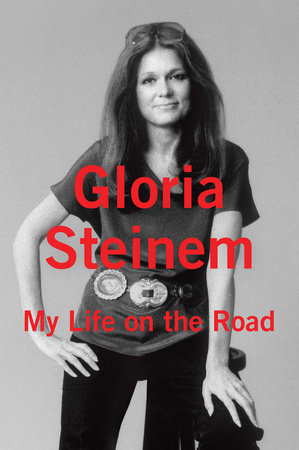
Teaser Tuesdays: My Life on the Road by Gloria Steinem

Teaser Tuesdays is a weekly bookish meme, hosted by MizB of Should Be Reading.

my life on the road

I was intimidated to read this book by Steinem – my first of hers – because she is such an accomplished, impressive woman. But I shouldn’t have been. She is warm and approachable on the page. Her story is not only of interest and worth reading (which of course I knew going in), but also well and simply told.

The book is a series of stories, and for today’s teaser, I’ve chosen one very short one for you.

On another campus, some women tell me about men who leave their own underwear on the floor and don’t feel compelled to pick it up – or even notice what they’ve done. By now, the shouts and laughter have become quite rowdy, and I’ve begun to worry about a silent young Japanese woman in the front row. Perhaps we are offending her.

As if summoned by my thought, she stands and turns to face all five hundred or so women. “When my husband leaves his underwear on the floor,” she says quietly, “I find it useful to nail it to the floor.”

Amid laughter and cheers, this shy young woman seems surprised to find herself laughing, too. She tells the group this is the first time she has ever said anything in public.

This quotation comes from an uncorrected advance proof and is subject to change.

The Wake by Paul Kingsnorth

This compelling novel of resistance to the Norman Invasion, told in a hybrid of Old English, will satisfy motivated readers of history, ecology and the persistent pull of the old gods.

wake

The Wake is a singular debut novel by Paul Kingsnorth (One No, Many Yeses; Real England), set in England immediately following the Norman invasion of 1066. Its first-person narrator is a landowner named Buccmaster, who has lost everything to the attack: his family, his home, his land and his privilege. He takes to the fens and woods, with revenge in his heart and an intention to drive the French from his land and all of England. There he becomes one of the guerrilla fighters known as green men, whose chapter in history is little known.

What makes this powerful story distinctive is Kingsnorth’s decision to write the story in what he calls a “shadow tongue,” an Old English hybrid of the author’s invention, made slightly more understandable to the modern reader. This choice presents an undeniable challenge to the reader, and requires substantial extra effort to pursue the story. (Hint: try reading aloud, to hear cognates and the rhythm of the speech). But Kingsnorth defends his strategy: it evocatively renders Buccmaster’s voice, and brings to an already gripping saga a layer of new meaning, in that the reader has to participate in creating that meaning through interpreting unfamiliar words. A partial glossary deciphers some words, but many are left for the reader to define via context clues and, yes, guessing. Some readers will be turned away. But those who persist will find the language easier to follow after 20-40 pages, and will be rewarded by Buccmaster’s riveting narrative.

Buccmaster is a follower of the eald (old) gods, as was his grandfather, the gods of wilde places on the earth and its wihts (creatures). His father was not. “I will not spec of my father,” he says, but the story of his father is only one of the details that this unreliable narrator leaves out. As Buccmaster travels overland on foot, gathering companions who also wish to drive out the French, he journeys as well into the myths and traditions of his elders, and envisions a grand role for himself. The fate of his band of green men is as tenuous as that of England, as their leader struggles with reality.

The Wake is an ambitious novel in its themes and scope, in addition to its unusual linguistic decisions. As the English folc in his story become disconnected from their land, they lose their freedom: “if the frenc cums and tacs this land and gifs these treows [trees] sum frenc name they will not be the same treows no mor.” As an impassioned defense of the natural world and people’s responsibilities toward it, the novel acts as a metaphor for modern times. Buccmaster’s personal narrative is a lesson in pride and its dangers, a glimpse of another culture in its own language. Kingsnorth’s captivating first novel is thought provoking, multi-faceted and intriguingly rendered.


This review originally ran in the August 11, 2015 issue of Shelf Awareness for the Book Trade. To subscribe, click here.


Rating: 8 fugols.

book beginnings on Friday: We Were Brothers by Barry Moser

Thanks to Rose City Reader for hosting this meme. To participate, share the first line or two of the book you are currently reading and, if you feel so moved, let us know what your first impressions were based on that first line.

we were brothers

A thoughtful memoir with beautiful illustrations by the author begins with this paragraph.

I have a family photogrpah that was taken on a Christmas Eve sometime in the early 1960’s. We are in my aunt’s living room. Two generations pose in front of a fireplace that, as far as I know, never entertained an actual fire. Above the garlanded mantel hangs a portrait of my aunt’s late husband that I painted when I was in high school. The people in the picture are my mother’s people: her husband, sisters, and brother are there, as well as my brother and me. Most of us lived cheek to jowl on a short stretch of Chattanooga country road.

Idyllic? Don’t get too comfortable. This is the story of a troubled brotherhood; but it is told lovingly, if sadly. Stay tuned.

This quotation comes from an uncorrected advance proof and is subject to change.

the TBR shelves: a lifestyle

Friends, I am a full-time reader-writer these days, having moved cross-country and left my day job behind. I read & review books & do author interviews for a living, and pursue my own, creative writing where I can. Let me repeat: I read books for a living.

I’ve written about this before, but I say again, I read for lots of reasons. I read for work, obviously, and am happy that what I get to read for work is mostly stuff I’m really interested in. But I also want to read all the good creative nonfiction and memoir out there, to train myself on it; I want to read all the good writing about sense of place, and people’s relationship to place; I want to catch up on everything ever written by Hemingway, Abbey, Maclean, and Dillard; I want to read more Stegner and Snyder. For fun I’d definitely spend more time with King and Burke. I want to read all the books on this and other lists. There are always more classics on my wish list – Steinbeck, Fitzgerald, Nabokov. I’m sure I’m forgetting all sorts of things, too.

Unsurprisingly, then, I’ve also got a couple of shelves devoted to books I already own and hope to someday find time for. Sometimes I weed these. When we moved from Houston to Bellingham, I was pretty ruthless; but I still moved probably 50 or 60 “to-be-read” (or TBR) books. Where do they come from?? I was just wondering this, so here’s a blog post.

My TBR shelves, in pictures (click to enlarge):
IMG_6176
IMG_6177

IMG_6178

IMG_6179

IMG_6181
These are recommendations (and gifts – Fil) from friends, on cycling and nature and Texas and Mexico; biographies of Melvil Dewey, Howard Hughes, and Zelda Fitgerald (if there’s a theme there, it might be mental illness); nature writing, much of it recommended by other nature writers; a hefty pile of Sharon Kay Penman; and several galleys I missed the chance to review for Shelf Awareness, but still hope to read (a smokejumper’s memoir; a readalike for Gus Lee’s Honor and Duty). Books about writing, or books that showcase the kind of writing I aspire to. There’s a different edition of A Sand County Almanac, from my dad. They’ve come from the discards pile at libraries I’ve worked at, as gifts, as galleys from publishers, and more than I like to admit I’ve bought and paid for, and may never find time to read. I’ve read 80-something books this year, and 18 of them were purely my choice, unassigned. I already quit my day job. What gives?