Teaser Tuesdays: Klee Wyck by Emily Carr

Teaser Tuesdays is a weekly bookish meme, hosted by MizB of Books and a Beat.

Teaser

In Cascadia, you’ll recall that I was much impressed by a few snippets of writing by Emily Carr (subject of the novel The Forest Lover). Now I have here, on loan from Pops, the longer work from which those snippets were snipped.

klee wyck

Klee Wyck is delightful. See for example these lines.

They were in a long straggling row the entire length of the bay and pointed this way and that; but no matter how drunken their tilt, the Haida poles never lost their dignity. They looked sadder, perhaps, when they bowed forward and more stern when they tipped back. They were bleached to a pinkish silver colour and cracked by the sun, but nothing could make them mean or poor, because the Indians had put strong thought into them and had believed sincerely in what they were trying to express.

Kathryn Bridge’s introduction and two forewords (to two different previous editions) by Ira Dilworth all note Carr’s style: painterly, minimalist, precise; each word in its place. Bridge quotes Carr on her two rules for writing, similar to those she used in her painting: “get to the point as directly as you can; never use a big word if a little one will do.” I think she’s done beautifully.

The Trespasser by Tana French

Tana French surpasses herself with character nuance and plot twists in her sixth gritty, Dublin-set murder-mystery.

trespasser

Tana French’s sixth novel, The Trespasser, revisits the burgeoning careers of Dublin Murder Squad Detectives Antoinette Conway and Stephen Moran, introduced in The Secret Place. As atmospheric and intricate as French’s past work, this engrossing mystery succeeds in both style and plot. Fans and new readers alike will be captivated.

Conway and Moran are partners now, but they are far from fitting in with the rest of the Murder Squad. The guys–and they are all guys–give Conway more than the usual rookie hazing. In the opening pages, she and Moran are assigned what looks like yet another boring domestic homicide: a beautiful young woman has been killed, apparently in a fit of passion during a romantic dinner at home. A little too perfect, she “looks like Dead Barbie,” and her apartment “like it was bought through some Decorate Your Home app.” But most disturbingly, Conway is sure she’s seen the vic somewhere before. The young detectives may be a little overeager to find links to organized crime or something more involved, but as this case unfolds, the ambitious Moran and much-beleaguered Conway find wider-reaching connections than they’d bargained for. As an added headache, the obnoxious veteran Detective Breslin has been assigned to “assist” Conway, who is ostensibly the lead detective, though Breslin seems to think he can call the shots.

French’s fans will recognize of the hallmarks of her mystery novels: intense interior struggles afflicting the protagonist detective; a potent undercurrent of class tensions; a case that appears to have a mind of its own; a victim whose personality haunts those who are seeking justice. The oppressive mood of the Murder Squad threatens to overwhelm Conway, who’s barely holding it together under the stress of workplace harassment; the incident room she is assigned becomes a character unto itself. The Trespasser is told in Conway’s voice, giving the reader full access to her troubles and offering perhaps a hint of the unreliable narrator to sneak in.

It is a testament to French’s talent that she more than matches her established achievements in characterization, dialogue, atmosphere and detailed setting, while also surprising her reader at every turn. She offers layers of possible betrayal, hypothetical events and convoluted stories, even an upheaval in Conway’s private life that echoes an element of the case at hand. More than 400 pages pass by almost without blinking, as The Trespasser‘s momentum presses forward to a finish that staggers Conway and Moran as much as it does the reader. This is a complex, compulsively readable novel; French keeps getting better and better.


This review originally ran in the August 29, 2016 issue of Shelf Awareness for the Book Trade. To subscribe, click here.


Rating: 8 stories we tell ourselves.

book beginnings on Friday: Memoirs of a Polar Bear by Yoko Tawada, trans. by Susan Bernofsky

Thanks to Rose City Reader for hosting this meme. To participate, share the first line or two of the book you are currently reading and, if you feel so moved, let us know what your first impressions were based on that first line.

memoirs of a polar bear

I have a strange and interesting one to start off this weekend. The back of the book quotes the New Yorker on “Yoko Tawada’s magnificent strangeness.” I’m looking forward to it.

We begin:

Someone tickled me behind my ears, under my arms. I curled up, becoming a full moon, and rolled on the floor. I may also have emitted a few hoarse shrieks. Then I lifted my rump to the sky and slid my head below my belly. Now I was a sickle moon, still too young to imagine any danger.

Sweet, and strange. I’m game.

This quotation comes from an uncorrected advance proof and is subject to change.

The Hidden Lives of Owls: The Science and Spirit of Nature’s Most Elusive Birds by Leigh Calvez

This enthusiastic study of the owls of the Pacific Northwest may inspire new fans and citizen scientists.

hidden lives of owls

Leigh Calvez had studied orca and humpback whales, spirit bears and brown bears, before owls crossed her line of sight. The Hidden Lives of Owls: The Science and Spirit of Nature’s Most Elusive Birds is the story of the time she spent pursuing the owls of the Pacific Northwest, where she lives.

Calvez meets with citizen scientists and professional researchers, and travels through Alaska, Montana, Washington and Oregon in her quest to spot and, more significantly, to understand a range of species. In a wondering tone, she considers the hard science and spiritual connections of Flammulated, Snowy, Great Horned, Great Gray, Burrowing and the controversial Barred Owls–which have thrived in the Pacific Northwest at the expense of other owls. Calvez shares some of the fascinating particulars of owl biology: specialized feathers that support silent flight; asynchronous hatching and fledging schedules; reversed sexual size dimorphism (females are larger than males in most owl species). She investigates the environmental threats to these birds, and she sympathizes with mothers forced to choose between the safety of their babies and their own.

The Hidden Lives of Owls is both informative and often reverential. While Calvez has chosen her subjects by their proximity to her home, many species considered here migrate or travel from coast to coast in the United States, and from Canada to Mexico, giving this book appeal across North America. In the end, Calvez makes a strong argument for the owls’ particular needs and interests.


This review originally ran in the August 26, 2016 issue of Shelf Awareness for Readers. To subscribe, click here, and you’ll receive two issues per week of book reviews and other bookish news.


Rating: 6 feathers.

selections from Cascadia: The Life and Breath of the World ed. by Frank Stewart & Trevor Carolan

cascadiaI just read a few pieces from this collection, so I won’t finish with a final rating, but I think it’s recommendable overall for readers interested in a sense of place in this place in particular; nature & ecology; First Nations peoples; or Emily Carr.

The table of contents is organized by category: essays, oratory, poetry, memoir. Unusually, the order of the table of contents is not the same as the order in the book itself. I picked out a few things I wanted to read: essays “In the Shadow of Red Cedar” by Wade Davis, “Reinhabitation” by Gary Snyder, and “Nature’s Apprentice” by Rex Weyler; Barry Lopez’s fiction “In the Great Bend of the Souris River”; and all three pieces of memoir, “The Laughing One: Word Sketches from Klee Wyck” by Emily Carr, “The Sasquatch at Home” by Eden Robinson, and “Lew Welch: An Appreciation” by Maxine Hong Kingston. Emily Carr’s sketches appear throughout, illustrating not only her own writing but all of Cascadia.

The work of Barry Lopez and Maxine Hong Kingston were among my favorites; Eden Robinson’s story about her mother and Elvis was curious and enjoyable. But by far the standout for me was Emily Carr, a woman I know best from a work of fiction: Susan Vreeland’s The Forest Lover. I marveled here at her skill with words as well as pencil and paintbrush. She recounts experiences as a teen visiting a mission school and other native communities, and the wisdom and humor as well as observations she expresses are impressive. I marked several startling phrases.

The house was of wood, unpainted. There were no blinds or curtains. It looked, as we paddled up to it, as it if were stuffed with black.

It must have hurt the Indians dreadfully to have the things they had always believed trampled on and torn from their hugging. Down deep we all hug something. The great forest hugs its silence. The sea and the air hug the spilled cries of sea-birds. The forest hugs only silence; its birds and even its beasts are mute.

The old man sawed as if aeons of time were before him, and as if all the years behind him had been leisurely and all the years in front of him would be equally so. There was strength still in his back and limbs but his teeth were all worn to the gums. The shock of hair that fell to his shoulders was grizzled. Life had sweetened the old man. He was luscious with time like the end berries of the strawberry season.

Luscious with time like a strawberry. I tell you. And this woman is famous for her paintings! (Etc.)

From Barry Lopez’s story, in which the narrator pours his passion into working with wood, reading wood, and using that work to read his world, comes a metaphor:

Nothing solid, I learned, can ever be built without shims.

I’ve just taken a quick overview of what this book has to offer; but I can see that it addresses the politics, history, cultures and ecology of the region of Cascadia (“a great arc from Southeast Alaska to Cape Mendocino, California”) through a variety of lenses and voices. And with some lovely words in between.

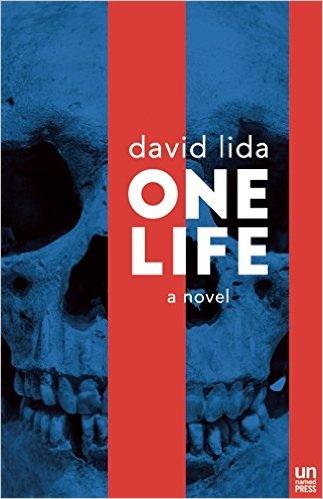
Teaser Tuesdays: One Life by David Lida

Teaser Tuesdays is a weekly bookish meme, hosted by MizB of Books and a Beat.

Teaser

I’ve been enjoying this novel, which is dark but sort of darkly whimsical, thoughtful, shocking, and heavily flavored by Mexico.

one life
Here’s your teaser from One Life:

Seated in a tiny booth, a smudged window separates Esperanza from her lawyer. She looks at Catherine’s straight brown bangs, her watery blue eyes, her bee-stung lips. Squeezed into her side of the booth, Catherine has brought a man with her; Esperanza imagines he is some other licenciado. Lawyers, cops, detectives, interpreters, investigators, detectives, consular officials and their respective assistants have all come to visit Esperanza in the months since her arrest. The meetings are brief and intense and then they disappear. She has seen few of them more than once.

This story is told in shifting perspectives, here Esperanza’s in the present, although hers visits the past quite a bit as well. The other major player is the strange man brought along on this visit. Stick around for the review: I recommend this one.

This quotation comes from an uncorrected advance proof and is subject to change.

Addlands by Tom Bullough

This richly detailed novel explores borders–between Wales and England, and in a changing world.

addlands

The first of Tom Bullough’s novels to be published in the U.S., Addlands covers 70 years in the life of one Welsh family and the changes in the world around them. The novel’s beauty lies in the common experience embedded in the personal, and Bullough has the rare gift of brevity: this sprawling storyline fits comfortably in about 300 pages.

Addlands opens in 1941. Idris Hamer is struggling to keep his sheep farm running when his young wife, Etty, gives birth to a son, Oliver, who grows into a champion boxer and prodigious bar brawler. Idris is tyrannically religious and mistrustful of change; Etty is a stronger woman than he might prefer. As generation gives way to generation, the Hamers face the challenges of technological and cultural changes (such as the fraught decision to exchange horse for tractor), financial troubles and their town losing people as a younger generation moves away. Family secrets are obliquely revealed, including Idris’s traumas in the trenches of World War I and a feud between brothers.

Bullough’s story and storytelling method are deeply rooted in the Welsh borderlands. His commitment to dialect can be challenging, exchanging a degree of ambiguity for the benefits of flavor and sound, although context clues serve adequately. Bullough pays special attention to natural landscapes, native flora and fauna and agriculture’s mark on the land. This wide-ranging but locally fixed style and plot combine to offer a muscular, evocative experience of a land and people, a novel to get lost in.


This review originally ran in the August 23, 2016 issue of Shelf Awareness for Readers. To subscribe, click here, and you’ll receive two issues per week of book reviews and other bookish news.


Rating: 7 times tupped.

book beginnings on Friday: Upstream: Selected Essays by Mary Oliver

Thanks to Rose City Reader for hosting this meme. To participate, share the first line or two of the book you are currently reading and, if you feel so moved, let us know what your first impressions were based on that first line.

I am very interested to be diving into my first Mary Oliver with an essay collection. I know her by reputation, naturally.

upstream

It starts in lovely form:

One tree is like another tree, but not too much. One tulip is like the next tulip, but not altogether. More or less like people–a general outline, then the stunning individual strokes. Hello Tom, hello Andy. Hello Archibald Violet, and Clarissa Bluebell. Hello Lilian Willow, and Noah, the oak tree I have hugged and kissed every first day of spring for the last thirty years. And in reply its thousands of leaves tremble! What a life is ours! Doesn’t anybody in the world anymore want to get up in the

middle of the night and
sing?

I see here trees; poetry; playfulness; and a spirit of celebration, which I do associate with Oliver. Feeling positive: happy Friday.

This quotation comes from an uncorrected advance proof and is subject to change.

Origins of the Universe and What It All Means by Carole Firstman

This reflective memoir examines an odd and estranged father through the lens of his scientific expertise.

origins of the universe

Carole Firstman’s ruminative memoir tracks a strained relationship with her eccentric but gifted father. The ambitious title, Origins of the Universe and What It All Means, is entirely appropriate: it is a direct and repeated quotation from her father, a research biologist obsessed with finding meaning in an enormous and confounding world.

Firstman suspects her father is on the autism spectrum, which might explain some of the social awkwardness, emotional detachment and unrepentant self-centeredness that characterizes Bruce and his parenting strategies–like moving his 19-year-old bride and their newborn daughter, Carole, into a tent in the backyard, because the baby’s crying disturbed his work. Despite such shocking details, Firstman gives a nuanced portrayal of an intelligent, lonely man capable of rare displays of concern. Weaving evolutionary theory, hard science and metaphysical origin stories with personal memoir, Firstman takes a contemplative tone. She is concerned with questions of linked causality (think the butterfly effect–except with scorpions, Bruce’s area of specialty) and what exactly she may have inherited from him. For example, she puts the same obsessive language in her own mouth that she does in Bruce’s, hinting that the Asperger-like symptoms she ascribes to him may tease at her, too. Firstman’s mother appears almost parenthetically, but at its heart this memoir is about what is inherited from and owed to one’s parents.

Origins contains unusual elements, including diagrams, mock lesson plans and footnotes, alongside Firstman’s self-questioning narrative. Despite its broad scope, this essentially human story handles “a conundrum of attachment and detachment” with sensitivity and rigor.


This review originally ran in the August 12, 2016 issue of Shelf Awareness for Readers. To subscribe, click here, and you’ll receive two issues per week of book reviews and other bookish news.


Rating: 7 ounces of formaldehyde.

War and Turpentine by Stefan Hertmans, trans. by David Mckay

This historical novel told in two voices explores war and family with sensitivity and grace.

war and turpentine

Stefan Hertmans’s War & Turpentine is a superlative novel of war, love, family and discovery.

Urbain Martien was a painter and a soldier, devout and devoted to his family. Late in life, he painstakingly handwrote two volumes of memoir: one of a “practically medieval” childhood in the 19th century, and one of serving in World War I. His unnamed grandson waited more than 30 years to open these notebooks. Parts of War & Turpentine are narrated by that grandson, a writer now in midlife, in which he recounts his own memories of Urbain and his war stories, integrating what he learns from the journals. The novel then shifts to the battlefields and to the voice of Urbain himself.

This Flemish family story explores the difficulties of class and culture in early-20th-century Europe. Urbain portrays his father, who labored in poverty as an undersung restorer of church paintings and frescoes, and the mother he adored. His grandson discovers in the memoirs a love found and lost during the war. Urbain’s battle-ravaged world is populated by family, romance and a passion for art–and as the title suggests, by the tension between two halves of a life. This is a story of seeking the truth of one’s ancestors, a past that can never be fully known. “Maybe his silence says more than enough about his life as it was then.”

Hertmans’s writing, and David McKay’s translation from Dutch, is elegant and unadorned, intense and restrained. War & Turpentine is a world to get lost in, referencing a history both broad and personal.


This review originally ran in the August 12, 2016 issue of Shelf Awareness for the Book Trade. To subscribe, click here.


Rating: 7 scars.