
Water Tossing Boulders: How a Family of Chinese Immigrants Led the First Fight to Desegregate Schools in the Jim Crow South by Adrienne Berard

Chinese immigrants to Mississippi challenged school segregation a generation before the famous Brown v. Board of Education case.
water tossing boulders

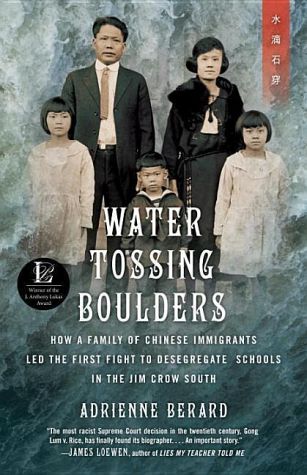
Thirty years before the Brown v. Board of Education decision made school segregation unconstitutional, a case originated in small-town Mississippi to challenge the same injustices. Journalist Adrienne Berard’s Water Tossing Boulders reveals the little-known experience of the Mississippi Delta Chinese population, including the Lum family, whose two daughters were sent home from the local white school they attended in Rosedale, Miss. The resulting case, Gong Lum v. Rice (1924), made it as far as the United States Supreme Court, but failed.

Berard has done rigorous research, as detailed in her author’s note, and offers a storytelling style with momentum. She expertly evokes her characters. Jeu Gong Lum and his wife, Katherine Wong, were Chinese immigrants who met and married in the Delta; their daughters had divergent personalities, Berda rebellious and Martha an ardent scholar. Their lawyer, Earl Brewer, spent his career fighting for social reforms. Ultimately an anti-lynching campaign would take his attention away from the Lums’ case, perhaps ruinously. Other legal players are profiled, including Supreme Court Justice Louis D. Brandeis and Chief Justice William Howard Taft, who penned the Court’s unanimous decision in favor of segregation. This is the story of the Fourteenth Amendment to the United States Constitution and the tortured arguments of eugenics, racism and segregation as much as it is the story of a family who simply wanted a decent education for their children. Told with precision, sympathy and context, Water Tossing Boulders is a brief but incisive history of great significance.


This review originally ran in the October 28, 2016 issue of Shelf Awareness for Readers. To subscribe, click here, and you’ll receive two issues per week of book reviews and other bookish news.


Rating: 7 children.

book beginnings on Friday: Fever Dream by Samanta Schweblin, trans. by Megan McDowell

Thanks to Rose City Reader for hosting this meme. To participate, share the first line or two of the book you are currently reading and, if you feel so moved, let us know what your first impressions were based on that first line.

fever-dream
A slim, well-regarded novel in translation from the Spanish. I’m all in.

It begins:

They’re like worms.

What kind of worms?

Like worms, all over.

It’s the boy who’s talking, murmuring into my ear. I am the one asking questions.

Intriguingly weird, yes? And I’m entranced by the cover. Horses and worms. Stay tuned.


This quotation comes from an uncorrected advance proof and is subject to change.

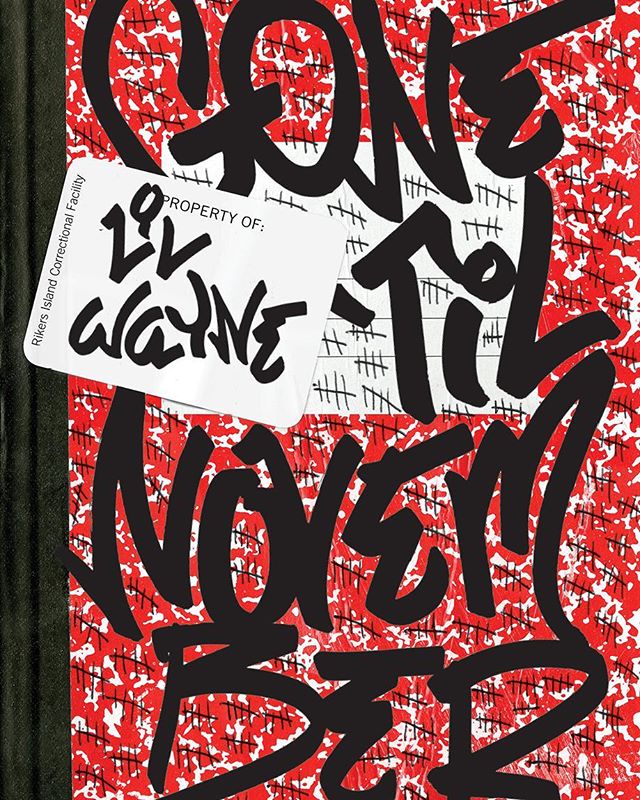
Gone ‘Til November: A Journal of Rikers Island by Lil Wayne

Lil Wayne’s prison diary gives a day-to-day account of his time in Rikers Island and a taste of the rapper’s offstage voice.

gone til november

In 2010, Lil Wayne entered New York’s Rikers Island Prison Complex to serve a yearlong sentence for illegal possession of a firearm. The New Orleans rapper was in the midst of a record-breaking career: multiple platinum records, Grammy Awards and financial success. In the eight months he spent in Rikers, Wayne kept a slim journal, published as Gone ‘Til November.

Wayne repeats himself: what he eats day to day varies little (the theme is burritos filled with chicken, rice, noodles, Doritos or Ruffles, beef jerky), and each night he does pushups, prays, reads his Bible and listens to ESPN. This monotony is to be expected in a prison diary, and is broken by the minor dramas of Wayne’s visitors, fellow inmates and the corrections officers he befriends. While the odd mention is made of violence occurring in other wings, the celebrity rapper has a relatively safe experience, plagued mostly by boredom. Entries are undated, requiring close attention to mark the time Wayne was incarcerated, from March through November. His slangy, informal tone shines vibrantly throughout.

A diary in which not much happens may sound less than gripping: this memoir will appeal most to Wayne’s many fans, who will find references to other rappers, future projects and Wayne’s lovers and children. But as an account of daily life in prison and its discontents, and as an exhortation to avoid incarceration, Gone ‘Til November offers a rare perspective for general readers as well.


This review originally ran in the October 25, 2016 issue of Shelf Awareness for Readers. To subscribe, click here, and you’ll receive two issues per week of book reviews and other bookish news.


Rating: 6 burritos.

Bayou Magazine, issue 65 (fall 2016)

bayou mag 65Bayou, from the University of New Orleans, is one of the briefer lit journals, which I confess leaves me sort of relieved: easier to get through in a sitting. In turn I’ll pass that brevity on to you.

Three essays grace these pages. “Holiday” by Ann Hillesland is, again, brief (a theme!), and takes a look at a movie that interested the writer when she was a teen, its commentary on her life; she comments in turn. I am sympathetic with this kind of writing, as a book reviewer. “Lifeline” by Patricia Feeney recalls Pat Conroy’s The Death of Santini, for its elegiac look at a rather unloveable family member. In ten pages, it manages a great deal of pulled-back perspective and passage of time; there’s a lot of movement.

My favorite was “The Mending Wall,” by Andrew Bertaina, who is undertaking something like what I hope to undertake in writing about my own mother: seeking the parts we can by definition never know. It also yielded the remarkable lines,

Perhaps you cannot mend things when you are still broken. I will never understand love or people: we are collections of moments, of opinions, of thoughts, not whole.

Overall, these pieces feel a tad less polished than the essays that appear in The Believer or Oxford American, which is not all bad: I’ve written before about the value of amateur art, the feeling of community and of real people efforting, and of movement and progress: we start here, and we improve. It can’t all be Broadway and the NBA; it is heartening to see community theatre and Division III college ball. Also, there has to be somewhere for us amateurs to submit to. I hope this doesn’t sound like faint praise: I enjoyed my time spent with Bayou, and you’ll see more of it here.


Rating: 7 showtimes.

Teaser Tuesdays: Take Me to Paris, Johnny by John Foster

Teaser Tuesdays is a weekly bookish meme, hosted by MizB of Books and a Beat.

Teaser

I am reading a beautiful, sad memoir about a love affair and the death of the beloved to AIDS. Juan was a Cuban refugee living in New York City and training as a dancer when he met John, an Australian history professor.

take-me-to-paris-johnny
John Foster tells this story with some lovely lines, like these.

I have one other memory of that November afternoon: the wind. It whipped off the river sharp and mean, and we were glad to step down from the street into the musty warmth of the subway on our way home. Juan was still living out of the bag of summer clothes that he had deposited, and since retrieved, at the Port Authority Bus Terminal.

Deceptively simple; but can’t you feel the wind? Whipping off sharp and mean really gets it there, for me. As I read this book, I feel like the tone of the title suits it: dreamy, sad, with some whimsy. Look for my review closer to the December pub date.

This quotation comes from an uncorrected advance proof and is subject to change.

Oxford American, issue 87: Texas Music Issue (winter 2014)

oxford-american-texasThey’ve done it again. This is my favorite magazine.

Actually, lest you think me totally partisan, the Georgia Music Issue might have been even better. Let’s start with the included musical cds, which make this very fine magazine even more desirable. I’m really enjoying the Texas cd, which includes tracks by Ray Price, Billy Joe Shaver, Rick Trevino, The Texas Tornados, Bob Wills, Freddy Fender, Kimmie Rhodes with Willie Nelson, Buddy Holly, Waylon Jennings, Guy Clark and Janis Joplin (whew). But I do notice that there’s not much here that bucks a traditional idea of Texas music – that is, country and Tejano. Contributions by Ornette Coleman and Spoon take a few steps off that path. But I thought the Georgia cd did a much better job of showing the wild variety available in a state prone to stereotypes. And it’s not because Texas doesn’t have the diversity available. Likewise, the text accompaniments to these musical tracks were a frank disappointment after reading the Georgia version. Rick Clark’s text is a just a little more basic, which is not to say I would have been let down, if only I hadn’t read that other one, in which each Georgia track was brought to life with storytelling unto itself that made me need to go back and listen again. Here, I’m listening again and again because the music is good, but not because a whole narrative world was opened to me. Perhaps tellingly, the write-up of the Texas cd is located at the back of the mag, not at the front.

But there’s something there, too: the cd and liner notes read a little better, feel a little fuller, after taking in the magazine as a whole. Joe Ely, Doug Sahm and others get attention in shorter articles, while features include Margaret Moser’s groupie diary (which I really enjoyed) and pieces on Guy Clark, Paul English (Willie’s drummer and bodyguard/door guy/gunslinger) and DJ Screw. The latter finally provided what I was looking for: a feeling that Texas music is as broad as its state lines suggest. I especially liked Amanda Petrusich’s commentary on the extreme localness of Screw’s reign – and here I am being partisan – in Houston’s rap scene, shortly before the internet blew the world wide open and, as she says, offered

more opportunity for cross-pollination, but less opportunity for the kind of place-specific identity-making that Screw wrought for Houston. The membranes are too permeable now.

Other highlights, for me, included the quirky perspective in Rachel Monroe’s “That Drifting Place,” where she examines Roy Orbison through the lens (excuse the pun) of his iconic dark glasses. “Texas Calling”, by Joe Ely as told to Alex Rawls, was a fun one to read: a bunch of recollections about playing with the Clash – with no real plot to hold them together, but it felt all the more like realistic recollecting that way. A very short piece of fiction by Bret Anthony Johnson provided an interesting departure – I don’t recall any fiction in the Georgia Music Issue. And I was thrilled to read Aaron Alford’s interview with Amanda Shires. She says,

When I bring people there [West Texas], they find it very odd, but they eventually love it. It’s unique in the way that it looks, and the people are so hospitable there, friendly. You have to be if you’re in a place that has a lot of prairie dogs.

Which is perfect, of course, and funny, and I can just hear it in her sweet drawl.

All in all? A different piece of work than the Georgia version was. Another very fine cd, more good writing, and again I learned a lot. Keep ’em coming.


Rating: 8 outlaws.

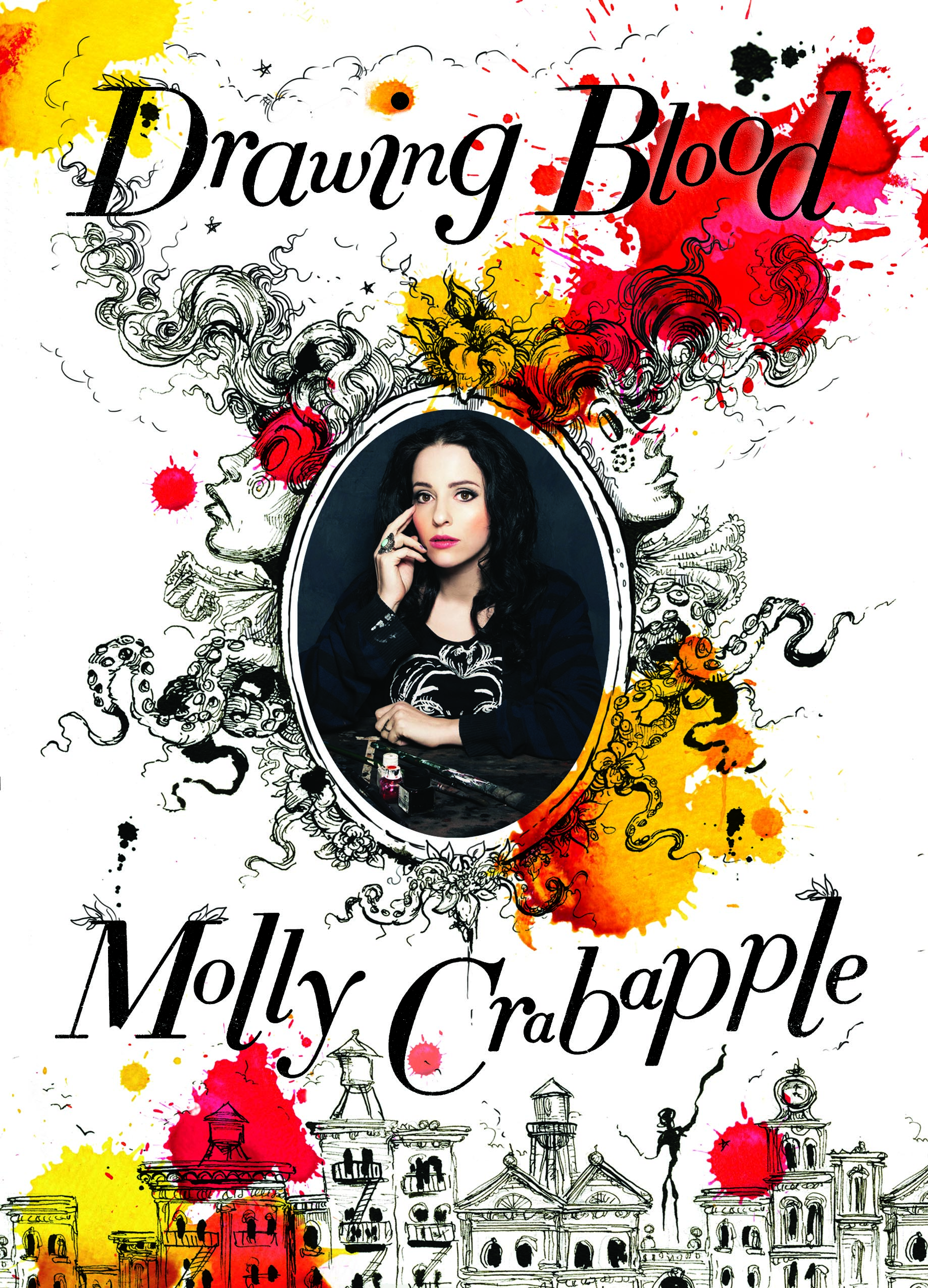
book beginnings on Friday: Drawing Blood by Molly Crabapple

Thanks to Rose City Reader for hosting this meme. To participate, share the first line or two of the book you are currently reading and, if you feel so moved, let us know what your first impressions were based on that first line.

A little departure here from paid reviews of pre-pub books: Drawing Blood was published nearly a year ago. A friend asked me to comment on this memory with visual art included.

drawing-blood
It begins:

I was drawing Khalid Sheikh Mohammed.

I sat in the courtroom at Guantánamo Bay Naval Base, watching a pretrail hearing for the 9/11 military commission in a room bisected by three layers of soundproof glass.

Well, that’s certainly attention-grabbing, and starts us off with the immediate question: who is this person and why is she where she is? I’ll let you know what I learn.

Happy Friday, friends.

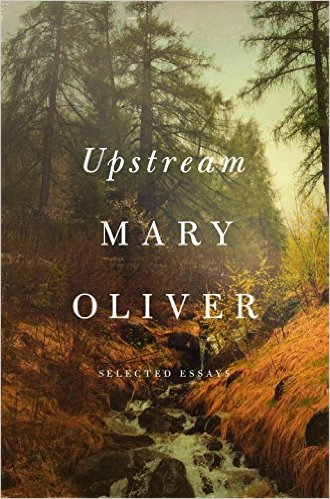
Upstream: Selected Essays by Mary Oliver

In a collection of prose, a Pulitzer Prize-winning poet ruminates joyfully on art and nature.

upstream

Pulitzer Prize-winning poet Mary Oliver should also be known for her prose: thoughtful, joyful and wise, always sparkling with characteristic energy. Upstream collects previously published essays and one new piece, skillfully grouped to chart a philosophical journey and “felt experience” much like that which she attributes to Walt Whitman.

Oliver revisits her childhood, and early instances of the sense of wonder so integral to her poetry, which she has often found in nature. The essay “My Friend Walt Whitman” speaks of a youthful and persistent literary affinity. Others explore natural places and creatures–spider, puppy, bear, bird–and the pleasures of artistic work. The middle of the collection contains slightly longer pieces of literary criticism–rediscovery of and praise for Edgar Allan Poe, Ralph Waldo Emerson, Whitman and William Wordsworth. Poets and the natural world mingle as Oliver invokes Percy Bysshe Shelley while hunting for turtle eggs. Finally, the previously unpublished essay, “Provincetown,” honors the Massachusetts fishing town where Oliver lived for many years. Brief but redolent, this love letter to a place in the passage of time tends to look backward, as do several of the essays immediately preceding it, so that the collection moves toward retrospection.

Upstream serves as an excellent, accessible introduction to Oliver’s work, and despite its largely previously published contents, will satisfy her fans with its fresh arrangement and feeling of movement. These meditations are evocative, lovely and of course poetic, charming in small pieces and as a whole.


This review originally ran in the October 25, 2016 issue of Shelf Awareness for Readers. To subscribe, click here, and you’ll receive two issues per week of book reviews and other bookish news.


Rating: 8 rumors of total welcome.

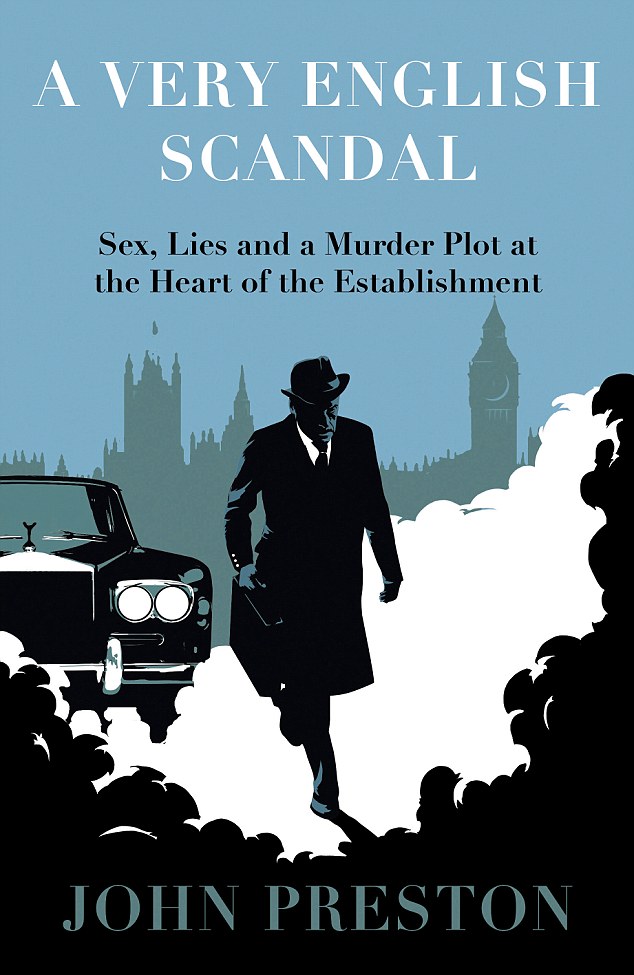
A Very English Scandal: Sex, Lies, and a Murder Plot in the Houses of Parliament by John Preston

John Preston energetically recounts extraordinary crimes of British political high society.

very english

Novelist John Preston turns to nonfiction with A Very English Scandal: Sex, Lies and a Murder Plot in the Houses of Parliament. In this thrilling story, a member of Parliament almost gets away with murder.

Jeremy Thorpe was an MP for the Liberal Party in the 1960s and ’70s, became his party’s leader and looked poised to lead a coalition government. His charisma enchanted everyone he met. But he had secrets. When the battle to legalize homosexuality was being fought, Thorpe had affairs with other men, harassed and abused them, and eventually–when one young man wouldn’t go quietly–conspired to have him killed. After years of posturing and payoffs, and a final dramatic scene of attempted murder worthy of fiction, Thorpe faced charges of conspiracy and incitement to murder at London’s Old Bailey.

Preston tells this salacious tale with a mostly straight face. The characters he portrays are often ridiculous: Thorpe’s relentless optimism and self-importance is countered by his victim Norman Scott’s sad struggles with mental illness, and the worshipful devotions of Thorpe’s friend and helper, David Holmes. Preston’s central source, Peter Bessell, is a fellow MP and fervent friend deeply mired in Thorpe’s intrigues. Bessell is perhaps the most vulnerable character in this drama: a bit absurd, but earnest, he is powerless to resist Thorpe’s magnetism. A Very English Scandal is a story of human weaknesses and outrageous spectacle. Preston’s play-by-play will captivate readers of true crime, British upper-crust history and classic tragedy alike.


This review originally ran in the October 25, 2016 issue of Shelf Awareness for Readers. To subscribe, click here, and you’ll receive two issues per week of book reviews and other bookish news.


Rating: 6 letters.

Teaser Tuesdays: Quicksand by Malin Persson Giolito, trans. by Rachel Willson-Broyles

Teaser Tuesdays is a weekly bookish meme, hosted by MizB of Books and a Beat.

Teaser

This one will be coming to you as a Maximum Shelf in the next few months, and the book, not until March (sorry). It is Malin Persson Giolito’s first novel to receive an English translation, and we are in for a treat.

quicksandI’ve chosen this teaser because I think it speaks to some of the themes of the book.

The people in this room do not go together. People like us don’t usually spend time together. Maybe on a Metro platform during a taxi-driver strike, or in the dining car on a train, but not in a classroom.

The plot centers around a school shooting, but has quite a few other things going on, including commenting on class, immigration, race and racism, media and the criminal justice system. Essentially, in all those areas, it’s concerned with how people do and do not naturally go together. So what happens when a mismatched group, as our narrator feels this one is, is thrown together?

Stay tuned!

This quotation comes from an uncorrected advance proof and is subject to change.