Another list of the top 100 books

We all love a good list, don’t we? I think what I love most is how they’re all different. This latest comes from World Book Night in the UK, and is compiled from a list that we – you and I – have all contributed of our top ten books that we’d like to share with others. Weighted for frequency, the list they’ve received is available at the link above – and, I’ve reproduced it here, with my usual indications as to whether I’ve read them or not. Feel free to weigh in.

I’m amused to note that my have-read-it stats fall off sharply as the list goes on; I’ve read 7 of the top 10, 10 of the top 20, and only 3 of the bottom 20.

How many have you read? Do you agree or strongly disagree with any of these? I certainly see a lot of my favorites (see my list of 100) on there, and also some I strongly disliked (ahem Cormac McCarthy).

Bold = I’ve read it (or if it’s linked to my review… I’ve read it)
Italicized = I’ve started the book, but never finished
neither = I haven’t picked it up.
New indicator: **for those that are definitely on my list (even before this list).

1    To Kill a Mockingbird    Harper Lee
2    Pride and Prejudice    Jane Austen
3    The Book Thief    Markus Zusak
4    Jane Eyre    Charlotte Bronte
5    The Time Traveler’s Wife    Audrey Niffenegger
6    The Lord of the Rings    J. R. R. Tolkien
7    The Hitchhiker’s Guide to the Galaxy    Douglas Adams
8    Wuthering Heights    Emily Bronte
9    Rebecca    Daphne Du Maurier
10    The Kite Runner    Khaled Hosseini
11    American Gods    Neil Gaiman
12    A Thousand Splendid Suns    Khaled Hosseini
13    Harry Potter Adult Hardback Boxed Set    J. K. Rowling
14    **The Shadow of the Wind    Carlos Ruiz Zafon
15    The Hobbit    J. R. R. Tolkien
16    One Day    David Nicholls
17    Birdsong    Sebastian Faulks
18    The Help    Kathryn Stockett
19    Nineteen Eighty-Four    George Orwell
20    Good Omens    Terry Pratchett and Neil Gaiman
21    The Notebook    Nicholas Sparks
22    The Girl with the Dragon Tattoo    Stieg Larsson
23    The Handmaid’s Tale    Margaret Atwood
24    The Great Gatsby    F. Scott Fitzgerald
25    Little Women    Louisa M. Alcott
26    Memoirs of a Geisha    Arthur Golden
27    The Lovely Bones    Alice Sebold
28    Atonement    Ian McEwan
29    Room    Emma Donoghue
30    Catch-22    Joseph Heller
31    We Need to Talk About Kevin    Lionel Shriver
32    His Dark Materials    Philip Pullman
33    Captain Corelli’s Mandolin    Louis De Bernieres
34    The Island    Victoria Hislop
35    Neverwhere    Neil Gaiman
36    The Poisonwood Bible    Barbara Kingsolver
37    The Catcher in the Rye    J. D. Salinger
38    Chocolat    Joanne Harris
39    Never Let Me Go    Kazuo Ishiguro
40    The Five People You Meet in Heaven    Mitch Albom
41    One Hundred Years of Solitude    Gabriel Garcia Marquez
42    Animal Farm    George Orwell
43    The Pillars of the Earth    Ken Follett
44    The Eyre Affair    Jasper Fforde
45    Tess of the D’Urbervilles    Thomas Hardy
46    Charlie and the Chocolate Factory    Roald Dahl
47    **I Capture the Castle    Dodie Smith
48    The Wasp Factory    Iain Banks
49    Life of Pi    Yann Martel
50    The Road    Cormac McCarthy
51    Great Expectations    Charles Dickens
52    Dracula    Bram Stoker
53    The Secret History    Donna Tartt
54    Small Island    Andrea Levy
55    The Secret Garden    Frances Hodgson Burnett
56    Lord of the Flies    William Golding
57    Persuasion    Jane Austen
58    A Prayer for Owen Meany    John Irving
59    Notes from a Small Island    Bill Bryson
60    **Watership Down    Richard Adams
61    Night Watch    Terry Pratchett
62    Brave New World    Aldous Huxley
63    The Curious Incident of the Dog in the Night-time    Mark Haddon
64    Jonathan Strange and Mr Norrell    Susanna Clarke
65    The Color Purple    Alice Walker
66    My Sister’s Keeper    Jodi Picoult
67    The Stand    Stephen King
68    Cloud Atlas    David Mitchell
69    The Master and Margarita    Mikhail Bulgakov
70    Anna Karenina    Leo Tolstoy
71    Cold Comfort Farm    Stella Gibbons
72    Frankenstein    Mary Wollstonecraft Shelley
73    The Guernsey Literary and Potato Peel Pie Society    Mary Ann Shaffer
74    The Picture of Dorian Gray    Oscar Wilde
75    Gone with the Wind    Margaret Mitchell
76    The Graveyard Book    Neil Gaiman
77    The Woman in White    Wilkie Collins
78    The Princess Bride    William Goldman
79    A Suitable Boy    Vikram Seth
80    Perfume    Patrick Suskind
81    The Count of Monte Cristo    Alexandre Dumas
82    The God of Small Things    Arundhati Roy
83    Middlemarch    George Eliot
84    Dune    Frank Herbert
85    Wolf Hall    Hilary Mantel
86    Stardust    Neil Gaiman
87    Lolita    Vladimir Nabokov
88    Midnight’s Children    Salman Rushdie
89    Harry Potter and the Philosopher’s Stone    J. K. Rowling
90    Shantaram    Gregory David Roberts
91    The Remains of the Day    Kazuo Ishiguro
92    Possession: A Romance    A. S. Byatt
93    Tales of the City    Armistead Maupin
94    Kafka on the Shore    Haruki Murakami
95    The Magus    John Fowles
96    The Boy in the Striped Pyjamas    John Boyne
97    A Fine Balance    Rohinton Mistry
98    Alias Grace    Margaret Atwood
99    Norwegian Wood    Haruki Murakami
100   The Wind-up Bird Chronicle    Haruki Murakami

Virtual Read-Out: The Awakening by Kate Chopin

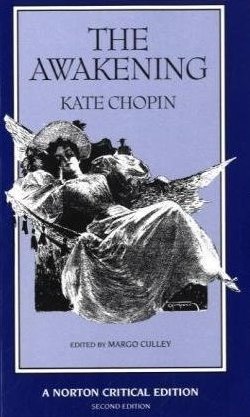
Today I’m “reading out” from Kate Chopin’s 1899 novel The Awakening, in honor of Banned Books Week. [Learn more about the Virtual Read-Out.] Sources vary as to the banning of this book, but ALA does list it on their list of banned classics. Its themes include the struggle of women to escape society’s intentions for us; the main character comes to hold some very unpopular views about the place of marriage, love, and childrearing in her own life. Here is my video read-out!

Thanks, Husband, for playing videographer. 🙂

Banned and Challenged Classics


I love lists of books. I especially love to note which books I’ve read, and which I want to read, on other people’s lists of best books, classic books, Books Everyone Should Read, and suchlike. This book is both timely (hello, Banned Books Week) and fun because it combines two concepts that make me interested in a book: that somebody is calling it a Classic, and that somebody thought it was too racy or thoughtful for people (especially little kids) to read. (This usually recommends a book to me, or at least piques my interest. I’m not weird, am I?)

So here are Banned and Challenged Classics according to the American Library Association. Again, my notations are:

Bold = I’ve read it
Italicized = I’ve started the book, but never finished
Neither = I haven’t picked it up.

1. The Great Gatsby, by F. Scott Fitzgerald
2. The Catcher in the Rye, by J.D. Salinger
3. The Grapes of Wrath, by John Steinbeck
4. To Kill a Mockingbird, by Harper Lee
5. The Color Purple, by Alice Walker
6. Ulysses, by James Joyce
7. Beloved, by Toni Morrison
8. The Lord of the Flies, by William Golding
9. 1984, by George Orwell
11. Lolita, by Vladmir Nabokov
12. Of Mice and Men, by John Steinbeck
15. Catch-22, by Joseph Heller
16. Brave New World, by Aldous Huxley
17. Animal Farm, by George Orwell
18. The Sun Also Rises, by Ernest Hemingway
19. As I Lay Dying, by William Faulkner
20. A Farewell to Arms, by Ernest Hemingway
23. Their Eyes Were Watching God, by Zora Neale Hurston
24. Invisible Man, by Ralph Ellison
25. Song of Solomon, by Toni Morrison
26. Gone with the Wind, by Margaret Mitchell
27. Native Son, by Richard Wright
28. One Flew Over the Cuckoo’s Nest, by Ken Kesey
29. Slaughterhouse-Five, by Kurt Vonnegut
30. For Whom the Bell Tolls, by Ernest Hemingway
33. The Call of the Wild, by Jack London
36. Go Tell it on the Mountain, by James Baldwin
38. All the King’s Men, by Robert Penn Warren
40. The Lord of the Rings, by J.R.R. Tolkien
45. The Jungle, by Upton Sinclair
48. Lady Chatterley’s Lover, by D.H. Lawrence
49. A Clockwork Orange, by Anthony Burgess
50. The Awakening, by Kate Chopin
53. In Cold Blood, by Truman Capote
55. The Satanic Verses, by Salman Rushdie
57. Sophie’s Choice, by William Styron
64. Sons and Lovers, by D.H. Lawrence
66. Cat’s Cradle, by Kurt Vonnegut
67. A Separate Peace, by John Knowles
73. Naked Lunch, by William S. Burroughs
74. Brideshead Revisited, by Evelyn Waugh
75. Women in Love, by D.H. Lawrence
80. The Naked and the Dead, by Norman Mailer
84. Tropic of Cancer, by Henry Miller
88. An American Tragedy, by Theodore Dreiser
97. Rabbit, Run, by John Updike

See, this is interesting: I think I have my highest percentage-read on this book, than of any of the lists I’ve reviewed here so far. (That, and a number of them make My List.) My personal reaction to this list is… wow, these are really excellent books. What a shame that anyone has tried to limit access to them. (And then there’s The Satanic Verses, which I really couldn’t get into. And Faulkner? Ugh, I couldn’t make any headway; although I was trying The Sound and the Fury, which I’ve since heard is not the best first-read.) That, and who the heck challenged The Call of the Wild??

Which books have you read off this list? Which ones are you itching to read? Any you aren’t attracted to?

Great Gone With the Wind Readalong, part 4

Just a reminder, folks: today Part 4 of our Readalong is up for discussion at The Heroine’s Bookshelf. Please do stop by!

working my way through Reacher.

(Presumably you saw my Die Trying post yesterday.)

I am working my way through the entire Jack Reacher series by Lee Child, slowly but very surely. And I’m having to start taking notes on which one included which action, because there are so many and I was out of order. Here they are in the order Child recommends:

  1. Killing Floor: our introduction to ex-military cop Jack Reacher, on the roam, who is arrested in Margraves, Georgia for a murder he didn’t commit. When he finally finds out who the victim was, it becomes his case to solve.
  2. Die Trying: Reacher stops to help a woman struggling with her dry-cleaning on a Chicago sidewalk, and gets kidnapped along with her. She turns out to be a well-connected FBI agent, and they have to work together to escape a truly bizarre criminal scheme.
  3. Tripwire, which I’m listening to now. Begins in Key West but quickly moves to New York City, where Reacher reconnects with an old friend and works to solve a mystery that stretches back to the jungles of the Vietnam War.
  4. Running Blind (yes, in two posts): A series of career women with the U.S. Army are dying, and the authorities are sure Reacher is their killer. This makes it his case to solve.
  5. Echo Burning, my very first Reacher book! I fell in love, not only with Reacher himself, but with the setting: far West Texas, where the desert of my home state meets Mexico and lawlessness reigns. An attractive housewife in a horrible predicament needs Reacher’s help, professional killers are on their way, and the final showdown remains one of my favorites.
  6. Without Fail, up next
  7. Persuader: A ghost from Reacher’s past reappears on a busy city sidewalk. He’s supposed to be dead. Reacher undertakes to fix the problem.
  8. The Enemy
  9. One Shot: A sniper is killing wantonly in Indiana. With all the evidence pointing to one man, it’s an easy arrest. But he wants Reacher there, and won’t say why. The police can’t find him, but don’t have to, because he shows up on his own. He knows the sniper from his army days, and may have something to add to the case.
  10. The Hard Way: Reacher is drafted into a private security company to find the boss’s kidnapped wife and child. He’s back in the detective business suddenly, not sure who he can trust. The solution might surprise us all, Reacher included.
  11. Bad Luck and Trouble
  12. Nothing to Lose: Hope and Despair are two towns in Colorado that deserve their names. What’s going on in Despair, and why don’t they want Reacher around? Telling him to leave is a good way to get him to return, repeatedly, until he understands. Luckily there’s a cute cop in Hope who might be willing to help.
  13. Gone Tomorrow: Reacher spots a subway bomber with his expert eyes in the first pages, but it will take the whole book to find out what she really had in mind and why.
  14. 61 Hours: Winter in South Dakota would be nasty enough without a threatened prison riot and gosh-knows-what headed our way. Keep your eyes peeled for a heroic local librarian. 🙂
  15. Worth Dying For: A frightened town in Nebraska that wants Reacher to leave immediately obviously really needs him to stay and fight the bullies.
  16. The Affair comes out the day after tomorrow!! Hie thee to a bookstore! My library has it on order (hardback & on audio), but I’m going to wait til I’ve worked my way through them all before I get to the latest.

Also, The Second Son, a recent Reacher short story.

If you have been clicking these links, you may have noticed a few things. One: I didn’t read them in order. Or rather, I read a bunch of them out of order and then realized what a fan I had become, and went back and worked in order through the ones I’d missed, which may be a little silly but has been working for me. Two: I have polished my bloggingness: Some of those older posts exhibit qualities I have learned to avoid, like covering two books in one post (I only do this now in the rare digest-version post, like after a vacation), or NOT titling the post after the book. Sorry. I just have too many other interesting things to do, than go back and fix those old posts. From now on, polish.

Anybody else reading – or have you already read – all the Lee Child series of Jack Reacher novels? Any other fans out there? I know there are; he’s a popular guy… also know we’re not all fans. My Pops, for one, didn’t dig the 61 Hours audiobook I lent him. It sounds like it was the short-and-choppy writing style that did it for him (or, didn’t do it for him) as well as the significant suspension of disbelief required to get down with Reacher’s superheroness. He didn’t hate it, though. More so, Raych at books i done read appears to have hated Die Trying. Reading her review made me cringe (just a little) because I LOVE and she DIDN’T, but they can’t all please us all. How long the lines would be, if we all liked the same stuff! It’s okay, Raych, I forgive you. Everything she said of Reacher (or Child) was true; no arguments; just a different appeal to this different girl.

Have you read any? What’s your call?

fiction as politics

No, I’m not going to talk about the fiction of Bill O’Reilly or Glenn Beck.

Shelf Awareness reports:

García Márquez Novel a Bestseller in Iran

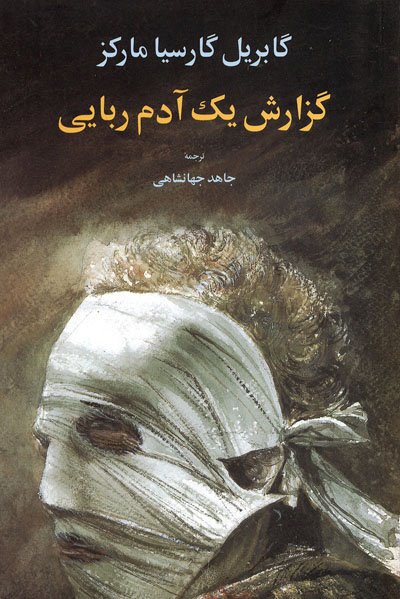
Copies of Gabriel García Márquez’s 1996 novel News of a Kidnapping have sold out in Tehran’s bookshops this week “after detained opposition leader Mir Hossein Mousavi said the book’s description of Colombian kidnappings offers an accurate reflection of his life under house arrest,” the Guardian reported. Mousavi and opposition leader Mehdi Karroubi have been under house arrest since calling for mass protests last February in solidarity with other pro-democracy movements in the Arab world.

Last week, Mousavi was permitted to meet briefly with his daughters, and told them: “If you want to know about my situation in captivity, read Gabriel García Márquez’s News of a Kidnapping.” Word spread quickly online, “prompting hundreds of opposition supporters to seek out the book. Queues formed in some bookshops, and copies of the book sold out within days,” the Guardian wrote.

The news was also shared on García Márquez’s Facebook page, which linked to a Radio Free Europe blog post reporting that Mousavi’s supporters had launched their own Facebook page, “News of a Kidnapping, the status of a president in captivity,” and that “a number of Iranian websites and blogs have made an electronic version of the book in Persian available for download.”

I find this very exciting and interesting in so many ways. Marquez wrote a work of fiction in 1996 that has become incredibly relevant and interesting to a demographic he may have never originally specifically intended; it’s speaking to modern events that he couldn’t have foreseen (again, at least not specifically). Let this be an rebuttal to those that argue that fiction has no real-life important purpose! Commercially speaking, it can’t be a bad thing from Marquez’s perspective that he’s selling more books; but I’d wager he is more pleased that his work is speaking to current events and, hopefully, helping the cause of democracy.

Another interesting aspect of this short news piece, as reported by Shelf Awareness, is in the rapid-fire social networking/media communication of Mousavi’s recommendation, and the distribution of the Persian translation. As in the recent Egyptian protests, these relatively new media are aiding social and political causes. I think it’s interesting to see media technologies changing the way we do the business of the world. And to see these lessons tied back to BOOKS is kind of inspirational for me.

I’m no expert in Iranian politics and don’t claim to be. But the power of the media, communications and social networking, and most especially, 15-year-old works of fiction on today’s political turmoils is worth noting.

Does this catch your imagination as it does mine?

fiction vs. non

I’ve talked a few times recently here at pagesofjulia about fiction and nonfiction. (See for example my discussion of the value of fiction.) Most recently, in my review of In Cold Blood, I ponder the fine line between the two. Sometimes it’s difficult to tell. How do we draw the line? Here at the library, for cataloging purposes, I use OCLC’s bibliographic record; but there is often room for debate. Ernest Hemingway (obviously) is my go-to example of an author of fiction which is so highly autobiographical as to raise eyebrows; and for that matter, he was also an author of nonfiction that may have fudged here and there (i.e. his journalism in times of war in which he claimed a heroic or brave role for himself). And then there are the James Freys and Greg Mortensons of the world, who claimed to be writing nonfiction and later were accused of either smudging their facts or wholly making things up. So, my point is, the line between fiction and nonfiction (a) can be fuzzy and (b) is an important line to be aware of – even when we can’t draw it firmly.

I came across a short article the other day that I want to share it with you here. Robert Gray’s column at Shelf Awareness, is called “Deeper Understanding.” He recently wrote Conquering Our National Fear of Fiction, in which he notes that President Obama has been criticized for reading fiction. He then makes arguments – and quotes studies – in favor of reading fiction for education, and for improving ourselves. His message is one I definitely get behind (again, see my discussion of the value of fiction).

I love reading nonfiction. I think I love it more every year. There’s so much in the history of our world – and in what’s happening in our world today – that’s fascinating and that we should be aware of. Of course, I’m not doing an exceptional job of keeping up on everything. There’s too much to know. But I do enjoy nonfiction. In fact, I feel like I’ve read an awful lot of it this year – but when I look back at my Books Read log, I see that fiction still massively outnumbers nonfiction. Maybe I had a misconception because so much of the fiction I read is very short, and some of nonfiction is quite long, so the time spent on each might be closer to equal… maybe I’m making excuses. My point is, I have nothing against nonfiction, and should read more than I do. But! Fiction! Not an ugly stepchild at all!

So, for discussion here if you please: Do you read mostly fiction, or non? What is the value of each? In other words, is fiction frivolous and nonfiction valuable, or does fiction have a great deal to offer us as people, as a society? Why? What authors have you come across who smudge the line between the two? How strongly do you feel about defining the line, and how do you go about it? For example, is In Cold Blood fiction or non? Or some strange hybrid?


For your reference, I’ve linked here to a few of my favorite nonfiction reads of the last year or two…
Around the World on Two Wheels: Annie Londonderry’s Extraordinary Ride, Peter Zheutlin
Dethroning the King, Julie Macintosh
The Devil in the White City, Erik Larson
Fire Season, Philip Connors
Heroine’s Bookshelf, Erin Blakemore
Iphigenia in Forest Hills, Janet Malcolm
Mr. Playboy, Steven Watts
Hemingway’s Boat, Paul Hendrickson
Newspaper Titan by Amanda Smith

the Hemingway House

All right! You want the details.

The Hemingway House at 907 Whitehead in Key West was Papa’s residence from 1931 until 1940ish. He bought the house with his second wife, Pauline, and left her to live in Cuba (in sort of a gradual manner, which is why I say 1940ish). Pauline would live in the house til her death in 1951, and Ernest would continue to use it, on his odd visit to the island, from that point until his death in 1961. It’s now a museum, with the Hemingways’ original furniture and books largely intact, we’re told. One of its more famous features is the population of polydactyl (six-toed) cats that still roams the grounds freely; they have forty-something today. Papa had one original cat, Snowball, who eventually populated the place pretty thoroughly. (Our B&B, the Wicker Guesthouse, also had a few polydactyl cats gracing its grounds, just a block from the Hemingway House. One assumes they’ve taken the island over for their own, to some extent.)

Our photo tour begins with a cat. Husband was rather good at making friends with them.

That’s Husband’s hand there.

Most special to me, of course, was the connection to Ernest Hemingway’s life and writing. This is his writing studio, in a separate building, up a flight of stairs: at this very typewriter (says our guide) Papa created much of his best work, including my personal favorite, For Whom the Bell Tolls.

Husband was careful to also record the urinal in Papa’s workshop.

More cats… did you hear me say FORTY-SOMETHING on the grounds? You could literally trip over them.

This is Husband’s lovely photo of the outside. Thank you, Husband! The House’s website has a number of pictures of the exterior from different years, which are nice to see as a series; I know from these pictures, for example, that it was not so lushly vegetated when Papa bought the place. (The other side, not pictured here, is a veritable jungle.) I have to keep going back to study all these exterior shots to try and convince myself that he was really here, right here where I am now… what a special thing to experience. On the morning we left Key West, I went back to stand and study the house and try to feel his presence.

But! Our trip didn’t end with touring the grounds. I’m always looking to have more Hemingway books – by, and about. I had saved up a little list of the holes in my collection, so that I could try and do some buying at the Hemingway House’s bookstore. I didn’t find everything I was looking for – their biographies, for example, were just the most well-known ones (Baker, Meyers, Lynn, Reynolds) who I already own. (I’m searching for some that were cited in Hemingway’s Boat, including Samuelson, V. Hemingway, P. Hemingway, Hotchner…) But I did fill a few holes:

That is, I bought four books by EH himself: Men Without Women, The Nick Adams Stories (a posthumous collection), To Have and Have Not, and The Fifth Column and Four Stories of the Spanish Civil War. (The Fifth Column was his one and only play, and I’ve never read it!) I also got Bernice Kert’s The Hemingway Women, which I’ve read references to for years. All in all, a good haul!

I had a very special time visiting a place where Papa himself lived and walked and worked. This was my first, but hopefully not my last trip: I want to see the family home in Oak Park, IL, and also the finca in Havana if they ever let us go.

As an aside, here’s another literary connection: at the start of Tripwire by Lee Child, my other hero Jack Reacher (who actually has a bit in common with Hemingway, at least as he wanted us to see him… hmmm) is making his living by digging swimming pools – by hand – in Key West. Husband also being familiar with this fact, our running joke was to ask each other every time we saw a pool (and there are a lot of them!) whether Reacher had dug that one? Good fun. 🙂

What about you? Have you made any literary pilgrimages? Do you have any in mind?

quick trip report: Key West, FL

Hello friends! I’m back! Did you miss me?

Husband and I DID, in fact, make it to Florida! Here’s a quick report…

Last Friday night we flew into Miami, got a hotel room and a rental car and a beer, and went to bed. Saturday morning we got up lateish and began the drive down through the Keys. It was a lovely drive, as promised, with water on both sides of the narrow highway for a few hours. We took our time on the drive down, stopping for lunch – fried conch, an outstanding Ahi burger, and some rum – and made it into Key West around 5pm. We got a room, had a few drinks, and walked around Duvall St. before turning in.

Sunday we really began our sightseeing, with my top priority: the Hemingway House. It was very special. I am still trying to wrap my head around the idea that he lived right there. I’ll give you the full Hem House report shortly. [EDIT: Here‘s my report.] Then we rented bikes and rode out to the area where the fishing charters depart, so we could shop for a fishing trip for Husband. Finally, we found some solid pizza by the slice and took yet another dip in the pool at our B&B.

Monday was a lazy day in and out of the pool, the bed, and various books… we rode our bikes around some more and fished off a pier on the east (Atlantic) side of the island. Then we had an early night so we could wake up early on Tuesday to go fishing!

We went out in a little boat with Captain Mike and Husband fished for baby tarpon, bonefish, permit, and maybe something else?? This is not my area but I went along for the boat ride. We saw maybe 5-7 sharks and a whole mess of sting rays, which was cool. This was “flats” fishing, on the Gulf side of the island, with a lot of poleing the boat over very shallow flats, so we could see very clearly what was swimming around under us. Husband didn’t have any luck but he thoroughly enjoyed himself all the same, and has expressed greater interest since we’ve gotten back home, in getting out there more. There’s talk of renting us seats on a local fishing boat in the coming months. And when I got up this morning he was casting in the back yard!

Tuesday night we spent more time exploring the island, catching up on the last of the recommended beer bars, getting our fill. Wednesday morning we had the time to wake up in a leisurely fashion, get Husband a new fishing hat (the other one disintegrating) from a local angler’s shop (so it’s a functional souvenir, good work Husband), and make the drive back up to Miami for an evening flight home. It was a fairly quick trip but we got everything out of it we wanted to (except a tarpon – maybe next time) and made it home with free time to spare.

Nephew Tanner kept all three little dogs alive and didn’t burn the house down, so things were a success all around!

Thursday morning involved some unexpected travel: we drove out west of Houston to Columbus, TX, one of the areas that was hit hard by wildfires in our absence. My family owns property out there and we had to assess the damage. In a nutshell, we were lucky: the hard work of the local fire crews saved our house, literally stopping the fire at the doorstep (as they did for countless of our neighbors). We lost our barn and tractor, and 30 acres of woodlands are spotty, some places nearly destroyed by fire (biggest trees standing but scorched, little else, carpeted in ash) and some places almost untouched. Overall we were most definitely lucky. Columbus lost 11 homes. Nearby Bastrop has lost some 1400 homes; this is almost unthinkable, in terms of all those families who have only what they could carry. We did take some clothes, toiletries, food and books up there with us to donate to the effort.

And now I’m just settling back in. I have several books and audiobooks to write for you. They might be brief reviews; I didn’t take any kind of notes, sadly. It feels good to be home. Here’s hoping you’re enjoying your reading, maybe even a break of some sort, and hoping your families are safe and fire-free…

Houston Shakespeare Festival presents The Taming of the Shrew

Petruchio and Kate

I saw this production on 8/7 with Husband and another couple. (And I reviewed the written play recently, here.) It was a good time! For one thing, I remembered my spectacles this time, so I could see the stage. Also, we all stayed awake through the whole thing. As I said about Othello, the pacing might have been a bit slow, especially for a performance that was past my bedtime… in the dark… viewed from a blanket on a hill with a glass (or two) of wine (or beer).

I thought this performance was outstanding. The bawdy humor came through loud and clear; even Husband followed the whole thing (with some quick briefing beforehand). Some of the modern costume choices were cute and clever, too, and Husband got a kick out of the scene in which Hortensio, in disguise as an appropriate music instructor, tutors Bianca. He’s sort of wild metal guy, and that was fun.

So we had a lovely evening outside, even in Houston – the key being to wait until after dark to be out there. The Houston Shakespeare Festival, in its 37th year, has done it again. This performance was professional, clearly presented, understandable to regular folk, and funny! The humor of The Taming of the Shrew came through. I really think that, when performing Shakespeare, your job is to just let the bard speak, and they did.

As to the misogyny question, I don’t think they took a stance, but just presented the text, with its underlying bawdiness, and let us draw our own conclusions. I will continue to optimistically believe that Shakespeare didn’t mean for us to take him too literally. Really, Kate’s submission at the end is too ludicrous to be intended seriously – right? What do you think?