An Odyssey: A Father, A Son, and an Epic by Daniel Mendelsohn

What is Odysseus, in the end – the hero whose final act of vengeful violence is compared, by means of another memorable simile, to a bard stringing his lyre – but the poet of his own life?

This is the first book I read in 2022, and I feel sure it will make the year’s best-of list, so that’s an excellent start. Another happy synchronicity: I bought this book based off a review I read, but find that Mendelsohn is also the author of a book I’ve had on my shelf for a few years, from a grad school reading list I never got to: The Lost: A Search for Six of Six Million. After this read, that one just moved up the list.

An Odyssey is a memoir focusing on a father/son relationship and a journey, both a literal one and the figurative path to greater understanding facilitated by a yet more famous Odyssey. Daniel Mendelsohn’s father Jay is eighty-one years old the spring he asks his son Dan if he can sit in on his undergraduate seminar course on Homer’s Odyssey. Dan says yes, and together with a small group of college freshmen, father and son explore a work of classic literature and, as Dan sees it, their own relationship. Just after the course ends, they go together on a Mediterranean cruise that follows Odysseus’s presumed route home from the Trojan War. A year later, Jay would be dead.

I bought this book because I read a lovely review of it (which I now cannot find. I thought it was Shelf Awareness but apparently not), but then it sat on my shelf for some time, I think because the concept sounded a little precious, a little pat. And it could have been, in the wrong hands, but Daniel Mendelsohn was the right writer for this story, and I’m so glad. For one, he has a deep expertise in Homer and indeed in the classics – as I briefly (in high school) aspired to do, he learned Greek and Latin sufficient to read Homer, Ovid and Virgil (etc.) in their original forms, just for a start. He is the kind of thoughtful, introspective student of relationships and families that I most appreciate as a writer. He has the nuance to handle such a premise – father and son study the Odyssey and take a trip together – with the subtlety it needs. Talk about a book matched to its reader: Homer, parent/child relationships, contemplative memoir… and a focus on teaching. The result is a beautiful book that I’ll be thinking about for a long time.

Here are a few lines that made me pause.

I was going to read Greek, the Iliad and the Odyssey, the elaborately unspooling Histories of Herodotus, the tragedies constructed as beautifully as clocks, as implacably as traps…

How lovely – and makes me think of Amy Leach’s “Pea Madness.”

And so ring composition, which might at first glance appear to be a digression, reveals itself as an efficient means for a story to embrace the past and the present and sometimes even the future – since some ‘rings’ can loop forward, anticipating events that place after the conclusion of the main story. In this way a single narrative, even a single moment, can contain a character’s entire biography.

A single moment containing a character’s entire biography feels like why I read and write.

About competing literary interpretations,

Whatever else it may mean, the fact that both of these hostile camps could make use of the same examples to prove diametrically opposed interpretations suggests a truth about how all of us read and interpret literary texts – one that is, possibly, rooted in the mysteries of human nature itself. Where some people see chaos and incoherence, others will find sense and symmetry and wholeness.

Following a half-page discussion of the etymology of a certain word that I care about,

In time, this wistful word nostos, rooted so deeply in the Odyssey‘s themes, was eventually combined with another word in Greek’s vast vocabulary of pain, algos, to give us an elegantly simply way to talk about the bittersweet feeling we sometimes have for a special kind of troubling longing. Literally this word means ‘the pain associated with longing for home,’ but as we know, ‘home,’ particularly as we get older, can be a time as well as a place. The word is ‘nostalgia.’

This takes me immediately to a Jason Isbell song (forgive the whiplash), “Something to Love,” and the line “don’t quite recognize the world that you call home.” Naturally, this is a song about art and creativity, and it is sung in the voice of a parent speaking to his child. The idea that two people a generation apart – parent and child – necessarily come from different worlds, because of the way the world changes over time, has been a powerful one for me in the last decade or so.

Here’s another passage that gets to the heart of some of (again) my own thinking about parents.

If only they knew the real him, I thought. Glancing around at the others as they listened to Daddy, at the charmed smiles on Brendan’s and Ksenia’s faces, and then back at his face, relaxed and open, mellow with reminiscence, a face so different from the one he so often presented, at least to his family, I wondered suddenly whether there might be people, strangers he had met on business trips, say, bellhops or stewardesses or conference attendees, to whom he showed only this kindly face, and who, therefore, would be as astonished by the expression of contempt that we knew so well as we were by the rare glimpses of the other, softer side. How many sides did my father actually have, I asked myself, and which was the ‘real’ one? Perhaps this expansive and charming person, so different from the crabbed and coiled man whom only a month or two earlier, I ruefully thought, my Odyssey students had come to know, this song-singing old gentleman who could be so affable and entertaining with total strangers on a ship in the middle of the sea, was the person my father had always been meant to be. Or, perhaps, had always been, although only with those others, the bellhops and stewardesses. Children always imagine that their parents’ truest selves are as parents; but why? ‘Who really knows his own begetting?’ Telemachus bitterly asks early in the Odyssey. Who indeed. Our parents are mysterious to us in ways that we can never quite be mysteries to them.

On teaching:

It was from Fred that I understood that beauty and pleasure are at the center of teaching. For the best teacher is one who wants you to find meaning in the things that have given him pleasure, too, so that the appreciation of their beauty will outlive him. In this way – because it arises from an acceptance of the inevitability of death – good teaching is like good parenting.

This feels like a revelation but also something I recognize because I already understood it. It gets at why passion and excitement make for good teaching. And there’s a profundity to the idea that teaching is about what lives on beyond us. Although shortly after, he’ll make the point that teachers never know who they will reach with which lesson, because these things take years to reveal themselves; just as our own teachers rarely know who they have reached. I think again of Mrs. Smith, who introduced me in high school to Homer and Hemingway.

These moments go on and on. I love a book that offers both lovely lines and thought-provoking ideas.

The only critique I’d make of this exquisite work is some minimizing or simplification of women, especially by contrast to another recent read, Natalie Haynes’s excellent Pandora’s Jar, which was one of the best books I read in 2021, and helped inspire this read. (I regret that my weird reading-and-review schedule has reversed the order in which they appear here.) Haynes set out to address the roles and reputations of women in the Greek myths, and Mendelsohn concerns himself with fathers and sons, so, fair enough. But there were a few moments where I felt Mendelsohn missed a chance to see certain issues of gender, such that it felt like an oversight to me. It’s up for debate, of course, what agency Odysseus gets for his affairs with Calypso and Circe and his flirtations with Nausicaa and others (as opposed to the-gods-made-him-do-it), but to credit his “allegiance to his wife… withstand[ing] the seductive attentions of various goddesses and nymphs” seems a bit rich. I missed a more nuanced treatment of gender relations, both in Homer and in Mendelsohn’s own life. But perhaps this is unfair, considering his stated focus on male relationships.

I’ll be thinking about An Odyssey for a while.


Rating: 9 doors.

Archival Quality by Ivy Noelle Weir and Steenz

This is a delightful graphic novel with a few threads that I enjoy: it takes place in a mysterious museum/library/archives setting; it’s a ghost story; it is concerned with mental illness and social justice; its cast departs from your run-of-the-mill beautiful straight white people; and it ends sweetly with an emphasis on friendship. I’m not sure where I got this recommendation, but it was a solid one.

Like most graphic novels, I found this one a quick read – I sped cover to cover in an evening. Celeste Walden has recently lost her library job after a depressive episode; she’s not doing so well, and her boyfriend Kyle is concerned, and she knows she has to get out of the house, but she really doesn’t want to work anywhere but a library again. That’s when she finds the Logan Museum, located in an old building that has also housed a hospital, an orphanage, and a sanitorium at different times. She’ll be an archivist, working nights, digitizing the museum’s images collection. And she is expected to live on premises, in a furnished apartment. Which of course involves things that go bump in the night. Kyle does not approve of this new job, but Cel is determined. Her new boss is disturbingly aloof, but the librarian who trains her is a lovely, supportive woman. And then the mysteries begin.

Cel’s mental illness is handled differently by different characters, including by herself, in ways that are true to life. The ghost story element is moving and involves some larger issues. Cel’s social circle – boyfriend, boss, librarian Holly, and Holly’s girlfriend – is small but impactful. I enjoyed the story, the characters, and the visual representations, which I felt communicated emotions and personalities nicely. I think this book would make a good choice for YA readers on up, and offers some excellent opportunities to discuss several topics that might appeal in middle school or high school classrooms or book clubs. I also enjoyed Weir’s afterword and Steenz’s “confidential files” at the end, which shed light on their friendship and process; the authors’ lives bear on the book, as is often the case. Definitely do recommend. Also, yay for libraries in literature.


Rating: 7 fruit baskets.

The Sister Who Ate Her Brothers: And Other Gruesome Tales by Jen Campbell, illus. by Adam de Souza

This delightful book, I’m pretty sure, came from another Shelf review. Jen Campbell teases her reader, in a brief foreword, with a playfully sinister tone; she notes that “brilliant, horrible tales” once “known far and wide” have somehow been replaced with “‘happily ever afters’ where nothing really awful happened and, well, a lot of them became boring.” She wants to restore the gruesome; thus this book, which offers fourteen tales from around the world (each presented with its country of origin), adapted and tweaked by Campbell. They are indeed deliciously gruesome, and complemented by Adam de Souza’s illustrations, which nod to each story’s cultural origin. I really liked this intersection of fairy tales, traditional storytelling, modern twists, and horror. Campbell’s afterword neatly bookends the collection with a cozier tone, now that we’ve gotten to know each other and all.

The title story is Korean, and straight horrifying. “The House That Was Filled With Ghosts” (Japan) I enjoyed for its victorious ending (bit of a ‘happily ever after’ here, Campbell!). “The Adults Who Lost Their Organs” (Germany) reminds me of a story I knew as a child but cannot name now… “The Man Who Hunted Children” (South Africa) is I think the “Hansel and Gretel” reference. “The Wife Who Could Remove Her Head” (El Salvador) had a refreshing outcome for the rebellious wife; likewise a bit of justice in India’s “The Son of Seven Mothers.” But my absolute favorite was definitely the final story, from Spain: “The Woman and the Glass Mountain.” There are book lovers, adventures, a wedding in a library, triumphant women, and queer love. I am smitten with this story and this whole book, and will put it in the growing pile of fairy tales & folktales that are somewhat simultaneously creepy and weirdly comforting. What a treat. I definitely recommend this book to anyone who enjoys tracking storytelling in human history and across cultures, or fairy tales and their origins, or spookiness in general. Good times.


Rating: 8 fingers.

Aurora Rising by Amie Kaufman and Jay Kristoff

Big winner from Liz again; this was just the absorbing, sci-fi-fantastical otherworld I needed in between heavier reads. Before finishing it I’d sat down and ordered the other two books in the trilogy (from my local online* bookstore, Gaslight), and I wish they were here already.

Aurora Rising is set in 2380, and begins at the Aurora Academy, where students graduate into the Aurora Legion – sort of a United Nations made up of both humans and alien species, to peacekeep throughout space. These teams are made up of teenagers, because the physiological challenges of deep-space Fold travel are only for the very young. (This will add to the drama.) Chapters are told from different points of view, but we begin with Tyler Jones, prettyboy and star student, top of his class in the Alpha track. Alphas will head up their squads; they are strategists and leaders. Tyler was poised to get to cherrypick his ideal squad and likely get the choicest mission assignment, but things went a little sideways, and he found himself saddled with odds and ends instead – happily, including his twin sister Scarlett and their shared best friend since childhood, Cat. (Scarlett is the squad’s Face, or diplomat, multilingual and people-skilled. Cat is their Ace, or pilot, as cocky and short-fused as Aces are stereotyped to be.) They get sent on a terrible mission to start their new careers: boring, distant, low-consequence. Or is it?

Tyler’s accidental misadventure, which cost him his pick-of-the-litter squad, was rescuing “the girl out of time”: Aurora (or Auri) has been in cryo-sleep for two hundred years. She was en route to the colony where her father lived, but the ship never arrived, and she is its sole survivor. Her father’s colony has been erased. And some very dangerous people seem to care very much what happens to Auri. Luckily, she falls in with this ragtag squad of losers: Tyler, Scarlett, Cat, Finian (nonhuman, the group’s differently abled Gearhead), Zila (socially awkward, or possibly sociopathic, Brain – responsible for scientific and medical expertise), and Kal (their Tank, or warrior, of a much-maligned alien species recently considered an enemy of the Terrans, or humans). Together they form “the strangest group of misfits that ever trekked across an abandoned alien planet beset with creeptastic plants and besieged by military forces,” which is a great line. I’m pretty intrigued by the intersection of plant life, beauty, and horror.

Thick greenery blooms from its eyes, its back is covered in a tangle of beautiful flowers, and when it opens its mouth to snarl its defiance at him, I see reddish-green leaves all the way down its throat.

What with sibling antics (Tyler and Scar), bestie vibes and hijinks (Scar and Cat), romantic and sexual tensions (several), awkward geekiness (several), and extreme danger and high stakes, this novel offers a charming blend of pathos, angst, and superlative, laugh-out-loud comedy. I stayed up to unhealthily late hours because I couldn’t put this book down; I was completely absorbed and in love with our dear, silly, impassioned young heroes. Also, check out this Princess Bride reference.

“Anyway, are you sure you’re not making them up? They sound ridiculous. I mean, hairy dirtchildren who fly spaceships and have almost identical DNA to you lot?” I scoff. “I don’t think they exist.”

And that’s when a snarling, furry pitch-black humanoid thing with jagged yellow teeth that would put an ultrasaur to shame comes screaming out of the undergrowth and straight for my face.

(Chimps, if you were wondering.)

There is so much to love here. The worldbuilding is on point (and if I recognize certain elements from The Expanse, what of it?). The characters are darling; who could resist such a motley band of misfits? The action is riveting. I’m hooked; give me more. This first installment ends a little cheesy, but I’m well hooked all the same. Stay tuned for book 2. I don’t think it will take me long. Thanks as ever, Liz!


Rating: 9 costume changes.

*local online? They’re working on a brick-and-mortar, which I badly want, so I buy all my books from them! Cheers, Justin and Ethan!

The People Could Fly: American Black Folktales told by Virginia Hamilton, illus. by Leo and Diane Dillon

I got this title from Well-Read Black Girl, although the cover was familiar enough that I wonder if I had it as a child at some point. (I definitely recognized some of the characters, like Brer Rabbit and the Tar Baby, if not these particular stories.) In a larger format, with a number of rich, grayscale illustrations, it offers a selection of folktales passed down as oral tradition from the Americas’ earliest Black residents: enslaved Africans and their descendants. Virginia Hamilton has done good work in compiling these stories, of course, but an equally important contribution is her brief notes about what each one represents and where it falls in the larger scheme of storytelling traditions in time and geography. (I really appreciated the occasional personal note, too.) She notes the families each story falls into and her choice to use more or less dialect, and the global traditions that contribute to each.

These stories appear in sections, headed by a title story and then grouped by type: animal stories, tales of the supernatural, tales of the real, extravagant, and fanciful, and slave stories of freedom. This last section finishes with the title story, “The People Could Fly,” and I think it’s the right note to end on. The illustrations really did add something – just look at that cover, where I find the facial expressions evocative; I feel like it conveys the movement and inspiration of the title story.

I love the animal stories, which perhaps felt most familiar – not only do I know Brer Rabbit, as mentioned, but these recall Aesop’s fables and many other storytelling traditions. I do love a tall tale, like “Papa John’s Tall Tale.” And I was pleased by the “grisly realism” of “The Two Johns” – just as a matter of personal taste, I suppose. There’s a general sense of rural settings close to nature, that I think comes of the enslaved experience (as Hamilton notes about the animal tales in particular); there’s a feeling common to all folktales and traditional storytelling, of trying to explain the world through stories. There’s something comforting about that effort, even when the resulting explanation is discomfiting.

I enjoyed the stories, but I think what makes this book special is Hamilton’s work, in her footnotes, to put them in context. I especially enjoyed the geography, or the references to global patterns in storytelling – that the opening story, “He Lion, Bruh Bear, and Bruh Rabbit,” for example, “ranges throughout North and South America, Europe, and Africa.” It’s pretty wild to think about how stories can encompass so much of the world: that they are that important and elemental.

With its moving illustrations, excellent and concise footnoting, and its range of fine stories, I think this is an essential book for any home library – for children and adults. Glad I came across it.


Rating: 7 clever rabbits.

The Stone World by Joel Agee

Immediately following World War II, an intuitive boy from the U.S. in Mexico carefully observes his changing world in this scintillating work of literary fiction.

Following his memoirs (Twelve Years; In the House of My Fear) and translations, Joel Agee’s first novel, The Stone World, is a dreamy, haunting immersion in the mind of a child in a gravely serious adult world. The story spans mere months in the life of six-and-a-half-year-old Peter, who prefers to go by Pira, as his Mexican friends pronounce his name. (Pira wishes he was Mexican; he has learned that gringo is not a compliment.) This is a quietly profound study of boyhood, in some ways almost humdrum: Pira writes a poem, borrows a significant item from a parent and breaks it (and lies about it), falls out with a friend, learns about the world. But the backdrop is late-1940s Mexico, where Pira lives with his American mother and German communist “second father” (his biological father lives in New York), and they rub shoulders with a range of characters: American, Hungarian, Mexican, rich, poor, activists and organizers and artists, including Frida Kahlo.

Pira is prone to involved imaginings, including dreams but also waking visions, as when he lies on the cold stone floors of the family’s small patio and feels himself sinking into another world. There is a literal fever dream as well (brought on by a serious allergic reaction), but even the half-sleep of the afternoon siesta can transport the boy–a very serious thinker–into realms of fantasy, where he decides that a nearby decaying bull’s carcass is the famous bull that has just killed a beloved Spanish bullfighter. Through the eyes of this curious, philosophical, sensitive child, the whole world is fresh and new, colorful, beautiful and dangerous.

Joel Agee is the son of celebrated novelist James Agee, and Pira’s life resembles his creator’s, who likewise lived in Mexico with his mother and German stepfather in the late 1940s. The Stone World is concerned with relationships, interpersonal and political: Pira is friends with boys his own age, as well as his pet dog and parrot and the family’s cherished maid, Zita. The politics of his parents and their friends (with their talk of parties–but not in the usual sense) are initially boring to young Pira, but real-life risks and even arrests bring the issues home to him: “He didn’t understand, but there was an explanation.”

In the hands of such a skilled and nuanced writer, this material glistens and tilts with both beauty and menace. Pira is captivating, and The Stone World is completely absorbing. Readers should clear their calendars until the final page has been turned, and then leave time for the contemplation this novel deserves.


This review originally ran in the December 21, 2021 issue of Shelf Awareness for the Book Trade. To subscribe, click here.


Rating: 7 marbles.

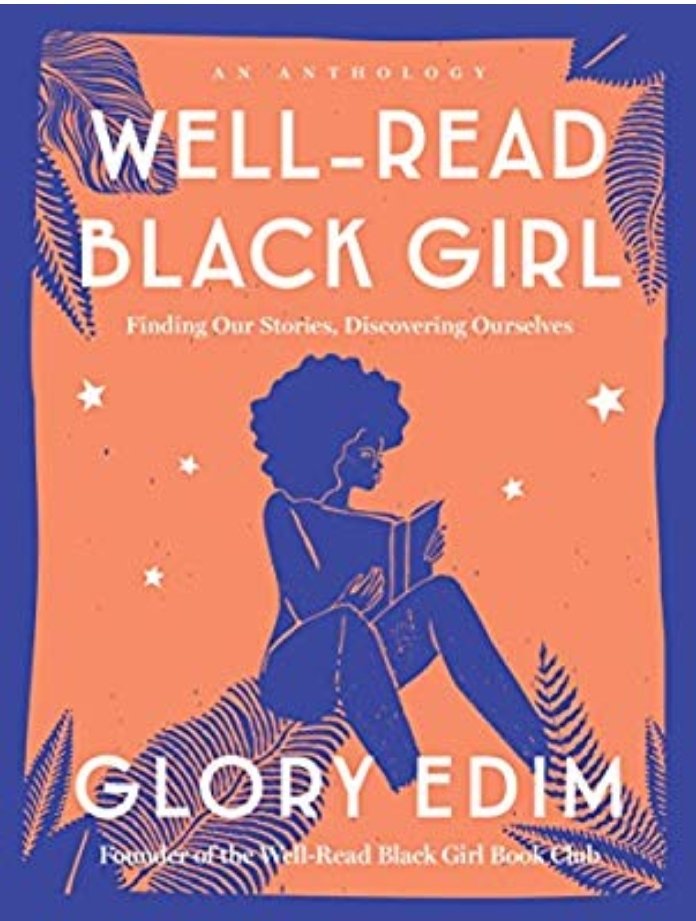
Well-Read Black Girl: Finding Our Stories, Discovering Ourselves, ed. by Glory Edim

This is a lovely collection of a wide range of voices and experiences, refreshing and bracing and joyful and gloriously various. Glory Edim is the founder of the Well-Read Black Girl book club (and later, the same-titled online community and conference), and here she has solicited and collected essays by Black women about their reading lives and the literary voices where they found identity and inspiration. This means lots of different things, and that’s the beauty of this book, I think. I loved that the authors of these essays ranged so wildly, as do their lived and literary experiences and the books and writers that they highlight – I confess, Roald Dahl wasn’t one I’d expected, but aren’t surprises fun? Between essays appear reading lists, naturally: the book club’s selections; classic novels by Black women; books on Black feminism; sci-fi, fantasy, plays, and poetry by Black women; books about Black girlhood and friendship. An appendix also lists all the books in this book. If there’s one thing about readers, we do tend to like a list of books.

The contributors’ list is star-studded: N. K. Jemisin, Rebecca Walker, Jesmyn Ward (), Jacqueline Woodson, Tayari Jones, Lynn Nottage, and many more. Veronica Chambers’ essay “Why I Keep Coming Back to Jamaica” I will definitely be using in my Short Fiction class this spring to discuss representation, what it means and why it matters. Woodson writes, “It’s difficult to be a reader and not be a writer,” and I like that as an encapsulation of the intersection of the two pursuits that I feel helps to define this book. There are no readers without writers and no writers without readers. Jesmyn Ward writes, “I never found the book that allowed me entry, granted me succor in story, and a home after the last page until I wrote my own.” That’s about empowerment, also a key point of this collection. Jemisin writes,

In the future, as in the present, as in the past, black people will build many new worlds.

This is true. I will make it so. And you will help me.

And why haven’t I read any more Jemisin since The City We Became impressed me so much?? (I just checked – there still isn’t a second book in that trilogy. But I now have The Fifth Season coming to me from my local bookstore.)

Much to love here in celebrating Black women as readers and as writers, and recognition of how far we’ve come, never ignoring how far we have yet to go in terms of representation and opportunities. And plenty of fodder for our to-be-read lists. I’m thrilled I found Well-Read Black Girl.


Rating: 8 library books.

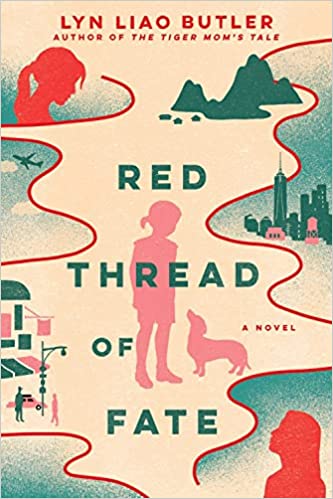
Red Thread of Fate by Lyn Liao Butler

Amid grief, betrayal and exposed secrets, a new widow learns to forge unexpected bonds.

Lyn Liao Butler (The Tiger Mom’s Tale) offers secrets, tragedy, hope and redemption in a novel centered on family and forgiveness. When Red Thread of Fate opens, Tam is on the phone with Tony, her husband. They are a bit short with each other; the marriage has been a little off, but they’re generally headed back on track and preparing to adopt a little boy from China, which both look forward to. Then there is cursing, a roaring sound–and just like that, Tam is a widow. The shocks come quickly, one after another: Tony was not in Manhattan, where he should have been, but in Flushing, Queens, and accompanied by a cousin Tam thought he’d been estranged from for years, killed by the same truck that struck Tony. Then Tam is surprised to be named guardian of the estranged cousin’s five-year-old daughter, even as her son-to-be still awaits adoption in China.

Tam, the California-born daughter of Taiwanese immigrants, and Tony, an immigrant from China, negotiated an uneasy peace with their families and their new lives in New York City, and with each other. Upon her own immigration, Tony’s cousin Mia lived with the couple for nearly two years, before unspecified events broke up the happy household. Now Tam is left to untangle the mysteries of Tony’s life, which seem to multiply the more she learns; Mia’s history is even more enigmatic, but Tam is committed to parenting her orphaned niece. She carries a guilty secret of her own, too.

By nature a shy and private woman, Tam is prompted by her new life–widowed, a single parent, grieving–to accept help, against her instincts. Slowly, she builds a family and a community: taking in her niece, moving toward adoption (which must be renegotiated now that she does not have a husband), deepening friendships and finding new ones, even beginning to mend relations with her mother. This process also involves navigating cultural nuances and divided loyalties. By the time Tony’s secrets come fully to light, Tam is a changed woman, with new strengths and allegiances, and better equipped to meet her many challenges.

Red Thread of Fate is a novel about what ties people to one another, and the nature of those bonds, the unintended consequences of choices and the possibility of a fresh start. With contemplative characters, surprising humor and a twisting plot, Butler’s thought-provoking story of nontraditional family models will appeal to readers interested in fate and identity.


This review originally ran in the December 6, 2021 issue of Shelf Awareness for the Book Trade. To subscribe, click here.


Rating: 6 wontons.

A Sense of the Whole by Siamak Vossoughi

I’m very glad I made the snap decision to buy this book after hearing Siamak Vossoughi read from it a few months ago. These electrifying stories are gleaming jewels, both very simple and very deep: absolute distillations where every word is perfect. Vossoughi’s writing reminds me of both Hemingway and Brian Doyle, which is a weird thing to say; but he encompasses both the koan-like, deceptively plain profundity of Hemingway and the profuse, excited, love-saturated celebration of Doyle. (Also, basketball.) Vossoughi’s characters are young and old, male and female, frequently Iranian-American (like the author) but not always; they are seeking, they are open and curious, and I find them inspirational (genuinely, not in the insipid way). They are also sometimes writers, which I appreciate and which feels autobiographical again, although I wouldn’t want to extrapolate that these stories are generally autobiographical (a too-easy assumption that’s often false).

A boy making a vulnerable but significant move in the classroom watches his teacher: “Mrs. Pardo didn’t look up or pause or anything, and he knew she wouldn’t look up or pause or anything, and she knew he knew it and that was a kind of love.” Two boys who have let their captured bees fly away silently muse about the mysteries of girls. “We couldn’t open that up between us because it would be like floating off into some vast and endless sky. So, we turned to something more certain and we talked about where those two bees on strings were by now.” In the story “Proverbs,” an Iranian-American child involves her parents and then a widening circle of the community in her homework when she is asked to explain the meanings of several American proverbs. I love that this story invokes the beauty and power of language, and the difficulties of translation, and the gift of sharing. Such a story could have been about alienation and discomfort, but here it is celebratory.

There is much here about the power of language, actually, as in “So Long”: “When I was a kid my father used to break my heart and send me soaring at once by the way he would say when he dropped me off at school, ‘Have fun.'” Later in the same story, “…it evened out everything that was vast and unknowable about America to remember that I could always be a listener, I could always take in somebody else’s America and grow my own by doing so, and know that I would have something to work with after doing that because at the very least, my America was a growing America.” Something about my own growing America, growing my own, feels revelatory to me. I tell my students that it’s important that we are all always learning and growing and aware that we don’t know it all, that the moment we think we know it all, we stop learning, and that’s where we fail. This feels related, and beautiful.

In “The Trophy,” I thought of Brian Doyle again. A shopkeeper at a trophy shop refuses a sale, instead intervening (against habit) in what he sees as a mistake about to be made. There is an empathy and a vulnerability to stories like this; it feels like these characters take the kinds of risks that we all wish we did.

The final two stories in the collection, “So Long” and “Nobody Died,” feel like the perfect choices, like everything the book had been building toward. I immediately went back to the beginning, in fact, to see if they all felt this good, once I’d gotten into Vossoughi’s rhythm, or something; but these final two still feel like standouts. I needed this in my life, and I’m already considering which story to teach in my upcoming Short Fiction class.

Vossoughi’s stories are very short – some just two pages, most four to five. And they’re perfect. Do yourself a favor and buy this book.


Rating: 9 apples.

The Turner House by Angela Flournoy

Humans haunt more houses than ghosts do. Men and women assign value to brick and mortar, link their identities to mortgages paid on time. On frigid winter nights, young mothers walk their fussy babies from room to room, learning where the rooms catch drafts and where the floorboards creak. In the warm damp of summer, fathers sit on porches, sometimes worried and often tired but comforted by the fact that a roof is up there providing shelter. Children smudge up walls with dirty handprints, find nooks to hide their particular treasure, or hide themselves if need be. We live and die in houses, dream of getting back to houses, take great care in considering who will inherit the houses when we’re gone.

Family, home, and sense of place. Pathos and humor. What’s not to love? This is a Great American Novel, telling the story of one prodigious family over generations, and in it the story of a city and more: the Turners’ Detroit is the story of the Great Migration, of racism and striving. Francis Turner came up from Alabama to Detroit in 1944, to be later joined by his wife Viola and first son, Charles or Cha-Cha. From there, from one rental house to another, the family grew, purchasing the house on Yarrow Street in 1951, where they would raise thirteen children, whose ages span 23 years. Readers meet these character briefly in 1958 and then spend much of the book’s space in 2008, as a widowed Viola weakens in Cha-Cha’s home and the old house on Yarrow falls into decay (and, if you remember 2008, there will be financial repercussions). The timeline jumps around: The Turner House is most concerned with 2008 and the final disposition of the title house (and its matriarch), but to tell that story, we have to flash back. Not all thirteen of the siblings get equal time, of course; the eldest, Cha-Cha, and the youngest, Lelah, play large roles, as do patriarch and matriarch, and a few others along the way, including partners.

There is a bit of a mystery at this story’s heart, too: Cha-Cha saw a haint in the Turner house when he was just a boy, and in his 60s he sees it again, while driving an 18-wheeler for work, which ends his career. His efforts to resolve this haint – its reality or unreality, its meaning – drives much of the book’s plot, serving as the main conflict in the 2008 timeline, although readers gradually become aware of how tenuous the family’s very existence was in the 1944 timeline as well. And Lelah is fighting demons of her own – as are all thirteen siblings, presumably, as are all of us. It’s an expansive story like that.

One man’s haunting is another man’s hallowed guest.

There is humor as well as pain, and many truths about families and homes, especially large families. One sideplot, which is both heartwrenching and funny, involves a minor character whose curiosity about big families causes her to make some spectacular missteps. As an outsider to large families myself, I sympathize, and I enjoyed this glimpse into a big, warm, loving, dysfunctional, unwieldy example.

He felt like a hostage in his own house. He saw now that these parties were larger than him and Tina, and even Viola. That his family could go on party prepping in Cha-Cha’s house when his home life was an obvious wreck indicated of a lack of respect. This was what happened when an open-door policy–something Cha and Tina had prided themselves on–ran amok. When mi casa es su casa was taken literally. His house had become an extension of the Brotherly Banquet Hall of their youths, except his siblings slept here too, and paid no security deposit for damage. In exchange, Turners thought their presence was expression of love enough; that they’d booked flights and crossed state lines to invade Cha-Cha’s space was supposed to be some sort of gift to him. It felt more like an ambush.

You know I have a special weakness for literature that tackles our relationships to places. Detroit is not a city I know well, but this version certainly felt fully formed to me; I didn’t look up street names but these are real places as far as I’m concerned, and that’s good enough. The importance of home, of connection to place and (sometimes) to the walls of one place in particular is very much a part of my worldview.

This book is about families and relationships, about connections to the past, about mysticism, about race and housing discrimination and Detroit and the Great Migration and the United States, about the significance of place and home. It is beautifully written and entirely absorbing; none of these characters is without flaws, but the narrative oozes with empathy through it all. It’s a masterpiece.


Rating: 8 hot links.