Motherthing by Ainslie Hogarth

Mothers and motherhood haunt this alarming, dark, weirdly funny novel of family ties and the power of just the right recipe to heal all wounds.

Ainslie Hogarth’s Motherthing is a grim, disturbing novel of family drama and mental illness, yet a bizarrely funny glimpse into one woman’s mind. In its opening pages, Abby, who narrates, and Ralph have recently moved in with Ralph’s mother, Laura, hoping to nurse her through her depression. But instead, Laura takes her life, Abby purloins Laura’s coveted opal ring and Ralph falls into despair. “Because even though he’d been strong when we’d moved in, strong enough to move in–equipped with resources he’d downloaded from a website called the Borderline Parent, and a swear-on-your-life promise from me that I could handle this temporary uprooting–being near her stirred rotten dangerous things inside him.”

Abby, very much in the throes of dealing with her own mother’s shortcomings and abuse, has identified Ralph as part mother, part god, the “Perfect Good” in her life and “the most genuinely good person in the entire world.” “Ralph would make eggs too, not specially because I was there, but because a person has eggs for breakfast. And soon, I remember thinking, clutching fistfuls of duvet to steady my overwhelming joy, I would be a person too.” In flashbacks to her childhood, she recalls a beloved couch she calls Couchy Motherthing, and constantly circles and ponders the ideal mother figure; she relies on a cookbook “for the mothers of good, happy, wholesome families, with lots of mouths to feed. And that’s the kind of mother I am too, even if I’m not yet”–because Abby desperately wants to have a child of her own, to embody the kind of mother that neither she nor Ralph got to have. She works at a nursing home where she considers her favorite resident her “baby” and, simultaneously, the perfect mother she never had. This fantasy is disrupted by the appearance of the woman’s real daughter, which might just push Abby over the edge. Because paired with her nurturing impulse, Abby secretly harbors intense rage, “murder so much more manageable right now than creating a whole entire family.” Her love verges on violence.

Hogarth (The Boy Meets Girl Massacre (Annotated)) rocks readers via Abby’s turmoil, her swings from devotion to fury, self-loathing to self-aggrandizement. Motherthing keeps readers as unstable as its narrator, struggling to manage the traumas and the waves of emotion. Abby copes with a focus on a few objects that she imbues with special significance: Laura’s ring (symbol of rejection, as Laura judged her daughter-in-law “more of a Kay Jewelers type than a vintage-family-heirloom type”), Abby’s cookbook and the recipes she hopes will save Ralph (an obsessed-over jellied salmon and an unusual iteration of Chicken à la King). The result of these roiling thoughts and images is a darkly comic, kaleidoscopic novel of unhealthy fixations, love, murder, the gifts and wounds that family can inflict and one woman’s fight to save herself.


This review originally ran in the August 4, 2022 issue of Shelf Awareness for the Book Trade. To subscribe, click here.


Rating: 6 little dogs next door.

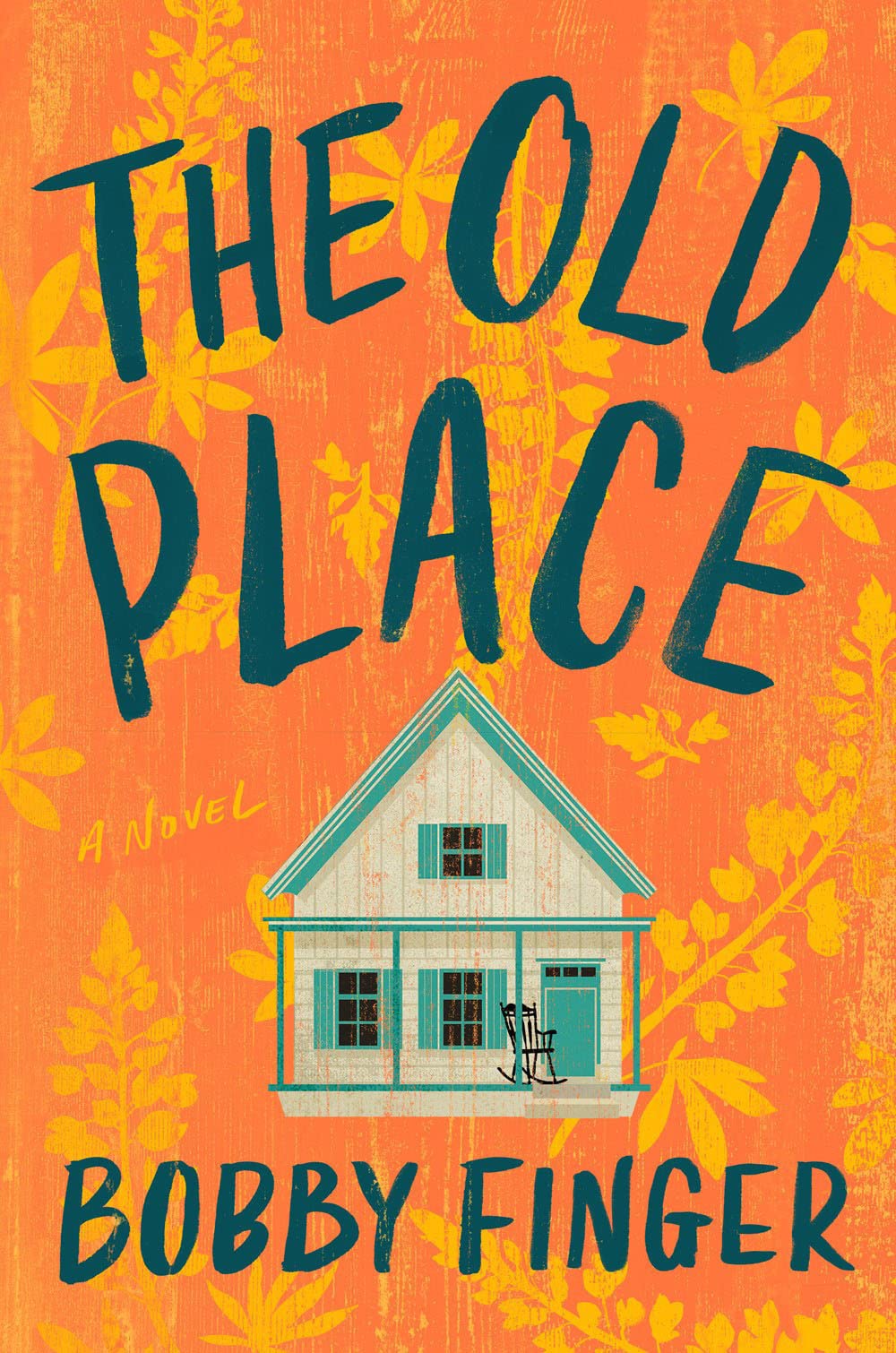
The Old Place by Bobby Finger

An irritable retiree in a small Texas town stars in this sweet, poignant story about community, secrets and all the ways to love.

Bobby Finger’s unforgettable debut novel, The Old Place, hits the rare and satisfying double note of harrowing and delightful. Roughly 90 minutes outside of San Antonio, Tex., a recently retired schoolteacher navigates various relationships and juggles old secrets in the kind of small community where everyone thinks they know everything about everybody else. Mary Alice Roth is a compelling, although decidedly prickly, protagonist; secondary characters only sweeten this heart-wrenching, warm-and-fuzzy small-town drama.

In the opening pages, Mary Alice is furious at being forced out of her job, and at the young woman–new to town and newly wed into an old family–hired to replace her. She tentatively renews her friendship with neighbor Ellie, hinting at one of the novel’s first slow reveals: the two women (one widowed, one divorced) had sons the same age who were also best friends, until a double tragedy. As readers puzzle over the deaths of Mary Alice’s husband and son, her (also long-estranged) sister, Katherine, shows up unannounced and unwelcome, all the way from Atlanta. Mary Alice continues her practice of bullying and haranguing the local ladies in preparation for the annual church picnic (“All the money spent there, whether on raffles or games or rides or food, went to Him whether you believed or not”). Katherine prods her to take responsibility for an old wrong, and together they reopen old wounds. Ellie privately nurses a new romance, only adding to the ever-twisting mysteries and secrets. Mary Alice’s replacement, the newcomer, offers a refreshing outside perspective as a native New Yorker who is as surprised as anyone at how much she loves her new home.

The Old Place muses over the stereotypes of a town like Billington, Tex., where privacy is scarce and prejudices persist, but where forgiveness and even redemption may just be possible. Mary Alice is a difficult woman to like, but the people who surround her–and the life she’s lived–keep her from being pure villain. By the novel’s second half, everyone is more nuanced than they originally seemed, and the fictional Billington feels as multifaceted and significant as any real hometown. Finger is expert at the careful disclosure of one secret after another, and his characters capture hearts and imaginations. His novel beautifully profiles the iconic small town, both holding it accountable and celebrating its quiet humanity. “Even a town in decline never really stops growing. People may leave, but their stories remain, reverberating in the bones of all those left behind.” At its heart, The Old Place is about the way people relate to one another: family, neighbors, new and old friends. The messiness, pain and grace of these relationships are candidly portrayed in a story that will inspire laughter and tears, making this debut a memorable achievement indeed.


This review originally ran in the July 26, 2022 issue of Shelf Awareness for the Book Trade. To subscribe, click here.


Rating: 8 tubs of potato salad.

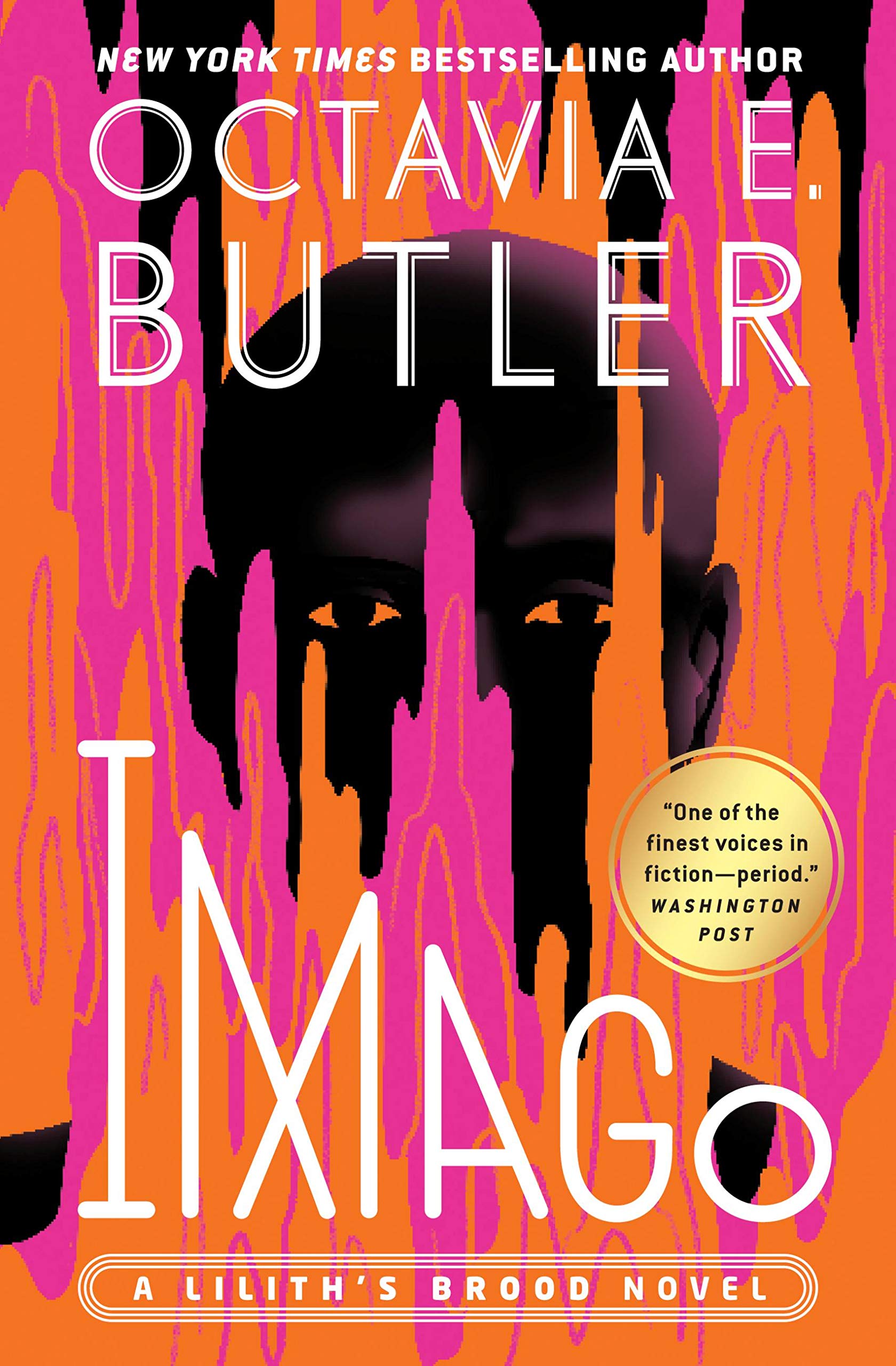
Imago by Octavia Butler

Following Dawn and Adulthood Rites is Imago, the final book in this trilogy, which I am sorry to see the end of. We’ve shifted narrators again: Lilith brought us through book one, then Akin for book two, and now we meet Jodahs, another first of its kind. Like Akin, Jodahs is a child of Lilith’s family, and her own (human-born). When Jodahs reaches metamorphosis, when Oankali and constructs (Oankali/human offspring) reach sexual maturity, a surprise: instead of becoming male as was expected, Jodahs begins to become ooloi, the Oankali third gender that is neither male nor female. Ooloi have extensive abilities to heal and changes themselves and others, and it had been thought still too risky to introduce human-born ooloi at this stage of the two species’ trade. Jodahs is a mistake, and a potentially dangerous one. But it quickly becomes clear that in its uniqueness it may have some special abilities to offer as well.

Imago is told from Jodahs’ point of view, as it struggles with its own needs and the challenges of coming of age. One early solution that is offered to the problem of Jodahs’ very existence is that it be exiled to a ship away from Earth; but Jodahs is a native of Earth, and quite reasonably pushes back against this idea. It’s the first of its kind, not wanted where it is from, and threatened with being sent “back” to a place it is not from. (The parallels to slavery are unmistakable.) It has overwhelmingly strong urges, toward sexual and other connections, but its people don’t want to allow it to pursue these urges, which are natural but also unprecedented (because Jodahs is unprecedented). I am still marveling at Butler’s worldbuilding here, that I’m so absorbed and bought into the rules of her invented peoples. It’s lovely.

There is commentary on human nature: the old human contradiction, as Oankali see it, of intelligence with hierarchical behaviors. Humans among themselves struggle with racism, xenophobia, sexism and sexual assault, and homophobia. When faced with Oankali – that is, something different, non-human – humans frequently react with fear and hostility. Even when they feel drawn to an ooloi, for example (and the ooloi have this power, to make themselves irresistible), they can feel revulsion mixed in. The trilogy has much to say about xenophobia and race, colonialism, agency and freedom of choice, and also gender. I love that the ooloi have to repeat that they are not male and female, not both, but a whole other thing. They still get misgendered and mis-pronouned. Jodah is asked if it wants to be male: “Had I ever wanted to be male? I had just assumed I was male, and would have no choice in the matter.” It’s also about community-building in ways that I love. Building communities, families and societies is just as hard in Butler’s fictional world as it is in any other dystopia I’ve encountered, real or fictional (because people). This is all good commentary on human tendencies, while at the same time being very fine, escapist fiction.

For more, especially some excellent thoughts on the book’s title, check out Erika Nelson’s “Playing Human” essay at Tor.com.

I love this series and think everyone should read it.


Rating: 8 tubers.

WWJD by Savannah Sipple

Disclosure: Savannah has taught as guest faculty in my MFA program and I have met her personally.


I loved these poems, the irreverence with the reverence, the frank talk about bodies, the attention to detail. They make sense to me in a way that poetry rarely does. Sipple’s poems are about people and relationships, violence, place, queerness, sex and love, fatness and body shaming, and religion. The title really comes into play in the third of three sections, and I read those three sections as being about three eras in the speaker’s life, in which she is (first and foremost at least for this reader) coming to terms with her sexuality. In the third section we get the WWJD poems, and the speaker claims her lesbian identity and continues to work on making peace with her body. The earliest two sections held perhaps more trauma and violence, where the third approaches a safer place. It’s also (perhaps logically) got more humor in it, as when “Jesus and I Went to the Walmart” and bought lady plugs and helped a young man pick out condoms.

                                              …Jesus found him, took him by the
shoulder and starting talking about how to please his girl. Jesus
held the ultra-ribbed and had just said something about clitoral
stimulation & remembering this wasn’t a 50-yard dash when I
said Jesus, what are you doing? and snapped the condoms out of his
hand.

There is some outstanding sensual work, as in “WWJD / about letting go.” I loved the writing about fat as in “And the Word Was God.” From “Jesus shouts, Amen!” I loved this final line: “My body is a holler I’ve tried to escape / time and again, but now, with this woman, I am home.” And the closing poem of the collection, “[Jesus rides shotgun]” was the perfect finish.

I’ve encountered a few poems this week (and not for the first time) in a form that I think is the cleave poem. (From Cleave Poetry: “In its most basic form the cleave poem is a vertical stanza on the left hand side, a vertical stanza on the right hand side, and a third horizontal poem which is read straight across from left to right, as though there is no gap between the left and right vertical stanzas.”) Sipple has one called “Rain, Love” that intrigues me greatly; I’ve been reading it over in the two ways, in two columns and then as a single right-to-left piece. But a friend of mine then suggested reading it in sort of a U-shape, down the left column and then back up the right from top to bottom, and it is a whole, third, outstanding piece in that way, too. How exciting and mind-expanding! (Thanks, D.) This has me thinking as well about the poems that can be read from top to bottom or from bottom to top, with two different meanings. (Sometimes you see them printed twice, in the two orders. I’ve seen these called palindromic, although I think that only works in the literal sense when it’s printed twice.) If anybody has a great example of that other form – or favorites of the cleave poem – I’d love to see them.

This collection excites me. Thank you, Savannah.


Rating: 8 times.

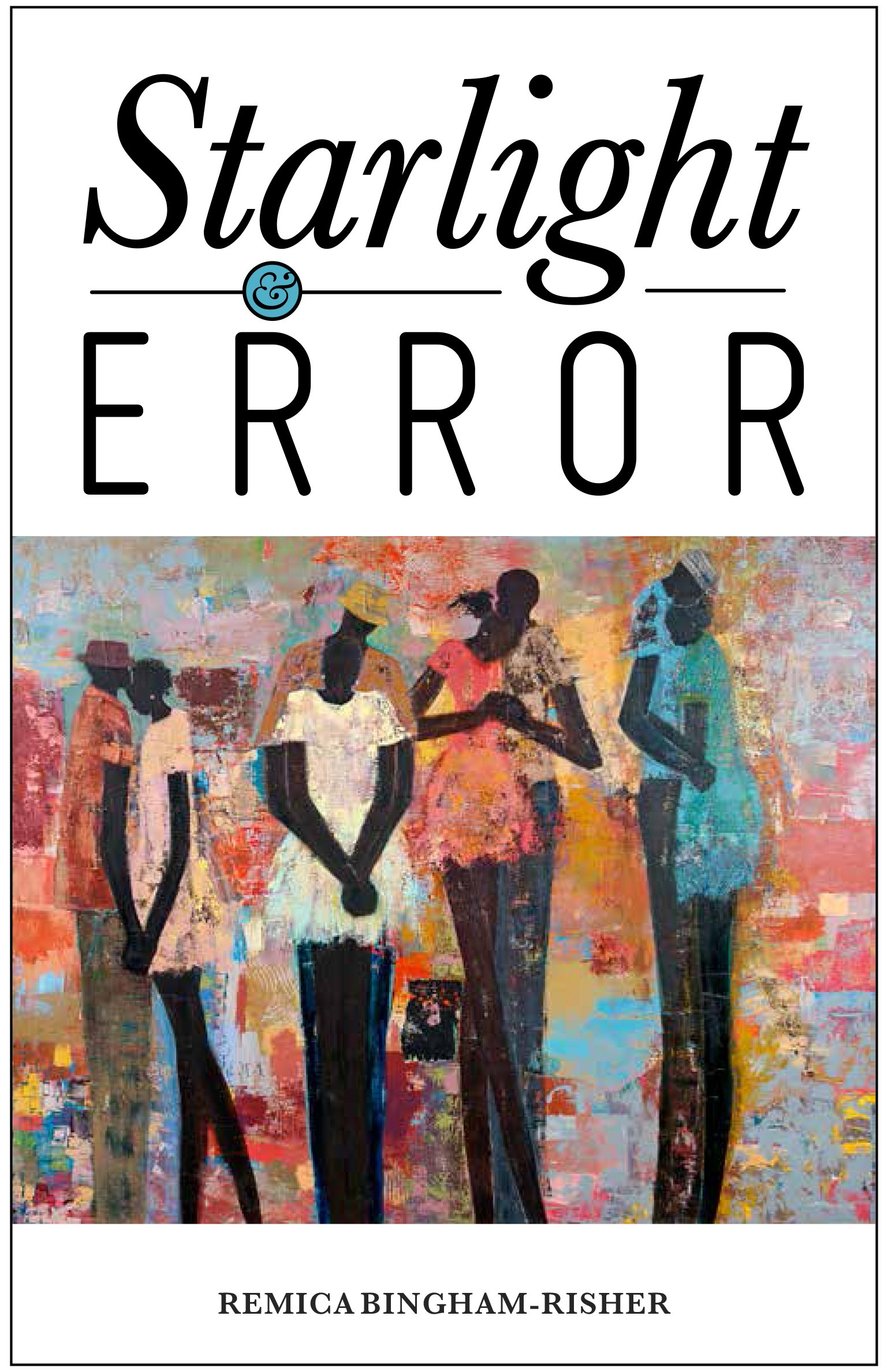
Starlight & Error by Remica Bingham-Risher

Disclosure: Remica has taught as guest faculty in my MFA program and I have met her personally.


This is a lovely collection of poems about family, love, different configurations of relationships, forgiveness… partings and comings back together, and always music. There are many mentions of music throughout, as an important thread in the speaker’s homes (young home with family and adult home with family of her own) and in her life; this adds up to the braided thread of music through the poems themselves. I love her writing about children and family, the ways in which people can be family without necessarily sharing the biological ties we (culturally) expect. “Son·sor·éa (\sahn-soar-ray\)” and “Mother Necessity” both comment on being a mother to a child not one’s own, and “Ways to Please a Five-year-old Superhero” is first a list poem (which you know I love) and then as well a pretty straightforward and I think helpful guide, as its title promises. These poems delighted me, as do the love poems (always, and coming off of Mary Carroll-Hackett’s collection that I reviewed the other day… I can still remember Mary telling us, at residency, that “it gets better” as you get older, and I love how both these women’s poetry reflects that, that love and, yes, sex can be messy and filled with contradictions but also deepening and enriching as they age and complicate). “Training or a Weapon” is about trauma and different ways of teaching, and I think I can remember Remica reading this at residency and I loved it then too. And there is a poem titled: “A student writes the thesis: If you never find your soulmate, this is when one must face the harsh reality of making major decisions alone and, though the grammar is incorrect, I give him credit,” and it is going to stick with me.

I still find poetry hard, but also rewarding. Thanks, Remica.


Rating: 7 days like this.

The Night I Heard Everything by Mary Carroll-Hackett

Disclosure: Mary has taught as guest faculty in my MFA program and I have met her personally.


This collection opens with the title poem “The Night I Heard Everything,” in which the speaker recalls a time when an unnamed person made an explanation that opened up the world. Its sets the tone for the rest of the book, with topics from the personal (love and lovemaking, family) to the external (science, history, nature) and a tone of wondering, admiring awe and hope. There are also repeating images and themes of women’s experiences and intergenerational ties, and connection to place, which of course speaks to me. The speaker’s loved ones are in several cases gone, but also everpresent, because (in the final line of “Someday the Woman You Will Be”) “there are, in fact, no endings, no endings after all.” There is mourning but there is continuation; these poems are concerned with ancestry, inheritance and what is passed on. They are mystical but also embodied – I love how Mary writes about love, as in “Here, Touch Here” and “Dark Brown Is My Favorite Shape.” This is a neat, brief poetry collection, easy to read at least in terms of its length, but also lots to linger in.


Rating: 7 glasses of tea.

Lungfish by Meghan Gilliss

A woman wrestles practical and existential questions of family and survival on an abandoned Maine island in this contemplative debut novel.

“Agnes–the first Agnes, who was my father’s mother, not long dead, on whose island I find myself now, and whom I named my daughter after (if only to try to solve a mystery)–had always protected her love for her only child.” Meghan Gilliss’s contemplative first novel Lungfish examines such mysteries of family in an austere setting.

Her protagonist takes refuge from unnamed problems on an island off the coast of Maine, in her late grandmother’s cabin, scraping a meager living from the rocks and the sea. In her fractured first-person narration, Tuck slowly releases information. She has brought along her young daughter, Agnes, named for the beloved grandmother. She is also accompanied by her husband, Paul, who is unwell. She has the field guides and religious texts her grandmother left behind, and little else. Paul’s trouble and the issues they have fled on the mainland only gradually become clear, to Tuck as well as to readers.

Some chapters offer consecutive pages of narrative storytelling; some are very brief and take a more gestural or lyric approach, revealing Tuck’s fragile grasp on her own story and history. The chronology shifts from present to past. Tuck’s father, who is legally heir to the cabin where she squats with her family, is missing, and has always lived an unconventional life. “He looks off the rails because we cannot see his rails.” Paul offers a new and different challenge. Tuck fearfully watches the calendar, knowing that when Maine’s fall turns to winter, her family will no longer be safe on this island; just as fearfully, she watches for the executor of her grandmother’s will. She scrambles the rocky beaches foraging for bladderwrack, rosehips, mussels and crabs, her toddler daughter in tow and knowing only this life. Tuck hides the key to the dory from her troubled husband between trips to the mainland for the most basic of provisions. It is a precarious system; mother and daughter flirt with starvation. A lone boat at sea allows Tuck to dream and hope.

Lungfish is a novel steeped in the harshness and beauty of the natural world, in which islands may be both real and metaphorical, where a woman may be accompanied by child and husband but also alone in navigating grief and responsibility. Tuck considers her relationships to her own father, mother, brother, her troubled husband and the growing Agnes, who “comes from different stock.” Although this novel’s setting is particular, its themes are universal. Atmospheric, haunted, but struck through with beauty and love, Lungfish is one to remember.


This review originally ran in the July 8, 2022 issue of Shelf Awareness for the Book Trade. To subscribe, click here.


Rating: 7 packets.

The Marsh Queen by Virginia Hartman

Mystery, romance, conspiracy, family drama, natural history and art combine in this excursion into a decades-old suspicious death in the swamplands of northern Florida.

Loni was 12 years old when her beloved father headed into the northern Florida marsh in his johnboat and did not return. At 36, she is working her dream job as a natural history artist at the Smithsonian, ignoring her past and her remaining family as hard as she can, until her younger brother calls to insist she come home to help care for their mother. The Marsh Queen, Virginia Hartman’s fast-paced, compelling first novel, sees the prodigal daughter return to the swamps, the family she left behind, the mystery of her father’s death and the possibility of a fresh start.

“Daddy wasn’t just a visitor to the swamp, he was a part of the place.” Loni’s father, Boyd, was a Fish & Game officer, a fisherman, a devoted husband and father and a most unlikely suicide, although that was the rumored–and covered up–cause of his death. Loni was his usual companion in the swamps, uninterested in fishing but a passionate and talented illustrator of the birds they watched together. As an adult, she’s kept that passion, but grown distant from her brother and especially from her always-prickly mother, Ruth, now suffering from dementia. A serious gardener and herbalist, Ruth struggles with painful secrets long kept from her daughter. Loni’s leave of absence from the Smithsonian comes at an especially stressful time at work, and returning home is always painful; nothing about this trip feels right. But Loni canoes the swamps, discovers family secrets, investigates her father’s death, finds herself involved in fresh intrigues and dangers–and meets a handsome stranger. The Smithsonian, and leaving Florida behind, have always been central to Loni’s life plan, but as she sinks back into the quirks of family and home, she may just find a new way.

Hartman’s descriptive writing and clear passion for her subject are on best display when Loni immerses herself in the natural environment, in her art and in her memories of Boyd. In her contemporary relationships, Loni can be frustratingly obtuse and lacking in self-awareness. As the enigma around Boyd’s suspicious death gets more complex, the plotting can feel a little unwieldy. But the subversion of Loni’s expectations is frequently refreshing; a few secondary characters offer intriguing perspectives, and the novel’s framing details of Florida marshland, ornithology, museum work and fine art are expertly and beautifully drawn. The Marsh Queen is unwavering in its lush, finely detailed, appreciative portrayal of a distinctive natural setting, and ends on a redemptive, even inspirational note.


This review originally ran in the July 1, 2022 issue of Shelf Awareness for the Book Trade. To subscribe, click here.


Rating: 5 herons.

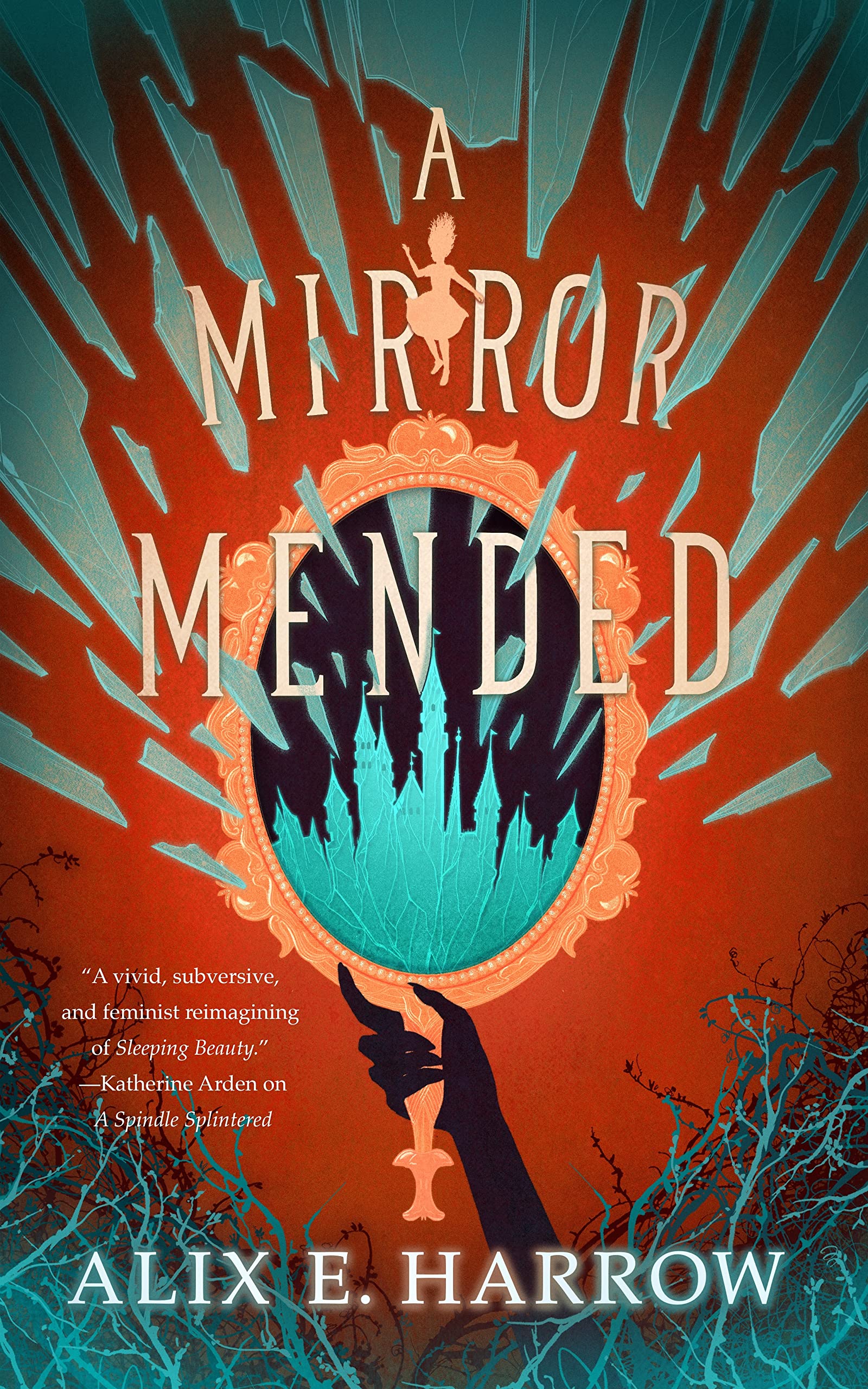
A Mirror Mended by Alix E. Harrow

My *only* complaint about these gems is their brevity. I could sink into Harrow’s retold fairy tales for much longer than ~120 pages. Can’t wait for the next installment.

Following the action of A Spindle Splintered, Zinnia Gray’s exciting life traveling through the fairy tale multiverse, saving princesses and sending them off into their happily-ever-afters is getting a little tiresome. “I’ve rescued princesses from space colonies and castles and caves; I’ve burned spindles and blessed babies; I’ve gotten drunk with at least twenty good fairies and made out with every member of the royal family. I’ve seen my story in the past and the future and the never-was-or-will-be; I’ve seen it gender-flipped, modern, comedic, childish, whimsical, tragic, terrifying, as allegory and fable; I’ve seen it played out with talking woodland creatures, in rhyming meter, and more than once, God help me, with choreography.” Zinnia’s story, as we know from book one, is Sleeping Beauty. But things are about to get weird again.

Looking in the mirror (hung over after another happy wedding), our heroine is surprised to see a very different face: not her own, and not that of a princess. This one is a haughty, threatening queen, holding a mirror in her hand, demanding a way out of her own story. Zinnia recognizes that she is the villain – but not of Sleeping Beauty’s story. She has somehow jumped not just from one world into another, but into another fairy tale entirely. And this time she doesn’t have her awesome best friend Charm to help her out, because of a mysterious estrangement that the reader doesn’t puzzle out til near the end of the book.

A Mirror Mended is again a delight, an irreverent, queer, cynical-but-sweet reimagining of Snow White that questions narrative truths about protagonists, villains, agency, resonance and cohesion. Zinnia knows there must be a back way into a castle because it’s a known plot device. She expects a certain evil queen to be ugly, “which is pretty fucked up of me, but in my defense, Western folklore persistently and falsely equates a character’s physical appearance with their inner morality.” [In case you forgot, Zinnia has a degree in folklore.] When yet another stranger doesn’t meet expectations, Zinnia assumes, because “I know a protagonist when I see one.” But as the walls between fairy tales thin, Zinnia will learn to question her assumptions.

I love the rethinking of gender expectations and of narrative tropes, and the examination of agency, the power we all might have to rewrite our own stories. It’s empowering and awesome and feel-good without ever being saccharine, although it can be awfully, wonderfully sweet. Zinnia learns some important lessons in this story, finds a little romance for herself this time around, and leaves us with the perfect setup for book three in the Fractured Fables series. I can’t wait, and I hope it goes well past a trilogy. Highly recommend.


Rating: 8 bodice laces.

Maximum Shelf: Ithaca by Claire North

Maximum Shelf is the weekly Shelf Awareness feature focusing on an upcoming title we love and believe will be a great handselling opportunity for booksellers everywhere. The features are written by our editors and reviewers and the publisher has helped support the issue.

This review was published by Shelf Awareness on June 22, 2022.


Claire North (The First Fifteen Lives of Harry August; The Pursuit of William Abbey) offers a new take on a familiar tale with Ithaca, a richly imagined, thought-provoking novel of Penelope’s trials during the Trojan War and its aftermath. The forgotten or misrepresented women and goddesses of ancient Greece bring joy, sorrow, humor and wit.

A lengthy space of time falls between The Iliad‘s story of the Trojan War’s conclusion and The Odyssey‘s story of Odysseus’s protracted homecoming. On the island of Ithaca while its king, Odysseus, is absent, Penelope, his queen, rules uncertainly, beset by unruly suitors wishing to become king, and the hopes and ambitions of her son, Telemachus, an infant when his father went to war and a young adult by the time he returns. Into this gap comes Ithaca, which follows the challenges faced by Penelope and the other women–queens, wives, mothers, goddesses, slaves–who surround her and fight their own often overlooked battles.

The Homeric myths are well-known and familiar territories for many readers and indeed many writers, who have reimagined and retold these stories in abundance. But despite the richness of such retellings, Penelope remains an enigma, and North’s contribution to the genre is unique and welcome. While the Ithacan queen is in some respects its protagonist, Ithaca is narrated by the goddess Hera, wife (and sister) to Zeus, and frequently represented as bitter, jealous and vengeful. Hera’s interest in Penelope is self-serving: as the goddess of women, wives, queens and motherhood, she resents the ways in which Penelope is disregarded by her male counselors, her absent husband, her suitors and her son. While Hera’s stepdaughter, Athena, is chiefly concerned with the hero Odysseus, Hera is entirely here for the women. In fact, it is not Penelope whose fate concerns her first: “No one ever said the gods did not have favourites, and it is Clytemnestra I love best, my queen above all, the one who would be free.”

Clytemnestra’s crime of husband-murder is reframed by the recounted sins of Agamemnon, and when the murderess-queen hides on Ithaca, readers are reminded that she and Penelope are cousins. Next arrive Orestes and Elektra, who seek to avenge their father’s death; Orestes is near-mute and disengaged, while his sister is a magnetic, powerful force, barely remembering that she must at least seem to defer to the will of a man: “aware that she has been perhaps a little too forceful… [she] adds, ‘My brother will issue his commands shortly.’ ” Clever Penelope is more practiced at the trick of subtly sliding her wise points into conversations while seeming to demur. Telemachus is a bit silly, a boy hoping to be a man. Odysseus is entirely off-screen, “groan[ing] in the nymph’s pearly bed.” Both Artemis and Athena make appearances, annoying their stepmother with their own agendas.

Penelope is of course harassed by the unwelcome suitors who place the queen in a sort of stalemate, as she can neither accept their offers of marriage (both because Odysseus may still be living, and because to accept one would be to provoke the others quite possibly to war) nor send them away (because of the culturally sacred host’s obligation). In this version, Penelope is additionally beset by pirates attacking her island nation–pirates dressed as Illyrians but wielding the short swords of Greeks. There seems to be intrigue afoot, offering a whodunit mystery subplot for Penelope and her subtle female counselors (in contrast to her blustering male ones) to investigate. Women warriors lurk in the shadows of this Ithaca. And North does not forget the maids, who are also slaves, and also in some cases Trojans: “Death to all the Greeks,” one of them repeatedly mutters under her breath. The maids are frequently bedmates of the suitors; but to what end, and with what choice in the matter?

Thus is Ithaca the story not only of Penelope, Hera and other queens and goddesses, but of less famed women as well, down to the teenaged village huntress who opens these pages. Hera is quick to remind her audience that the stories that get passed down are written by poets, whose narratives may be purchased, and who rarely notice the contributions of women: “That girl is not remembered now”; “No poet will ever do her homage.” “Freedom only increased the efficacy of her work, though there is not a single poet in all of Greece who would dare breathe of such an outcome.” Hera’s voice is humorous, whimsical, imperious, frequently scornful. But she is also surprisingly easily cowed by the other Olympians, knowing that Zeus holds power over her. “I was a queen of women once, before my husband bound me with chains and made me a queen of wives.” While this story is on its face about Penelope, Clytemnestra, Elektra and the rest, Hera is an engrossing and masterful character in her narration.

North’s prose is clever, funny and as wise as Penelope herself, with an eye for pleasing images as well as deeper meanings. In her capable hands, this ancient landscape is both fresh and timely. Ithaca is the first in a trilogy, and having come to know this three-dimensional Penelope, North’s readers will eagerly await the next two installments.


Rating: 8 dreams.

Come back Monday for my interview with North.