readalike: Henrietta Lacks and The Spirit Catches You

The Immortal Life of Henrietta Lacks, by Rebecca Skloot, and The Spirit Catches You and You Fall Down, by Anne Fadiman, read almost like partner volumes to me. These two nonfiction works share author/narrators who get involved in their subjects, spending a great deal of time with the families involved and forming personal bonds. Both Fadiman and Skloot are bothered by a sense of, if not wrongdoing, something having gone awry. The subject of both books is medicine, and the interaction of the institution of western medicine with a culture that doesn’t fully understand it. Humans are important. Ethics are involved, and there are no clear rights and wrongs – or perhaps it would be better to say it’s easy to see where we went wrong, but difficult to see what the right path would have been. Even the structure and tone of the two books are similar: to understand the subject at hand, we are often taken back a step or zoomed out, to a perspective where we can see the history or the culture’s role in a specific situation. The reader learns medicine, science, history without feeling lectured. I strongly recommend both.

Lee Child’s Echo Burning, and some more nonfiction: The Spirit Catches You and You Fall Down

Sorry I’ve been absent for a bit. But I have been doing some good reading.

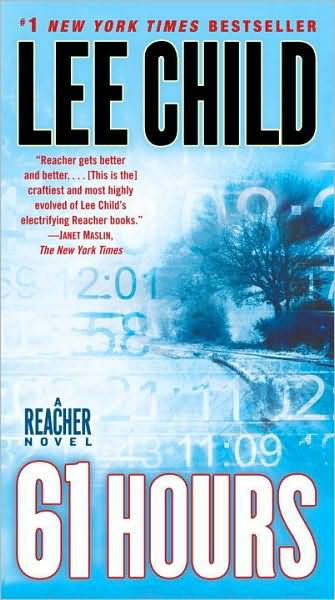
Last week, my workday reading was Lee Child’s Echo Burning. Child and his character, Reacher, were recommended to me in my RA class, and I picked up Echo Burning because it’s set in the vast west Texas desert, an area I’m a little bit familiar with.

Child’s series starring Jack Reacher was compared by my classmate and teacher to Connelly’s series starring Harry Bosch, of which you might have noticed I’m a fan. I really read Connelly to get more of Bosch, and Reacher does share some resemblance. Bosch, while an anti-authority loner type, does actually work for the authorities as a police detective, although he’s always at odds with his bosses and occasionally leaves the fold just to make things interesting. Reacher is a former military policeman (MP) turned rogue do-gooder, in a violent sort of way. Neither has a great deal of respect for authority or the rules that dictate the way they should go about solving crimes or problems, although Harry grudgingly plays along, most of the time, at least in the clues he leaves behind, because he has to present a prosecutable case to his DA.

Reacher doesn’t have a mission like Bosch does; in this book, and I get the impression in all, he’s merely drifting, moving through town, and gets caught up in problems he then goes about solving. Bosch has a job to do, and does it well and willingly; Reacher is just taking what comes up. Actually, in many ways the Reacher story reminds me of a western, especially with this setting; he’s the lone ranger rolling through town, taking care of business and moving along. He has an endearing, chivalrous care for the ladies, but he’s awfully rough around the edges, and starkly violent.

I loved it. It was just similar enough to Connelly to get me excited – the characters were similar but different, and would probably respect one another, although they wouldn’t stick around to get to be friends. I enjoyed the setting and recognized it, which is always fun (we all enjoy realistic settings in our own hometowns, right?). I guess it had a number of my requirements: strong sense of place; moody, gritty, dark tone; and a certain “type” of main character. I think I’ll be looking for Reacher again.

This weekend I got involved in another work of nonfiction, and I have to say, I find it remarkably similar to a recent read (but I’ll tell you about that another day, so as not to ruin it). I’m about two-thirds of the way through, now, with The Spirit Catches You and You Fall Down, by Anne Fadiman. (There’s an excellent chance I’ll finish tonight.)

This book is about a little girl and her family’s experience: Lia Lee is a Hmong child, born in Merced, CA to recent immigrants from the Hmong people’s extended journey through China and Laos. She has severe epilepsy, and the book centers around the conflict between her family and culture, and western medicine, in their two very different understandings of what her illness is, what causes it, and how it should be treated. In addressing Lia’s story, Fadiman gives us a brief history of the Hmong people’s culture and history. It is absolutely fascinating, and for me, the cultural aspects make this book special.

It’s an educational book because it provides lots of information and facts, properly cited, about medicine and epilepsy, as well as about the Hmong people in history (and the U.S. involvement in Vietnam and Laos), their immigration here, and the treatment of refugees by our welfare and other systems. But like I said, the cultural interactions are most interesting to me. The local hospital and medical system struggle to treat Lia and give her the best possible life; her parents likewise want her to be happy and healthy. But they have such fundamental differences… it’s not like two doctors debating two courses of treatment; we’re talking about two absolutely non-compatible, to the extent that they’re not really translatable, understandings of what’s wrong with her and the causes of her disease. Translation is almost not possible in the traditional sense because of cultural norms that don’t allow for direct translation. Californians and the Hmong have so recently met that there’s no precedent for much of a need for translation; there hasn’t been time for much bilingualism to develop, nor has their been much interest, on either side. (I should note this book is more than ten years old, so the current situation is a little different.)

I’m totally engrossed in the story of Lia and her family, but equally so in the story of the Hmong people in history. I’m also intrigued by the involvement of the author/narrator and her experience in researching the book. One lesson or concept that I’m coming away with is the ease with which we can condemn someone as having done the Wrong thing, and the difficulty with which we can come up with the Right thing. This is something that always occurs to me in politics. I can clearly see policies or politicians with whom I disagree because they’re Wrong; but in such a big, complicated, diverse world, with such intertwined goals, interrelated causes and effects, and various goals, I have an awfully hard time clearly seeing The Right Way. This is why I am not running for public office! Anyway – Lia’s story might well make you realize that nobody was entirely right or entirely wrong (certainly not wrong in their intentions and best efforts) and yet, Lia did not get optimal care. These cultural exchanges are, whew, hard.

I recommend this book and hope you’ll join me in enjoying it. If you haven’t already guessed what recent read I’m comparing it to, stay tuned. To me it’s just as obvious as anything but we’ll see. Feel free to post your guess here… Til soon, enjoy your week and your books.

weekend reading: a few mysteries

This weekend the Husband and I had a relaxing time at my parents’ weekend home in the country. I finished last week’s lunch book pretty quickly: that was The Sweetness at the Bottom of the Pie, and I guess I was ready for it to be over. It was cute, entertaining, and kept me guessing through the middle portion of the book, but its momentum flagged a bit for me toward the end. Once we knew for sure whodunit, author Bradley was just a little too relaxed in tying up all the loose ends, for my taste. But, I came to really appreciate our young hero Flavia, and look forward to meeting her again late in the series. The dual frames of chemistry/poisons (Flavia) and stamp-collecting (her father) were unique and intriguing even though I share neither interest. I’ll look for more of Flavia.

For a second book I had brought along two choices: Inkheart by Cornelia Funke, and Fantasy in Death by J.D. Robb. I read the backs of both aloud to the Husband and he chose for me, the latter. Inkheart is a children’s/young adult (YA) book about a girl named Meggie whose father, by reading aloud, can bring characters to life, including the bad guy Capricorn. I can’t tell you much more about it because I haven’t read it yet! But I intend to.

So I read Fantasy in Death yesterday (had to stay up a little bit later than intended, but ah well, I was so close!). J.D. Robb is Nora Roberts’s mystery-writing nom de plume. I have read exactly one Nora Roberts books (The Stanisklaski Sisters, thanks Gala) and don’t consider myself a reader of romance. Sometimes I find them mildly amusing (recently, Julia Quinn’s The Viscount Who Loved Me). But, I confess I did find Stanislaski a bit too fluffy, and I was concerned about the forcefulness with which the men pursued and conquered the women. Some of the scenes were not far off sexual assault, and the fact that the heroines were won over by force seemed to seriously confuse the issue of “no means no!”

Because of this past experience, I was a little bit leery, I confess, and I have no experience with the romance/mystery crossover genre, so what’s that about? A few things about this book surprised me. For one, are all of J.D. Robb’s books set in the future? This was romance/mystery with sci fi thrown in too! (Answering my question, according to my new favorite online resource NoveList, yes, Robb’s series does use the same future setting.) In Fantasy in Death, Lieutenant Eve Dallas is joined by her filthy-rich gaming-mogul husband Roarke in investigating the murder of a young gaming star-on-the rise. I give Robb full credit for keeping me engaged in the gaming and tech stuff even though I don’t care one bit about either. It wasn’t super complex, but Eve and Roarke were likeable and not flat characters, and I didn’t know whodunit til the very end, and I cared, so it worked fine for me. Fluffy, yes, but enjoyable. I may very well pick up another Robb.

There wasn’t a huge amount of sex, but what there was seemed out of place, gratuitous, and sort of awkward. Eve and her sidekick Peabody discussing penises while driving around on the case was forced. I guess this is where we get the romance crossover? Actually, the relationship between Eve and Roarke was pretty realistic and heartfelt, did not feel forced to me, and made me care more about both of them, so well done there. I’m not offended by sex in books, but for dog’s sake please make it naturally a part of things.

All in all it was a fine weekend of reading books, and the Husband did some reading, too. He’s following my lead into Raymond Chandler’s The Long Goodbye. I wish you all a week of reading and recommending good books 🙂 and I wish for myself, plenty of time for the same!

moving slowly along

Bear with me, gentle reader. I’ve only had time the last few days to read over lunch. I’m slowly enjoying The Sweetness at the Bottom of the Pie by Alan Bradley, which is a mystery with a young amateur detective named Flavia de Luce. She’s a youthful chemist, and her father, accused of the murder of a red-headed stranger in their cucumber patch, is a passionate philatelist (student of stamps), so there are a few frame elements for you right there. This book is cute; Flavia is our first-person narrator, which poses the usual challenge  of trying to get the voice of a eleven-year-old girl right, but Bradley does passably well. She has a charming and pretty accurate self-importance to her that I find amusing, simultaneous with despair that no one else notices how great she is (least of all her two older sisters). It reminds me of other young-girl-detective novels I’ve read, like Hotel Paradise by Martha Grimes. There are some interesting secondary characters (Dogger, the gardener, sort of, is pretty complex and sympathetic) and I’m moving right along to see whodunit. There’s an intimidating librarian figure too. 🙂 I’ll let you know what else comes down the pipeline, but for now, be assured that I’m slacking a bit but not forgetting about you.

discovering something new in “pop fiction”

Happy Friday, gentle reader.

I don’t often find myself reading recently released pop fiction. I’ve never read anything by Nicholas Sparks; I’ve never read Eat, Pray, Love (ok, that’s not fiction, but you get the drift); I haven’t tackled Stieg Larsson’s trilogy yet; and until this week I had not read any Jodi Picoult. (Side story: I so enjoyed Lionel Shriver’s We Need to Talk About Kevin that I began to be interested in Picoult’s Nineteen Minutes which is on the same subject; but Shriver’s book came out ~4 years before and they looked so similar I worried that Picoult was not being perhaps entirely original!) However, after reading my friend Amy‘s blog post about Handle with Care, I became interested in My Sister’s Keeper, which is discussed in that post. (Sorry if this story is a little convoluted.) Because I trust and respect Amy even though she reads and writes sci fi 🙂 I picked up My Sister’s Keeper and started it this week. So.

My usual reading routine is to keep (at least) one book going at work, which I read on lunch breaks, and almost always bring home to finish over the weekend (if I don’t, it’s not a very good book). I simultaneously have one (or more likely several) books going at home. My Sister’s Keeper has been doing so well, though, that I took it home with me last night – on a Thursday – to read at the park before a trail work session. That’s a good sign.

I spent a couple dozen pages being a little, mm, irritated I suppose, by the conversational and youthful style. The story is told from varying viewpoints, a chapter at a time in first person from a variety of characters; but we start pretty heavy on Anna, the thirteen-year-old protagonist. I think perhaps her voice was authentic for her age, and maybe that’s what bothered me a little. I pushed through my grumpiness, though, and I think I’ll take full credit for that grumpiness; I just needed an adjustment period. I like this book! The moral issues at stake are pretty interesting, and while I’m not extremely torn – I’m pretty clear on what I think “should” be – I definitely appreciate what Picoult is doing to illustrate the complexity of the question.

Quick plot synopsis: Anna was genetically engineered and conceived specifically to match older sister Kate’s needs for a tissue donor. Kate has a very complex and aggressive cancer. By the time we meet Anna (13), Kate (16) has lived a decade beyond expectations. Parents Sara and Brian (such prosaic names!) have always just drawn from Anna when Kate has needs; but now, in the face of kidney donation, Anna hires a lawyer and sues her parents for medical emancipation. If she wins, her sister dies. You can see the complexity there. No plot spoilers for now because I’m not done reading yet 🙂 although I did read Amy’s spoilers! (It’s okay, I don’t care, a good book should stand up after spoilers.)

My reaction to the dilemma is entirely on Anna’s side. Kate will die with or without a kidney transplant; Anna has much more to gain or lose in this question, and it’s high time someone took her rights into account. Here’s a kicker: read all the synopses you like of this book, and tell me, how many mention the third (eldest) sibling, Jesse? He doesn’t count at all; and Anna only counts as a body-parts donor. Sara is heard to say “stop acting like a five-year-old” to a five-year-old; she guilt trips her other two children, even at very young ages, that at least they’re not in Kate’s shoes; she rejects many pleas for normalcy because everything has to be about Kate. She accuses Jesse of injecting drugs when in fact his track marks are from donating plasma to his little sister; Sara’s so busy martyring the world that she wasn’t aware of his donations. I don’t think there’s much question here of what’s right or wrong; but for a thirteen-year-old girl to make the decision for her sister to die is pretty heavy stuff. It’s heavy for the mother, too, but I can’t believe she doesn’t have a little more concern for her other daughter.

So even though I find myself a little disgusted with one character, I like what Picoult’s doing. All of the characters are very believable; to not like a character is certainly not to not like a book or a writer’s work.

Sorry I waited so long to give this one a try! I’ll have to be a bit more open-minded in the future.

Just to keep you up to date, I’m working on Alan Bradley’s The Sweetness at the Bottom of the Pie at home (thanks to an RA classmate for the recommendation), and yes I will read Stieg Larsson’s trilogy one of these days, but what’s the rush? I’ll wait til there aren’t lines of people waiting for them and buy them off the used rack in a year or two. 🙂

Enjoy your weekend! I know I will, with so many good books in the world. Ahhh.

vacation reading.

Hello! I’m home early from my vacation; some bad weather ran us off the trails at Tyler 😦 and it was so beautiful, too. I got plenty of reading done, though, and now I’m here to tell you about it.

I finished The Cases That Haunt Us by John Douglas and read Bridge to Terabithia by Katherine Paterson, The Reversal by Michael Connelly, and Look Again by Lisa Scottoline. (I also picked up a copy of J.D. Robb’s Fantasy in Death at a big-box store in Louisiana but didn’t need it since we came home early.) And I listened to about half of Ian McKellen’s reading of the Odyssey in the car. So, you’ll have to forgive this long post!

In order:

I finished The Cases That Haunt Us, which I’ve been taking in bits and pieces for some time now. Because it’s a compilation of Douglas’s notes about various cases, it reads well this way. I got a little impatient with his style occasionally, but to be fair, this is not a professional writer, but a criminal profiler. I found his analyses very interesting and it was well worth my time. I now have a longer list of serial killers that I want to look up and read about. Is that weird? Thanks Douglas for interesting stories and facts. I’m not sure why this subject is so fascinating to me!

I picked up a copy of Bridge to Terabithia on impulse, having read about it somewhere. This children’s read is not a new book, either, but I think stories like this one stay current. It reminded me of the 1991 movie My Girl with Macaulay Culkin, in which a girl full of her own issues and problems has her perspective widened by the death of her best friend. Bridge to Terabithia involves a 5th-grader short of friends and positive moments in his life, who makes a new best friend and loses her in an accident in which he feels some responsibility. I think it’s an age-old story about friendship, society/rejection (so important especially to kids), and loss. It’s a coming-of-age story, too, because we grow a little bit older when we experience tragedy. I’m not involved with any kids’ reading choices, so this was just a diversion for me… but even an adult can enjoy a quick-read high-quality kids’ story like this one.

Then the main event: Connelly’s latest release, The Reversal. I think I can handle this one without any spoilers, staying within the bounds of the blurb you’ll find online or on the dust jacket. In this book, we have a convergence of characters: defense attorney Mickey Haller teams up with his prosecutor ex-wife Maggie McPherson (“McFierce”) to work for the people this time, and they take Harry Bosch on as their case investigator. I find it exhilarating to have these three in the same room! And we get their daughters together, too, which several of us besides Haller have been looking forward too. As expected, family connections further develop the characters on a personal level. Earlier in the series, Bosch was much more “just” a police detective, but all this personal-life-material has really developed him into a full and complete human. I love it. This is what I read Connelly for.

As expected, we get a full dose of Hollywood society and L.A. setting in this high-profile case. Also, as I’ve come to expect from the Haller books, we get extra courtroom-procedural drama; I especially like the jury selection and analysis. (Here I find a parallel to the criminal profiling I also like.) The case is interesting and convoluted, of course; that’s not optional. But to me, the personal connections and family drama amongst our 3 chief characters is what really makes the book.

I have to file one complaint: I found the ending to be a little anti-climactic and unsatisfactory. I was looking for more answers, just like Harry Bosch was. I guess maybe this is realistic; maybe this is the way cases like this do end. It’s also not the first time Connelly has done this to me, and I still love him and will keep reading. But I guess it ended a little bit abruptly for me. Maybe I’ll come back and reconsider this later, more fully, when others have read the book. If there’s any interest shown. (Chime in here.)

This is where I ran out of reading material, gasp, and stopped off at the above-mentioned big-box store in Ruston, LA. (That’s an experience.) I picked up the J.D. Robb that I never got to (maybe that’s next) along with Lisa Scottoline’s Look Again. I’ve never read her, but I’ve read about her work and it sounds interesting.

Look Again is about a reporter in Philadelphia named Ellen who gets a missing-child postcard in the mail. As she goes to throw it away, she’s stopped by the face on the card: it is, uncannily, the face of her three-year-old adopted son, Will. Amidst drama at her tenuous place of employment, Ellen takes off work and flies to Miami to investigate a two-year-old abduction, and look into her adoption. We get a number of surprises, but not perhaps where Scottoline wanted them: I found the major plot revelation to be completely predictable, while the late-book romance and brief gory, graphic violence caught me off-guard. I wasn’t bothered, but I was surprised by the change in tone, after spending so much time on family and babies. Despite all this, I enjoyed the book. It was fast-paced, kept me involved and interested even as I predicted our big “surprise”, and I really cared about Will’s fate. I’d recommend it to someone who wanted a fast-paced, exhilarating suspense-mystery about family and children, even a little romance, in which setting is important (more on this in a moment) and the ending is fully satisfying (unlike Connelly, hmph). It was a quick, easy, satisfying read.

I observed in reading the Scottoline book that significant sense of place is important to me. I really like how Connelly uses the city of L.A. (and sometimes Vegas or other locales) almost as a character; the place is realistic and very important to the action of the book. For this quality, definitely look to James Lee Burke and his depiction of small-town New Iberia, Louisiana, as well as New Orleans and occasionally other places including Galveston, TX. (His main detective character has a lot in common with Harry Bosch, too.) I’ve only read one Nevada Barr book (starring Anna Pigeon): Deep South, set in Mississippi if I recall correctly. I got the same satisfying sense of place from her, and it’s my impression that this is true of all her books. I like it. I liked that Philadelphia and Miami were well characterized in Look Again. When I read Elizabeth George and Martha Grimes, I get a pretty good sense of place too, but their mysteries are set in Great Britain, and I have much less sense of their settings; I can’t judge how hackneyed or evocative their settings are for myself, if that makes any sense. Even though I’ve never been to Miami, I feel more at home in the U.S. settings mentioned here. So, I’m just still making observations about what’s important to me in a good murder-mystery. Sense of place. Wonder if there are any good ones set in Houston out there. I have read some Susan Wittig Albert; hers are set in small-town Texas not far from Austin. But they’re a bit cute and cozy for me.

Sorry about the rambling there – moving on: the Odyssey audiobook. I was excited about hearing it read aloud to me for the first time, after many readings. This work was composed in oral form before the invention of writing, so it’s really meant to be heard and not read off the page. And Ian McKellen seemed like an excellent selection for reader (he’s Gandalf in the Lord of the Rings movie trilogy in case you don’t know). The translation makes a big difference, of course, and forgive me for being picky but I prefer Fitzgerald’s to the Fagles one read here, which is still excellent.

It’s been a few years since my last reading of the Odyssey, and one of the first things to grab me was the use of repetition. Homer helps us keep track of who’s who and where’s where by use of repeated phrases: in the Fagles translation (from memory I paraphrase), “when they’d put aside desire for food and drink, they set their mind on other pleasures” and the epithet of dawn, “young dawn with her rose-red fingers” (Fitzgerald uses “rose-fingered Dawn” and maybe just because I was raised on it I find this more satisfying somehow). I enjoyed this repetition, and of course, the poetry of this beautiful work. McKellen does a beautiful, powerful, emotional job of reading. Although I’m not sure why we need a British accent to make poetry beautiful!

On the other hand, I was a little disappointed at some of the pacing issues. Maybe I’ve been pacing myself differently on the page all these years: maybe I skim more quickly over the repetitious or descriptive parts and rush towards the action (I’ve been guilty of this before). They’re such great stories, as well as being beautiful poetry. Maybe on different days and in different readings I prioritize these two aspects differently. The beauty of reading it myself off a page is that the power is mine to rush or linger. Or maybe I was just concerned, once I got the Husband in the car, about keeping his interest – I think for him, the action definitely needed to be prioritized. You can’t speed Sir Ian up.

Maybe I’m just not sold on the audiobook format. I’ve never been a listener as much as I am a reader. And I’ll stick with “real” books over the Kindle/Nook/etc. for now, thanks. 🙂

So, the vacation may not have gone perfectly (rain in Tyler, boo) but the reading was excellent and hopefully I’ve preserved the bulk of my thoughts long enough to get them online for you. 🙂 Thanks for checking in on me. What are YOU reading these days?

catching up on Connelly

So I got home from work last night, and the Husband was out, so I got on the couch with my “new” Michael Connelly: A Darkness More Than Night. With his newest release, The Reversal, on its way to me (delivery estimate is today!), I was excited to get caught up. Darkness was the very last of his novels that I had never read. What fun.

(Darkness was published in 2001 and is not new. I have a liking for the series out of order, though.)

I’ve been excited, over the years, to see the serial characters I’ve come to know and love (Bosch, McEvoy, Haller, Rachel and Eleanor, even Cassie Black and Thelma the parole officer) come into contact with one another. It makes Connelly’s world so much more real to see them pass as ships in the night. It’s not like he created a group at the start and kept them together. It really is as if they’re all part of a larger, complex system, and they meet, perhaps only tangentially, and diverge just like we do in our real world. Also, I appreciate that Connelly changes things up, updates his characters, and keeps things very real and human for me. For example, I confess I came to a point where I felt that Bosch was becoming a little bit of a type, or a caricature: the lone, self-destructive, hard-drinking, isolated, good-hearted, authority-battling, etc. police detective. But just as I recognized this concern, Connelly recognized it too, and made Bosch a fuller, more complex and human character. We get into his personal relationships; or, we get a different character’s perspective for a book or two, and see Bosch through someone else’s eyes than his own. So, I continue to be a real fan.

In Darkness, Terry McCaleb from Blood Work returns for another unofficial investigation, and finds the fingers pointing towards Harry Bosch himself. Again we see Bosch through eyes other than his own, while the majority of Connelly’s novels are seen from Bosch’s perspective. It’s every bit what I expect from Connelly: fast-paced, suspenseful, edge-of-the-seat action with surprises, plot twists, and a touch of very human love, along with glimpses into the depths of human goodness and depravity, and some appreciation of art along the way. (Most often we learn about jazz, Bosch’s passion; here we look at some classic paintings. I love a novel that inspires nonfiction research, as this one did for me.) I would say it’s “typical” Connelly, but don’t be confused by the negative connotation there, one of the same-old. Rather, “typical” Connelly is intended as high praise. I read this book straight through before bed – no need for a bookmark – and stayed up too late consequently, but it was worth it, as always.

All this just has me all the more excited for The Reversal, in which Bosch and Haller team up! I can’t wait. After today, I’m on vacation til next Wednesday the 27th, so don’t expect to hear from me; I’m taking The Reversal on vacay with me if it shows up in time (hope hope!), along with the Fagles translation of Homer’s Odyssey on audio, read by Ian McKellen, for the drive. Good times!

See you back here next week. Thanks for following. Go get some Connelly!

finished HeLa.

Wow. The Immortal Life of Henrietta Lacks really got me interested and taught me so much; and it was such an easy read, for something so educational. 🙂 When I finished the book I spent some time perusing the acknowledgements and notes, just out of regret that it was over. I am relieved to say that there is some measure of peace achieved in the end. It’s not a particularly happy or upbeat story; it’s very serious stuff. But there are some hopeful moments in the final wrap-up.

I count it in author Skloot’s favor that I became involved in her life as well as those of Deborah and the other Lackses we come to know. These people matter, and I know and care about some medical issues I had not bothered about before reading this book. I think this should be required reading for everyone, in the category of Knowing About Your World. Thank you KD for prompting my interest!

finally, meet Henrietta Lacks

What an amazing story. First, let me admit that I was perhaps a little wary of beginning this one because I feared it might be “heavy” (science-y, tech-y). But after a pleasant day pre-riding tomorrow’s race course with friends in perfect weather, I got brave and settled into it while the Husband worked on a bike in the garage.

I began with “A Few Words About This Book” and was enthralled in just a few sentences. Nothing about this story is dry or overly science-y. In the prologue I learned of the personal connection between author Rebecca Skloot and the story of Henrietta Lacks. This is too human to be heavy.

I’ll back up. In case you don’t know, The Immortal Life of Henrietta Lacks is a work of nonfiction, addressing the case of a Southern black woman whose cells were harvested without her knowledge shortly before a mysteriously aggressive cancer took her life just past the age of 30, leaving 5 small children to be raised by an enormous family of Lackses and friends. This family didn’t find out about the use of her cells for more than 20 years, during which time they were reproduced in numbers greater than can be contemplated. Henrietta’s cells have played an important and often the decisive role in innumerable medical and scientific advances: the polio vaccine, chemotherapy, genetic research, in vitro fertilization and the effects of the atom bomb. All of this without any attempt to inform her family, get consent, or discover their feelings; and without any compensation. While industries are birthed and men become rich,  the Lackses continue in the same culture that Henrietta’s parents knew, living in their forefather’s slave quarters and farming tobacco. Today’s Lackses are ill-equipped to even understand the story of Henrietta’s cells, and no one has bothered to try to explain it to them.

As soon as I started reading I was engrossed. Again, the author, Skloot, has a personal relationship to the story, and necessarily forms personal relationships with the modern-day players in the course of her research. I learn a surprising amount of science without feeling intellectually exercised, and it almost reads like a work of suspense; the pages keep turning; I’m anxious to hear the next bit of dialog. Human interactions with Henrietta’s relatives are interspersed with the science (which in itself is interspersed with the human stories of those players), and the thing just rolls along building momentum.

I had to tear myself away to write this entry for you. I find this to be an outrageous (as in, outrage-inducing) and educational story, and I recommend it. Skloot’s skills as a writer are commendable. I hope you’ll join me as I open a cold Avery IPA (just one, I’m racing tomorrow) and get back in it.

Friday

Well this has been a heck of a day! I’ve been intimately connected with my IT guy all day, for one thing (thanks Wes) and that’s just the beginning. But at least my library patrons have been pleasant all day.

I was looking forward to lunchtime today, not just for the usual reason 🙂 but because I was interested to see what would happen with poor Justin, and whodunit? in Murder Past Due! Congrats to author James for getting me involved. The whole thing ended in what I consider to be a very Agatha Christie scenario: all the players in one room, with the Poirot-character asking increasingly perplexing questions in a crescendo of uncovered secrets, ending with the perpetrator very unwisely spilling all of his/her secrets and all the details of the crime, even the ones unnecessary to confession. There was a bit of a twist, of course, since librarian Charlie has been our cozy amateur detective all along, and the policewoman takes over at the end; but it was still satisfactory and adequately surprising. (The hints build towards the end, which I think is slightly less satisfying than an all-out oh-my-goodness surprise crook, but still.) I was sad that it was over; I was becoming a fan of our Southern-small-town characters and want to know them better. But, this is the beginning of a new series, we’re told, so I guess I’ll be back! While not the most serious or life-changing book I’ve read lately, it was entertaining and I don’t regret my time.

Soon it’s off to the house for some sweet rest before off to the races all weekend! Next weekend I’m taking a vacation that involves some racing as well as some live music and some just-for-fun riding, but I also hope it’ll involve some reading!! as I’m getting behind. (For one thing, I still have yet to start Henrietta Lacks which I really did intend to readalong with Kristi; but I think she’s very busy and thus a slow-ish reader too, so maybe there’s hope.)

Today, by the way, marks six months at my new job here at the Patient Family Library. It’s been rewarding and I’m glad to be of service. Here’s to more of the same, er, better.