The Heroine’s Bookshelf by Erin Blakemore

I have a delightful little book to share with you today! I mightily enjoyed Erin Blakemore’s The Heroine’s Bookshelf: Life Lessons, from Jane Austen to Laura Ingalls Wilder.

Blakemore’s message is this: we are all heroines in our daily lives, or at least we can and should be; and we have a wealth of heroines to learn from. These are the women of our favorite books. She organizes her book by chapters which each deal with one lesson or attribute (including dignity, happiness, and simplicity), represented by one author (all are women) and one female character, from one book or series. I would love to list them all here for you but feel I should leave you something to discover when (not if!) you pick this book up yourself; so I shall tease you with Alice Walker and Margaret Mitchell, on top of the two authors Blakemore names in her subtitle.

It’s a very sweet, comforting, and comfortable little book. Twelve chapters explore twelve women’s literary impact on our world. Eleven of them I definitely call classics; one I’d never heard of! but of course I don’t know everything. Blakemore’s approach is intimate and loving and a touch incisive. It’s not an academic or intellectual book, but it’s not what you might call “fluffy”, either. She did do some research, I’m sure, as she discusses not only what’s between the pages of the books in question, but also notes biographical details about the authors and draws some conclusions. For instance, I didn’t know about the 2008 revelation by the descendants of Lucy Maud Montgomery about her death. This book is not too serious – a light read – but an important one, at the same time.

I am absolutely inspired to read, and re-read, the books examined here. I share Blakemore’s love for Jo March, and I wonder at her selection of Jane Eyre over Wuthering Heights, but we’re all unique, individual heroines, aren’t we. I marvel at her call to compare Frances Hodgson Burnett to Britney Spears and Amy Winehouse! but I admire her for it, too. Again, the adjectives that come to mind are comfortable, almost warm-n-fuzzy.

I need to own this book; the library’s copy will not suffice. And I think YOU should own it, too. Who am I talking to here? Well, I readily accept that many of these books are “girls’ books” (or women’s). But some are absolutely essential to us all: A Tree Grows in Brooklyn, for example, is an important book all around. This book is directed at women, but is not necessarily to be enjoyed by them exclusively. I’m sure you know who you are.

I can almost see a book club (or reading blog) project coming out of this. I would be very happy to shelve this book, in my home library, next to its twelve objects of study, and read them all in a streak of thirteen, with a mind to discussion. This would be a lovely thing to share with other women – and a willing man or two if they could be located. I don’t have the energy to put this together at this time, but do invite me if you decide to. 🙂

I’m so glad I found this little jewel. I hope you’ll find it, and enjoy it, too.


Edit: My mother asked who this author is, and I had to go looking for the answer, so here it is, Mom: she calls herself “a writer, entrepreneur, and inveterate bookworm” on her website, and I was immediately drawn in to her blog and have added it to the list of blogs I follow.

an average day in the life of a librarian

…means taking things home. We will eventually have a storage problem in my house. Or perhaps it has already begun, considering that the books have outgrown my study (Husband calls it the “book cave” which is really unfair as there is lots of lovely natural light streaming in) and the TBR bookcase is in the dining area. Here is a picture, which is now dated; it’s all full up these days…


Some days I just carry my regular work bag, which only allows a book or two along with my lunch and personal effects. But some days I carry a supplemental book bag. Like today. Today I’m bringing home…


Starting upper left and going clockwise:

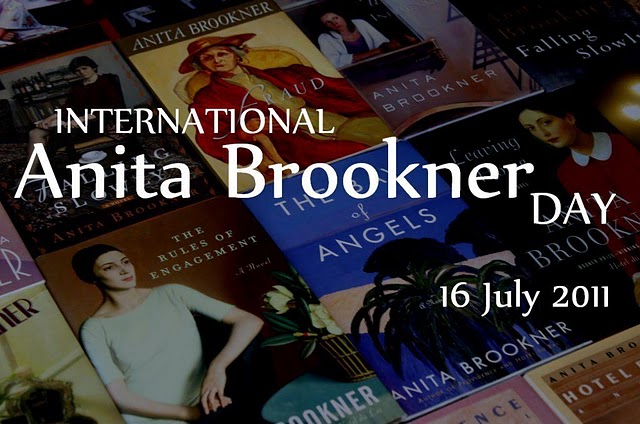
Hotel du Lac by Anita Brookner. My interest is inspired by Thomas at My Porch, and I’m nearing the end of it now and very well pleased.

The Heretic’s Daughter by Kathleen Kent. Katy at A Few More Pages has written up this and other of Kent’s books, and I’m intrigued.

These Things Hidden by Heather Gudenkauf, which I’ve had my eye on for a while now. Now, litlove (at Tales From the Reading Room) did take issue with this book, calling it commercial fiction. But I’m still interested.

The Red House Mystery by A.A. Milne. The one and only mystery from the author of Winnie the Pooh etc.? I’m sold.

Rebecca by Daphne du Maurier. I’ve never read it (gasp!) and want to; plus I saw this post the other day at Savidge Reads and got a final nudge.

Without Fail by Lee Child. My current genre favorite; he hasn’t let me down yet. It’s always good to have some light pleasure reading lying around!

By-Line: Ernest Hemingway has been discussed here before. I’m still not quite done.

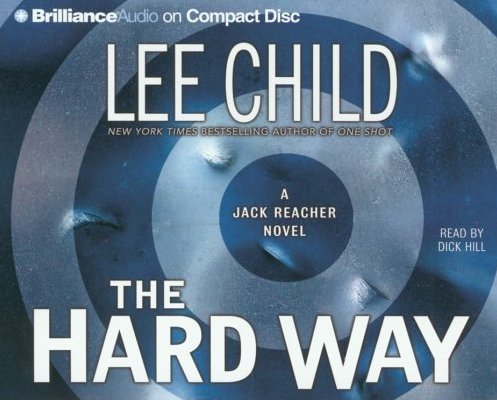
Gone Tomorrow by Lee Child on audio. This is in the car right now. More of my current genre guy.

And… Tales from Watership Down by Richard Adams. On the long list of books I’ve always vaguely intended to read, so I grab when I can.

It’s a dangerous world when you spend over 40 hours/week in a library!!

Most treasured.

I’m acting on a nudge from Sheila today, over at Book Journey. She did a lovely post about her very most treasured (physical) book, and asked her readers what they treasure. I found her story of her father’s death,and the loss of most of his possessions, very touching and very (obviously) sad, and I was relieved to find the good reason why she’s never read her most prized and treasured book: it’s a Vietnamese/English dictionary, thus not the sort of thing you read cover to cover. Got it. At any rate, it got me thinking.

I think it’s probably obvious that I treasure physical books. Most reading-bloggers undoubtedly do! Even those who have embraced e-readers (and I haven’t, yet, but all things are possible and I’m not ragingly anti) feel the value of “real” books. I love books. But my most treasured? I think, like Sheila, my favorite books came from my parents. I don’t have as striking a story to go with mine as she does (and thank goodness, I still have both of my parents) but I do have a small collection of older editions that I am very fond of, and will be very sad when they finally, completely fall apart. Like these:

I think my very most favorite is the battered hardcover copy of The Electric Kool-Aid Acid Test, on the bottom.

Sheila, thanks for asking!

Shoot Him If He Runs by Stuart Woods (audio)

I tried Stuart Woods out because he’s popular with some of my library patrons and I want to be as well-rounded as possible, especially in the mystery genre which is my personal favorite.

Shoot Him If He Runs sees Stone Barrington return to the scene of earlier action on the small Caribbean island of St. Mark’s with ex-girlfriend and CIA spy Holly Barker. There is governmental corruption (no mysteries there); there are vodka gimlets, nude beaches, beautiful people, and other accoutrement of the good life; there is a a very talented former-CIA spy, master of disguise, now thorn-in-the-side of the CIA, who Stone and Holly are trying to find and identify. There is no action, terrible dialog, no intrigue, a tiny touch of gratuitous and pointless sex, undeveloped characters and unexplained lose ends. I don’t know what to say that’s nice about this book. I fell asleep during some of the most important parts, but I don’t think it mattered (the Husband was driving and therefore presumably awake throughout and could name no redeeming features) and is only a statement of my feelings about the action. I guessed what was coming at about halfway through. Then I went to sleep.

I’m sorry, Stuart Woods. I wanted to see what so many of my older male patrons like about you, but I just didn’t.

I’m pretty sure I won’t pick up another Stuart Woods novel again unless I’m in serious book-deprived distress, but that’s a state I’m generally able to avoid.


Edit: I asked Husband to share his perspective for us, and he said “It’s no Reacher. [referring to Lee Child’s Jack Reacher series we both love so much] No suspense.” There you have it, folks: the succinct review. Well put, Husband.

enjoying the books.

I just want to post a quick note that I’m really enjoying my reading life these days. (This is probably due in part to having just finished the semester and thereby finding some unaccustomed free time.) I have just a few pages left in Hotel du Lac (Anita Brookner) and will finish today, probably to go back to the final pages of By-Line: Ernest Hemingway that I left unfinished. I’m listening to Gone Tomorrow (Lee Child) in the car which is a guilty but delicious pleasure. It’s a good life. That is all. 🙂

Love You More by Lisa Gardner

My first experience with Lisa Gardner was an overwhelmingly positive one. I’d been attracted by reviews and descriptions of this recent release for weeks, and was excited to find it available to me right before leaving for our road trip to Arkansas at the beginning of the month.

A few key elements:

  • female detective with personal life. Detective D.D. Warren’s former boyfriend is also her former work-partner, and in this book she has to work with him once again. Her current boyfriend is largely off-screen. She’s pregnant and in denial about it.
  • female state trooper has apparently shot her husband who has apparently been beating her. Tessa’s six-year-old daughter is missing. Tessa is well acquainted with processes of criminal investigation, etc., and therefore very able to assist, or thwart, D.D.’s efforts to figure out why the husband is dead, why Tessa shot him (she did shoot him, right?) and most importantly, where’s little Sophie?
  • suspense!! edge-of-my-seat, staying-up-too-late-on-Thursday-and-Friday-nights-before-my-big-race-on-Sunday (thank goodness I finished it before Saturday night), thrilling, adrenaline-junkie suspense.
  • police procedural with all the details, including interdepartmental pissing contest.
  • strong sense of place. I’m not real familiar with Boston but the details felt authentic to me; neighborhoods, social strata, housing trends and home values are discussed. This was very much a real place.

These are some elements that make me very, very happy about genre fiction. This is some of my favorite stuff. As I’ve mentioned repeatedly in this blog, I have a theory that the current trend in fiction (apparently even in my beloved bloody-violent genre) is themes of maternity and family, and it tends to annoy me a bit. These themes were present here: D.D. is panicking over her unwanted pregnancy and the idea of reconciling it with a career in law enforcement; Tessa provides a perfect example of how wrong this combination can go. The two women’s situations are clearly not only entwined but allegorical. This didn’t bother me a bit. D.D. is all business, no mushiness, no sentiment. Tessa loves her daughter very much, but it’s not mushy for her either. They’re both strong women, and I was fine with the maternal angles in this case.

This was a murder mystery that had everything I ask for, including wild plot twists (I was so caught off guard! repeatedly!) and surprises, and a wild build-up of action and violence to the finish. And yea, okay, some of the final crescendo of action and gore was a bit unrealistic but come on, I don’t read this kind of book because it’s realistic in its minutia. It was well within my ability to comfortably suspend disbelief.

All the thumbs are up. I shall be seeking out more Lisa Gardner. Well done!

The Mapping of Love and Death by Jacqueline Winspear

It’s that time again! Time for the Maisie Dobbs Read-Along!

This week’s book is The Mapping of Love and Death, and of course the title is significant. Our mystery is the questionable wartime death of a young American man who enlisted with the Brits (in WWI) as a cartographer; he was allowed to do this because of his extraordinary skill and training in the field, and because of his father’s British origins. Maisie is struck by the young man’s very likable family, who are attacked in their hotel immediately after meeting with her, and land in the hospital in critical condition.

Maisie tracks the mystery of what turns out to be a murder in the trenches (characteristically, delving into the war-related past to solve a mystery of the present), as well as the question of what happened to the cartographer’s sweetheart. As a bonus, of course, she solves the attack on the parents, too. In what is almost becoming a predictable format, the past – in this case, the father’s familial past in Britain before his emigration – plays an important role. We see some tragedy in this book, but things are ultimately resolved to general satisfaction in terms of the mystery.

Two important things happen in Maisie’s world: Maurice Blanche, her lifetime mentor, friend, and father figure, dies. And she takes on a new beau, far more promising than anyone we’ve met so far, because she has a truly emotional reaction to him rather than being detachedly “fond” as she was of Dr. Dene. The new beau is James Compton, son of her patroness the Lady Rowan, and I suppose I’m (naturally) naive to the difference in their social classes being such a big deal, but I couldn’t help but be a bit impatient with this question. I thought it couldn’t help but be resolved – as it was – by Lady Rowan’s demure acceptance of the inter-class question. She’s always been a nonjudgmental friend to Maisie. I was a bit surprised at her protest, which was unrelated to social class, and now I’m especially impatient to see Maisie declare her intentions and continue to “walk out” with James. The book left us hanging on this point. I suppose I’ll look forward more anxiously than usual to A Lesson in Secrets, the new Maisie book, released just a week or two ago. (It’s en route to the library now and I shall read it first thing.)

So let’s review. Another mystery was solved, satisfactorily but also according to a pattern I’m becoming very comfortable with – if not perhaps a touch bored. Maurice died, which is a very real personal tragedy for Maisie, as well as being one of those silver-lining opportunities for greater personal growth and independence, much as Simon’s death was. Ah yes, I didn’t say that she is now a quite wealthy young woman! Thanks to being the overwhelming heir to Maurice’s fortune. She has a new man, one I find very promising, if she can quit being wishy-washy and say YES Lady Rowan, I adore your son! I suppose it’s hard to think about remaining an independent businesswoman and get married, especially in her time. But James seems so wonderful, surely he’d be supportive?

I have left out any consideration of Billy Beale, generally one of my favorite characters. His family life & drama didn’t play quite such a strong role in this book; but that’s good for them, the reason being, that they had less drama. Billy’s still dreaming of emigrating to Canada, and I have a feeling Maisie’s new-found personal wealth will trickle towards the Beales; but there may also be a new mouth to feed around that household soon! So who knows. I continue to hold Billy and his family close to my heart and look forward to meeting with them again soon.

I believe that sums it up. I enjoyed this Maisie book, as all the others. But there is very much a pattern to the structure that can be comfortably rhythmic and predictable but has thoroughly ceased to make me gasp. For truly suspenseful, edge-of-my-seat mystery novels, I have learned, I must look elsewhere. That’s okay. There are lots of good suspense writers out there. I can’t wait for the new Michael Connelly to arrive! And I recently really enjoyed my first experience with Lisa Gardner; and there’s Elizabeth George… she hasn’t settled into any kind of predictable pattern, yet, to me. Although, come to think of it, her Barbara Havers character frustrates me in the same way Maisie does: I want to shove them or shake them into realizing the teeny tiny steps they could make that would get them so far… it’s taking awfully many books for these women to realize their own worth in certain areas. But don’t get me ranting. 🙂

Still loving Maisie and still loving the read-along! Check out our fearless leader Book Club Girl for discussion of The Mapping of Love and Death.

Main Street by Sinclair Lewis

This is a real star. I’ve been so pleased to take in this witty, bitingly satirical story of small-town life. The setting is the fictional town of Gopher Prairie, Minnesota, based on Lewis’s hometown of Sauk Centre; but as he says in the introduction, “the story would be the same in Ohio or Montana, in Kansas or Kentucky or Illinois, and not very differently would it be told Up York State or in the Carolina hills.”

This is my first experience with Sinclair Lewis, and I’m sorry I waited so long. Certainly his other work is now on my long list TBR.

It’s the story of Carol Kennington (née Milford), who as a college student has some vague and lofty ideas of improving small towns, before she marries and settles in Gopher Prairie. This small town (patently representative of small towns everywhere – Lewis all but beats us over the head with this statement) does not want to be improved, does not believe it needs improving, and disapproves of Carol on every level. It’s a painful story, and it drags along, not becoming boring, but definitely oppressive in Carol’s pain. She’s no pristine heroine, repeatedly distracted from her lofty goals of uplifting Gopher Prairie and the human race; she’s decidedly flawed. And yet I don’t think the reader can help but sympathize with her.

She tries to implement her idealized improvements but is rejected in her theater group, her improvement of the town library, her crossing of social, economic, and class lines. She tries to escape in a few cheap flirtations, but none is consummated – her choices of love are disillusioning. She finally makes her husband take her on a trip to leave behind the doldrums, but her relief is temporary. From page 393:

Yes. She was back home! Nothing had changed. She had never been away. California? Had she seen it? Had she for one minute left this scraping sound of the small shovel in the ash-pit of the furnace? But Kennicott preposterously supposed that she had. Never had she been quite so far from going away as now when he believed she had just come back. She felt oozing through the walls the spirit of small houses and righteous people. At that instant she knew that in running away she had merely hidden her doubts behind the officious stir of travel.

Finally, just when I thought we were going to wallow forever, Carol up and leaves town with her three-and-a-half-year-old son for Washington, D.C., where she starts a new and relatively satisfying life. But she is still not ultimately fulfilled… Relatively quickly, she ends up back in good ole GP with good ole Will Kennicott. The book ends with Carol resigned to GP, with an oddly comfortable but not entirely content feeling. I found this a ending a little strange. So much of the book had been writhing discomfort and dissatisfaction and dreaming and planning for something different. Then we finally – very late in the game (by which I mean the book) – saw Carol go to DC for a life that I do see was not entirely suited to her, but also seemed very much an improvement. And then she went back… home? Do we call it home? She makes a few final defiant statements at the end of the book; but her defiance is in spirit and not in action or even, I feel, in emotion. I’m not disappointed with the ending. I suppose I’m a bit surprised. I’m awfully removed from Carol’s world. I will see my 30th birthday a good 95 years after hers; and I’m if anything a bit independent in my own time. Her life in DC looked pretty interesting to me but I realize that I am not Carol. And who on earth could I have been in her day? But I digress.

Lewis’s criticism of Gopher Prairie and by extension, all of the U.S., is almost cruelly biting, but also wonderful, witty, and funny. I was entertained from the first page. Besides American hypocrisy, or maybe even before it, its largest social issue is definitely feminism and women’s place in the home. But there is also tangential treatment of war (World War I), communism, workers’ rights, religious hypocrisy, class structures… and Carol doesn’t escape criticism, either. Lewis reserves a sneer for the out-of-touch artsy do-gooder in her. But in the end I think he retains something of a loving touch for most of his characters at the same time.

The writing was delightful. I laughed out loud and I felt Carol’s pain, and I felt for the ridiculous Will Kennicott (who mostly, I did not like) when he stoically handled Carol’s infidelity-in-spirit. But I also gloried in the turns of phrase. I loved “that amiable contempt called poise” and that Carol “picked [the book] up carelessly, with a slight yawn which she patted down with her fingertips as delicately as a cat.” Does that not paint a portrait?

I was interested to find, in the Afterword (by Mark Schorer of the University of California, in my Signet Classic paperback edition of 1961), discussion of this book in relation to Madame Bovary. Apparently my repeated comparison of the two, while I was reading, has a strong precedent. Schorer writes,

Madame Bovary is more than a study of provincial manners in a certain time and place in France; that much is only the setting for a highly dramatic presentation of human catastrophe. But Main Street cannot be lifted out of its historic setting, which is, in effect, the whole of it.

Perhaps this is what I was saying above, about trying to put myself in Carol’s shoes. At any rate I found the Afterword to be a few thoughtful pages, worth the time I spent on it.

I picked this up as a casual read and it was very enjoyable and worth my time and interest. I’m going to apply it towards the Classics Challenge at which I am so miserably far behind, so there we go. More to come!

The Postcard Killers, by James Patterson (audio)


Well, my feelings on this one are mixed.

First let me speak to the format: I listened to this book on audio cd, in the car while commuting, and also brought it in to the house two nights to listen some more. I don’t listen to audio books very often at all. The Husband and I enjoyed some together on our last long road trip, and I think that’s an excellent application. But mostly I find that I enjoy reading actual, physical books. One of my main concerns is that I like to go back and reread a sentence or a paragraph that strikes me or that I want to understand better, and rewinding a cd is just not the same. The voices of the characters or the inflections aren’t always what I would imagine in my reading experience. Sometimes this bothers me. On the other hand, I’ve just “read” another book in the last week that I wouldn’t have gotten to read otherwise; I have a good hour a day spent driving that I can spend listening to audiobooks. Despite my complaints and concerns, I think it’s likely that I’ll be picking up another audiobook next week. 🙂 I guess that’s a net win for the format. But I most definitely prefer reading.

Now, on to the book in question. As I said earlier this week, I picked up this James Patterson novel – my first (I know!) – just to expand my horizons as a reader and (more importantly) librarian and readers’ adviser. I came in with some bias: I have an understanding that Patterson writes “fluffy” novels, that he really cranks ’em out (or rather, puts his name alongside numerous co-authors to crank ’em out), that maybe his mysteries are less intellectual than some. All of this is very snobby of me and I’m not proud of it, but I’m trying to address this bias honestly here.

After finishing The Postcard Killers, I remain conflicted. I had a number of real problems with this book. The plot was somewhat simplistic; there weren’t layers of meaning or action; there were no real surprises. (Of course, there was no mystery for the reader to solve, just some loose ends left to curiosity til the end of the book. We met the killers in chapter 1 and knew them all along; it was just the detectives that didn’t.) The sex was foreshadowed from the first moment; some tension was allowed to build up, but once the dam burst, so to speak, a formerly strong woman just followed the man around like a puppy dog, which I found a bit silly. The police detectives in Stockholm were incompetent beyond comedy to the point of my great frustration. I thought it was totally unrealistic. These are police officers! The characters didn’t have hobbies, interests, or personality characteristics. They were flat. It was rather a flat book in general, in many ways. Michael Connelly may be “fluffy” too, in a way (light, entertaining, pleasurable reading for the beach), but his Harry Bosch is a many-layered complex character, and he meets interesting, complex people and solves complicated cases. I’m afraid I was unimpressed by the Patterson & Marklund team in many ways.

However! I was engrossed! I knew from the start who the killers were, but couldn’t figure out how they had accomplished things. The question of motive was left open, too, although I found the solution unsatisfactory. I was anxious to get back in the car to hear what was going to happen next. And however tired and predictable the sexual tension and eventual release was for Jacob & Desi, I waited anxiously for them to get around to it. So I guess what this says is, for all my criticisms, Patterson’s predictable, flat suspense still got me interested and page-turning (so to speak). I’m not impressed, but I was entertained in the short term. I would probably even grab another one of his novels again – that is, if there were nothing better lying around, at the beach; or if the Husband and I needed an audiobook for a road trip. At any rate, I’m very glad to have exposed myself to this author and know his style. (At least in combination with one of his co-authors. There’s probably a lot I still don’t know, thus the need to pick up some more.)

As it happens, we’re hitting the road this weekend, for a drive to Arkansas and back. I’ve picked out four audiobooks, but no Patterson this time. I have:

Extreme Measures, by Vince Flynn

Gone Tomorrow, by Lee Child

Shoot Him If He Runs, by Stuart Woods

The Pied Piper, by Ridley Pearson

The Husband and I are both fans of Lee Child and his bad-ass character Jack Reacher. The other three are in further pursuit of my well-roundedness in the mystery/suspense genre, and in the hopes of discovering more authors the Husband can appreciate. (He likes Connelly but I’ve read all of his novels and didn’t want to do repeats on this trip.)

So, I give the audio format a “meh” with strong likelihood of repeat use. I give The Postcard Killers a “meh” with medium likelihood of repeat use. I’m open to compromise. 🙂

Dethroning the King: the hostile takeover of Anheuser-Busch, an American icon, by Julie Macintosh


Wow. Where to begin? I found this book riveting, cover to cover. I took my time, and I took breaks, and I read other books – all this is true. But my interest in this one never waned. I have been raving a bit manically to anyone who will listen ever since I finished it last Friday night. I’ve taken my time writing about it here because I was trying to be less hysterical in my praise.

I’ll give you a quick synopsis if the subject area is unfamiliar to you:

Anheuser-Busch was the last U.S.-owned big beer company in 2008, and was also still family-controlled, by the Busches. (Coors was already part of Canadian-owned Molson-Coors, and Miller was part of South-African-owned SAB-Miller.) A few Brazilian bankers had started, years earlier, by buying out Brazilian Brahma beer, but they quickly grew into a large brewing concern known as AmBev who then joined with Belgian brewers Interbrew to become InBev, which ended up Belgian-based, but mostly Brazilian-controlled. In 2008, AB was suffering, and InBev made their play by offering an impressive bid. AB made a rather half-hearted effort to defend itself by merging with Mexican brewing powerhouse Modelo, but ended up selling to InBev to create Anheuser-Busch InBev (ABI).

Macintosh is the journalist who covered the takeover of Anheuser-Busch by InBev, for the Financial Times. She had me right from the start, when she described (in the Author’s Note) her experience as a woman – and a visibly pregnant one, at that – in the doubly male-dominated worlds of finance and beer. This resonated with me, as I’ve worked in beer and in bicycles in the past and am also familiar with the concept of male-dominated industries. This personal relationship to her work foreshadowed to me that she was going to handle her subject from a human perspective, and she did. I like my nonfiction full of narrative and personalities – human characters. This was a fascinating treatment of a story I was already prepared to be interested in. My ties to beer, and the beer industry, originally drew me to this book. But I stayed for the human element.

This story is full of characters. (Forgive me for broadly generalizing, but people in Big Beer and finance are wealthy, and wealthy people tend to be eccentric, yes?) Macintosh kindly includes a “Cast of Characters” (and I also referred to the index to flip back to the earliest mention of a character here and there) to help us keep them straight; but really I had minimal trouble. They’re all so quirky and real (notice I didn’t necessarily say likeable! but interesting, yes). Like I said, the beer got me in the door; but the people and the plot twists kept me in my seat.

The world of finance is thoroughly new and mysterious to me. (I have been harassing my finance-friends to help me understand certain concepts. They have been mostly helpful; or, unavailable. Probably on purpose. That’s you Will.) But it speaks to my engagement in this book, that I am now hyper-motivated to learn all about mergers & acquisitions (independent v. dependent board members… fiduciary duty… private equity firms…) JUST so I can better follow the action in this plot. For me to have found a book of finance this unputdownable seems rather a feat. I can’t recommend it enough.

The more I try and explain my appreciation, the more I think this story wears several hats. It’s actually suspenseful and full of intrigue, like a lot of the novels I enjoy – like a murder/mystery/international intrigue. It also has certain elements of classic tragedy – ambition and hubris being (among) the tragic flaws of the Busch players. And the fate of Anheuser, in mid- and late-2008, is also an allegory for what the United States went through simultaneously. Our national hubris and feeling of this-can’t-happen-to-us led to a shocking (to varying degrees I suppose) downfall. Of course I’m just paraphrasing Macintosh in this; she says on page 22,

Anheuser’s hubris and naivete had led to its fall from grace, and it provided an apt comparison to the broader state of American at the time.

Or again, page 341, in the words of an (unnamed) advisor to AB,

The way this played out was Shakespearean in nature. I haven’t decided which play. The dynamic between father and son was just Shakespearean and tragic.

(The father and son referred to here are August Busch III and IV.)

My notes at the end of reading this book say, “I ❤ gray areas." It's always easy to love and hate characters in books when they're all good or all bad; but isn't it more satisfying to feel conflict? Aren’t they more human and thereby more evocative of complex emotions, when they have redeeming characteristics, or confuse us a little bit? These are, of course, real humans; but it’s Macintosh’s journalistic thoroughness that rounds them out. I didn’t find it easy, in the end, to see any of these characters in black and white. Instead, the complexities and gray areas make it echo for me.

If you’re interested in big business, or finance, or the beer industry, or the consolidation of the world market into very few giant conglomerates, or U.S. businesses’ place in an international world, or if you enjoy readable nonfiction… I really can’t overestimate my recommendation of this book.