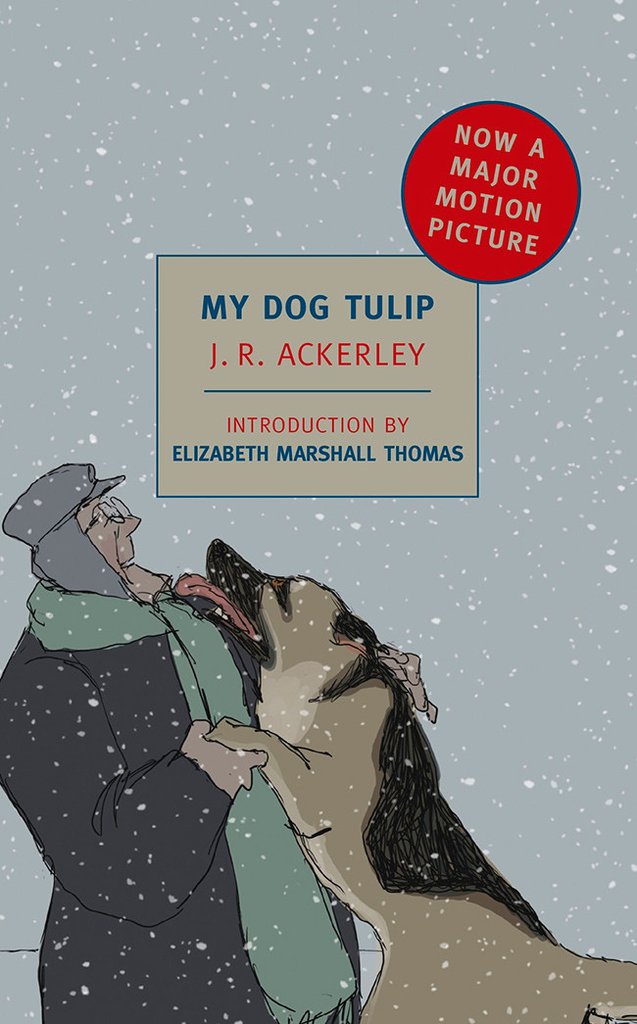
My Dog Tulip by J.R. Ackerley

Well, huh. This one didn’t age well. I thought a book about a much-loved dog, which has come to me so highly recommended, would be an obvious pleasure. I felt my first misgivings when reading Elizabeth Marshall Thomas’s praise-packed introduction, in which she “derives much satisfaction” from a certain dog-shit-versus-cyclist episode.

The book is a cataloging of the life of Tulip, a not particularly well-behaved German shepherd. And it’s true that Ackerley has a knack for description and an ability to make me laugh at some of his characterizations and turns of phrase. But I ended up resenting his small victories of this sort, because in between he kept pissing me off. For one thing, his repeated statements about class were very off-putting. Now, I can allow the strong correlation between class and education in 1940s England, but that doesn’t mean he had to be so hateful about it. He makes some nasty comments about women-in-general, too, but my favorite is when he manages to combine the two: “Women are dangerous, especially women of the working class. It is always a mistake to ruffle them.”

I found this narrator to be highly unlikeable. He thinks his dog should shit where it pleases, including in the doorway of the local green-grocer’s shop (this precipitates his comment about working-class women), and you’re an asshole if you think otherwise. He thinks his dog Tulip should get to do absolutely anything she wants, and you’re an asshole if you think otherwise. He wants to have it both ways: his dog is a creature of nature and should be allowed to behave “naturally” wherever she wants (free-bleeding on a city bus, pooping in the grocery), but she’s also a much-loved pet who sleeps in his bed with him. I think you have to pick one, myself. I guess this makes me what Thomas calls a “dog fascist”…

And then there’s Tulip’s sex life. I was surprised (especially after Thomas’s introduction sums up the book very differently) to find that fully two-thirds of the book are occupied with this topic. Tulip is ‘unaltered’ – not fixed – and so she goes into heat twice a year. Ackerley is much worked up about this: he pities her unfulfilled needs, he wants her needs fulfilled (wants her to have sex and be a mommy), has trouble having her needs fulfilled, doesn’t want her needs fulfilled, cries and wails… he admires her beautiful swollen vulva and its pretty pink. It all got to feel very Freudian and weird to me, by page 100 or so of this. Also, the snobbery about breed: he wants her litter to be “pure,” wants her bred with nothing less beautiful than herself, and goes on about the evils of ‘mongrels.’ Again, I know that this was rather typical of Ackerley’s time (and class), but it reads poorly now. Of course, Tulip prefers a mutt (because she understands inbreeding much better than her upper-class human). Oh! and he intends to drown all of her female pups (females being undesirable, don’t you know), but finds himself regrettably unable to do this “reasonable thing.” Woe is him. Anybody still like this guy? No.

There were a few moments of humor here, but I spent most of my time angry. The best thing about this book was perhaps that it was short.


Rating: 3 dead puppies on your head, mister.

another new beginning: pagesofjulia in the classroom

I am honored to announce that I’ve received one of two Irene McKinney Fellowships from my MFA alma mater, West Virginia Wesleyan College. This is a nine-month teaching appointment there on campus in Buckhannon, WV; I’ll have three sections of writing composition in the fall and three sections in the spring, one of the latter possibly being a literature course. So, I’ll be pausing my van travels there this summer, with the option to restart them the following May.

I am excited and intimidated; I think it will be great.

Again (are you accustomed to the fluctuations yet?) my work for Shelf Awareness will decrease to give me more time for my day job. I don’t yet know what this will mean for the blog, but we always work something out, don’t we? Stay tuned… it’s still some months away, but I wanted to share my news. On to the next big thing.

My Years with Townes Van Zandt: Music, Genius, and Rage by Harold F. Eggers Jr. with L. E. McCullough

Disclosure: I was sent a copy of this book by its publicist in exchange for my honest review.


Over four months ago, a publicist wrote to me offering a copy of this memoir about Townes Van Zandt. Only in the last week or so when I finally got around to opening it did I realize the honor I’d received. I’m really grateful I got to read this one; and I’m honored that I was asked. Thanks, Jennifer.

Townes Van Zandt was a tortured genius and one of the finest troubadours this country has known. Harold F. Eggers Jr. was Townes’s road manager, business partner, and much more, for some twenty years. His memoir here (cowritten with L. E. McCullough, who has the writing experience) is very much about telling Townes’s story, but Eggers’s own life is well-represented, as well. I respect the format very much. The remarkable life of Townes Van Zandt clearly inspired the writing, and that’s the name that draws readers to the book. But Eggers has lived, as well, and I’m glad he’s present.

The book opens with the early years Eggers and Townes spent together, and then flashes back to a very brief telling of Eggers’s childhood and his service in Vietnam before he went to work for Townes (thanks to his big brother Kevin Eggers, who had previously worked with Townes and set up his veteran younger brother with a job to help him out). His tour in Vietnam plays a role in the rest of the story; Eggers credits the things he saw there with his ability to adapt to this wildness of sharing a hotel room with Townes, and believes his thrill-seeking and attraction to danger was about chasing something he’d seen in war. As a parallel, Townes had tried to enlist in the armed forces but been turned away because of the electroshock therapy he’d received as a teenager (also an enormous event in Townes’s life which would follow him forever). As Eggers tells it, Townes’s disappointment cast a long shadow.

There is everything here that a Townes fan wants: insider information, jokes and stories, and that enormous and overarching sadness that we feel in his songs. (Well, almost everything. We still don’t know much about Townes’s early life, pre-shock therapy, because he didn’t remember it, himself. This is a painful hole in the record, in my opinion. But Eggers couldn’t resolve it, and he’s right not to try. I sure wish someone had approached Townes’s parents while they were alive…) It’s a thorough telling of Townes’s final twenty years or so, as seen by Eggers, who does not claim to know what he wasn’t there to see; but the two men spent a lot of time together when on tour, often living as roommates even off the road. Eggers quotes Guy Clark: “Harold, how can you stay in the same room with Townes Van Zandt? You have been doign this for years, man. I’m his friend, too, but it would wear me out. How do you put up with it?” After years of reflection, Eggers is ready to say that growing up in a large family and later his military service gave him “the ability to routinize almost any sort of irrational behavior.” Eggers has his tricks: when Townes pitches fits in public and is on the brink of getting them arrested, Eggers tells him he needs to get onstage right now; this always works. He sees Townes sabotage recording sessions and huge live shows, and wishes the musicians in the studio only knew how to manage Townes the way he does.

As told here, the two have a symbiotic relationship. Eggers babysits and manages Townes, enabling the career he was able to have, however wracked and traumatized. But Townes helps Eggers mange his own demons, too. There’s a huge amount of love here. At the beginning and the end and in between, Eggers relates that Townes wanted this book to exist, and wanted to be sure it told the whole story, and not just the pretty stuff. “Tell the truth, no matter what… do not whitewash anything. Let all the ghosts and demons have their say.” Although Eggers’s love for Townes rings loud, I think he’s honored his friend’s wish, too.

This is one of the ways I want to contrast this book with another. Without Getting Killed or Caught, a recent biography of Guy Clark, was a rich source of information about Guy, one of Townes’s best friends. But it was too saccharine in its praise, didn’t let all the ghosts and demons have their say. Eggers did, and I appreciate him for that.

The style of My Years with Townes Van Zandt is straightforward, the writing style of a man with a story to tell, rather than that of a writer of craft and artistry. No complaints; Eggers’s voice comes through clearly, and I can feel his personality, and I hung on every word. But it’s a straight relating, and not a crafted piece of creative nonfiction. I’m a little surprised, since there was a ghostwriter involved, that it didn’t get a little more polish. But I’m not sorry.

One final detail before I tell you what an important read this is. Several appendices offer a thorough discography (and then some) and Eggers’s recording philosophy, for recording live shows (which have yielded such discography). The student of Townes’s music will be well-served: I know some of what I’m shopping for next.

For the Townes fan? An absolutely essential volume to keep and study. For the reader not so sure about Townes? An important look into the music industry of the 1970s-90s, at counterculture and American roots music, and at an artist you will soon become a fan of. Don’t miss this one.


Rating: for the sake of 8 songs.

writers in video (audio)

A few links for you today that came from my parents.

My mother sent this recording of a Bellingham local Whatcom Reads program, in which Timothy Egan discusses his book The Big Burn: Teddy Roosevelt and the Fire that Saved America (and, in Q&A, a few more – remember Mom reviewed The Worst Hard Time for us). I really enjoyed listening to this one (thanks Mom for the tip that the visual part was not entirely necessary), and I am reminded that I need to try some Egan one day – he sounds in the vein of Jon Krakauer and Erik Larson, who were among the first writers I recognized as creative nonfiction and as something I loved. While I really enjoyed it, I also took exception a few times to some of Egan’s comments: his chauvinism about geography, for example, and his statement that “Indians all have creation narratives,” as if to imply that his/our own culture doesn’t have creation narratives. (I guess it’s only a creation narrative if somebody else believes it, and what *I* believe is just truth?) (Also, any time you say “all the [ethnic group] do such-and-such” you’re probably on thin ice.) These quibbles were not fatal for my appreciation, and if anything indicate that I was engaging. One of these days I will read some Egan…

And, my father sent this episode of Oregon State University’s About Words, featuring Ben Goldfarb about his book Eager: The Surprising, Secret Life of Beavers and Why They Matter. Pops appreciates beavers; we have a mutual friend (and friend to Goldfarb, apparently) named Rob Rich who is a beaver fan and advocate, and writer; and I have been seeing a lot of beavers these last few weeks on my travels. But this short video (very short, after an hour-plus with Tim Egan) is less about the beavers and more about the imperative to write, among other things.

So, a little extra to add to your listening queue! [That’s a tip: although YouTube videos, I did not watch but only listened to both clips, which was fine (visuals were just background). I signed up for a free 30-day trial of YouTube Premium, which allowed me to download these videos for offline viewing/listening.]

Thanks, Mom and Pops!

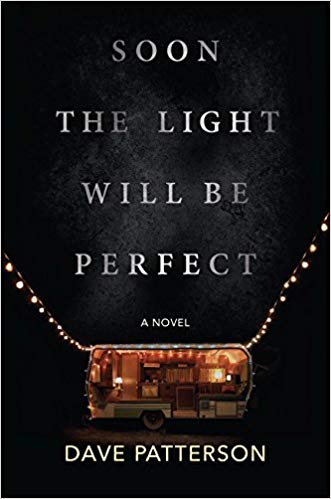
Soon the Light Will Be Perfect by Dave Patterson

This sensitive debut novel about everything that can go wrong as one grows up will touch any reader who remembers being 12 and beset by the world.

Dave Patterson’s first novel, Soon the Light Will Be Perfect, is a rough-edged coming-of-age story. Set in a poverty-stricken Vermont community at the beginning of “the desert war,” it spotlights a family in crisis within a town in despair.

The narrator is a 12-year-old boy. Along with his older brother, father and mother, he remains nameless, although more peripheral characters have proper names. As the story opens, the family has recently moved out of the trailer park–an important social step up–and they have given away their old kitchen table in an act of charity. The father is supposed to be building a new one, but this project serves as a metaphor for larger troubles. Getting the new kitchen table finished and perfect will prove daunting. In the first chapters, the family’s troubles ratchet rapidly from an overpopulation of pet cats to the mother’s cancer diagnosis.

The 15-year-old brother gets a girlfriend and distances himself from the narrator, although the boys still smoke weed together in the garage, where the kitchen-table project progresses slowly. This is a devout Catholic family, and guilt plagues the young narrator, whose burgeoning sexual interests, for example, give him trouble. Struggles with faith are central to the book. The father’s work in a weapons factory seems secured by the advent of war, a fact that the narrator has trouble reconciling with Christian teachings. His mother’s suffering at the hands of cancer, chemotherapy and radiation seems senseless. He remains committed to religion, despite these conflicts and his obsession with women’s underwear. A new girl his own age from the trailer park provides further conflicts between what he feels and what he thinks he ought to feel.

While Patterson’s gift for description brings beauty to this novel, the tone is bleak. The father labors helplessly: “In the garage the saw screams in the ceremony of my father’s self-destruction.” The sick mother delivers food to those needier than herself but also covers up a small crime, as her younger son sneaks cigarettes and self-flagellates. Amid the narrator’s crisis of faith, even the priest turns away from church. Certain plot turns and characterizations may tend toward cliché, but Patterson’s striking writing and attention to detail rescue his book from that realm. To put it another way, clichés are formed from the broadest truths of life, and Patterson aims to approach those overarching truths–perhaps why his protagonists go unnamed.

Soon the Light Will Be Perfect is an ambitious work about what it is to be young and facing problems that challenge the most capable adult. At its end, much remains unresolved, just as in life, but readers will recognize just how true that ending rings.


This review originally ran in the March 22, 2019 issue of Shelf Awareness for the Book Trade. To subscribe, click here.


Rating: 6 junked cars.

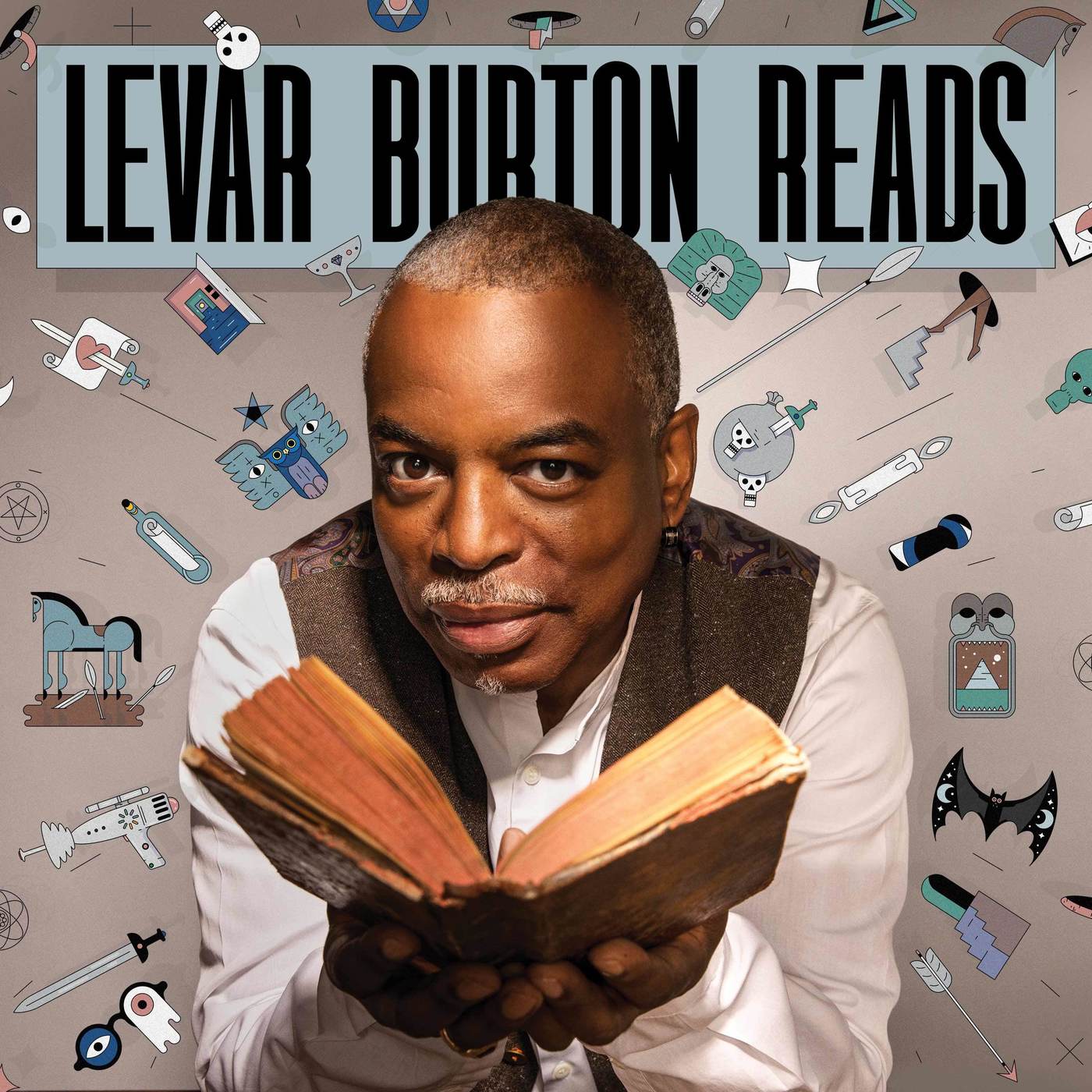
LeVar Burton Reads

A new podcast, kids: new to me, although coming up on two years old now. I live in a van now (as you may recall), and although my drive time varies from day to day and week to week, I am always looking out for new listening material. (I am also totally loaded up with audiobooks, podcasts, and music; I guess I’m looking for new listening material like I’m looking for new books to read. Sigh.)

LeVar Burton Reads was an obvious choice, at least for those of us who grew up with Reading Rainbow – which, with over twenty years on the air, many of us did. This is the voice and performance we love applied to short fiction for adults, hand-picked by the man and storyteller himself.

I’ve only just begun, with six episodes under my belt. So far, I’d especially recommend Daisy Johnson’s “The Lighthouse Keeper” – that’s Daisy Johnson of Everything Under, and recognizably so.

Also so far, there is perhaps an emphasis on sci fi and fantasy, but he promises an assortment to come, and I believe him. Do come with me… Just take a look, it’s in a book

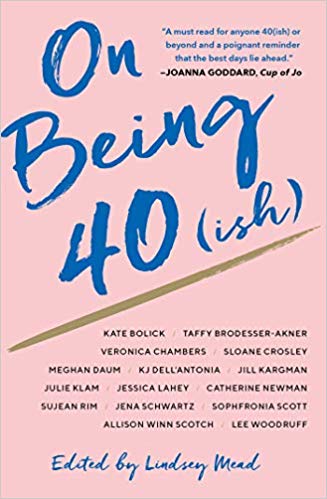
On Being 40(ish) ed. by Lindsey Mead

These collected essays about the milestone 4-0 remind readers to laugh, cry and hope.

In On Being 40(ish), 15 women muse on what being 40 years old–give or take–means in their lives. This anthology, edited by freelance writer Lindsey Mead, offers diverse viewpoints and concerns but as a whole aims to inspire. As Mead writes in her introduction, “These are not reflections on the dying of the light, but rather a full-throated celebration of what it means to be an adult woman at this moment in history.”

The contents are varied, including celebrations, uncertainties and elegies. Some writers mourn losses, some rejoice at new beginnings; some are concerned with the existential, some more lightheartedly concerned with changing appearances. Lee Woodruff writes about her mother’s 40th birthday, her own and what she hopes to pass down to her own daughters. Taffy Brodesser-Akner writes about time, which “happens no matter what you’re doing with it.” The quickness with which years pass is a theme across these essays, as is the victory involved in aging: “by forty, we know who we are,” Jill Kargman writes. “When we are young, we are diluted versions of ourselves. We become balsamic reductions as we age–our very best parts distilled and clarified.”

Allison Winn Scotch writes about accepting the unexpected when a devastating injury interrupts plans for a trip to Mexico. She closes: “I worried that my injury would upend everything. It turns out that it did.” And that’s a happy ending.

On Being 40(ish) is mostly about happy endings; or the ongoingness of life–its not ending at all, not yet. This is an anthology for women of all ages and all perspectives.


This review originally ran in the March 19, 2019 issue of Shelf Awareness for Readers. To subscribe, click here, and you’ll receive two issues per week of book reviews and other bookish news.


Rating: 6 rainbow suspenders.

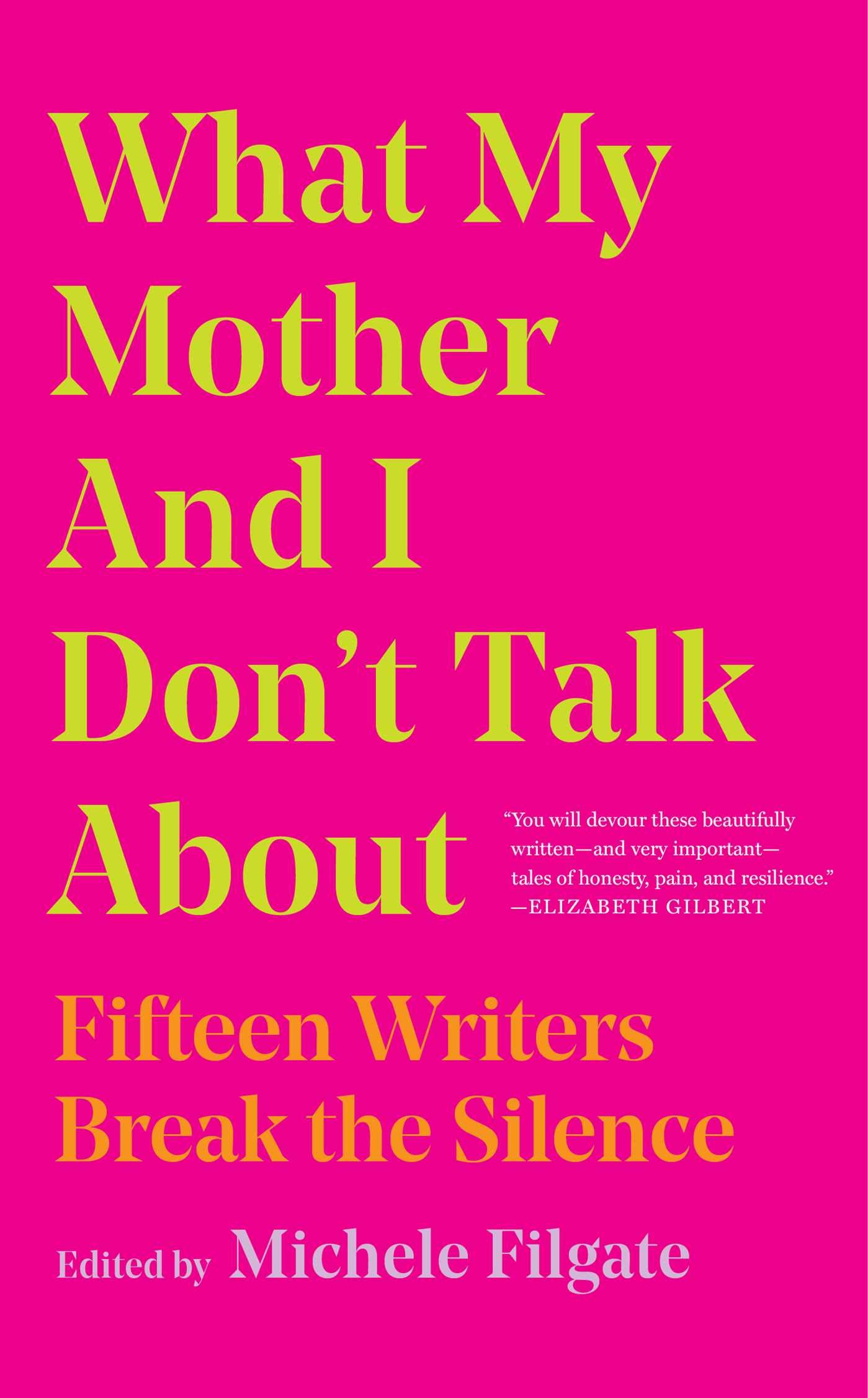
What My Mother and I Don’t Talk About: Fifteen Writers Break the Silence ed. by Michele Filgate

Diverse writers answer the title’s prompt with essays that are cutting, furious, delicate, generous and everything in between.

Literary Hub contributing editor Michele Filgate thought she was writing an essay about her stepfather’s abuse, but it turned out she was really writing about the relationship with her mother that allowed such abuse to continue. After years of work, her essay was eventually published by Longreads under the title “What My Mother and I Don’t Talk About.” Readers and writers responded strongly, and Filgate’s piece now leads this astonishing anthology.

What My Mother and I Don’t Talk About: Fifteen Writers Break the Silence follows that essay with a breathtaking range of responses. Filgate writes, “Mothers are idealized as protectors: a person who is caring and giving and who builds a person up rather than knocking them down. But very few of us can say that our mothers check all of these boxes. In many ways, a mother is set up to fail.” And while many of the essayists featured here reproach mothers who have hurt them, there are also apologies, confessions and unsolved mysteries. These essays bring many perspectives and deal in self-awareness, too.

In “Thesmophoria,” Melissa Febos considers her close relationship with her psychotherapist mother by recalling myths, chiefly that of Persephone and Demeter. “We often love the things that abduct us.” Brandon Taylor wrestles with the pain his mother has caused: “It’s strange, really, that to grasp that which has hurt you, you must trust it not to hurt you when you let it inhabit you”–or when you write about it.

Alexander Chee hides the abuse he’s suffered from his mother because of the tragedy they’ve endured together: “This is how we got each other through.” Dylan Landis seeks to understand her mother better through an old apartment building, and a possible former lover. Amid the layered traumas of race, nation and gender, Kiese Laymon asks his mother: “Can we please get better at loving each other in America?” Carmen Maria Machado finds her own conflicted feelings about parenthood linked to her mother’s harsh treatment. And André Aciman considers his deaf mother’s language, separate from words, and what it taught him.

Leslie Jamison closes the anthology with an essay exploring her mother through the eyes of an outsider to the family unit: her mother’s first husband’s unpublished novel about their marriage. It is a fitting conclusion, with that surprise perspective and a careful, loving attention to the woman who came before the mother.

These collected essays are variously rich, tender, angry, despairing and clinical. The result, greater than the sum of parts, is part paean and part denunciation, intelligent, heartfelt and wise. What My Mother and I Don’t Talk About is a shrewd, glinting collection of beauty and pain: a gift for mothers and their children.


This review originally ran in the March 19, 2019 issue of Shelf Awareness for the Book Trade. To subscribe, click here.


Rating: 8 myths.

The Underground Railroad by Colson Whitehead

I so enjoyed seeing Colson Whitehead speak at TSU almost a year ago – it seems a little strange it’s taken me this long to get to this one!

The Underground Railroad is compelling, a story with momentum and imagination. I had forgotten that the underground railroad would turn out, in this book, as a literal railroad that runs underground: that was a fun surprise to experience. “Fun” is not precisely the right word for this book, though. It’s about slavery and the quest for freedom; there is little here that is light or fun.

The protagonist is Cora, a young enslaved woman who makes a run for it with a young man, Caesar, who she doesn’t know very well. It begins with a little prefacing history, of Cora’s grandmother and mother before her. Her mother escaped the Georgia plantation where she and Cora were born, never to be seen again. The ghost of that woman hangs over Cora’s decisions and her feelings about those around her.

Cora travels, with and without Caesar, through several states via the underground rails. We see the details of various stations on the railroad: this one beautified and furnished, this one bare, a statement about the hard work required to dig survival out of rock and earth. Cora asks, who built the railroad? And the response: “Who built anything in this country?”

Cora will continue to wonder about the hidden hands who contribute to the quest for a better life, even as that life eludes her in her travels. This is not particularly a story of redemption or of happily-ever-after. Each time Cora survives a brutal and shocking turn of events, she loses those she cares about, and cynically revises her hopes: how stupid (she thinks) she was to think it could get better. The places she gets to know along the way could be viewed as archetypes (remember from Whitehead’s talk that I heard something like this idea): the place where no Black person is suffered to live, where the streets are lined with hanging corpses; the place where life appears secure only on the surface; the place where all can contribute according to their abilities. These steps along the way are instructive. But the book does not necessarily end on a hopeful note.

There’s a bit here of something I watch out for in books like this, historical fiction featuring ordinary or marginalized people: Cora perhaps holds a bit more far-reaching wisdom of the world than someone with her life experience might be expected to have. For example, she observes slave labor replaced by cheap Irish immigrant labor, and muses that as the Irish supply runs out or goes out of fashion, another poor country will send its emigrants to form the next wave. This speculation about the poor countries of the world seems like a lot for a woman who’s lived her life on a Georgia plantation to come up with. It’s a clear temptation, especially with benefit of hindsight, to invest one’s apparently “ordinary” characters with special knowledge and wisdom.

I appreciated the range of characters. Most of the book is told from Cora’s perspective, but short interspersed chapters come from the points of view of secondary characters, including racist white ones. I imagine those chapters in particular might have been hard to right, but also interesting to write, and they enrich the book by complicating things. Not that the evil slavecatcher gets much sympathy; but hearing his inner thoughts makes him more real, more believable, and therefore more frightening. Complication, in literature, is always good.

I believe I expected this book to be magical realism, and I’m not entirely sure that’s my impression after reading it. There’s nothing here (that I noticed) that couldn’t happen in our real and non-magical world. The literal underground railroad would be a feat of engineering and supplies, but not strictly impossible. The good and bad luck (if we can call it that) Cora and others face certainly seems fantastical, but is in line with the well-documented true stories of enslaved people. That said, it was a vibrant, rich way of telling the story of slavery and struggle: one we’ve heard/read before but clearly aren’t done with. The railroad part was fascinating, nicely told. The characters were always intriguing. I think pacing may be the great feat of this book: I scarcely was able to look away once I was in it. Thank you, Colson Whitehead.


Rating: 7 stations.

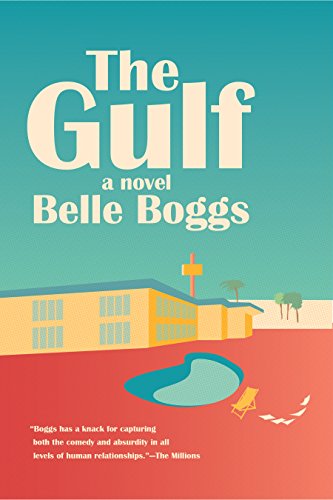
The Gulf by Belle Boggs

Where a failing writer, ill-conceived for-profit education and the American political divide come together, the result is both funny and feeling.

The Gulf by Belle Boggs (The Art of Waiting) is a hilarious, pitiable, thoughtful first novel not to be missed. A rare combination of silliness and poignancy, with momentum and compassion, this is a story for every reader, but especially for struggling writers.

Marianne is desperately underemployed and about to lose her apartment in Brooklyn, N.Y., and her poetry manuscript has been long stalled. Eric, her best friend and ex-fiancé, has an annoyingly good job teaching overseas, as he works to complete the second novel in his two-book contract. When he calls from the United Arab Emirates with a business offer, Marianne wants to say no, but she has no other option.

Eric has inherited an aging motel on Florida’s Gulf Coast, and wants to realize an old college joke of Marianne’s: a low-residency writing school for Christian writers. Marianne, a liberal atheist, soon finds herself in business with Eric, his venture capitalist brother, Mark, and their silent partner, great-aunt Frances. Ensconced in the crumbling motel with occasional hurricanes passing through, Marianne doesn’t precisely want to fleece the applicants sending in embarrassing manuscripts, but she certainly could use the money.

What follows is part hilarity: Marianne and Eric flub their Bible references and flirt with hooking back up; the earnest students have no idea how a writing workshop is supposed to work; and the down-and-out instructors (all the Genesis Inspirational Writing Ranch can attract, or afford) prove eccentrically dysfunctional in various ways. It’s part pathos: as real as Marianne’s struggle to complete her own manuscript is the troubled calling of Janine, poet, home economics teacher, mother of two, who writes about Terri Schiavo. Mark lands a big investor that specializes in for-profit education for the Christian market, but their intervention quickly upsets everyone involved. Marianne finds herself, against all odds, rooting for her students–those right-wing nuts she once laughed at. As the biggest storm of the year approaches the ramshackle Ranch, she’ll have to make a stand.

Boggs’s gifts are many. The Gulf‘s plot is inspired, even accounting for the arguable overabundance of novels about MFA program shenanigans. Perhaps the greatest genius is in her characters: Marianne, Eric, the writing instructor who can’t remember anyone’s name, the hotelier next door, Janine and the former R&B superstar now banking on an autobiographical novel to make his comeback. Each of these is perfectly developed and flawed just enough to be lovable, if hapless. The book hums along with fitting momentum, so that when the storm hits, the reader is entirely invested in this well-meaning but ill-fated crew. Redemption is a risky ambition, especially with inspirational writing, but Boggs pulls it off with The Gulf‘s denouement. This is a novel of keen comedy, insight and empathy.


This review originally ran in the March 8, 2019 issue of Shelf Awareness for the Book Trade. To subscribe, click here.


Rating: 8 applications.