The Ministry of Truth: The Biography of George Orwell’s 1984 by Dorian Lynskey

This funny, wise, well-researched study sits at the intersection of biography of Orwell’s life, literary criticism of 1984 and social commentary on literature’s role in life.

Dorian Lynskey (33 Revolutions Per Minute) takes a close look at an ubiquitous classic with The Ministry of Truth: The Biography of George Orwell’s 1984. The novel was a sensation and a controversy when it was published in 1949; again as the year 1984 approached and passed; again in recent years, and at every time in between. Lynskey sets out to examine its ancestry in utopian and dystopian literatures, in Orwell’s experiences during the Spanish Civil War and wartime Great Britain, and the political and cultural responses it’s drawn.

Lynskey spends much time contextualizing outside material: he devotes whole chapters to the literary works of Edward Bellamy, H.G. Wells and Yevgeny Zamyatin. Orwell’s service in the Spanish Civil War, his relationships with other writers and his personal and professional history necessarily figure as background material in Part One of The Ministry of Truth.

Part Two covers the world’s reaction to 1984, all the way through the election of the Unites States’ 45th president. In 1984, the novel surfaced not only in documentaries and articles, but also in a comedy sketch by Steve Martin and Jeff Goldblum, in carpet advertisements, on Cheers and in Charlie Brown–Lynskey writes that it “had mutated from a novel into a meme.” He refers to Margaret Atwood, Rebecca Solnit, Neil Postman and Orwell’s son, Richard Blair. He covers some of the books’ various interpretations: Atwood features as the “most prominent advocate” of the Appendix Theory, which asserts that 1984‘s Appendix, covering Newspeak from a date apparently far beyond 1984, “is a text within the world of the novel, with an unidentified author,” thereby offering a decisive reading.

This wide-ranging and thorough study requires a careful and patient reader. Even one familiar with both Orwell’s work and early communist and socialist histories will need to read closely. Lynskey offers his own appendix: a chapter-by-chapter précis of 1984, which is recommended for everyone. The requisite attention will be well rewarded, as The Ministry of Truth is not only enthralling and research-rich, but often laugh-out-loud funny. When 1984‘s American publishers wrote to J. Edgar Hoover hoping for a back-cover endorsement, Lynskey writes, “Hoover declined the request and instead opened a file on Orwell.” Lynskey’s voice is impassioned and self-aware, and he has an eye for the absurd (as any student of Orwell’s should).

Among Lynskey’s conclusions is that 1984 is “a vessel into which anyone could pour their own version of the future.” Too often it has been mistaken for a prophecy (and critics then argue about how successful it has been in that regard), rather than understood as Orwell intended: to offer a possible future as motivation to work against that possibility. Lynskey argues that such persistent and diverse misreadings are possible because the novel leaves room to become essentially whatever the reader wants it to be, or most fears. This is part of why 1984 remains as forceful and compelling as ever. The Ministry of Truth is a necessary guide.


This review originally ran in the May 3, 2019 issue of Shelf Awareness for the Book Trade. To subscribe, click here.


Rating: 7 lies.

Lanny by Max Porter

This novel about family, the power of the woods and the creative spirit, centered on a special young boy, will charm any reader.

Following his decorated first novel, Grief Is the Thing with Feathers, Max Porter again takes his reader into a weird and magical world with Lanny. Similarly short, lyric and mysterious, this touching story is partner but not sequel.

Lanny’s mum and dad have moved to a village not far from London, “fewer than fifty redbrick cottages, a pub, a church.” Lanny’s dad commutes into the city while his mum works on writing her murder thriller. Lanny goes to school and plays in the woods, singing, fairy-like and joyful; he is “young and ancient all at once, a mirror and a key,” “stinking of pine trees and other nice things.” He “says strange and wonderful things, mumblings, puzzling things for a child to say.” There is also an old man in the village named Pete, an artist who works with natural materials and was once famous in London. He describes himself as a “miserable solitary bastard” but is actually caring and sensitive; he becomes the closest friend Lanny’s family has in town.

And then there is Dead Papa Toothwort, a legend and an enigma, tied up in trees and leaves and related to the green men carved in old churches in this part of the world. When the book opens, he is waking “from his standing nap an acre wide.” As a force, it is unclear whether Dead Papa Toothwort is good or evil; he is associated with death as well as seasonal renewal. “He wants to kill things, so he sings… his grin takes a sticky hour.” “He loves it when a lamb gets stuck being born.” And he is obsessed with Lanny.

The whole village, in a way, revolves around Lanny–especially after misfortune strikes. His dad feels overwhelmed by his son’s specialness (“What or who is supposed to manage and regulate Lanny and his gifts? Oh f*ck, it’s us”); his needs are simpler, related to work, food and sex. The boy’s mum is closer to Lanny’s dreamworld, “the type of person who is that little bit more akin to the weather than most.” After agreeing to give him art lessons, Pete finds a surprising new friend in the young boy. The rest of the human population follows this preoccupation–and always there is Dead Papa Toothwort, listening.

What begins as a sweet revolution of three adult lives (mum, dad, Pete) around the boy turns sinister in the novel’s second of three parts; resolution comes in the third. Often a stream-of-consciousness style leaves the reader a bit off-kilter, but this is suited to Lanny’s dreamlike setting: trust in the story will be rewarded. Porter’s prose is undeniably gorgeous. “Mile-wide slabs of rain romp across the valley… palette-knife smears of bad weather rush past.” These elements in combination are every bit as imaginative, compelling and magical as Lanny himself.


This review originally ran in the April 25, 2019 issue of Shelf Awareness for the Book Trade. To subscribe, click here.


Rating: 8 mutterings.

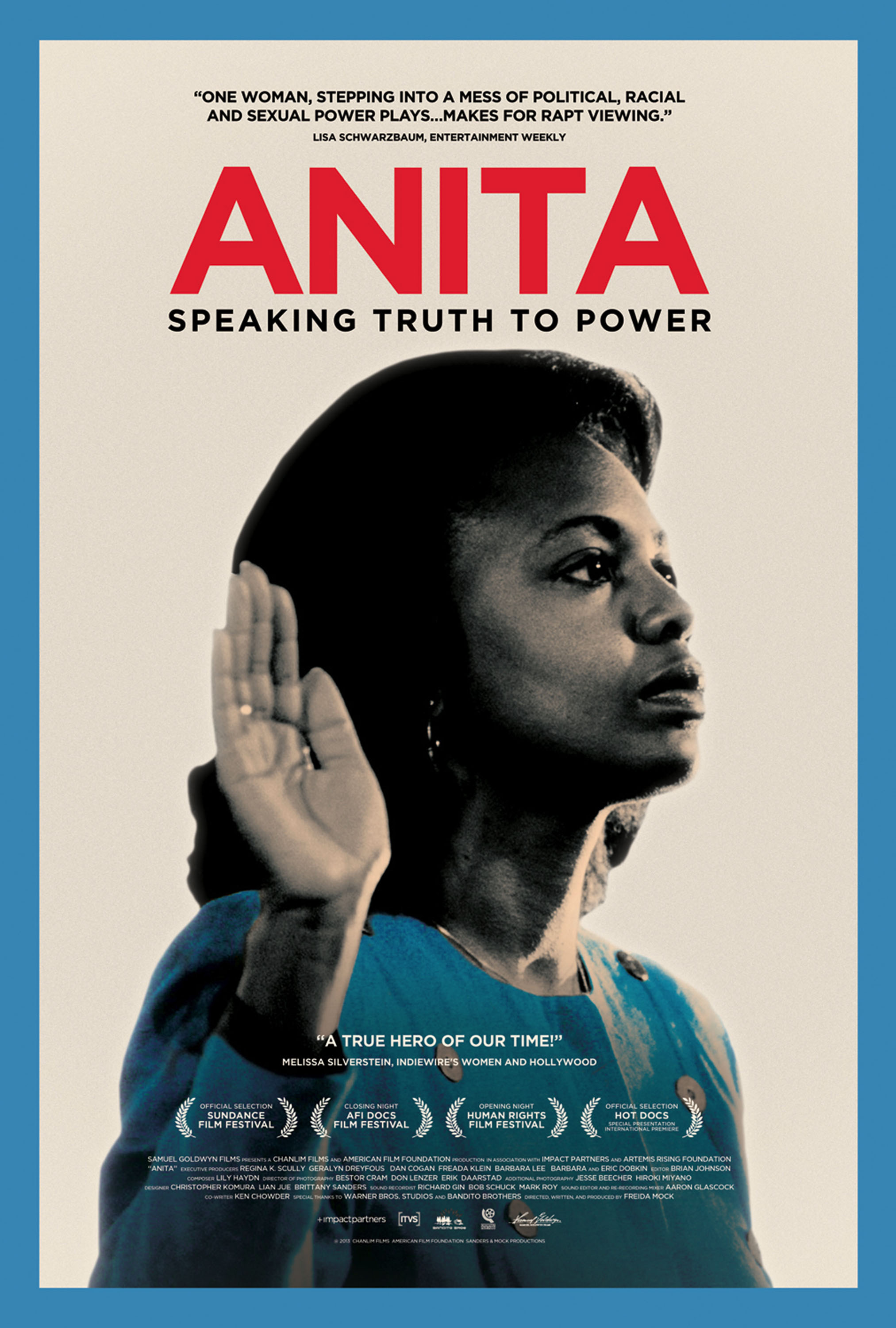
movie: Anita (2014)

At my father’s encouragement, I spent several nights in the van watching this documentary in small pieces, as wifi connections and laptop batteries permitted. This was the right way to watch it for me, anyway, because I continue to find this difficult content. Like so many millions of women, I had a hard time seeing Dr. Christine Blasey Ford give testimony against a man who is now a Supreme Court justice, just last year. I have a hard time watching Dr. Anita Hill do the same. I have a hard time with the continuity of this story.

I’ve written about Anita’s story before, when watching Confirmation and reading Speaking Truth to Power (in two parts). Looking back at those reviews, I guess I’m feeling the way I did with that first of two book reviews: discouraged, traumatized. Of course, looking back at the email in which my father recommended I watch this, I see he saw this coming: “You could skip roughly the first half of the 77-minute film – it recounts the hearings with too many excerpts for us who have seen too much of it already.” Strangely, I guess that’s me, even though I didn’t watch the hearings in 1991.

For my father, the point of the film was was redemptive. (He saw it at a local documentary festival event.)

Once it shifts to Hill’s update on her aftermath, it becomes uplifting and fulfilling as it recounts the huge community of support that has buoyed her life, and catalyzed social change (such as it is). (I did not know anything about her move to Brandeis University in Massachusetts, where she has clearly blossomed as activist & educator.) By the end, there is emphasis on younger generations of women in particular.

The years since 2013 have not been as good, and the audience discussion with (filmmaker) Mock and two local women attorneys (one from local Western Washington University) was attentive to that and the Kavanaugh hearings. But I found the film personally necessary, because it counters the sad-end-narrative for Hill herself, which I had stuck in my head after her book, the recent reenactment film, and Kavanaugh. I’m sure Hill was knocked askew by Kavanaugh too, but now I know what a strong place she was in when that debacle arrived, and trust she is weathering it along with us all.

And those points are well taken, although I guess I needed reminding of that. I viewed the film’s final minutes – that spotlighting of the inspiring younger women saddling up – as positive but also disheartening again, especially because I watch this in 2019 and know what these young women, filmed in 2011-12, don’t know about the immediate future. I guess what I’m saying is that it’s hard for me to stay positive in the face of this ongoing story, but I don’t argue that that’s the right perspective. Hope is better. I’m trying.

To Anita Hill, for the 500th time, I take my hat off and thank you. As far as this film, I think Pops has it right: the footage from the hearings is essential stuff, but if you’re already well-versed, there’s nothing especially new there (and it’s hard to see them press her about pubic hairs and big-breasted women over and over again. Not as hard as it was for her to be pressed, though). The later stuff in the movie is new, even for those of us who have already worked through Hill’s excellent memoir and the very good movie Confirmation. And Pops is correct, it’s good to see how well she’s doing, and that’s she still doing the work.

The story is essential. Pick your version, for starters. You would not do badly if you chose to start here.


Rating: 7 times they made her repeat herself.

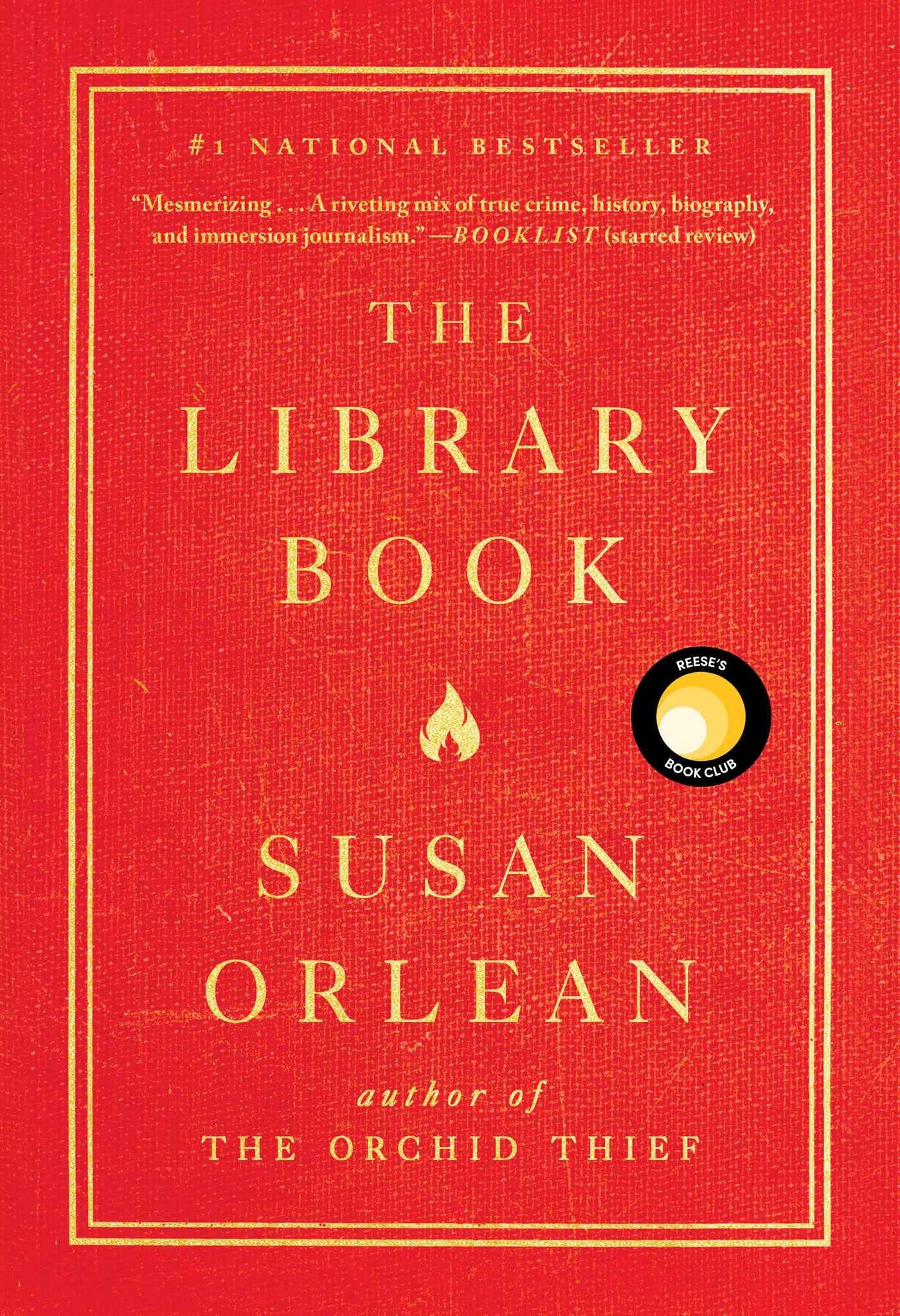
guest review: The Library Book by Susan Orlean, from Pops

Recommended for me from my father, with this nice write-up.

If you know a librarian, or you appreciate libraries, or you love books, this is a book for you; that’s what the title is telling us. There are thousands of books touching on this subject; Susan Orlean provides a compelling and approachable addition with this one.

In 31 short or long chapters, Orlean ranges widely with library history and librarian profiles; library trivia and book burning history; eccentric characters and stories stranger than fiction; and more, thus satisfying many interests without attempting to be an ‘all about…’ tome.

While this approach may still occasionally have the interest of a particular reader momentarily flagging, it would be only brief. The narrative thread woven throughout describes the Los Angeles Public Library; the disastrous Central Library fire of 1986; the mystery of its cause; and the many colorful, intertwining characters.

Along the way, we learn of libraries’ triumph over the ‘tech revolution’; the magical mix of personalities that make librarians and staff special, and the fire’s traumatic impact on them; the amazing and broadening social role of libraries, globally; historical library anecdotes spanning three centuries; L.A. Central Library architecture and rebuilding; book restoration; Fahrenheit 451 (and its author); the disturbing flaws in arson investigation; how AIDS touches this narrative; and more.

We get glimpses of the influential 1960s and 1970s through a library filter. And in brief interludes spend a ‘day in the life’ of the Children’s section, or the Music section, or the ‘InfoNow department.’ We peer into the possible future of libraries, and are reassured.

Yet this is also an openly personal story of a seasoned journalist seeking answers to mysteries – both public and private – while allowing her inner-researcher’s curiosity to wander down various rabbit trails that appear unexpectedly. This book, as with many, in part wrote itself. A veteran author, resolved to never again invest her life in creating a book, is compelled to write.

Her first-person voice is often present in describing interviews or other source material, but never distracts. While lending her journalist’s keen eye to details, she attempts little objective critique; she is a library booster.

We learn of her personal commitment to the subject in only a few brief episodes, doled out modestly, where endearing prose explains her devotion to the book’s purpose. Her library passion is rooted in early life experience nurtured by her mother; this becomes a touchstone rediscovered late in life, passed on to her son and brought to fruition in these pages. The book’s final two pages are lovely conclusion, returning to this personal story.


Postscript: an essay about a book about books, and about books from libraries, would be remiss without mentioning the physical book. This first-edition library binding is a bright orange, without jacket; the front and back cover text is imprinted into the nicely textured cover material. The orange leaps out boldly on the bookshelf. The front is bold text in bright shiny yellow, like polished gold against the orange. The back includes the usual blurbs (notably Erik Larson, among others) in white and yellow text.

Inside, both sides of the front endpaper display the summary typically appearing on a book jacket, here with a traditional-looking design.

The endpaper flyleaf has the usual author photo and brief bio; but the endpaper itself is special: an image of an old yellowed library lending-card sleeve, with a lending card that becomes personal dedication, connected to her personal story. The card shows four handwritten entries, for: Ray Bradbury, Orlean’s mother, Orlean herself, and her son. The image is so lifelike that a reader instinctively reaches to pull the card. I have tested this on others old enough to know; one cannot resist.

The volume is attractive to the eye and hand, with a pleasant heft. It’s a nice book; check it out from your local library!

That yellowed library card is a design feature in several places these days; lovely!

Thanks for sharing.

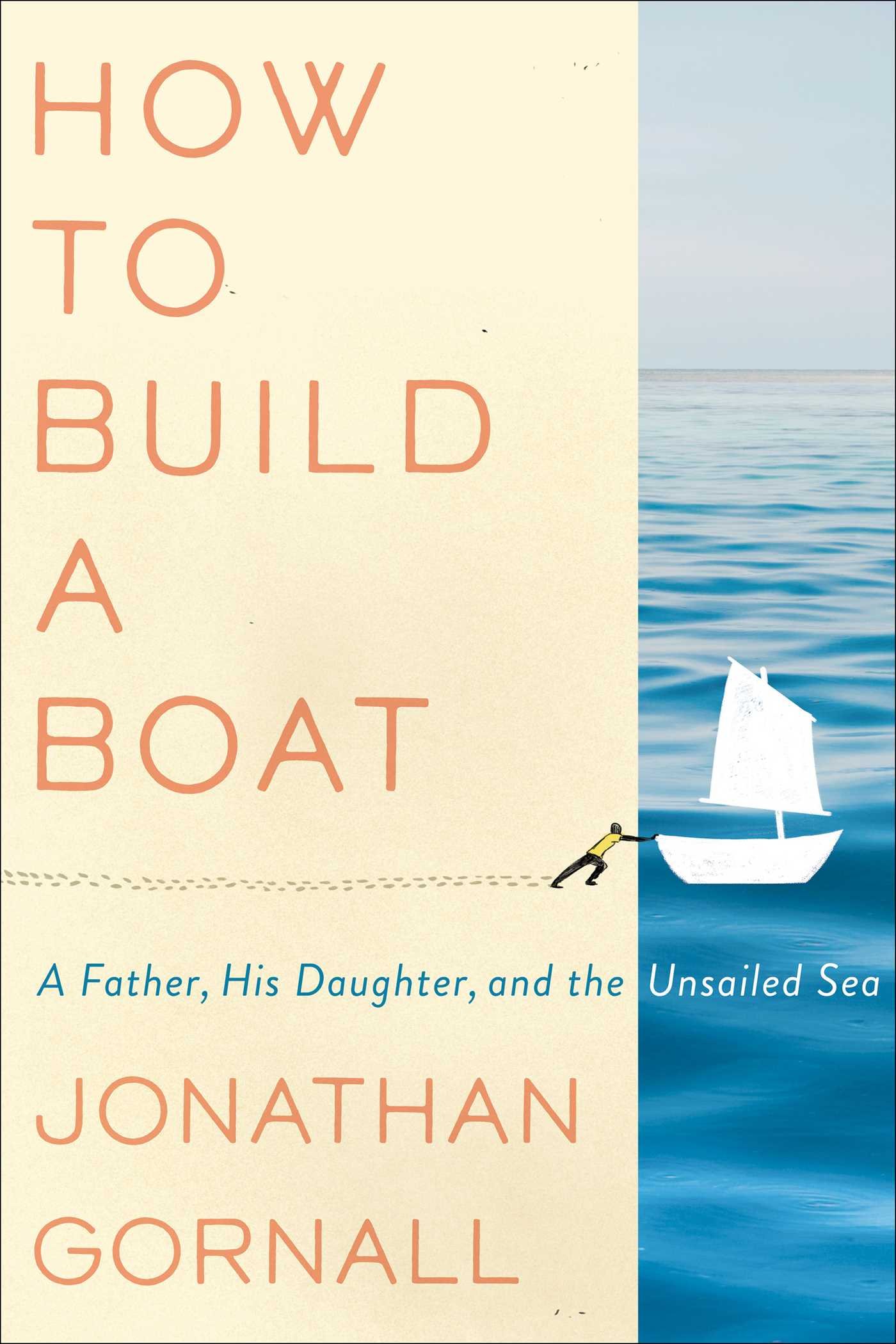
How to Build a Boat: A Father, His Daughter, and the Unsailed Sea by Jonathan Gornall

A father ill-suited to DIY projects builds a boat for his daughter, and in the process writes a charming, heartfelt love letter to both boat and child.

Jonathan Gornall has been boat- and water-obsessed for many decades, but he is the first to admit that, as a longtime chair-bound freelance journalist, his DIY skills are nil. The idea of him building anything from scratch is unlikely. But Gornall is also giddy with joy at becoming a father again at age 58. As he seeks a project sufficient to show his new daughter his love and hope for her life, the idea feels natural, even obvious: he will build her a boat.

How to Build a Boat: A Father, His Daughter, and the Unsailed Sea is a love letter to that small child, Phoebe. It is a memoir of a life on and off of water and a study of the history, art and science of boatbuilding. Gornall is determined not only to build a seaworthy craft by hand and from scratch, he also feels that it must be clinker-built, the traditional type of planked wooden boat favored by the Vikings and early Anglo-Saxons, dating to the second century. Of course, he acknowledges, there is “no boatbuilding technique so respectably ancient, so historically resonant, so seductively beautiful, and so bloody difficult.” With his wife’s cautious support, Gornall sets himself a deadline: he will build Phoebe a boat within a year.

The pages of this book span slightly more than that year, following Gornall’s inspiration for his project through its conclusion, as well as revisiting the life that has led to this point. He considers his first sea voyage (in utero, with an unwed mother who consistently claims he’s ruined her life), his first experiences with boats (at boarding school) and his significant time on the ocean. Gornall has twice attempted to row across the Atlantic, with enormous press and personal pressure, and twice failed: these disappointments weigh heavily on the older man’s mind and contribute to the urgency to get this boating effort right. Along the way, he consults local boatbuilding experts in the historic tradition, as well as books in the canon: four authors he calls his League of Dead Experts.

Gornall’s tone is drily funny and always self-deprecating when it comes to the project at hand. His research, however, is as serious as his journalistic background would suggest. The writer’s love for style is evident: each chapter is headed by an epigraph, equally likely to come from one of the Dead Experts or from The Wind in the Willows or Winnie-the-Pooh. The result is a deeply moving intersection of the personal–Gornall’s absolute devotion to his daughter–with the practical. This is not quite a how-to manual, but readers with aspirations to fashion their own clinker-built boat would have a headstart upon reading. By the end, this self-described “soft-handed, deskbound modern man with few tools, limited practical abilities, and an ignominious record of DIY disaster” has achieved something truly remarkable, and possibly moved his reader to tears. If the boat is a gift to Phoebe, this book is another.


This review originally ran in the April 9, 2019 issue of Shelf Awareness for the Book Trade. To subscribe, click here.


Rating: 8 saws.

Fulton Theatre presents Next to Normal (2019)

I feel so glad and so lucky that I found a charming little theatre in Lancaster, Pennsylvania, and this play to attend. It was a phenomenal performance and experience all around. This is the best part of traveling: finding gems like this.

First of all, the space and background: let me set the stage, if you will. The Fulton Theatre is a grand, historic old opera house, of a certain type. The main theatre space is opulent, extravagant: ornate carvings, gilt, red velvet. My date and I snuck in to see this space after our play was over; but Next to Normal was performed upstairs, in the “studio.” It reminded me very much of the iDiOm/Sylvia, with spare furnishings and rows of chairs set up on the floor for the audience. I was a little disappointed not to see the big grand theatre in action, of course, but I admit seeing this smaller, simpler space was a comfort, because it reminded me of another theatre I’ve really appreciated (I’m still remembering Clown Bar fondly).

the lovely Fulton Opera House (photo credit)

So, a small space, unassuming, and with moderately minimal props and backdrop, and a small cast of just six. I have seen a larger cast play in small space – Clown Bar was one of those exceptions – but generally a smaller space does mean fewer players. They did indulge in costume changes, though.

Now on to the play, itself.

Next to Normal was written by Brian Yorkey (book and lyrics) and Tom Kitt (music), and I appreciate it very much as a play, to begin with. The topics it deals with are not small undertakings. Family dysfunction and severe mental illness are difficult to approach in any art form, I think. Here we have a mother, Diane, who is ill – how ill becomes gradually clear, but she clearly struggles to get out of bed and deal with her daily life within the home, let alone outside it. Her husband, Dan, means well, but he’s ill-equipped to help his wife with her outsized problems. There are two children who are affected in different ways. And there’s a big reveal part-way through, which I won’t spoil for you here, but it’s important.

Did I mention yet that this play was a musical? A rock musical, that is. It sounded weird coming in (doesn’t it sound weird?) – a rock musical about mental illness and family dysfunction.

The high-school-aged daughter gets her first boyfriend, and Diane has a psychiatrist, and then another (both played by the same actor); and that’s the whole cast: mom, dad, two kids, boyfriend, psych. In two acts, Diane gets sicker. She is prescribed lots of drugs; she experiences hallucinations; she attempts to kill herself; she is hospitalized, and undergoes electroconvulsive therapy (ECT). The nuclear family learns some things about themselves individually, about each other, and about how they work together. The ending is surprisingly hopeful, but feels earned.

My one real concern that I want to voice is something that often concerns me in conversations about mental illness. There seem to be two well-intentioned stories we tell ourselves/each other: that it’s okay to take drugs, to get the help one needs; and that one is stronger if one can be okay without drugs. I think it’s tricky to navigate these two messages, either one of which can be potentially damaging. On the one hand, there’s an argument that we’re too pill-happy in this culture, and that we start our kids on drugs too young. On the other hand, the feeling that you’re stronger if you can “do it” without drugs is really problematic for those people who suffer from conditions that require medication, as some do. The narrative of this play came down a little bit on the side of praising and admiring the drug-free path. And if that works for the fictional Diane, of course I am so happy for her. But that kind of praise can be discouraging, even damaging, for patients who need drugs to be okay. I just wanted to voice that because it occurred to me as I watched the play unfold. And as I’m writing this, I guess I need to observe how personal this material felt. Without violating anyone’s privacy, I thought of some loved ones who have struggled or are currently struggling in ways I recognized here. It was sobering and hard to watch, of course, but it also felt good to have certain people seen. Art is powerful. I’m glad that art addresses such topics as these – even the really hard ones – because the hardest parts of life deserve to have this light shined upon them.

Also, can we talk about the extraordinary image, above? Click through to the larger version. That woman with her blurred-out face, the suburban ideal in her torso, and the pills spilling out from her lower extremities. The sense of time passing all around her. That’s an ideal of accompanying art.

Even with this serious and disturbing material, Next to Normal is remarkably also very funny, and so heartwarming, even through the challenges. And played by such gifted actors – I could feel their passion and power. I paused to admire, at intermission, how odd it is that I can be simultaneously aware that this is “just” a play, and also so invested in these characters who are fiction, and I know that, and yet they make me laugh and cry, and I just want for Diane to be okay and for her daughter Natalie to feel loved and to know it’s okay, she doesn’t have to be perfect to make up for everything… I want Dan to know it’s not his job to fix his wife. Gosh, but I love the theatre.

The thing that was most surprising and impressive about this play I’ve saved for last. Listen to this: the actor who played Dan was unavailable at the last minute, and so they called upon an actor with twenty-four hours’ notice to step in. Jeffrey Coon did not have time to learn his lines; he played the role with a bound script in one hand, flipping through its pages as he went. But he knew the scenes! And he knew the music! He played the physical role perfectly, including interactions with other actors; he knew his blocking. And recall this is a musical: when he glanced down at that playbook for his lines, he was often not speaking but singing them. He knew the songs, musically, just needed the words as he went. Because Dan is some kind of businessman, often carrying a briefcase, he was able to make that bound script often serve as a prop, so that it sometimes disappeared and we could forget about it altogether. I have NEVER seen this before. And I cannot imagine it’s ever done this well: Coon’s acting as Dan was superb, spot-on emotionally and in key with his fellow players. His singing was impressive – great voice, but also timing and feeling. I cannot communicate here how impressed I was with this performance. I didn’t know it could work this well. I can only assume this guy (who works for the Fulton as his day job as well) is a professional ideal. My admiration for this art form has just been raised another ten notches, watching this man slide into this slot so smoothly. During final curtain calls, the other actors made a point to celebrate him, too, so that I could see they shared my feelings about his incredible performance.

I feel again like the luckiest woman alive, when I get to travel through a small city and find a shining experience like this one. I’m going to treasure Next to Normal, the Fulton Theatre, and Jeffrey Coon’s performance for some time.


Rating: 9 pills.

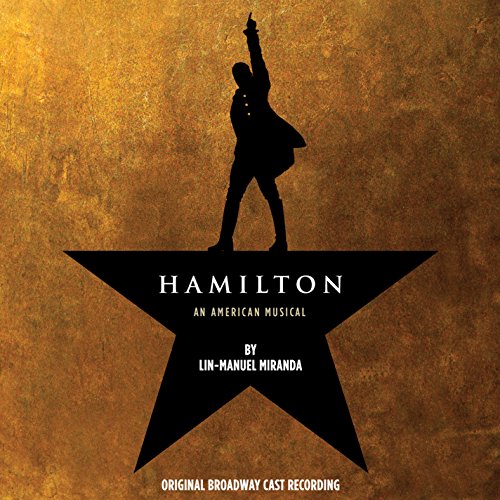
Hamilton soundtrack

I don’t usually review music around here, but I’m making an exception for this double-album soundtrack because a) it’s a preview of the actual musical I’ll get to see in about a month’s time (squeal!), and b) it’s highly narrative, so it feels like it belongs.

We’ve all by now heard about the musical Hamilton by Lin-Manuel Miranda, right? Based on the biography Alexander Hamilton by Ron Chernow (which I may need to read next). I had heard of it, but hadn’t paid much attention until I heard Miranda interviewed on my favorite podcast, Another Round (rest in peace). (That episode is here.) Once I started paying attention, I knew I had to see it. So I got tickets! to go with my friend Jacinda (talented author of Saint Monkey) next month in Louisville, and we can’t wait. (Sadly, I will not see Miranda perform, himself, but I will trust that they’ve chosen a good replacement.) My parents recently saw it performed in San Francisco (still waiting on their guest review[s]!), and my mother sent me this soundtrack.

And it’s phenomenal. The music is impressive in itself – that is, as music, you want to lean it, turn it up, nod along with the beat. There is such a full story communicated in its lyrics – all of which are perfectly legible, rare enough with any genre of music. I can immediately hear that Hamilton’s life was full of drama and inspiration, and I can imagine Miranda reading Chernow’s book and being captured by the wild true story of one man’s experience in and out of American politics. That he took that story and put it into varied and captivating song… is another inspiration in itself. I can hardly believe people are this talented.

My impression is that the entire play is available in these songs – leave it to be seen how true that is, but this double-album is quite a complete narrative in itself. It has everything: compelling, dramatic story; catchy beats; wildly crisp, awesome, technical execution; feeling, voice, and talent. I am deeply excited to see it live.

I’ve listened to the whole thing exactly two times through before writing this review, but of course I’ll be going back through it over and over before the show. So far, my favorite tracks include the introductory opener, “Alexander Hamilton,” and the following “Aaron Burr, Sir,” in which Hamilton meets this central character; the pairing “Helpless” and “Satisfied,” which offer parallel love stories with two Schuyler sisters; and the Cabinet Battles, #1 and #2, which are rap battle versions of the stand-offs between Hamilton and Thomas Jefferson. This is so exciting! This is how you get the kids (and me) excited about history. I’ve written before about the importance of interdisciplinary studies; I think rap-battle-meets-history-lesson might be the best yet. Also the “Ten Duel Commandments,” and “The Reynolds Pamphlet” for its sheer drama, and the final two numbers, “The World Was Wide Enough” and “Who Lives, Who Dies, Who Tells Your Story.” And, well, I love every track.

I also appreciate the threads that tie these songs together: for example, the repeated refrains of helpless and satisfied (in regards to Hamilton’s love life and ambition). I admire the narrative artistry of the song “Satisfied,” in which we rewind to see a scene and story just told in the previous track, from a very different point of view. This is some fine storycrafting.

I’m afraid of going in circles now – or of creating expectations that are too high to satisfy for the live show. So I’ll stop with this high praise.


Rating: 9 shots.

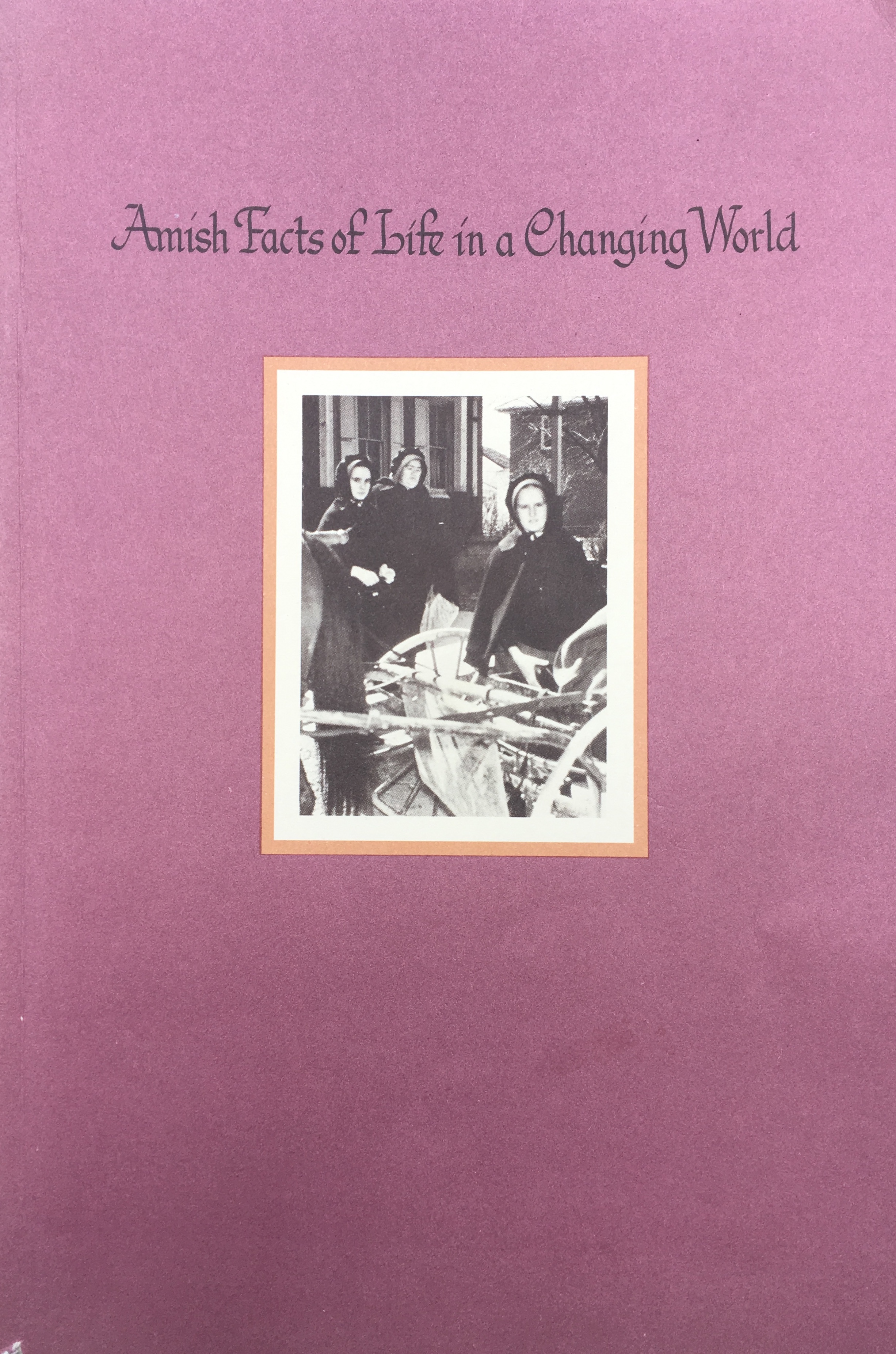
Amish Facts of Life in a Changing World by Gerald S. Lestz

While visiting with family on a horse farm in Lancaster County, Pennsylvania – Amish country – I had so many questions that they lent me this little book. It’s a pamphlet, really, at just 71 pages. And despite the title, a publication date of 1978 means it remains quite dated: for example, “mortgages for several hundred thousand dollars might be eyebrow-raisers among city folk” amused me. That said, I still learned a lot about the Amish way of life – maybe the Amish way of life in 1978, but the idea is that it doesn’t change that much, right? And in conversations with my hosts here, it sounds like quite a lot of what I’ve learned is still true.

Author Gerald S. Lestz is not Amish, but he has a good relationship with the community, who let him spend time in the one-room schoolhouse he profiles here, for example. His five essays can easily stand alone: “An Amish Teacher and Her School,” “Amish Pay High Prices to Keep Their Farms,” “The Diary: An Old Order Newsletter,” “Amish Story in Wood Carvings,” and “Demand Soars for Amish Quilts.” I think I enjoyed the school part the most, perhaps because it’s an area that interests me anyway; I am intrigued by the question of whether the school board allows the Amish to self-educate and take their kids out of school early. But each of these essays had something that piqued my interest.

Lestz is not impartial. He admires his subjects, and thinks we should all learn from them. Check out this description of one of the lovely wood carvings he features, by Aaron Zook:

Home prayer takes place every evening, and this is a touching scene. It is in the large kitchen of an Amish farm home. All members of the family are kneeling. The father is reading the prayer. Studying this, one can understand why the Amish way of life persists, and why there is so much goodness and so little crime among its members.

I do think the Amish offer some interesting solutions to some of our societal problems, but I think it’s a stretch to say that a kneeling family scene equals low crime and goodness. At any rate, you see the bias. And fair enough: it’s right out there where we can see it, which is always nice, if there’s going to be a bias at all.

The purpose of this slim book is education and information, not entertainment or artistic accomplishment. Lestz’s writing style is simple and forthright (notwithstanding his “paraphrase [of] Gertrude Stein in the negative: you can no longer say a quilt is a quilt is a quilt.” Clever, that). But it’s information I wanted, and I’m happy to have it. (I supplemented this read with a few issues of local rag The Fishwrapper, a little more treacly and Jesus-y but not unhelpful.) I’m glad I read it.


Rating: 6 vendues.

Cibola Burn by James S. A. Corey (audio)

Following Leviathan Wakes, Caliban’s War, and Abaddon’s Gate, Cibola Burn makes book four of The Expanse.

First remark: I noticed within seconds that this audiobook is read by a different narrator than books 1-3. I guess it is one of those quiet tragedies that we often don’t notice or remark on the narrator at all if they do a good job; done right, their work kind of fades into invisibility behind a great story. (I do try and recognize narration, and sometime comment on it, but I’ve probably failed to credit some fine work. In this format, no news is probably good news.) The earlier narrator of this series, Jefferson Mays, has given me each of the characters’ voices and accents; he gave me a world that I invested in. And this new guy is messing it up.

According to this fan wiki, Erik Davies stepped in to read book 4 because Mays had a scheduling conflict, and a later audio edition was released with Mays reading again. I regret that I didn’t find this out earlier and go seek that one out! I’m sure Davies is a nice man, but he butchered this reading. It would seem reasonable to go back and listen to the earlier narrations (this is a series; fans are invested) to find how each character was played and try to follow that, but maybe the scheduling issue provides a clue: too rushed to research? Not only are characters played inconsistently with past portrayals (Avasarala loses her accent; Amos’s voice moves way down in pitch), they are played inconsistently within this one book. Alex’s famous accent (practically defines his character) comes and goes, sometimes entirely absent. Our villain Captain Murtry has the accent Alex should have, but it sort of comes on slow and ramps up as the story unfolds. He changes the pronunciation of Coordinator Chiwewe’s name partway through, then changes it back. This is sloppy work. Additionally, Davies has a sort of droning monotone style in general, and he is apt to deliver lines like… remember Horatio Caine from CSI? The way he would take off his sunglasses and put them back on again and sigh and emphasis. every. word. very. slowly? Davies does this too, and it drives me crazy.

I know I’m going on at length about a single element of this audiobook and have not even gotten into its contents yet, but this is important stuff, friends. It took me every bit of half the book to get my bearings in this new world. I’m sorry I never gave Mays credit for his earlier work.

And my narration complaints don’t help my overall impression, certainly, but I also think this was the weakest installment in the series (interesting, because my friends at Tor.com loved it). The plot shows promise – shall I get around to plot, now? Following the opening in book 3 of “the ring” as a station to access a bunch of new solar systems, one of the “new” planets has been colonized by Belter refugees from Ganymede. Only now, a ship from an Earth corporation has shown up ready to do a sanctioned scientific study, and the two groups (to put it very simply) don’t get along. Blood is shed immediately, and the OPA/Earth alliance headed by Fred Johnson and Crisjen Avasarala sends Holden and his Rocinante crew out to set things right. For political reasons, they share a thinly veiled hope that Holden will actually fuck things up.

So here come Holden and Amos down to the surface of a planet… not quite at war, but certainly very tensely at odds. (Alex and Naomi stay up in the Rocinante in orbit nearby, along with the two much larger ships held by the two factions who beat them there.) Besides the political/social complications, we face challenges like superstorms, “death slugs” (which crawl out of the ground and kill on contact), and a mysterious growth that threatens to blind every person on the planet except Holden, for whatever mysterious reason. (I was calling this bullshit – the way Holden is such a superman and is the only one immune to this blindness threat – but it turned out to be explained pretty neatly, so okay.)

Again, the plot shows promise. We get (as usual) a couple of engaging new characters, especially the brilliant, work-obsessed scientist Elvi Okoye, who has one misguided crush and then finds true love, and her sidekick Fayez. The clear villain, as I said (and I don’t think this is a spoiler) is one Captain Murtry; he is a sociopath, I think, and I enjoyed him not one bit, but I suppose we need him for the story. We also meet again a few characters from earlier books: Miller’s old partner Havelock, and Basia Merton, from Caliban’s War. The Tor writer, Stefan Raets, found these reappearances a little too unlikely, but I’m on board. I also cheered the return of Sergeant Bobbie Draper in the prologue, but she scarcely shows her face past that beginning.

I loved the new world being discovered here, the new planet, with its totally unique biology and scientific challenges; Elvi’s overwhelming enthusiasm and love for her work is contagious. The mimic lizards captured my imagination and reminded me of Oy the billy-bumbler from King’s Dark Tower series. I remember Oy so fondly, this gave me a good feeling. (Corey is good, but King is better, hands down.)

Plot, check, characters, check. But the weakness comes in in the actual writing. I felt that where we used to see subtlety we are now being banged over the head. The emphasis on Holden’s crew being like family used to be mentioned offhandedly or merely demonstrated; here we have repeated overt references, as in “these are my family. I’m not going to let them die” sort of things. One of the book’s clearest themes is this idea that it’s silly for us to fight when we should be working together… we’re facing so many dangers, why can’t we remember that we’re all people, and band together… and then finally, common enemy, working together against dangers… look, we did it, we pulled together! And I think this theme would have been perfectly evident, and impactful, without saying all those things all the time. It got really cheeseball; I think it’s insulting to the reader to spell things out so thoroughly; and most importantly, it ruins the effect. Dialog, as well, moved from clever and quippy (especially among the Rocinante‘s crew) to over-explainy. Somebody actually said “I said that so you’d know I know.” The writing felt so different to me here that I wonder if something changed in how the writing team (that goes by the name Corey) works together; it just really didn’t feel like the same authorial voice. Of course, I have no idea how much Davies’s sub-standard reading played into this impression. The way a line is delivered can very much change how it’s read.

Finally, the interludes. A new addition here, these short sections seem told from the aliens’ point of view (I am following Raets’s usage here), and they remind me thoroughly of Gertrude Stein and not in a good way.

I do appreciate (as Raets points out) the way this book integrates some of the material of those that have come before. I appreciated Alex getting a bit more backstory – I said in my last review that he was little more than an accent, and finally he gets more characterization, which is just as well since he just about lost his accent in this narration… And if we get Avasarala and Bobbie Draper back together again in the next book, I’ll be very pleased. I’m still in, is what I’m saying, but please let’s get back to Jefferson Mays’s narration and back on track. C’mon, team…


Rating: 6 blue fireflies.

Maximum Shelf author interview: Alex North

Following Wednesday’s review of The Whisper Man, here’s Alex North: The Heart of the Book Starts Beating.


Alex North was born in Leeds, where he now lives with his wife and son. He studied Philosophy at Leeds University, and prior to becoming a writer he worked there in their sociology department.

Chapter by chapter, your characters take turns holding center stage. Was it complicated to manage so many points of view? Is there a strategy for writing this way?

I think the structure is just what this story demanded. Although the characters do come together as the book progresses, they start off in different places, and they each have their own storyline to follow until they do. Tom is clearly the main character, and we follow the majority of the book from inside his head, but there is a surrounding cast whose stories gradually begin to dovetail with his, until all of them are inextricably linked by the end.

I don’t think it’s necessarily any more complicated to write than a more straightforward single narrative. You do have to keep track of things very carefully, though, and you certainly don’t want one strand of the story to overshadow another. In an ideal world, a reader will finish a chapter that focuses on one specific character completely desperate to find out what happens to them next–but equally eager to pick up on things from another character’s perspective in the meantime and see what happens there.

It’s a balancing act, but I do like stories that use this technique. For one thing, if it’s done well, it can drive you through the book. For another, it can sometimes become quite claustrophobic for me if I’m trapped in a single character’s head for the entire story. But most of all, I think it’s interesting when these characters eventually collide and interact with each other. Writing from different perspectives allows you to see things from different angles, because the characters will understand and interpret the same event in their own unique ways. We all do that in real life. And I think it helps to bring nuance and ambiguity to the story, with the truth being revealed through a combination of viewpoints.

Fathers’ impact on their sons forms a central theme of the book. Was that intended, or did it arise as the story unfolded?

It was intended to an extent. To begin with, all I knew was that I wanted to write about a father left alone to care for his son, and finding it difficult. But there was a moment, shortly after moving into our new house, when my own son briefly mentioned that he was playing with “the boy in the floor”–which obviously gave me a bit of a chill! Thankfully, that didn’t last, but at that point I knew the little boy in my story would have imaginary friends, and that some of them might turn out to be quite sinister and disturbing. The book unfolded from there.

But the background theme of fathers and sons definitely expanded the more I wrote. It was on my mind the whole time, and so I found different connections emerging as I went. It felt a lot like things appearing through the mist: the more you write, the more the events in the book begin to link to each other, suggesting other connections, and so on. I was writing about fathers and sons from the beginning, but it took a first draft of the book before I discovered all the different ways that theme fed into the story.

What are your favorite parts of writing a novel like this?

Writing a novel is a marathon rather than a sprint, and I think you have to accept that there will be good and bad days–and far more of the latter–but I’ve learned that you have to go through all those bad days to get to the good ones. As is so often the case, half the battle is showing up.

But while I’ve enjoyed the handful of days when the writing has flowed, there’s also immense pleasure to be had in the ones when you had to drag yourself to the keyboard… and something just clicks. It’s enough to keep you trying the next day and then the next. Which of course is what you have to do.

For The Whisper Man, the moments I most enjoyed were towards the end, when all the connections began to make sense to me and the book finally came together. It’s easy to say what my favorite scene to write was, but also a bit of a spoiler. Speaking carefully, it involves a conversation between a little boy and a little girl. While there was still a whole load of writing and rewriting to do afterwards, that was the moment where I felt like I’d found the heart of the book and felt it start beating.

Can you give us any hints about your next novel?

I’m really superstitious when it comes to talking about work in progress. For one thing, I think it robs you of the impetus to write the book itself but, more importantly, my books tend to change all the way up to the wire. I have to try to write the story to figure out what I should have written all along, which means my final draft can be very different from my first. I write slowly to begin with, and then frenetically in the last month or so. But one thing I can say is that the next one is another very dark psychological thriller with creepy undertones. If The Whisper Man made it difficult to fall asleep, my hope is that the next one will make you very scared indeed of what might happen when you do.


This interview originally ran on April 17, 2019 as a Shelf Awareness special issue. To subscribe, click here, and you’ll receive two issues per week of book reviews and other bookish fun!