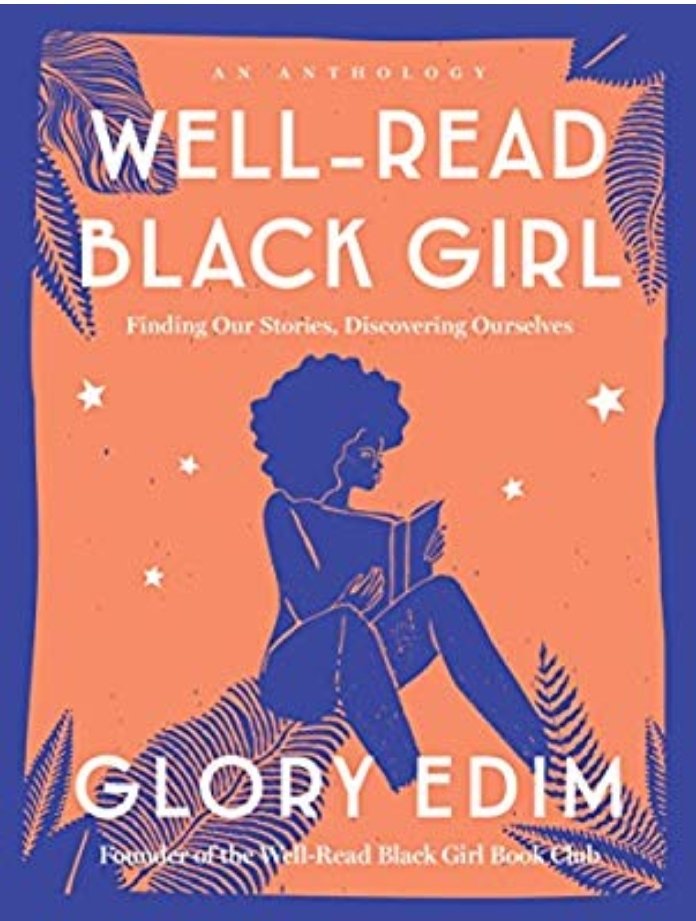
Well-Read Black Girl: Finding Our Stories, Discovering Ourselves, ed. by Glory Edim

This is a lovely collection of a wide range of voices and experiences, refreshing and bracing and joyful and gloriously various. Glory Edim is the founder of the Well-Read Black Girl book club (and later, the same-titled online community and conference), and here she has solicited and collected essays by Black women about their reading lives and the literary voices where they found identity and inspiration. This means lots of different things, and that’s the beauty of this book, I think. I loved that the authors of these essays ranged so wildly, as do their lived and literary experiences and the books and writers that they highlight – I confess, Roald Dahl wasn’t one I’d expected, but aren’t surprises fun? Between essays appear reading lists, naturally: the book club’s selections; classic novels by Black women; books on Black feminism; sci-fi, fantasy, plays, and poetry by Black women; books about Black girlhood and friendship. An appendix also lists all the books in this book. If there’s one thing about readers, we do tend to like a list of books.

The contributors’ list is star-studded: N. K. Jemisin, Rebecca Walker, Jesmyn Ward (), Jacqueline Woodson, Tayari Jones, Lynn Nottage, and many more. Veronica Chambers’ essay “Why I Keep Coming Back to Jamaica” I will definitely be using in my Short Fiction class this spring to discuss representation, what it means and why it matters. Woodson writes, “It’s difficult to be a reader and not be a writer,” and I like that as an encapsulation of the intersection of the two pursuits that I feel helps to define this book. There are no readers without writers and no writers without readers. Jesmyn Ward writes, “I never found the book that allowed me entry, granted me succor in story, and a home after the last page until I wrote my own.” That’s about empowerment, also a key point of this collection. Jemisin writes,

In the future, as in the present, as in the past, black people will build many new worlds.

This is true. I will make it so. And you will help me.

And why haven’t I read any more Jemisin since The City We Became impressed me so much?? (I just checked – there still isn’t a second book in that trilogy. But I now have The Fifth Season coming to me from my local bookstore.)

Much to love here in celebrating Black women as readers and as writers, and recognition of how far we’ve come, never ignoring how far we have yet to go in terms of representation and opportunities. And plenty of fodder for our to-be-read lists. I’m thrilled I found Well-Read Black Girl.


Rating: 8 library books.

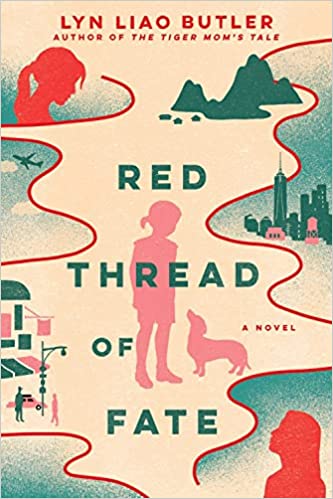
Red Thread of Fate by Lyn Liao Butler

Amid grief, betrayal and exposed secrets, a new widow learns to forge unexpected bonds.

Lyn Liao Butler (The Tiger Mom’s Tale) offers secrets, tragedy, hope and redemption in a novel centered on family and forgiveness. When Red Thread of Fate opens, Tam is on the phone with Tony, her husband. They are a bit short with each other; the marriage has been a little off, but they’re generally headed back on track and preparing to adopt a little boy from China, which both look forward to. Then there is cursing, a roaring sound–and just like that, Tam is a widow. The shocks come quickly, one after another: Tony was not in Manhattan, where he should have been, but in Flushing, Queens, and accompanied by a cousin Tam thought he’d been estranged from for years, killed by the same truck that struck Tony. Then Tam is surprised to be named guardian of the estranged cousin’s five-year-old daughter, even as her son-to-be still awaits adoption in China.

Tam, the California-born daughter of Taiwanese immigrants, and Tony, an immigrant from China, negotiated an uneasy peace with their families and their new lives in New York City, and with each other. Upon her own immigration, Tony’s cousin Mia lived with the couple for nearly two years, before unspecified events broke up the happy household. Now Tam is left to untangle the mysteries of Tony’s life, which seem to multiply the more she learns; Mia’s history is even more enigmatic, but Tam is committed to parenting her orphaned niece. She carries a guilty secret of her own, too.

By nature a shy and private woman, Tam is prompted by her new life–widowed, a single parent, grieving–to accept help, against her instincts. Slowly, she builds a family and a community: taking in her niece, moving toward adoption (which must be renegotiated now that she does not have a husband), deepening friendships and finding new ones, even beginning to mend relations with her mother. This process also involves navigating cultural nuances and divided loyalties. By the time Tony’s secrets come fully to light, Tam is a changed woman, with new strengths and allegiances, and better equipped to meet her many challenges.

Red Thread of Fate is a novel about what ties people to one another, and the nature of those bonds, the unintended consequences of choices and the possibility of a fresh start. With contemplative characters, surprising humor and a twisting plot, Butler’s thought-provoking story of nontraditional family models will appeal to readers interested in fate and identity.


This review originally ran in the December 6, 2021 issue of Shelf Awareness for the Book Trade. To subscribe, click here.


Rating: 6 wontons.

HeartWood Lit Mag: Meet the Editors

Just a little piece of news I’m not sure I’ve shared here, friends. I’ve been in this role a little over a year now. Check us out:

2021: A Year in Review

In 2021, I read 108 books (to 2020’s 103). Of those:

  • 85% were fiction, and the rest nonfiction. This represents a real change, not only from 2020 (last year I read 36% nonfiction, and 6% poetry), but over the years. The world just got ugly enough that I needed more escapism than usual, I think.
  • 61% were written by female authors (46% last year); 32% were by men (51% last year), with the remainder being collections by multiple authors, or variously unidentifiable, or other.
  • Of the fiction I read, 14% were mysteries or thrillers, 10% historical, 12% fantasy or sci fi, and equal handfuls were fairy tale/folktales, horror, and children’s or YA. The overwhelming 46% I labeled contemporary fiction – my largest and most nebulous category. (Last year, 23% were contemporary, 23% historical, 18% mysteries, and 10% thriller.)
  • I “read” just 8 audiobooks (last year 18).
  • This year, as last year, 58% of my reading was for pleasure, and the rest were for paid reviews.
  • I checked out 14% of the books I read from my local library, and the rest were an even split between purchased books and those sent to me for review. (Last year 13% were library books, 45% were purchased and 40% were sent to me for reviews.)
  • Last year, I reread three books; this year, just one, if you count the graphic novel adaptation of The Jungle.
  • A whopping 46% of this year’s reads were e-books (last year, 37%). I’m not sure how this happened. I mean, it’s because reviews moved to e-books after the pandemic, but I’m not thrilled that it’s gotten so extreme!
  • Of the books I read this year, 19% were by Black authors, and 66% by white authors. This represents a slight improvement over last year, but not enough yet. (In 2020, 17% were authored by Black writers, 9% I marked other or unknown, and 75% were white.)
  • Last year 10% of the books I read were authored by people who identify publicly as queer, and this year, only 8%.

best of 2021: year’s end

My year-in-review post will be up on Monday, with reading stats. But first, as usual, I want to share the list of my favorite things I read this year. (You can see past years’ best-of lists at this tag.)

Best of the year:

Honorable mentions:

Other special mentions outside the world of books:

This post is always an inspiration. Happy New Year, friends.

A Sense of the Whole by Siamak Vossoughi

I’m very glad I made the snap decision to buy this book after hearing Siamak Vossoughi read from it a few months ago. These electrifying stories are gleaming jewels, both very simple and very deep: absolute distillations where every word is perfect. Vossoughi’s writing reminds me of both Hemingway and Brian Doyle, which is a weird thing to say; but he encompasses both the koan-like, deceptively plain profundity of Hemingway and the profuse, excited, love-saturated celebration of Doyle. (Also, basketball.) Vossoughi’s characters are young and old, male and female, frequently Iranian-American (like the author) but not always; they are seeking, they are open and curious, and I find them inspirational (genuinely, not in the insipid way). They are also sometimes writers, which I appreciate and which feels autobiographical again, although I wouldn’t want to extrapolate that these stories are generally autobiographical (a too-easy assumption that’s often false).

A boy making a vulnerable but significant move in the classroom watches his teacher: “Mrs. Pardo didn’t look up or pause or anything, and he knew she wouldn’t look up or pause or anything, and she knew he knew it and that was a kind of love.” Two boys who have let their captured bees fly away silently muse about the mysteries of girls. “We couldn’t open that up between us because it would be like floating off into some vast and endless sky. So, we turned to something more certain and we talked about where those two bees on strings were by now.” In the story “Proverbs,” an Iranian-American child involves her parents and then a widening circle of the community in her homework when she is asked to explain the meanings of several American proverbs. I love that this story invokes the beauty and power of language, and the difficulties of translation, and the gift of sharing. Such a story could have been about alienation and discomfort, but here it is celebratory.

There is much here about the power of language, actually, as in “So Long”: “When I was a kid my father used to break my heart and send me soaring at once by the way he would say when he dropped me off at school, ‘Have fun.'” Later in the same story, “…it evened out everything that was vast and unknowable about America to remember that I could always be a listener, I could always take in somebody else’s America and grow my own by doing so, and know that I would have something to work with after doing that because at the very least, my America was a growing America.” Something about my own growing America, growing my own, feels revelatory to me. I tell my students that it’s important that we are all always learning and growing and aware that we don’t know it all, that the moment we think we know it all, we stop learning, and that’s where we fail. This feels related, and beautiful.

In “The Trophy,” I thought of Brian Doyle again. A shopkeeper at a trophy shop refuses a sale, instead intervening (against habit) in what he sees as a mistake about to be made. There is an empathy and a vulnerability to stories like this; it feels like these characters take the kinds of risks that we all wish we did.

The final two stories in the collection, “So Long” and “Nobody Died,” feel like the perfect choices, like everything the book had been building toward. I immediately went back to the beginning, in fact, to see if they all felt this good, once I’d gotten into Vossoughi’s rhythm, or something; but these final two still feel like standouts. I needed this in my life, and I’m already considering which story to teach in my upcoming Short Fiction class.

Vossoughi’s stories are very short – some just two pages, most four to five. And they’re perfect. Do yourself a favor and buy this book.


Rating: 9 apples.

The Turner House by Angela Flournoy

Humans haunt more houses than ghosts do. Men and women assign value to brick and mortar, link their identities to mortgages paid on time. On frigid winter nights, young mothers walk their fussy babies from room to room, learning where the rooms catch drafts and where the floorboards creak. In the warm damp of summer, fathers sit on porches, sometimes worried and often tired but comforted by the fact that a roof is up there providing shelter. Children smudge up walls with dirty handprints, find nooks to hide their particular treasure, or hide themselves if need be. We live and die in houses, dream of getting back to houses, take great care in considering who will inherit the houses when we’re gone.

Family, home, and sense of place. Pathos and humor. What’s not to love? This is a Great American Novel, telling the story of one prodigious family over generations, and in it the story of a city and more: the Turners’ Detroit is the story of the Great Migration, of racism and striving. Francis Turner came up from Alabama to Detroit in 1944, to be later joined by his wife Viola and first son, Charles or Cha-Cha. From there, from one rental house to another, the family grew, purchasing the house on Yarrow Street in 1951, where they would raise thirteen children, whose ages span 23 years. Readers meet these character briefly in 1958 and then spend much of the book’s space in 2008, as a widowed Viola weakens in Cha-Cha’s home and the old house on Yarrow falls into decay (and, if you remember 2008, there will be financial repercussions). The timeline jumps around: The Turner House is most concerned with 2008 and the final disposition of the title house (and its matriarch), but to tell that story, we have to flash back. Not all thirteen of the siblings get equal time, of course; the eldest, Cha-Cha, and the youngest, Lelah, play large roles, as do patriarch and matriarch, and a few others along the way, including partners.

There is a bit of a mystery at this story’s heart, too: Cha-Cha saw a haint in the Turner house when he was just a boy, and in his 60s he sees it again, while driving an 18-wheeler for work, which ends his career. His efforts to resolve this haint – its reality or unreality, its meaning – drives much of the book’s plot, serving as the main conflict in the 2008 timeline, although readers gradually become aware of how tenuous the family’s very existence was in the 1944 timeline as well. And Lelah is fighting demons of her own – as are all thirteen siblings, presumably, as are all of us. It’s an expansive story like that.

One man’s haunting is another man’s hallowed guest.

There is humor as well as pain, and many truths about families and homes, especially large families. One sideplot, which is both heartwrenching and funny, involves a minor character whose curiosity about big families causes her to make some spectacular missteps. As an outsider to large families myself, I sympathize, and I enjoyed this glimpse into a big, warm, loving, dysfunctional, unwieldy example.

He felt like a hostage in his own house. He saw now that these parties were larger than him and Tina, and even Viola. That his family could go on party prepping in Cha-Cha’s house when his home life was an obvious wreck indicated of a lack of respect. This was what happened when an open-door policy–something Cha and Tina had prided themselves on–ran amok. When mi casa es su casa was taken literally. His house had become an extension of the Brotherly Banquet Hall of their youths, except his siblings slept here too, and paid no security deposit for damage. In exchange, Turners thought their presence was expression of love enough; that they’d booked flights and crossed state lines to invade Cha-Cha’s space was supposed to be some sort of gift to him. It felt more like an ambush.

You know I have a special weakness for literature that tackles our relationships to places. Detroit is not a city I know well, but this version certainly felt fully formed to me; I didn’t look up street names but these are real places as far as I’m concerned, and that’s good enough. The importance of home, of connection to place and (sometimes) to the walls of one place in particular is very much a part of my worldview.

This book is about families and relationships, about connections to the past, about mysticism, about race and housing discrimination and Detroit and the Great Migration and the United States, about the significance of place and home. It is beautifully written and entirely absorbing; none of these characters is without flaws, but the narrative oozes with empathy through it all. It’s a masterpiece.


Rating: 8 hot links.

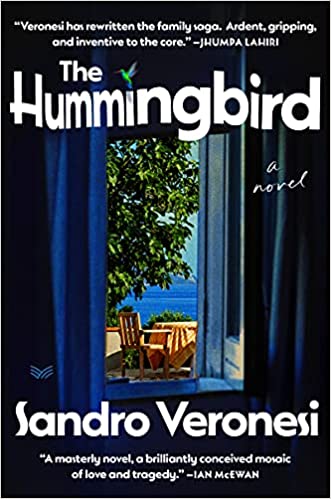
The Hummingbird by Sandro Veronesi, trans. by Elena Pala

This family saga set in Italy, with one life at its center, is moving, literary, philosophical and multi-layered.

The Hummingbird by Sandro Veronesi (Quiet Chaos; The Force of the Past), translated from the Italian by Elena Pala, is a shape-shifting, multigenerational novel of family, love, loss, joy, change and pain.

When readers meet Marco Carrera, the year is 1999 and he is a 40-year-old ophthalmologist in Rome, about to meet destiny in the form of a psychoanalyst breaking his confidentiality oath. From here, chapters jump back and forth in time from 1960 to 2030. Readers meet the great love of Marco’s life, visit his childhood, witness his marriage and divorce. When he is just a boy, Marco stops growing, remaining small and childlike well into his teenage years: his mother nicknames him “the hummingbird” for his stature, a moniker that will echo into his adulthood. He becomes a father and eventually a grandfather, so that four generations of his family flash kaleidoscopically across these pages; Marco is ever at the novel’s center, however, even as he is accused of holding still through life’s storms. “You can keep still as time flows around you, you can stop it flowing, sometimes you can turn back time, even–just like a hummingbird, you can fly backwards and retrieve lost time.” The novel mimics this movement with its nearly stop-action chronology.

Some chapters take a straight narrative form, others are transcribed conversations, letters, postcards or e-mails. Elena Pala’s translation from the Italian feels perfectly suited to this twisting, many-faceted form, as different voices take the lead. The pieced-together story moves between Rome and a Tuscan coastal town where the Carreras have a vacation home; its characters travel much farther (Spain, Germany, the United States), but Marco’s orbit is limited. Rather, as he keeps still, his family and friends revolve around him.

In these various forms, across time and space, Veronesi refers to numerous other literary voices (a Samuel Beckett epigraph sets the tone) and concepts from ophthalmology, psychotherapy, architecture and design, among other disparate fields. The Hummingbird is clearly an intellectual exercise, but can also be read more simply as a story about a single, deceptively ordinary life: Marco might appear unremarkable at first glance, but he has lived remarkable tragedies and triumphs, which will define him. He is affected by his experiences as if by ocean waves, his life a series of natural forces, or natural disaster. Packed with pathos, humor and tragedy, the novel’s finish is both a quiet goodbye and a crescendo, the only fitting end to such an unobtrusive but resounding life.


This review originally ran in the December 2, 2021 issue of Shelf Awareness for the Book Trade. To subscribe, click here.


Rating: 7 appointments.

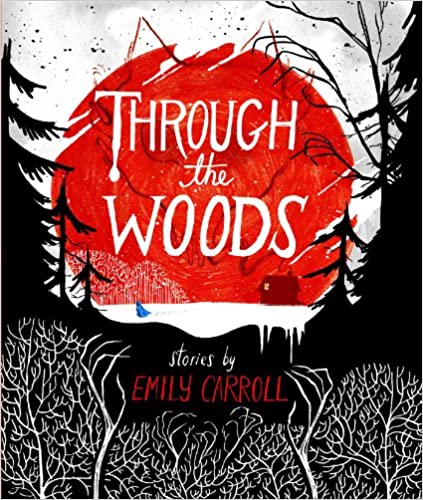
Through the Woods by Emily Carroll

This was a delightful quick read: five spooky stories, with brief introduction and conclusion to bookend. Carroll’s illustration style is lovely – I almost want to say simple, but deceptively so, for sure. She communicates a lot of emotion. I am reminded of the graphic versions of Gaiman’s work. I loved the woman “with starry eyes,” and indeed there were tiny little stars in her pupils.

These tales are deliciously unnerving, creepy, and enigmatic – it’s not always clear that there is something to be scared of in the end, but there sure might be. There’s a lot of question of who to trust, of things that go bump in the night and come out of the woods (as “most strange things do”). Friendships and familial relationships are perhaps less stable and trustworthy than they first appear. There might be monsters, after all. Houses and spaces hold nasty potential. I’ve decided to call these stories dark fairy tales; they definitely recall that style and the traditional setting (and at least one is a clear reference).

This is the kind of horror that is just deeply fun, and in this graphic format, even sumptuous. There are multiple spreads that I could see hanging on the wall. I love the idea of keeping this around for quick, easy, luxurious, high-impact reads. Carroll deserves her accolades. I’d buy another volume of this work in a minute.


Rating: 8 teeth.

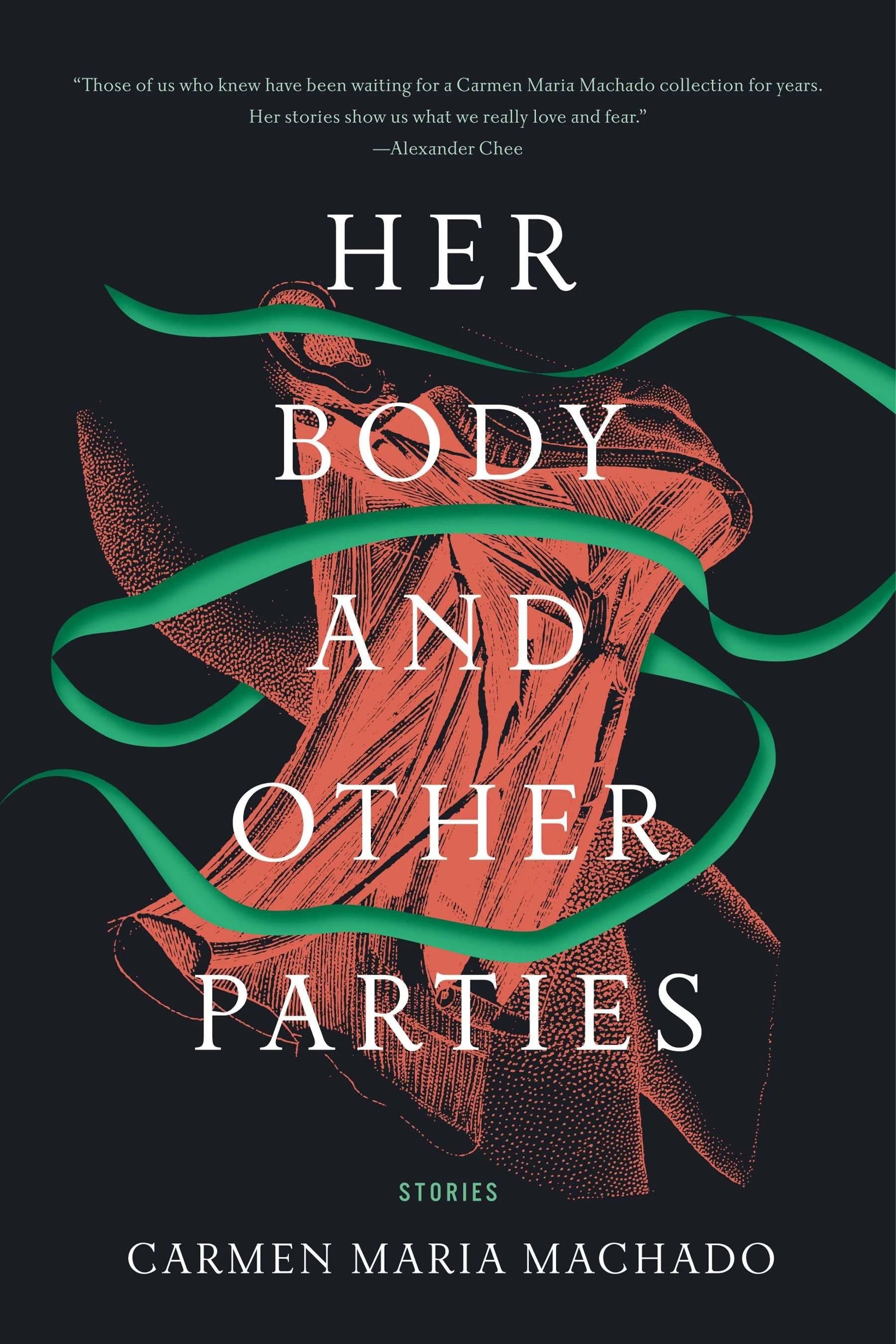
Her Body and Other Parties by Carmen Maria Machado

The stories in Carmen Maria Machado’s debut Her Body and Other Parties are both highly varied – in length, form, and style – and also absolutely related. They each handle gender in our real world, including issues of body image, sexuality, violence, lust, and family structures, but frequently do so by calling in supernatural forces, post-apocalypses, fairy tales or other fictional reference points. These are narratives to get completely lost and absorbed in, not necessarily pleasant reading, but compelling.

“The Husband Stitch” starts the collection off, and is why I own it: my friend Vince teaches it and I’ve heard him talk about it several times. It is a quite discomfiting story of a woman’s life from girlhood on, including her marriage and motherhood to a boy. It’s about gender expectations, and it feels true to our world, which is why it’s so uncomfortable. It also makes reference to the classic urban myth/horror story about the girl with the green ribbon around her neck – remember that one?

“Inventory” lists the narrator’s partners, of different genders, over the years, until the reader understands that in her world there has been a global pandemic that has all but wiped out the human population. (This was published in 2017, but yes, it feels creepily familiar, like The Stand.) I think it counts as what Suzanne Paola calls a life-rolled-up. I like it very much, in this case, the spooky outer world that it shows at an off-angle while ostensibly focusing on sexual/romantic relationships.

“Mothers” sees a woman showing up on her former lover’s doorstep with a baby, which she deposits, saying “She’s yours.” The trick is that the partner is also a woman, who has imagined their life together as mothers many times, but simultaneously comforted herself that it wasn’t possible for them to make a baby. This central riddle is never solved; by the end, it doesn’t feel like it matters. It’s an interesting thought experiment. The passage about “the major and minor arcana of our little religion” pleased me greatly.

“Especially Heinous,” the longest story in this collection, I felt was the weakest of the collection. I like both the form and the frame: subtitled “272 Views of Law & Order: SVU,” it offers very short synopses of 272 episodes of that show, seasons 1-12. I have watched this show some; as a person mostly ignorant of pop culture references like this, it was gratifying to know the subtext. But it didn’t really work out for me. This alternate version of Benson and Stabler have themselves an alternate version, Henson and Abler, sort of evil doppelgängers who muck up their cases and relationships. It’s otherworldly, paranormal, and weird (none of which I shy away from!) but somehow didn’t come together. Maybe the large number of short pieces didn’t hold together for this many pages. I definitely got bogged down here and reading became a bit of a task.

But then things came right back together again. “Real Women Have Bodies” sees a world with another, different epidemic, in which women sort of… fade out, and become invisible. But where do they go? Our female protagonist works in a high-end dress shop, and finds herself in a relationship with another woman, and both wind up in a position to witness the ways in which women change and are disregarded. (No metaphor here, I’m sure.) It’s lovely and haunting, which could be said about the whole collection.

“Eight Bites” is another perfectly apt observation of the world, in which a woman gets gastric bypass surgery – the last of her sisters to do so – and thereby horrifies and enrages her daughter, who rejects the societal bullying that gets us here in the first place.

“The Resident” features a writer heading to an artists’ residency where she struggles to relate to others, eventually finding herself humiliated – again. This story has a neat trick at its conclusion.

And finally, “Difficult at Parties” (a phrase that echoes from an earlier story) depicts the aftermath of a trauma. Not for the first time, this story is so realistic and painful that it is hard to read, but also spellbinding and crystalline.

NPR‘s Annalisa Quinn states that this book is “full of outlandish myths that somehow catch at familiar, unspoken truths about being women in the world that more straightforward or realist writing wouldn’t.” I’m glad I read that line; it helps me to think about this kind of writing – fabulist realism, perhaps – as defamiliarization. Making our very own familiar world strange helps us to see it more clearly.

I’ll be thinking about these stories for some time. Machado has a gift. Keep your eyes open for her later memoir, In the Dream House. Also, thanks Vince for the recommendation.


Rating: 8 dresses.